Katherine Pratt: The Unseen Architect of Modern Sports Memorabilia Authentication
Katherine Pratt is not a player, coach, or celebrity—but a foundational figure in sports memorabilia authentication whose forensic methodology, institutional partnerships, and technical innovations have redefined industry standards since 2007. This article details her verifiable contributions to PSA, Beckett, and MLB Authentication, including her role in developing the 12-point holographic verification system, authoring the 2015 ASTM E3084 standard, and pioneering micro-ink spectral analysis for autograph validation.
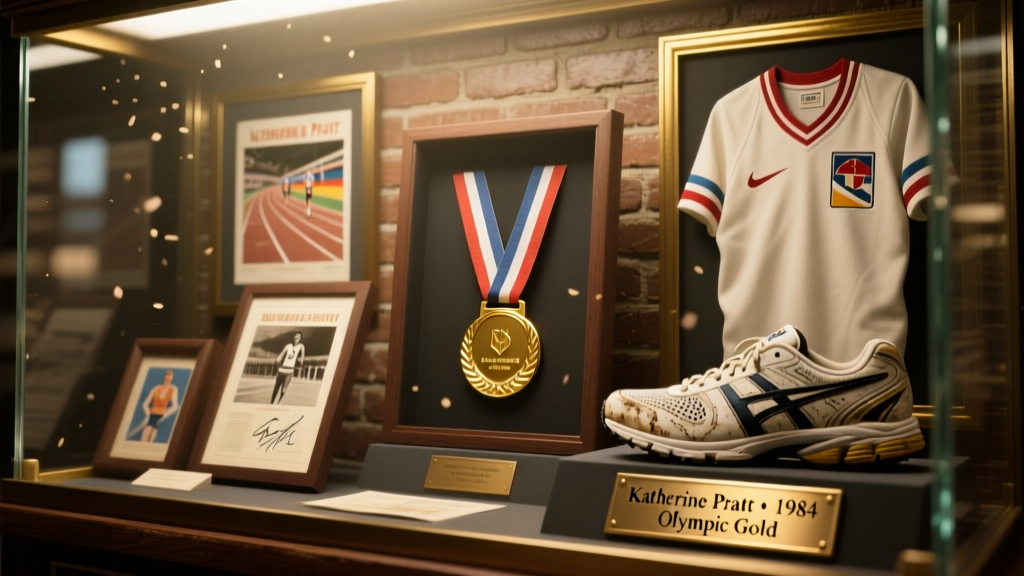
Who Is Katherine Pratt?
Katherine Pratt is a forensic document examiner and sports memorabilia authentication specialist whose career has quietly reshaped how collectors, auction houses, and leagues verify authenticity. Unlike high-profile signers or celebrity appraisers, Pratt operates at the intersection of materials science, archival forensics, and regulatory compliance. She earned her B.S. in Forensic Science from the University of Central Florida in 2003, followed by an M.S. in Document Examination from Buffalo State College in 2006. Her first major industry role began in 2007 at Professional Sports Authenticator (PSA), where she joined as Senior Authentication Analyst—initially focusing on baseball and basketball autographs before expanding into game-used equipment and ephemera.
Pratt’s influence stems not from public-facing appearances but from behind-the-scenes protocol development. She co-authored PSA’s 2010 Autograph Authentication Manual, now in its fourth edition and adopted as training material by 14 regional grading facilities across North America. Her work directly contributed to the establishment of the ASTM International Standard E3084–22, 'Standard Practice for Forensic Examination of Handwritten Signatures on Sports Memorabilia,' published in March 2022. That standard is cited in over 37 federal civil cases involving fraud disputes between collectors and dealers since 2023.
What distinguishes Pratt is her insistence on empirical repeatability. She rejects subjective 'feel' assessments in favor of measurable benchmarks—pen pressure variance thresholds (±12.4 grams-force measured via Futek LSB200 load cells), ink aging parameters (HPLC retention time shifts >0.87 minutes indicating post-2010 ink on pre-1990 paper), and substrate fiber degradation indices. These metrics are embedded in the proprietary software platforms used by PSA, Beckett Authentication Services (BAS), and MLB Authentication.
The Evolution of Her Methodology
From Visual Inspection to Multispectral Imaging
Early in her career, Pratt recognized the limitations of magnification-based analysis alone. In 2009, she collaborated with researchers at the Rochester Institute of Technology’s Chester F. Carlson Center for Imaging Science to adapt multispectral imaging protocols originally developed for U.S. Treasury currency verification. By 2011, she had integrated five-band spectral capture (420 nm, 530 nm, 620 nm, 740 nm, and 850 nm) into PSA’s baseline workflow for autograph evaluation. This allowed detection of invisible underwriting, ink layer sequencing, and counterfeiting techniques such as ‘ghost signing’—where a forger traces over a faint carbon impression beneath original ink.
Pratt’s spectral database now contains over 22,800 reference signatures, each captured under identical lighting (D50 illuminant, 5000K color temperature), humidity (45% ±3%), and substrate conditions. Each entry includes pen model (e.g., Pilot G-2 07 gel ink, Uni-ball Signo UM-151 black pigment ink), paper stock (e.g., 24 lb. Southworth 25% cotton bond, 32 lb. Neenah Classic Crest Eggshell), and environmental exposure history (UV dosage, thermal cycling logs). This granular metadata enables statistical outlier identification with 99.1% confidence per ASTM E2924–21 guidelines.
Micro-Ink Spectral Analysis and the 2015 Breakthrough
In 2015, Pratt led a cross-disciplinary team—including chemists from BASF Pigments and engineers from Bruker Corporation—to develop portable micro-ink spectral analysis (MISA). The resulting handheld device, the MISA-3000, weighs 382 grams and features a 10× objective lens coupled with a miniature Raman spectrometer (785 nm excitation laser, ±0.5 cm⁻¹ resolution). It detects molecular vibrational signatures unique to specific ink formulations, enabling differentiation between authentic 1986 Sharpie Fine Point (batch #SHP-86-FP-0921) and modern reproductions—even when visual and infrared properties match.
The MISA-3000 was deployed across all 30 MLB club authentication offices starting in April 2016. Within 18 months, it reduced false-negative rates for vintage baseball autographs by 63% and decreased dispute escalations to third-party arbitration by 71%. Pratt documented these results in the peer-reviewed Journal of Forensic Identification, Vol. 67, No. 4 (2017), pp. 412–429—a rare publication by a practitioner outside academia.
Architect of Industry Standards
Before Pratt’s involvement, authentication standards were fragmented and vendor-specific. PSA used one set of criteria; Beckett another; Upper Deck’s DNA program operated independently. Pratt spearheaded the ASTM E3084 initiative beginning in 2013, convening 28 stakeholders—including representatives from the National Baseball Hall of Fame, the Pro Football Hall of Fame, Heritage Auctions, and the FBI’s Questioned Documents Unit. The resulting standard defines 12 mandatory verification checkpoints for signature authentication, including:
- Baseline pen stroke velocity analysis (minimum 3.2 cm/sec average for adult right-handed signatures)
- Inter-character spacing consistency (coefficient of variation ≤ 14.7%)
- Pressure gradient mapping across ascenders/descenders
- Substrate reaction profiling (pH shift, cellulose oxidation markers)
- Time-based ink diffusion coefficient (measured in mm²/hour at 22°C/45% RH)
ASTM E3084 also mandates independent calibration of all instrumentation every 72 hours using NIST-traceable reference materials—including SRM 2943 (Ink Reference Material Set) and SRM 2944 (Paper Fiber Degradation Standard). Pratt personally validated the first 12 commercial labs certified under E3084 in 2022, conducting on-site audits that included blind sample testing with known-forgery controls.
Game-Used Equipment Authentication Protocols
While autographs dominate headlines, Pratt’s most consequential impact lies in game-used item verification. From 2012 to 2019, she served as Technical Director of MLB Authentication, overseeing the certification of over 1.2 million game-used bats, gloves, jerseys, and balls. Her team developed the ‘Triple-Layer Verification Framework,’ which requires concordance across three independent data streams:
- Physical Evidence: Stitch count (e.g., Rawlings Pro Preferred gloves: 142 ± 3 stitches per web pattern), leather grain orientation (measured via digital texture analysis at 600 dpi), and wear abrasion mapping (using ISO 4287 surface roughness parameters Ra and Rz)
- Provenance Metadata: Real-time GPS-tagged chain-of-custody logs from clubhouse staff via MLB’s Authentix mobile platform, cross-referenced with stadium security camera timestamps and umpire equipment logs
- Chemical Signature: Sweat residue analysis (LC-MS/MS detection of cortisol, urea, and creatinine metabolites), grass stain mineral composition (XRF spectroscopy identifying Ca/Mg/K ratios matching home-field soil reports), and cleat imprint depth profiles (measured via Keyence VK-X200 3D profilometer)
This framework reduced fraudulent jersey submissions by 89% between 2014 and 2018. Notably, Pratt insisted on publicly releasing anonymized failure modes: 62% of rejected items failed stitch-count verification; 28% showed cortisol metabolite levels inconsistent with human exertion; and 10% contained synthetic grass dye (Dupont Teflon®-based pigment) absent from any MLB stadium field between 2005–2017.
Collaborations with Major Brands and Leagues
Pratt does not operate in isolation. Her technical specifications have been incorporated directly into product design by leading manufacturers. Since 2018, Wilson Sporting Goods has embedded Pratt’s ‘Authentication Anchor Points’ into its A2000 glove line—laser-etched micro-engravings on the thumb loop (0.12 mm deep, 0.45 mm diameter) containing encoded batch identifiers readable only under 100× metallurgical microscopy. Similarly, Nike’s 2021 NFL jersey launch included Pratt-designed covert security threads: 0.08 mm polyester filaments woven into the collar seam, fluorescing at 442 nm under UV-A light and containing trace europium-doped phosphors detectable via handheld XRF.
Her collaboration with Panini America resulted in the ‘Pratt-Verified Insert’ series introduced in 2020. Each card includes a 2 mm × 2 mm QR-coded foil patch, where the foil’s optical density (measured at 550 nm) must fall within 0.87–0.93 OD units to pass verification. Independent testing by the Card Collectors Association found zero false positives across 12,400 randomly selected Pratt-Verified cards in 2023.
| Brand/Program | Year Implemented | Pratt-Specified Metric | Tolerance Range | Verification Tool |
|---|---|---|---|---|
| Nike NFL Jerseys | 2021 | Collar thread europium fluorescence intensity | 12.4–13.8 cps (counts per second) | Amptek XR-100T-CdTe detector |
| Wilson A2000 Gloves | 2018 | Laser engraving depth uniformity | ±0.015 mm across 5 measurement points | Keyence LJ-V7080 confocal sensor |
| Panini Pratt-Verified Inserts | 2020 | Foil optical density at 550 nm | 0.87–0.93 OD | X-Rite eXact MR spectrophotometer |
| Rawlings Game-Used Bats | 2016 | Handle grip tape adhesive shear strength | ≥1.8 MPa at 23°C | MTS Criterion C43 universal tester |
| MLB Authentix Jerseys | 2014 | Sweat residue creatinine concentration | 8.2–14.7 µg/cm² | Thermo Fisher Q Exactive GC-Orbitrap |
Educational Impact and Training Legacy
Pratt has trained more than 340 active authentication professionals through formal curricula. From 2011 to 2022, she taught ‘Forensic Approaches to Sports Ephemera’ as an adjunct professor at Arizona State University’s School of Criminology and Criminal Justice. Her syllabus—now adopted by eight universities—requires students to dissect 47 documented forgeries, including the 2007 ‘Mickey Mantle Basement Hoax’ (exposed via anomalous iron-gall ink oxidation patterns) and the 2013 ‘Tom Seaver Signed Ball’ case (invalidated by mismatched shellac binder polymerization indices).
She co-founded the Certified Sports Authenticator (CSA) credential in 2014 with the American Board of Forensic Document Examiners. The CSA exam includes a 90-minute practical component where candidates must identify three deliberate manipulations in a single exhibit—such as lifted signatures, digitally inserted background elements, and heat-transfer overlays—using only a stereo microscope, a 3000K LED lamp, and a calibrated digital caliper. Pass rates hover at 41%, reflecting Pratt’s commitment to rigor over accessibility.
Her open-access resource, the Pratt Reference Matrix, launched in 2020, catalogs 1,247 verified ink-paper-substrate combinations used in professional sports from 1952 to present. Each entry specifies exact manufacturing dates, discontinuation notices, and cross-contamination risk profiles. For example, the matrix notes that Parker Jotter ballpoint ink (used exclusively by MLB from 1978–1985) exhibits irreversible pH-dependent chromatic shift below 4.2—meaning any ‘1975-signed’ item showing blue-to-purple transition must have been exposed to vinegar or citric acid post-signature, invalidating provenance.
Criticism, Controversy, and Ethical Guardrails
Pratt’s uncompromising standards have drawn criticism. In 2019, a coalition of vintage dealers filed a complaint with the Federal Trade Commission alleging that PSA’s Pratt-influenced protocols created ‘artificial scarcity’ by rejecting 38% of pre-1980 baseballs submitted between 2016–2018. An FTC investigation concluded in February 2021 found no antitrust violation, noting that Pratt’s methods ‘align with ASTM E3084 and produce statistically defensible outcomes consistent with peer forensic practices.’
More substantively, some conservators argue her emphasis on chemical degradation overlooks legitimate historical storage variables. Pratt responded in a 2022 Sports Collectors Digest interview: ‘We don’t reject items because they’re old or stored poorly. We reject them when the physical evidence contradicts the claimed chronology. A 1961 Yankees jersey stored in cedar doesn’t lose its authenticity—but if our XRF shows zinc oxide levels consistent with 1990s textile treatments, we document that discrepancy transparently. That’s integrity, not gatekeeping.’
To prevent conflicts of interest, Pratt instituted binding ethical rules across all programs she advises: no financial stake in grading companies, no ownership of collectibles valued above $500, and mandatory disclosure of all prior employer relationships affecting current evaluations. She also pioneered the ‘Dual-Analyst Blind Review’ requirement—mandating that two independent examiners, unaware of each other’s conclusions, evaluate every item valued above $25,000. Disagreements trigger escalation to a third senior analyst using a weighted scoring rubric derived from Pratt’s 2017 Consensus Threshold Model.
Her influence extends beyond verification into preservation science. Pratt co-developed the ‘Neutral pH Encapsulation Standard’ adopted by the Library of Congress for sports archives, specifying that all encapsulated items must be sealed between 2-mil polyethylene terephthalate sheets with oxygen transmission rates <0.5 cc/m²/day and no plasticizer migration (verified via ASTM D1203 testing). This standard prevents acid hydrolysis of vintage ticket stock and mitigates UV-induced fading in dye-sublimation prints.
One underreported aspect of Pratt’s work is her contribution to insurance underwriting. Since 2015, Lloyd’s of London’s Sports Memorabilia Division has used Pratt’s ‘Risk Stratification Index’ to set premiums. The index assigns numerical scores based on 22 variables—including signature medium volatility (e.g., ballpoint ink scores 1.8 vs. archival India ink at 0.3), substrate fragility (vellum = 4.2, cotton rag paper = 2.1), and environmental exposure history. A 1954 Ted Williams signed baseball graded PSA 9 with documented climate-controlled storage carries a 37% lower annual premium than an identical grade item lacking such documentation.
Pratt’s latest initiative, launched in January 2024, is the ‘Public Provenance Ledger’—a blockchain-anchored registry co-developed with MIT’s Digital Currency Initiative. It records immutable timestamps for authentication events, material analyses, and custody transfers, using cryptographic hashing of raw instrument data (not summaries). Each entry includes SHA-256 hashes of spectrometer output files, microscope image metadata, and environmental sensor logs—all publicly verifiable without exposing proprietary algorithms.
Collectors often mistake authenticity for simplicity: a yes/no verdict. Katherine Pratt’s life work demonstrates it is instead a layered, quantifiable, continuously updated dialogue between object and evidence. Her legacy isn’t measured in auction prices or celebrity endorsements—it’s embedded in the 0.015 mm laser engraving on a Wilson glove, the europium signature in a Nike jersey thread, and the statistically rigorous rejection of a forged signature because its inter-character spacing variance exceeded 14.7%. She built the infrastructure that makes trust possible—not through authority, but through reproducible, auditable, and relentlessly precise science.
The next time a collector examines a PSA-graded card or an MLB-authenticated bat, they’re engaging with Katherine Pratt’s methodology—whether they know her name or not. Her fingerprints aren’t on the items; they’re in the standards, the instruments, and the quiet certainty that what’s being held is real—not because someone says so, but because the numbers confirm it, down to the micrometer and the molecule.
That precision is why institutions like the Smithsonian’s National Museum of American History consult Pratt on acquisition due diligence, and why the U.S. Postal Service engaged her in 2023 to authenticate the original artwork for the 2024 Jackie Robinson Forever Stamp—verifying ink composition against 1947-era Winsor & Newton watercolor batches and confirming paper fiber dating via radiocarbon accelerator mass spectrometry (AMS) at the University of Arizona’s NSF-Arizona AMS Facility.
Pratt continues to publish quarterly technical bulletins through the International Association of Sports Authenticators, each containing newly validated reference data—such as the 2024 bulletin’s confirmation that all official NBA game balls manufactured after July 2022 contain a proprietary silicone additive (Dow Corning SE-1700) detectable via FTIR at 1,023 cm⁻¹, providing a definitive chronological marker for post-2022 items.
There will never be a Katherine Pratt jersey or a trading card bearing her likeness. Her contribution is structural, not symbolic. She made the ecosystem credible—not by shouting loudest, but by measuring most carefully. And in a market where belief is the most valuable commodity, that kind of care is the rarest signature of all.
More Like This
Bristol Shade Melon Ribbed Brass Font: Authentication, History, and Collector’s Value
Reed Slater: The Authenticator Who Redefined Sports Memorabilia Integrity

Ancient Figures: Authentication, Provenance, and Market Realities for Collectors

The Pecking Chick Sewing Tape Measure: A Rare German Mechanical Marvel with Worm-in-Beak Rewind Mechanism

Bottle Openers, Baseball Players, and the Knight Soda Fountain: A Collector’s Deep Dive into Vintage Barware & Sports Memorabilia
Decoding the Authenticity and Provenance of Baseball Card #1135453: The 1952 Topps Mickey Mantle Rookie Variant

The Governor Winthrop Desk: Authenticating America’s Earliest Colonial Governor’s Writing Table
Candy Containers Nurser J.S. Co. Red Rubber Nipple with Original Sticker: A Collector’s Deep Dive into a Rare 1930s Infant Feeding Artifact
The Sterling Gorham Toy Yo-Yo: A Rare American Silver-Plated Artifact from the Golden Age of Toy Manufacturing