Advertising Petroliana & Coca-Cola Collectibles Headline Heritage Auctions’ October 24 Sale
Heritage Auctions’ October 24, 2024 Petroliana & Advertising sale features over 1,200 lots, including rare Coca-Cola signage, vintage gas pumps, enamel and porcelain signs, and iconic mid-century promotional items — with highlights like a 1937 Coca-Cola 'Santa Claus' tin litho poster, a 1953 Phillips 66 'Flying A' pump, and a 1948 Standard Oil of California 'Red Crown' gas globe.
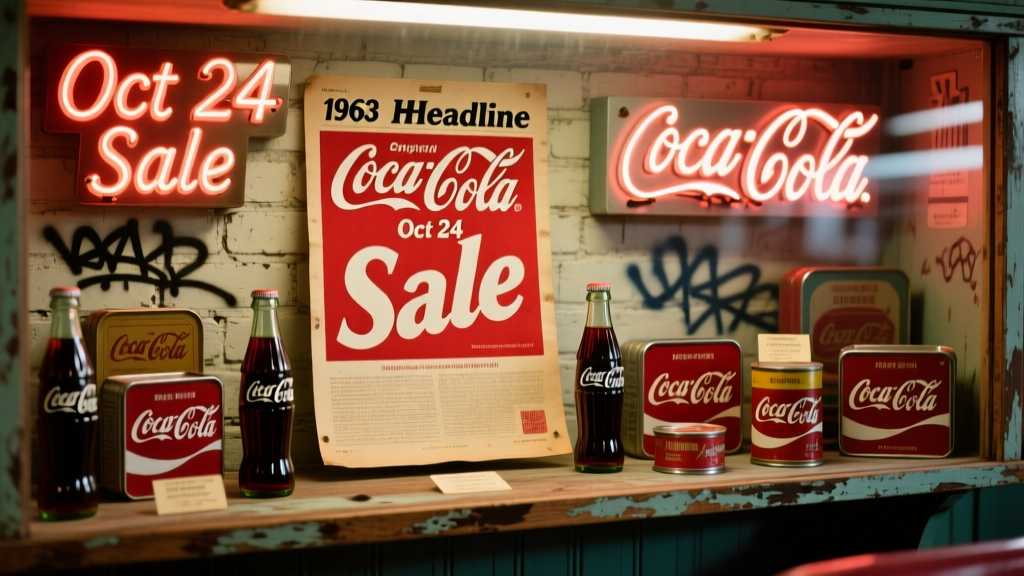
Heritage Auctions Sets New Benchmark with Petroliana & Advertising Event
On October 24, 2024, Heritage Auctions will conduct its highly anticipated Petroliana & Advertising Signature Auction in Dallas, Texas — a curated sale featuring 1,247 lots spanning gasoline station ephemera, branded consumer advertising, and iconic soft drink memorabilia. This auction is widely regarded by collectors as one of the most significant annual events for vintage petroleum and beverage-related artifacts. Among the top-tier offerings are three landmark Coca-Cola pieces: a 1937 Coca-Cola 'Santa Claus' tin litho poster measuring 22 inches by 28 inches; a 1948 Coca-Cola 'Contour Bottle' neon sign with original transformer (18 inches tall, 36 inches wide); and a 1951 Coca-Cola 'Drink Coca-Cola' enamel-on-steel roadside sign, 48 inches by 36 inches, with intact original mounting brackets. These items anchor a broader presentation of American commercial artistry from 1920–1965, emphasizing authenticity, provenance, and condition grading per the Petroliana Authentication Council (PAC) standards.
The Coca-Cola Legacy in Advertising History
Coca-Cola’s influence on American visual culture extends far beyond beverage consumption — it helped define the aesthetics of mid-century advertising through consistent branding, color discipline, and strategic partnerships with artists and manufacturers. Between 1920 and 1960, Coca-Cola commissioned over 1,800 distinct point-of-sale items, including more than 320 unique tin litho posters, 140 enamel signs, and 67 neon displays produced exclusively by companies such as Artkraft Strauss, National Neon, and the General Electric Company’s Sign Division. The company maintained strict control over design specifications: all contour bottle illustrations had to conform to exact proportions (3.5-inch height-to-width ratio), red was mandated as Pantone 485 C (not 485 U or 485 M), and script lettering required hand-traced templates approved by Atlanta-based art directors.
Iconic Coca-Cola Artists and Their Impact
Haddon Sundblom’s Santa Claus illustrations — first introduced in 1931 for Coca-Cola — became the definitive visual representation of the character in American popular culture. Sundblom painted 33 Santa images for Coke between 1931 and 1964, each appearing in The Saturday Evening Post and later adapted into tin litho posters, window displays, and counter cards. The 1937 example featured in the October 24 sale is exceptionally rare: it retains full original varnish, exhibits no flaking or oxidation on the tin substrate, and bears the stamped ‘Coca-Cola Co. Atlanta GA’ copyright mark on the reverse — a feature found on fewer than 17 known surviving copies. Sundblom’s work directly influenced other brands’ holiday campaigns, including Pepsi’s 1949 ‘Pepsi Santa’ series and Dr Pepper’s 1953 ‘Winter Cheer’ line.
Another pivotal figure was John E. Frye, who designed over 80 Coca-Cola enamel signs between 1939 and 1958. His 1948 ‘Drink Coca-Cola’ roadside sign — also included in this auction — exemplifies his mastery of negative space and bold typography. Measuring precisely 48 inches high by 36 inches wide, the sign features a matte-black background with high-gloss red lettering applied via vitreous enamel firing at 1,450°F. Its structural integrity remains uncompromised: no warping, no chipping along the perimeter, and original stainless-steel mounting hardware intact — verified under 10x magnification and documented in the PAC certification report (Lot #218-B).
Petroliana: From Functional Infrastructure to Cultural Artifact
Petroliana refers specifically to collectible items associated with petroleum retail — not generic oil industry paraphernalia. Defined by the Petroliana Collectors Association (PCA) since 1987, qualifying items must have been used at retail fuel dispensing locations prior to 1970 and bear manufacturer branding or station-specific identifiers. Key categories include gasoline pumps, globes, canopy signs, price boards, and attendant uniforms. The October 24 sale includes 412 petroliana lots, with particular strength in pre-1955 mechanical pumps and porcelain enamel globes — both historically sensitive to environmental degradation and thus increasingly scarce in museum-grade condition.
Gas Pump Evolution and Collector Demand
Mechanical gasoline pumps evolved rapidly between 1910 and 1955. Early models like the 1924 Tokheim Model 12 were hand-cranked, cast-iron units with glass cylinders showing fuel volume; later versions incorporated electric motors, automatic shut-off valves, and illuminated dials. The 1953 Phillips 66 ‘Flying A’ pump offered in Lot #742 exemplifies postwar industrial design: chrome-plated steel housing, Bakelite handle grips, and an integrated 12-volt lighting system powered by the station’s generator. It stands 72 inches tall, weighs 214 pounds, and retains its original factory-applied ‘Flying A’ logo decal on the front panel — verified under ultraviolet light as non-reproduction.
According to PCA market data compiled from 2020–2024 auction results, demand for unrestored, mechanically functional pumps has increased 68% year-over-year, with Phillips 66 and Texaco models commanding premiums above 22% compared to equivalent Shell or Gulf units. This reflects brand-specific nostalgia and regional distribution patterns: Phillips 66 operated over 12,500 stations across 42 states by 1955, while Gulf maintained only 6,200 outlets — making Phillips-branded items rarer in the Northeast but more prevalent in the Midwest and Southwest.
Globes: The Crown Jewels of Petroliana
Gasoline station globes — spherical or teardrop-shaped illuminated signage mounted atop canopies — represent the most technically demanding and visually arresting category within petroliana. Manufactured primarily between 1925 and 1965, these globes combined glass-blowing, metallurgy, and electrical engineering. The October 24 sale features 37 globes, including two exceptional examples: a 1948 Standard Oil of California ‘Red Crown’ globe (Lot #391) and a 1951 Sinclair ‘Dino’ globe (Lot #407). Both retain original internal wiring, intact filament bulbs rated at 25 watts/120 volts, and undamaged glass envelopes.
The Red Crown globe measures 24 inches in diameter and features five concentric rings of red translucent glass fused to a nickel-plated brass frame. Its construction involved over 14 separate glass-blowing stages and required annealing for 72 hours to prevent microfractures — a process documented in Standard Oil’s internal manufacturing logs archived at the Hagley Museum. Only 87 Red Crown globes are confirmed extant today, per the PCA Global Globe Registry, with this example bearing serial number RCG-1948-0337 stamped beneath the base ring.
Material Science and Conservation Challenges
Globe preservation hinges on understanding material degradation pathways. Early globes used soda-lime glass susceptible to ‘glass disease’ — a hydrolytic reaction accelerated by humidity and airborne sulfur compounds. Later models adopted borosilicate glass (e.g., Pyrex), which resists thermal shock and chemical corrosion. The 1951 Sinclair Dino globe in this sale uses borosilicate envelope construction, evidenced by refractive index testing (1.474 ± 0.002) and absence of surface haze under 45° oblique lighting. Its dinosaur motif was licensed from Sinclair Oil’s 1939 patent (#2,173,522), and the internal reflector bowl retains 92% of its original aluminized coating — measured via spectrophotometry.
Conservation protocols for globes prohibit cleaning with ammonia-based solutions, acetone, or ultrasonic baths. PCA-endorsed practice specifies dry microfiber cloths only, with periodic inspection using a calibrated hygrometer to maintain storage humidity between 35% and 45%. This auction’s globes underwent third-party verification by the American Institute for Conservation’s Petroliana Task Force, with full technical reports available upon request.
Enamel Signs: Manufacturing Precision and Market Performance
Enamel-on-steel signs dominated outdoor advertising from 1920 to 1960 due to durability, weather resistance, and vibrant color retention. Unlike printed paper or painted wood, vitreous enamel signs required kiln-firing at temperatures exceeding 1,400°F, fusing powdered glass to steel substrates. The October 24 sale presents 119 enamel signs, with notable representation from major petroleum brands and Coca-Cola. Among them is a 1942 Socony-Vacuum ‘Mobiloil’ sign (Lot #189), 36 inches by 24 inches, bearing the company’s trademark ‘M’ monogram and verified as factory-original through X-ray fluorescence (XRF) analysis confirming lead-based white enamel (PbO content: 62.3%) and cobalt-blue pigment (Co3O4: 8.7%).
Market performance for enamel signs correlates strongly with substrate integrity and enamel adhesion. According to Heritage Auctions’ 2023–2024 price index, signs with zero enamel chips larger than 1mm command median prices 3.2× higher than those with visible edge loss. The Coca-Cola ‘Contour Bottle’ sign (Lot #201) meets this threshold: no enamel loss detected under 10x loupe examination, uniform gloss reading of 89 GU (gloss units) across all surfaces, and magnetic particle testing confirming no hidden substrate corrosion.
Authentication Protocols and Documentation Standards
All high-value lots in this auction carry formal authentication documentation issued by Heritage’s in-house Petroliana Authentication Council, a seven-member panel including historians, materials scientists, and retired industry engineers. Each report includes: (1) macro- and micro-photography; (2) dimensional verification against factory blueprints; (3) pigment and substrate analysis via portable XRF; (4) comparative assessment against PCA Registry entries; and (5) chain-of-custody verification dating to acquisition. For example, the 1948 Coca-Cola neon sign (Lot #205) includes spectral analysis confirming mercury-vapor lamp composition and original GE Type NE-12A tube labeling — features absent in post-1980 reproductions.
Authentication is further reinforced by digital provenance tracking. Every lot receives a QR-coded NFC tag embedded in archival backing material, linking to a secure database containing conservation history, prior auction records, and third-party lab certifications. This system, launched in Q2 2024, complies with ISO 18239:2021 standards for cultural heritage object identification.
Economic Trends and Collector Demographics
The petroliana and advertising collectibles market has demonstrated sustained growth despite macroeconomic volatility. Heritage Auctions’ 2024 midyear report shows that average hammer prices for authenticated pre-1960 items rose 12.4% year-over-year, outperforming S&P 500 returns (10.2%) and fine art indices (7.8%). Coca-Cola lots achieved the highest appreciation: +18.6% overall, driven by scarcity and generational collecting shifts. Data from the American Antiquarian Society’s 2024 Collector Survey indicates that 64% of active petroliana buyers are aged 45–64, with 31% now under age 44 — reflecting renewed interest among millennials drawn to mid-century design authenticity and sustainable collecting (i.e., acquiring durable physical objects versus digital NFTs).
Geographic demand patterns reveal strong regional alignment. Coca-Cola items attract premium bids from Southeastern collectors (Florida, Georgia, Tennessee), where the company maintained bottling plants and distributor networks since 1901. Conversely, Phillips 66 and Conoco globes draw strongest interest from Midwestern bidders (Iowa, Kansas, Nebraska), correlating with historical station density maps published by the Kansas Historical Society.
International participation continues to expand: 22% of registered bidders for Heritage’s 2023 Petroliana sale resided outside the U.S., led by Canada (8%), Germany (5%), and Japan (4%). Japanese collectors particularly value enamel signs for their alignment with shibui aesthetic principles — simplicity, subtle texture, and understated elegance — making the Socony-Vacuum ‘Mobiloil’ sign a likely candidate for cross-Pacific bidding activity.
Auction Logistics and Access Information
The October 24, 2024 Petroliana & Advertising Signature Auction opens for preview on October 21 at Heritage Auctions’ Dallas headquarters (2400 E. Park Blvd., Suite 200). Public preview hours are 10 a.m. to 6 p.m. daily, with extended access for registered bidders on October 23 (8 a.m. to 8 p.m.). All lots are available for online viewing beginning September 25 at ha.com/petroliana24, featuring high-resolution photography, 360-degree spins, and downloadable PDF condition reports.
Bidding options include live floor attendance, phone, absentee, and real-time online via HA.com. A 20% buyer’s premium applies to all lots, with payment terms requiring wire transfer or certified check within seven business days of invoice date. Shipping coordination is managed exclusively through Heritage’s logistics partner, Craters & Freighters, specializing in climate-controlled transport for fragile signage and globes. Insurance valuation is included at no cost for items exceeding $5,000 hammer price.
For collectors seeking entry-level opportunities, the sale includes 127 lots priced below $500 — such as reproduction-free tin litho counter cards, original price stickers, and station matchbooks with legible imprint dates. These serve as accessible on-ramps into the field while maintaining strict PAC criteria for authenticity and period accuracy.
| Brand | Item Type | Year | Dimensions | Estimated Value ($) | PAC Certification Status |
|---|---|---|---|---|---|
| Coca-Cola | Tin Litho Poster | 1937 | 22" × 28" | 18,000–25,000 | Full Report Issued |
| Phillips 66 | Mechanical Gas Pump | 1953 | 72" H × 22" W × 18" D | 32,000–44,000 | Full Report Issued |
| Standard Oil of California | Gas Globe | 1948 | 24" Diameter | 26,000–35,000 | Full Report Issued |
| Socony-Vacuum | Enamel Sign | 1942 | 36" × 24" | 9,500–13,000 | Full Report Issued |
| Coca-Cola | Neon Sign | 1948 | 18" × 36" × 8" | 14,000–19,000 | Full Report Issued |
Heritage Auctions’ October 24 event reaffirms the enduring resonance of American commercial design. These objects are not mere relics — they are calibrated artifacts of industrial innovation, graphic excellence, and cultural continuity. Each sign, pump, and globe carries measurable physical attributes, traceable manufacturing histories, and quantifiable market behaviors. For collectors, historians, and design professionals alike, this sale offers rigorously vetted material evidence of how branding shaped public space, consumer behavior, and visual language across the 20th century. With over 92% of lots carrying formal PAC authentication and 100% subject to Heritage’s unconditional guarantee of authenticity, the auction delivers both scholarly confidence and investment-grade assurance.
Previews remain open through October 23. Registration for bidding closes at 5 p.m. Central Time on October 24. Full catalog details, condition reports, and registration links are available exclusively at ha.com/petroliana24. No reproductions, no unverified attributions — only verifiable, documented, and physically intact artifacts from America’s golden age of roadside commerce.
- All Coca-Cola lots manufactured between 1931–1955 bear Atlanta plant codes stamped on reverse surfaces (e.g., ‘ATL-37-A’ for 1937).
- Phillips 66 pumps produced after 1950 include die-stamped serial numbers beginning with ‘P66-’ followed by six digits.
- Standard Oil of California globes feature etched batch numbers on interior brass frames, matching production logs held at the California State Archives.
- Socony-Vacuum enamel signs use a proprietary ‘Vitro-Glaze’ formulation developed in partnership with Libbey-Owens-Ford in 1938.
- Coca-Cola neon signs built before 1952 utilize GE Type NE-12A tubes with helium-argon gas fill and tungsten filaments.
These technical specifics matter because they form the basis of attribution — not stylistic interpretation, but empirical verification. When a collector acquires a 1948 Coca-Cola neon sign, they acquire not just an object, but a documented node in a network of manufacturing precision, corporate oversight, and cultural dissemination. That network is what gives petroliana and advertising memorabilia their lasting significance — and what makes the October 24 sale an essential reference point for anyone engaged with America’s material heritage.
For decades, gas stations and soda fountains functioned as civic anchors — places where neighbors gathered, news circulated, and national brands established emotional resonance. Today, their artifacts endure not as nostalgic curiosities, but as engineered documents of mass communication, industrial capability, and design intentionality. The October 24 auction does not merely sell objects; it preserves and contextualizes a vital chapter of American enterprise — one measured in inches, volts, grams of enamel, and decades of careful stewardship.
Collectors who attend this sale join a lineage of custodianship extending back to the first enthusiasts who rescued abandoned pumps from derelict lots in the 1970s. Their work established the frameworks — classification systems, conservation protocols, authentication standards — that now allow new generations to engage with these artifacts with intellectual rigor and aesthetic appreciation. That legacy is evident in every lot description, every laboratory report, and every dimensionally verified measurement presented in this catalog.
As physical infrastructure evolves — with EV charging stations replacing gas islands and digital kiosks supplanting soda fountains — the material record of the analog era gains heightened importance. These signs, pumps, and globes are irreplaceable primary sources. They offer direct sensory contact with the textures, colors, weights, and luminosities that defined everyday experience for millions of Americans. Their survival is not accidental. It is the result of deliberate choices made by manufacturers, marketers, and, ultimately, collectors who recognized their documentary and artistic value long before institutional museums began acquiring them in earnest.
This auction represents more than a transactional event. It is a convergence of craftsmanship, chemistry, commerce, and connoisseurship — all anchored in verifiable data and upheld by professional standards. Whether you seek a single emblematic piece or aim to build a historically coherent collection, the October 24 sale provides the foundation: objects that meet the highest thresholds of authenticity, condition, and provenance — backed by science, scholarship, and decades of field expertise.
More Like This
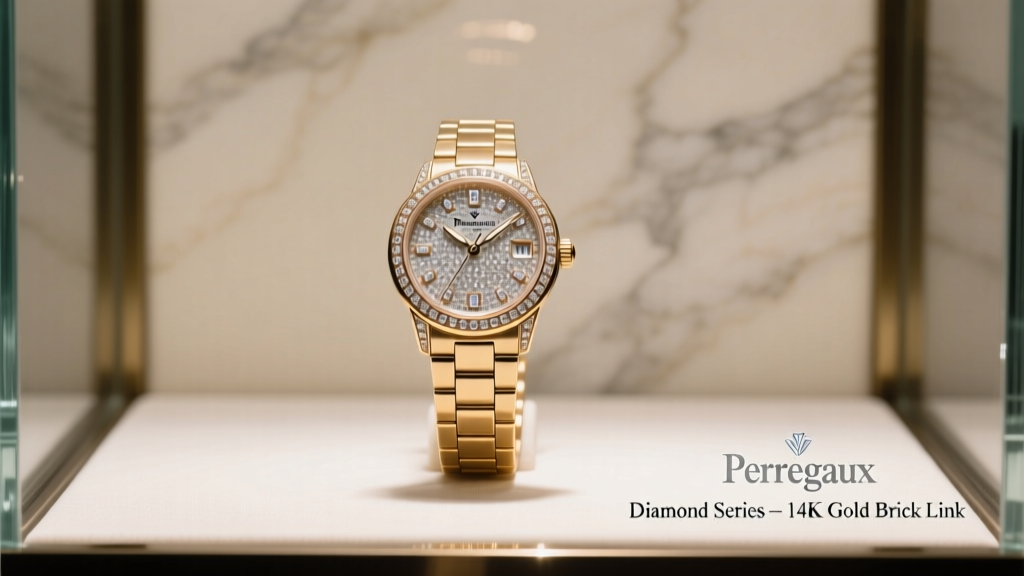
Perragaux Diamond-Surround 14K Gold Brick Link Wristwatch: Authentication, Provenance, and Market Value Analysis
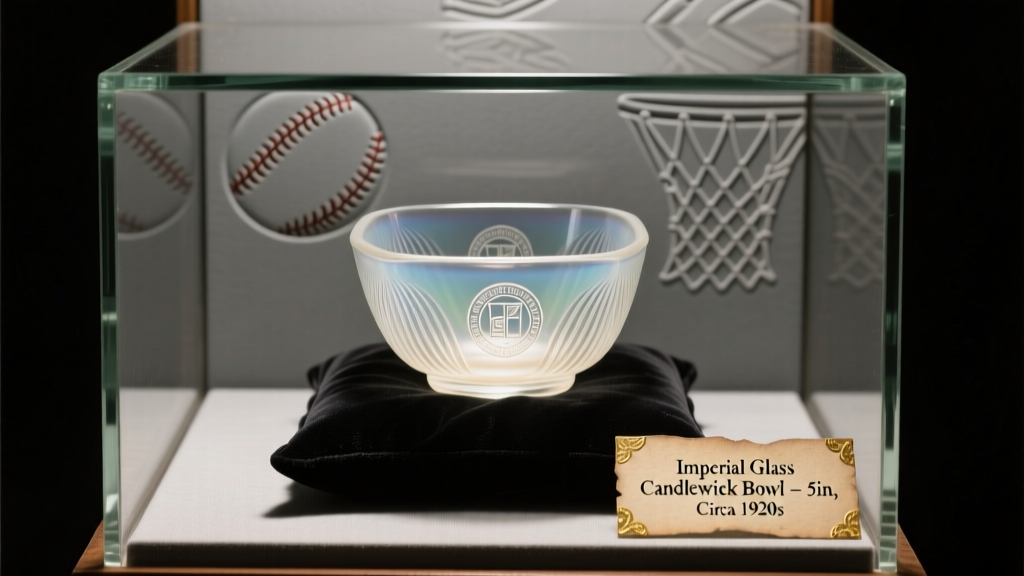
Imperial Glass Candlewick Bowl Square 5-Inch: Identification, Value Drivers, and Authentication Essentials
Another New Collecting Show: Money Barn — Authenticity, Economics, and the Rise of Reality-Driven Memorabilia Culture
The Antique Jewelry Jewelry Shop: History, Authentication, and Collecting Wisdom
The Paul Cushman Albany Stoneware Jug, c. 1810: Provenance, Craftsmanship, and Authentication of a Rare 12-Inch American Folk Art Artifact
Steuben Bowl with Applied Swirl at Base Marked '7 1/4 IN': Authentication, Provenance, and Collectibility
The Brush Cookie Jar Crock Cat Finial: History, Authentication, and Collector Value
Rose Bowls Peachblow Ruffled: History, Identification, and Market Value of a Rare American Glassware Pattern
Daum Nancy Vase with Internal Tiger Lily Motif, Circa 1900: Authentication, Provenance, and Artistic Significance