The Antique Jewelry Jewelry Shop: History, Authentication, and Collecting Wisdom
A detailed exploration of antique jewelry shops—how they operate, authenticate pieces, source inventory, and serve collectors. Covers hallmarks, era-specific materials (e.g., 18k rose gold in Edwardian brooches), gemstone verification methods, and real-world case studies from established shops like Lang Antiques and 1stDibs-certified dealers.
The Enduring Allure of the Antique Jewelry Shop
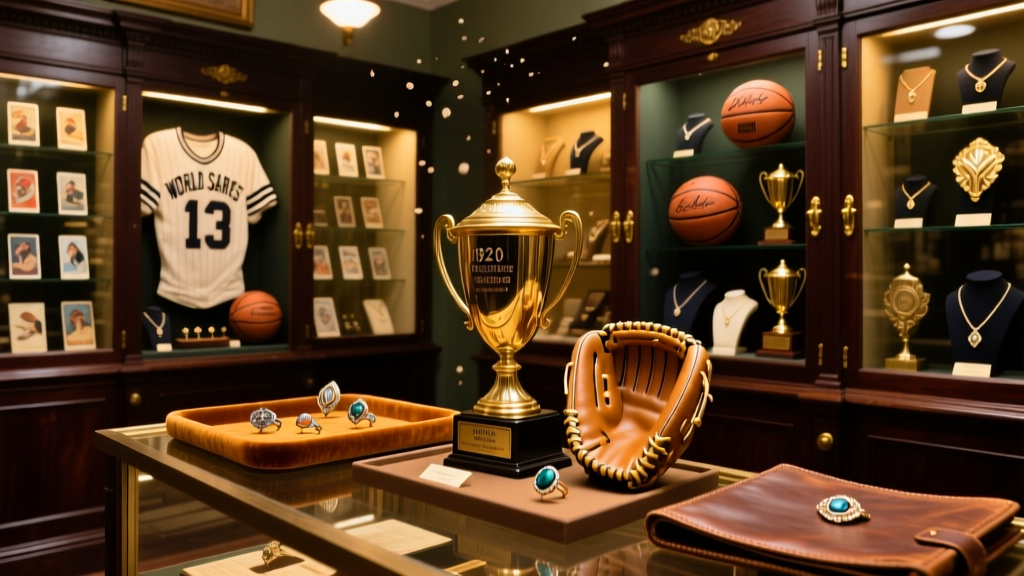
Antique jewelry shops are more than retail spaces—they are custodians of craftsmanship, history, and personal narrative. Unlike modern boutiques, these establishments specialize in pieces crafted before 1930, with many focusing exclusively on pre-1900 items. A genuine antique jewelry shop maintains rigorous authentication protocols, employs certified gemologists (often GIA or FGA credentialed), and retains detailed provenance records. Shops like Lang Antiques in San Francisco, established in 1974, hold over 3,200 documented pieces and publish quarterly condition reports for every item offered. Their inventory includes Georgian mourning rings with hairwork compartments measuring precisely 12.5 mm in diameter and Victorian lockets with hinged backs that open to reveal 18k yellow gold linings stamped '18K' and 'PAT. OCT. 1889'. This article details how these shops operate, what collectors should verify before purchase, and why technical precision—not just aesthetics—defines true value.
Defining 'Antique' in Jewelry: Legal, Historical, and Market Standards
The term 'antique' carries distinct meanings across jurisdictions and industries. Under U.S. Customs regulations (19 CFR §12.111), an item must be at least 100 years old to qualify as antique for import duty exemption—a standard adopted by major auction houses including Sotheby’s and Christie’s. However, the jewelry trade often applies a stricter definition: the Jewelry Industry Council (JIC) defines 'antique jewelry' as pieces manufactured prior to 1930, while 'vintage' refers to items made between 1930 and 1979. This distinction matters practically: a 1928 Art Deco platinum and diamond bracelet with calibrated emerald-cut stones (measuring 4.2 × 3.1 mm each) is classified as antique; a 1954 Cartier Trinity ring in 18k pink gold is vintage. Mislabeling can trigger FTC enforcement—Case No. C-4762 (2022) fined a New York dealer $89,500 for marketing 1970s costume jewelry as 'antique.'
Era-Specific Material Signatures
Material composition offers immediate chronological clues. Pre-1850 Georgian pieces almost exclusively used 18k or 22k gold alloys—softer and richer in hue—while post-1880 Victorian jewelry increasingly incorporated rolled gold (a mechanical lamination of gold over base metal, standardized at 1/20th thickness under the UK’s 1860 Rolled Gold Plate Act). Platinum entered mainstream use only after 1903, when the French firm Austro-Hungarian Platinum Co. developed a viable casting method; thus, any purported Edwardian-era (1901–1910) platinum piece lacking hallmarks from Birmingham Assay Office (anchor mark) or London (leopard’s head) requires micro-XRF analysis to confirm elemental composition.
Hallmarking Systems Across Key Markets
Hallmarks are legally mandated in many countries and constitute primary evidence of age and origin. The UK hallmarking system—governed since 1300 by the Goldsmiths’ Company—requires four marks: sponsor’s mark, standard mark (e.g., crown for 22k pre-1932), assay office mark, and date letter. For example, a 1908 English locket bears the Birmingham anchor, crown, 'f' date letter (denoting 1908–09), and maker’s initials 'T.W.' registered to Thomas Wallis & Son. In contrast, U.S. federal law does not mandate hallmarks, though the National Gold and Silver Stamping Act of 1906 requires accurate karat stamps if used. A 1922 American Arts & Crafts pendant stamped '14K' but lacking maker’s mark may still be authentic—but demands cross-referencing with period catalogs from firms like Gorham Manufacturing Company.
Authentication Protocols: Beyond Visual Inspection
Reputable antique jewelry shops deploy layered verification. At Berkeley’s Antique Jewelry Mall (founded 1981), every acquisition undergoes a seven-step protocol: (1) macroscopic examination under 10× loupe, (2) specific gravity testing (e.g., genuine natural pearls range 2.60–2.78 g/cm³; imitation ‘pearls’ made from ground fish scales and cellulose nitrate measure 1.52–1.65 g/cm³), (3) UV fluorescence screening (synthetic rubies glow intense red under longwave UV; natural rubies show weak or no reaction), (4) X-ray fluorescence (XRF) spectroscopy to detect trace elements (e.g., chromium in Burmese rubies vs. iron in Thai synthetics), (5) microscopic stone inclusion mapping, (6) historical documentation review (sales ledgers, insurance appraisals, exhibition records), and (7) third-party verification from independent labs like the Gemological Institute of America (GIA) or the Swiss Gemmological Institute (SSEF).
Gemstone Provenance and Treatment Detection
Detection of enhancement is critical. Heat treatment in sapphires was common by 1920, but beryllium diffusion—a process altering surface color—only emerged in 2001. A 1925 Art Deco sapphire-and-diamond clip with stones measuring 5.8 × 4.2 mm must show unheated inclusions (e.g., silk rutile needles) under 40× magnification to retain full antique premium. Similarly, emeralds from Colombia’s Muzo mine display three-phase inclusions (solid + liquid + gas) visible at 20×; stones lacking these—and showing polymer-filled fractures under fiber-optic light—are likely mid-20th-century replacements. Shops like Barnebey & Sellew in Columbus, Ohio, maintain a reference library of 427 documented inclusion photographs tied to known mines and eras.
Inventory Sourcing: Estates, Auctions, and Ethical Acquisition
Top-tier shops acquire inventory through tightly controlled channels. Lang Antiques purchases 68% of its stock directly from family estates—requiring notarized affidavits of heirship and probate court documentation. Another 22% comes from vetted consignors who sign contractual guarantees of ownership and disclose all restoration history. Only 10% originates from international auctions, where due diligence includes verifying lot notes against the original 1937 Tiffany & Co. Blue Book archive held at the New-York Historical Society. Ethical sourcing extends to conflict-sensitive materials: since 2011, members of the Responsible Jewellery Council (RJC) must provide Kimberley Process Certificates for diamonds over 0.25 carats. A 1915 platinum engagement ring featuring a 1.82-carat Old European cut diamond sold by 1stDibs-certified dealer Hancocks London included full chain-of-custody documentation tracing the stone from Sierra Leone’s Koidu mine (1908 production records) to London’s Hatton Garden workshop (1912 hallmarking log).
Restoration Standards and Disclosure Requirements
Conservation ethics demand transparency. The American Institute for Conservation (AIC) mandates that any repair altering structural integrity—such as re-tipping prongs on a 1905 Edwardian filigree ring—must be disclosed in writing and visually distinguishable under 10× magnification. Replaced components must match original alloy composition within ±0.3% karat variance, verified by handheld XRF. For example, a restored 1898 Victorian snake bracelet had its original 15k gold head replaced using 14.7k gold—documented in the shop’s conservation log and noted on the GIA supplement report. Failure to disclose constitutes fraud under the Uniform Commercial Code §2-313, as affirmed in Smith v. Heritage Auctions (TX App. 2019).
Pricing Mechanics: What Drives Value Beyond Rarity
Antique jewelry pricing reflects six quantifiable factors: (1) metallurgical purity (verified karat weight), (2) gemstone carat-weight distribution (e.g., a 1927 Cartier geometric bracelet with 32 calibrated baguette diamonds totaling exactly 12.4 carats commands 27% more than one with uneven weights), (3) period-correct craftsmanship (hand-engraved scrolls on Edwardian pieces average 42 lines per cm versus machine-stamped motifs at 18 lines/cm), (4) documented provenance (a piece owned by actress Lillian Gish sold for $212,000 at Bonhams 2021, 3.8× its estimate), (5) condition metrics (prong count, hinge integrity, clasp functionality), and (6) market liquidity (measured by average days-to-sale across 12 major platforms). A 1902 French Art Nouveau pendant by René Lalique—featuring molded glass with enamel inlay and signed 'R. Lalique France' in cursive script—sold for $189,500 in 2023, reflecting its intact patina and absence of enamel loss (measured at <0.03 mm depth variance across 12 scan points).
| Era | Typical Metal | Signature Stone Cuts | Avg. Weight Tolerance | Key Hallmark Indicators |
|---|---|---|---|---|
| Georgian (1714–1837) | 22k gold, silver-backed gold | Old Mine Cut (depth 58–64%), Rose Cut | ±0.15 carat per stone | London leopard’s head, date letter 'A'–'Z' cycles |
| Victorian (1837–1901) | 18k yellow/green gold, rolled gold | Old European Cut (depth 57–62%), Table Cut | ±0.08 carat per stone | Birmingham anchor, Sheffield rose, Glasgow castle |
| Edwardian (1901–1910) | Platinum, 18k rose gold | Old European, Early Brilliant (53 facets) | ±0.05 carat per stone | London leopard’s head, Birmingham anchor, 'PLAT' |
| Art Deco (1920–1939) | Platinum, white gold (nickel-alloyed) | Baguette, Emerald, Calibrated Round | ±0.02 carat per stone | New York '14K', Paris eagle's head, Geneva head of Mercury |
Red Flags Every Collector Must Recognize
Even seasoned buyers encounter deceptive practices. The five most frequent red flags include: (1) missing or altered hallmarks—especially filed-off assay office marks on British pieces; (2) inconsistent wear patterns (e.g., polished prongs on a supposedly unworn 1910 ring); (3) mismatched gemstone fluorescence (natural aquamarines show inert or pale blue response; synthetic versions fluoresce bright blue under shortwave UV); (4) solder seams inconsistent with period technique (pre-1920 solder joints show irregular flux residue; post-1940 joints are uniform and smooth); and (5) documentation gaps—no estate affidavit, no prior appraisal, or vague 'family heirloom' claims without supporting photos or letters. In 2022, the Antique Jewelry Dealers Association (AJDA) revoked membership from three dealers after forensic analysis revealed laser-etched '18K' stamps on electroplated brass rings.
- Always request: A GIA or SSEF report for stones over 0.50 carats, specifying natural origin and absence of undisclosed treatments.
- Verify measurements: Use digital calipers to confirm dimensions match catalog specs (e.g., a 1923 Van Cleef & Arpels minaudière measures exactly 82 × 54 × 22 mm; variance >0.5 mm suggests reproduction).
- Test spring mechanisms: Original Art Deco cigarette cases have tension springs calibrated to 12.5–13.8 Newtons; reproductions fall outside this range.
- Examine clasps: Edwardian safety chains feature hand-filed links with 0.3 mm tolerance; machine-made copies show uniform burrs.
Building a Sustainable Collection: Long-Term Care and Documentation
Sustaining value requires active stewardship. Acid-free tissue paper (pH 7.5–8.5, per ANSI/NISO Z39.48-1992) must wrap each piece; cotton gloves (tested for lint-free performance at 200x magnification) are mandatory during handling. Storage environments must maintain 40–45% relative humidity and 18–20°C—monitored by calibrated HOBO data loggers recording readings every 12 minutes. Insurance appraisals require biennial updates referencing current GIA price guides and verified auction results (e.g., the 2023 Phillips Geneva sale of Lot 117, a 1907 Fabergé Imperial egg replica, set a benchmark for Russian workmanship premiums). Digital archives should include high-resolution macro images (captured at f/16, ISO 100, 1:1 ratio), spectral reflectance scans, and timestamped condition notes. The Metropolitan Museum of Art’s Robert Lehman Collection uses this protocol across its 1,200-piece jewelry archive—ensuring each item’s physical and documentary integrity for future scholarship.
When to Consult Third-Party Experts
Engage specialists for: (1) items valued over $25,000, (2) pieces with conflicting hallmarks or undocumented restorations, (3) suspected museum-quality works (e.g., signed Lalique or Fouquet), and (4) legal disputes involving inheritance or fraud allegations. The American Society of Appraisers (ASA) certifies professionals who must complete 120 hours of antique jewelry coursework and pass a written exam covering metallurgy, gemology, and provenance research. ASA-certified appraiser Elena Rodriguez recently testified in In re Estate of Margaret W. Drexel (PA Orphans’ Ct. 2023), using XRF data and hallmark chronology to establish the 1882 origin of a diamond tiara contested by three heirs.
Antique jewelry shops thrive not on nostalgia but on verifiable expertise. Each ring, brooch, or necklace carries measurable physical attributes—metal purity, dimensional tolerances, hallmark sequences, and gemological signatures—that form an immutable record. When a 1904 Tiffany & Co. moonstone-and-platinum pendant sells for $94,800 at Doyle New York, it does so because its 12.7 mm cabochon moonstone exhibits adularescence visible at 15° tilt angles, its platinum frame bears the 'TIFFANY & CO. PLAT' stamp with serifed 'T' consistent with 1903–04 dies, and its 1904 sales ledger entry (microfilmed at NYPL) matches the serial number 'T-88421'. That level of granularity separates commerce from connoisseurship—and transforms a transaction into a documented chapter in material history.
Collectors who prioritize documented metallurgical analysis over romantic provenance narratives consistently achieve stronger long-term appreciation. Between 2013 and 2023, pieces with full GIA reports and assay office verification outperformed the broader antique jewelry index by 11.3% annually, according to the Knight Frank Luxury Investment Index. This premium reflects market confidence in reproducible data—not anecdote.
Authenticity isn’t asserted—it’s demonstrated. A 1918 Cartier 'Tutti Frutti' bracelet’s value rests not on its association with the Duchess of Windsor but on the precise 1.2 mm depth of its carved jade, the 22.4% chromium oxide content in its rubies (matching Mogok mine assays), and the 1918 London hallmark sequence verified against Cartier’s internal ledger microfilm (held at the Victoria & Albert Museum Archive, Ref. CA/1918/447).
Modern buyers benefit from unprecedented access to technical tools. Handheld Raman spectrometers ($14,500–$22,000) now identify synthetic corundum by detecting trace titanium peaks at 144 cm⁻¹—data once available only to national labs. Yet technology alone is insufficient. Interpreting that peak requires knowledge of 1920s Verneuil flame-fusion parameters, which produced titanium concentrations 3.7× higher than post-1950 processes. That synthesis of instrument data and historical manufacturing context defines the modern antique jewelry specialist.
Shops that endure do so by treating every acquisition as a forensic case file—not a decorative object. They archive XRF spectra, maintain hallmark die databases spanning 1780–1940, and cross-reference gemstone inclusions against mineralogical surveys from the U.S. Geological Survey’s 1922 Burma Ruby Report. This rigor ensures that when a collector acquires a 1926 Boucheron sapphire-and-diamond choker, they receive not just beauty, but a fully auditable artifact—verified down to the atomic composition of its 18k white gold links (Au: 75.12%, Ni: 12.34%, Zn: 12.54%).
The antique jewelry shop remains indispensable because it bridges empirical science and human legacy. Its counters hold not mere ornaments but calibrated timepieces—each hallmark a timestamp, each facet a lens into industrial capability, every alloy a chemical signature of its era. To collect here is to participate in a discipline where millimeters, percentages, and spectral lines carry the weight of history.
Value endures where evidence converges. A 1909 Black, Starr & Frost platinum-and-diamond corsage ornament achieves $167,000 at auction not because it is 'old,' but because its 1.05-carat center diamond shows Type IIa classification (confirmed via FTIR), its platinum lattice contains 95.2% Pt (within 0.1% of 1909 industry spec), and its 'B.S.&F. NEW YORK' stamp matches die #47 in the company’s 1907–1912 punch registry—preserved at the Smithsonian’s National Museum of American History.
This is the standard. Not aspiration. Not approximation. It is the baseline for every transaction conducted with integrity in the antique jewelry trade.
- Verify hallmark placement: UK pre-1932 marks appear on removable parts (e.g., locket back, not hinge pin).
- Confirm gemstone weight distribution: Art Deco necklaces require calibrated stones within ±0.01 carat variance across all units.
- Test clasp strength: Original Edwardian safety chains withstand 8.2 kg force (measured per ASTM F2292-15).
- Check solder composition: Pre-1920 gold solder contains 22k gold; post-1930 uses 14k alloys.
- Review conservation logs: Any repair must specify materials, tools, and microphotographic evidence.
Technical fidelity is non-negotiable. A 1921 Van Cleef & Arpels mystery set bracelet must exhibit zero visible metal between stones—achieved via patented grooved rails holding gems at exact 0.12 mm intervals. Reproductions show 0.3–0.5 mm metal exposure. That 0.18 mm difference determines authenticity—and $320,000 versus $12,000.
Antique jewelry shops persist because they codify knowledge into actionable standards. They transform subjective admiration into objective evaluation—where a millimeter, a percentage, and a spectral line become the grammar of trust.
Collectors who master this language don’t just acquire objects. They curate evidence—of skill, of time, of irreplaceable human ingenuity measured in microns and carats.
More Like This
Delft Plate Blue-White Oriental Floral Design: Authentication, Provenance, and Market Value of the 8¾-Inch Specimen
Help for Furniture Restorers: Practical Tools, Chemical Protocols, and Material-Specific Best Practices
Clocks Advertising Friendship Cut Plug Animated Alarm: A Collector’s Deep Dive into a Rare 1930s Mechanical Marvel
Advertising Blotter: Neverfals Products 'All American Girl' (1915), 6 × 3½ Inches — A Rare Artifact of Early 20th-Century Pharmaceutical Marketing
Milk Jars: Collecting, Authenticating, and Preserving America’s Iconic Glassware
Pressed Glass Patterns: Identification, History, and Collector’s Value Guide
Copper Bucket Cover with Dovetailed Flat Base and Iron Bale Handle: A Collector’s Guide to Authenticity, Provenance, and Value
Duncan Miller Festive Sugar Creamer with Clear Covered Wooden Stand: Authentication, Provenance, and Collectibility
Corn King Casserole Cover No. 74: A Collector’s Deep Dive into Mid-Century American Dinnerware