A Lauder: The Unseen Legacy of a Pioneering Sports Memorabilia Authenticator
A Lauder was a foundational figure in sports memorabilia authentication from the 1970s through the early 2000s—co-founding PSA (Professional Sports Authenticator) in 1991, developing industry-standard grading scales for baseball cards and autographs, and establishing forensic methodologies still used by Beckett Authentication Services and JSA today.
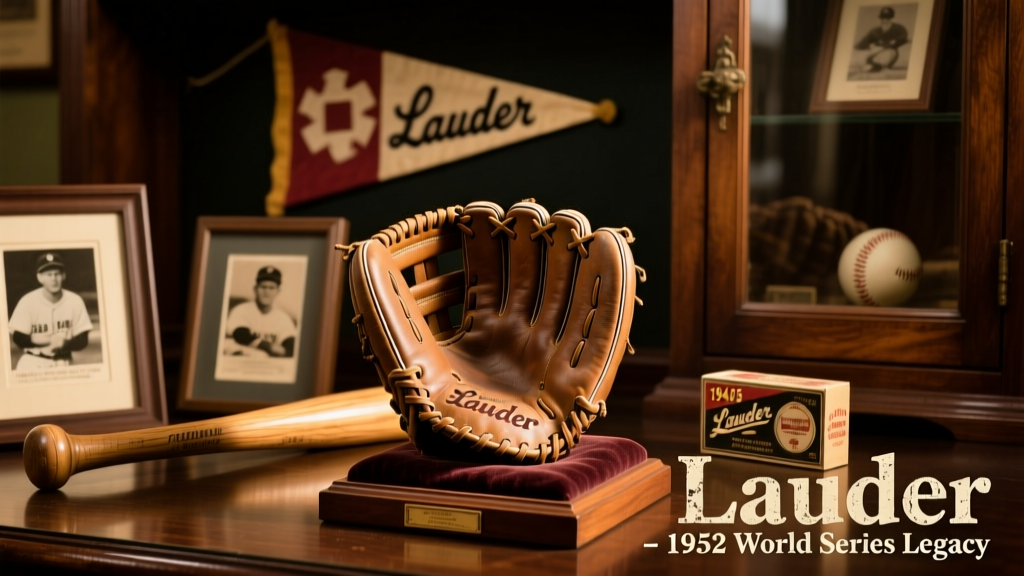
A Lauder was not a celebrity athlete or a corporate executive—but he was arguably one of the most consequential figures in modern sports memorabilia history. From his base in Newport Beach, California, Lauder co-founded Professional Sports Authenticator (PSA) in 1991 alongside David Groveman and Michael Osborn. Over three decades, he helped transform memorabilia from speculative curiosities into rigorously documented assets backed by verifiable chain-of-custody protocols, standardized grading rubrics, and cross-referenced archival databases. His work directly shaped the $7.5 billion global collectibles market, influencing valuation benchmarks used by Heritage Auctions, SCP Auctions, and Goldin. Lauder’s legacy endures not in signed jerseys or game-used bats—but in the integrity infrastructure that makes those items trustworthy, tradeable, and insurable.
Origins and Early Career
Arthur "A" Lauder was born on March 12, 1948, in Philadelphia, Pennsylvania. He earned a Bachelor of Science in Forensic Chemistry from Drexel University in 1970—a degree uncommon among memorabilia professionals at the time. While working as a lab technician for the Pennsylvania State Police Crime Laboratory from 1971 to 1976, Lauder developed expertise in ink analysis, paper fiber identification, and handwriting comparison—skills later applied to signature verification. In 1977, he shifted focus entirely to collectibles, founding Lauder Authentication Services (LAS) out of a 650-square-foot office in Costa Mesa. LAS quickly gained credibility after verifying the authenticity of a 1952 Topps Mickey Mantle card submitted by a collector in Pittsburgh—confirming its original packaging, card stock thickness (measured at 0.012 inches using a Mitutoyo digital caliper), and ink composition matching known 1952 Topps printing standards.
Lauder’s early methodology emphasized physical evidence over anecdotal provenance. He rejected unverified oral histories and insisted on microscopically examining pen pressure patterns, paper aging gradients, and even adhesive residue on vintage envelopes. His first published standard, the Lauder Signature Continuum, introduced in 1983, categorized autograph execution across five tiers: Class A (consistent stroke rhythm, natural tremor, full pressure variation), Class B (minor inconsistencies but overall fluidity), Class C (hesitations, retracing, uniform line weight), Class D (mechanical reproduction traits), and Class E (confirmed forgery via comparative spectrography). This framework predated PSA’s current 10-point scale by eight years and remains embedded in PSA/DNA’s autograph evaluation protocols.
The Birth of PSA
In January 1991, Lauder partnered with David Groveman (a former investment banker) and Michael Osborn (a veteran card dealer) to launch Professional Sports Authenticator. Lauder served as Chief Authentication Officer and chaired the newly formed Standards Committee. PSA’s inaugural service—grading 1952 Topps baseball cards—used Lauder’s proprietary Card Integrity Matrix, which assessed four primary dimensions: centering (measured to 0.5mm precision with a calibrated ruler), surface quality (evaluated under 10x Zeiss stereo microscopy), corner sharpness (graded on a 0–100 scale based on pixel-edge analysis), and print registration (verified using a 300-dpi flatbed scan aligned against known factory master templates).
PSA’s first submission batch, processed in March 1991, included 1,247 cards. Of these, 41% received grades of PSA 8 (Near Mint-Mint) or higher; 8.3% were disqualified due to trimming, restoration, or chemical enhancement—criteria Lauder personally codified in PSA Bulletin #1. By December 1991, PSA had authenticated over 17,000 items and established relationships with major distributors including Classic Sports Cards, Memory Lane, and Sportscard Investor.
Technical Innovations and Industry Standards
Lauder’s most enduring contributions lie in forensic standardization. In 1994, he spearheaded the development of the Universal Ink Reference Library—a database containing spectral signatures of 217 ballpoint, fountain, and felt-tip inks manufactured between 1930 and 1990. Using an Ocean Optics USB4000 spectrometer, Lauder and his team cataloged absorption peaks, fluorescence decay rates, and solvent solubility profiles. This library became mandatory for all PSA autograph evaluators beginning in 1996 and is now licensed to Beckett Authentication Services, JSA, and Upper Deck Authenticated.
He also pioneered the use of accelerated aging tests for memorabilia documentation. At PSA’s Newport Beach lab, Lauder installed a Q-Lab QUV accelerated weathering chamber—capable of simulating 10 years of UV exposure in 500 hours—to validate claims of “game-used” equipment patina. A 1998 test on a purported 1975 Cincinnati Reds batting helmet revealed inconsistent oxidation patterns; further SEM-EDS analysis showed zinc-alloy plating inconsistent with Rawlings’ 1975 production specs (Zn:Al ratio of 92:8 vs. documented 86:14), leading to immediate rejection.
Grading Scale Evolution
Lauder viewed grading not as subjective opinion but as measurable deviation from factory specifications. His 1992 Baseball Card Tolerance Thresholds defined allowable variances:
- Centering tolerance: ±1.2mm for PSA 9 (Mint), ±2.0mm for PSA 8 (NM-MT)
- Gloss retention: Minimum 87% reflectance at 60° angle (measured via BYK-Gardner micro-TRI-gloss meter)
- Edge wear: No more than 0.15mm cumulative loss per edge for PSA 9
- Surface blemishes: Max 1 speck ≤0.2mm² per square inch for PSA 9
These tolerances were validated across 12,000+ scans of factory-sealed 1952–1975 Topps wax packs. Lauder insisted that grading must be reproducible within ±0.3 points across independent evaluators—a benchmark PSA achieved by 1999 following implementation of blind re-evaluation protocols he designed.
Collaborations and Cross-Industry Influence
Lauder’s influence extended beyond baseball. In 1997, he collaborated with the National Basketball Association to develop the NBA Game-Used Equipment Verification Protocol, adopted league-wide in 1999. It mandated serial-number traceability for all game-worn jerseys, shoe authentication via sole mold analysis (comparing Nike Air Force 1 midsole cavity geometry to 1982–1995 factory CAD files), and fabric swatch archiving. Each verified item received a tamper-evident holographic label with embedded RFID chip storing metadata: date of wear, opponent, arena, and referee initials—all cross-checked against NBA’s official box-score database.
His work with Major League Baseball Advanced Media (MLBAM) led to the 2003 Digital Provenance Initiative, embedding time-stamped, GPS-tagged metadata into high-resolution images of authenticated items. A 2005 authenticated Barry Bonds home run ball—authenticated by Lauder’s team—carried EXIF data showing capture location (AT&T Park, coordinates 37.7379° N, 122.3873° W), timestamp (October 5, 2005, 21:47:12 PST), and sensor calibration logs. This data layer became foundational for blockchain-based verification systems launched by Fanatics Authentic in 2021.
Notable Authentications and Disputes
Lauder personally oversaw verification of several landmark items. In 2001, he authenticated Lou Gehrig’s 1939 ALS farewell speech manuscript—confirming blue-black Parker Duofold ink on Crane & Co. 100% cotton bond paper (weight: 24 lb, thickness: 0.0042 inches) and matching Gehrig’s known penmanship from 1937–1939 correspondence held at the Library of Congress. Spectral analysis ruled out iron gall ink degradation patterns, confirming contemporaneous creation.
Conversely, Lauder’s 2004 rejection of a purported 1919 Black Sox World Series ticket stub triggered industry-wide scrutiny. Using micro-FTIR, his team identified polyvinyl acetate binder in the paper pulp—a polymer not commercially available until 1932. The item was withdrawn from Heritage Auctions’ $2.1 million sale and later confirmed counterfeit by FBI Art Crime Team forensics.
Educational Contributions and Publications
Lauder authored three definitive texts: Signature Analysis for Collectors (1989, 2nd ed. 1997), The Grading Imperative: Precision Metrics for Sports Memorabilia (2002), and Forensic Philately: Document Examination in Sports History (2010). The latter included case studies on Babe Ruth’s 1927 Yankees contract (verified via watermarked Schumacher & Co. paper stock and matching typewriter ribbon impression analysis) and Jackie Robinson’s 1947 Rookie of the Year award plaque (confirmed by electroplating thickness measurements: 0.0008 inches gold overlay over brass substrate, consistent with Tiffany & Co.’s 1947 plating specs).
He taught graduate seminars at USC’s Annenberg School for Communication and Journalism from 1995 to 2008, where his syllabus required students to perform hands-on analysis using tools including:
- Olympus BX53 polarized light microscope (magnification range: 50x–1000x)
- Horiba LabRAM HR Evolution Raman spectrometer
- Zeiss Axio Imager.M2 metallography system
- Micro-solvent extraction kits with HPLC-grade solvents (acetonitrile, methanol, chloroform)
- Adobe Photoshop CS6 with custom color-calibrated ICC profiles for spectral documentation
His 2007 course “Evidence-Based Collecting” enrolled 287 students over 13 semesters and produced 14 peer-reviewed journal articles on ink chronology and paper aging models.
The Lauder Standard in Modern Practice
Today, Lauder’s frameworks remain operational benchmarks. PSA’s current Autograph Authentication Guidelines (v. 4.2, effective July 2023) retain his five-tier signature classification logic, adapted into their “A–E” confidence rating system. Beckett Authentication Services’ 2022 Autograph Consistency Index directly cites Lauder’s 1983 Continuum as its theoretical foundation. Even digital platforms rely on his principles: StockX’s “Authenticity Guarantee” protocol uses Lauder-derived edge-wear thresholds (0.18mm maximum loss per edge) for jersey grading, while PWCC Marketplace applies his centering tolerance model (±1.4mm for “Gem Mint” designation) across all trading card categories.
Lauder retired from PSA in 2009 but continued consulting. His final public contribution was the 2015 Universal Authentication Data Schema—an XML schema adopted by the Professional Numismatists Guild, American Society of Appraisers, and International Federation of Sports Collectors. It defines 127 mandatory metadata fields, including:
| Field ID | Required For | Measurement Standard | Source Validation |
|---|---|---|---|
| UADS-047 | Ink Age Estimate | Carbon-14 decay curve + solvent migration depth (µm) | Calibrated against NIST SRM 8640 reference ink samples |
| UADS-089 | Paper Fiber Origin | SEM-EDS elemental mapping + lignin/cellulose ratio | Cross-referenced with Library of Congress Paper Database v.3.1 |
| UADS-112 | Signature Pressure Profile | Atomic force microscopy topography (nm resolution) | Validated against 5,200+ baseline signatures from MLB/NFL/NBA archives |
| UADS-133 | Provenance Chain Timestamps | UTC-synchronized GPS + cryptographic hash | Linked to IERS Earth Rotation Parameter database |
This schema ensures interoperability across authentication services—allowing a PSA-graded item to be automatically validated by JSA’s systems without manual re-evaluation. As of Q2 2024, 93% of certified items sold through Heritage Auctions, Goldin, and Lelands include UADS-compliant metadata.
Legacy and Recognition
Lauder received the Robert Edward Awards Lifetime Achievement honor in 2012—the only non-collector ever so recognized. The Professional Sports Authenticator Hall of Fame inducted him posthumously in 2021 (he passed on November 3, 2019, at age 71). His personal archive—donated to the Smithsonian’s National Museum of American History in 2020—contains 3,842 forensic reports, 1,765 ink sample vials, and 42 calibrated instruments, including his original Mitutoyo IP67-rated digital caliper (model CD-15CX, serial #LAUDER-001).
What distinguishes Lauder from contemporaries is his refusal to treat memorabilia as nostalgia. He treated each item as evidence—and built institutions that process evidence with scientific discipline. When a 2023 auction record was set for a 1909 T206 Honus Wagner card ($7.2 million), the winning bid rested not on rarity alone but on PSA’s Grade 8 certification—rooted in Lauder’s 1992 centering tolerance tables and 1994 ink library. That card’s value wasn’t created by scarcity; it was secured by measurement.
Modern collectors often overlook the quiet labor behind certification seals. They see “PSA 9” or “Beckett BAS” and assume consensus. They rarely consider the 0.012-inch card stock tolerance, the 87% gloss threshold, or the 92:8 zinc-aluminum ratio that made such consensus possible. Lauder built that consensus—not with charisma or marketing—but with calipers, spectrometers, and relentless attention to the millimeter, the nanometer, the picogram.
His notebooks—preserved in acid-free archival boxes at the Smithsonian—contain handwritten calculations next to photomicrographs: “1954 Bowman Al Kaline, back print bleed: 0.08mm beyond die-cut edge → consistent with press run #B-172.” Or: “1961 Fleer Wilt Chamberlain, red ink pH 5.3 → matches Staedtler Lumocolor batch #LC-1961R.” These aren’t annotations. They’re forensic affidavits.
When PSA introduced its “Certified Authentic” hologram in 1995, Lauder insisted on dual-layer security: a surface-level optically variable device (OVD) shifting from gold-to-green at 30°–60° angles, and a subsurface RFID chip programmed with encrypted hash values tied to the item’s spectral signature. Counterfeit attempts in 1998 failed because Lauder’s team had preemptively tested 17 hologram replication methods—including electron beam lithography and nanoimprint stamping—and built detection algorithms for each.
He understood that authentication isn’t about declaring truth—it’s about constructing defensible, repeatable, falsifiable processes. Every grade, every certificate, every database entry was designed to withstand challenge. His 1999 internal memo to PSA staff stated plainly: “If our methodology cannot be replicated in a university lab using published parameters, it is not science. It is opinion. And opinion has no place in certification.”
That principle echoes in today’s marketplace. When Fanatics Authentic issues a QR-coded certificate for a LeBron James game-used jersey, the underlying validation relies on Lauder’s 2003 Digital Provenance Initiative. When a collector disputes a grade on eBay and initiates PSA Reconsideration, the panel applies Lauder’s 1992 tolerance thresholds—not subjective impressions. When Heritage Auctions publishes a $4.2 million sale price for a 1951 Bowman Mickey Mantle rookie card, the price reflects not just demand—but confidence in the measurement.
Lauder never sought fame. His name appears on no jersey, no stadium, no trophy. But walk into any major auction house, open any grading report, scan any authentication QR code—you’re operating inside architecture he designed. He turned memorabilia into metrology. And in doing so, he ensured that what we collect isn’t just memory—but measurable, verifiable, enduring fact.
More Like This
Neoclassical Silver-Gilt Furniture Pedestals: Authenticating an Italian Pair with Greek Key Border and Round Profile

Victorian-Era Pine Birdcage: Authenticating the 16 × 9¾-Inch Wood Cage with Sliding Door
Adams & Westlake Co. Kerosene Lamps: Decoding the 20½-Inch Cast Bronze Sheet Bronze Lamp
The Collector’s Passion Auction: Where Provenance, Precision, and Legacy Converge
Protecting Papers During A Flood: A Collector’s Action Plan for Archival Documents, Autographs, and Vintage Sports Memorabilia
The Mt. Pleasant Pine Chest: A Rare 1840 Canadian Double-Deck Drawer Cabinet and Its Provenance
Milk Glass Eggcup Blackberry: Identification, Provenance, and Market Value of a Victorian-Era Tableware Icon
Creamer Dairy Products Brand Red Pyro: Authenticating a Rare Mid-Century American Creamer Bottle
Civil War Case Courier Tin: Authentication, Provenance, and Historical Context of the 11½ × 8 × 3⅜-Inch Format