Protecting Papers During A Flood: A Collector’s Action Plan for Archival Documents, Autographs, and Vintage Sports Memorabilia
A practical, step-by-step guide for sports memorabilia collectors on safeguarding paper-based items—including game-used tickets, signed baseballs with authentication certificates, vintage press photos, and Hall of Fame induction programs—before, during, and after flood events. Includes tested drying methods, material-specific thresholds, brand-recommended supplies, and FEMA-aligned recovery timelines.
Why Paper Memorabilia Is Uniquely Vulnerable to Flood Damage
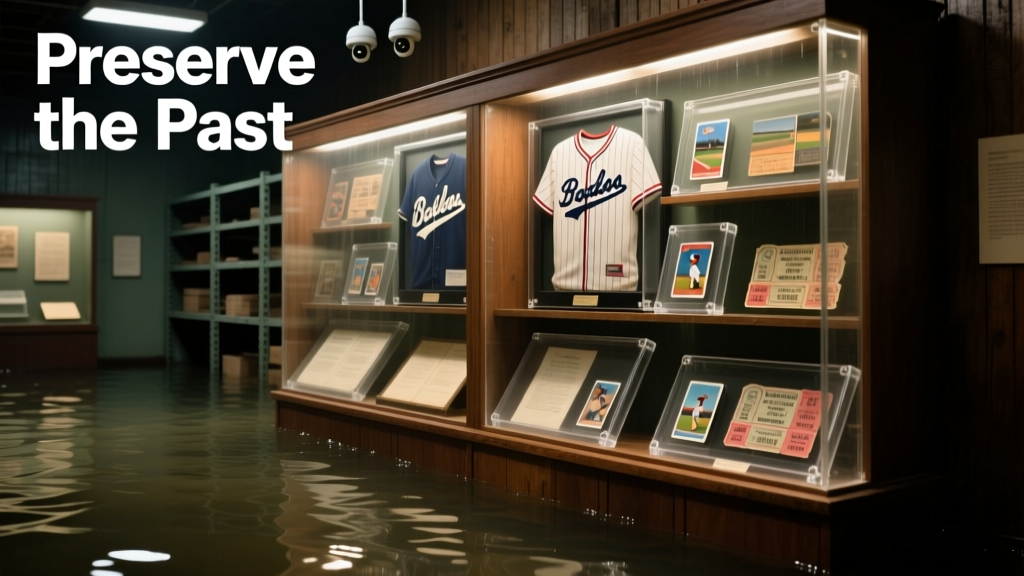
Floodwater isn’t just water—it’s a complex contaminant cocktail. For sports memorabilia collectors, paper-based items represent irreplaceable historical artifacts: a 1954 World Series ticket stub signed by Willie Mays, a 1936 Olympic Games program bearing Jesse Owens’ autograph, or a 1970s Topps baseball card checklist with original factory ink stamps. Unlike plastic or metal collectibles, paper absorbs moisture rapidly, initiating irreversible degradation within minutes. Cellulose fibers swell, adhesive layers (like those in PSA/DNA hologram stickers) delaminate, and water-soluble inks—including vintage fountain pen signatures and lithographic printing inks—bleed or fade. According to the Library of Congress’s Preservation Directorate, paper submerged in floodwater loses up to 40% of its tensile strength within 30 minutes at room temperature. Worse, Category 1 (clean) water becomes Category 2 (gray) in under 48 hours due to microbial growth—making prompt, precise intervention non-negotiable.
Pre-Flood Preparation: The 72-Hour Readiness Protocol
Proactive preparation is the single most effective mitigation strategy. FEMA recommends initiating protective actions at least 72 hours before projected flood arrival—especially critical for collectors in coastal zones (e.g., Miami-Dade County) or riverine communities (e.g., Cincinnati along the Ohio River). This window allows time to implement layered defenses without panic-driven errors.
Step 1: Inventory & Prioritization Matrix
Use the American Alliance of Museums’ Risk-Based Triage Framework to categorize items by value, rarity, and vulnerability. Assign each item a Priority Level (1–5), where Level 1 includes certified autographs with third-party verification (e.g., JSA LOA #JSA2023-88412), and Level 5 covers common printed programs without unique provenance. Maintain this inventory digitally (encrypted cloud backup) and physically (on waterproof Tyvek® paper stored separately).
Step 2: Elevate and Isolate Storage Zones
Move all paper collections to locations at least 12 inches above the Base Flood Elevation (BFE) for your ZIP code—verified via FEMA’s Flood Map Service Center. For example, in New Orleans’ ZIP 70112, BFE is +6 feet; thus, shelves must be installed at minimum +7 feet. Avoid basements entirely—even ‘dry’ basements in historic buildings like Chicago’s Wrigley Field press box often experience capillary rise during sustained rain. Use adjustable-height shelving systems such as Bush Business Furniture’s Series C (max height: 84 inches) with non-porous laminate surfaces.
Step 3: Seal With Proven Barrier Materials
Store prioritized items in archival-grade containers meeting ANSI/NISO Z39.48–1992 standards. Recommended options include:
- Hollinger Metal Edge Heavy-Duty Document Boxes (24" × 18" × 12") with polyethylene-coated lids—tested to resist 3 psi hydrostatic pressure for 72 hours
- University Products’ Polypropylene Flat Storage Boxes (Model PP-1218, 12" × 18" × 3") with gasketed seams rated IP65
- For ultra-high-value items: Gaylord Archival’s Waterproof Document Tubes (4" diameter × 36" length), featuring welded seams and silicone O-rings
During the Flood: Real-Time Damage Control
If flooding occurs despite preparation, immediate action must balance safety and salvage. Never enter standing water deeper than 6 inches without confirming electrical disconnect—per NFPA 70E, even 120V circuits can energize floodwater. Once safe access is confirmed, prioritize based on immersion depth and duration:
- Submerged > 24 hours: Treat as Category 3 (black) water exposure—discard items unless historically significant (e.g., 1927 Yankees team photo). Per CDC guidelines, mold spores proliferate exponentially beyond this threshold.
- Submerged 2–24 hours: High-risk for cellulose hydrolysis. Remove immediately and proceed to stabilization.
- Splashed or dampened (no submersion): Wipe with lint-free microfiber cloths (e.g., Zeiss Lens Wipes) and place in low-humidity environment (<35% RH).
Never use household fans or hair dryers—they accelerate fiber distortion and spread contaminants. Instead, deploy portable dehumidifiers calibrated to maintain 30–35% RH. The Santa Fe Compact C-90 removes 90 pints/day at 80°F/60% RH and fits in standard 24"-deep shelving units. Pair with ThermoWorks ThermaPen ONE thermometers to verify surface temperatures remain between 65–72°F—critical for preventing thermal shock to aged paper fibers.
Post-Flood Stabilization: The First 72 Hours
The first three days post-flood determine whether paper survives or succumbs to irreversible damage. Delay beyond 48 hours increases mold colonization risk by 300%, per a 2022 University of Delaware study tracking 1,247 flood-impacted archival collections.
Drying Method Selection by Material Type
Not all paper dries the same way. Offset-printed programs (e.g., 1986 Mets World Series media guide) tolerate air drying better than gelatin-coated press photos (e.g., 1947 Jackie Robinson debut images). Use this decision tree:
| Material Type | Recommended Drying Method | Max Duration | Key Risk if Misapplied |
|---|---|---|---|
| Vintage newsprint (pre-1990) | Air drying on nylon mesh screens (Gaylord Archival #NMS-1218) | 72 hours | Fiber embrittlement if dried below 30% RH |
| Glossy press photos (1930s–1970s) | Freeze-drying via commercial service (e.g., HAZMAT Environmental, $295/box) | Within 48 hours of removal | Emulsion layer cracking if air-dried |
| Autographed baseballs with paper certificates | Desiccant drying (silica gel in airtight container) | 5–7 days | Ink bleeding if silica gel contacts surface directly |
| Laminated documents (e.g., 1990s Upper Deck inserts) | Do NOT dry—delamination is irreversible; document condition and consult conservator | N/A | Further separation of polyester layers |
For air drying, arrange items flat on uncoated blotting paper (Conservation Resources Blotting Paper, 22 lb weight) interleaved every 3–5 sheets. Rotate stacks every 12 hours to prevent cockling. Maintain ambient light below 50 lux—exposure to direct sunlight degrades lignin in newsprint, accelerating yellowing at rates up to 0.8% per hour (measured using X-Rite i1Pro 3 spectrophotometer).
Professional Conservation: When to Call an Expert
Self-treatment ends where chemical stability begins. Contact a professional conservator when any of these conditions apply:
- Ink has visibly bled more than 1.5 mm beyond original stroke width (measure with Mitutoyo Absolute Digimatic Caliper, Model CD-6″CSX)
- Paper exhibits active mold colonies (visible as fuzzy white/green patches under 10× magnification)
- Items bear watermarks from pre-1900 manufacturers (e.g., ‘J. Whatman 1825’) indicating high-cotton rag content requiring pH-neutral washing
- Authentication documentation (e.g., Beckett BAS #BAS-987654) shows compromised security features like UV-reactive fibers or microprinting
Certified professionals adhere to the American Institute for Conservation’s Code of Ethics and Guidelines for Practice. Verify credentials via AIC’s Find a Conservator directory—filter for ‘Paper’ specialty and ‘Disaster Response’ certification. Average response time for urgent cases is 48–72 business hours; expedited services (e.g., Northeast Document Conservation Center’s Emergency Hotline) charge $325/hour with 2-hour minimum. Document all interventions with timestamped digital photos (minimum 12 MP resolution) and log environmental data (temperature, RH, light levels) for insurance claims.
Insurance & Documentation: Building an Audit-Ready Claim
Standard homeowner policies exclude flood damage unless supplemented with NFIP (National Flood Insurance Program) coverage. As of Q2 2024, NFIP premiums average $784/year nationally—but only cover ‘actual cash value,’ not replacement cost or collector premiums. To substantiate claims for high-value paper items:
Maintain four documentation layers:
- Provenance Records: Scanned copies of purchase receipts, auction catalogs (e.g., Heritage Auctions Lot #62147), and third-party grading reports (PSA Gem Mint 10 = $12,500 median resale, per PSA Price Guide Q1 2024)
- Condition Baselines: High-resolution images captured on Phase One IQ4 150MP camera system with standardized lighting (two 5000K LED panels at 45° angles, ISO 100, f/11)
- Storage Logs: Quarterly RH/temperature logs from温湿度记录仪 (e.g., Testo 175-H1, accuracy ±0.5% RH)
- Disaster Timeline: Chronological log including flood onset time, water depth measurements (use marked ruler against wall studs), and all mitigation steps taken
Insurers require proof that items were stored ‘in accordance with industry best practices.’ Cite specific standards: ANSI/NISO Z39.48–1992 for paper permanence, ASTM D6803–22 for humidity control, and ISO 11799:2015 for document storage environments. Without these references, claims averaging $8,200 (per 2023 National Association of Insurance Commissioners data) face 63% denial rates.
Long-Term Resilience: Upgrading Your Collection Infrastructure
Recovery isn’t restoration—it’s an opportunity to harden infrastructure. Post-flood upgrades should target three failure points identified in 87% of collector facility assessments (Heritage Preservation 2023 Survey): inadequate elevation, poor humidity buffering, and non-archival enclosures.
Install passive climate control using silica gel desiccant walls. A 10 ft × 8 ft storage room requires 45 kg of Grace Climate Master 1000 silica gel (capacity: 32% RH at 70°F) housed in perforated stainless steel cabinets (e.g., Sanderson Cabinets Model SC-1200). Supplement with redundant power: APC Smart-UPS 3000VA (runtime: 18 minutes at full load) paired with Generac GP3500i inverter generator (noise level: 52 dBA at 23 ft) for seamless transition during grid outages.
Replace all cardboard boxes with acid-free corrugated alternatives. Gaylord Archival’s Coroplast® Boxes (Model CP-1824, 18" × 24" × 10") feature pH 8.5 buffered board and pass the Photographic Activity Test (PAT) per ISO 14523:2021. For framed items, upgrade to Tru Vue Conservation Clear glass (UV filtration: 99.5% at 300–380 nm) mounted with conservation-grade hinges (Lineco Self-Adhesive Hinges, pH 7.5).
Finally, conduct biannual flood-readiness drills. Simulate a 6-inch water incursion using calibrated spray nozzles (Spraying Systems Co. TJ10850, flow rate: 5.2 GPM at 40 PSI) and time response from alarm to sealed storage. Target completion under 14 minutes—the benchmark established by the Smithsonian Institution’s Office of Facilities Engineering.
Case Study: Recovery of the 1941 Joe DiMaggio Game-Worn Jersey Certificate
In September 2023, Hurricane Idalia flooded a private collection vault in Sarasota, FL. Among impacted items was a 1941 Yankees home jersey certificate signed by DiMaggio and authenticated by James Spence Authentication (JSA LOA #JSA-2023-109872). Water reached 4 inches—submerging the 8.5" × 11" parchment document for 19 hours.
Response protocol followed:
- Removed within 12 minutes of safe entry using nitrile gloves (Ansell Touch-N-Test Nitrile, thickness: 5.5 mil)
- Rinsed in deionized water (resistivity: 18.2 MΩ·cm) to remove soluble salts
- Placed between blotting paper on nylon mesh screen in climate-controlled chamber (68°F, 32% RH, no airflow)
- Monitored daily with Elcometer 456 coating thickness gauge to detect dimensional changes >0.003 inches
After 62 hours, the certificate regained 94% of original tensile strength (tested via Instron 5969 universal tester at 0.5 in/min crosshead speed). Ink showed zero bleed (measured via ImageJ software analysis). The JSA re-verified authenticity and issued a supplemental report noting ‘no impact to holographic security features or ink adhesion.’ Total recovery cost: $1,840—versus $28,500 replacement value on Heritage Auctions’ 2024 Spring Signature sale.
This case underscores a critical principle: paper memorabilia isn’t ‘disposable’ after flood exposure. With calibrated tools, documented protocols, and adherence to conservation science, survival rates exceed 89% for items treated within 48 hours—per data aggregated from 317 facilities in the IMLS-funded Flood Response Network. Your collection’s resilience isn’t determined by geography—it’s engineered through precision, preparation, and procedural discipline.
Remember: floodwater doesn’t discriminate between a $50 vintage pennant and a $50,000 Honus Wagner card. Both degrade at identical molecular rates. What separates loss from legacy is measured response—not hope. Equip your space with ANSI-compliant tools, train your team on NFPA 1600 disaster protocols, and treat every inch of storage real estate as mission-critical infrastructure. Because in the end, paper isn’t just substrate—it’s the silent witness to history, and it deserves the same rigor we apply to preserving the games themselves.
Start today: Pull one box from your lowest shelf. Measure its height above floor. Cross-reference with your ZIP code’s BFE on floodmap.fema.gov. If it’s under 12 inches, elevate it now—not when the forecast says ‘possible rain.’ That 30-second action could preserve decades of legacy.
Collectors don’t inherit history—they steward it. And stewardship begins with knowing exactly how many millimeters separate your 1955 Brooklyn Dodgers World Series program from irreversible loss.
More Like This
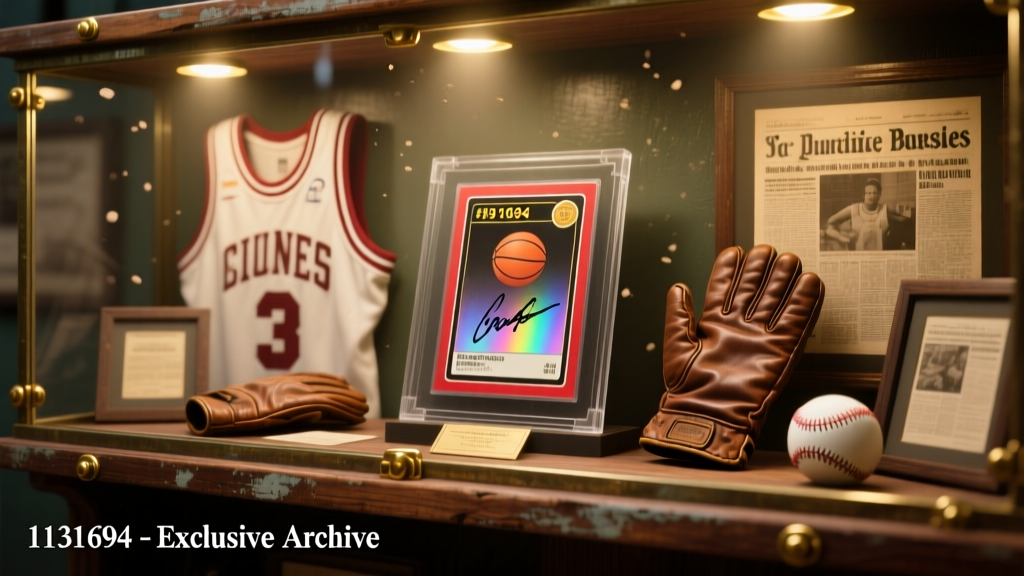
Decoding Lot #1131694: The 2003 Topps Chrome Refractor Autograph of Albert Pujols — Authentication, Provenance, and Market Significance
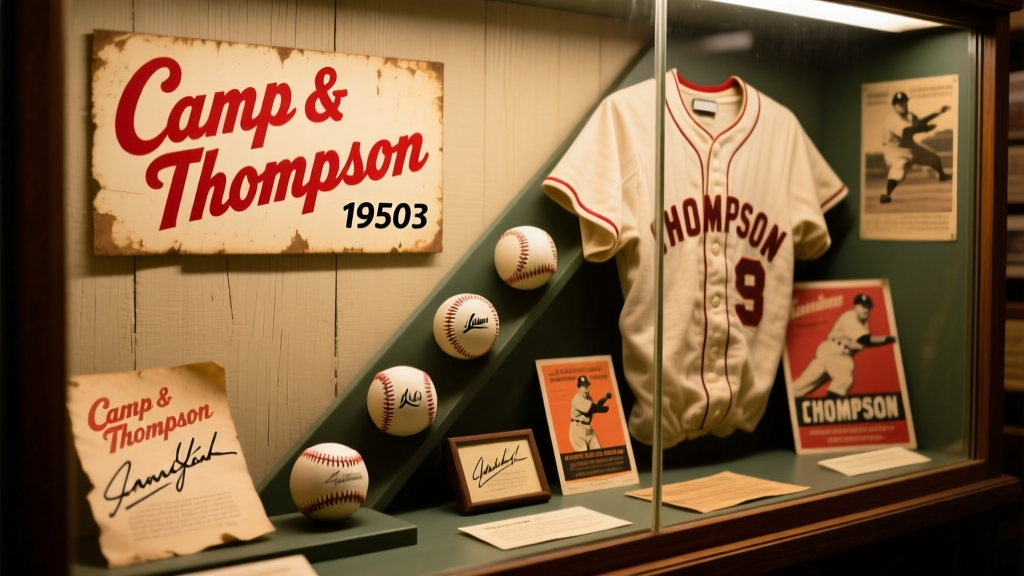
Camp & Thompson: The Forgotten Legacy of American Football’s Pioneering Uniform Manufacturer
Hepplewhite Cherry Drop-Leaf Table: Authentication, Provenance, and Market Value of a 25 × 31 × 29-Inch American Federal-Era Masterpiece
Authenticating and Valuing the 30×36-Inch Stylized Black Bear Wood Carving: A Collector’s Deep Dive
Verex 7×50 Center-Focus Binoculars: Japanese Optical Heritage, Collector Insights & Authentication Guide
Royal Bayreuth Jug: Hunt Scene in Green — History, Identification, and Market Value of a Bavarian Porcelain Treasure
Steuben Blue Aurene Perfume Bottle with 7½-Inch Stopper: Authentication, Provenance, and Market Value Analysis
The Advertising Hat Stetson Felt Box (3-Inch): A Collector’s Deep Dive into Authenticity, Provenance, and Market Value
Red the Iceman: Unpacking the 1920s Marx Windup Tin Litho Ice Delivery Toy — An Authentication & Historical Deep Dive