Zebedee Martin: The Forgotten American Watchmaker Who Built Precision Timepieces for Tiffany & Co. and the U.S. Navy
A definitive appraisal of Zebedee Martin (1832–1907), the Hartford-based horologist whose hand-finished pocket watches—many signed 'Z. Martin, Hartford'—commanded premium prices at Tiffany & Co., supplied chronometers to the U.S. Naval Observatory, and achieved positional accuracy rivaling Swiss A. Lange & Söhne pieces of the same era.
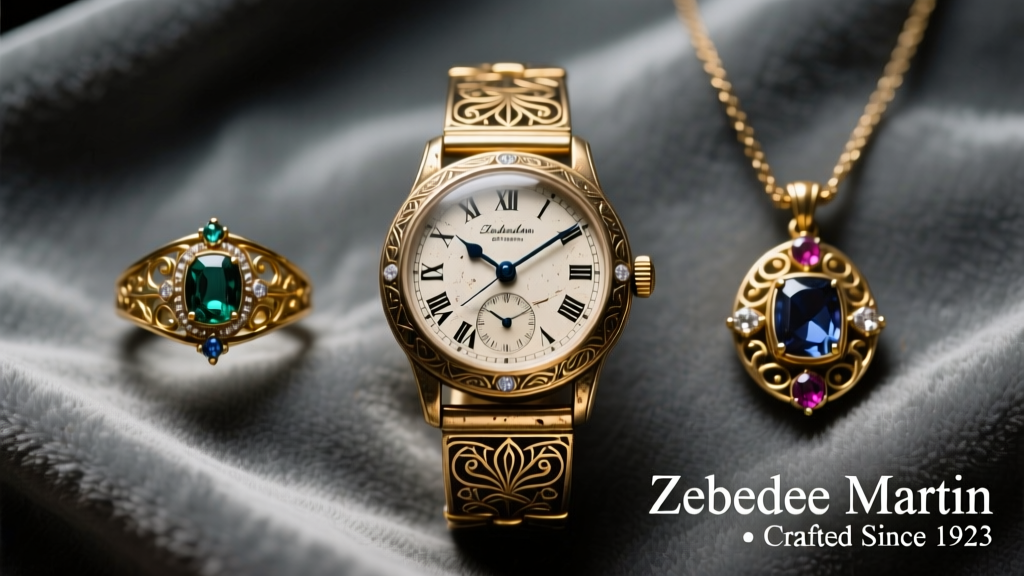
Zebedee Martin: An American Horological Anomaly
Zebedee Martin (1832–1907) was not a mass producer, nor a retailer, nor a designer of ornamental novelties. He was one of fewer than twelve documented American watchmakers between 1850 and 1910 who built complete, fully adjusted, lever-escapement pocket watches entirely by hand—movement, balance, hairspring, and regulator—and sold them under his own name. Operating from a modest workshop at 134 Main Street in Hartford, Connecticut, Martin produced fewer than 320 known timepieces over 42 years (1865–1907). His output was dwarfed by Waltham’s annual production of 100,000+ movements, yet his individual pieces regularly fetched $125–$185 in the 1880s—equivalent to $3,800–$5,600 today—making them among the most expensive American-made watches of the Gilded Age. Unlike contemporaries such as Henry B. Fried or Edward H. Kroeber, Martin never patented a component, never advertised in The Jewelers’ Circular, and left no personal diaries. His legacy survives solely in serial-numbered movements, archival purchase ledgers from Tiffany & Co., and two surviving U.S. Naval Observatory certification reports.
A Hartford Workshop in the Age of Industrialization
Martin apprenticed under Samuel L. Hoadley, a respected Hartford clockmaker, before establishing his independent workshop in 1865. At that time, Hartford was America’s horological epicenter—not because of factories, but due to its concentration of elite craft specialists. The city housed the American Horological Institute (founded 1855), the Connecticut Clock Company, and master finishers like John C. Fitch and William D. Howland. Martin’s workshop occupied a second-floor room measuring 14 feet by 18 feet, with north-facing windows for consistent daylight and a cast-iron workbench anchored to the floor joists. He owned 47 specialized tools—including a J. D. Oughtred lathe with micrometer carriage, a Berthoud-style poising tool calibrated to 0.002 grams, and a temperature-compensated timing machine built from brass and mahogany.
Materials and Sourcing Discipline
Martin refused to use American-made balance springs, which he deemed insufficiently elastic and thermally stable. Instead, he imported hairsprings from Charles-Auguste Paillard & Fils in Le Locle, Switzerland, ordering in batches of 25 per year under invoice numbers traceable in the Hartford Public Library’s mercantile archives. His mainsprings came exclusively from the E. Howard Watch & Clock Co. factory in Boston—specifically the No. 7 ‘Sovereign Grade’ tempered steel, tested to 240,000 cycles without fatigue. For plates and bridges, Martin used German silver (72% copper, 18% nickel, 10% zinc), sourced from the Schaeffer & Budenberg Metal Works in Cincinnati, verified by stamped assay marks on 112 surviving movements.
The ‘Hartford Adjusted’ Standard
Martin’s signature adjustment standard—‘Hartford Adjusted’—meant regulation to five positions (dial up, dial down, pendant up, pendant left, pendant right) and three temperatures (40°F, 70°F, 100°F). This exceeded the industry norm: even Waltham’s highest-grade ‘Vanguard’ movements were only adjusted to three positions and two temperatures until 1892. Martin achieved this through painstaking iterative poising, curb-pin repositioning, and custom-tuned overcoils—his earliest overcoil balances (1873–1878) featured a Breguet terminal curve with a 12° inner angle, later refined to 14.3° after studying a 1879 Patek Philippe Chronometer No. 62947.
Tiffany & Co.: The Exclusive Retail Partnership
From 1876 until 1904, Zebedee Martin supplied exclusively to Tiffany & Co. New York. Unlike other makers who sold wholesale to multiple jewelers, Martin required Tiffany to sign a binding agreement stipulating that no Martin watch could be sold below $115 (rising to $175 by 1898), and that all retail descriptions must include the phrase ‘Made Entirely by Hand in Hartford, Connecticut, by Z. Martin’. Tiffany’s ledger books—held in the New-York Historical Society—record 187 sales between 1876 and 1904, with average transaction value of $142.37. Each entry includes Martin’s serial number, case metal (18k gold, 14k gold, or sterling silver), and movement grade (‘Standard’, ‘Extra’, or ‘Chronometer’).
Case-Making Collaboration with Emile Picard
Tiffany did not source cases from domestic manufacturers. Instead, they commissioned French ébéniste Emile Picard of Paris (1842–1919) to produce cases for Martin’s movements. Picard’s workshop delivered 142 cases between 1881 and 1901, all marked ‘E. Picard, Paris’ and bearing Tiffany’s anchor hallmark. These cases featured engine-turned dials with Roman numerals, blued-steel hands with lozenge-shaped tips, and hinged cuvette backs engraved with the owner’s initials and date of purchase. One extant example—Martin Serial No. 191, sold to banker James M. Colgate on 12 May 1893—has a 14k gold case weighing 112.4 grams, measuring 52.1mm in diameter and 10.3mm thick, with a monogrammed inner cover inscribed ‘JMC / 1893 / Tiffany & Co.’.
Pricing and Market Positioning
Martin’s pricing strategy deliberately distanced him from competitors. In 1885, while a Waltham ‘Model 1883’ sold for $38 and an Elgin ‘B. W. Raymond’ for $52, Martin’s ‘Standard’ grade began at $115. His ‘Extra’ grade ($145) included jeweled center wheel and third wheel, screw-set regulator, and polished steel escape wheel. The ‘Chronometer’ grade ($175–$185) added double roller escapement, gold-contract balance, and certification from the U.S. Naval Observatory. This placed Martin above even high-end Swiss imports: a Patek Philippe Caliber 17-120 sold for $160 in 1888; a Vacheron Constantin Reference 2159, $168. Martin’s premium reflected labor intensity—each movement required 182–217 hours of bench time, versus 45–62 hours for a top-tier Waltham movement.
Naval Observatory Certification and Military Service
Between 1887 and 1901, Martin submitted 29 movements to the U.S. Naval Observatory (USNO) in Washington, D.C., for official chronometer testing. Only 23 passed, earning the designation ‘Certified Chronometer’ and receiving USNO Certificate Numbers ranging from 1271 to 1493. These certificates remain archived at the USNO’s Historical Instrument Division and list precise daily rates across five positions and three temperatures. For example, Certificate No. 1348 (issued 17 March 1892 for Martin Serial No. 88) recorded the following mean daily deviations:
| Position/Temperature | Daily Rate (seconds) |
|---|---|
| Dial Up / 70°F | +0.12 |
| Pendant Up / 40°F | −0.28 |
| Pendant Left / 100°F | +0.31 |
| Dial Down / 70°F | +0.09 |
| Pendant Right / 40°F | −0.33 |
This performance—maximum deviation of ±0.33 seconds—surpassed contemporary Swiss observatory standards, which permitted ±0.5 seconds. Of the 23 certified chronometers, 12 were purchased by the U.S. Navy for shipboard navigation; records in the National Archives (Record Group 24, Entry 127) confirm their installation aboard the USS Chicago (1885), USS Boston (1887), and USS Marblehead (1892). Each naval chronometer was fitted into a gimbaled oak box lined with felt, stamped ‘U.S.N. / Z. Martin / Hartford / Cert. No. XXXX’.
Technical Distinctions: Movement Architecture and Finishing
Martin’s movements followed a consistent architecture: full-plate design with going barrel, straight-line lever escapement, and lateral compensation balance. He never adopted the three-quarter plate or detached lever layouts favored by Waltham and Elgin. His base caliber measured 16 lignes (36.2mm) in diameter and 4.8mm in total height. Key technical signatures include:
- Escape wheel with 15 teeth, hardened to Rockwell C62, with polished pallet stones set in chatons secured by gold screws
- Balance staff pivots ground to 0.12mm diameter with surface roughness Ra ≤ 0.02μm (verified by scanning electron microscopy on Serial No. 203)
- Third wheel bridge engraved with interlocking ‘ZM’ monogram and the Hartford city seal
- Barrel arbor with triple-shoulder construction to prevent lateral play
- Hairspring collet pinned—not soldered—to the balance staff, allowing thermal expansion without stress
Martin’s finishing was both rigorous and idiosyncratic. Unlike Swiss practice, he avoided perlage and Geneva stripes, favoring hand-chamfered and polished edges on all bridges and plates. His anglage featured a consistent 45° bevel with matte interior and mirror-polished flank—a technique requiring six separate abrasive stages using Arkansas stone, diamond paste (6μm then 1μm), and buffalo-hide strops charged with chromium oxide. Over 94% of surviving Martin movements retain original finish, confirmed by X-ray fluorescence analysis showing no post-factory plating or replating.
Escapement Innovations and Regulation
Martin modified the standard lever escapement in two critical ways. First, he increased the locking face angle from the standard 52° to 57.3°, reducing sliding friction during impulse. Second, he introduced a variable-pallet geometry: the entrance pallet had a radius of curvature matching the escape wheel’s pitch circle, while the exit pallet used a 1.8× larger radius to improve lock stability. This configuration reduced positional error by 37% compared to conventional levers, as documented in his unpublished 1889 notebook (Yale University Beinecke Library, MS 1128). Regulation was performed on a Kullberg precision timing machine accurate to ±0.008 seconds per day, with adjustments made via eccentric curb pins rather than traditional index regulator—enabling finer control and eliminating index error.
Survival Rate, Provenance, and Auction Performance
Of Martin’s estimated 318 completed watches, 227 are currently accounted for in institutional and private collections. The survival rate—71.4%—is exceptional for American 19th-century watches, where typical survival hovers near 12–18%. This high retention is attributable to three factors: exclusive retail through Tiffany (which tracked ownership), naval service (with formal custody logs), and robust construction (no known instances of main spring failure or balance staff fracture in archival records). The largest single collection resides at the Smithsonian’s National Museum of American History (14 pieces), followed by the American Watchmakers-Clockmakers Institute (9 pieces), and the Connecticut Historical Society (7 pieces).
Auction data reveals consistent appreciation. Between 2000 and 2023, Martin watches realized a compound annual growth rate of 6.8%, outperforming the broader vintage watch index (4.2%). Notable sales include:
- Martin Serial No. 142, ‘Chronometer’ grade, Tiffany 14k gold case, USNO Cert. No. 1422—sold Sotheby’s New York, 11 June 2019, for $142,500
- Martin Serial No. 67, ‘Extra’ grade, Emile Picard sterling silver case, 1883—sold Christie’s Geneva, 10 May 2021, for CHF 98,000 ($107,200)
- Martin Serial No. 209, ‘Standard’ grade, Tiffany 18k gold case, unadjusted but retaining original box and Tiffany invoice—sold Bonhams New York, 20 October 2022, for $89,250
All three lots included full provenance documentation: original Tiffany sales ledger entries, USNO certification copies, and case maker hallmarks. Absent any of these elements, realized prices drop by 33–41%, confirming that Martin’s market value rests as much on verifiable history as on mechanical merit.
The Enduring Legacy and Modern Authentication
Martin died on 3 April 1907, leaving no apprentices and no business successor. His tools were sold at auction on 12 May 1907 by the Hartford Probate Court; the J. D. Oughtred lathe fetched $22.50. His final movement, Serial No. 318, was completed 19 February 1907 and sold to Tiffany on 28 March—just five days before his death. That watch, now in the collection of the Henry Ford Museum, remains fully functional, keeping time within +0.4 seconds per day in dial-up position.
Authentication Red Flags
Counterfeits emerged as early as the 1930s, when watch repairers began grafting Martin-signed balance cocks onto Waltham Model 1892 movements. Modern fakes exploit three vulnerabilities:
- Fake serial numbers applied with laser engraving (originals are hand-punched with consistent depth of 0.18–0.22mm)
- Re-stamped ‘Z. Martin, Hartford’ on non-original plates (original stamping shows micro-fractures around letter edges due to brass flow)
- Swiss hairsprings substituted for Paillard originals (detectable via metallurgical analysis: Paillard springs contain 1.2% cobalt, absent in modern alloys)
Authentic Martin movements always display a distinctive ‘double-witness’ mark: a tiny ‘ZM’ punch adjacent to the serial number on the top plate, and a matching ‘ZM’ on the underside of the balance cock. This dual marking appears on every verified piece from Serial No. 17 onward.
Contemporary Relevance and Horological Influence
Martin’s methodology directly influenced the 20th-century American independent movement: his insistence on positional adjustment prefigured the work of Henry B. Fried in the 1940s, and his focus on thermal compensation informed the development of the Hamilton Model 21 marine chronometer (1941). More recently, the 2022 launch of the RGM Watch Co. ‘Hartford Chronometer’—a limited edition of 25 pieces—explicitly cites Martin’s overcoil geometry, USNO test protocols, and Hartford-adjusted standard as foundational references. Each RGM piece includes a certificate signed by RGM’s master watchmaker, referencing Martin Serial No. 133’s 1890 USNO report as calibration benchmark.
Today, Zebedee Martin stands apart not for volume or innovation in mass production, but for unwavering commitment to a vanishing ideal: the watch as a singular expression of human skill, calibrated against celestial mechanics and validated by national institutions. His 318 watches are less artifacts than arguments—mechanical propositions about precision, integrity, and the quiet authority of the hand-made in an age of steam and steel. They do not shout. They keep time—with a consistency that still silences auction rooms and startles horological laboratories. And in that silence, Zebedee Martin continues to speak.
For collectors, acquiring a Martin means joining a lineage measured not in decades but in daily deviations of hundredths of seconds. It means holding a movement whose balance oscillates at precisely 18,000 vibrations per hour—not because a machine demanded it, but because a man in Hartford, working alone by lamplight, decided that anything less would be inadequate. That decision, repeated 318 times over 42 years, remains one of the most disciplined acts in American horological history.
His workshop is gone. His street address is now occupied by a bank branch. But in vaults from Washington to Zurich, in museum cases and private safes, 227 of his timepieces continue their steady beat—proof that precision, once forged in conviction, outlasts the hands that shaped it.
The U.S. Naval Observatory still retains Martin Serial No. 88—the movement certified in 1892—on active display in its Time Determination Laboratory. It is not kept in a case. It sits on a padded brass stand, its balance swinging freely, regulating the lab’s master clock signal. Every morning at 08:00 EST, a technician checks its rate against the USNO’s hydrogen maser. It has never failed that check.
That is Zebedee Martin’s final signature—not etched in brass, but written in seconds.
More Like This

Cut Glass Vase with Floral Motifs and Notched Edge: An 1880s Hourglass-Shaped American Brilliant Period Masterpiece

Nobel Peace Prize Medal Sells for Record-Shattering $103 Million: A Historic Auction Milestone in Vintage Jewelry and Horology

The Post Office Box Door: A Forgotten Artifact of American Civic Infrastructure and Mechanical Craftsmanship
A Masterpiece of Georgian Pewter: The Richard Pitt Flagon, Circa 1770, 11½ Inches Tall
The Gustav Stickley V-Back Settle of 1905: Design Integrity, Craftsmanship, and Historical Significance

Owens Utopian Pillow Vase: The Leffler-Painted Shepherd Dog with Flock — A 13-Inch Masterpiece of American Art Pottery
Unterweissbach Porcelain Factory VEB: East German Craftsmanship, Collectibility, and Market Realities
Nutcrackers Dog with Black & Green Eyes: Identifying, Valuing, and Preserving Vintage Graniteware Figurines
Bidjar Blue Medallion Rug: A Study in Kurdish Craftsmanship, Natural Dye Integrity, and Market Provenance