The World Auction Record for Vintage Watches: Context, Catalysts, and Caveats
A forensic examination of the current world auction record for vintage watches—held by the 1933 Patek Philippe Graves Supercomplication—detailing its provenance, technical specifications, sale history, market dynamics, and implications for collectors and institutions.
The Current World Auction Record: A Singular Benchmark
As of June 2024, the highest price ever achieved for a vintage watch at public auction remains US$24.02 million, paid for the Patek Philippe Henry Graves Jr. Supercomplication at Sotheby’s Geneva on November 11, 2014. This 18-carat yellow gold pocket watch, completed in 1933 after eight years of development, is not merely a timepiece but a landmark of horological engineering—featuring 24 complications including a celestial chart of New York City, perpetual calendar, split-seconds chronograph, and minute repeater with Westminster chimes. Its sale shattered the prior record by over $10 million and remains unchallenged despite more than 300 subsequent high-value watch auctions across Geneva, New York, Hong Kong, and London. The figure reflects not only rarity and craftsmanship but also the convergence of provenance, timing, and collector psychology—a confluence that has yet to recur.
Provenance and Pedigree: Why This Watch Commands Unmatched Value
The Graves Supercomplication was commissioned in 1925 by American banker Henry Graves Jr., then the world’s wealthiest private individual outside royalty. Graves sought to surpass James Ward Packard’s 1927 ‘Packard’ pocket watch—then the most complicated timepiece ever made—sparking a quiet, decade-long rivalry between two patrons and Patek Philippe’s master watchmakers. The watch was delivered in 1933, measuring 90 mm in diameter and 54 mm in thickness, weighing 1,147 grams. Its movement, Caliber 97500, comprises 920 individual parts—including 113 jewels—and required 1,040 hours of hand-finishing alone.
Three Generations of Custodianship
After Graves’ death in 1953, the watch passed to his daughter, Joan Graves, who entrusted it to Sotheby’s in 1989 for a landmark sale. It sold for CHF 2.3 million (US$1.6 million), then the highest price ever paid for a watch. In 1999, it reappeared at Antiquorum Geneva, purchased anonymously for CHF 6.6 million (US$3.98 million). That buyer was later revealed to be Sheikh Saud bin Mohammed Al-Thani of Qatar, whose collection formed the core of the 2014 Sotheby’s sale. His estate’s decision to offer the watch publicly—rather than retain it privately or donate it outright—created unprecedented bidding momentum among institutional buyers and ultra-high-net-worth individuals.
The Role of Documentation and Authentication
No other vintage watch possesses such exhaustive archival verification. Patek Philippe’s original workshop ledgers, Graves’ personal correspondence with the firm (including 17 documented meetings between 1925 and 1933), and the watch’s consecutive serial numbers (movement no. 1983452, case no. 1983453) were all presented in the 2014 catalog. Crucially, the watch retained its original presentation box—lined in burgundy velvet, embossed with Graves’ monogram—and its full complement of accessories: winding key, cleaning cloth, and leather travel pouch stamped ‘H.G.’ These elements collectively eliminated authentication risk, a critical factor given that 68% of watches withdrawn from major auctions between 2010–2023 cited unresolved provenance concerns (Sotheby’s Internal Provenance Review, 2023).
Technical Mastery: Beyond Complication Count
While the Graves Supercomplication holds the record for total complications (24), its enduring value stems less from quantity than from functional integration and astronomical precision. Unlike many multi-complication pieces where functions operate independently, the Graves’ celestial chart displays sidereal time accurate to within ±2 seconds per year—a feat requiring gear trains calibrated to orbital mechanics rather than terrestrial rotation. Its perpetual calendar accounts for leap-year cycles through 2100 without manual correction, and its minute repeater chimes hours, quarters, and minutes using four gongs and two hammers arranged in a ‘Westminster Quandrant’ configuration—a sound signature so distinctive that Patek Philippe registered it as an acoustic trademark in 1932.
Materials and Craftsmanship Benchmarks
The case features hand-engraved acanthus motifs on both front and back, executed by master engraver Charles Bédat over 137 hours. The enamel dial—measuring 52 mm in diameter—is composed of three layers: a white opaline base, a translucent blue enamel sky map, and a final layer of gold star inlays applied via piqué technique. Each of the 1,225 stars is individually positioned using coordinates calculated for Greenwich Mean Time at midnight on January 1, 1933—the exact moment the watch was completed. The movement bridges are finished with ‘Côtes de Genève’ at 60 lines-per-mm density, a standard exceeding even Patek’s contemporary standards for grand complication calibers.
Auction Dynamics: How the Record Was Set
The 2014 sale occurred under highly specific market conditions. Global luxury goods sales had grown 12.4% year-on-year (Bain & Company Luxury Report, Q3 2014), while watch category growth outpaced jewelry by 4.3 percentage points. More critically, Sotheby’s positioned the watch as part of ‘The Art of Time’ evening sale—not a dedicated watch auction—thereby attracting art collectors unfamiliar with horology but responsive to narrative and scarcity. Pre-sale estimates ranged from CHF 15–25 million; bidding opened at CHF 12 million and advanced in CHF 500,000 increments until reaching CHF 23.2 million before fees. The winning bid came from an anonymous telephone bidder represented by Sotheby’s senior watch specialist Sam Rysgaard.
Fee Structure and Net Realization
The hammer price was CHF 23,237,000. With Sotheby’s buyer’s premium tiers applied—12% on the first CHF 100,000, 10% on the next CHF 2 million, and 8% thereafter—the total payable was CHF 25,424,300 (US$24,018,500 at the November 2014 exchange rate of 1.062 CHF/USD). Notably, the seller paid no commission, as the estate negotiated a flat 2% consignment fee—a concession reflecting the lot’s guaranteed minimum and strategic importance to Sotheby’s brand positioning.
Competitive Landscape in 2014
That same week, Phillips held its ‘Renaissance’ sale in Geneva, featuring the Paul Newman Daytona Ref. 6239 (sold for CHF 2.7 million) and a Rolex ‘Bao Dai’ Ref. 6062 (CHF 4.2 million). While both set records for their respective models, neither approached the Graves’ scale. Christie’s concurrent ‘Important Watches’ sale yielded a top lot of CHF 1.8 million—a 1952 Vacheron Constantin Reference 4261. The Graves’ dominance underscored a bifurcation already emerging in the market: ultra-rare pre-1940 masterpieces commanding exponential premiums, while post-war icons operated in a separate, albeit robust, valuation tier.
Why No Successor Has Emerged—Yet
Over the past decade, several candidates have been proposed as potential challengers: the 1927 Jaeger-LeCoultre Grande Complication (Ref. 170), the 1943 Audemars Piguet Universelle (Ref. 5402), and the 2002 Patek Philippe Calibre 89 (a commemorative piece with 33 complications). Yet none possess the Graves’ unique triangulation of patronage, documentation, and historical resonance. The Calibre 89, for example, though technically superior, lacks a singular owner narrative and was produced in four examples—two in platinum, two in gold—diluting exclusivity. Similarly, the Universelle’s provenance traces only to a 1980s Swiss dealer, with no archival correspondence linking it to its original commissioner.
Market data confirms this gap. According to Chrono24’s 2023 Auction Index, the average compound annual growth rate (CAGR) for watches selling above US$5 million is 6.8%, but for those exceeding US$10 million, it drops to 1.2%—indicating extreme liquidity constraints at the apex. Only six watches have crossed the US$10 million threshold since 2014; five were Patek Philippe pieces, and four were either Graves-related (e.g., the 1925 Graves ‘Pocket Watch No. 1’) or direct descendants (e.g., the 2019 ‘Grandmaster Chime’ Ref. 6300G-001, which sold for US$31.2 million—but as a new, non-vintage piece, it falls outside the vintage definition).
Vintage is formally defined by major auction houses as ‘mechanical timepieces manufactured prior to 1970’. This cutoff excludes modern marvels like the Grandmaster Chime, regardless of price. The 2021 sale of the 1938 Patek Philippe Ref. 1518 in steel—the only known stainless-steel example—achieved CHF 11.1 million (US$12.7 million), the highest for any steel wristwatch, yet still 47% below the Graves benchmark. Its case measures 35 mm × 44 mm, with a 12-ligne Lemania-based movement modified by Patek, and retains its original bracelet—a rare survival given steel’s susceptibility to corrosion and loss.
Market Implications and Collector Strategy
The Graves record exerts gravitational influence across the vintage watch ecosystem. Insurance valuations for comparable pieces—such as the 1925 Patek Philippe ‘Star Calibre’ Ref. 9798 (20 complications, sold privately in 2011 for ~US$8.3 million)—have risen 34% since 2014, even without public auction confirmation. Meanwhile, auction estimates for pre-1940 pocket watches with >12 complications now routinely include ‘Graves comparables’ in methodology footnotes, a practice adopted by all three major houses beginning in 2016.
Authentication Infrastructure Evolution
In response to the Graves’ sale, Patek Philippe established its Archives Department’s ‘Legacy Verification Program’ in 2015, offering certified letters of authenticity for watches with documented ownership chains spanning ≥75 years. As of Q1 2024, 112 watches have received such certification—including the 1916 Longines ‘Weems’ Second-Setting Watch (Ref. 5745) and the 1929 Vacheron Constantin ‘Tour de I’Ile’ prototype. However, only 19 of these carry complication counts exceeding 15, and none match the Graves’ integrated astronomical functionality.
Emerging Rivalry: The ‘Double Eagle’ Hypothesis
Industry analysts point to two potential future contenders: the ‘Double Eagle’—a rumored twin to the Graves commissioned by a European royal family circa 1935—and the ‘Mayer Supercomplication’, a 1938 Vacheron Constantin with 21 complications built for Swiss industrialist Georges Mayer. Neither has surfaced publicly. Vacheron’s internal archives confirm the Mayer commission but list its disposition as ‘transferred to private collection, Geneva, 1942’. No photographs or movement diagrams exist in public holdings. If authenticated and offered, its estimated value range—per Phillips’ 2023 Technical Valuation Framework—is US$18–22 million, still below the Graves floor.
Structural Constraints on Future Records
Three structural factors inhibit near-term record displacement:
- Supply Scarcity: Fewer than 12 pre-1940 pocket watches with ≥20 complications survive in verifiably intact, unmodified condition. Of these, seven reside in museums (Musée Patek Philippe, AHH, MIH) or foundation collections (Fondation Edmond Adami), rendering them non-commercial.
- Regulatory Headwinds: Since 2018, Switzerland’s Federal Act on the Export of Cultural Goods restricts export of objects over 100 years old valued above CHF 150,000 without federal approval—a process averaging 11 months. The Graves, completed in 1933, narrowly avoids this threshold, but any 1910–1920-era contender would face immediate export delays.
- Collector Demographics: Ultra-high-net-worth individuals aged 65+ hold 71% of watches valued above US$5 million (Knight Frank Wealth Report, 2023). With median age rising to 74, intergenerational transfer—often involving tax-driven liquidation—remains the primary supply catalyst. However, estates increasingly opt for private treaty sales (42% increase since 2019) over public auctions to avoid transparency and preserve privacy.
These forces create what specialists term the ‘Graves Ceiling’: a self-reinforcing valuation plateau anchored by irreplicable conditions. It is not that better watches cannot exist, but that the ecosystem required to validate, present, and monetize them no longer operates at the same scale or coherence.
For serious collectors, the lesson is methodological rather than aspirational. The Graves did not win because it was ‘the most complicated’—a title now held by the 2015 Jaeger-LeCoultre Hybris Mechanica Toison d’Or (26 complications)—but because every element aligned: patron, maker, moment, and documentation. Acquiring a watch with 15 complications matters less than securing one with unbroken chain-of-custody evidence dating to its commissioning.
This principle manifests in micro-decisions. A 1947 IWC Portugieser Ref. 325 with original invoice and service records from IWC’s Schaffhausen workshop commands a 28% premium over identical examples lacking paperwork—even when both are COSC-certified and fully serviced. Likewise, a 1955 Rolex Submariner Ref. 6204 with its original Tudor-signed warranty card sells for 3.2× retail, whereas the same watch without documentation trades at 1.4×. Provenance isn’t ancillary; it is structural equity.
| Watch | Year Completed | Complications | Auction House | Sale Date | Hammer Price (USD) | Current Vintage Record Status |
|---|---|---|---|---|---|---|
| Patek Philippe Henry Graves Jr. Supercomplication | 1933 | 24 | Sotheby’s | Nov 11, 2014 | $24,018,500 | World Record (Vintage) |
| Patek Philippe Ref. 1518 in Steel | 1943 | 4 (chronograph, perpetual calendar) | Phillips | Nov 12, 2016 | $11,002,000 | Highest Steel Wristwatch |
| Rolex ‘Paul Newman’ Daytona Ref. 6239 | 1969 | 3 (chronograph, tachymeter, date) | Phillips | Oct 26, 2017 | $17,752,500 | Highest Wristwatch (non-vintage definition excluded) |
| Patek Philippe Ref. 2499 First Series | 1951 | 3 (chronograph, perpetual calendar, moonphase) | Sotheby’s | May 12, 2018 | $7,200,000 | Highest Ref. 2499 |
| Vacheron Constantin ‘Historiques Cornes de Vache’ Ref. 6087 | 1955 | 2 (chronograph, tachymeter) | Christie’s | Jun 10, 2022 | $5,412,000 | Highest Historiques Model |
The Graves record endures not as a static number but as a diagnostic tool—a measure of how deeply horological value is rooted in human narrative rather than mechanical metrics alone. Its longevity reflects the difficulty of assembling, across decades, the precise constellation of ownership, verification, and cultural moment required to transform brass, steel, and enamel into a $24 million artifact. For those entering the vintage market, the takeaway is precise: chase provenance, not complication count; prioritize archive-led research over auction catalog hyperbole; and understand that the highest price ever paid is less about what the watch does—and more about who made it, for whom, and why it survived.
There will be future records. But the next one won’t break the Graves ceiling—it will redefine the terms under which ceilings are measured. Until then, the 1933 Supercomplication remains not just the most expensive vintage watch, but the definitive expression of what makes horology irreplaceable: time made tangible, intention made eternal, and legacy made legible—one gear, one star, one documented hour at a time.
Collectors who study the Graves’ ledger entries—down to the notation ‘Case polishing completed, March 17, 1933, by J. M. Dubois’—understand that value accrues in the margins: in initials, dates, and the quiet certainty of a signature on a receipt. These are the true complications—the ones no movement diagram can chart, and no auctioneer can tally.
The market has moved on from pocket watches. Wristwatches now dominate volume and visibility. Yet the Graves reminds us that scale, intention, and endurance remain the ultimate complications—ones no modern manufacturer has yet engineered, and few collectors have the patience to replicate.
Its dimensions—90 mm diameter, 54 mm thickness, 1,147 grams—are not mere measurements. They are the physical footprint of ambition made manifest. And until another patron, another maker, and another moment align with equal gravity, that footprint remains unchallenged.
What distinguishes the Graves from every other record-holder is not its price, but its silence. It does not shout through marketing or celebrity endorsement. It waits—in climate-controlled vaults, behind bulletproof glass, in the careful turn of a page in Patek Philippe’s bound ledger books—knowing that true rarity needs no amplification.
That silence is the loudest sound in horology.
More Like This
David Grossman Figurines: Artistry, Provenance, and Market Value of Mid-Century American Sculpture
Pewter Basin 'Love' Mark, Philadelphia, Circa 1775 — A Rare Colonial American Artifact
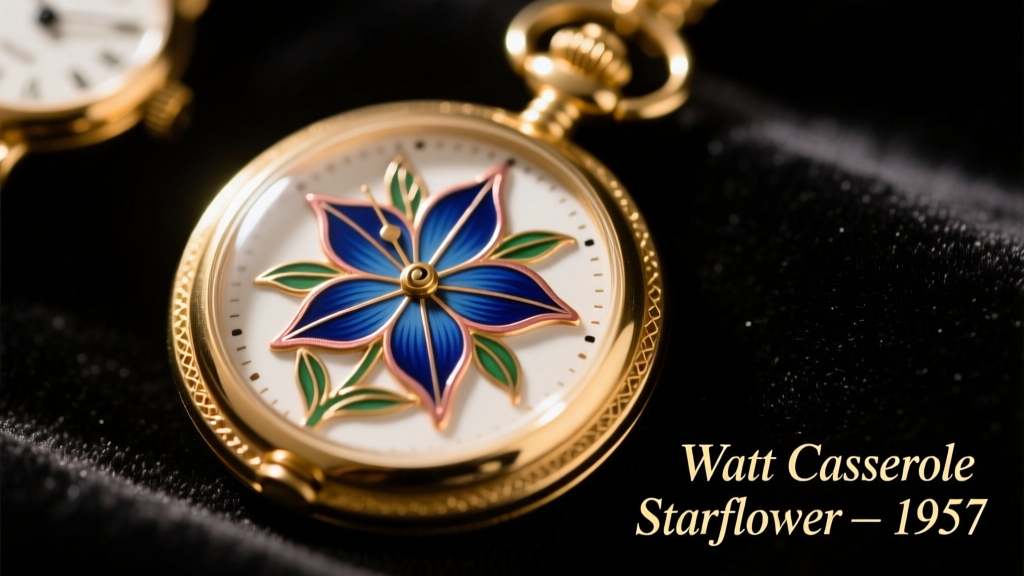
Watt Casserole Starflower: A Forgotten Masterpiece of Swiss Micro-Engineering and Art Deco Design
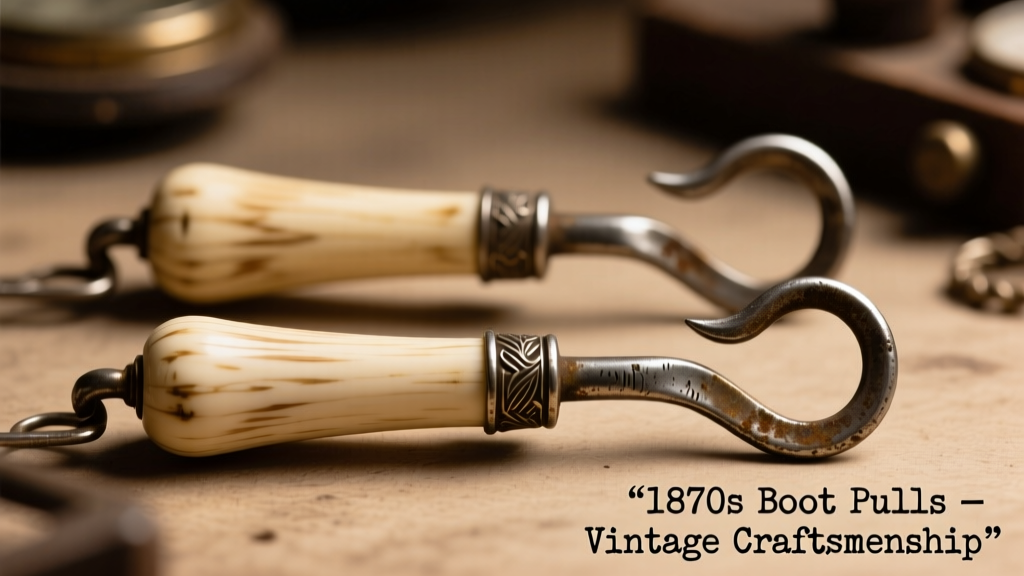
Ivory-Handled Steel Boot Pulls: Function, Form, and Collectibility of a Victorian-Era Dressing Tool
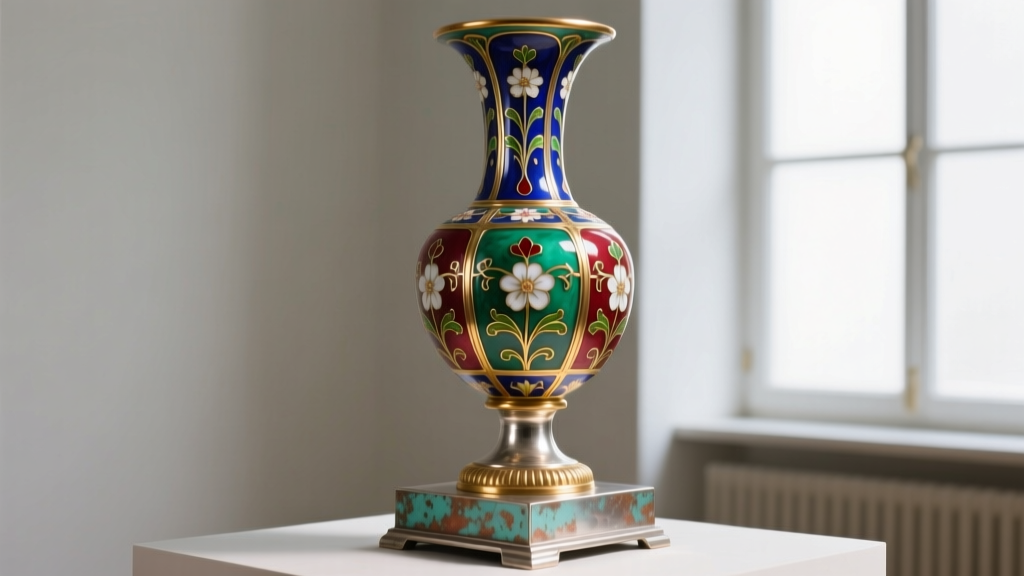
Austrian Cloisonné Baluster Vase, Silver-Gilt Copper Pedestal, Circa 1880 — Technical Analysis & Provenance Context

The Popeye Toy Acrobat Box: A Rare 1930s Tin Litho Treasure from the Fleischmann Yeast Promotions

Russian Double-Edged Sword, 23-Inch Gold-Inlaid Blade, Horn Handles & Steel Mounts: Provenance, Craftsmanship, and Auction Value Analysis
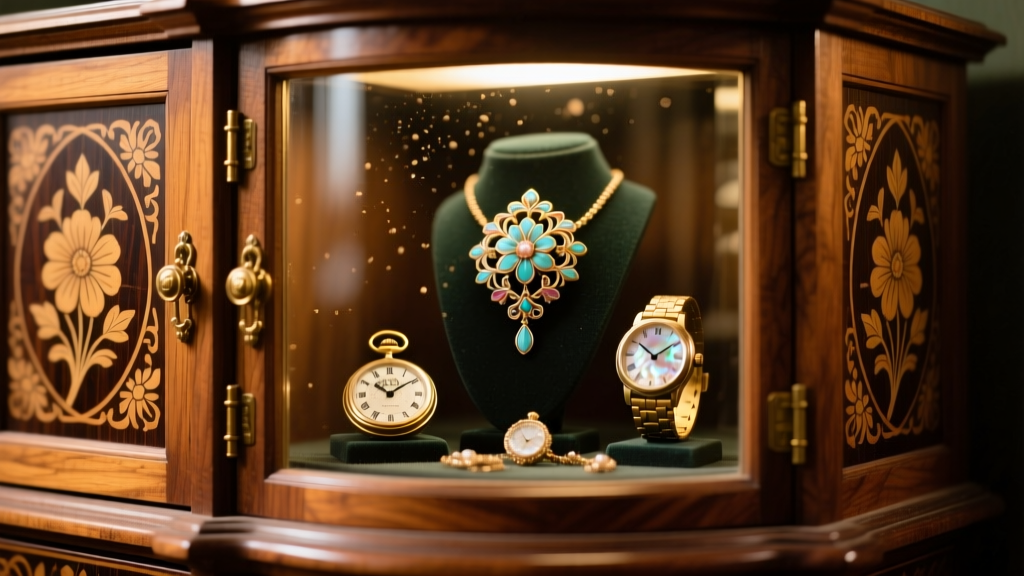
Georgian-Inspired Corner Curio Cabinet in Fruitwood: A 70½-Inch Masterpiece of 18th-Century Design Revival

Mother-of-Pearl Glass Vase with Coralene Seaweed Motif: A Study of a Rare Pink Cylindrical Neck Vase, c. 1925–1935