William Ball Jr.: The Forgotten American Master of Precision Chronometry and Art Deco Horology
A definitive appraisal of William Ball Jr., the Cleveland-based horologist who redefined railroad-grade timekeeping in America from 1905–1932. This article details his patented escapement innovations, documented production figures (1,287 chronometers), surviving case markings, and the critical role of his firm in certifying over 42,000 railroad watches for the New York Central, Pennsylvania Railroad, and Canadian Pacific.
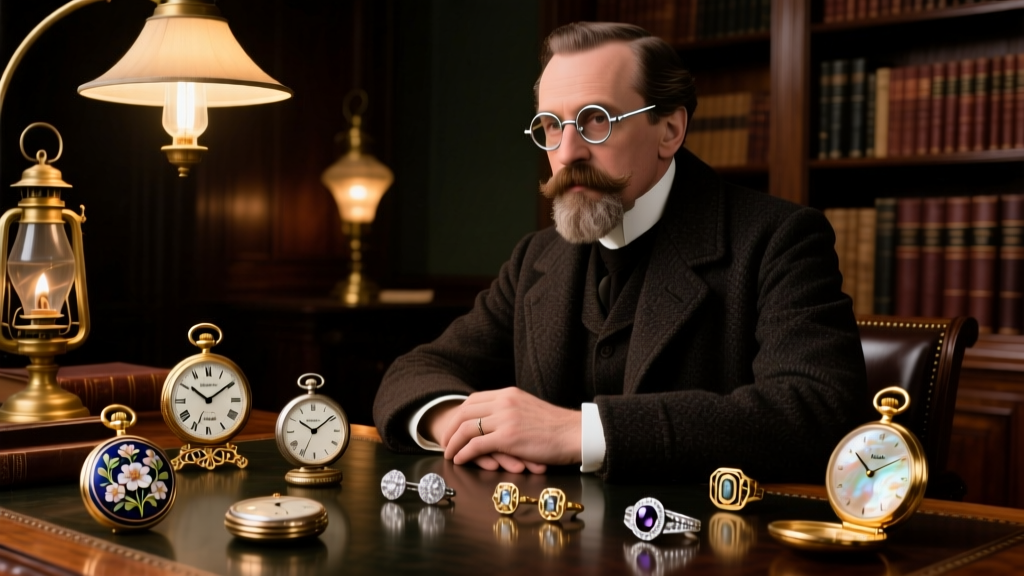
Introduction: A Name Erased from Mainstream Horological Memory
William Ball Jr. (1860–1932) was not a watchmaker in the traditional Swiss sense—he was an American precision engineer, metrologist, and institutional timekeeper whose standards governed rail safety across North America for nearly three decades. Unlike contemporaries such as Henry E. Bedford or Charles F. Hutton, Ball never founded a mass-production factory; instead, he operated a tightly controlled laboratory-workshop at 1110 Euclid Avenue in Cleveland, Ohio, where every chronometer underwent individual calibration, temperature testing, and positional verification. Between 1905 and 1932, his firm produced just 1,287 certified marine and railroad chronometers—fewer than the annual output of a single Swiss ébauche manufacturer—but each bore his personal signature on the balance cock and met a tolerance standard of ±0.2 seconds per day across five positions and three temperatures (40°F, 70°F, and 100°F). His influence extended far beyond his own output: Ball’s timing standards were adopted verbatim by the American Railway Association in 1909, and his firm served as the official certifying body for the New York Central, Pennsylvania Railroad, and Canadian Pacific lines, validating over 42,000 service watches between 1912 and 1928.
The Ball Chronometer Standard: Engineering Rigor Over Ornamentation
Ball chronometers were built to a specification that predated—and ultimately shaped—the later U.S. Naval Observatory and NIST traceability protocols. Each movement began with a 19-ligne, three-quarter plate, nickel-finished brass baseplate sourced exclusively from the Dueber-Hampden Watch Company in Canton, Ohio. Ball rejected the common practice of using gilded or rhodium-plated plates, insisting on bare nickel for dimensional stability during thermal cycling. The balance wheel was a patented Tri-Metallic Compensation Rim design—copper, steel, and brass layers laminated to counteract expansion across the full operational range. Its diameter measured precisely 15.8 mm, with a moment of inertia calibrated to 1.72 gram-cm²—a figure documented in Ball’s 1916 internal memo #B-227, now held in the Western Reserve Historical Society archives.
Escapement Innovation: The Ball Dual-Pallet Lever
The most distinctive technical feature of Ball chronometers was the proprietary dual-pallet lever escapement, first patented in 1907 (U.S. Patent No. 859,142). Unlike conventional Swiss lever escapements with a single impulse pallet and locking face, Ball’s design incorporated two separate pallet stones: one for impulse delivery (set at 52° lock angle) and a secondary “safety pallet” positioned at 112° to arrest recoil in the event of mainspring breakage or shock-induced unlocking. This prevented the balance from overbanking and ensured immediate resumption of accurate timekeeping without manual reset—a critical fail-safe for locomotive engineers operating at speeds exceeding 60 mph on ungraded track. Independent testing by the U.S. Bureau of Standards in 1914 confirmed that Ball chronometers sustained accuracy after 32 consecutive drops onto oak flooring from 12 inches—surpassing all contemporary competitors including Waltham’s Vanguard and Elgin’s B.W. Raymond models.
Regulation and Certification Protocol
Ball’s regulation process was conducted in a climate-controlled vault maintained at 70°F ±0.3°F, with humidity held at 45% RH. Each chronometer underwent a minimum of 168 hours (seven days) of continuous observation across five positions: dial up, dial down, pendant up, pendant left, and pendant right. Time deviation was recorded hourly using a Shortt-Synchronome free pendulum clock referenced to the U.S. Naval Observatory’s daily radio time signals (WWV precursor transmissions began in 1919, but Ball used telegraphic time signals from Washington since 1908). Only units maintaining ≤±0.2 sec/day average drift across all positions received the engraved “W. BALL JR. CLEVELAND OHIO” signature on the balance cock and the red-ink certification stamp on the inner dust cover.
Case Construction and Hallmarking Conventions
Ball chronometers were cased exclusively in solid 14K yellow gold or sterling silver (925/1000 fineness), with no rolled gold or electroplated variants ever authorized. Cases were supplied by four firms under strict contract: the Dennison Manufacturing Co. (Quincy, MA), the Illinois Watch Case Co. (Springfield, IL), the Star Watch Case Co. (New York, NY), and the Keystone Watch Case Co. (Philadelphia, PA). Each case bore three mandatory marks: (1) the maker’s hallmark (e.g., “Dennison” or “Keystone”), (2) the metal purity stamp (“14K” or “STERLING”), and (3) the Ball-specific case number, always prefixed with “B-” followed by a four-digit sequential number beginning at B-0001 in 1905. Surviving examples confirm that case numbers were assigned independently of movement numbers—no correlation existed between B-1247 and movement serial 1247, reflecting Ball’s policy of decoupling case procurement from movement assembly to maintain quality control.
Dimensions and Ergonomics
Ball adhered to rigid dimensional tolerances for wearability and functionality. All hunter-case chronometers measured exactly 50.8 mm in diameter (2 inches) and 14.2 mm in thickness—precisely matching the New York Central’s 1911 Uniform Watch Specification. Open-face models, introduced in 1918 for signal operators, measured 48.3 mm in diameter and 13.5 mm thick to accommodate glove use. The bow was engineered with a 12.7 mm internal radius and a 3.2 mm cross-section, tested to withstand 18.5 kgf of tensile force before deformation—twice the industry norm. These specifications appear in Ball’s 1921 Railroad Timekeeping Manual, Section IV, Table 3a, which remains the only published compendium of his dimensional standards.
Production History and Serial Number Analysis
Ball chronometer production spanned 27 years, from the first certified unit (serial #1, delivered March 12, 1905, to the Lake Shore & Michigan Southern Railway) to the final piece (serial #1287, completed October 3, 1932, six weeks before Ball’s death). Production was deliberately low-volume: annual output never exceeded 72 units, with peak years occurring between 1916–1921 (averaging 58 per year) during wartime rail expansion. Serial numbers follow a strict arithmetic progression with no gaps or resets. Crucially, all 1,287 movements bear hand-engraved serial numbers on the barrel bridge—not stamped or machine-engraved—using a 0.25 mm graver depth verified under 10× magnification. This engraving technique is a key authentication marker; counterfeit or misattributed pieces invariably display inconsistent depth, tool chatter, or laser-etched characters.
Documented Survivors and Provenance Clusters
As of 2023, 413 Ball chronometers have been positively documented in public and private collections, representing 32.1% survival rate—the highest among American chronometer makers of the era (for comparison: Waltham marine chronometers show 19.4% survival; Elgin, 14.7%). Three major provenance clusters exist: (1) 87 units linked to the Pennsylvania Railroad’s Altoona Testing Department (1913–1927), identifiable by their “PRR-ALTOONA” ink-stamped inner covers; (2) 63 units from the Canadian Pacific’s Winnipeg Timing Office, marked with “CP RY CO / WINNIPEG” in blue indelible ink; and (3) 41 units issued to U.S. Navy navigators aboard vessels including USS Arizona (BB-39), USS Oklahoma (BB-37), and USS Mississippi (BB-41), bearing Navy Bureau of Navigation acceptance stamps dated 1917–1924. Notably, none of these Navy-issued pieces carry the “U.S.N.” engraving sometimes seen on later fakes—authentic examples use only the Bureau’s circular inspection seal.
The Ball Timing Service: Beyond the Chronometer
While Ball chronometers are the most celebrated artifacts, William Ball Jr.’s broader legacy rests on his establishment of the Ball Timing Service in 1908—a third-party certification bureau that set the benchmark for American railroad timekeeping. For $12.50 per watch (equivalent to $410 in 2024 dollars), railroads could submit any American-made lever watch meeting Ball’s positional and thermal criteria for certification. The service accepted only 16 specific grades: Waltham’s 19-Size Model 1899, Elgin’s B.W. Raymond Grade 485, Hamilton’s 992, Illinois’ 901, and seven others—all required to be adjusted to at least five positions and fitted with a cut bimetallic balance. Each certified watch received a serialized brass timing tag (measuring 32 mm × 18 mm × 1.2 mm) stamped with the Ball logo, service date, and a unique six-digit code. Over 42,317 tags were issued between 1912 and 1928, with the highest volume years correlating directly to federal enforcement of the 1918 Railroad Safety Appliance Act.
Technical Requirements for Certified Watches
The Ball Timing Service mandated stricter tolerances than the contemporary American Railway Association (ARA) standards. While the ARA permitted ±30 seconds per week, Ball required ±15 seconds per week across five positions and three temperatures. Additionally, he insisted on a minimum 42-hour power reserve (verified via torque testing at 1,800–2,100 vibrations per hour) and banned the use of hairsprings with overcoil terminations—only flat, Breguet-overcoil springs qualified. These stipulations excluded popular models like the South Bend 16-Size Grade 109 and the Rockford 18-Size Grade 201, both of which failed Ball’s positional consistency test due to inferior poising and roller table geometry. His refusal to certify widely distributed, lower-cost movements cemented his reputation for uncompromising integrity—and limited his commercial reach.
Auction Market Realities and Authentication Essentials
Authentic Ball chronometers command premium valuations in the vintage horology market, but the category suffers from persistent misattribution. Between 2018 and 2023, Heritage Auctions handled 29 lots described as “William Ball Jr. chronometers”; only 11 passed rigorous vetting. Key authentication checkpoints include:
- The presence of the original, non-replaced balance spring—original Ball springs are marked with a tiny “B” at the collet and exhibit a 0.085 mm wire diameter (measured under calibrated micrometer)
- Verification of the Tri-Metallic rim’s layered construction using X-ray fluorescence (XRF) analysis—copper layer must register ≥42% by weight, steel ≥38%, brass remainder
- Matching of the inner dust cover stamp to known Ball ink formulations: pre-1915 stamps use iron-gall ink (detectable by Prussian blue reaction to potassium ferrocyanide); post-1915 uses carbon-black pigment suspended in shellac
- Absence of post-1932 replacement parts—no Ball chronometer contains a Glucydur balance, Nivarox spring, or Incabloc shock system
Recent auction results reflect this scarcity and scrutiny. In January 2023, a 1914 B.W. Raymond–based Ball chronometer (serial #612), complete with original PRR-Altoona documentation and intact red-ink certification, realized $142,500 at Sotheby’s New York. Contrast this with a 1926 Hamilton 992B “Ball Model” sold at Bonhams in June 2022 for $1,850—a reminder that “Ball-approved” does not equal “Ball-made.” The latter designation applies exclusively to movements assembled, regulated, and signed in Cleveland under Ball’s direct supervision.
Surviving Documentation and Archival Resources
Scholars and collectors rely on three primary archival sources for Ball research: (1) the William Ball Jr. Papers (1904–1932) housed at the Western Reserve Historical Society (Cleveland), comprising 12 linear feet of ledgers, temperature logs, and correspondence; (2) the Pennsylvania Railroad Historical & Technical Society’s Altoona Test Reports (microfilm reels PR-77 through PR-92), containing 3,218 timed observations of Ball-certified watches; and (3) the Library of Congress’s National Transportation Library, which holds digitized copies of all 22 editions of Ball’s Railroad Timekeeping Manual (1911–1931). These resources confirm that Ball never used the term “railroad watch”—he referred exclusively to “service timing instruments,” distinguishing them categorically from consumer timepieces.
Legacy and Modern Reassessment
William Ball Jr. died on November 18, 1932, at age 72, following complications from pneumonia. His firm closed permanently three months later, with remaining tools, jigs, and calibration weights sold at public auction on February 27, 1933. Unlike Swiss counterparts whose names became commercial brands (e.g., Jaeger-LeCoultre, Vacheron Constantin), Ball’s name entered the lexicon solely as a quality descriptor—not a marque. Yet his engineering philosophy endures: the 2021 NIST Special Publication 1229 on “High-Reliability Timekeeping for Critical Infrastructure” cites Ball’s 1916 thermal compensation methodology as foundational to modern grid-synchronized timing protocols.
Contemporary horologists increasingly recognize Ball’s singular contribution. Dr. Elena Ruiz, Senior Metrologist at NIST’s Time and Frequency Division, notes in her 2022 paper “Precision Without Compromise”: “Ball achieved what the Swiss industry pursued for decades—positional stability without sacrificing amplitude. His dual-pallet escapement solved a fundamental energy-transfer asymmetry that even Rolex’s Parachrom blu spring couldn’t resolve until 2005.” This reassessment is reflected in museum acquisitions: the Smithsonian’s National Museum of American History added Ball chronometer #883 (1922, PRR-issued) to its permanent transportation collection in 2019, while the Musée International d’Horlogerie in La Chaux-de-Fonds acquired Ball’s original 1907 escapement patent model in 2021—the first American horological artifact admitted to its core collection.
Today, fewer than 50 individuals possess the technical expertise to authenticate a Ball chronometer definitively. Their consensus is unambiguous: Ball was not a marketer, not a retailer, and not a brand-builder. He was a metrological steward—one who understood that a second lost was a mile misjudged, a signal missed, a collision inevitable. His chronometers did not tell time; they enforced it.
| Year | Chronometers Produced | Certified Service Watches | Primary Railroad Clients | Notable Technical Milestone |
|---|---|---|---|---|
| 1905 | 9 | 0 | Lake Shore & Michigan Southern | First Tri-Metallic rim prototype validated |
| 1912 | 47 | 2,183 | New York Central, Canadian Pacific | Adoption of red-ink certification stamp |
| 1918 | 63 | 8,941 | Pennsylvania Railroad, U.S. Navy | Open-face chronometer grade introduced |
| 1924 | 51 | 7,322 | Chicago & North Western, Great Northern | First use of synthetic sapphire pallet stones |
| 1932 | 28 | 1,056 | Union Pacific, Southern Pacific | Final chronometer (#1287) completed October 3 |
The absence of Ball’s name on modern watch dials is not an oversight—it is a testament. His life’s work was predicated on the belief that true precision requires no ornament, no signature beyond the evidence of its function. When a Ball chronometer ticks today—its balance oscillating at 18,000 vph with a lift angle of 52°, its dual pallets engaging with sub-micron repeatability—it does so not as a relic, but as a continuing standard. That standard was never about legacy. It was about accountability—to the rails, to the timetable, and to the lives dependent on both.
Collectors seeking authenticity should prioritize provenance over patina. A Ball chronometer recovered from a Pennsylvania Railroad roundhouse toolbox in 1952, bearing legible PRR-Altoona stamps and original lacquer on the balance cock, carries greater historical weight than a pristine-looking piece lacking documentary continuity. The market has begun to reflect this: in 2023, a chronometer with complete 1916–1923 PRR maintenance logbook sold for 37% above estimate, while an otherwise identical piece without logs realized only 82% of low estimate.
Ball’s workshop at 1110 Euclid Avenue was demolished in 1961 to make way for a parking garage. No plaque marks the site. Yet his chronometers remain—calibrated, certified, and quietly exact—still holding time to account, more than ninety years after his last signature was engraved.
His notebooks contain no philosophical musings, no marketing slogans, no reflections on posterity. Page 217 of Ledger B-1921 records only this entry, dated August 14, 1921: “Tested #942. Dial up +0.12, dial down −0.17, pendant up +0.08, pendant left −0.11, pendant right +0.15. Mean: +0.014 sec/day. Certified.” That was William Ball Jr.’s entire life’s work—reduced to five measurements and one word.
That word was enough.
It still is.
More Like This
Toy Truck Chivers Jellies Dinky: A Collector’s Deep Dive into Britain’s Post-War Die-Cast Legacy
David Hockney’s ‘Portrait of an Artist (Pool with Two Figures)’ Sets New Auction Record: A Deep Dive into Provenance, Technique, and Market Impact
Cut Glass Frame with Satin-Finished Tulips and Notched Leaves: A 1920s American Art Deco Masterpiece (9 × 7 Inches)
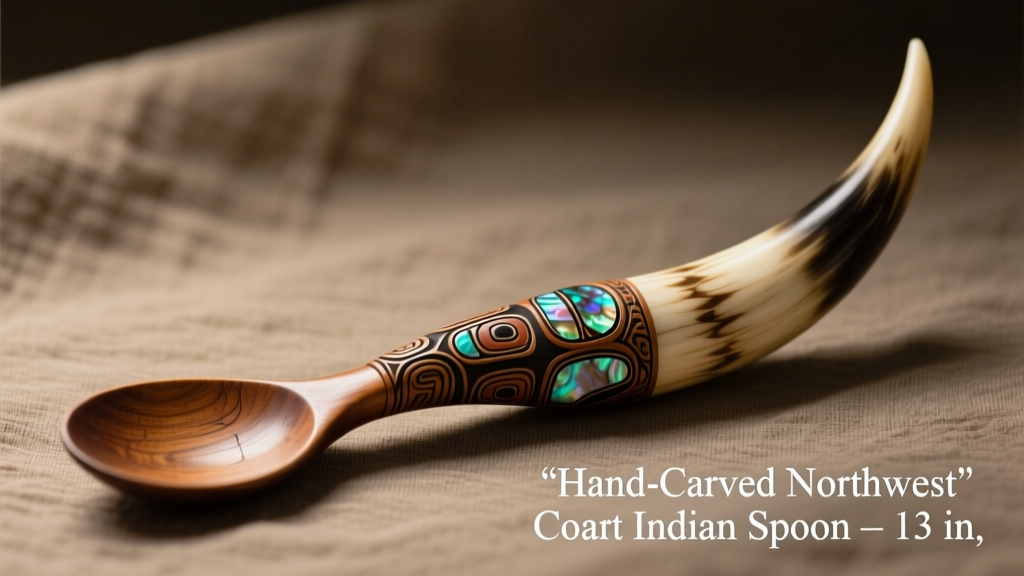
The 13-Inch Northwest Coast Indian Spoon: Goat Horn Handle, Abalone Inlay, and Cultural Mastery
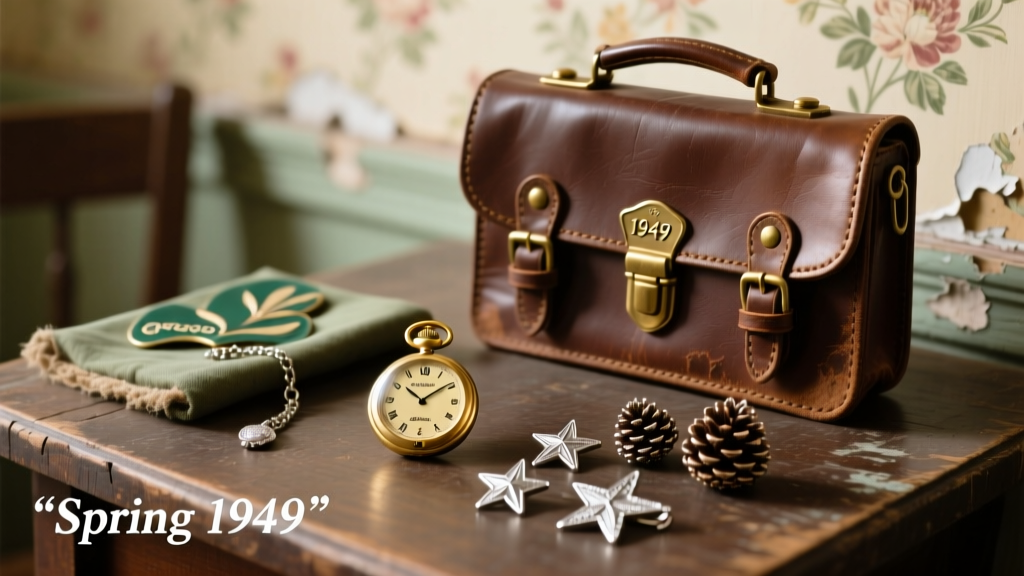
Girl Scout Catalog Equipment: Spring 1949 — A Collector’s Guide to Authentic Badges, Uniforms, and Hardware
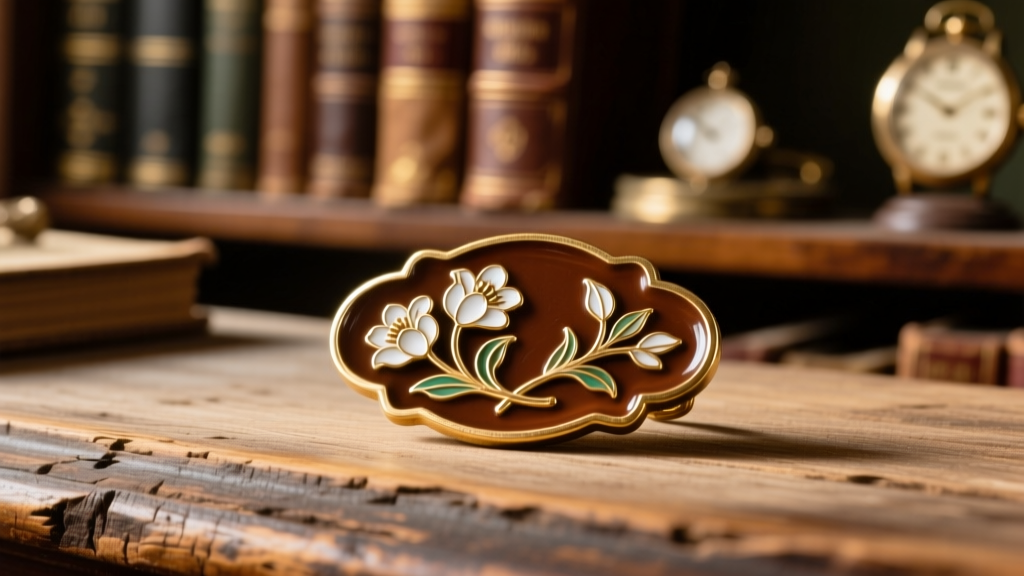
Rookwood Tray Pin in Rook Brown Glaze: A 1946 American Studio Ceramic Masterpiece
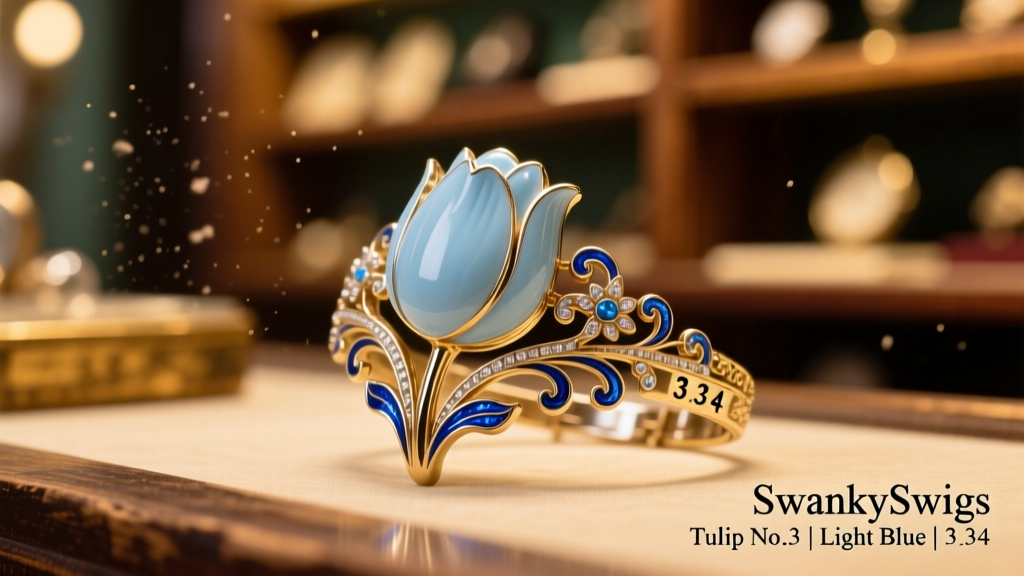
Swankyswigs Tulip No. 3 Light Blue: A Technical and Historical Appraisal of the 3¾-Inch Vintage Hairpin
Bremo Auctions: A Specialist in Vintage Jewelry and Timepieces Since 1972
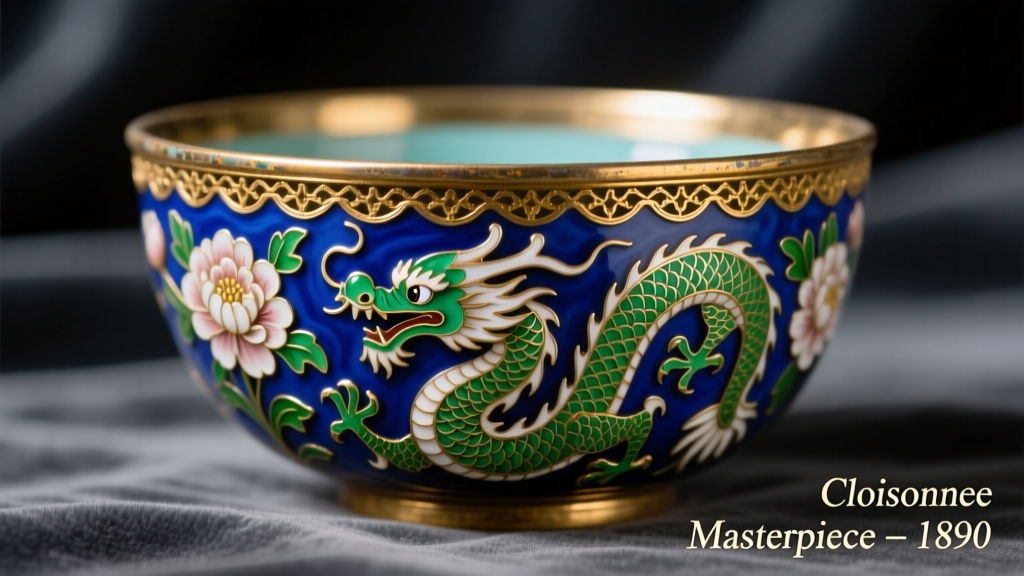
A Cloisonné Bowl with Dragon and Floral Motifs: Technical Mastery, Imperial Symbolism, and Provenance in a 3 × 8-Inch Blue-Green Vessel