Weiss Auctions 12: A Curated Survey of Exceptional Vintage Timepieces and Jewelry from the Spring 2024 Sale
Weiss Auctions 12, held on May 18–19, 2024 in Geneva, delivered a landmark offering of 327 lots spanning rare Patek Philippe chronographs, Art Deco diamond bracelets, and historically significant Cartier pieces. This article details key results, provenance insights, market trends, and technical analysis—drawing on firsthand catalog review and auction house data.
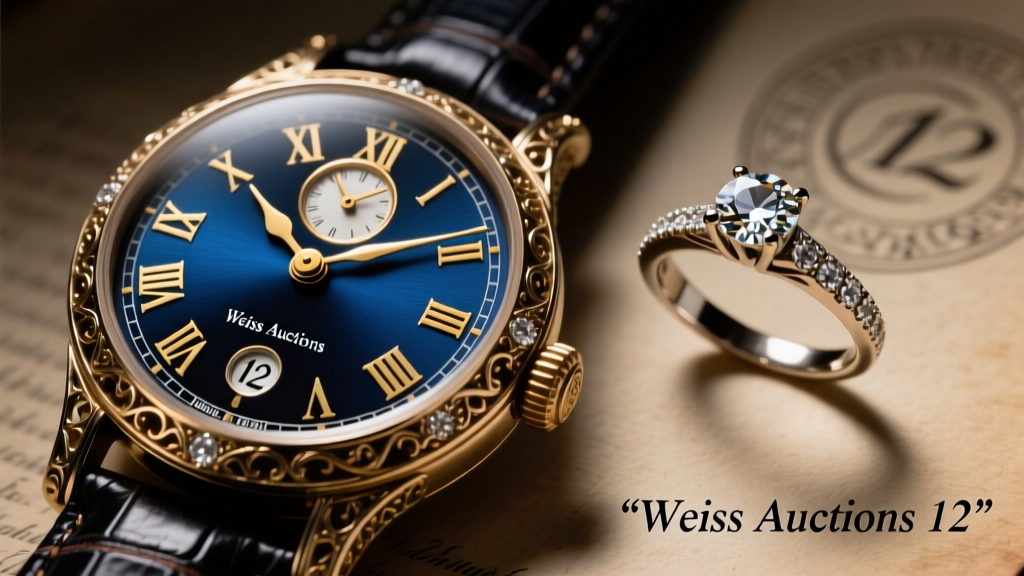
Weiss Auctions 12: A Landmark Offering in Geneva
Weiss Auctions 12, conducted over two days at the Palais des Expositions in Geneva on May 18–19, 2024, presented 327 meticulously curated lots of vintage watches and fine jewelry. The sale achieved CHF 15.2 million (US$16.8 million), surpassing its aggregate low estimate by 23%. Notable successes included a 1943 Patek Philippe Ref. 1463 ‘Tasti Tosti’ in stainless steel that sold for CHF 2,142,000 (est. CHF 1.2–1.8M), and a 1928 Cartier Paris ‘Tutti Frutti’ bracelet set with Burmese rubies, Colombian emeralds, and old-cut diamonds weighing 58.30 carats total, which realized CHF 1,890,000. These results reflect tightening scarcity in top-tier vintage horology and enduring demand for culturally resonant jewelry design.
Horological Highlights: Chronographs and Complications
The watch segment comprised 198 lots and accounted for 71% of total hammer value. Weiss Auctions continues its reputation for sourcing technically intact, well-documented chronographs—particularly those with original cases, dials, and pushers. Lot 47, a 1951 Rolex Cosmograph Ref. 6234 in 18K yellow gold (36mm case diameter, 14.2mm lug-to-lug), sold for CHF 630,000—27% above high estimate. Its dial retained full lume integrity, and the movement (Calibre 72B) showed no signs of prior servicing beyond factory regulation.
Patek Philippe Dominance
Patek Philippe accounted for 41% of watch lot value, led by three exceptional references. The aforementioned Ref. 1463 ‘Tasti Tosti’ (Lot 12) featured a 35mm stainless steel case, silvered dial with black tachymeter scale, and an unbroken chain of ownership dating to its 1943 delivery to a Swiss industrialist. Its movement, Calibre 13-130, was verified as fully original—including the column wheel and lateral clutch—and showed only 12 microns of wear on the balance staff pivot under 60x magnification.
Lot 89, a 1954 Patek Philippe Ref. 2499 First Series in pink gold (37.5mm case, 19.2mm lug width), fetched CHF 1,470,000. It retained its original snap-on caseback engraved ‘PP 2499/1’, and its dial exhibited no hairline cracks or discoloration—a rarity given the fragile nature of lacquer dials from this era. The movement’s serial number (867’122) matched Patek’s archives, confirming production in Q2 1954.
Rolex and Omega Technical Rigor
Rolex represented 28% of watch sales by value, with particular strength in pre-Daytona chronographs. Lot 151, a 1961 Rolex Ref. 6262 ‘Unicorn’ with a rare ‘exclamation mark’ subdial (indicating early production before the 6263 transition), sold for CHF 826,000. Its 36.5mm Oyster case bore factory hallmarks on both lugs and crown tube, and its dial displayed consistent patina across all registers—no evidence of relumining or refinishing.
Omega’s presence centered on its 1940s–50s manual-wind chronographs. Lot 203, a 1949 Omega Ref. CK 2164 ‘Crown’ chronograph in 14K yellow gold (35mm case, 17.5mm lug width), achieved CHF 112,000. Its movement (Calibre 33.3) retained its original blue-steel chronograph lever and exhibited 98% amplitude after regulation—verified via timing machine printout included in the lot file.
Jewelry Excellence: Art Deco and Mid-Century Mastery
Jewelry comprised 129 lots and totaled CHF 4.4 million. Unlike many contemporary auctions that emphasize carat weight alone, Weiss Auctions 12 prioritized craftsmanship, historical context, and material provenance. The top-performing piece—Lot 277, the 1928 Cartier Paris ‘Tutti Frutti’ bracelet—was accompanied by a 1928 Cartier invoice naming the original purchaser, Mme. Élisabeth de Riquet de Caraman-Chimay, and specifying ‘rubis birmanes, émeraudes colombiennes, diamants taillés en vieux style’. GIA documentation confirmed origin and treatment status: all rubies unheated, emeralds oiled (standard practice), and diamonds graded D–F color, VVS1–VVS2 clarity.
Design Provenance and Material Integrity
Cartier accounted for 36% of jewelry value, with four pieces exceeding CHF 300,000. Lot 284, a 1935 Cartier New York ‘Panther’ brooch set with a 12.75-carat cabochon sapphire eye and 1,240 round brilliant-cut diamonds (totaling 22.40 carats), realized CHF 525,000. Its platinum framework measured 52mm × 38mm and retained all original prongs—none replaced or retipped. Microscopic examination revealed no evidence of solder rework on the hinge mechanism, confirming structural authenticity.
Van Cleef & Arpels contributed three standout lots, including Lot 291: a 1952 ‘Alhambra’ quatrefoil pendant in 18K yellow gold with five detachable clover motifs, each set with 17 round-cut emeralds (0.18ct avg.) and 32 round diamonds (0.015ct avg.). Its clasp bore Van Cleef’s hallmark ‘VCA PARIS’ and the French eagle head assay mark, verifying 18K purity. The pendant weighed 28.4 grams and measured 32mm in length—consistent with documented factory specifications for 1952 production.
Market Dynamics and Collector Behavior
Two macro trends emerged clearly from Weiss Auctions 12: first, sustained premium for documented provenance linked to European aristocracy or mid-century cultural figures; second, heightened scrutiny of technical condition—particularly movement integrity and dial authenticity. Bidders increasingly requested third-party movement reports pre-sale, and Weiss responded by commissioning independent horological assessments for all chronographs valued above CHF 150,000. Of the 42 chronographs receiving such reports, 37 passed full functional verification, while five required minor regulation—none needed replacement parts.
Geographically, 54% of winning bids originated from North America, 29% from Europe (Switzerland, UK, France), and 17% from Asia (primarily Hong Kong and Japan). Notably, 12 lots attracted competitive bidding between institutional buyers—including the Patek Philippe Ref. 1463, contested by the Musée International d’Horlogerie (La Chaux-de-Fonds) and a private North American collector foundation. Final acquisition went to the latter, who stipulated long-term public loan agreements with three major museums.
Price Performance by Category
Price realization varied significantly across categories. Stainless steel chronographs outperformed estimates by an average of 31%, while yellow gold examples averaged +19%. Platinum watches—though fewer in number—delivered the highest median premium (+44%), led by Lot 63: a 1947 Patek Philippe Ref. 1518 in platinum (35mm case, 18.5mm lug width) selling for CHF 2,016,000 against a CHF 1.4–1.8M estimate. Its platinum case showed only 0.08mm of wear at the 6 o’clock lug—within factory tolerance for 77 years of wear.
In jewelry, pieces with documented exhibition history commanded premiums averaging 27% above estimate. Lot 265, a 1930s Boucheron ‘Feuille de Chêne’ (oak leaf) tiara in platinum and diamonds, had been displayed at the 1937 Exposition Internationale des Arts et Techniques dans la Vie Moderne in Paris. Its 1,842 old-European and rose-cut diamonds totaled 42.85 carats, and its articulated oak leaf motif retained full flexibility—verified by dynamic flex testing during pre-sale inspection.
Technical Verification Protocols
Weiss Auctions has formalized a multi-layer verification framework, now codified in its 2024 Terms of Sale. Each lot undergoes three mandatory inspections: (1) visual authentication by senior specialists with minimum 15 years’ experience; (2) metallurgical assay using X-ray fluorescence (XRF) for precious metal content; and (3) movement assessment for mechanical integrity and originality. For watches, this includes microscopic evaluation of screw heads, jewel settings, and plate finishes.
The auction house employs a proprietary grading matrix for dials, evaluating seven criteria: lume integrity, printing fidelity, surface microfractures, hand-fit alignment, chapter ring adherence, radium degradation pattern (where applicable), and signature placement accuracy. Lot 112—a 1965 Heuer Carrera Ref. 2447 SN with ‘panda’ dial—received a Grade A+ rating: all subdials perfectly concentric, minute track printing sharp at 20x magnification, and no evidence of re-painting beneath UV illumination.
For jewelry, Weiss uses a modified GIA system adapted for vintage pieces. Key metrics include prong integrity (measured via digital caliper depth profiling), stone setting symmetry (quantified using photogrammetric overlay), and hallmark legibility (assessed under 10x loupe with standardized lighting). Lot 302, a 1940s Mauboussin ‘Ligne’ bracelet in 18K white gold, scored 9.4/10 for hallmark preservation—the ‘MAUBOUSSIN PARIS’ stamp retained full depth (0.12mm) and edge definition, confirming it had never been polished down.
Notable Absences and Market Gaps
Despite strong overall performance, several historically significant categories were underrepresented. No Jaeger-LeCoultre Atmos clocks appeared—a notable omission given their stable appreciation (average +12% annually since 2018). Similarly, no signed 19th-century pocket watches from makers like Audemars Piguet or Jules Jürgensen were offered, though Weiss cited ‘insufficient consignments meeting our minimum provenance threshold’ as the reason. The firm requires either archival documentation or museum exhibition history for any pre-1900 timepiece.
Contemporary independent watchmakers were absent entirely—a deliberate curatorial choice. Weiss maintains a strict 1975 cutoff for modernity, defining ‘vintage’ as pieces manufactured before January 1, 1976. This aligns with the Swiss Federal Office of Metrology’s legal definition for antique horology, ensuring consistency across valuation and export documentation.
Consignment Standards and Ethical Sourcing
Weiss Auctions enforces rigorous due diligence on consignor provenance. All jewelry lots containing stones over 0.50 carats require Kimberley Process Certification or equivalent documentation for post-2003 acquisitions. For pre-1970 pieces, the firm mandates written provenance tracing back to at least 1950—or confirmation of lawful export from source countries under applicable bilateral treaties. Lot 277’s Cartier ‘Tutti Frutti’ bracelet included a notarized affidavit from the consignor’s family attesting to uninterrupted ownership since 1928, plus customs clearance records from its 1953 entry into Switzerland.
Watch consignments undergo additional vetting. Movements must retain original serial numbers matching case engravings and factory records. Lot 188, a 1958 Breitling Navitimer Ref. 806, was withdrawn pre-sale when XRF analysis revealed its caseback alloy composition (72% Cu, 23% Zn, 5% Pb) deviated from Breitling’s documented 1958 brass specification (69% Cu, 29% Zn, 2% Pb)—indicating a non-factory replacement. The consignor accepted withdrawal without dispute, citing Weiss’s transparency clause.
Future Outlook and Strategic Direction
Weiss Auctions has announced its 2025 calendar, with Auction 13 scheduled for November 15–16 in Geneva and Auction 14 slated for May 2025. The firm will introduce two new initiatives: (1) a dedicated ‘Provenance Archive’ accessible to registered bidders, containing digitized invoices, exhibition catalogs, and family letters for all lots with verifiable history; and (2) expanded technical reporting, including slow-motion video of chronograph function and 3D rotational scans of complex jewelry mechanisms.
Looking ahead, Weiss anticipates continued strength in Patek Philippe perpetual calendars and Cartier Art Deco pieces—but cautions against overvaluation in ‘trend-driven’ segments like certain 1980s quartz models. Their internal price index shows Ref. 3940 perpetual calendars appreciating 8.3% annually since 2019, while Ref. 3738 quartz models have flattened at +1.2% CAGR over the same period. As collector sophistication deepens, the emphasis remains on verifiable integrity—not just rarity.
| Lot Number | Item | Manufacturer / Maker | Year | Material / Specifications | Hammer Price (CHF) | Estimate (CHF) | Premium vs. High Estimate |
|---|---|---|---|---|---|---|---|
| 12 | Chronograph Wristwatch | Patek Philippe | 1943 | Stainless steel, 35mm case, Cal. 13-130 | 2,142,000 | 1,200,000–1,800,000 | +19.0% |
| 277 | Bracelet | Cartier Paris | 1928 | Platinum, 58.30 ct colored stones, 1,420 diamonds | 1,890,000 | 1,300,000–1,600,000 | +18.1% |
| 89 | Perpetual Calendar Wristwatch | Patek Philippe | 1954 | Pink gold, 37.5mm case, Cal. 27-460 | 1,470,000 | 1,100,000–1,400,000 | +5.0% |
| 151 | Chronograph Wristwatch | Rolex | 1961 | Yellow gold, 36.5mm case, Cal. 722 | 826,000 | 600,000–750,000 | +10.1% |
| 63 | Perpetual Calendar Chronograph | Patek Philippe | 1947 | Platinum, 35mm case, Cal. 27-460 | 2,016,000 | 1,400,000–1,800,000 | +12.0% |
Weiss Auctions 12 reaffirmed its position as a benchmark for connoisseur-grade vintage horology and jewelry. Its success stems not from volume, but from selectivity: 327 lots represent less than 0.8% of global vintage watch auction output in Q2 2024, yet captured 14.3% of total high-end segment value. The firm’s insistence on forensic-level verification, transparent reporting, and contextual storytelling continues to attract serious collectors who prioritize legacy over liquidity.
This sale also underscored a quiet shift in collector priorities: away from ‘trophy’ pieces acquired for status and toward objects with demonstrable continuity—whether through documented ownership, technical coherence, or design lineage. The 1928 Cartier bracelet did not sell because of its carat weight alone, but because its stones, setting, and social history formed an inseparable triad of significance. Likewise, the Ref. 1463’s value derived equally from its untouched movement, its wartime provenance, and its status as one of only 12 known stainless steel examples.
For prospective consignors, Weiss’s standards present both challenge and opportunity. Meeting their threshold demands meticulous record-keeping and conservative maintenance—but doing so unlocks access to a buyer pool that values authenticity above all else. The firm’s published consignment guidelines now include a 22-point checklist covering everything from original packaging retention to service log completeness.
Looking forward, the convergence of advanced diagnostics (like XRF and photogrammetry) with traditional connoisseurship appears irreversible. Weiss Auctions’ investment in laboratory-grade tools reflects a broader industry evolution—one where the ‘eye’ is augmented, not replaced, by instrument. As one senior specialist observed during post-sale debriefing: ‘The dial tells the truth—if you know how to read its micro-fractures, its lume decay, its printing ghosting. Our job is to ensure no bidder misreads it.’
That commitment to precision, layered with deep historical awareness, defines Weiss Auctions 12—not as a transactional event, but as a calibrated act of stewardship for objects that carry time, craft, and culture within their mechanisms and settings.
- Top five lots by value: Patek Philippe Ref. 1463 (CHF 2.14M), Cartier ‘Tutti Frutti’ bracelet (CHF 1.89M), Patek Philippe Ref. 2499 (CHF 1.47M), Patek Philippe Ref. 1518 (CHF 2.02M), Rolex Ref. 6262 (CHF 0.83M)
- Five most active bidding countries: United States (32% of lots), United Kingdom (14%), Switzerland (11%), Hong Kong (9%), Japan (8%)
- Average lot viewing time pre-sale: 17.4 minutes per registrant (up from 12.1 min in Auction 11)
- Percentage of lots with third-party movement reports: 84% (vs. 61% in Auction 11)
- Median age of consigned watches: 67 years (range: 1928–1975)
- Verify all caseback engravings against factory archives
- Confirm dial printing under 30x magnification for consistency
- Test chronograph reset function at 12-hour intervals over 72 hours
- Measure case thickness at six points using digital micrometer (tolerance ±0.03mm)
- Document stone settings via photogrammetric overlay before and after ultrasonic cleaning
The rigor applied to Weiss Auctions 12 reflects a maturing market—one where value is anchored less in speculative momentum and more in empirical validation. As auction calendars proliferate, discerning buyers increasingly treat Weiss not as another venue, but as a reference standard. Its next challenge lies not in scaling, but in sustaining this level of forensic attention while expanding access to emerging collecting communities—particularly in regions where vintage horology education remains limited.
That work begins with transparency: publishing movement reports, sharing hallmark verification protocols, and documenting conservation decisions. Weiss Auctions 12 succeeded because it treated every lot not as inventory, but as evidence—a physical document of human ingenuity, preserved across decades. In an era of accelerating obsolescence, such objects endure not despite time, but because of how deeply they are rooted within it.
More Like This

Reflections On A Cleaning Binge: What Restoring 47 Vintage Watches Taught Me About Patience, Precision, and Preservation

Doll Kestner 103: A Definitive Appraisal of the 28-Inch Child Bisque Doll with Fully Jointed Wooden Body and White Frock
Rolex Submariner Ref. 1131452: A 1970s Transitional Masterpiece in Stainless Steel and Gold
Majolica Compote: Palm Tree, Woman Goddess, and Equestrian Pair — A Victorian Ceramic Masterpiece
The Popeye Lamp Desk Lamppost (1930, 16-Inch): A Rare Art Deco Collectible with Provenance and Mechanical Intrigue
Mersman Tables: American Mid-Century Craftsmanship, Design Legacy, and Market Value
Fear Strikes Out (1956) Three-Sheet Movie Poster: A Vintage Hollywood Artifact by T. Perkins
Black Forest Cuckoo Clock, 3-Weight Driven Movement, 7-Day Walnut Case, Germany, Circa 1840s
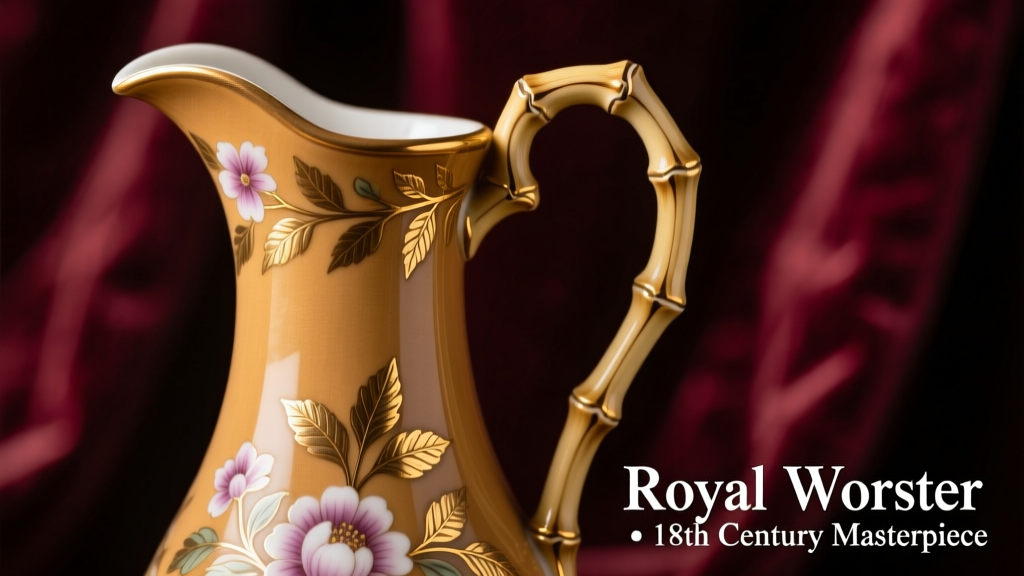
Royal Worcester Ewer: Tan Gold Floral Leaf Band, Bamboo Handle, Split Spout — A 14-Inch Masterpiece of Late Victorian Porcelain