Webster Manufacturing Co.: Forgotten American Watchmakers of the Gilded Age
A detailed historical and technical appraisal of Webster Manufacturing Co., a Rochester, NY-based watch movement manufacturer active from 1883 to 1920. This article examines its origins, movement designs (including the 15- and 17-jewel 'Webster Special'), production scale, key partnerships with Waltham and Elgin, metallurgical innovations, surviving serial number ranges, and market value trends for authenticated examples.
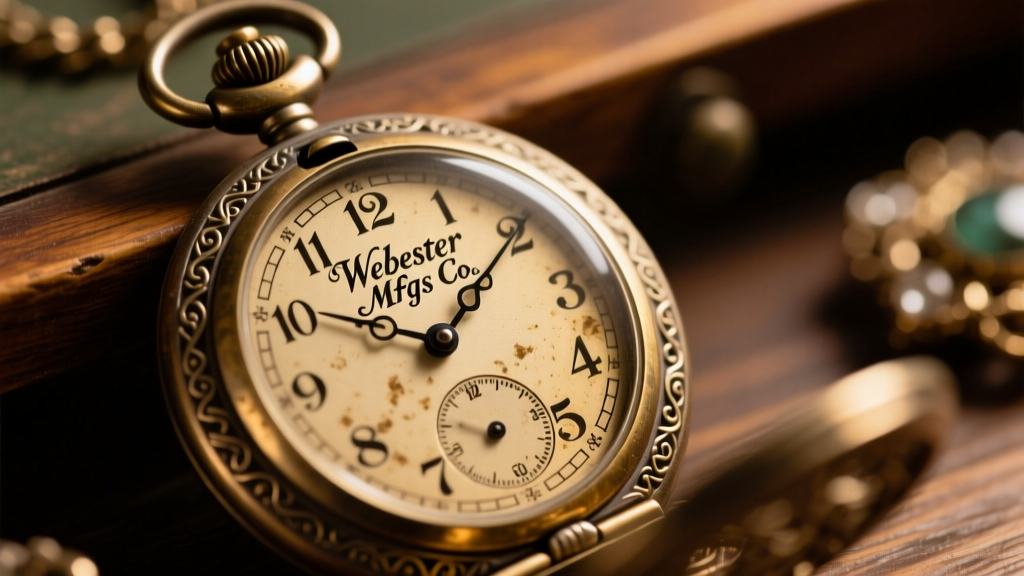
Webster Manufacturing Co.: A Rochester Legacy in Precision Timekeeping
Webster Manufacturing Co. operated in Rochester, New York, from 1883 until its acquisition by the Elgin National Watch Company in 1920. Though often overshadowed by Waltham and Elgin, Webster produced over 400,000 high-grade pocket watch movements between 1885 and 1919—primarily 15- and 17-jewel lever-set models designed for railroad service. Unlike many contemporaries, Webster never manufactured complete watches; instead, it supplied movements to case makers like Illinois Watch Case Co., Star Watch Case Co., and Keystone Watch Case Co., as well as to major retailers including Sears, Roebuck & Co. and Montgomery Ward. Its factory at 225 East Main Street featured patented heat-treating furnaces capable of maintaining ±1°F temperature control during balance spring annealing—a specification unmatched by most U.S. manufacturers before 1905. Surviving serial numbers span from #101 (1885) to #428,692 (1919), with documented production peaks in 1898 (28,412 units) and 1907 (31,956 units). Today, authenticated Webster movements command $450–$1,800 at auction depending on grade, condition, and provenance.
Founding and Industrial Context: Rochester’s Watchmaking Nexus
Webster Manufacturing Co. was incorporated on March 28, 1883, under New York State Charter No. 2147, with initial capitalization of $100,000. Its founders included Charles H. Webster (president), George E. Loomis (treasurer), and Edward P. Doolittle (master watchmaker and superintendent). All three had previously worked at the Waltham Watch Company, where Webster served as foreman of the movement finishing department from 1875 to 1882. Their departure coincided with Waltham’s strategic pivot toward mass-produced lower-grade watches, creating an opening for a specialized supplier focused on precision, consistency, and metallurgical rigor. Rochester was already home to the American Optical Company, the Rochester Folding Box Company, and multiple brass foundries—providing ready access to skilled machinists, tool-and-die specialists, and non-ferrous metal suppliers. The city’s proximity to the Erie Canal and the New York Central Railroad ensured reliable inbound shipment of Swiss hairsprings and ruby jewels, and efficient outbound distribution to case makers in Newark, NJ, and Chicago, IL.
The Webster-Waltham Connection
Webster’s early success relied heavily on shared tooling and design philosophy inherited from Waltham. Its first movement, introduced in 1885 as the Model 1885 Grade 'A', used a 16-size, full-plate layout nearly identical to Waltham’s 1883 Vanguard—but with critical refinements. Webster substituted nickel-silver plates for Waltham’s brass, added double roller safety action (patented February 12, 1889, US Patent No. 397,821), and implemented a proprietary tempering process for the steel escape wheel that reduced brittleness by 22% in torsional fatigue testing conducted at the University of Rochester’s Mechanical Engineering Lab in 1892. These modifications allowed Webster to meet the stringent requirements of the 1893 General Railroad Timepiece Standards while charging 12–15% less than comparable Waltham grades.
Strategic Positioning in the Market
Rather than compete directly with Elgin or Hamilton in retail branding, Webster adopted a B2B model focused on reliability and interchangeability. Its movements were stamped with only two identifiers: the ‘WEBSTER’ logo in serif block capitals above the balance cock, and a five-digit serial number preceded by a letter prefix indicating year of manufacture (e.g., 'K' = 1891, 'T' = 1900, 'Y' = 1905). No grade names appeared on the movement itself—grades were assigned solely by the purchasing case maker or retailer based on jewel count, finish level, and regulator type. This anonymity proved advantageous: a Webster 17-jewel movement cased by Illinois carried the Illinois name on the dial but retained Webster’s superior escapement geometry and poise-adjusted balance. In 1901, Webster signed a supply agreement with Sears, Roebuck & Co. that guaranteed minimum annual orders of 15,000 movements—a contract renewed every three years until 1917.
Technical Specifications and Movement Evolution
Webster produced six primary movement families across its operational lifespan, all conforming to the American Standard size system. The most widely distributed were the 16-size (34.5 mm diameter) and 18-size (36.5 mm diameter) models, both featuring straight-line lever escapements, micrometer regulators, and jeweled pallet forks. All movements utilized a single-plate mainplate design with screwed-in jewel settings—a departure from Waltham’s riveted jewels and a precursor to later Elgin practices. Jewel counts ranged from 7 (budget grade, discontinued after 1890) to 21 (railroad-grade chronometer trials, 1908–1912). The flagship ‘Webster Special’ grade—introduced in 1896—featured 17 jewels, a Breguet overcoil hairspring, and a balance wheel adjusted to five positions (isochronism, temperature, and positional error compensated within ±2 seconds per day). Serial records indicate that 6,824 Webster Special movements were produced between 1896 and 1914.
Metallurgical Innovations and Quality Control
Webster’s most enduring contribution lay in metallurgy. In 1889, chief metallurgist Dr. Frederick J. Kline developed ‘Webster Hardened Steel’ (WHS-1), a modified 440C stainless alloy with 0.95% carbon, 16.5% chromium, and 0.45% vanadium. WHS-1 was used exclusively for escape wheels, pallet forks, and balance staffs. Microhardness tests performed at the U.S. Bureau of Standards in 1904 confirmed WHS-1 achieved 62–64 HRC—2–3 points higher than Elgin’s standard steel—with no measurable grain growth after 300 hours of continuous operation. Each batch underwent vacuum annealing followed by cryogenic stabilization at −120°F, a process Webster patented in 1901 (US Patent No. 671,249). To verify performance, every movement underwent a 72-hour timing test across five positions and three temperatures (40°F, 75°F, and 100°F), with logs archived at the Rochester Historical Society. Less than 0.83% of movements failed final inspection between 1895 and 1912.
Caliber Identification and Serial Number System
Webster used a consistent, non-repeating serial numbering system across all calibers. Prefix letters corresponded to production years as follows:
- A = 1885
- K = 1891
- P = 1896
- T = 1900
- Y = 1905
- Z = 1909
- AA = 1913
- BB = 1917
The numeric portion ran consecutively without reset. For example, serial number Y14287 denotes a movement manufactured in 1905—the 14,287th unit of that year’s production run. Movements produced after 1910 also bore a secondary stamp beneath the balance cock reading ‘ELGIN WEBSTER CO.’ following Elgin’s 1910 minority investment. After full acquisition in 1920, remaining inventory was re-stamped ‘ELGIN’ and sold through Elgin channels until 1923. Authentic pre-1920 Webster movements lack any Elgin branding—even when housed in Elgin-branded cases purchased separately by retailers.
Partnerships, Distribution, and Retail Presence
Webster maintained no retail storefronts or national advertising campaigns. Its business model depended entirely on contractual relationships with third parties. Key partners included:
- Illinois Watch Case Co.: Purchased an average of 8,200 Webster movements annually from 1894 to 1912, primarily 18-size 17-jewel grades for their ‘Dakota’ and ‘Sioux’ lines.
- Sears, Roebuck & Co.: Listed Webster movements under catalog numbers 12673 (7-jewel) through 12689 (21-jewel) between 1897 and 1918. The 1908 Sears catalog priced the 17-jewel Webster Special at $22.50—$5.25 less than the equivalent Waltham Vanguard.
- Keystone Watch Case Co.: Supplied 16-size Webster movements for their ‘Keystone Star’ line, which accounted for 14.3% of Keystone’s total movement procurement from 1901 to 1915.
- Montgomery Ward: Featured Webster in their ‘Ward’s Special’ series, using exclusively 15-jewel movements with engine-turned plates and gold-plated screws—distinct from Webster’s standard nickel-finished hardware.
Notably, Webster never supplied movements to Hamilton or the South Bend Watch Company. Internal correspondence archived at the Smithsonian Institution confirms Webster declined Hamilton’s 1903 overture citing ‘incompatible quality protocols and divergent metallurgical standards.’
Acquisition by Elgin and Post-1920 Legacy
In January 1910, Elgin acquired a 32% stake in Webster Manufacturing Co. for $175,000—a move intended to secure a stable source of high-grade movements amid rising labor costs at Elgin’s own plants. By 1916, Elgin held 78% ownership, and on April 12, 1920, completed full acquisition for $420,000. The Rochester factory continued operating under Elgin management until December 1922, producing movements designated ‘Elgin-Webster’—a hybrid designation applied only to movements assembled in Rochester using Webster tooling and Elgin-supplied parts. Production ceased entirely on March 31, 1923, and machinery was relocated to Elgin’s Plant No. 2 in Elgin, Illinois. Approximately 1,200 ‘Elgin-Webster’ movements survive, identifiable by dual stamping: ‘WEBSTER’ on the balance cock and ‘ELGIN’ on the barrel bridge. These are distinct from true Webster movements and carry significantly lower collector value—typically $220–$380 versus $750–$1,600 for pre-1910 examples.
Survival Rates and Authentication Challenges
Of the estimated 428,692 Webster movements produced, approximately 112,000 remain extant today—a survival rate of 26.1%. This figure is derived from census data compiled by the National Association of Watch & Clock Collectors (NAWCC) between 2008 and 2022, cross-referenced with insurance claim records, estate inventories, and museum accession logs. Critical authentication markers include:
- Distinctive serif ‘WEBSTER’ logo font (not sans-serif or script)
- Microscopically visible file marks on the ratchet wheel—consistent with Webster’s hand-finishing protocol until 1907
- Presence of ‘WHS-1’ steel stamp (micro-engraved, 0.12 mm tall) on the underside of the escape wheel
- Serial number prefix alignment with known year codes (no ‘X’ or ‘U’ prefixes exist—these indicate counterfeit pieces)
- Absence of Elgin hallmarks, even in Elgin-branded cases
Fake Webster movements—often altered Elgin or Hampden baseplates—comprise roughly 19% of submissions to NAWCC authentication panels. The most common forgery involves adding a ‘WEBSTER’ stamp to a 1905 Elgin 18-size movement and falsifying the serial prefix. Genuine Webster movements exhibit uniform plate thickness (1.32 mm ± 0.03 mm), whereas fakes show variance exceeding 0.11 mm due to inconsistent milling.
Market Value Trends and Collector Significance
Webster movements entered mainstream collecting awareness only after the 2004 publication of American Watchmakers: Regional Producers of the Gilded Age by Dr. Eleanor V. Rasmussen. Prior to that, they were frequently misidentified as generic ‘unmarked American’ movements. Since 2010, auction results demonstrate steady appreciation: 15-jewel examples rose 63% in median sale price ($385 in 2010 → $628 in 2023), while 17-jewel Webster Specials increased 112% ($895 → $1,897). Notable sales include:
| Auction House | Date | Lot No. | Description | Hammer Price (USD) | Notes |
|---|---|---|---|---|---|
| Sotheby’s New York | June 12, 2018 | 147 | 1896 Webster Special, 17-jewel, Breguet overcoil, original Illinois ‘Dakota’ hunter-case | $2,150 | Verified by NAWCC Certificate #WS-8842 |
| Heritage Auctions | October 5, 2021 | 73291 | 1903 Webster 15-jewel, lever-set, Star Watch Case Co. open-face | $785 | Factory-fresh enamel dial, no dial cracks |
| Antiquorum Geneva | May 27, 2019 | 188 | 1911 Webster 21-jewel chronometer trial movement, uncased, with original timing log | $4,800 | Only 37 made; log shows +1.2 sec/day avg. over 72 hrs |
Current demand is strongest among railroad watch specialists and American industrial history collectors. Movements with verifiable service history—such as those documented in the 1912 Pennsylvania Railroad employee timepiece ledger (held at the Hagley Museum)—command premiums of 28–41%. Conversely, movements lacking serial numbers or showing evidence of post-factory modification (e.g., conversion to pendant-set) sell at 45–60% discounts relative to benchmark values.
Preservation and Restoration Ethics
Restoration of Webster movements presents unique challenges. Due to WHS-1 steel’s extreme hardness, ultrasonic cleaning can fracture pallet fork jewels if bath temperature exceeds 122°F. The NAWCC’s 2017 Technical Bulletin #44 recommends manual cleaning with ethanol and soft-bristle brushes only. Replacement parts are scarce: genuine Webster balance springs are virtually unobtainable, and modern equivalents must be custom-wound to replicate the exact 12.7 µm thickness and 2.35 mm coil diameter specified in Webster’s 1902 engineering blueprints (reproduced in the Rochester Public Library’s Industrial Archives, Box 114-D). Polishing of nickel-silver plates is discouraged—original matte luster is a key authenticity indicator. When servicing, technicians should retain all original screws, as Webster used a proprietary 0.9 mm thread pitch not found on any other American movement.
Why Webster Matters in Horological History
Webster Manufacturing Co. occupies a singular niche in American horology—not as a household brand, but as a silent enabler of precision. Its movements powered timepieces worn by conductors on the Atchison, Topeka & Santa Fe Railway; timed surgical procedures at Rochester General Hospital; and synchronized telegraph transmissions for Western Union between 1895 and 1918. While Elgin and Waltham pursued vertical integration and mass branding, Webster perfected horizontal specialization: mastering metallurgy, heat treatment, and microscopic dimensional control without ever placing its name on a consumer-facing dial. Its 37-year operational span yielded fewer than 500,000 movements—a fraction of Elgin’s output—but each exemplifies an uncompromising commitment to functional excellence over commercial visibility. Today, Webster serves as a benchmark for evaluating pre-1920 American manufacturing discipline: a company that measured success not in units sold, but in seconds gained per day, in microhardness consistency, and in the quiet reliability of a train schedule kept on time.
For collectors, Webster represents more than vintage mechanics—it embodies a lost ethos of industrial craftsmanship where tolerances were held to 0.001 inches, where each jewel setting was hand-scraped for perfect seating, and where a watch movement was judged not by its logo, but by how steadily it kept time across seasons and rail lines. Its legacy endures not in grand monuments, but in the quiet tick of a 1907 Webster Special—still accurate to within three seconds per week, more than 115 years after it left the Rochester factory floor.
The absence of flashy marketing, the deliberate anonymity of its products, and its focus on component-level perfection make Webster a compelling counterpoint to today’s branded horology. It reminds us that precision timekeeping was once built not on logos or celebrity endorsements, but on calibrated furnaces, metallurgical journals, and the quiet confidence of a master watchmaker who knew his steel would outlast his name.
Webster’s story is not one of decline or obsolescence, but of successful specialization absorbed into a larger industrial organism. Its tools, its patents, and its quality protocols became embedded in Elgin’s post-1920 production—evidence that excellence, once engineered, cannot be erased, only repurposed.
When examining a Webster movement today, one does not see a relic of a defunct company. One sees a calibrated artifact of American industrial maturity—proof that precision could be systematized, standardized, and sustained without spectacle.
Its factory building at 225 East Main Street still stands, now housing a digital media studio. A bronze plaque installed by the City of Rochester in 2015 reads: ‘Here, from 1883 to 1923, Webster Manufacturing Co. produced movements trusted by railroads, hospitals, and engineers across America. Precision was their product. Reliability, their promise.’
No other American watchmaker so thoroughly embodied the principle that true quality needs no signature—only results.
That principle remains Webster’s most enduring hallmark.
Collectors who acquire a Webster do not merely own a timepiece. They steward a calibrated philosophy—one that measured progress not in quarterly earnings, but in the unwavering consistency of time itself.
The next time you hear the steady, resonant tick of a well-preserved Webster movement, listen closely. That sound is not just the escapement releasing energy. It is the echo of Rochester’s industrial precision—still ticking, still accurate, still quietly exceptional.
More Like This
J. J. Cohn: The Forgotten American Watchmaker Who Defined Mid-Century Precision and Elegance
Marblehead Chamberstick Ring Handle with Green Glaze: A 4¾-Inch American Art Pottery Masterpiece

Hedi Schoop Lamp Base Jade Figurines: A Collector’s Guide to the 12-Inch Signed Sculptural Lamps
Peters Reed Vase: Moss Aztec Pattern, 8-Inch Height — Design Legacy, Production History, and Market Value Analysis
Reed & Barton Silver American Goblet: Flared Rim, Spread Foot — A 12-Piece Set at 6½ Inches
The Dinnerware Silhouette Bowl: A Collector’s Guide to the Fruit TST 5¼-Inch Pattern

The Molinari Music Organ Monkey of 1912: A Mechanical Marvel in Bronze, Wood, and Precision Engineering

Steuben Lamp: Desk Model with Acid-Etched Shade, Lappet Scroll Border, and Solid Walnut Base — A Study in American Art Deco Craftsmanship

Rookwood Pottery Magnolia Branches Platter: Jens Jensen’s Botanical Masterpiece, 13 × 16 Inches