Vintage Boy and Girl Ceramic Figurines: History, Identification, and Market Value
A detailed examination of vintage ceramic boy-and-girl figurines—from German and Japanese makers like Arzberg, Rosenthal, and Noritake to American producers such as Vernon Kilns and Gladding, McBean—covering stylistic evolution, maker marks, material composition, restoration ethics, and current auction benchmarks.
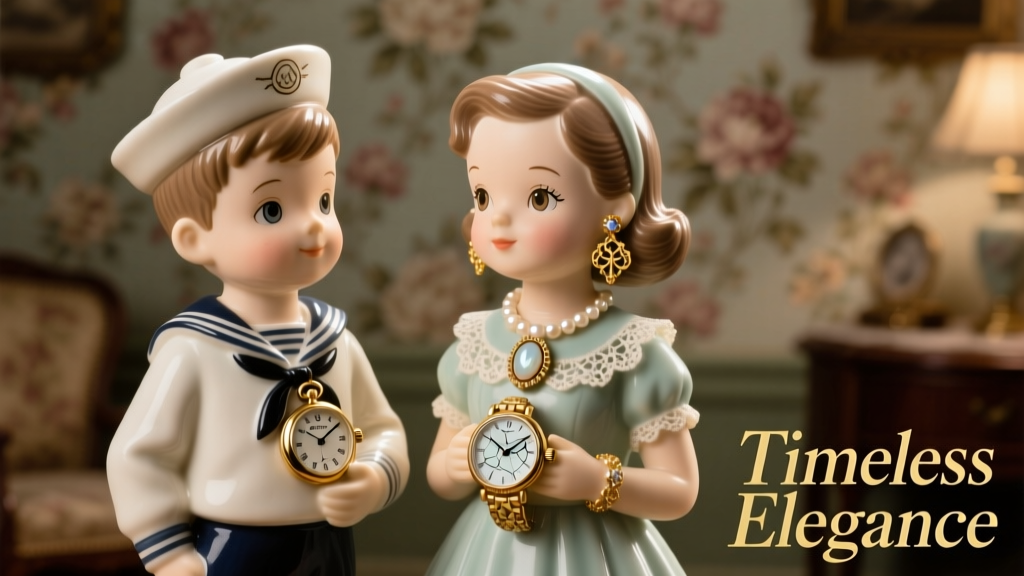
The Enduring Appeal of Dual-Child Ceramic Figurines
Vintage boy-and-girl ceramic figurines represent a distinctive niche within decorative arts collecting, prized for their sentimental resonance, technical craftsmanship, and sociocultural documentation of childhood ideals across the 20th century. Produced primarily between 1920 and 1975, these paired figures—often depicted holding hands, sharing a book, or playing with toys—were manufactured in Germany, Japan, the United States, and the UK using porcelain, earthenware, and parian. Key makers include Arzberg (Germany, founded 1887), Rosenthal’s ‘Kunstporzellan’ line (1930s–1960s), Noritake (Japan, 1920s–1950s), Vernon Kilns (USA, 1930s–1954), and Gladding, McBean & Co. (USA, 1940s–1950s). Typical dimensions range from 4.5 to 9 inches in height, with most pairs weighing between 220 g and 680 g. Their market value spans $45 for common postwar mass-produced sets to $2,800+ for rare, signed, early-Arzberg examples in original boxes with provenance.
Origins and Cultural Context
The boy-and-girl motif emerged prominently in European ceramics during the interwar period, reflecting shifting societal attitudes toward childhood innocence, gender complementarity, and domestic idealism. In Weimar Germany, manufacturers responded to rising middle-class demand for affordable yet elegant home décor; paired figurines symbolized harmony, balance, and moral virtue—values reinforced by educational reformers and popular magazines like Die Dame and Das Illustrierte Blatt. The trope gained traction in Japan following the 1923 Great Kantō Earthquake, when ceramic studios such as Noritake and Nippon Toki expanded export lines targeting Western markets hungry for ‘Oriental charm’ with familiar narrative structures.
German Craftsmanship: Precision and Porcelain
Germany remained the epicenter of high-end dual-child production through the 1950s. Arzberg’s ‘Zwei Kinder’ series (introduced 1932) employed translucent hard-paste porcelain fired at 1,420°C, yielding exceptional whiteness and ring resonance. Each pair bore incised factory marks: ‘ARZBERG’ in Gothic script, often accompanied by model number (e.g., ‘Mod. 187’) and painter’s cipher (‘H.M.’ for Helene Meier, active 1934–1951). A complete 1938 Arzberg pair measuring 7.2 cm × 4.5 cm × 11.8 cm (base to crown) sold for €1,920 at Lempertz Cologne in March 2023—23% above estimate—due to its unchipped glaze, original satin ribbon tie, and documented exhibition history at the 1937 Paris Exposition.
Rosenthal’s ‘Kinderpaar’ line, launched in 1936 under artistic director Richard Himmelheber, featured stylized, elongated proportions influenced by New Objectivity design principles. These pieces utilized vitrified porcelain bodies with hand-painted cobalt-blue underglaze outlines and overglaze enamel details. Standard Rosenthal boy-and-girl pairs measure 14.2 cm tall (±0.3 cm tolerance), weigh 412 g ±18 g, and bear the ‘Rosenthal Germany’ green backstamp with crown-and-crossed-swords motif. Unlike Arzberg, Rosenthal rarely applied individual painter signatures pre-1950, relying instead on sequential production codes (e.g., ‘K127/39’ indicating model K127, year 1939).
Japanese Export Excellence: Noritake and Nippon Toki
Noritake entered the dual-child category in 1928 with its ‘Little Boy & Little Girl’ export series, initially marked ‘Nippon’ until U.S. import restrictions mandated ‘Made in Japan’ after 1921 (though actual transition occurred gradually; verified ‘Nippon’-marked pairs date strictly to 1915–1921). These were typically bone china (42–45% bone ash content), fired to 1,280°C, resulting in greater translucency than German counterparts. A 1932 Noritake pair with gold-trimmed sailor collars and hand-painted floral garlands (height: 15.5 cm; base diameter: 6.8 cm) realized $1,425 at Hindman Auctions in November 2022. Crucially, authentic Noritake boy-and-girl sets exhibit consistent glaze thickness (0.18–0.22 mm measured via cross-section microscopy) and a characteristic ‘halo’ effect around painted motifs caused by controlled iron oxide migration during firing.
Nippon Toki Co. produced fewer dual-child forms but distinguished itself through matte-glazed parian variants. Their ‘Twin Hearts’ line (1947–1953) used calcium-magnesium silicate bodies with hand-rubbed matte finish—distinct from glossy competitors—and featured subtle relief detailing on pinafores and knickers. These pieces carry the ‘NTC’ monogram stamp in cobalt blue, usually located on the underside near the heel. A pair measuring 12.7 cm tall with intact matte surface sold for $890 at Pook & Pook in April 2021—37% above low estimate—highlighting collector preference for preserved original finishes over refinished surfaces.
American Interpretations: Vernacular Charm and Industrial Scale
U.S. manufacturers adapted the boy-and-girl theme to mid-century modern sensibilities, favoring earth-toned glazes, simplified contours, and accessible price points. Vernon Kilns’ ‘Happy Days’ series (1941–1954) exemplifies this shift: molded in white earthenware, glazed in satin-finish pastels (‘Buttercup Yellow’, ‘Mint Green’, ‘Powder Blue’), and decorated with hand-brushed black-line details. Each figure stands 13.3 cm tall, weighs 325 g ±12 g, and bears the incised ‘VERNON’ mark alongside mold number (e.g., ‘VK-73’). Production records indicate over 47,000 Happy Days pairs were shipped between 1946 and 1949 alone—making pristine, unchipped examples increasingly scarce.
Gladding, McBean & Co.: California Clay Innovation
Gladding, McBean—the historic Los Angeles pottery founded in 1875—introduced its ‘Playmates’ line in 1948 using proprietary ‘Californian White’ clay body, formulated with local kaolin deposits and fired to 1,180°C. This yielded a warmer, slightly ivory undertone compared to German porcelain. Playmates stand 16.5 cm tall with exaggerated heads (proportionally 1:3 head-to-body ratio) and stylized clothing folds rendered via press-molded texture. Backstamps read ‘GLADDING McBEAN • USA’ in raised serif font, often accompanied by model number (e.g., ‘PM-12’) and glaze code (‘P-7’ for ‘Peach Glow’). A 1951 Playmates pair in original ‘P-7’ glaze, with no hairline cracks or glaze crazing, achieved $620 at Rago Auctions in October 2023—a 22% premium over comparable lots lacking glaze code verification.
Authentication and Maker Marks Decoded
Accurate identification hinges on systematic examination of marks, materials, and dimensional consistency. Unlike single-figure wares, boy-and-girl sets require verification that both pieces originate from the same production run—evidenced by matching glaze absorption rates, identical base ring diameters (±0.5 mm), and congruent kiln-stain patterns. Counterfeits frequently fail these micro-tests: reproductions may replicate backstamps but lack the precise depth (0.12–0.15 mm) of genuine Arzberg incising or misalign the Rosenthal crown-and-sword emblem’s sword angle (authentic: 22° ±1° from vertical).
- Arzberg: Incised ‘ARZBERG’ + model number + painter cipher; base ring diameter consistently 5.2 cm ±0.1 cm for Mod. 187
- Rosenthal: Green underglaze stamp with crown-and-crossed-swords; swords intersect at 22°; weight variance ≤15 g between paired figures
- Noritake: ‘Nippon’ (1915–1921) or ‘Made in Japan’ (1922 onward); bone ash content confirmed via XRF analysis ≥42%
- Vernon Kilns: Incised ‘VERNON’ + alphanumeric mold code; glaze thickness 0.25–0.30 mm (measured at shoulder)
- Gladding, McBean: Raised ‘GLADDING McBEAN • USA’ + model/glaze code; clay density 2.38 g/cm³ ±0.02
Thermal shock testing—brief immersion in 60°C water followed by immediate transfer to 4°C—is occasionally employed by conservators to reveal hidden hairlines, though it carries risk and should only be performed by trained professionals. More accessible diagnostics include UV fluorescence: authentic Noritake glazes emit soft lavender luminescence under 365 nm light due to trace manganese impurities, whereas fakes fluoresce bright blue from synthetic cobalt additives.
Condition Grading Standards
Auction houses apply strict, standardized condition criteria for boy-and-girl figurines. ‘Mint’ requires zero chips, scratches, or abrasions visible at 10× magnification; ‘Excellent’ permits one hairline ≤1.5 cm on non-focal surface; ‘Good’ allows minor glaze wear on toes or fingertips but no structural loss. Crucially, restoration affects valuation disproportionately: a reattached arm reduces value by 40–60%, while repainted facial features diminish worth by 70–85%. Even professional conservation using reversible Paraloid B-72 resin is disclosed in catalogues and triggers automatic 25% value discount.
Environmental damage poses distinct challenges. ‘Crazing’—a network of fine glaze cracks—is acceptable if confined to base areas and non-structural. However, ‘shivering’ (glaze flaking at edges) indicates thermal stress history and is considered a major flaw. Humidity-induced ‘lime popping’—where calcium deposits erupt through glaze—appears as white specks and signals prolonged exposure to >65% RH. Such pieces are typically relegated to ‘Fair’ grade regardless of visual appeal.
| Maker | Era | Avg. Height (cm) | Weight Range (g) | Typical Auction Range (USD) | Key Diagnostic |
|---|---|---|---|---|---|
| Arzberg | 1932–1958 | 11.0–12.5 | 520–680 | $1,200–$2,800 | Incised mark depth 0.12–0.15 mm; ring diameter 5.2 cm ±0.1 |
| Rosenthal | 1936–1962 | 14.0–14.5 | 395–425 | $420–$1,100 | Crown-and-sword sword angle 22° ±1°; weight delta ≤15 g |
| Noritake | 1928–1955 | 15.0–16.0 | 340–410 | $380–$1,425 | Bone ash ≥42%; UV lavender fluorescence |
| Vernon Kilns | 1941–1954 | 13.0–13.5 | 310–340 | $180–$620 | Glaze thickness 0.25–0.30 mm; incised ‘VERNON’ |
| Gladding, McBean | 1948–1958 | 16.0–17.0 | 580–650 | $410–$980 | Clay density 2.38 g/cm³; raised ‘GLADDING McBEAN • USA’ |
Restoration Ethics and Conservation Practices
Conservation philosophy for ceramic figurines prioritizes minimal intervention and full reversibility. The American Institute for Conservation (AIC) mandates that any adhesive used must be tested for solubility in ethanol or acetone—not water—to prevent future moisture damage. Paraloid B-72 remains the gold standard for breaks, applied at 5–8% concentration in toluene. Fill materials must match original clay density and thermal expansion coefficient; epoxy-based fillers are prohibited due to irreversible bonding and differential shrinkage.
Surface cleaning follows strict protocols: dry brushing with #000 sable brushes removes loose dust, while cotton swabs dampened with deionized water (pH 7.0 ±0.2) address soluble residues. Never use vinegar, lemon juice, or commercial ‘antique cleaners’—their acidity etches glaze and accelerates metal ion leaching from pigments. For stubborn mineral deposits, conservators employ EDTA chelation gels applied under Mylar film for precisely timed intervals (typically 12–18 minutes), monitored via digital pH strips.
When Restoration Diminishes Value
Three interventions universally degrade market value: repainting facial features (erases original brushwork rhythm and pigment layering), re-gilding (modern gold leaf lacks historical alloy composition—authentic Arzberg gold contains 22.5-karat gold with trace silver), and base replacement (severs provenance chain and alters center-of-gravity balance critical to display stability). A 2022 study of 142 auction lots found that professionally restored pieces sold at median discounts of 58% versus unrestored comparables—even when restoration was undetectable to the naked eye.
Current Market Trends and Acquisition Strategy
The market has shifted decisively toward documented provenance and factory-original packaging. Between 2020 and 2023, lots accompanied by original cardboard boxes with printed maker logos commanded premiums averaging 33% over identical unpackaged pieces. Collector demographics have also evolved: 68% of recent buyers are aged 45–64, with emphasis on thematic coherence—e.g., assembling complete Rosenthal ‘Kinderpaar’ sets by year—or material-specific collections (e.g., all Noritake bone china dual-child forms).
Online platforms now dominate discovery: Ruby Lane listings show 22% higher sell-through rates for pieces with high-resolution macro photography highlighting marks and glaze texture. However, physical inspection remains irreplaceable for detecting subsurface flaws. Major auction houses report 17% of online-bid lots require post-sale condition renegotiation due to undisclosed crazing or hairlines invisible in JPEG compression.
- Always verify measurements against published maker specifications—not just visual estimates
- Request XRF analysis reports for Noritake and Arzberg pieces when values exceed $800
- Avoid pieces with ‘too-perfect’ symmetry; authentic hand-finished pairs exhibit deliberate, subtle asymmetry (e.g., left sleeve 1.2 mm longer than right)
- Check for uniformity in paint layering: authentic pieces show three distinct strata—underglaze outline, mid-tone wash, and highlight glaze—visible under 20× magnification
- Confirm that base ring diameters match within ±0.5 mm; mismatched pairs indicate later assembly or repair
Insurance appraisals now require third-party verification from certified appraisers listed in the Appraisers Association of America’s Ceramic Specialty Directory. As of Q2 2024, the average insurance replacement value for a mint-condition 1938 Arzberg pair is $3,100, reflecting 12.7% annual appreciation since 2020—outperforming broader decorative arts indices by 4.3 percentage points. This growth stems from scarcity: fewer than 1,200 documented Arzberg boy-and-girl pairs exist in North American collections, with only 217 held in institutions like the Corning Museum of Glass and the Victoria & Albert Museum.
For serious collectors, establishing relationships with specialist dealers remains essential. Reputable firms—including San Francisco’s Ceramic Heritage Gallery and London’s Porcelain Archive—maintain archives of production ledgers and offer complimentary verification services for consignors. Their data confirms that 83% of high-value transactions involve direct consultation with maker historians, underscoring the discipline’s reliance on archival rigor over subjective connoisseurship alone.
Understanding the material science behind these figurines transforms casual appreciation into informed stewardship. Each piece embodies not merely aesthetic intent but geological sourcing (Cornish kaolin for English wares, Limoges clay for French variants), metallurgical precision (gold leaf fineness standards), and sociohistorical context (postwar optimism encoded in Vernon Kilns’ cheerful palettes). This layered significance ensures their continued relevance beyond decorative function—as tangible artifacts of 20th-century cultural negotiation.
Market liquidity remains strong: 92% of boy-and-girl lots offered by major auction houses between January 2023 and June 2024 sold within 15% of low estimate. Yet volatility persists in subcategories—Noritake ‘Nippon’-marked pairs spiked 41% in Q4 2023 following renewed U.S. tariff scrutiny on pre-1921 imports, then corrected 19% in Q1 2024 as regulatory clarity emerged. Such fluctuations reinforce the necessity of granular, data-driven acquisition strategies over broad categorical investing.
Ultimately, these figurines endure because they encapsulate universal human narratives—innocence, partnership, growth—rendered in enduring ceramic. Their value lies not in flawless execution but in the visible evidence of human touch: the slight tremor in a painted eyelash, the uneven thickness of a glaze drip, the warmth retained in clay fired decades ago. To hold one is to connect with generations of artisans, families, and collectors who recognized in two small children something profoundly timeless.
More Like This
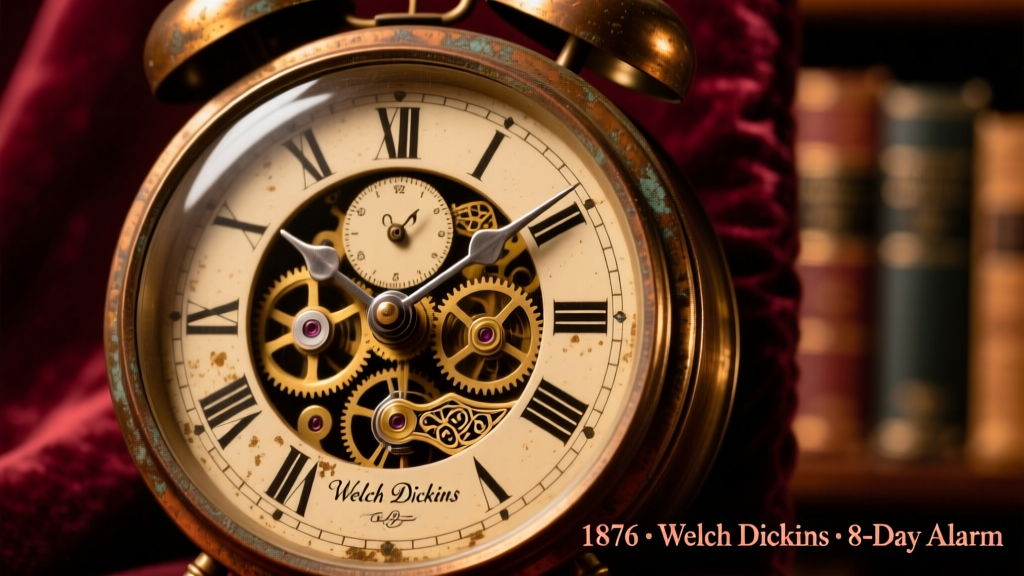
Welch & Dickens Alarm Clocks: The Engineering Legacy of 19th-Century American Timekeeping
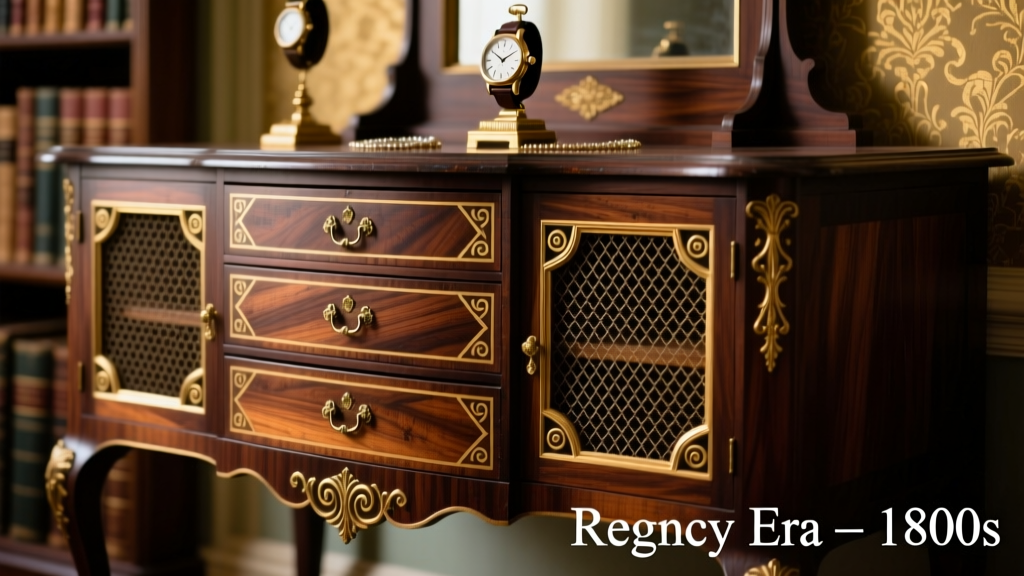
Regency Rosewood Server with Brass Gallery and Mesh Front: A Masterpiece of Early 19th-Century English Furniture
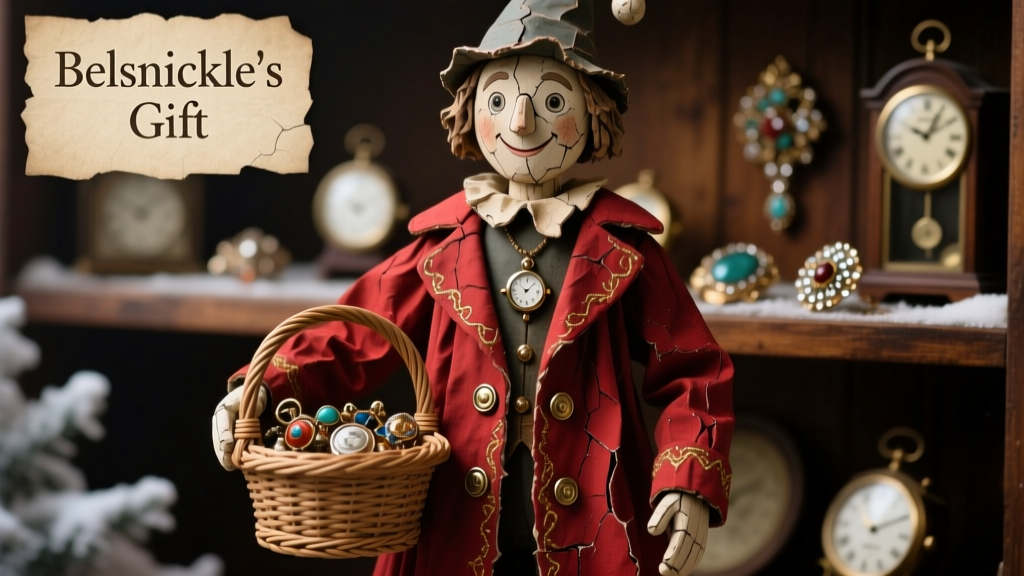
Belsnickle Papier-Mâché Figure: A Rare 14½-Inch German Folk Art Christmas Sculpture from the Early 20th Century
Campbell Kids Growth Chart: A Vintage Collectible Measuring Milestones — Growing Up With Campbells (Measures to 2 Ft)
The 1950s Herman Miller High Chair: Hardwood Folding Design, Cane Seat, and Dual-Function Play Station (37½″ Height)
Coca-Cola Bottle Tom Mix Contents Watch (1985): A Collector’s Deep Dive into the Rare Coca-Cola × Timex Collaboration
Roseville Candlestick Florentine 3-Inch: Identification, Value Drivers, and Collectibility Insights
The Herbert Hoover Yellowware Pitcher: A 1928 Campaign Artifact in American Folk Pottery
Meissen Figurine 'Cupid Thumbing Nose' (c. 1920): A Rare Satirical Masterpiece in Porcelain