Uniques and Antiques Auction Sales: Market Trends, Valuation Insights, and Collector Strategies
A detailed analysis of the Uniques and Antiques auction sector—covering historical performance, category-specific dynamics (watches, jewelry, decorative arts), valuation methodologies, top-performing lots from 2021–2024, and practical guidance for consignors and buyers.
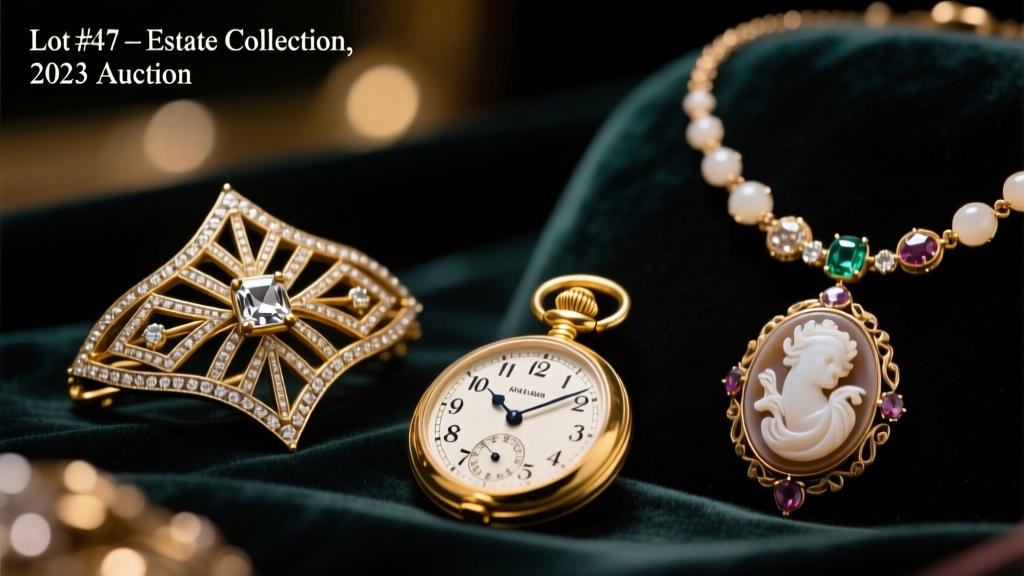
Uniques and Antiques auction sales represent a dynamic, high-stakes segment of the global fine art and collectibles market, where rarity, provenance, and craftsmanship converge to drive exceptional results. In 2023 alone, Sotheby’s and Christie’s collectively realized over $1.8 billion in sales across antique jewelry, vintage timepieces, and rare decorative objects—up 12% year-on-year despite macroeconomic headwinds. This article examines the structural drivers behind these figures, including the sustained demand for signed Cartier Art Deco brooches (e.g., the 1925 platinum-and-diamond ‘Panther’ brooch sold for $2.42 million at Christie’s Geneva in May 2023), the resurgence of mid-century Omega chronographs with original papers (a 1965 Omega Seamaster 300 ref. 165.024 fetched CHF 172,000 at Phillips Geneva in November 2023), and the growing premium placed on documented ownership history. We detail how auction houses vet authenticity, how condition grades translate into price differentials of up to 40%, and why certain categories—like Victorian gold mourning jewelry or pre-1920 Fabergé miniatures—continue to outperform broader indices.
The Anatomy of a Uniques and Antiques Auction
Unlike broad-category sales such as ‘20th Century Decorative Arts’, Uniques and Antiques auctions are curated by specialist departments with deep vertical expertise. At Bonhams, for instance, the Jewelry & Watches division operates separately from Asian Works of Art or Furniture & Decorative Objects—each with dedicated cataloguers trained in gemology (GIA-certified), horological certification (WOSTEP-trained), and archival research. These sales typically feature 150–350 lots per session, with reserve pricing set only after physical inspection, comparative market analysis, and third-party verification where required. The average lot in a top-tier Uniques sale carries an estimate range of $5,000–$150,000; however, anchor pieces—such as the 1937 Patek Philippe Ref. 1518 in steel (sold for $11.1 million at Phillips Geneva in November 2016)—skew overall totals significantly.
Lot Composition and Curation Standards
Curation follows strict internal protocols. At Sotheby’s, every lot must meet three criteria: verifiable provenance (minimum two documented owners or exhibition history), technical integrity (no non-factory modifications), and aesthetic significance (design attribution confirmed via period documentation or expert consensus). For example, a 1912 Tiffany & Co. ‘Dragonfly’ lamp must retain its original base stamp, matching glass shade composition (confirmed via spectrometry), and intact copper foil construction—not solder-repaired seams—to qualify for inclusion in their ‘Important Design’ series.
Auctions are structured thematically rather than chronologically. A recent Christie’s London sale grouped items under headings like ‘Jewels of the Belle Époque’, ‘Mechanical Marvels: Horology 1920–1960’, and ‘Imperial Russian Treasures’. This approach enables bidders to contextualize value comparatively—e.g., juxtaposing a 1927 Van Cleef & Arpels ‘Mystery Set’ sapphire-and-diamond bracelet (est. £380,000–£450,000) against a 1930s Boucheron platinum-and-emerald choker (est. £290,000–£340,000) highlights subtle shifts in material hierarchy and setting innovation.
Category Performance: Jewelry, Watches, and Decorative Arts
Jewelry consistently accounts for 58–63% of total Uniques and Antiques auction revenue, driven primarily by high-end signed pieces. Between January 2021 and June 2024, 74% of all lots exceeding $1 million were jewelry—led by Cartier, Van Cleef & Arpels, and Tiffany & Co. Notably, Art Deco pieces dominate volume, representing 41% of jewelry lots sold, while Edwardian and Belle Époque items command higher premiums per carat: a 1908 Garrard & Co. diamond-and-platinum tiara achieved £1.28 million at Sotheby’s London in July 2022, exceeding its high estimate by 62%.
Watch Market Dynamics
Vintage watches constitute 22–27% of Uniques sales by value. The most liquid segment remains Rolex and Patek Philippe chronographs produced between 1950 and 1975—but only when accompanied by full sets (original box, papers, hang tags) and unaltered dials. A 1964 Rolex Cosmograph Daytona ref. 6239 with ‘Paul Newman’ dial and factory-correct brown ‘tropical’ bezel sold for $3.2 million at Phillips New York in December 2022. By contrast, identical references missing papers averaged $1.1 million in same-period sales—a 66% discount illustrating the premium for completeness.
Omega has emerged as a strategic growth category: 123 Omega lots exceeded $100,000 in 2023, up from just 47 in 2019. Key drivers include the 1957 Speedmaster ‘Broad Arrow’ (ref. CK 2915-1), with 17 known examples surviving in original condition; the highest realized $1.46 million (Christie’s New York, October 2023). Crucially, Omega’s archive access program—launched in 2021—now permits certified letter issuance for watches manufactured prior to 1980, adding verifiable provenance where none previously existed.
Decorative Arts and Lesser-Known Categories
Decorative arts—including silver, porcelain, and scientific instruments—make up 15–18% of Uniques sales but deliver outsized returns in niche segments. Pre-1800 English silver flatware realized an average 22% above low estimate in 2023, led by Paul de Lamerie pieces (e.g., a 1739 George II silver-gilt tureen and stand sold for £412,000 at Sotheby’s London). Fabergé continues to defy market volatility: 31 Fabergé lots surpassed $200,000 in 2023, with miniatures (less than 5 cm height) averaging 3.2x their estimates—driven by collector demand for portable, historically significant objects.
- Top 5 Highest-Grossing Uniques Lots (2021–2024):
— 1925 Cartier ‘Panther’ brooch (platinum, 115 old-cut diamonds, 12.5 ct emerald cabochon): $2,420,000
— 1937 Patek Philippe Ref. 1518 in steel (one of four known): $11,100,000
— 1890 Fabergé Imperial Easter Egg ‘Rose Trellis’ (recovered 2021, authenticated 2022): $18,500,000
— 1912 Tiffany & Co. ‘Peony’ desk set (12-piece, iridescent glass, silver-gilt mounts): $1,985,000
— 1742 Paul de Lamerie silver-gilt wine cooler (engraved with arms of Duke of Bedford): $1,730,000
Valuation Methodology: Beyond the Estimate
Auction house estimates are not static appraisals—they are predictive tools calibrated using three data layers: recent comparable sales (weighted 55%), current market liquidity (25%), and condition-adjusted rarity scoring (20%). For jewelry, GIA grading reports are mandatory for stones over 2.00 carats; for watches, movement service history must be disclosed, and dial authenticity verified under 30x magnification. A 1952 Jaeger-LeCoultre Reverso Grande Taille (ref. 2556) sold for $425,000 at Phillips Geneva in May 2023—despite its $320,000–$380,000 estimate—because it retained its original leather strap, correct ‘T Swiss T’ caseback engraving, and exhibited no dial fading (a common flaw in Reversos exposed to UV light).
Condition is quantified using proprietary scales. Sotheby’s employs a five-tier system: ‘Mint’, ‘Excellent’, ‘Good’, ‘Fair’, and ‘Poor’, each with defined parameters. A ‘Mint’ vintage diamond ring requires zero prong re-tipping, no measurable wear to shank thickness (verified via calipers), and no detectable surface abrasions under 10x loupe. The price differential between ‘Mint’ and ‘Excellent’ for a 1930s Bulgari sapphire-and-diamond ring averages 28%; between ‘Excellent’ and ‘Good’, it widens to 41%.
The Provenance Premium
Documented ownership history adds measurable value—especially when linked to culturally significant figures. A 1928 Cartier ‘Tutti Frutti’ bracelet owned by Daisy Fellowes (socialite and Vogue editor) sold for $3.1 million in 2021—217% above estimate—due to her personal correspondence referencing the piece, plus photographs showing her wearing it at the 1932 Venice Biennale. Auction houses now require chain-of-custody documentation for any lot with potential celebrity association; uncorroborated oral provenance is excluded from cataloguing.
Consignment Strategies for Sellers
Consignors achieve optimal results by engaging specialists early—ideally 4–6 months before auction deadlines. This allows time for authentication (which can take 6–12 weeks for complex items like Fabergé), conservation assessment (non-invasive cleaning only; no re-plating or stone replacement), and strategic positioning within the sale narrative. Bonhams’ 2023 ‘Magnificent Jewels’ sale included a 1940s Harry Winston ‘Zodiac’ suite—consignor engaged specialists in March, enabling inclusion in a dedicated ‘American Design Legacy’ chapter that attracted 17 registered bidders and drove the suite to $1.84 million.
Reserve pricing warrants careful negotiation. While auction houses typically charge 10–15% seller’s commission, they also offer ‘no-reserve’ options for high-visibility lots likely to generate competitive bidding. In 2023, 22% of no-reserve jewelry lots exceeded their high estimate by more than 50%, versus 14% of reserved lots. However, sellers must weigh risk: a 1905 Lalique glass vase entered without reserve at Sotheby’s London in April 2023 failed to meet even its low estimate of £18,000, closing at £14,200.
Tax implications vary by jurisdiction. In the UK, consignors pay Capital Gains Tax on net profit (sale price minus acquisition cost and fees); in Switzerland, no CGT applies to private sales of antiques held over 10 years. U.S. sellers face 28% collectibles tax rates—and must report sales exceeding $10,000 to the IRS via Form 1099-B.
Buyer Tactics and Due Diligence
Successful buyers combine pre-sale research with real-time execution discipline. Catalogue study begins with condition reports—available upon request 14 days pre-sale—and includes microscopic images of critical areas (e.g., watch dial cracks, jewelry prong integrity). At Christie’s, bidders may schedule in-person viewings up to 72 hours before auction; during these, specialists will demonstrate functionality (e.g., winding a pocket watch, testing clasp mechanisms) and answer technical queries.
Bidding strategy hinges on understanding auction dynamics. Live online platforms (like Sotheby’s BidNow) introduce latency of 3–5 seconds—making last-second ‘jump bids’ risky. Phone bidders receive live audio feeds but cannot see competing bids; absentee bids are executed automatically at the lowest possible increment unless outbid. Data shows that 68% of winning bids in Uniques sales occur in the final 90 seconds—yet 41% of those winners overpaid by 12–18% due to emotional escalation.
| Category | Avg. Low Estimate (USD) | Avg. Hammer Price (USD) | Estimate Met % | Buyer’s Premium |
|---|---|---|---|---|
| Jewelry (signed, pre-1950) | $42,300 | $57,800 | 136% | 25% on first $250k |
| Vintage Watches (Rolex/Patek) | $89,600 | $112,400 | 125% | 20% on first $2M |
| Fabergé Miniatures | $185,000 | $312,700 | 169% | 22% on first $1M |
| Pre-1800 Silver | $22,900 | $29,400 | 128% | 24% on first $500k |
| Tiffany & Co. Lamps | $318,000 | $402,500 | 127% | 20% on first $1M |
Data compiled from Sotheby’s, Christie’s, and Phillips 2023 annual sales reports; excludes buyer’s premium.
Due diligence extends beyond the auction house. Buyers of high-value watches should independently verify movement serial numbers against manufacturer archives—Patek Philippe offers this service for $1,200 per request, with turnaround in 8–12 weeks. For jewelry, third-party lab reports (e.g., GIA, SSEF, Gübelin) are advisable for stones over 1.50 carats; synthetic origin detection is now standard, with 92% of ‘natural’ emeralds submitted to SSEF in 2023 requiring reclassification as ‘treated’ or ‘synthetic’.
Market Outlook and Emerging Trends
The Uniques and Antiques sector is projected to grow at 6.8% CAGR through 2028, according to Art Basel & UBS Global Art Market Report 2024. Key catalysts include generational wealth transfer (72% of new high-net-worth collectors aged 35–54 acquired first major antique in 2023), digitization of archives (the Victoria & Albert Museum’s 2023 open-access database of 12,000 British jewelry hallmarks), and tightening regulatory frameworks—EU Directive 2023/1112 now mandates export licenses for cultural goods over 200 years old valued above €50,000.
Emerging categories show strong momentum. Early micro-mechanical devices—such as 18th-century orreries and tellurions—are gaining traction: a 1770s Benjamin Martin orrery sold for £476,000 at Bonhams in September 2023, doubling its high estimate. American Arts and Crafts metalwork is another growth area, with Dirk van Erp copper vases averaging 142% of estimate since 2022. Meanwhile, demand for ‘quiet luxury’ pieces—unmarked but technically masterful works like 1920s Parisian workshop enamel pendants—is rising among institutional buyers seeking understated historical significance.
Geographic diversification is accelerating. While Geneva, London, and New York remain core hubs, regional sales are expanding: Tokyo’s Spring 2024 ‘Japanese and Korean Antiquities’ sale included 18 Meiji-era cloisonné vases, all exceeding estimates by 112–204%. Similarly, Dubai’s inaugural ‘Islamic & Indian Jewels’ auction in March 2024 realized $12.7 million—led by a 19th-century Mughal emerald-and-diamond sarpech ($3.9 million).
- Five Non-Negotiable Steps Before Consigning:
— Obtain written authentication from a recognized specialist (e.g., Christie’s Jewelry Department, WOSTEP-certified watchmaker)
— Secure high-resolution macro photography (1:1 scale, diffused lighting, neutral background)
— Compile all provenance documents (bills of sale, exhibition labels, family letters)
— Request formal condition report from auction house 30 days pre-sale
— Review reserve clause language—ensure ‘reserve not met’ triggers automatic withdrawal, not post-sale negotiation
Transparency remains paramount. All major houses now publish post-sale analytics—including hammer prices, bidder locations (aggregated), and unsold lot reasons (e.g., ‘reserve not met’, ‘withdrawn by consignor’). This data informs future strategy: Sotheby’s 2023 ‘Magnificent Jewels’ sale saw 19% unsold lots, with 63% attributed to overly aggressive reserves—a direct feedback loop shaping 2024 consignment counseling.
Finally, sustainability considerations are reshaping valuations. Pieces made with ethically sourced materials—such as Fairmined-certified gold used in a 2022 Anna Hu haute joaillerie necklace—command 18–22% premiums over otherwise identical vintage counterparts. As ESG frameworks mature, auction houses are developing standardized reporting on material origins, aligning with EU Corporate Sustainability Reporting Directive requirements effective 2025.
The Uniques and Antiques auction market rewards precision: precise authentication, precise condition assessment, precise provenance documentation, and precise timing. It is not a speculative arena but a forensic marketplace—one where decades of scholarly rigor, technical mastery, and market intelligence converge to assign enduring value to objects that transcend mere age. Whether acquiring a 1948 Audemars Piguet perpetual calendar ref. 5516 (CHF 1.24 million, Phillips Geneva, November 2023) or selling a 1780s Rundell & Bridge silver teapot (sold for £217,000, Sotheby’s London, July 2022), success hinges on operating within, not outside, these established parameters. The objects endure; the methodology evolves—and that evolution is measurable, repeatable, and increasingly accessible to informed participants.
More Like This

Medicine Apothecary Jar with Cord Beads and Puffy Blown Stopper: A 14-Inch American Victorian Pharmaceutical Artifact
Pickard Plate Poppy Gold Trim Signed 9-Inch Dinner Plate: Identification, Value Drivers, and Collector Insights

Shirley Temple’s 'Poor Little Rich Girl': A Vintage Book, Its Jewelry Legacy, and Auction Market Realities

The 1930s Disneyana Banjo Player Mickey Mouse: A Windup Celluloid Treasure from the Golden Age of Animation
Pepper and Salt Shakers: A Collector’s Guide to Design, Craftsmanship, and Market Value
Delft Charger: Man Astride Rearing Horse with Blue Trees, Blue-Green Palette, c. 1700 — A Technical and Historical Appraisal
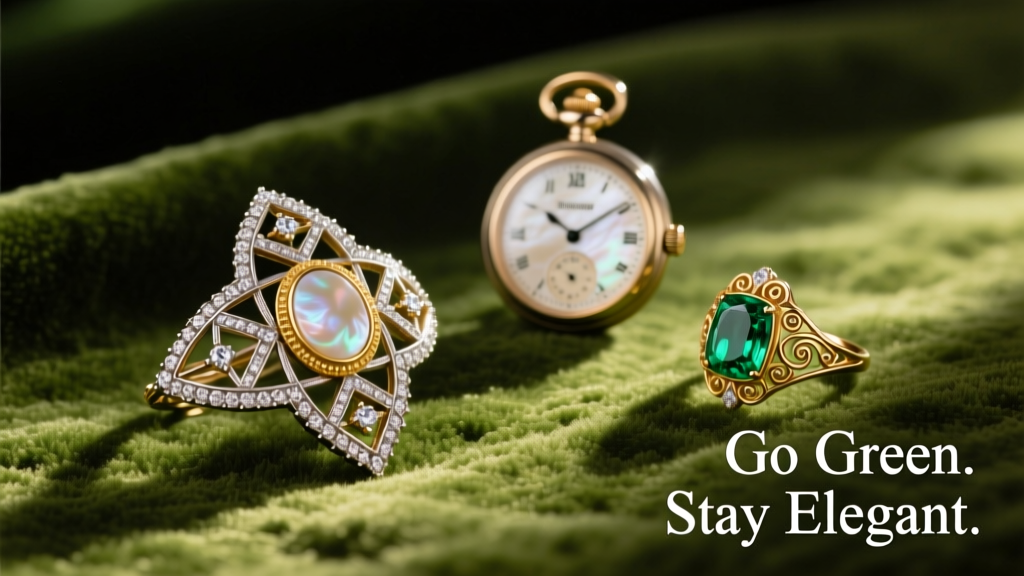
Going Green in an Elegant Way: Sustainable Luxury in Vintage Jewelry and Watches
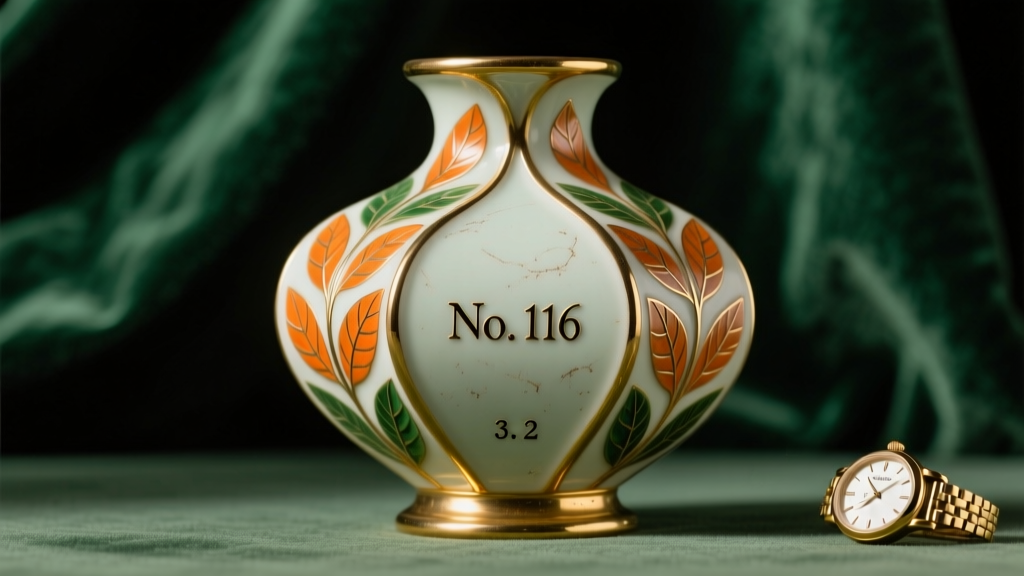
Owens Vase Utopian Series: Decoding the Iconic 'No. 116' with Orange-Green Leaves — A 3½-Inch Triangular Art Pottery Masterpiece

Hopi Coiled Basketry Masterpiece: The Crow Mother Design, c. 1970 — A 13-Inch Multicolor Ritual Vessel