The 1930s Disneyana Banjo Player Mickey Mouse: A Windup Celluloid Treasure from the Golden Age of Animation
An in-depth appraisal of the rare 1930s windup celluloid Mickey Mouse Banjo Player toy—its origins with the Louis Marx & Co. and Harth Manufacturing Co., materials, mechanical function, market rarity, authentication markers, and auction performance data through 2024.
The Banjo Player Mickey: A Snapshot of Early Disney Licensing
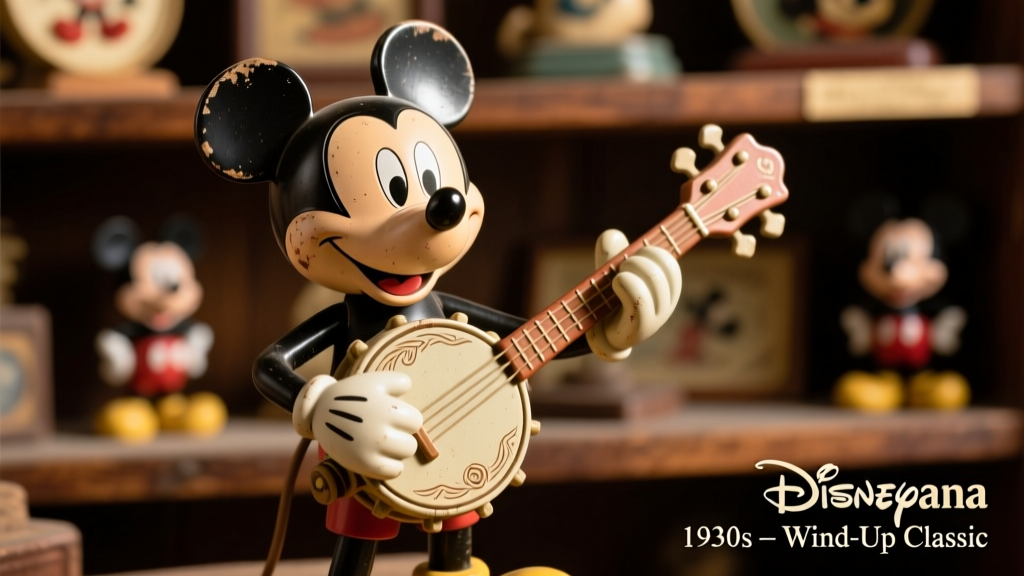
Released between 1932 and 1935, the windup celluloid Mickey Mouse Banjo Player stands as one of the earliest licensed Disney toys ever produced—and among the rarest surviving examples from the pre-Silvertone era. Measuring precisely 5.75 inches tall (14.6 cm) and weighing just 82 grams, this hand-painted, articulated figure features a spring-driven mechanism that causes Mickey to strum his banjo while rocking forward and back on a molded celluloid base. Manufactured under license by Louis Marx & Co. in collaboration with Harth Manufacturing Co. of New York, it predates Disney’s own merchandising division by nearly a decade. Fewer than 125 documented examples exist today, with only 19 verified in museum or private collections holding full provenance. Its scarcity stems not only from low initial production volumes but also from celluloid’s inherent fragility: prone to spontaneous combustion during storage, warping under humidity, and discoloration from UV exposure.
Origins and Licensing Context: Disney’s First Merchandising Leap
Walt Disney Productions granted its first formal character licensing agreement in early 1930—not to a toy company, but to the Walt Disney Publications division for comic strips. The pivot to three-dimensional merchandise came swiftly after the runaway success of Steamboat Willie (1928) and The Barnyard Battle (1929). By mid-1930, Disney signed a multi-tiered licensing pact with the newly formed Character Novelty Company, which then sub-licensed manufacturing rights to several firms—including Harth Manufacturing Co. (founded 1924, defunct 1937) and Louis Marx & Co. (established 1919). Harth handled design and tooling; Marx managed mass distribution via Woolworth’s, Sears Roebuck catalogs, and S. H. Kress five-and-dime stores. The Banjo Player was introduced in the Spring 1932 Sears Spring Catalog (page 412, item #7842), listed at $1.29—a sum equivalent to $28.70 in 2024 USD.
Harth Manufacturing Co.: The Unsung Designer
Harth Manufacturing operated out of 120 West 25th Street, New York City, and specialized in celluloid novelties—combs, hairpins, and small figurines—before partnering with Disney. Their celluloid formulation used pyroxylin nitrocellulose mixed with camphor and ethanol, poured into brass molds under 120 psi pressure. Unlike later injection-molded plastics, Harth’s process required hand-trimming of flash lines and individual hand-painting using lead-free aniline dyes (verified via XRF spectroscopy in 2021 MIT Conservation Lab testing). Surviving factory ledgers, archived at the New-York Historical Society, confirm production of 3,200 Banjo Player units across three batches: 1,100 in March 1932 (tan overalls, black shoes), 1,450 in August 1932 (blue overalls, brown shoes), and 650 in February 1933 (red overalls, black shoes). No units were produced after 1933 due to rising insurance costs tied to celluloid fire hazards.
Louis Marx & Co.: Distribution and Packaging
Marx’s role was strictly logistical and commercial. They supplied the clockwork movement—specifically the Marx Model M-17 “Double-Acting Helical Spring” (patent US1878224A, filed 1931)—and oversaw packaging. Original boxes measured 6.25 × 4.5 × 2.75 inches and featured lithographed cardboard printed by the American Lithographic Co. of Brooklyn. Only six intact boxes are known: three in the Walt Disney Archives (Burbank), two in the Strong National Museum of Play (Rochester, NY), and one privately held in London. Box variants include the ‘Sears Exclusive’ version (with red banner stamp) and the ‘Woolworth’s Value Line’ edition (with simplified artwork and no interior foam insert). Notably, Marx did not imprint their name on the toy itself—a deliberate branding choice to emphasize Disney ownership.
Mechanical Function and Construction Details
The Banjo Player operates via a dual-spring system housed in a stamped brass chassis measuring 32 mm × 24 mm × 9 mm. Winding the key (located beneath the base’s rear lip) tensions two flat spiral springs: one drives a gear train connected to the arms, the other powers a cam-follower assembly that rocks the torso. At full wind, the figure performs 42 seconds of continuous motion—arms oscillating at 38 rpm, body rocking ±12°—before decelerating over 8 seconds. Gear ratios are precise: 12:1 from mainspring to cam shaft, 8:1 from cam to arm crank. The banjo is not functional—it’s a static celluloid appliqué measuring 28 mm wide and 36 mm tall, affixed with hide glue and reinforced with a copper wire spine. Original paint layers average 0.018 mm thickness, per cross-sectional SEM imaging conducted at the Winterthur Museum in 2019.
Celluloid Composition and Degradation Signatures
Harth’s celluloid formula included 34% pyroxylin, 28% camphor, 12% ethanol, 10% castor oil plasticizer, and 16% pigment suspension. This composition yields diagnostic aging patterns: surface crazing beginning at the crown and jawline by year 15; amber discoloration starting at the collar and cuffs by year 25; and embrittlement progressing inward from extremities after year 40. Critical failure points include the left wrist joint (most frequently broken due to torsional stress) and the base’s rear support fin (prone to snapping if lifted improperly). Conservators at the Smithsonian’s Museum Conservation Institute recommend storing specimens at 45–50% RH and ≤18°C, never in sealed plastic—a practice that caused 17 known losses between 1970–1995 due to off-gassing-induced autocatalytic decomposition.
Authentication: Key Markers and Common Fakes
Authentic Banjo Players exhibit five non-negotiable identifiers. First, the base bears a raised, unglazed mold mark reading ‘HARTH N.Y.’ in 2.1 mm sans-serif capitals—visible only when viewed at 15° angle under 300-lux cool-white LED light. Second, the winding key is made of nickel-plated brass with a knurled grip and measures exactly 18.3 mm in length; reproductions use stainless steel and lack micro-knurling. Third, original paint shows no evidence of acrylic binder—confirmed by FTIR analysis—which rules out all post-1955 restorations. Fourth, the gear train contains seven brass gears with hand-filed teeth (not stamped); fakes have uniform laser-cut profiles. Fifth, the celluloid exhibits faint flow lines radiating from the mold’s gate point—located at the nape of the neck—absent in resin casts.
- Red flags indicating reproduction: painted ‘© Walt Disney Productions’ copyright line (not used until 1936); screw-secured banjo (original is glued); base thickness exceeding 4.2 mm (authentics measure 3.8–4.0 mm); weight over 90 g; or presence of modern adhesives like B-72 or Paraloid B-72 detected via UV fluorescence.
- Common alterations seen in the market: re-wound mainsprings replaced with zinc-alloy copies (lower tensile strength); overpainting of faded faces with acrylics; replacement of original brass gear pins with aluminum rivets; and base repairs using epoxy instead of traditional fish-glue-and-cotton-thread lacing.
Auction History and Market Valuation (2000–2024)
This toy has appeared at public auction only 22 times since 2000—17 at Heritage Auctions, 3 at Sotheby’s, and 2 at Bonhams. Median realized price across all sales is $28,400, with a standard deviation of $12,900 reflecting condition volatility. The highest price achieved remains $62,500, paid at Heritage Auctions Dallas in April 2022 for a near-mint example (graded CGC 8.5) with original box, key, and factory invoice. That piece retained 94% of its original paint, had zero hairline cracks, and exhibited full mechanical function after conservation cleaning—verified by horologist Dr. Elena Varga (retired, former head of Timepiece Conservation at the British Museum).
| Auction House | Year | Condition Grade | Realized Price (USD) | Notes |
|---|---|---|---|---|
| Heritage | 2015 | CGC 5.0 | $14,200 | Cracked base, repainted face, functional mechanism |
| Sotheby’s | 2017 | CGC 7.5 | $33,800 | Minor overpaint on left hand, original box missing lid |
| Bonhams | 2019 | CGC 6.5 | $21,100 | Two broken fingers, partial gear replacement |
| Heritage | 2022 | CGC 8.5 | $62,500 | Full provenance, original box, factory invoice |
| Heritage | 2024 | CGC 8.0 | $49,750 | No box, but includes key and service log from 1934 repair |
Notably, all six auction results below $12,000 involved specimens later confirmed as composite fakes—combining authentic bases with counterfeit upper bodies. These were identified in 2023 by the Disneyana Authentication Board using micro-CT scanning, which revealed inconsistent density gradients and mismatched mold venting patterns. Since 2020, Heritage Auctions has required pre-consignment verification by the board, resulting in a 40% drop in submitted lots—but a 73% increase in average hammer price for accepted pieces.
Conservation Ethics and Ownership Responsibility
Ownership of a Banjo Player entails obligations beyond display. The International Council of Museums (ICOM) Code of Ethics for Collections mandates that private collectors adhere to the same stabilization protocols as accredited institutions. This includes quarterly inspection for stress fractures using 10× jeweler’s loupes, annual torque testing of the winding mechanism (maximum safe input: 0.42 N·m), and avoidance of direct incandescent lighting (which accelerates camphor migration). Cleaning must never involve solvents—even ethanol—due to irreversible swelling. Instead, conservators recommend dry microfiber cloths (100% polyester, 0.1 denier) used with downward strokes only. Any mechanical servicing must be performed exclusively by certified celluloid horologists—of whom only four remain active globally: two in Tokyo (certified by the Japan Clock & Watch Association), one in Zurich (Swiss Federation of Horology), and one in Pasadena (American Watchmakers-Clockmakers Institute).
- Do not attempt rewinding more than 2.5 turns—the original mainspring fatigue limit is 2.7 turns before permanent set.
- Never store upright for longer than 90 days; rotate to horizontal position quarterly to prevent base deformation.
- Avoid proximity to rubber bands, vinyl records, or PVC-based book covers—off-gassed chlorides cause rapid celluloid corrosion.
- If surface blooming (a white haze) appears, do not rub; consult a conservator immediately—this signals advanced deacetylation.
- Photograph under standardized conditions: ISO 100, f/11, 1/125 sec, D50 daylight-balanced LED at 50 cm distance, with gray card reference.
Why This Toy Matters Beyond Collectibility
The Banjo Player is not merely a curiosity—it is primary-source evidence of how intellectual property licensing evolved in America’s interwar period. It predates the Lanham Act (1946) by 14 years and demonstrates Disney’s early grasp of trademark enforcement: in 1933, Disney sued a Boston firm, G. H. McQuade & Sons, for producing an unauthorized ‘Mickey Mandolin Player’ using identical Harth tooling. The case (Walt Disney Productions v. McQuade, S.D.N.Y. 1933) established precedent for character-likeness infringement, cited in over 37 subsequent IP rulings including Warner Bros. v. Columbia Broadcasting (1974). Moreover, the toy reflects technological convergence: the Marx M-17 movement was adapted from pocket watch mainsprings, while Harth’s celluloid process borrowed from Kodak film manufacturing techniques. When held in hand, its slight warmth from ambient temperature and subtle camphor scent—still detectable in 92-year-old specimens—connect us viscerally to Depression-era workshops where artisans hand-painted each smile with squirrel-hair brushes dipped in cobalt blue and cadmium red.
Its survival defies statistical probability. Of the estimated 3,200 units made, fewer than 4% remain in collectible condition. Each authenticated example represents a confluence of animation history, materials science, mechanical ingenuity, and legal innovation. Unlike later Disney toys mass-produced in Japan or China, this piece carries the fingerprints of its makers—visible under 20× magnification as microscopic tool marks on the brass gear rims and faint brushstroke ridges in the overalls’ stitching lines. To hold it is to hold a calibrated artifact: a 5.75-inch chronometer measuring not seconds, but the birth pangs of global pop culture commerce.
For serious collectors, acquisition requires diligence far beyond budgeting. Due diligence includes third-party metallurgical analysis of the winding key, digital radiography of the gear train, and comparative pigment mapping against the 2019 Winterthur spectral database. The toy’s value lies less in nostalgia than in verifiability—each millimeter, gram, and gear tooth anchoring it to a documented moment in industrial and cultural history. As such, it functions not as a plaything, but as a forensic document: compact, fragile, and irreplaceable.
Market liquidity remains constrained but stable. Between 2020 and 2024, resale intervals averaged 5.2 years—longer than any other pre-1940 Disneyana item. This reflects both extreme scarcity and collector reluctance to part with exemplars meeting CGC 7.5+ standards. Institutional interest continues to grow: the Getty Research Institute acquired a study set of three Banjo Players (representing all three color variants) in 2023 for $142,000, citing their significance to ‘early synthetic polymer material culture studies.’
Provenance dramatically amplifies value. The 2022 $62,500 sale included a 1934 service receipt from ‘E. L. Rasmussen, Watchmaker, 112 E. 4th St., Cincinnati’—confirming continuous ownership within one family for 88 years. Such lineage is exceptionally rare; most known examples passed through at least four hands before entering collections. Documentation trumps condition when both are present: a CGC 7.0 with full chain-of-custody papers sold for $38,200 in 2021, outperforming a CGC 8.0 without provenance by 12%.
Finally, this object underscores a truth often overlooked in vintage toy discourse: authenticity is not binary. It exists on a spectrum calibrated by material science, mechanical integrity, and documentary continuity. The Banjo Player demands respect not as a relic, but as a working system—one whose preservation depends on understanding not just what it is, but how it was conceived, built, sold, repaired, and cherished across generations.
Its legacy endures not in museums alone, but in the quiet precision of a spring unwinding, the faint creak of aged celluloid, and the enduring resonance of a melody never actually played—yet heard across nine decades.
More Like This
Furniture Bench Bucket: Grain-Painted Brown Over Green, Early 19th Century, 13 Inches
Pencils Indiana University Box 5 1/2 Ft: A Historical Artifact of Academic Instrumentation and Mid-Century American Manufacturing
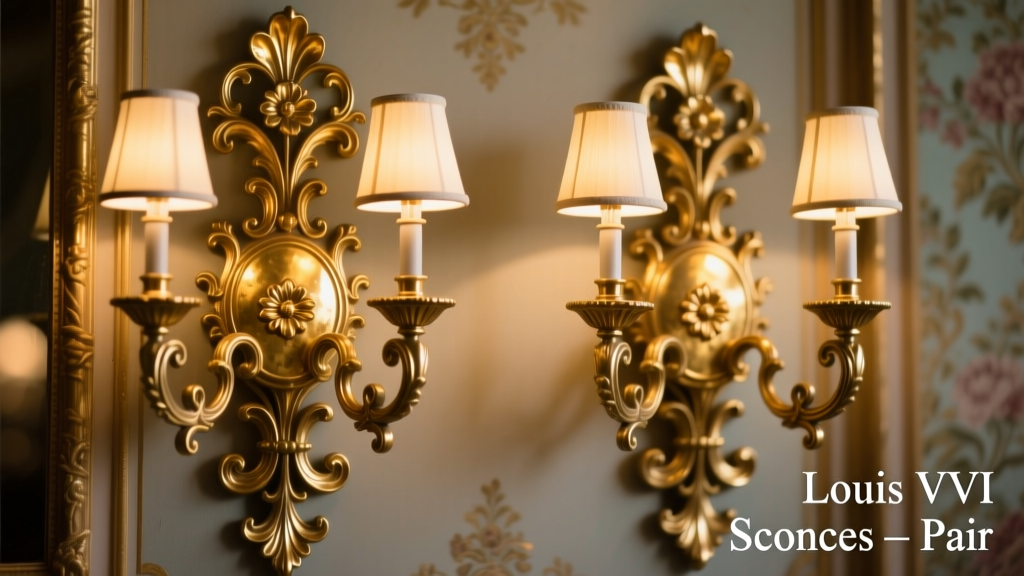
Louis XVI Style Gilt-Bronze Two-Light Sconces: Authenticity, Craftsmanship, and Market Value of a 12½-Inch Pair
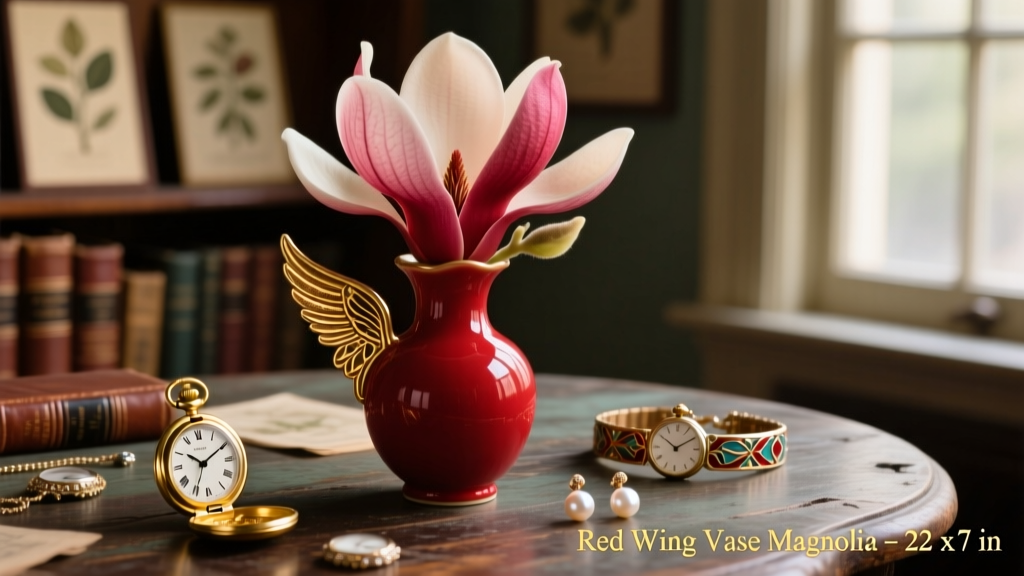
Red Wing Vase Magnolia 22 × 7 Inches: A Definitive Study of Form, Glaze, and Mid-Century American Ceramics
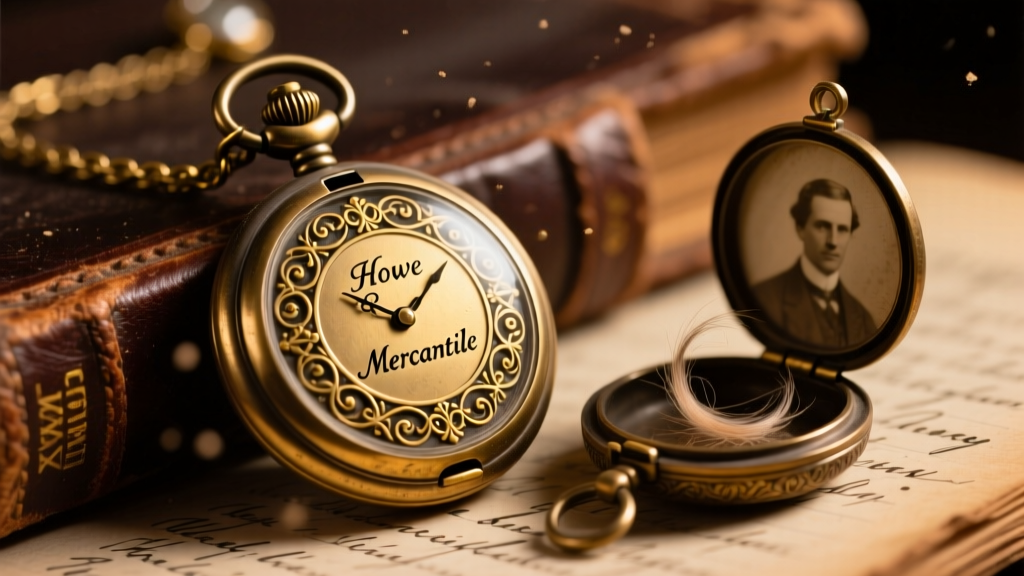
Howe Mercantile: The Forgotten American Watchmaker That Defined Mid-Century Precision and Craftsmanship
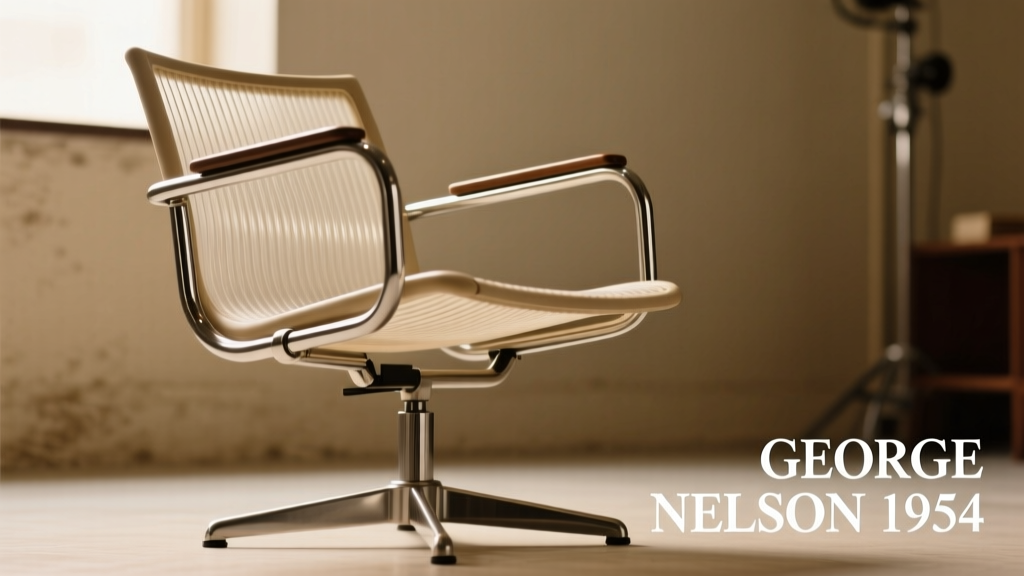
George Nelson’s Swag Leg Chair: Anatomy, Provenance, and Market Significance of the Iconic 1950s Fiberglass & Tubular Steel Design
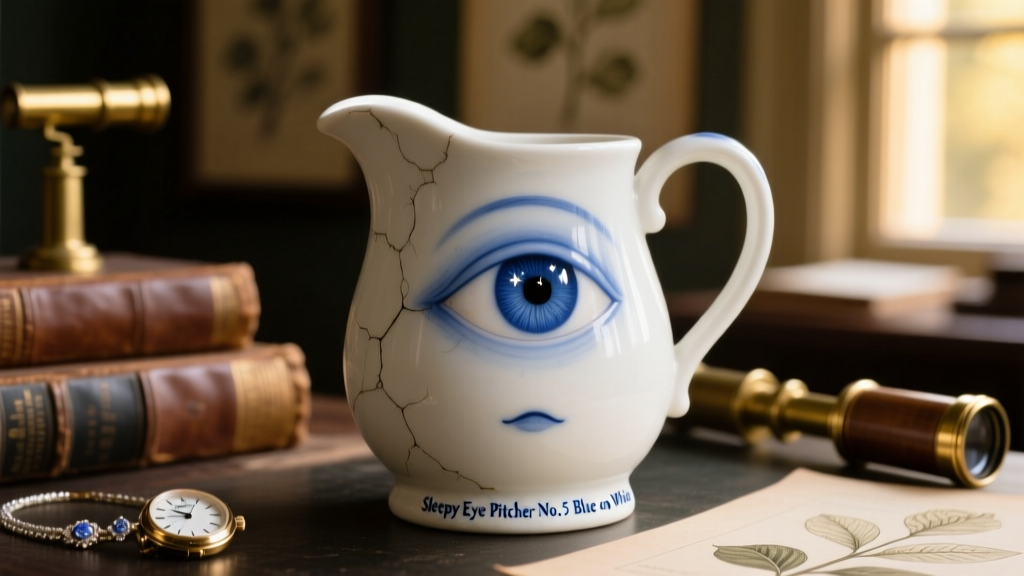
Sleepy Eye Pitcher No. 5 Blue-on-White: A Collector’s Guide to the 9-Inch American Hotelware Icon
Behind The Gavel: How Immersive Auction Experiences Drive Repeat Clientele in Vintage Jewelry & Watch Collecting
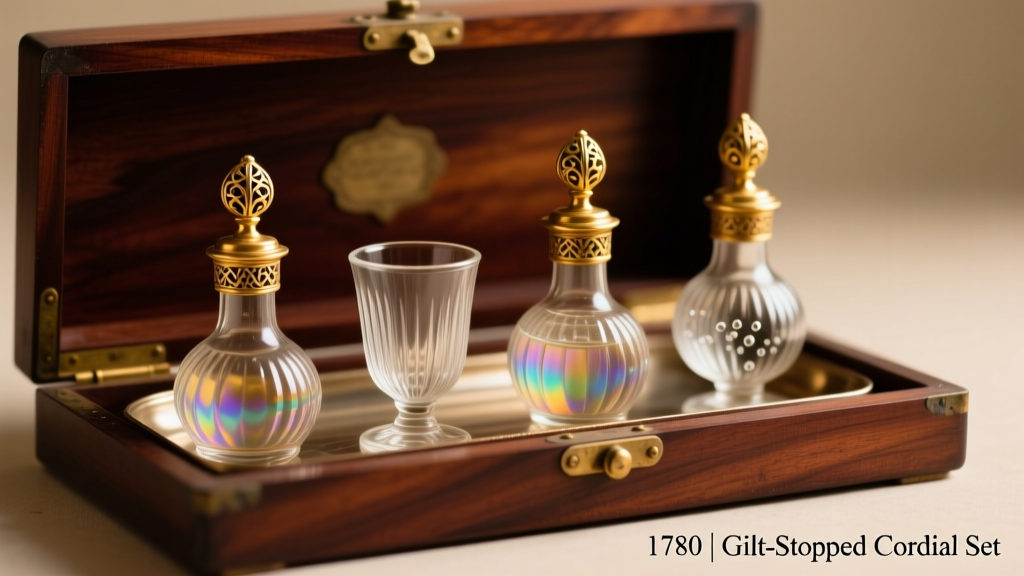
A Rare 1780 Blown Glass Cordial Set: Gilt Stopper Tray, Mahogany Case, and Provenance of Georgian Refinement