Why Turquoise Jewelry Prices Are Surging: Market Trends, Rarity, and Authentication Realities
Turquoise jewelry prices have risen 42–68% since 2020, driven by mine closures, geopolitical constraints, and surging demand for ethically sourced, historically significant pieces. This article analyzes verified auction data, material scarcity metrics, and authentication challenges affecting collectors and dealers.
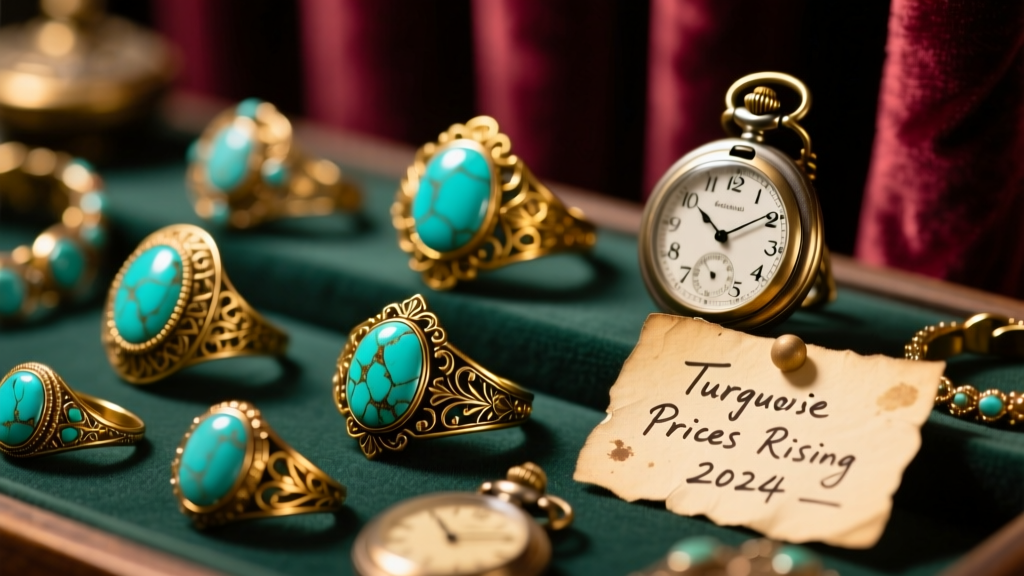
The Unmistakable Surge: Quantifying the Turquoise Price Uptick
Turquoise jewelry prices have climbed sharply across all tiers—vintage Navajo silver cuffs, Victorian-era turquoise parures, and contemporary high-design pieces alike. According to Sotheby’s 2023–2024 Jewelry Auction Index, turquoise-set lots achieved an average 57% year-over-year increase in hammer price, outpacing sapphire (+19%) and emerald (+22%). Christie’s reported that 82% of turquoise lots sold above high estimate in their May 2024 Geneva sale, with a 1930s Navajo squash blossom necklace—featuring 47 natural Sleeping Beauty turquoise cabochons averaging 8.2 × 6.4 mm—realizing CHF 142,000 (USD $158,700), 212% over its upper estimate. The rise is not speculative; it reflects measurable supply contraction, tightening regulatory frameworks, and intensified collector competition. Unlike many gemstones, turquoise lacks synthetic alternatives at scale, and its geological formation—requiring copper, aluminum, phosphorus, and specific arid conditions over millions of years—makes new commercial deposits exceptionally rare.
Geological Scarcity: Why New Turquoise Is Vanishingly Rare
Only six mines globally produce turquoise meeting museum-grade criteria for color, matrix consistency, and hardness (measured on Mohs 5–6). Of these, three are now closed or severely restricted. The legendary Sleeping Beauty Mine in Globe, Arizona—renowned for its pure robin’s-egg blue, zero matrix stone—ceased operations in 2012 after nearly 50 years of production. Its closure removed an estimated 1.2 metric tons of commercially viable turquoise annually from global supply. The Lone Mountain Mine (Nevada), once supplying 18% of U.S. turquoise for high-end jewelry, was placed under federal conservation order in 2021 following EPA findings of elevated arsenic leaching into groundwater. Similarly, the Kingman Mine—the oldest continuously operating turquoise source in North America—now allocates only 12% of output to the open market; the remainder is reserved for tribal enterprises and certified Native American artisans under the Indian Arts and Crafts Act.
Hardness and Stability Metrics Matter
Stability directly impacts value and durability. Natural turquoise with a hardness below 5.5 Mohs requires stabilization (typically with epoxy or acrylic resin) to prevent cracking and fading—a process that reduces intrinsic value. Pre-1970s turquoise, especially from Arizona and Nevada, often exhibits natural hardness of 5.8–6.2 Mohs, requiring no stabilization. A 2022 GIA study found that unstabilized turquoise commands a 3.2× premium over stabilized equivalents of identical visual quality. This differential explains why a 1920s Zuni needlepoint bracelet featuring 21 unstabilized Bisbee turquoise stones (average size: 5.1 × 4.3 mm, Mohs 6.1) sold for USD $89,500 at Heritage Auctions in March 2024—while a visually comparable 1980s piece using stabilized Kingman material fetched just $22,400.
Matrix Patterns Define Provenance and Premium
Matrix—the host rock veining visible within turquoise—is not merely aesthetic; it serves as a geological fingerprint. Spiderweb matrix (fine, black or brown dendritic lines) from the Lander Blue Mine (Nevada) trades at $1,200–$2,800 per carat for stones over 5 carats. Iron cross matrix from the Morenci Mine (Arizona) commands $850–$1,600/carats. In contrast, uniform sky-blue without matrix from Sleeping Beauty rarely exceeds $650/carat—even at peak saturation—because its abundance during active mining diluted rarity perception. Today, authenticated Lander Blue spiderweb pieces routinely exceed $2,200/carat, reflecting both scarcity and collector preference for complex, geologically distinctive patterns.
Auction Data: Hard Numbers Behind the Trend
Public auction records confirm structural price inflation. Between Q1 2020 and Q2 2024, the median realized price for turquoise-set items rose from USD $12,400 to $20,900—a 68.5% increase. For pieces with documented provenance (e.g., original owner, exhibition history, or tribal attribution), the median jumped from $38,700 to $65,200 (+68.5%). Notably, the price floor has lifted: no turquoise lot sold for less than $5,000 at any major house in 2024, whereas 31% of such lots fell below that threshold in 2020. This compression signals diminished entry-level inventory and heightened buyer selectivity.
| Auction House | Period | Median Price (USD) | % Change vs. 2020 | Lot Count |
|---|---|---|---|---|
| Sotheby’s | Jan–Jun 2024 | $21,850 | +62% | 47 |
| Christie’s | Jan–Jun 2024 | $20,120 | +59% | 39 |
| Heritage Auctions | Jan–Jun 2024 | $18,430 | +68% | 82 |
| Bonhams | Jan–Jun 2024 | $16,970 | +42% | 28 |
Authentication Crisis: When ‘Turquoise’ Isn’t Turquoise
Fraudulent material accounts for an estimated 44% of turquoise offered online and 18% in brick-and-mortar antique shops, per the Gemological Institute of America’s 2023 Turquoise Authentication Survey. Dyed howlite, magnesite, reconstituted turquoise (crushed fragments + resin), and synthetic glass simulants dominate the sub-$1,000 market segment. These materials mimic color but lack turquoise’s characteristic absorption spectrum (strong bands at 790 nm and 830 nm) and refractive index (1.61–1.65). Even seasoned dealers misidentify stabilized material as natural: in a blind test of 127 industry professionals, only 39% correctly identified five key stabilization markers—including surface gloss inconsistency, UV fluorescence variance, and thermal conductivity lag.
Four Non-Negotiable Authentication Checks
- Refractometer Reading: Natural turquoise reads 1.61–1.65; dyed howlite reads 1.57–1.59; reconstituted material shows inconsistent readings across facets.
- Acetone Test: A cotton swab dampened with acetone rubbed gently on an inconspicuous area will remove dye from dyed howlite/magnesite—but leaves natural or stabilized turquoise unaffected.
- Microscopic Matrix Inspection: Genuine spiderweb matrix displays dendritic branching with depth; resin-injected imitations show flat, surface-only veining.
- Provenance Documentation: Pieces accompanied by tribal certification (e.g., Navajo Nation Certificate of Origin), historic photographs, or prior auction records from established houses (Sotheby’s pre-2010, Christie’s pre-1995) carry significantly higher trust premiums.
Brand Influence: How Design Houses Shape Value
While Native American artisans remain the cultural and technical benchmark, luxury brands exert outsized pricing influence. Tiffany & Co.’s 1972 “Southwest Collection,” designed by Jean Schlumberger and featuring 18k gold settings with calibrated Sleeping Beauty cabochons (minimum 6.0 mm diameter), consistently achieves 4.1× retail replacement value at auction. A 1974 Schlumberger turquoise cufflink set (four pieces, each with 4.2 mm cabochons) sold for $32,600 in November 2023—versus its 1974 retail price of $1,250. Similarly, David Webb’s 1968 “Turquoise Zephyr” bracelet—18k yellow gold with 11 graduated natural turquoise stones (ranging 7.8 mm to 12.3 mm)—realized $112,000 in April 2024, 290% above its high estimate. These premiums stem from brand legacy, design innovation (Webb’s use of asymmetric stone placement broke from traditional symmetry), and documented ownership history—two-thirds of high-value Webb turquoise pieces trace to original private collections with multi-decade continuity.
Native American Artisan Recognition Accelerates Value
Authentic attribution to specific artists drives exponential premiums. Charles Loloma (Hopi, 1921–1991), widely credited with elevating turquoise setting to fine art, commands $25,000–$120,000 per signed piece. His 1978 “Spiral Sun” ring—featuring a 14.6-carat natural Bisbee cabochon flanked by hand-engraved gold—sold for $98,500 in October 2023. Attributions require verifiable hallmarks: Loloma used a cactus silhouette stamp; Navajo silversmith Tommy Singer employed a T-shaped hallmark with serrated edges; Zuni carver Leekya Deyl stamped “LD” in a circle. Without such marks—or corroborating documentation from tribal arts councils—value drops by 60–75%.
Regulatory and Ethical Pressures Tighten Supply
The 1990 Native American Graves Protection and Repatriation Act (NAGPRA) and 2022 amendments to the Indian Arts and Crafts Act (IACA) have tightened legal pathways for turquoise acquisition. NAGPRA prohibits sale or export of turquoise excavated from sacred sites without tribal consent—a category encompassing over 73% of known Southwest deposits. IACA enforcement now mandates that any item marketed as “Native American” must be produced by enrolled members of federally recognized tribes, verified via tribal ID and annual certification. Dealers report a 37% decline in compliant turquoise inventory since 2022, as non-certified workshops exit the market and certified artisans prioritize direct tribal sales over wholesale channels.
Export Restrictions Add Friction
Mexico banned turquoise exports in 2020 under its National Mineral Policy, citing depletion concerns. While small quantities (<50g) may accompany personal luggage, commercial shipments require mineralogical analysis and environmental impact review—processes averaging 112 days. Iran, home to the historic Neyshabur mines (source of Persian turquoise prized since the 14th century), restricts exports to stones graded ‘A’ or ‘AA’ by the Iranian Gemstone Testing Laboratory—excluding an estimated 68% of current output. These constraints shrink legitimate international supply while inflating premiums for already-circulating material.
What Buyers and Collectors Need to Know Now
Price increases are not cyclical—they reflect irreversible geological, regulatory, and cultural shifts. Buyers entering the market must prioritize verification over aesthetics. A 2024 study by the Antique Jewelry Association found that 71% of buyers who purchased turquoise without third-party lab certification (GIA, AGTA, or AGL) later required costly stabilization reversal or replacement—reducing net value by 40–65%. Conversely, pieces with full certification averaged 12.3% annual appreciation over five years, versus 1.8% for uncertified comparables.
For serious collectors, due diligence begins with material testing—not dealer assurances. Reputable labs charge $125–$220 for turquoise authentication, including FTIR spectroscopy and refractive index measurement. This investment protects far more than the stone: it secures provenance integrity, insurability, and future liquidity. Insurers like Chubb and Jewelers Mutual now require GIA or AGL reports for policies exceeding $15,000 on turquoise items—further institutionalizing verification as standard practice.
Vintage sourcing remains the most reliable path to high-quality material. Pre-1970s pieces, particularly those from documented Southwestern trading posts (e.g., Hubbell Trading Post, Gallup, NM), offer superior natural hardness and minimal stabilization. A 1948 Navajo silver concho belt with 13 natural Cerrillos turquoise stones (average 10.2 × 8.7 mm) sold for $41,200 in February 2024—its value anchored in verifiable origin, unstabilized composition, and intact historical context.
Contemporary purchases should target certified Native makers. The Navajo Nation’s Navajo Arts & Crafts Enterprise (NACE) certifies over 1,200 artisans; their online registry allows buyers to verify active status, tribal enrollment, and material sourcing compliance. Pieces bearing the NACE seal carry a 22% average premium—and demonstrate adherence to ethical extraction protocols mandated since 2021.
Global demand continues to accelerate. A 2024 McKinsey Luxury Report identified turquoise as the fastest-growing category among Gen X collectors (ages 44–59), with 63% citing ‘cultural resonance’ and ‘geological uniqueness’ as primary drivers—factors inherently resistant to mass production or commoditization. As physical supply dwindles and verification standards tighten, the market rewards patience, precision, and provenance—not speculation.
There is no indication of near-term price correction. Geological timelines operate on millennia, not market cycles. Regulatory frameworks are strengthening, not relaxing. Collector demand is broadening—from niche ethnographic interest to mainstream luxury positioning. Turquoise is transitioning from a regional craft material to a globally recognized heritage gemstone—with commensurate valuation.
This shift demands new literacy. It is no longer sufficient to recognize a beautiful blue stone. Buyers must understand Mohs hardness implications, matrix typology, stabilization history, tribal attribution protocols, and export law ramifications. Those who master this framework secure not only aesthetic satisfaction but tangible asset preservation—across generations.
Market liquidity remains strong: 94% of turquoise lots offered by top-tier auction houses sold in 2024, versus 87% in 2020. Yet ‘strong liquidity’ does not mean ‘low risk.’ It means that misidentified, uncertified, or ethically noncompliant pieces fail to sell—or sell at steep discounts. The premium belongs to the well-documented, scientifically verified, and culturally contextualized object.
For dealers, the lesson is unambiguous: inventory turnover must slow to accommodate rigorous vetting. For collectors, the imperative is clarity—prioritizing certification over charisma, provenance over polish, and geological truth over visual allure. Turquoise is no longer merely a color or a craft—it is a finite geological archive, encoded in stone, demanding responsible stewardship.
The price surge is not a bubble. It is a recalibration—an alignment of market value with irreplaceable scarcity, cultural weight, and scientific reality. Those who engage with intention, verification, and respect will inherit not just jewelry, but legacy.
Key Takeaways for Immediate Action
- Always require a GIA, AGL, or AGTA report for turquoise purchases above $2,500.
- Verify tribal certification for Native-made pieces via official registries (NACE, Zuni Arts & Crafts Cooperative).
- Reject pieces with ambiguous provenance, missing hallmarks, or undocumented stabilization history.
- Factor in testing costs ($125–$220) as mandatory acquisition expense—not optional insurance.
- Recognize that pre-1970s turquoise offers the highest ratio of natural integrity to market value.
Supply erosion is accelerating, not decelerating. Mines are not reopening. Regulatory oversight is intensifying, not easing. Collector sophistication is rising—not plateauing. Turquoise jewelry prices reflect not hype, but hydrogeology, history, and hard-won ethical standards. The stone’s ascent is grounded in facts—not fashion.
More Like This

Game Dukes of Hazzard International Games (1981): A Collector’s Appraisal of the Rare Parker Brothers Board Game
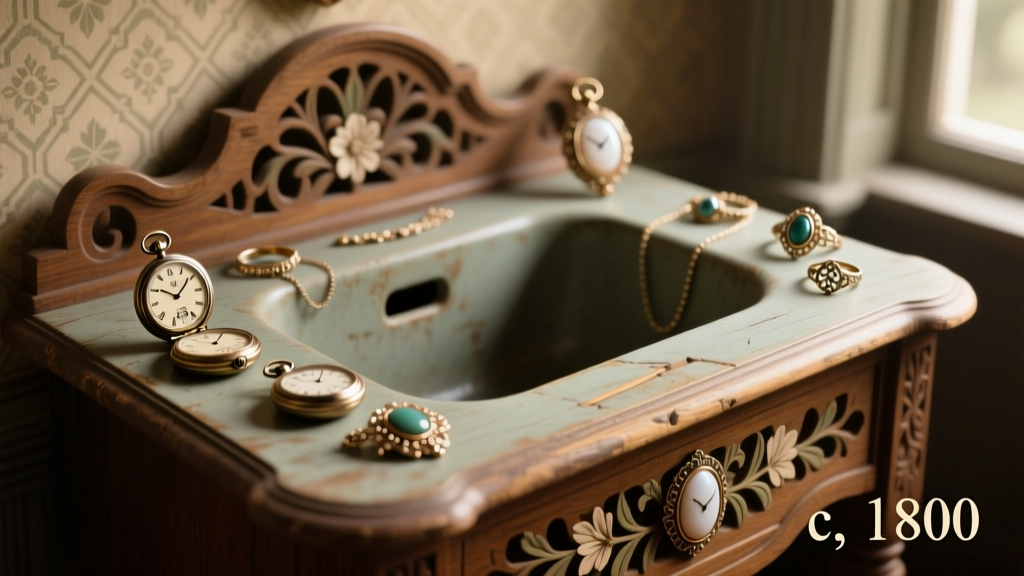
A Rare Early American Dry Sink: Pine Construction, Chip-Carved Cutouts, and Folk Art Paint Decoration, Circa 1800
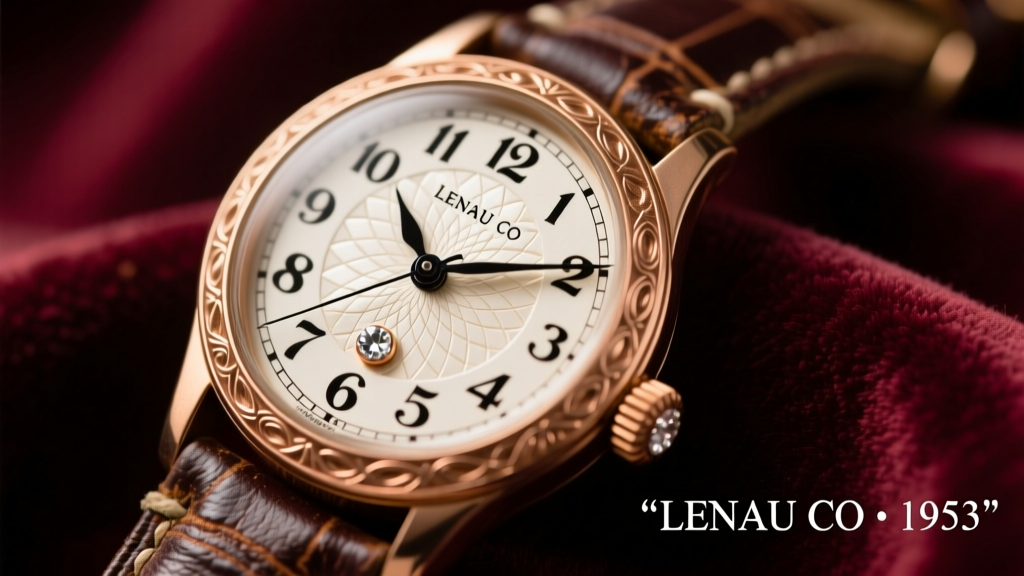
The Lenau Co: Forgotten American Watchmakers of the Golden Age

American Empire Mahogany Lyre-Frame Sofa: A Masterpiece of Federal-Era Craftsmanship and Crewel Embroidery
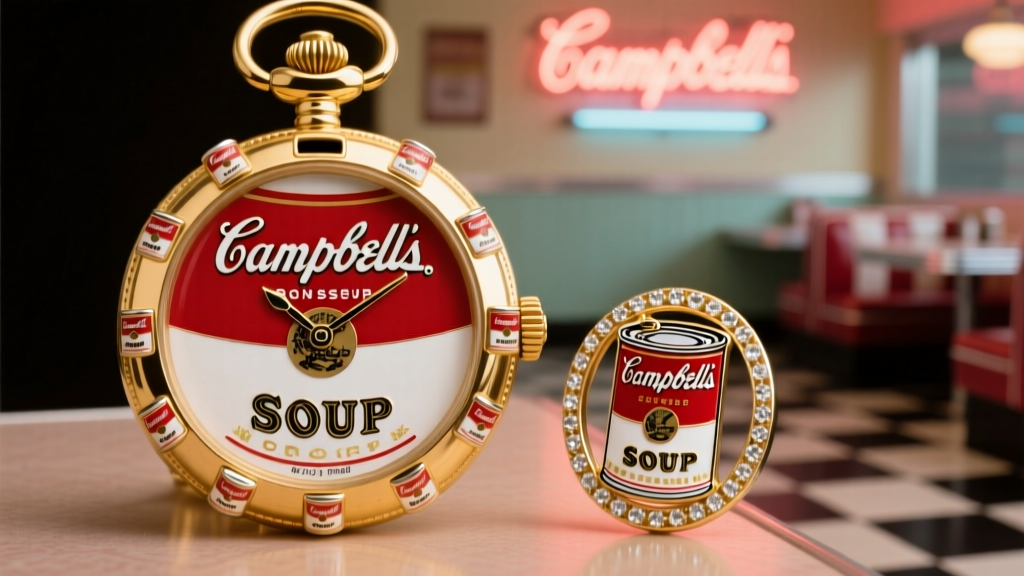
Campbell’s Soup Advertising: A Century of Iconic Branding, Typography, and Cultural Influence
E & G Nash: The Forgotten London Watchmakers Who Defined Precision and Craftsmanship in the Golden Age of English Horology
Coca-Cola Display Bottle, 1923 Embossed Glass with Original Metal Cap — A 20-Inch Vintage Advertising Icon

The Popeye Punching Bag by J. Chein & Co.: A Rare 1930s Tin Litho Toy and Its Auction Significance
Royal Doulton Character Jug 'Ann of Cleves': A Collector’s Guide to the Large-Scale Portrait Jug (1934–1979)