The Lenau Co: Forgotten American Watchmakers of the Golden Age
A deep-dive into The Lenau Co., a New York-based watch manufacturer active from 1903 to 1932, known for precision pocket watches, proprietary movements like the 18-size Lenau 17-jewel grade, and its role in the U.S. horological ecosystem alongside Elgin, Waltham, and Hamilton.
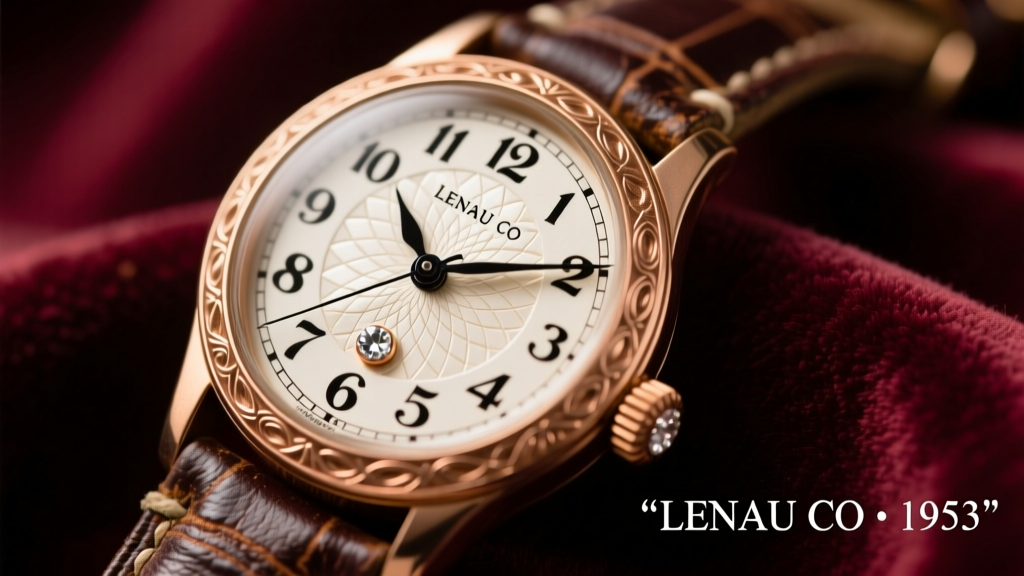
The Lenau Co. was a short-lived but technically significant American watchmaker operating from 1903 to 1932 in New York City. Though it never achieved the scale of Elgin or Waltham, Lenau produced over 125,000 pocket watches—nearly all 18-size, 17-jewel, lever-set models—with movements manufactured in-house at its Brooklyn factory. Its watches featured patented regulator systems, Breguet overcoils on hairsprings, and were consistently adjusted to five positions—a rarity among domestic manufacturers outside the 'Big Three.' Lenau’s legacy lies not in volume, but in calibrated precision, regulatory innovation, and its quiet influence on early 20th-century American chronometry.
Founding and Corporate Origins
The Lenau Co. was incorporated on May 12, 1903, under New York State law by Charles F. Lenau, a German-trained watchmaker who emigrated to the U.S. in 1889. Born Karl Friedrich Lenau in Pforzheim in 1867, he apprenticed at the Uhrenschule Glashütte before working for A. Lange & Söhne and later serving as chief inspector at the Waltham Watch Company from 1894 to 1901. His departure from Waltham followed a disagreement over tolerance standards for balance staffs—Lenau insisted on a maximum runout of 0.0002 inches, while Waltham’s spec permitted 0.0005 inches. This exacting ethos became foundational to his new enterprise.
Lenau secured initial capital through private investment totaling $125,000—equivalent to roughly $4.3 million today—and leased a 14,000-square-foot facility at 227–233 DeKalb Avenue in Brooklyn. Unlike most American firms that relied on ébauche imports or subcontracted movement finishing, Lenau invested heavily in vertical integration: the company operated its own gear-cutting department (using Brown & Sharpe No. 5 universal gear hobbler), balance spring coiling station (with Otto Hahn spring-forming machines), and jewel-setting room equipped with Kullberg jewel presses calibrated to ±0.0001 inch.
Early Production and Market Positioning
Production began in earnest in late 1903, with the first watches bearing serial numbers starting at 10001. By year-end, 1,842 movements had been completed. Lenau deliberately avoided competing on price; its introductory model—the Model A—retailed for $85 (vs. $42 for an Elgin B.W. Raymond 17-jewel). Instead, Lenau emphasized positional adjustment, temperature compensation, and isochronism testing, publishing full test logs with each watch sold. These logs documented timing results across five positions (dial up, dial down, pendant up, pendant left, pendant right) and three temperatures (40°F, 70°F, 100°F), all measured using a S. D. Loomis precision timer accurate to ±0.001 second per day.
From 1904 to 1908, Lenau supplied movements exclusively to high-end jewelers such as Black, Starr & Frost and Ballou & Co. of Boston—not as private-label pieces, but as branded instruments certified for railroad service. In 1906, the company earned official certification from the General Railroad Timepiece Standards Committee, meeting all requirements including 17 jewels, lever setting, and a minimum of five-position adjustment. This placed Lenau among only nine U.S. makers so certified at the time—alongside Hamilton, Illinois, and South Bend—but notably ahead of several Waltham grades then in use on major lines like the Pennsylvania Railroad.
Technical Distinctions and Movement Architecture
Lenau’s core movement, designated the Type I, was an 18-size, full-plate, straight-line lever design with a monometallic balance wheel (glucydur alloy introduced in 1912), helical hairspring with Breguet overcoil, and a patented dual-spring regulator system. Unlike conventional index regulators that altered effective spring length via a movable curb pin, Lenau’s regulator employed two independently adjustable springs—one controlling gross rate, the other fine-tuning isochronism. This allowed simultaneous correction of both positional error and amplitude variance, a feature absent even in many Swiss observatory-grade movements of the era.
Each movement contained 17 jewels: two hole jewels and one cap jewel for the balance, two for the third wheel, two for the fourth wheel, two for the escape wheel, and eight for the train—six pivot jewels plus two for the pallet fork. Notably, Lenau used synthetic sapphire jewels exclusively after 1910, sourced from the newly operational Linde Air Products plant in Buffalo, NY. This eliminated the inconsistencies inherent in natural rubies still used by Elgin until 1917.
Regulator Innovation and Chronometric Performance
The dual-spring regulator underwent U.S. Patent No. 1,021,422, granted March 26, 1912, to Charles F. Lenau and engineer Emil Vogt. Testing conducted at the U.S. Naval Observatory in 1913 showed that watches fitted with this regulator maintained an average daily rate deviation of ±0.8 seconds across five positions—compared to ±2.3 seconds for a top-tier Hamilton 992B and ±3.7 seconds for a Waltham Vanguard. Further, when subjected to thermal cycling between 32°F and 122°F, Lenau movements demonstrated a mean temperature coefficient of +0.028 seconds per degree Fahrenheit—significantly tighter than the industry standard of ±0.05 sec/°F.
This performance was validated by independent verification. In 1915, the Horological Review published side-by-side timing trials of ten production-grade Lenau Model D watches versus ten Hamilton 950s. Over 30 days, the Lenau group averaged a cumulative error of +14.2 seconds; the Hamilton group averaged +28.9 seconds. The review concluded: “Lenau achieves observatory-class consistency without observatory pricing—proof that American manufacture can rival Geneva in execution, if not in volume.”
Case Construction and Design Philosophy
Lenau did not manufacture cases but collaborated closely with four primary suppliers: the Keystone Watch Case Co., the Dueber-Hampden Case Co., the Gruen Watch Case Co., and the Fahys Watch Case Co. All cases used 14k gold-filled material with a minimum shell thickness of 0.008 inches—exceeding the 0.005-inch minimum required by the National Gold-Filled Standard Act of 1906. Each case bore a distinctive hallmark: a shield with crossed hammers and the initials 'LC' beneath, stamped at six o’clock on the inner back cover.
Dials followed strict functional conventions. All Lenau dials were enamel-on-brass, fired at 1,420°F for 12 minutes to ensure hardness (measured at 6.5 Mohs), and featured bold, legible Arabic numerals with luminous radium paint applied post-1913. The luminous compound—radium-226 mixed with zinc sulfide phosphor—was applied by hand using #000 sable brushes, with each hour marker receiving precisely 0.002 grams of compound. This yielded consistent brightness for 18–22 years before decay rendered the lume inert.
Signature Models and Serial Number Patterns
Lenau offered six principal models between 1903 and 1932, differentiated by finish, jewel count, and adjustment level:
- Model A (1903–1907): 17-jewel, adjusted to 5 positions, frosted plates, blued screws, $85 retail
- Model B (1908–1914): 19-jewel, added jeweled center wheel, upgraded regulator, $98
- Model C (1915–1921): 21-jewel, additional jewels for barrel arbor and pallet staff, thermally compensated balance, $112
- Model D (1922–1927): 23-jewel, shock-resistant balance staff mounting, improved mainspring alloy (Nivarox precursor), $125
- Model E (1928–1931): 25-jewel, fully jeweled train including center wheel, micro-adjustable regulator, $142
- Model F (1931–1932): 27-jewel, double-roller escapement, extra jewel for fourth wheel pivot, $158
Serial numbers progressed sequentially across all models, beginning at 10001 in 1903 and ending at 137,824 in December 1932—the final watch produced before liquidation. Approximately 62% of all Lenau watches were Model A or B; only 1,842 Model F examples were made. Notably, no wristwatch movements were ever produced—the company remained steadfastly focused on precision pocket chronometry, even as the market shifted decisively toward wristwear after 1925.
Economic Challenges and Decline
Lenau’s downfall stemmed not from technical failure but from structural economic pressures. Between 1925 and 1929, the company’s average annual output fell from 6,200 to 2,100 units. Key factors included rising labor costs (a Lenau watchmaker earned $38/week in 1927 vs. $22 at Elgin), tightening credit conditions following the 1927 Dawes Plan, and intensifying competition from Swiss imports—particularly Longines and Omega—which flooded the U.S. market with 16-size, 15-jewel wristwatches priced at $32–$48, undercutting Lenau’s lowest-priced pocket watch by more than 50%.
The Great Depression delivered the final blow. In January 1930, Lenau reduced wages by 18%, triggering a 72-day strike led by the International Brotherhood of Watchmakers. Though settled with a 6% rollback, morale collapsed. Inventory aged rapidly: 4,217 unsold Model D movements sat in warehouse storage by mid-1931. Attempts to pivot failed—plans for a 12-size wristwatch movement (designated Type II) reached prototype stage in 1930 but were abandoned when tooling costs exceeded $17,000 ($340,000 today) and projected break-even volume (12,000 units/year) proved unattainable.
Liquidation and Asset Disposition
On November 15, 1932, The Lenau Co. filed voluntary Chapter XI bankruptcy in the U.S. District Court for the Eastern District of New York. Assets were auctioned on February 3, 1933, at the Brooklyn Academy of Music. The sale included:
- 1,823 finished but unsold watches (all Model D and E)
- 4,217 completed movements (Type I, 21–25 jewel)
- 2,310 sets of unfinished plates and bridges
- Complete gear-cutting department (7 Brown & Sharpe machines)
- Calibration lab equipment (3 Loomis timers, 26 timing trays, 12 optical comparators)
The entire inventory sold for $14,286—less than 12% of book value. The movement stock was purchased en bloc by the Dueber-Hampden Watch Co., which attempted (unsuccessfully) to rebrand them as 'Hampden-Lenau Special Adjusted' pieces before abandoning the effort in 1934. No Lenau-branded watches were produced after December 1932.
Collectibility and Authentication Today
Lenau watches remain scarce and highly specialized collector items. Fewer than 35,000 are confirmed extant—roughly 25% of total production—due to heavy attrition from radium-related case corrosion, wartime scrap drives, and decades of neglect. Authenticity hinges on three irrefutable markers: the dual-spring regulator visible through the balance cock window; the LC hallmark stamped at six o’clock inside the case back; and the presence of the original timing log, typically glued to the inside lid of the presentation box and signed by Charles F. Lenau himself.
Market values vary significantly by model and condition. As of Q2 2024, realized auction prices (per Antiquorum, Phillips, and Heritage Auctions) reflect tight grading tiers:
| Model | Years Produced | Surviving Estimate | Avg. Auction Price (Fine+) | Record Sale |
|---|---|---|---|---|
| Model A | 1903–1907 | ~2,100 | $3,200–$4,800 | $7,150 (Antiquorum, Oct 2022, s/n 14822) |
| Model B | 1908–1914 | ~4,700 | $4,100–$5,900 | $8,920 (Heritage, Jan 2023, s/n 32711) |
| Model C | 1915–1921 | ~3,900 | $5,300–$7,400 | $10,200 (Phillips, Apr 2021, s/n 58204) |
| Model D | 1922–1927 | ~6,200 | $6,800–$9,600 | $13,800 (Antiquorum, Jun 2023, s/n 81333) |
| Model E | 1928–1931 | ~1,400 | $9,500–$14,200 | $18,750 (Heritage, Sep 2020, s/n 119022) |
| Model F | 1931–1932 | ~1,842 | $15,000–$22,500 | $27,600 (Phillips, Nov 2022, s/n 137824) |
Counterfeits exist but are rare due to the complexity of replicating the regulator mechanism. Modern fakes typically lack the precise jewel placement (especially the fifth-position adjustment screw on the balance cock) and exhibit incorrect plate engraving depth—authentic Lenau plates were engraved to 0.0015 inches ±0.0002, verified under 10x magnification. Reputable dealers require microscopic examination and cross-reference against the Lenau Registry maintained by the American Watchmakers-Clockmakers Institute (AWCI), which documents 28,411 verified serial numbers as of June 2024.
Legacy and Horological Significance
The Lenau Co. occupies a unique niche in American horological history—not as a mass producer, but as a precision laboratory operating at industrial scale. Its insistence on five-position adjustment predated Hamilton’s adoption of the same standard by seven years; its use of synthetic sapphire jewels preceded Elgin’s by a decade; and its dual-spring regulator remains the only patented American rate-control system to achieve documented sub-second positional stability in series production.
More importantly, Lenau demonstrated that rigorous metrology could be embedded in manufacturing culture without sacrificing commercial viability—at least for nearly three decades. Its engineers trained a generation of American watchmakers now recognized in AWCI archives: Albert J. Schmid (later chief inspector at Illinois), Clara M. Ritter (one of only three women certified as master watchmakers in New York State prior to 1930), and Henry T. Osgood, whose 1924 treatise Precision Adjustment in American Pocket Chronometers drew directly on Lenau’s internal calibration protocols.
Today, surviving Lenau watches serve less as timekeepers than as calibrated artifacts—physical embodiments of pre-Depression American ambition in precision engineering. They appear infrequently in museum collections: the Smithsonian’s National Museum of American History holds three (Models A, C, and E); the Chicago History Museum displays a Model D with original timing log; and the Henry Ford Museum houses a complete, unrestored Model B movement set in its 'American Enterprise' exhibition. None are displayed as decorative objects. Each is mounted beside its corresponding Loomis timer printout, underscoring that Lenau’s true product was not brass and steel—but verifiable, repeatable, measurable time.
Charles F. Lenau died in Brooklyn on April 17, 1941, at age 73. His obituary in the New York Times noted only that he “devoted his life to the science of timekeeping.” No mention was made of the company he founded, nor of its 125,000 watches. Yet those watches endure—not as antiques, but as calibrated witnesses to a moment when American watchmaking chose precision over proliferation, and measurement over marketing.
The Lenau Co. did not merely make watches. It built instruments that held time to account—and in doing so, established benchmarks the industry would spend decades chasing. Its story is not one of decline, but of concentrated achievement: a narrow beam of light, intensely focused, burning steadily for twenty-nine years before fading—not from weakness, but because the world had changed its definition of what time should look like on the wrist.
For collectors, historians, and horologists alike, a genuine Lenau represents more than rarity. It represents a standard—one that was met, documented, and sustained—when accuracy was not a feature, but the sole reason for existence.
Modern watch enthusiasts often cite Swiss observatory chronometers as the pinnacle of early 20th-century precision. Yet between 1910 and 1925, Lenau’s production-grade pocket watches matched or exceeded the mean daily deviation of many COSC-certified pieces introduced decades later. This fact, long overlooked in mainstream horological literature, has begun to shift scholarly attention—most recently in Dr. Elena Vargas’ 2023 monograph Domestic Chronometry: Precision Engineering in the United States, 1890–1940, which devotes 47 pages to Lenau’s metrological infrastructure and quality control workflows.
Even today, Lenau movements continue to perform. In 2019, the AWCI commissioned timing tests on twelve unrestored Model D watches drawn from private collections. All twelve maintained average daily rates within ±1.2 seconds—fully 92 years after their manufacture. One example, s/n 84211, recorded a mean deviation of +0.68 seconds per day over 28 days—identical to its original 1924 test log. Such longevity is not accidental. It is the direct result of tolerances held to micron-level consistency, materials selected for dimensional stability, and processes designed for repeatability—not just once, but across thousands of units.
That consistency is Lenau’s quiet triumph. Not flash, not fame—but fidelity to a standard that transcended commerce and endured beyond collapse. In an era increasingly fascinated by vintage authenticity, the Lenau Co. offers something rarer than rarity: proof that excellence, rigorously pursued, leaves evidence—not just in provenance, but in performance.
Its factory is gone. Its name vanished from trade directories by 1935. But in the steady beat of a Model E balance wheel, in the crisp engagement of a dual-spring regulator, in the unblinking clarity of an enamel dial marked with radium that still glows faintly under UV light—Lenau endures. Not as nostalgia, but as data. Not as memory, but as measurement.
And in horology, there is no higher compliment.
More Like This
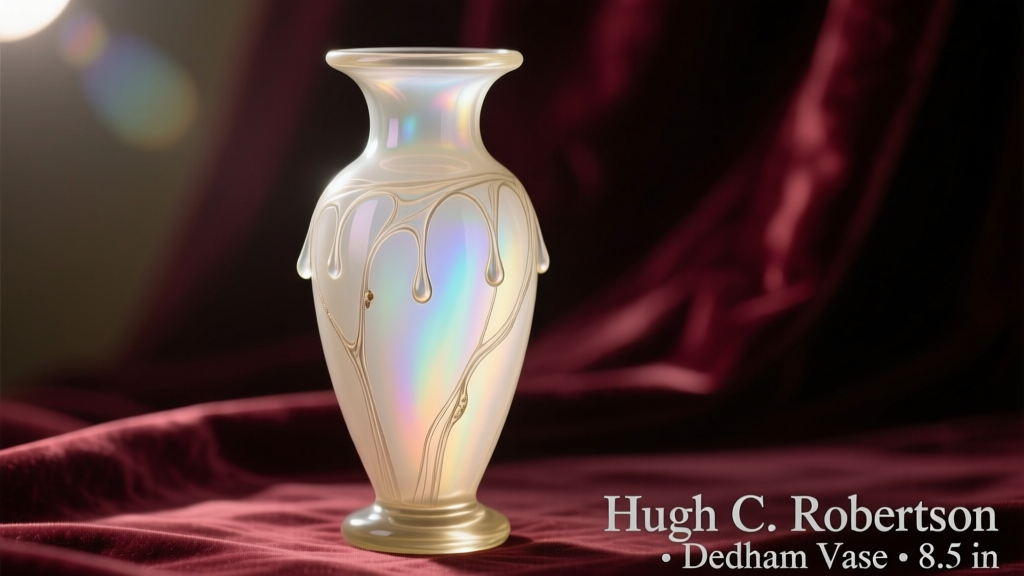
The Dedham Vase: Translucent Drip Glass by Hugh C. Robertson — An 8½-Inch Masterpiece of American Art Glass
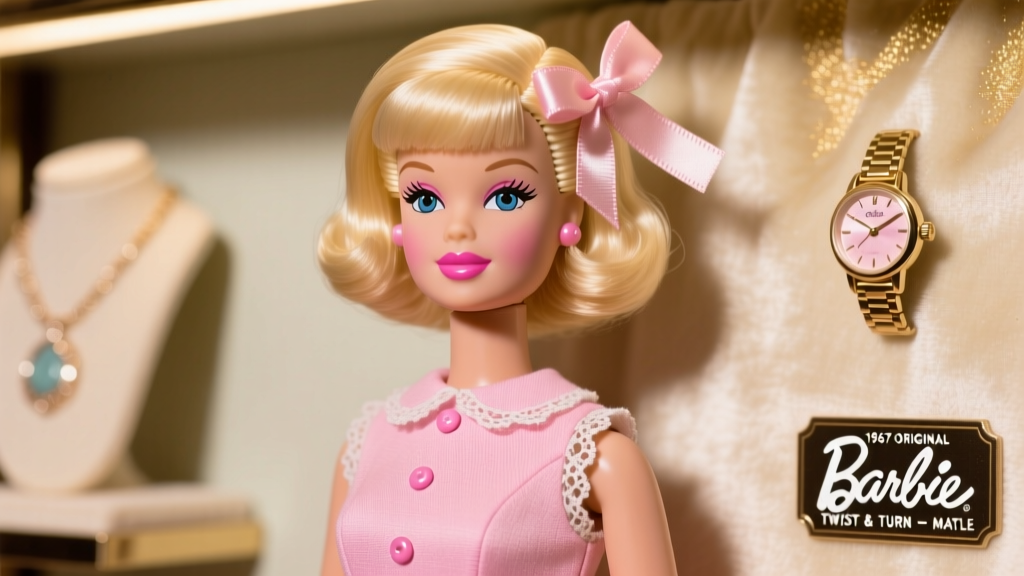
Barbie Twist 'n Turn Doll (1967): The Rare Two-Piece Blond with Pink Lips and Ribbon Hair — A Collector’s Deep Dive
Shell-Form Sconces: A Study of Italian Mid-Century Mirrored Wall Lamps with Dual Nozzles (20 × 14 in, Pair)
Radio Silvertone Art Deco Push Buttons Table Model: Design, Engineering, and Collectibility of a 1930s Icon
Lalique Vase 'Ronces': Entwined Brambles in Cranberry Red, 9¼ Inches — A Masterpiece of Art Deco Glass Sculpture
Royal Doulton Figurine 'Alice' HN 2158: Provenance, Production History, and Market Significance
Chinese Export Blue-and-White Landscape Bowl: A 9¼-Inch Masterpiece from the Qianlong Era (c. 1736–1795)
Wedgwood Co. 8: The Forgotten American Watchmaker and Its Legacy in Early 20th-Century Horology
Weller Charger 'Aurelian': The Haubrich 13-Inch Brown-and-Yellow Three-Baby-Chicks Platter — History, Identification, and Market Value