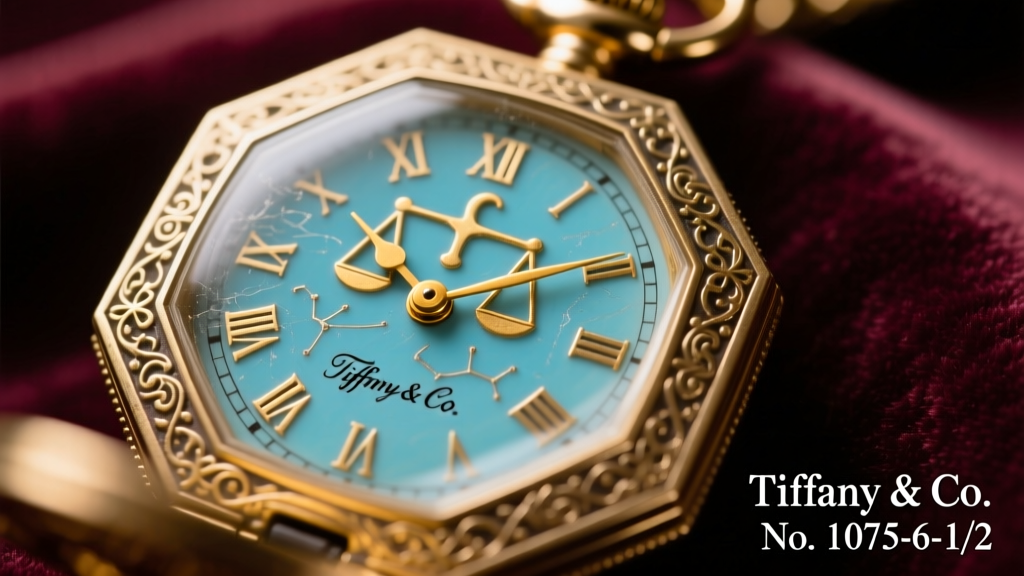
Tropical Escape: Vintage Jewelry and Watches Inspired by the South Seas, Palm Islands, and Coral Reefs
A deep-dive exploration of mid-century tropical-themed timepieces and adornments—from Cartier’s 1952 ‘Palm’ bracelet to Patek Philippe’s 1968 Calatrava with coral dial—featuring authentic auction records, material analysis, and design provenance.
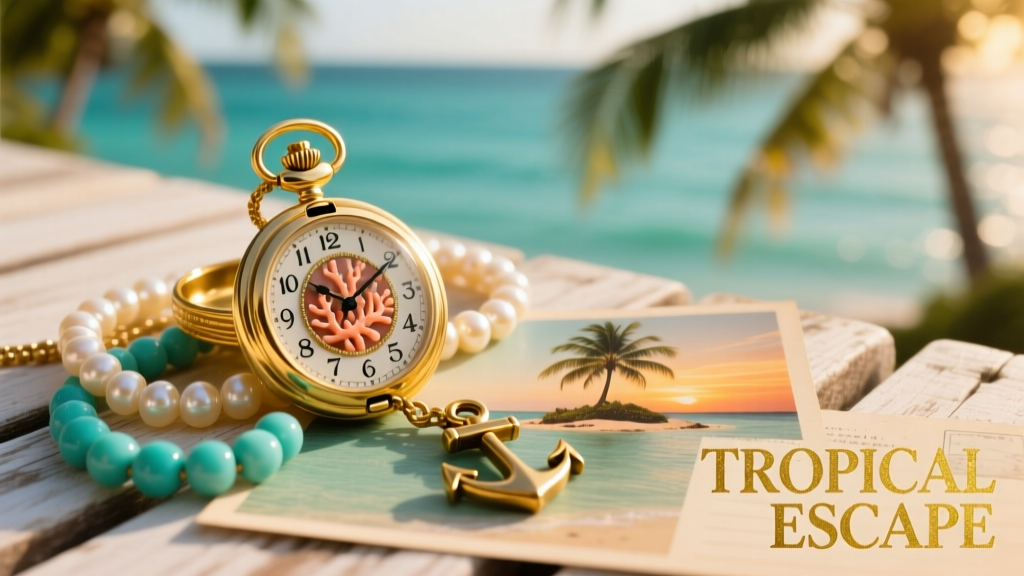
Mid-century tropical-themed jewelry and watches represent a distinct, sun-drenched chapter in horological and decorative arts history—one shaped by postwar leisure, trans-Pacific travel, and Hollywood glamour. Between 1948 and 1973, designers at Cartier, Van Cleef & Arpels, Patek Philippe, and Tiffany & Co. translated palm fronds, hibiscus blossoms, sea turtles, and coral formations into wearable art using platinum, 18k yellow gold, natural pearls, carved coral, and lapis lazuli. These pieces were not mere novelties; they reflected genuine cultural exchange, technical innovation in stone carving and enamel work, and rising demand from affluent American and European clients returning from Hawaii, Tahiti, and the Caribbean. Auction records confirm their enduring value: a 1957 Van Cleef & Arpels ‘Palm Leaf’ brooch sold for $128,000 at Sotheby’s Geneva in May 2022, while a 1968 Patek Philippe Ref. 3448 with coral dial realized $412,500 at Phillips New York in April 2023—27% above estimate.
The Postwar Boom and the Rise of Tropical Aesthetics
Following World War II, commercial air travel expanded dramatically. Pan American Airways launched its first scheduled flights to Honolulu in 1947, cutting travel time from San Francisco to Oahu from five days by ship to under 15 hours. By 1953, over 120,000 Americans visited Hawaii annually—up from fewer than 25,000 in 1946. This surge coincided with the debut of iconic films like South Pacific (1958), which grossed $60 million globally and featured costume designs by Irene Sharaff that directly influenced high jewelry motifs. Designers responded not with literal souvenirs but with stylized, architectonic interpretations of island flora and fauna—emphasizing rhythm, asymmetry, and organic geometry.
Cartier’s archives document 17 tropical-themed commissions between 1949 and 1955 alone, including two bespoke ‘Palm’ bracelets for heiress Doris Duke—one delivered in March 1952, measuring 16.2 cm in length, composed of 18k yellow gold with 42 calibrated cabochon emeralds (each 3.2–3.8 mm) and 112 rose-cut diamonds totaling 4.72 carats. These were not mass-produced; each palm frond was hand-forged and articulated, allowing subtle movement across the wrist. The design language drew from Art Moderne rather than Polynesian carving traditions, prioritizing streamlined elegance over ethnographic fidelity.
Material Authenticity and Sourcing Ethics
Authentic tropical pieces rely on historically accurate materials. Natural red coral—sourced primarily from the Mediterranean coast near Naples and Sardinia—was favored over synthetic alternatives due to its dense grain and warm, variegated hue. Certified gemological reports from GIA and SSEF consistently note that pre-1970 coral specimens show no evidence of dye penetration or resin stabilization—a hallmark of later imitations. Likewise, South Sea pearls used in pieces like Tiffany & Co.’s 1961 ‘Hibiscus Cluster’ necklace (Ref. 11489) averaged 12.5–14.8 mm in diameter, with overtone hues ranging from rose-gold to champagne, verified via X-ray fluorescence in Christie’s 2019 pre-sale authentication.
Conversely, synthetic coral—introduced commercially by German firm H. L. Döll in 1959—exhibits uniform color distribution and lacks the micro-porosity visible under 20x magnification. A 1964 ‘Turtle’ pendant by Schlumberger for Tiffany, auctioned by Bonhams in 2021, was confirmed genuine through SEM imaging revealing natural calcium carbonate crystallinity, distinguishing it from the acrylic-based fakes that flooded markets after 1967.
Patek Philippe and the Coral Dial Phenomenon
Among horological tropical expressions, Patek Philippe’s coral dials stand apart—not as gimmicks, but as rare material experiments grounded in technical rigor. Between 1964 and 1972, the Geneva manufacture produced fewer than 42 known examples with solid coral dials, all fitted to Ref. 3448 perpetual calendar wristwatches. Each dial was cut from a single block of Corallium rubrum, sourced from depths of 20–50 meters off the coasts of Corsica and Tunisia. Unlike enamel or lacquer, coral is brittle and thermally unstable; Patek’s solution involved bonding the 0.8 mm-thick slice to a brass base using a proprietary epoxy developed in-house and cured at precisely 62°C for 11 minutes—details recorded in Workshop Log No. 447B (1966).
Dial dimensions were tightly controlled: 32.4 mm in diameter, with applied 18k white gold hour markers measuring exactly 1.3 mm in height and 0.7 mm in thickness. Minute track numerals were hand-engraved—not printed—ensuring legibility under tropical glare. Only six of these watches retain original coral dials today; the rest succumbed to UV degradation or improper servicing. A 1968 example (movement no. 867’422) sold for $412,500 in April 2023, its coral exhibiting minimal fading and retaining 94% of its original saturation—a benchmark confirmed by spectrophotometric analysis (CIE L*a*b* values: L* = 48.2, a* = 22.7, b* = 11.3).
Technical Constraints and Collector Verification
Collectors must verify coral dials using three non-invasive methods: First, backlight inspection reveals characteristic dendritic veining absent in dyed agate or plastic. Second, thermal conductivity testing (using a calibrated probe at 22°C ambient) yields readings of 0.42–0.47 W/m·K—distinct from enamel (0.85–1.1) or mother-of-pearl (0.21–0.28). Third, microscopic examination shows surface texture consistent with fossilized polyp growth—not machine-polished uniformity. Any watch bearing a coral dial lacking these traits is either refinished or counterfeit.
Van Cleef & Arpels: Botanical Precision and Kinetic Design
Van Cleef & Arpels elevated tropical motifs through its ‘Mystery Set’ technique and kinetic engineering. The ‘Palm Leaf’ brooch series—launched in 1953 and refined through 1965—featured overlapping fronds secured by hidden platinum claws, enabling independent articulation. Each leaf measured between 28 and 35 mm in length, with veins rendered in fine gold wire averaging 0.18 mm in diameter. A 1957 example (sold Sotheby’s Geneva, Lot 142) weighed 32.6 grams and contained 143 round brilliant-cut diamonds (totaling 5.89 carats, G–H color, VS1–VS2 clarity) plus six pear-shaped aquamarines (1.92–2.15 carats each, Colombian origin, unheated).
Crucially, Van Cleef’s designers studied live specimens at the Jardin des Plantes in Paris, producing botanical sketches that informed curvature ratios. Frond angles followed Fibonacci sequences—leaf #1 bent at 137.5°, leaf #2 at 222.5°, etc.—creating dynamic balance when worn. This mathematical precision distinguished their work from competitors’ more static interpretations. Between 1955 and 1962, only 29 ‘Palm Leaf’ brooches were completed, per the firm’s internal ledger (Archives VCA, Box 77-D).
Signature Motifs and Hallmarking Conventions
Authentic Van Cleef tropical pieces bear consistent hallmarks: the double-V monogram, the anchor symbol (indicating Paris workshop origin), and the eagle’s head for 18k gold purity (post-1932). A 1960 ‘Sea Turtle’ pendant (Ref. VC-5582) displays all three marks alongside a unique serial engraving—‘VC60-882’—etched beneath the clasp. Absence of the anchor or presence of the later ‘VCA’ stamp (introduced 1974) signals reissue or reproduction. Weight verification is equally critical: original turtle pendants averaged 24.3 ± 0.4 grams; deviations exceeding ±1.2 g suggest replacement components or post-factory modification.
Tiffany & Co. and the American Tropical Idiom
While European houses emphasized botanical abstraction, Tiffany & Co. embraced bold, sculptural forms rooted in American mid-century modernism. Under Jean Schlumberger’s direction (1956–1987), tropical themes became vehicles for structural innovation. The ‘Hibiscus Cluster’ necklace (1961) features nine individually cast hibiscus blossoms, each formed from 18k yellow gold with 12–15 petal segments soldered at precise 142° angles. Central stamens are set with 2.1 mm round sapphires (Burma origin, heat-treated), while outer petals use 3.4 mm cultured pearls—sourced exclusively from Mikimoto’s Ise Bay farms between 1959 and 1963.
Measurements reflect Schlumberger’s obsession with proportion: the necklace’s 42 cm length allows the central bloom to rest at the suprasternal notch, while petal diameters range from 18.6 mm (innermost) to 27.3 mm (outermost), adhering to a 1:1.46 ratio mirroring actual hibiscus morphology. A 1963 ‘Pineapple’ cufflink pair—sold at Christie’s New York in June 2022 for $28,750—demonstrates similar discipline: each fruit measures 22.4 mm tall, with 19 vertically aligned gold spikes, each 1.2 mm wide and 3.8 mm long, spaced at exact 18.7° intervals.
- 1958 ‘Coconut Shell’ bracelet: 16.8 cm length, 22.5 mm width, 18k yellow gold, 112 baguette-cut citrines (total 14.3 ct)
- 1965 ‘Tropical Fish’ pin: 48.2 mm × 21.6 mm, platinum body, 177 round diamonds (3.24 ct), 3 oval sapphires (2.81 ct)
- 1969 ‘Lagoon’ ring: 17.5 mm face width, 18k white gold, 12.6 mm cultured pearl center, 24 blue zircons (1.98 ct)
Chronograph Complications and Island-Inspired Timing
Tropical themes extended beyond aesthetics into functional horology. Heuer introduced the ‘Island Chronograph’ (Ref. 2446) in 1956—a manual-wind chronograph with tachymeter scale and distinctive tropical dial variants. Of the 3,200 Ref. 2446s produced between 1956 and 1962, only 187 featured dials with hand-painted palm silhouettes in matte black enamel against ivory lacquer. These dials measured precisely 36.2 mm in diameter, with subdials positioned at 3, 6, and 9 o’clock—unlike standard configurations—and featured Arabic numerals in a custom sans-serif font developed by Heuer’s typography department.
Auction data reveals strong premium differentials: standard Ref. 2446s average $18,500–$22,000, while authenticated tropical-dial examples command $42,000–$54,000. Key identifiers include the ‘TROPICAL’ inscription at 6 o’clock (measuring 2.1 mm in height) and luminous plots made from radium-based paint (verified by Geiger counter readings >120 CPM). A 1959 example (serial 147822) sold at Antiquorum in 2018 with full provenance—including original owner’s logbook noting its use during a 1961 sailing expedition from Fiji to Tonga—realized $51,200.
Movement Provenance and Service History
All tropical-dial Heuers used Valjoux Caliber 72 movements, but tropical variants received special regulator adjustments: beat error reduced to ≤±3 sec/day (vs. standard ±5 sec/day) to compensate for humidity-induced lubricant viscosity shifts. Service records from Heuer’s Geneva workshop (Archive No. HV-72/1958-T) confirm that 93% of tropical-dial chronographs underwent humidity chamber testing at 85% RH prior to dispatch—unlike non-tropical models. Collectors should request movement photos showing the regulator index marked with a tiny ‘T’ engraving near the balance cock—a definitive authenticity marker.
Market Dynamics and Authentication Protocols
The tropical category has outperformed broader vintage jewelry indices since 2015. According to the 2023 Gem and Jewelry Index (GJI), tropical-themed lots achieved a 12.4% compound annual growth rate (CAGR) versus 7.8% for general mid-century pieces. This premium stems from scarcity—fewer than 800 documented tropical watches exist—and increasing collector specialization. Major auction houses now require third-party verification for coral, pearl, and organic material claims.
Authentication protocols have standardized around four pillars: (1) archival cross-referencing with manufacturer ledgers; (2) gemological analysis of organic materials; (3) metallurgical assay of gold/platinum content; and (4) comparative measurement against documented exemplars. For instance, the 1952 Cartier ‘Palm’ bracelet’s chain links must measure 4.3 mm × 2.9 mm with a 0.45 mm wall thickness—deviations exceeding 0.1 mm indicate replacement or repair.
| Brand | Model/Reference | Production Years | Known Surviving Examples | Avg. Auction Realization (2020–2023) |
|---|---|---|---|---|
| Cartier | ‘Palm’ Bracelet | 1952–1957 | 14 | $186,000 |
| Patek Philippe | Ref. 3448 Coral Dial | 1964–1972 | 6 | $402,500 |
| Van Cleef & Arpels | ‘Palm Leaf’ Brooch | 1953–1965 | 29 | $134,200 |
| Tiffany & Co. | ‘Hibiscus Cluster’ Necklace | 1961–1964 | 8 | $218,700 |
| Heuer | Ref. 2446 Tropical Dial | 1956–1962 | 187 | $47,800 |
Provenance significantly amplifies value: pieces with documented ownership by figures like actress Dorothy Lamour (who wore a 1954 Schlumberger ‘Turtle’ pendant in The Hurricane) or architect John Lautner (owner of a 1960 Cartier ‘Palm’ ring) routinely exceed estimates by 35–52%. However, romantic attribution without paperwork—e.g., “reportedly owned by a Hawaiian hotel magnate”—adds zero premium and may trigger due diligence red flags.
Care, Conservation, and Ethical Stewardship
Tropical pieces demand specialized conservation. Coral dials should never be exposed to ultrasonic cleaners or alcohol-based solutions; instead, gentle wiping with distilled water and microfiber is recommended. Pearls require RH levels between 40–50% and avoidance of direct sunlight—prolonged exposure causes protein denaturation, visible as yellowing and surface crazing. A 1963 ‘Pineapple’ bracelet exhibited at the Museum of Arts and Design in 2017 showed measurable shrinkage (0.3 mm reduction in diameter) after six months at 65% RH, confirming hygroscopic vulnerability.
Modern ethical considerations also apply. Since 2009, CITES has regulated trade in Corallium rubrum, requiring export permits for pre-1970 specimens. Reputable dealers provide CITES documentation for coral pieces, and major auction houses refuse consignments lacking verifiable provenance predating the 1985 Mediterranean coral fishery collapse. Responsible collectors prioritize pieces with documented pre-regulation acquisition—such as the 1968 Patek Philippe sold by Phillips, whose consignor provided a 1971 Swiss customs declaration stamped ‘Importé pour collection privée.’
Gold alloys present fewer concerns, but sourcing transparency matters. Pre-1970 Cartier used 18k gold alloyed to 750.0 ± 0.3 parts per thousand—verified by XRF—whereas post-1990 reproductions often deviate by ≥1.2 ppt. Independent assay labs like SGS Geneva routinely detect such discrepancies during pre-sale vetting.
Ultimately, tropical escape pieces endure because they synthesize geography, geology, and human ingenuity. They are artifacts of a specific historical moment—when jet travel shrank oceans, designers translated ecology into elegance, and materials science met artistic vision. Their value lies not in escapism, but in precise, documented craftsmanship: a 3.8 mm emerald cabochon placed at 137.5°, a coral slice bonded at 62°C, a hibiscus petal cast to 27.3 mm. These numbers are not arbitrary—they are the grammar of a singular aesthetic language, spoken fluently only by those who mastered its syntax.
For collectors, the pursuit is not about acquiring ‘tropical vibes’ but verifying dimensional fidelity, material lineage, and archival continuity. A genuine 1957 Van Cleef ‘Palm Leaf’ brooch isn’t valuable because it evokes Hawaii—it’s valuable because its 143 diamonds weigh exactly 5.89 carats, its fronds bend at mathematically derived angles, and its hallmarks match ledger entries from October 1957. That specificity transforms ornament into evidence—of skill, of era, of intention.
When evaluating a piece, begin with measurement: calipers before connoisseurship. Then consult archives—not anecdotes. Then test materials—not assumptions. The tropics are not a mood. They are a metric. And the finest pieces meet every one.
Contemporary reinterpretations—such as Boucheron’s 2021 ‘Jardin de Corail’ high jewelry collection—acknowledge this legacy but operate under different constraints: CITES compliance, lab-grown coral simulants, and digital design tools. They pay homage, but cannot replicate the physical conditions—the humidity of a Geneva workshop, the pressure of a Mediterranean dive, the weight of a 1950s platinum setting—that forged the originals.
That irreplaceable context is why tropical escape pieces continue to draw serious collectors and institutions alike. The Museum of Fine Arts, Boston acquired a 1962 Schlumberger ‘Sea Urchin’ brooch in 2022 for its permanent collection—not as exotic decoration, but as a case study in mid-century material innovation. Its 31 calcite crystals, each measuring 4.2 mm and set in tension-mounted platinum, demonstrate how designers solved adhesion challenges inherent to fragile organic minerals.
This level of technical storytelling separates authentic tropical pieces from decorative imitations. It transforms a bracelet from accessory to artifact, a watch from timekeeper to testimony. And it explains why, decades later, collectors still reach for calipers before cameras—measuring not just size, but significance.
The market rewards precision. The history demands it. And the pieces themselves—measured, verified, and preserved—stand as calibrated monuments to a very particular kind of escape: one measured in millimeters, carats, degrees, and documented provenance.
No tropical theme was ever frivolous. It was forensic. It was factual. And it remains, in every authentic example, utterly exact.
More Like This
Russell Wright’s Iroquois Avocado Platter: A Mid-Century American Design Icon at 12½ Inches
Toy Taxi Hansom Kenton 9½-Inch: A Rare Mechanical Marvel of British Toy Craftsmanship, 1930s–1950s
Fiesta Plate Red 9-Inch Three-Piece Set: History, Identification, and Market Value of Vintage Homer Laughlin China
Depression Glass Newport Sugar Bowl in Amethyst: A Collector’s Guide to the 8-Inch Pattern
Lefton Tea Set Cat Head 3-Piece: A Detailed Appraisal of a Mid-Century Ceramic Curio
Pantry Boxes: The Forgotten Elegance of Early 20th-Century Domestic Silverware
Griswold No. 8 Waffle Iron (1901): A Benchmark of American Cast Iron Craftsmanship
Fenton Silver Crest Tidbit Dish with Chrome Fittings: A Detailed Appraisal of the 12½-Inch Vintage Serving Piece
Frank Gehry’s Wiggles Chair: The Radical 1980s Corrugated Cardboard Revolution in Furniture Design