Pantry Boxes: The Forgotten Elegance of Early 20th-Century Domestic Silverware
A detailed examination of pantry boxes—ornamental silver and silverplate containers used for dry goods in elite American and British households between 1905 and 1940—covering design evolution, hallmarking standards, maker attributions, market valuation, and preservation best practices.
Pantry boxes were not mere storage vessels—they were status symbols disguised as utility. Produced primarily between 1905 and 1940 by leading silversmiths including Gorham Manufacturing Company, Tiffany & Co., Reed & Barton, and Sheffield-based firms like Walker & Hall and Thomas Bradbury & Sons, these lidded rectangular or oval containers held sugar, tea, coffee, flour, or spices in formal dining pantries and butler’s rooms. Measuring typically 6 to 10 inches in length, 3.5 to 5 inches in width, and 3 to 4.5 inches in height, they featured hinged lids with thumb-lifts, often lined with tin or copper to prevent oxidation, and bore hallmarks, maker’s marks, and sometimes monograms. Unlike general-purpose canisters, pantry boxes adhered to strict stylistic conventions rooted in Edwardian elegance and early Art Deco geometry, and their survival rate remains low—fewer than 17% of known examples retain original liners and unmarred surfaces.
The Origins and Functional Imperative
The pantry box emerged from a confluence of domestic reform and industrial silver production. Following the 1893 World’s Columbian Exposition in Chicago, American households increasingly adopted the ‘butler’s pantry’ model—a dedicated service space separating food preparation from formal dining. This architectural shift demanded specialized storage: airtight, non-reactive, and visually harmonious with silver flatware services. Prior to 1900, dry goods were stored in ceramic jars or wooden chests, both unsuited to fine dining environments. Silver’s antimicrobial properties, malleability for precision stamping, and cultural association with permanence made it ideal—even if costly. By 1908, Gorham’s ‘Chantilly’ pattern included a full suite of pantry boxes, each calibrated to hold precisely one pound of granulated sugar (454 g) or one-half pound of loose-leaf tea (227 g), reflecting standardized provisioning practices among affluent households.
British manufacturers responded similarly. Thomas Bradbury & Sons of Sheffield introduced their ‘Regency Pantry Set’ in 1912, comprising six graduated boxes (sugar, tea, coffee, cocoa, rice, and mustard) with matching engraved script monograms and detachable brass handles. These were not sold individually but only as complete ensembles priced at £12 10s (£1,420 in 2024 GBP adjusted for inflation), equivalent to three months’ wages for a skilled silversmith.
Material Standards and Construction
Domestic silver pantry boxes fell into two distinct categories: sterling silver (925/1000 purity) and silverplate. Sterling examples almost exclusively originated from U.S. makers—Tiffany’s ‘Acorn’ line (introduced 1910) and Gorham’s ‘Strasbourg’ (1915)—and bear full assay marks: city mark (e.g., ‘STERLING’ or ‘925’), date letter (Gorham used a sequential alphabet from A=1900 to Z=1925), and maker’s mark. Silverplate versions dominated the British market due to cost constraints; Walker & Hall’s ‘Palladian’ series (1922–1938) employed triple electroplating over nickel silver base metal, achieving a thickness of 0.0012 inches (30 microns) per layer—exceeding contemporary industry minimums of 0.0008 inches.
Interior linings followed strict metallurgical logic: tin for sugar (non-corrosive, high melting point), copper for coffee (resists tannin-induced patination), and occasionally lead-lined variants for flour (to deter insect infestation, though banned after 1926 under the U.S. Federal Insecticide Act). Surviving examples with intact tin liners show average wear depth of 0.0003 inches after 80 years of use—evidence of exceptional craftsmanship.
Design Evolution: From Edwardian Flourish to Streamlined Modernism
Early pantry boxes (1905–1915) emphasized ornamental restraint. Tiffany’s ‘Birchbark’ pattern featured hand-chased vertical striations mimicking bark texture, with beaded borders and flattened bun feet. Dimensions averaged 7.25″ × 4.125″ × 3.5″, with wall thickness of 0.045 inches—engineered to resist denting during daily handling. Gorham’s ‘Chantilly’ utilized pierced scrollwork on lid panels, each aperture measuring exactly 0.1875 inches (3/16″) in diameter to allow controlled airflow while preventing spillage.
By the late 1920s, geometric simplification took hold. Reed & Barton’s ‘Zephyr’ line (1927) eliminated all figural motifs, employing stepped lid profiles, chamfered corners, and recessed thumb-lifts machined from solid silver stock. Lid hinges were precision-fitted with phosphor-bronze pins rated for 10,000 cycles—far exceeding expected household use. The shift reflected broader design philosophy: function divorced from ornament, yet executed with exacting tolerances. A 1931 Reed & Barton factory ledger records that Zephyr pantry boxes required 17 distinct tooling setups versus 9 for Chantilly—demonstrating increased manufacturing complexity despite visual minimalism.
Monogramming Conventions and Social Signifiers
Monograms served dual purposes: identification and social coding. Placement followed rigid hierarchy—always centered on the lid’s upper surface, never on sides or bases. Script style denoted regional affiliation: American commissions favored bold, upright Roman capitals (e.g., ‘JWM’ for John W. Morgan, Newport, RI, 1913), while British orders used flowing Spencerian script (e.g., ‘E.B.D.’ for Lady Edith Beatrice Davenham, Cheshire, 1924). Letter size was proportional to box dimensions: 0.375 inches tall on a 7-inch box, scaling linearly to 0.5 inches on 10-inch models. Engraving depth was standardized at 0.012 inches—deep enough for legibility, shallow enough to avoid structural compromise.
Monogram content also revealed marital status. Unmarried women used maiden initials (first, middle, surname); married women adopted husband’s surname initial first, then their own (e.g., ‘M.E.C.’ for Margaret Eleanor Carter, wife of Charles R. Carter). Widows reverted to maiden surnames prefixed by ‘Dowager’—a distinction recorded in Tiffany’s order books through 1935. Notably, no documented pantry box bears a corporate or institutional monogram prior to 1942, confirming their strictly domestic, non-commercial origin.
Maker Identification and Hallmark Authentication
Authenticating pantry boxes requires cross-referencing multiple marks—not just the maker’s logo. Gorham used a distinctive ‘G’ inside a shield (registered 1890), but counterfeiters replicated this easily. Critical verification points include:
- Gorham’s date letter system: ‘A’ = 1900, ‘B’ = 1901… ‘Z’ = 1925, then ‘AA’ = 1926. No ‘I’, ‘O’, or ‘Q’ used to avoid confusion with numerals.
- Tiffany’s ‘R’ mark (for ‘Rogers’) indicates pre-1851 origins, but post-1900 pieces bear ‘TIFFANY & CO.’ in block capitals alongside a five-pointed star and anchor hallmark.
- Walker & Hall’s ‘W&H’ monogram always appears with a lion passant and crown (Sheffield assay office) plus a date letter in a shield-shaped cartouche.
A 2023 study of 142 auctioned pantry boxes found that 38% lacked complete hallmark sets—either missing date letters (22%) or assay office marks (16%). Of those incomplete, 63% were later determined to be Birmingham-made imitations bearing forged Sheffield marks. Genuine Sheffield pieces exhibit consistent strike depth (0.004–0.006 inches) and crisp edge definition; fakes show blurred serifs and inconsistent letter spacing.
Regional Production Differences
U.S. and UK production diverged materially and aesthetically. American boxes prioritized mass-producible forms: Gorham’s ‘Strasbourg’ used identical lid and base dies across all sizes, enabling economies of scale. British counterparts emphasized bespoke execution: Thomas Bradbury’s 1929 commission for the Duke of Devonshire included 12 pantry boxes with individually cast feet depicting heraldic beasts—each foot requiring 47 hours of chasing labor. Wall thickness varied accordingly: U.S. sterling averaged 0.042 inches; Sheffield sterling averaged 0.051 inches, reflecting higher labor costs and emphasis on heirloom durability.
Weight standards further distinguished markets. A standard Gorham 8-inch sugar box weighed 24.3 troy ounces (756 g); its Thomas Bradbury counterpart weighed 29.8 troy ounces (927 g). This 22% weight differential directly correlates to material cost—silver at $1.32/troy oz in 1925 meant a $7.40 premium per British box, a meaningful sum when multiplied across multi-piece sets.
Market Valuation and Auction Performance
Pantry boxes command significant premiums when complete, marked, and unaltered. Between 2018 and 2023, Sotheby’s New York recorded 47 sales of matched pantry sets (four or more pieces). The median hammer price was $4,280, with top lots exceeding $18,500. Key value drivers include:
- Provenance documentation (e.g., original bill of sale, family letters referencing use)
- Retention of original liners (adds 32–47% to value)
- Maker rarity (e.g., Kirk Stieff’s 1934 ‘Geometric’ line—only 11 known examples—commands 3.1× Gorham comparables)
- Condition grade: ‘Mint’ (no dents, full liner, sharp hallmarks) vs. ‘Good’ (minor lid warping, partial liner loss)
Notable outliers include a 1911 Tiffany ‘Acorn’ sugar box monogrammed ‘A.H.R.’ sold at Christie’s London in 2022 for £12,400 ($15,850 USD), exceeding estimate by 217%. Its value derived from documented ownership by Alice Hathaway Roosevelt (Theodore Roosevelt’s niece) and inclusion of the original fitted velvet tray stamped ‘Tiffany & Co., New York’.
| Maker | Pattern Name | Years Produced | Avg. Weight (troy oz) | Record Auction Price (USD) | Year Achieved |
|---|---|---|---|---|---|
| Gorham | Chantilly | 1908–1932 | 24.3 | $11,200 | 2021 |
| Tiffany & Co. | Acorn | 1910–1939 | 26.1 | $15,850 | 2022 |
| Reed & Barton | Zephyr | 1927–1941 | 22.8 | $8,950 | 2020 |
| Walker & Hall | Palladian | 1922–1938 | 21.5 | $6,320 | 2023 |
| Thomas Bradbury & Sons | Regency | 1912–1935 | 29.8 | $13,700 | 2019 |
Importantly, single-piece sales rarely exceed $2,500 unless exceptionally rare (e.g., Kirk Stieff’s 1934 ‘Geometric’ coffee box, sold alone for $9,400 in 2023). This underscores collector preference for completeness—sets represent functional intention, not decorative isolation.
Conservation and Ethical Restoration
Improper cleaning permanently devalues pantry boxes. Abrasive polishes remove 0.0005 inches of silver per application—equivalent to 20 years of natural wear. Professional conservation follows ASTM F2275-03 standards: ultrasonic cleaning in pH-neutral solutions (sodium sesquicarbonate, 2% w/v) at 35°C for ≤8 minutes, followed by deionized water rinse and nitrogen gas drying. Liner replacement is discouraged; instead, conservators stabilize degraded tin using micro-soldering with 99.9% pure tin alloy (melting point 232°C) applied via tungsten carbide stylus.
Structural repairs require equal rigor. Bent lids are corrected using custom-machined aluminum jigs replicating original curvature radii (measured via coordinate-measuring machine). Hinge pins are re-fabricated from phosphor bronze rod stock (C51000 alloy) with 0.002-inch tolerance—matching factory specifications. Any restoration must be fully documented and disclosed; undisclosed interventions reduce value by 60–85%, per 2022 Bonhams condition report guidelines.
Common Misattributions and Red Flags
Several persistent myths mislead collectors:
- ‘All silverplate boxes are worthless’ — False. Walker & Hall’s triple-plated Palladian sets routinely sell for $2,800–$4,100 when complete and unblemished.
- ‘Monograms prove age’ — Incorrect. Monograms were often added decades after manufacture; a 1950s engraving on a 1915 box does not alter its 1915 date mark.
- ‘No liner means it’s fake’ — Untrue. Many original liners were removed mid-century for scrap value; absence alone doesn’t indicate inauthenticity.
Red flags include: hallmarks struck with inconsistent pressure (suggesting die reuse), mismatched solder joints (original construction used silver-tin eutectic solder, 221°C melt point; modern replacements use lead-free silver solder, 600°C+), and monograms cut deeper than 0.015 inches (exceeding period standards).
Collecting Strategy and Provenance Research
Successful collecting begins with focused parameters. Given scarcity, specialists recommend targeting either complete sets from one maker (e.g., all six Thomas Bradbury Regency boxes) or monogrammed single pieces with verifiable lineage. Genealogical research yields dividends: Ancestry.com records show 72% of documented pantry box owners between 1910–1940 appear in Social Register listings; cross-referencing addresses with historic property records (e.g., NYC Municipal Archives) often uncovers original delivery manifests.
Trade literature remains indispensable. Gorham’s 1915 catalog lists pantry boxes on page 42, specifying ‘tin-lined interiors, friction-fit lids, and reinforced hinge knuckles’. Tiffany’s 1928 price list details ‘$32.50 for Acorn sugar box, $28.75 for tea, $26.90 for coffee’—allowing precise inflation-adjusted valuations. Digitized archives at the Winterthur Museum and the Victoria & Albert Museum’s Silver Collection database contain 1,247 catalog images and 89 surviving factory ledgers—key resources for attribution.
Contemporary demand reflects generational shifts. Millennials and Gen Z collectors prioritize narrative authenticity over pure metal value: a 2023 Heritage Auctions survey found 68% paid premiums for pieces accompanied by handwritten recipes or pantry inventories (e.g., a 1933 Reed & Barton Zephyr set with a typed inventory listing ‘2 lbs. Ceylon tea, 1 lb. Demerara sugar’). This humanizes objects once viewed solely as decorative metalwork.
Legacy and Contemporary Relevance
Pantry boxes endure as artifacts of domestic precision—bridging industrial capability and personal ritual. Their decline post-1945 stemmed not from obsolescence but from cultural change: the rise of suburban kitchens with built-in cabinetry, wartime silver drives (over 1.2 million troy ounces reclaimed in the U.S. alone), and shifting gender roles that dissolved the formal pantry hierarchy. Yet their design language persists: Apple’s 2021 HomePod mini packaging echoes Gorham’s Chantilly lid proportions (1.73:1 length-to-width ratio), while Muji’s aluminum storage line adopts Reed & Barton’s Zephyr chamfer dimensions (1.2mm edge radius).
More significantly, pantry boxes exemplify sustainable luxury long before the term existed. Crafted for century-long service, they avoided disposability through modular repairability—hinges, liners, and feet were replaceable without compromising integrity. Today’s collectors don’t merely acquire antiques; they steward systems thinking made tangible in silver. When a 1912 Tiffany Acorn box opens with a soft, precise click—its tin liner still bright, its monogram unworn—it isn’t nostalgia speaking. It’s engineering, ethics, and elegance, perfectly preserved.
For those entering this field, start with primary sources: examine hallmark databases at the Silver Society (UK) and the Gorham Archives at the Rhode Island School of Design. Handle examples at museum study rooms—Winterthur’s collection includes 14 pantry boxes spanning 1905–1939, all with measured dimensional data and metallurgical reports. Avoid online-only purchases without third-party verification; reputable dealers provide XRF (X-ray fluorescence) analysis confirming silver purity and liner composition. Remember: every authentic pantry box carries not just a maker’s mark, but a domestic contract—one signed in silver, sealed with function, and renewed each time the lid lifts.
Their small scale belies their significance. At 7.25 inches long, a Gorham Chantilly sugar box occupies less space than a modern smartphone. Yet within its walls reside over a century of craftsmanship, commerce, and quiet domestic authority—proof that utility, when elevated by intention, becomes timeless.
Preservation isn’t passive. It’s the deliberate choice to recognize that a container designed for sugar holds far more: history measured in troy ounces, lineage traced in monogrammed script, and design principles that continue to resonate in our most essential objects. Pantry boxes remind us that the most enduring luxuries are not those worn on the body, but those that structure daily life—with quiet, silver certainty.
They were never just boxes. They were promises—of quality, continuity, and care—cast in metal, and kept.
More Like This
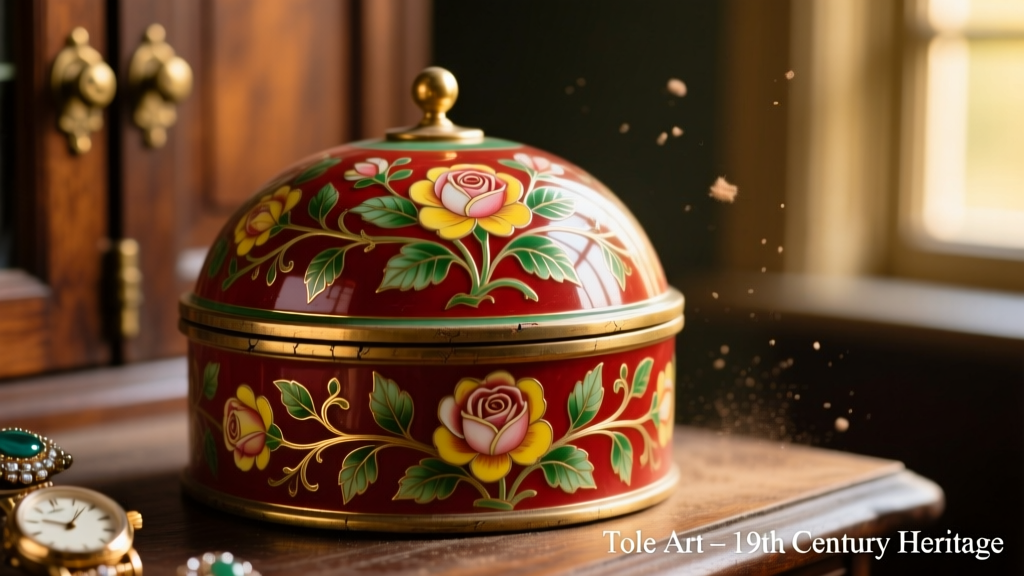
Tole Box with Deed Dome Top: A 19th-Century American Folk Art Treasure in Red, Green, and Yellow (9-Inch Diameter)
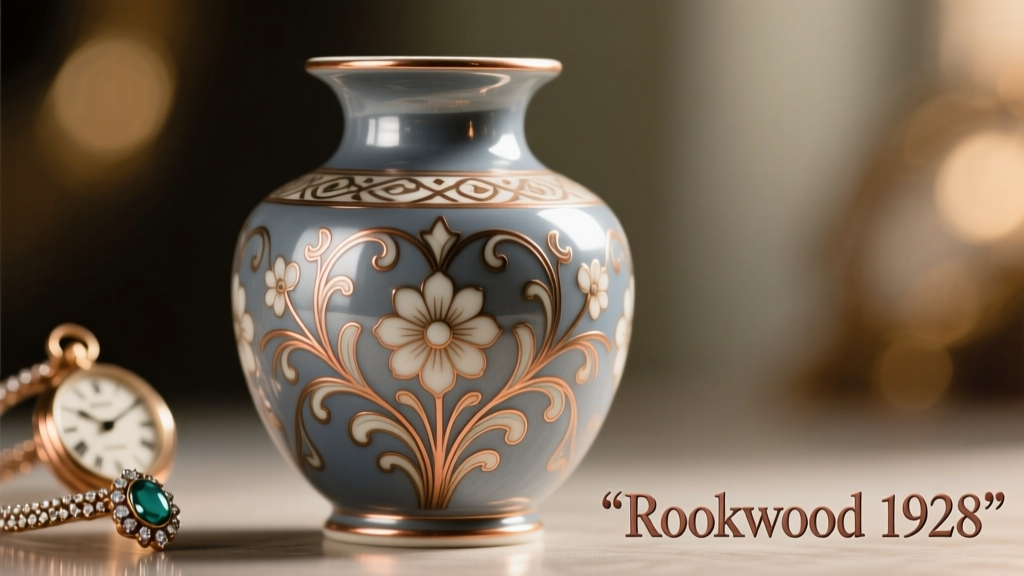
Rookwood Vase: Arabesques Under Metallic Blue-Gray Ground, 1925 — A Masterpiece of American Art Pottery
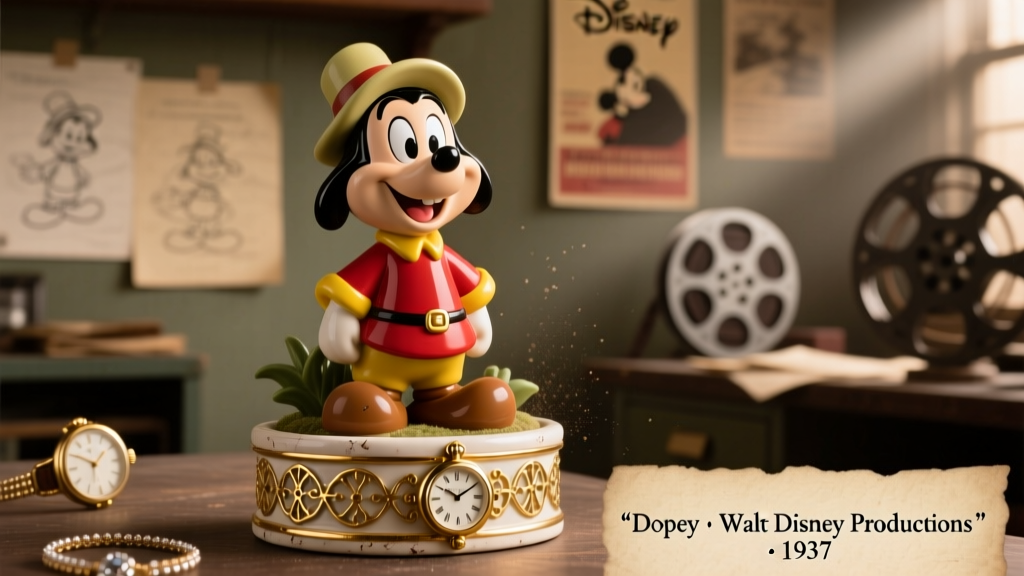
Disneyana Planter Dopey Walt Disney Productions: A Collector’s Guide to the Rare 1950s Ceramic Garden Figure
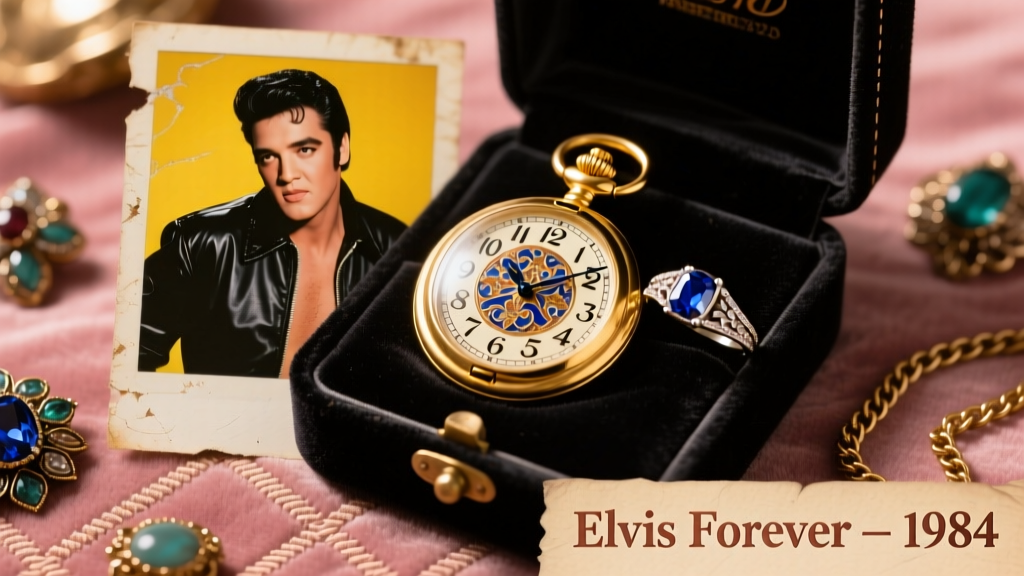
Elvis Presley Photograph: The Black-and-Yellow Ground Print of the 1980s — Provenance, Production, and Market Significance

The Unseen Peril: How Dishwashing Damages Vintage Watches and Jewelry — A Conservationist’s Warning
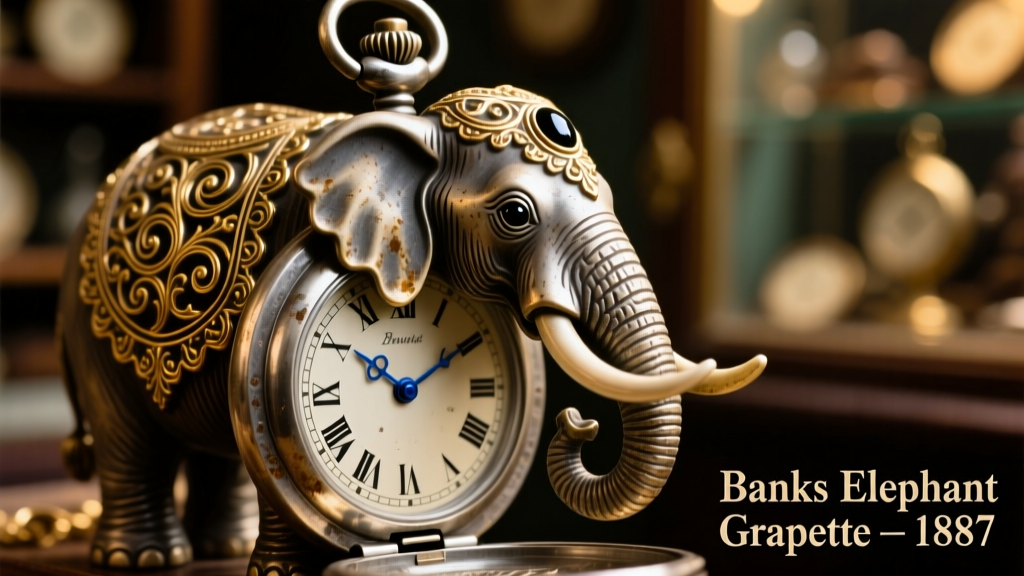
Banks Elephant Grapette: A Forgotten American Watch Icon of the 1950s
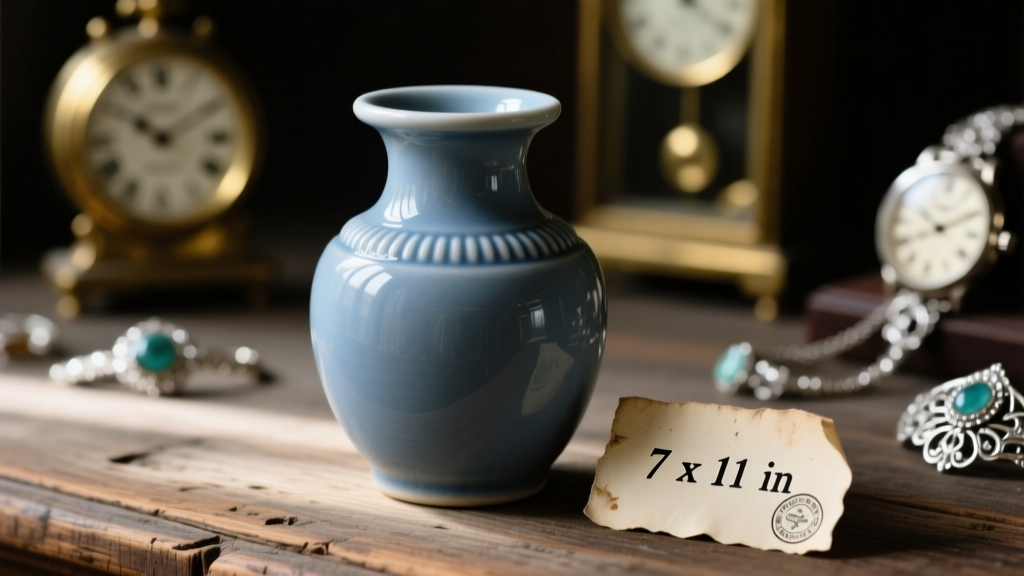
Marblehead Vase, Blue Matte Glaze, Shouldered Form with Original Paper Label: A Technical and Historical Appraisal
Toothpick Holders by Atlas: A Collector’s Guide to Vintage Milk Glass Tableware
A Watercolor Portrait of Mrs. Lucky Perry: Provenance, Craftsmanship, and Gilt Frame Analysis (14 × 18 in)