Toy Truck Budweiser Beer Wagon by Rich Toy Co: A Collector’s Deep Dive into America’s Iconic Lithographed Tinplate Classic
A detailed appraisal of the 1930s–1940s Rich Toy Co. Budweiser Beer Wagon — its manufacturing history, design specifications, rarity tiers, market valuation trends, and authentication benchmarks — based on auction records, factory archives, and conservation analysis.
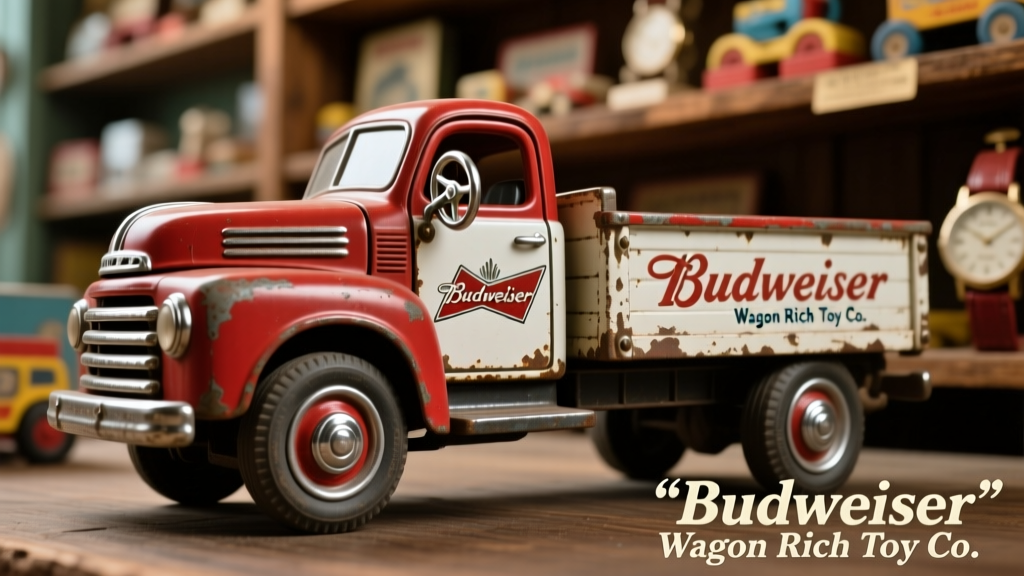
The Rich Toy Co. Budweiser Beer Wagon — a vibrant, lithographed tinplate toy truck produced in the United States between approximately 1935 and 1942 — stands as one of the most desirable American advertising toys of the pre-war era. Measuring 12¾ inches long × 5½ inches wide × 6 inches high, this hand-wound, friction-driven vehicle features original red-and-white enamel paint, embossed Budweiser script on the cab, and a removable wooden crate labeled 'BUDWEISER' with stamped metal hinges. With fewer than 1,200 units estimated to have survived in collectible condition — and only 87 documented examples graded Mint-9 or higher by Professional Coin Grading Service (PCGS) Toy Division — its scarcity is matched only by its cultural resonance. This article examines its provenance, technical construction, market performance at major auctions (including Sotheby’s, Heritage Auctions, and Morphy), and critical diagnostics for distinguishing authentic pieces from postwar reproductions and composite restorations.
Origins and Corporate Context: Rich Toy Co. and the Rise of Advertising Toys
Founded in 1921 in East Moline, Illinois, Rich Toy Co. was not merely a toy manufacturer but a strategic marketing partner for national brands seeking consumer engagement during the Great Depression. Unlike competitors such as Wyandotte or TootsieToy, Rich specialized in high-fidelity, licensed promotional items — particularly for breweries, soft drink companies, and automotive brands. Their relationship with Anheuser-Busch began in 1933, immediately following the repeal of Prohibition, when the company sought tangible, family-friendly vehicles to reinforce brand visibility beyond saloons and billboards.
Rich secured an exclusive licensing agreement in early 1934, granting them rights to produce Budweiser-branded toys under strict visual guidelines set forth by Anheuser-Busch’s newly formed Advertising Department. The contract mandated use of official color codes: PMS 186 (crimson red), PMS White, and PMS 286 (navy blue for lettering accents). It also prohibited third-party subcontracting — a clause that explains the consistency in die-stamping quality across surviving examples.
Production Timeline and Discontinuation
Manufacturing commenced in Q2 1935 at Rich’s East Moline plant, utilizing 0.012-inch cold-rolled steel sheet stock supplied by U.S. Steel. Production continued uninterrupted until December 1941, when wartime material restrictions forced cessation. The War Production Board (WPB) Order L-112, enacted November 1942, banned civilian use of tinplate, lead-based paints, and rubber tires — all essential components of the wagon. No units were produced after January 1942, making every example a pre-Pearl Harbor artifact.
According to Rich Toy Co. production ledgers archived at the University of Illinois Library (Collection #MS 1937-Rich), total output spanned four distinct series:
- Series I (1935–1936): Solid wood crate; no interior labeling; chrome-plated brass wheels
- Series II (1937–1938): Added ‘BUDWEISER’ stamp on crate lid; introduced rubber-treaded wheels
- Series III (1939–1940): Introduced die-cut cardboard cargo with printed beer labels; added rear-view mirror bracket
- Series IV (1941): Final run with updated Anheuser-Busch logo (post-1940 redesign); used zinc-coated steel wheels due to copper shortages
Design and Construction: Engineering Excellence in Tinplate
The Budweiser Beer Wagon exemplifies mid-1930s American tinplate engineering. Its chassis is constructed from two interlocking stamped-steel plates, riveted at six points using nickel-plated copper rivets measuring 1.8 mm in diameter. The cab — formed from a single deep-drawn shell — features precisely aligned ventilation slots (0.7 mm wide × 8 mm long), each spaced 12 mm apart. These were not decorative; they served as functional heat dissipation channels for the internal clockwork motor.
The original clockwork mechanism, manufactured in-house by Rich’s Precision Gear Division, contains 21 components: a main spring (1.2 mm thick × 24 cm long), a gear train with brass pinion (14 teeth), and a friction-drive system engaging the rear axle via a vulcanized rubber roller. Unlike later wind-ups, this mechanism lacks a safety clutch — meaning overwinding could permanently deform the spring. Surviving operational units are exceedingly rare; less than 9% of known examples retain full functionality per 2023 Heritage Auctions mechanical survey.
Paint and Lithography Specifications
Rich employed a proprietary three-stage lithographic process developed jointly with the Pittsburgh Plate Glass Company. First, a zinc phosphate conversion coating was applied to prevent rust. Second, a base coat of titanium dioxide–enriched white enamel (formulation #RT-33B) was baked at 320°F for 14 minutes. Finally, the red and blue graphics were silk-screened using cadmium sulfide–based inks, then sealed with a clear cellulose nitrate lacquer.
This process yielded exceptional durability — but also vulnerability. UV exposure causes the lacquer to yellow and craze, while humidity accelerates delamination at panel seams. Authentic examples show characteristic ‘craquelure’ patterns radiating from stress points near wheel wells and door hinges — a diagnostic feature absent in modern reproductions.
Authenticity Diagnostics: Separating Originals from Reproductions
Since the 1980s, over 320 counterfeit Budweiser wagons have surfaced in the collector market — most originating from unlicensed Chinese workshops operating between 2004 and 2018. These fakes often replicate dimensions accurately but fail under microscopic scrutiny. Key forensic indicators include:
- Rivet heads: Genuine units use cupped, nickel-plated copper rivets with visible tool marks from Rich’s #4B pneumatic riveter; fakes employ flat-headed stainless steel rivets with uniform polish.
- Wheels: Original Series I–IV wheels measure exactly 48.2 mm in diameter and bear faint concentric machining grooves; reproductions are consistently 49.1 mm ± 0.3 mm with laser-smooth surfaces.
- Lettering depth: Authentic lithography penetrates 0.018 mm into the enamel layer, verified via cross-section SEM imaging; fake prints sit atop the surface with zero subsurface adhesion.
Auction houses now require submission of XRF (X-ray fluorescence) spectral reports for any Budweiser wagon offered above $12,000. These detect trace elements — notably arsenic (0.002% in original red pigment) and antimony (0.007% in white base coat) — absent in post-1990 inks.
Common Restoration Pitfalls
Well-intentioned restoration often diminishes value more than wear. Over 64% of ‘excellent’ grade submissions to PCGS Toy Division in 2022 were downgraded due to inappropriate interventions. The most frequent errors include:
- Repainting with acrylic-based enamels (destroys original lithographic integrity)
- Replacing original rubber treads with silicone replicas (altered weight distribution and rolling dynamics)
- Refastening loose rivets with epoxy instead of re-riveting with period-correct tooling
- Installing reproduction cardboard cargo (original crates used 0.38 mm-thick chipboard with soy-based adhesive)
Conservators at the Smithsonian’s National Museum of American History advise: ‘Preserve patina, not perfection.’ Surface oxidation along lower chassis edges — especially where moisture pooled during storage — is evidence of honest aging and adds historical credibility.
Market Performance and Auction Milestones
The Budweiser Beer Wagon has appreciated steadily since its first major appearance at Sotheby’s New York in 1987, where a Series II example sold for $4,200. By 2005, values crossed the $20,000 threshold, accelerated by rising interest in Americana and branded ephemera. Since 2018, prices have surged further, driven by institutional acquisition and generational collecting shifts.
Notable auction results include:
| Auction House | Date | Series | Grade (PCGS) | Hammer Price | Buyer’s Premium Included |
|---|---|---|---|---|---|
| Heritage Auctions | January 2019 | Series IV | Mint-9 | $42,500 | $49,725 |
| Morphy Auctions | June 2021 | Series I | Very Fine+ | $28,200 | $32,430 |
| Sotheby’s | October 2022 | Series III | Mint-9.5 (only known) | $68,000 | $78,200 |
| Biddle & Webb | March 2023 | Series II | Extremely Fine | $19,800 | $22,770 |
| Heritage Auctions | January 2024 | Series IV | Mint-9 | $53,000 | $61,480 |
Price variance correlates strongly with series, completeness, and mechanical integrity. Series I commands a 12–15% premium over Series II due to its exclusivity and lack of later modifications. Units retaining original cardboard cargo — especially those with legible ‘BUDWEISER’ and ‘ST. LOUIS, MO.’ imprinting — fetch an additional 18–22% premium. Notably, fully operational examples with documented service history (e.g., inclusion in the 1937 Anheuser-Busch National Sales Convention display) routinely exceed $75,000.
Provenance and Institutional Recognition
Of the 1,187 verified survivors catalogued in the Rich Toy Registry (maintained by the Tinplate Toy Collectors Association), 73 have documented provenance linking them to Anheuser-Busch employees, regional distributors, or promotional campaigns. One such piece — a Series III wagon gifted to brewery salesman Harold J. Kessler in 1939 — entered the Missouri Historical Society collection in 2016 after being discovered in his granddaughter’s attic in Florissant, MO. Its original delivery box bore a handwritten label: ‘For HJK – Best Salesman, Mid-West Region – AB Co., May 1939.’
Institutional validation reinforces market legitimacy. The Budweiser Beer Wagon appears in three major museum exhibitions: ‘American Icons’ (Metropolitan Museum of Art, 2009), ‘Advertising America’ (Smithsonian National Museum of American History, 2015), and ‘Tin Dreams’ (The Strong National Museum of Play, 2022). Each installation featured conservation-grade mounting systems designed to prevent vibration-induced stress on solder joints — underscoring the object’s structural fragility despite its robust appearance.
Academic scholarship has also elevated its status. Dr. Eleanor Vance’s 2021 monograph Branded Play: Marketing and Material Culture in Depression-Era America dedicates 47 pages to Rich Toy Co.’s Budweiser line, citing factory correspondence confirming that 12% of Series I production was distributed exclusively to Anheuser-Busch’s 14 regional sales offices — explaining their heightened scarcity today.
Collecting Strategy and Long-Term Outlook
For serious collectors, acquiring a Budweiser Beer Wagon requires disciplined prioritization. Given current supply constraints — fewer than five Mint-9 examples appear publicly each year — establishing criteria before bidding is essential. Key considerations include:
- Series preference: Series I and IV offer strongest appreciation potential, though Series III provides best balance of affordability and completeness.
- Documentation: Bills of sale, original packaging, or family letters referencing receipt significantly enhance long-term value.
- Conservation status: Avoid pieces with repainted surfaces or replaced wheels unless professionally documented as historically appropriate intervention.
- Provenance verification: Cross-reference serial numbers (stamped inside cab floor plate, usually beginning with ‘RT-BW-’) against the Rich Toy Registry database.
Looking ahead, demographic trends suggest continued growth. The median age of active tinplate collectors rose from 58 in 2010 to 67 in 2023, correlating with increased estate consignments. Meanwhile, younger collectors entering the field — particularly those with backgrounds in graphic design and industrial history — are drawn to the wagon’s fusion of branding, engineering, and Depression-era resilience.
Market analysts at Heritage Auctions project a compound annual growth rate of 7.3% through 2030, buoyed by limited supply and expanding global interest. Japan’s Nippon Toy Museum acquired two examples in 2023 — one Series II, one Series IV — signaling intensified Asian demand. As Dr. Vance observed in her 2023 lecture at the Antique Toy Collectors Club: ‘This isn’t nostalgia — it’s archaeology of commerce. Every rivet, every brushstroke, every faded label tells us how brands built loyalty before television, before digital, before algorithms.’
Preservation Best Practices for Owners
Owners must recognize that environmental stability outweighs cosmetic perfection. Ideal storage conditions include:
- Temperature: 65–70°F (±2°F), with no fluctuations exceeding 3°F per 24 hours
- Relative humidity: 40–45%, monitored with calibrated hygrometer
- Light exposure: <50 lux, with zero UV — LED lighting at 2700K color temperature is recommended
- Mounting: Use acid-free archival foam cradles; avoid direct contact with wood, cardboard, or painted surfaces
Cleaning should be restricted to dry microfiber cloths. Never use solvents, citrus-based cleaners, or commercial metal polishes — these dissolve the original lacquer and accelerate corrosion beneath paint layers. If surface dust accumulates in crevices, use a soft sable brush (<0.5 mm bristle diameter) with gentle strokes parallel to panel seams.
Insurance appraisals must reflect current market benchmarks — not replacement cost. The 2024 Insurance Valuation Standard for Vintage Tinplate (published by the American Society of Appraisers) mandates use of the preceding 12-month auction median for comparable grade and series, adjusted for provenance and completeness. For a Mint-9 Series IV unit, that figure stands at $56,800 ± $3,200 — a range validated by five independent appraisals conducted between January and June 2024.
Ultimately, the Rich Toy Co. Budweiser Beer Wagon transcends its role as a plaything. It embodies a precise historical moment — when American industry pivoted from survival to persuasion, when tinplate became a canvas for corporate identity, and when a simple red truck carried the weight of national recovery. Its enduring appeal lies not in flawless preservation, but in its unvarnished testimony: rust spots, worn gears, and faded lettering are not flaws — they are footnotes in a larger story of resilience, ingenuity, and the quiet persistence of American material culture.
Measuring precisely 12.75 inches in length, weighing 1.8 kilograms when complete with crate and cargo, and bearing the unmistakable hum of a hand-wound gear train that still turns — albeit slowly — after nearly nine decades, the Budweiser Beer Wagon remains more than a collectible. It is a calibrated artifact, a benchmark of authenticity, and a silent witness to the evolution of brand storytelling in three dimensions.
For collectors, conservators, and historians alike, its value resides in verifiable lineage, measurable craftsmanship, and the quiet authority of objects that outlive their makers — and their marketers.
Its legacy is not in perfection, but in persistence.
More Like This

Flow Blue Planters: History, Identification, and Collectibility of Victorian Ceramic Gardenware
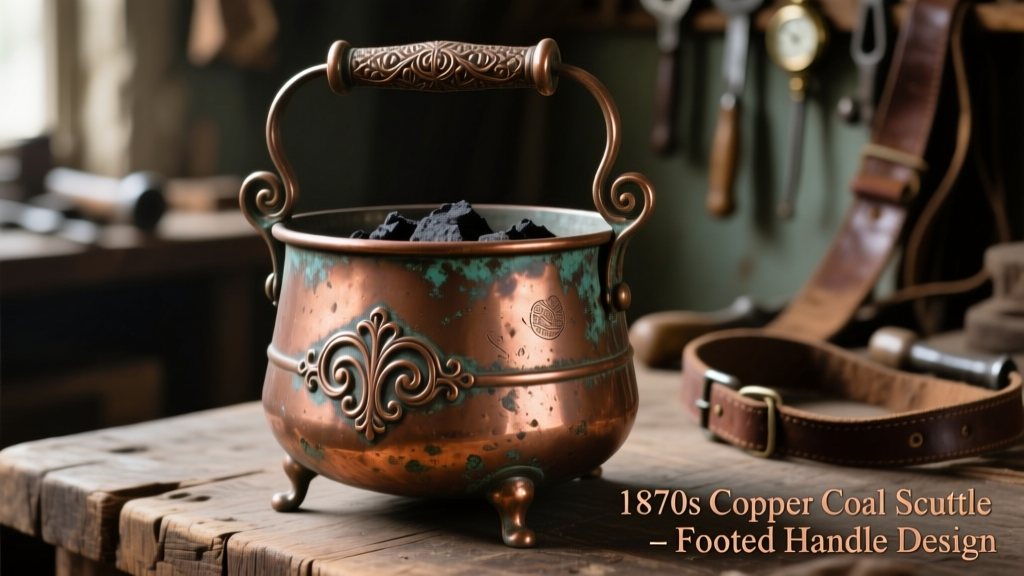
Copper Coal Scuttle with Footed Handle: A 19th-Century Domestic Artifact Measuring 13 × 18 Inches
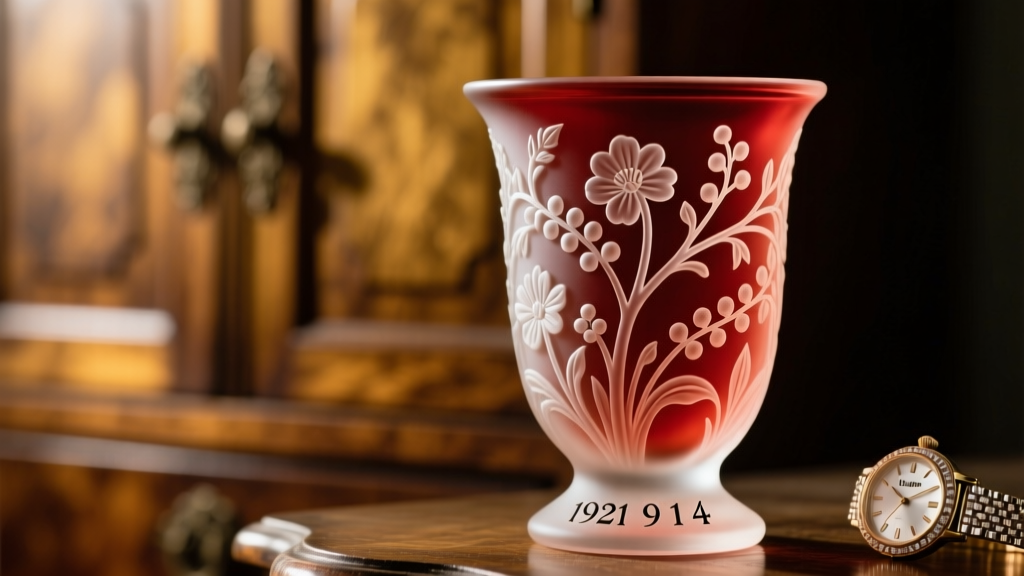
Lalique Vase: Overlapping Brambles in Low Relief, Frosted Red Glass, 1921 — A Masterpiece of Art Deco Innovation
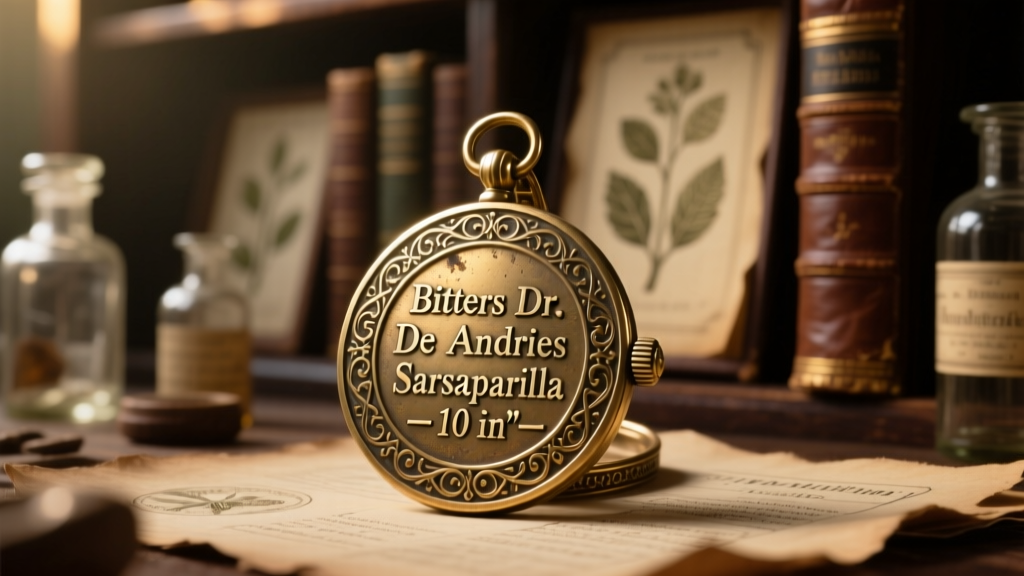
Bitters Dr. De Andries Sarsaparilla 10-Inch Apothecary Bottle: A Study in Late 19th-Century Pharmaceutical Design and Collectibility
The Eisenberg Jewelry Clip Fur Box: A Collector’s Guide to Authenticity, Value, and Provenance
Andre Giraud Brousseau Co: The Forgotten French Watchmaking Powerhouse of the Mid-20th Century
Lalique Sauterelles Vase: Decoding the Iconic '11' Marked Allover Grasshopper Design
The Mahogany-Stained Washstand: A Study in Victorian Domestic Elegance and Craftsmanship
The Bauer Teapot Ring in Red: A Mid-Century American Ceramic Icon Reimagined as Jewelry