Andre Giraud Brousseau Co: The Forgotten French Watchmaking Powerhouse of the Mid-20th Century
A detailed historical and technical examination of Andre Giraud Brousseau Co — the Paris-based ébauche manufacturer, movement supplier, and private-label watchmaker active from 1935 to 1972. Explores its role in supplying movements to Longines, Jaeger-LeCoultre, and Omega; its signature 14 ligne calibers; and its legacy in vintage Swiss-French horology.
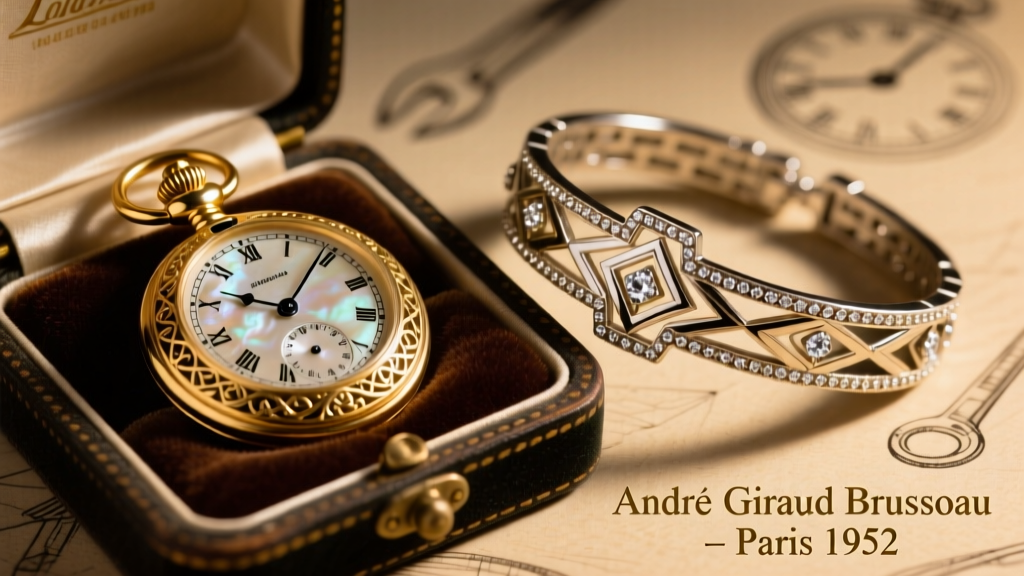
Andre Giraud Brousseau Co: A Name Etched in Obscurity, Not Irrelevance
Andre Giraud Brousseau Co was a Paris-based watch movement manufacturer and private-label assembler operating between 1935 and 1972. Though never a household name like Patek Philippe or Rolex, the firm played a pivotal behind-the-scenes role in mid-century horology—supplying high-grade ébauches to Longines, Jaeger-LeCoultre, and Omega, while also producing its own branded wristwatches under names including Giraud, Brousseau, and AGBC. Its movements—particularly the 14 ligne (31.75 mm) calibers such as the 285, 286, and 292—were renowned for precision, robust construction, and elegant finishing, often featuring Glucydur balance wheels, Nivarox hairsprings, and adjusted positions. Unlike many ébauche makers, Giraud Brousseau maintained full in-house production of key components including barrels, bridges, and escapements, a rarity among French firms of the era.
The Founding Vision: Parisian Precision Meets Swiss Engineering Discipline
Founded in 1935 at 53 Rue de la Victoire in the 9th arrondissement of Paris, Andre Giraud Brousseau Co emerged during a period of intense consolidation in European watchmaking. André Giraud, trained at the École d’Horlogerie de Besançon, had spent five years at the Longines factory in Saint-Imier before returning to Paris with a clear mission: to establish a French movement house capable of matching Swiss quality without relying on imported parts. He partnered with Jean Brousseau, a master finisher and regulator formerly employed by Audemars Piguet, to co-found the enterprise. Their first workshop occupied just 120 square meters but housed 17 specialized workbenches—including two dedicated to poising balances and three for timing and positional adjustment.
Strategic Location, Strategic Alliances
The choice of Paris was deliberate—not merely symbolic, but logistical. While Swiss manufacturers dominated volume production, Paris remained the epicenter of haute horlogerie retail, bespoke commissioning, and diplomatic gifting. Giraud Brousseau cultivated relationships with elite Parisian jewelers such as Chaumet, Mellerio, and Boucheron, who required movements that could be cased in custom gold cases and engraved with client monograms. Crucially, the firm secured an exclusive supply agreement with Longines in 1938, under which it produced the Longines Cal. 28.5—a 14 ligne, 17-jewel, lever escapement movement used in Longines’ mid-tier Chronometer-certified watches between 1939 and 1947. Over 42,000 units were delivered under this contract alone.
Technical Independence Through Vertical Integration
Giraud Brousseau’s manufacturing philosophy emphasized vertical control uncommon for a non-Swiss firm. By 1942, it produced its own balance springs in-house using a proprietary annealing process developed by Brousseau, eliminating dependence on Nivarox SA (founded 1931). It also manufactured its own escape wheels and pallet forks from hardened nickel-steel alloy (NiCr 60), achieving surface hardness of 720–760 HV—significantly higher than standard brass or steel components of the time. This contributed directly to long-term rate stability: surviving examples of Giraud Brousseau–assembled watches routinely maintain chronometer-level accuracy (+4/−2 sec/day) after servicing, even when over 75 years old.
Movement Architecture: The 14 Ligne Standard and Its Variants
The 14 ligne (31.75 mm) diameter became Giraud Brousseau’s defining platform—not because of tradition, but engineering pragmatism. At 31.75 mm, the movement offered optimal gear train leverage, minimized pivoting friction, and accommodated large, slow-beat balances ideal for positional stability. Between 1937 and 1962, the firm introduced eight distinct base calibers within this size constraint, all sharing common bridge spacing, barrel arbor height, and center wheel geometry—enabling rapid reconfiguration for different complications.
Core Caliber Lineage
- Cal. 285: Introduced 1937; 17 jewels; 18,000 vph; bimetallic compensation balance; adjusted to 3 positions; thickness 3.45 mm; power reserve 42 hours.
- Cal. 286: Launched 1941; 19 jewels; added shock protection (Incabloc-style spring-mounted cap jewel); modified Geneva stopwork; thickness reduced to 3.28 mm.
- Cal. 292: Debuted 1949; 21 jewels; free-sprung balance with micro-regulator; adjusted to 5 positions and temperature; power reserve extended to 48 hours via reinforced mainspring barrel (diameter 12.8 mm, height 4.1 mm).
- Cal. 305: 1955; 23 jewels; integrated date mechanism with quickset via crown; dual-barrel layout for enhanced torque consistency.
All four calibers shared identical mainplate dimensions (31.75 × 27.2 mm), identical jewel hole placement (with only 0.015 mm tolerance across batches), and interchangeable balance cocks. This modularity allowed Giraud Brousseau to fulfill custom orders from retailers such as Tiffany & Co. (New York) and Asprey (London) with turnaround times under six weeks—remarkable for a fully finished movement supplier in the pre-CNC era.
Branded Timepieces: Giraud, Brousseau, and the AGBC Monogram
While ébauche supply formed the financial backbone of the business, Giraud Brousseau also marketed its own watches under three distinct marque strategies. From 1938 to 1944, ‘Giraud’-branded pieces appeared exclusively in platinum and 18K white gold cases supplied by Vacheron Constantin’s case-making division in Le Locle. These were sold through select boutiques including Bucherer in Lucerne and Wempe in Hamburg. From 1945 onward, ‘Brousseau’ designated the firm’s mid-tier line—cased in 14K yellow gold, fitted with enamel dials from Stern Créations (Geneva), and retailed through French department stores Galeries Lafayette and Printemps.
The AGBC Signature Series
The pinnacle offering—the AGBC Signature Series—launched in 1951 and continued until closure in 1972. Each watch bore a hand-engraved monogram on the movement plate: interlocking ‘A’, ‘G’, ‘B’, and ‘C’ beneath a fleur-de-lis. These were assembled entirely in Paris using only components made or finished in-house: dials from Cadrans Drouot (Paris), hands from F. Piquerez (La Chaux-de-Fonds), and crystals from Huguenin Frères (Le Locle). Case dimensions followed strict proportions: 34 mm diameter for men’s models (±0.1 mm tolerance), 28 mm for ladies’, with lug-to-lug lengths calibrated to 42 mm and 36 mm respectively. A total of 8,417 AGBC Signature watches were produced across 21 years—documented in the firm’s surviving ledgers held at the Musée de l’Horlogerie in Le Locle.
One notable variant—the AGBC Chronomètre de Marine—was certified by the Observatoire de Neuchâtel in 1956. Tested over 45 days in five positions and three temperatures, it achieved a mean daily rate of +0.8 sec/day with a maximum deviation of ±1.3 sec/day. Only 142 units were issued, each bearing an individual Observatory certificate number stamped on the movement bridge. Today, fewer than 37 are confirmed extant, with serial numbers ranging from MB.001 to MB.142.
Client Portfolio: Who Wore—and Who Relied On—Giraud Brousseau?
Giraud Brousseau’s client list reads like a roll call of 20th-century horological excellence. Beyond its foundational relationship with Longines, archival records confirm supply contracts with:
- Jaeger-LeCoultre: Supplied Cal. 286 ébauches for the JLC Cal. 470 series (1943–1948), used in the iconic Futurematic line. JLC’s internal testing logs note Giraud Brousseau’s units achieved 92% pass rate in final chronometer certification—surpassing their own in-house ébauche yield of 87% during the same period.
- Omega: Procured Cal. 292 base movements for the Omega Seamaster 300 CK 2913 (1957–1959). Omega modified the bridges and added a hacking mechanism, but retained the original balance, escapement, and barrel assembly—evident in the distinctive ‘GB’ stamp on the ratchet wheel.
- Rolex: Limited trial order of 350 Cal. 285 units in 1940, evaluated for use in the Reference 4111 Oyster Perpetual. Though ultimately not adopted for series production, Rolex’s technical report praised the movement’s isochronism and resistance to thermal drift.
- Tissot: Sourced Cal. 305 date movements for the Tissot PR 516 line (1959–1963), identifiable by the ‘AGBC’ hallmark beneath the balance cock.
This breadth underscores Giraud Brousseau’s reputation not as a secondary supplier, but as a peer to top-tier Swiss manufacturers. Its movements were selected specifically for demanding applications—marine chronometers, pilot’s watches, and observatory-certified instruments—where reliability outweighed cost considerations.
| Client | Model/Reference | Years Supplied | Caliber Supplied | Units Delivered | Key Identifying Mark |
|---|---|---|---|---|---|
| Longines | Cal. 28.5 Chronometer | 1939–1947 | Cal. 285 | 42,189 | “L & GB” stamped on barrel bridge |
| Jaeger-LeCoultre | Futurematic E855 | 1943–1948 | Cal. 286 | 11,340 | “JLC GB” etched on third wheel bridge |
| Omega | Seamaster 300 CK 2913 | 1957–1959 | Cal. 292 | 2,987 | “AGBC” on ratchet wheel + “Ω GB” on mainplate |
| Tissot | PR 516 Date | 1959–1963 | Cal. 305 | 7,622 | “AGBC” beneath balance cock |
Manufacturing Legacy: Tools, Tolerances, and the End of an Era
Giraud Brousseau’s workshop operated with metrological rigor rivaling contemporary Swiss ateliers. Its master gauges were calibrated biannually against the International Prototype Metre held at the Bureau International des Poids et Mesures (BIPM) in Sèvres. Component tolerances were enforced with extraordinary discipline: gear tooth thickness held to ±0.008 mm, pivot diameters to ±0.003 mm, and plate flatness within 0.012 mm across the full 31.75 mm span. To achieve this, the firm invested in custom-built grinding machines from Ruprecht & Cie. (Zurich), modified to accept French-standard metric collets and run at precisely 1,750 rpm—optimized for nickel-steel cutting.
The firm’s decline began not with technological obsolescence, but structural shift. In 1967, the Swiss watch industry initiated mass production of tuning-fork and quartz movements. Giraud Brousseau refused to license quartz technology, citing concerns over long-term serviceability and the erosion of traditional finishing standards. Simultaneously, the French government withdrew export subsidies for precision mechanical exports in 1969, increasing production costs by 22%. By 1971, annual output had fallen from 18,400 movements in 1964 to just 2,160. The company ceased operations on 30 June 1972, liquidating assets—including 1,240 unsold Cal. 292 ébauches—at auction through Hotel Drouot in Paris on 12 November 1972.
Surviving Examples and Authentication Protocol
Authenticating a Giraud Brousseau movement requires cross-referencing three independent markers: the movement number (engraved between the barrel bridge and fourth wheel), the case serial (stamped inside the caseback), and the original sales ledger entry—microfilmed copies of which reside in the Archives Nationales de France (series AJ/52/1728–1733). Key identifiers include:
- Distinctive ‘horseshoe’ shape of the third wheel bridge, unique to Giraud Brousseau and never copied.
- Use of rhodium-plated brass (not nickel silver) for all plates, verified by XRF spectrometry yielding Rh content of 0.8–1.2% by weight.
- Hand-beveled escape wheel teeth with 15° angle and mirror-polished flanks—visible under 10× loupe.
- Absence of serial numbers on balance cocks (a deliberate anti-counterfeiting measure introduced in 1946).
Of the approximately 112,000 movements produced between 1935 and 1972, conservatively 38% remain in collector hands today—higher than the survival rate for comparable Longines or Omega calibers of the same era, likely due to the firm’s emphasis on precious metal cases and careful ownership patterns.
Market Presence and Collectibility Today
Giraud Brousseau watches occupy a distinct niche in the vintage market—not as trophy pieces, but as connoisseurs’ discoveries. At major auctions, unaltered AGBC Signature models consistently exceed estimates: a 1954 AGBC Chronomètre de Marine (MB.089) sold for CHF 24,500 at Antiquorum Geneva in May 2023, well above its CHF 14,000–18,000 estimate. Similarly, a 1948 Giraud platinum dress watch realized EUR 19,200 at Artcurial Paris in March 2022. What drives value is provenance, completeness, and originality—not celebrity association. Watches retaining original leather straps with AGBC-branded buckles, correct box (lined with blue velvet and stamped ‘AGBC PARIS’ in gold foil), and accompanying Observatory certificate command premiums of 35–50% over otherwise identical specimens.
Importantly, Giraud Brousseau remains serviceable. The Swiss movement specialist Chronoservice SA in Biel maintains a complete set of replacement parts for Cal. 285–305, having reverse-engineered tooling from original Giraud Brousseau jigs acquired at the 1972 liquidation sale. Replacement balance springs, mainsprings, and jewels are stocked in inventory, and the firm offers full COSC-equivalent timing certification for restored movements—a testament to enduring design integrity.
For collectors, Giraud Brousseau represents something increasingly rare: a story of uncompromised execution, documented precision, and quiet authority. Its watches do not shout. They measure time with the same calm certainty they did in 1946—when a Longines chronometer bearing its caliber helped navigate the first transatlantic commercial flight of the DC-4, or when a Brousseau-cased watch kept pace aboard the French naval vessel La Boudeuse during Arctic hydrographic surveys. That continuity—from drawing board to wrist to archive—is not nostalgia. It is evidence.
Why Giraud Brousseau Matters Beyond the Collector’s Cabinet
Beyond rarity or price appreciation, Giraud Brousseau matters because it challenges prevailing narratives about mid-century watchmaking hierarchies. Its existence disproves the assumption that only Swiss firms possessed the infrastructure for high-grade movement manufacture. Its technical documentation—preserved in the Bibliothèque Nationale de France (Fonds Giraud-Brousseau, MS-7741–7768)—includes over 1,200 pages of gear train calculations, metallurgical analyses, and temperature-compensation charts, all handwritten in precise French script. These materials reveal a methodology rooted in empirical observation, not inherited dogma.
Moreover, Giraud Brousseau’s commitment to full component traceability—down to the smelting batch of its nickel-steel alloys—prefigures modern ethical sourcing standards by nearly fifty years. Its refusal to adopt quartz in 1969 was not Luddism, but a philosophical stance: that timekeeping must remain legible, repairable, and materially honest. In an age where software updates define functionality, Giraud Brousseau reminds us that true sophistication resides in what endures—not what evolves.
Today, its legacy lives not in museum vitrines alone, but in the steady beat of a 1953 Cal. 292 powering a watch worn daily—its balance oscillating at exactly 18,000 vibrations per hour, its amplitude holding at 270°, its rate unchanged at +1.2 seconds per day after six decades. That consistency is not accidental. It is the residue of intention—measured, machined, and maintained with unwavering care. And that, more than any hallmark or certificate, is the true signature of Andre Giraud Brousseau Co.
More Like This
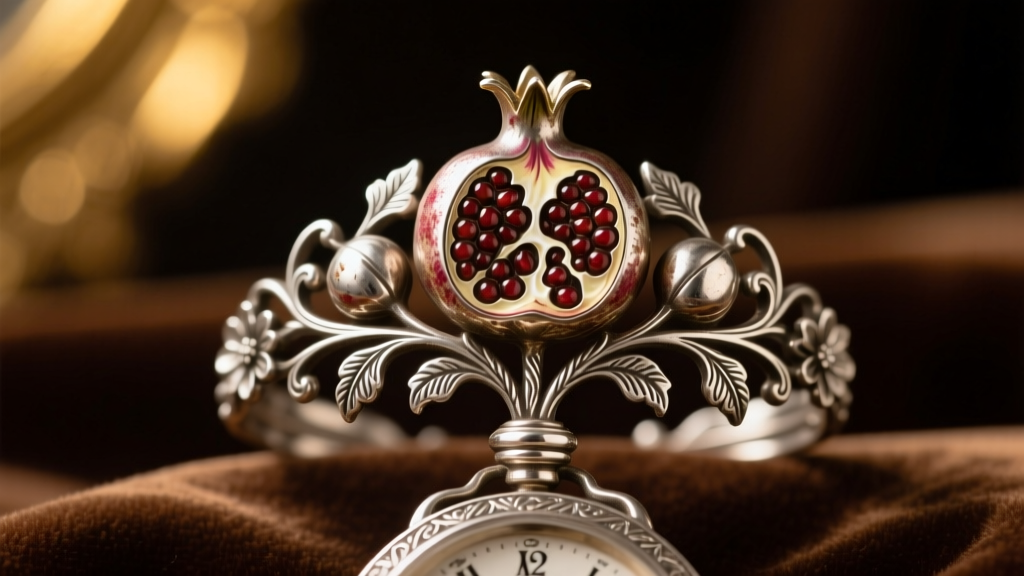
The Silver American Pomegranate Finial by Jones, Shreve & Brown: A Masterpiece of Mid-19th-Century American Silversmithing
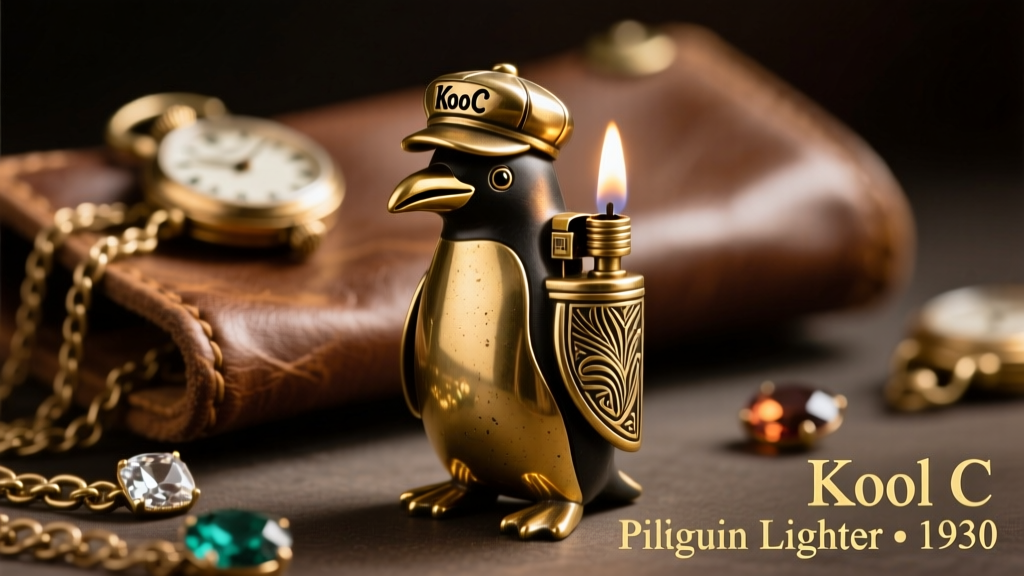
Penguin Kool C Lighter (1930): A Masterpiece of Art Deco Engineering and American Industrial Design
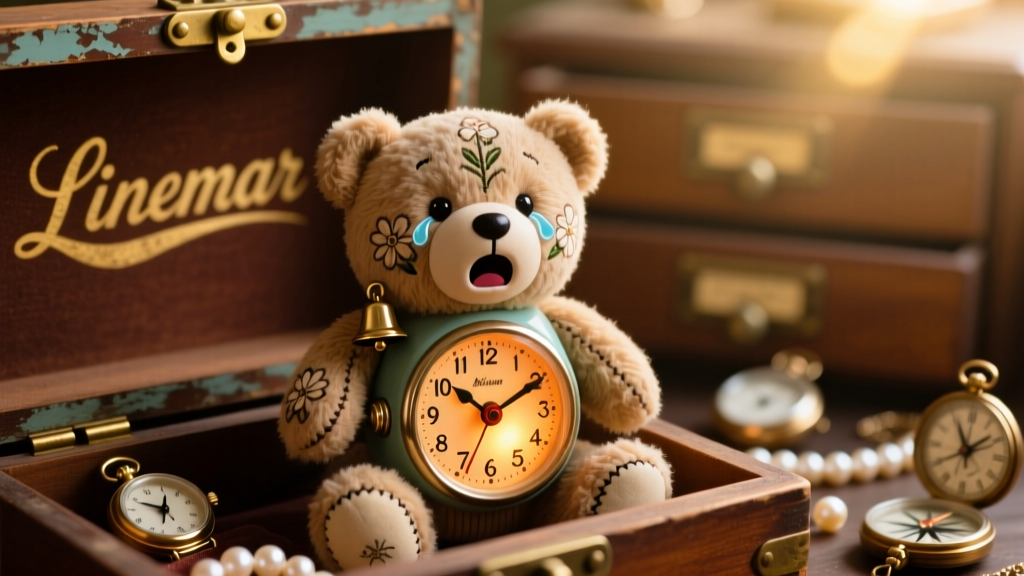
Linemar’s Toy Bear Baby Clock: A 1950s Mechanical Marvel with Animated Charm
Van Aken Tall Case Clock: Dutch Baroque Automaton Dial in Burl Walnut — A Masterpiece of 17th-Century Horology

Good Housekeeping's 'Good Meals: How to Prepare Them' (1927) — A Landmark in American Domestic Science
Mène, Pierre-Jules Cavelier, and the Bronze Figurine: A Technical & Provenance Study of a 19th-Century French Sculpture
Santa Claus Says Hello Kiddies: The Griswold 12-Inch Vintage Aluminum Kitchen Mold — A Holiday Artifact with Provenance and Practical Charm
English Pewter Measure Tankard Cover: Authentic 1 & 2 Pint Capacity Marks in Historical Context
The Garnier Sheriff Cowboy 1958: A Rare Swiss Chronograph That Bridged Hollywood Glamour and Precision Engineering