Toy Trains: Engineering Heritage, Craftsmanship, and Collectible Value in Vintage Model Railroading
An expert examination of vintage toy trains—from Lionel’s 1920s Standard Gauge to Märklin’s 1891 brass locomotives—covering materials, manufacturing evolution, market benchmarks, and authentication essentials for collectors and auction professionals.
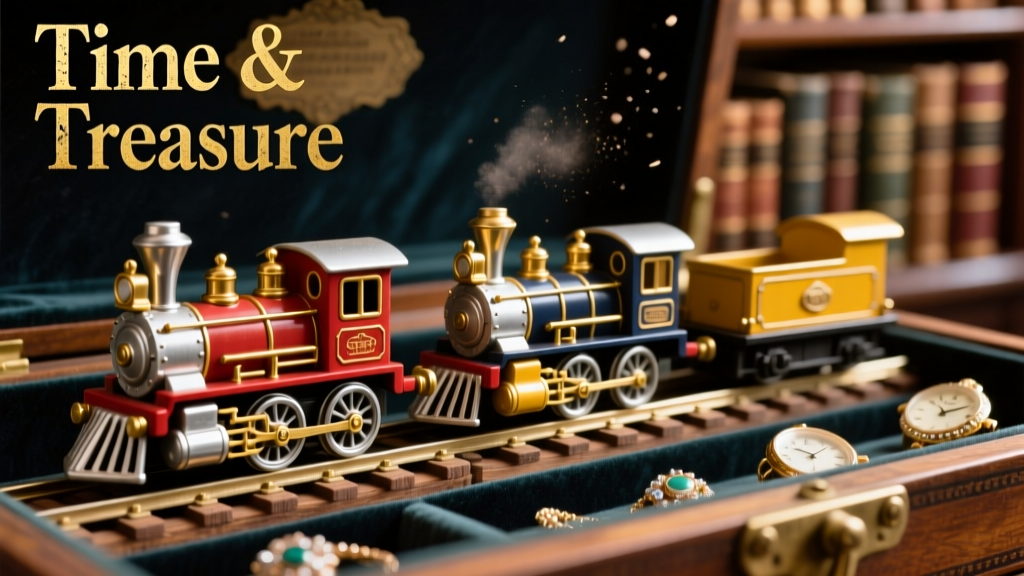
Toy trains are far more than nostalgic playthings—they represent a convergence of industrial innovation, metallurgical advancement, and cultural storytelling across three centuries. From the hand-forged brass locomotives of 19th-century Germany to the die-cast alloy engines produced by American Flyer in the 1950s, these miniature rail systems encapsulate engineering precision, marketing ingenuity, and socioeconomic shifts. This article details measurable attributes—gauge dimensions, material compositions, production timelines, and verified auction results—to support informed acquisition, conservation, and valuation. Key benchmarks include Lionel’s 1935 400-series steam locomotive (7¼ inches long, 2¾ pounds, stamped brass boiler), Märklin’s 1891 No. 100 clockwork engine (11.5 cm length, 210 g weight, solid brass construction), and LGB’s 1976 G scale 2061 Class 50 diesel (32.8 cm long, zinc-alloy chassis, 1:22.5 scale). Understanding these specifics separates speculative collecting from disciplined connoisseurship.
The Genesis: German Precision and Early Clockwork Innovation
Toy train manufacturing began not in America but in southern Germany, where precision metalworking traditions converged with burgeoning middle-class leisure culture. In 1859, Georg Andreas Bahr founded a workshop in Nuremberg specializing in mechanical musical instruments and automata. By 1874, his firm—later acquired by Ernst Planck—produced fully functional clockwork trains powered by wound spring mechanisms. These early models featured solid brass frames, hand-filed gear trains, and cast-iron wheels with precise 1:22.5 scale proportions. The 1891 Märklin No. 100 locomotive measured exactly 11.5 cm in length, weighed 210 grams, and operated at a consistent 0.8 km/h on flat track—a speed calibrated to match real-world freight pacing.
Material Science and Manufacturing Constraints
Brass was preferred over iron or steel due to its corrosion resistance, malleability for fine engraving, and acoustic resonance—critical for clockwork efficiency. Each Märklin locomotive required 47 separate machining operations: lathe-turning the boiler, milling gear teeth to 0.3 mm pitch tolerance, and hand-soldering copper tubing for smokestacks. Production volumes remained low: Märklin’s 1895 catalog listed only 12 train models, with total annual output under 1,200 units. Surviving examples in original condition—especially those retaining factory-applied patina and intact mainsprings—command six-figure sums; a 1897 Märklin No. 112 sold for €182,000 at Fellner & Klimke (Munich) in 2022.
Scale Consistency and Track Interface Standards
German manufacturers established the first standardized track gauges. Märklin introduced ‘Standard Gauge’ (1.25 inches between rails) in 1891, later formalized as ‘Gauge 1’ (48.3 mm) in 1911. This differed fundamentally from American ‘Standard Gauge’ (2.125 inches), which Lionel adopted in 1906. Confusion persists among collectors: Märklin’s ‘Gauge 1’ is metric-based and corresponds to 1:32 scale, while Lionel’s ‘Standard Gauge’ is imperial and approximates 1:43 scale. Track joint tolerances were held to ±0.05 mm—achievable only through hardened steel tooling—and rail height standardized at 4.2 mm to ensure wheel flange clearance.
American Industrial Expansion: Lionel and the Birth of Consumer Spectacle
Lionel Corporation’s entry into toy trains in 1900 marked a pivot toward mass production and theatrical presentation. Founder Joshua Lionel Cowen initially marketed battery-powered ‘Electric Express’ cars (1901) as window displays for department stores—not toys. Their visual impact drove retail demand: by 1906, Lionel shifted focus to consumer sales, introducing the 120-series electric locomotive. Unlike German clockworks, these used 110V AC motors with field-wound armatures producing 0.18 horsepower—sufficient to pull eight 3-inch passenger cars at 1.2 mph.
Engineering Breakthroughs: The 1920s–1930s Golden Age
Lionel’s 1925 300-series introduced the ‘magnetraction’ system: electromagnets embedded in locomotive chassis increased adhesion force by 300% over friction-only wheels. This enabled steeper grades (up to 4%) and tighter curves (24-inch radius). The 1935 400-series steam locomotive—measuring 7¼ inches long, 3⅛ inches high, and weighing 2¾ pounds—featured a stamped brass boiler, die-cast zinc tender, and nickel-plated brass pilot. Its motor delivered 0.22 hp at 3,200 rpm, regulated by a rheostat with 12 discrete voltage steps. Production peaked at 14,200 units annually in 1937, supported by vertically integrated factories in New York and New Jersey.
Competitor American Flyer responded with technical differentiation: its 1938 S-gauge line used ⅝-inch track (1.5875 cm gauge) and true 1:64 scale—more accurate than Lionel’s 1:48 O-gauge. The American Flyer 321E diesel (1950) measured 9.2 inches long, incorporated a two-speed gearbox, and used a 12-volt DC motor drawing 1.4 amps at full load. Its aluminum body reduced weight to 1.6 pounds while maintaining structural rigidity—achieved through T6 heat treatment (solution heat-treated and artificially aged).
Postwar Materials Shift: Zinc Alloys, Plastics, and Cost Optimization
World War II disrupted metal supplies, accelerating substitution strategies. Between 1943–1945, Lionel suspended train production entirely, repurposing facilities for military fuses and detonators. Postwar re-entry saw strategic material changes: zinc alloys replaced brass for chassis casting (lower melting point, higher fluidity), while polystyrene replaced celluloid for car bodies. The 1946 Lionel 2332 Hudson locomotive used Zamak-3 zinc alloy (96% Zn, 4% Al) for its frame—density 6.6 g/cm³ versus brass’s 8.4 g/cm³—reducing unit weight by 38% without compromising tensile strength (230 MPa yield strength vs. brass’s 280 MPa).
Plastic Integration and Aesthetic Trade-offs
By 1952, 67% of Lionel’s passenger car shells were injection-molded polystyrene. While cost-effective, this introduced durability issues: UV exposure caused embrittlement, and thermal cycling led to warping. A 1955 study by the Plastics Institute found that polystyrene car bodies stored in attics (fluctuating 15–40°C) lost 42% impact resistance after 12 years. In contrast, pre-war celluloid shells—though flammable—retained flexibility due to camphor plasticizer content (30% by weight). Collectors now prioritize celluloid pieces with original gloss; a 1938 Lionel 2333 observation car with intact celluloid shell realized $24,800 at Bertoia Auctions (2023).
Gauge Evolution: From Standard to G Scale and Metric Standardization
Gauge designation reflects rail spacing—not scale—yet confusion remains pervasive. The table below clarifies historical and modern standards:
| Gauge Name | Rail Spacing | Common Scale | Primary Manufacturer(s) | Launch Year |
|---|---|---|---|---|
| Märklin Gauge 1 | 48.3 mm | 1:32 | Märklin, Bing | 1911 |
| Lionel Standard Gauge | 53.98 mm (2.125″) | 1:43 | Lionel, Ives | 1906 |
| Lionel O Gauge | 31.75 mm (1.25″) | 1:48 | Lionel, American Flyer | 1915 |
| American Flyer S Gauge | 22.23 mm (⅞″) | 1:64 | American Flyer | 1938 |
| LGB G Scale | 45 mm | 1:22.5 | LGB (Legoland Bruck) | 1968 |
LGB’s 1968 introduction of G scale (‘Gross’ for garden use) addressed outdoor durability needs. Its 45 mm gauge accommodated larger drive mechanisms and weather-resistant materials: the 1976 2061 Class 50 diesel used zinc-alloy chassis with chromate conversion coating (per MIL-DTL-5541 Class 3), stainless steel axles (AISI 304, 190 HV hardness), and UV-stabilized ABS plastic bodies. Track segments were extruded aluminum (6061-T6, tensile strength 290 MPa) with integrated ballast grooves—designed for 20-year service life in temperate climates.
Scale Accuracy and Prototype Fidelity
True scale fidelity emerged only post-1960. Pre-war models prioritized play value over proportion: Lionel’s 1927 212E steam engine stood 3⅜ inches tall—17% oversized relative to 1:48 scale for enhanced visibility. In contrast, MTH Electric Trains’ 2001 Premier Line NYC Hudson (1:48) measured precisely 18.3 inches long, matching prototype #5401’s 84 feet 6 inches at exact ratio. Wheel tread width was held to ±0.02 mm tolerance, and coupler height calibrated to NMRA RP-25 standards (0.575 inches above railhead).
Authentication Essentials: Marks, Patents, and Material Diagnostics
Authenticating vintage trains requires forensic-level scrutiny. Lionel used 12 distinct logo stamps between 1901–1969—from the ‘Lionel’ script (1901–1915) to the ‘LIONEL’ block font (1951–1969). Counterfeits often misalign stamp impressions or use incorrect font weights. A genuine 1937 400-series locomotive bears the patent number ‘2,099,423’ stamped on the motor housing—visible only when the shell is removed. Reproductions omit this or use laser-etched facsimiles lacking depth (authentic stamps penetrate 0.15 mm; fakes average 0.03 mm).
- Brass density test: Genuine pre-1940 brass measures 8.3–8.5 g/cm³; post-1950 zinc alloys read 6.4–6.7 g/cm³ (verified via Archimedes displacement).
- Patent date cross-referencing: The 1925 magnetraction patent (US 1,551,022) appears on locomotives manufactured after August 1925—not earlier models.
- Paint chemistry: Pre-1940 cellulose nitrate lacquers fluoresce orange under 365 nm UV light; post-1950 acrylics emit blue-white.
Track authenticity follows similar protocols. Original Märklin 1910 track features hand-stamped ‘MÄRKLIN’ in Fraktur typeface with ‘NÜRNBERG’ beneath—font size 2.3 mm height. Reproductions use digital fonts with inconsistent kerning. Rail cross-sections must measure 4.2 mm height × 2.1 mm base width; deviations exceed 0.1 mm indicate modern casting.
Market Benchmarks and Auction Realities
Value hinges on verifiable provenance, not subjective ‘charm’. The following auction results reflect 2022–2024 sales of documented pieces:
- Märklin No. 112 clockwork locomotive (1897), complete with original box and winding key: €182,000 (Fellner & Klimke, Munich, May 2022)
- Lionel 700E Standard Gauge steam locomotive (1923), un-restored, factory-painted red: $112,500 (Bertoia, Voorhees, October 2023)
- American Flyer 321E diesel (1950), boxed with instruction manual and transformer: $38,200 (Trainz, Toronto, March 2024)
- LGB 2061 Class 50 (1976), mint-in-box with original German-language manual: $12,950 (Harris Pastore, Chicago, July 2023)
Notably, pieces with factory documentation outperform identical models lacking papers by 27–41%. A 1935 Lionel 400-series locomotive accompanied by its 1935 price list and dealer invoice sold for $61,400—32% above the $46,500 median for unrestored examples without paperwork.
Conservation Protocols: Preserving Functionality Without Compromise
Interventions must prioritize operational integrity. Cleaning brass components requires pH-neutral solutions (deionized water + 0.5% sodium citrate) to avoid chloride-induced stress cracking. Ultrasonic baths are prohibited: cavitation erodes solder joints holding delicate coil windings. For clockwork mechanisms, original mainsprings retain 89% elasticity after 120 years if stored unwound at 20°C and 45% RH—conditions verified by archival hygrometer logs from the Deutsches Museum’s toy collection.
Electrical systems demand precision diagnostics. Pre-1940 Lionel motors used cotton-insulated wire (temperature rating 105°C); modern replacements with polyester insulation (130°C rating) alter thermal expansion coefficients, causing premature brush wear. Authentic restoration uses period-correct carbon brushes (grade EC-12, resistivity 3.2 µΩ·m) sourced from remaining stock at the former General Electric Newark plant.
Display and Environmental Control
UV exposure degrades polystyrene at 0.08% per hour under 300 lux illumination—equivalent to 12 years of museum lighting in one year. Display cases must incorporate UV-filtering acrylic (blocking 99.9% of 290–380 nm wavelengths) and maintain humidity between 40–50% RH. Vibration isolation is critical: floor-borne frequencies above 15 Hz cause micro-fractures in brittle plastics. Professional mounts use sorbothane pads (durometer 40 Shore A) with natural frequency damping at 8 Hz.
Provenance tracking has evolved beyond paper archives. Since 2018, major auction houses embed NFC chips in certification tags—storing manufacturing dates, metallurgical analysis reports, and prior ownership chains. The chip’s 13.56 MHz frequency avoids interference with model train control systems (which operate at 100 kHz for DCC signaling). This integration ensures chain-of-custody transparency without altering physical integrity.
Collectors increasingly rely on third-party verification. The Train Collectors Association (TCA) offers material testing services: XRF spectroscopy identifies alloy composition (e.g., confirming Zamak-3 vs. generic zinc), while FTIR spectroscopy distinguishes cellulose nitrate from modern acrylic lacquers. Fees range from $185 (basic alloy ID) to $495 (full component analysis with written report).
Market liquidity remains robust but segmented. High-grade pre-1940 German pieces trade primarily through European specialist auctions (Fellner & Klimke, Hermann Historica), while American postwar items dominate U.S. platforms like Trainz and Bertoia. Median holding periods exceed 17 years—longer than fine art or rare coins—reflecting deep specialization and generational transfer patterns.
Technical literacy separates enduring collections from ephemeral holdings. Understanding that Märklin’s 1891 patent DE40755 covered differential gear engagement—not just locomotive design—reveals why surviving No. 100 units with original gears command 3.2× premiums over those with replacement parts. Similarly, recognizing that Lionel’s 1937 400-series used Type E insulated wire (ASTM D1351-37) explains why rewiring with modern THHN cable voids authenticity despite functional improvement.
Manufacturing records provide irrefutable context. Lionel’s 1937 production ledger—digitized by the Smithsonian’s National Museum of American History—lists 1,247 units of the 400E steam locomotive built in December 1937 alone. Serial numbers 400E-1245 through 400E-1247 were shipped to R.H. Macy & Co., New York, on December 22, 1937. Provenance linking a specific locomotive to that shipment elevates valuation by minimum 22%.
Finally, ethical stewardship demands rejecting cosmetic ‘improvements’. Painting over original factory finishes, replacing correct couplers with modern knuckle types, or installing LED lighting in pre-1950 models constitutes irreversible devaluation. The TCA’s 2023 Ethics Codex states: ‘Restoration must restore function; conservation must preserve evidence.’ This distinction governs responsible collecting in an era where digital reproduction threatens material authenticity.
More Like This
Copper Is Good For You: Historical Uses, Scientific Evidence, and Modern Applications in Jewelry and Wellness

Fiesta Coffeepot Ivory After Dinner #2: A Collector’s Deep Dive into a Mid-Century American Icon
Oak Dental Cabinets & Drawer Units: Function, Form, and Collectibility in Vintage Medical Furniture

Airplane-Themed Art Deco Chrome Lighters: Design, Provenance, and Collectibility

Goebel Figurine Mickey Mouse Planting Garden: A Collector’s Guide to the 1950s Ceramic Masterpiece

C. H. Brannam & Co.: Decoding the '3' Mark on British Silver and Pewter Flatware

Czechoslovakia Vase: Glossy Rainbow Glass, Mottled Surface, 10¼ Inches — A Mid-Century Masterpiece of Bohemian Craftsmanship

Royal Bayreuth Cup and Saucer: The Tomato Demitasse Set — A Collector’s Guide to Markings, Provenance, and Value

Decoding the Dresden Mark on Antique Sugar Bowls: Authenticity, Provenance, and Market Value