Oak Dental Cabinets & Drawer Units: Function, Form, and Collectibility in Vintage Medical Furniture
A detailed examination of mid-century oak dental cabinets—focusing on construction, original manufacturers like Kalamazoo, Ritter, and Dentco; drawer configurations; dimensional standards; patina assessment; and market value indicators for collectors and restorers.
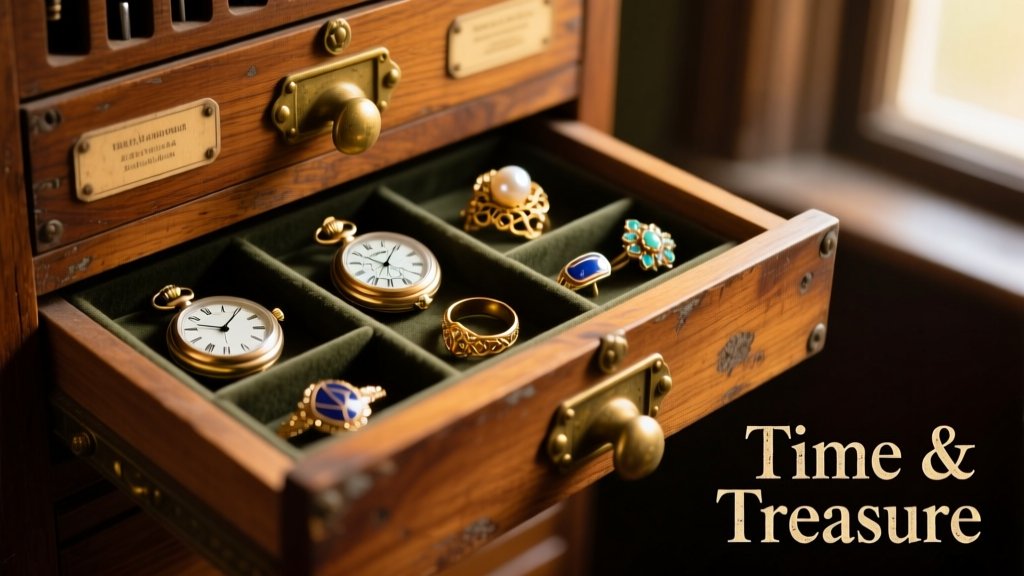
Mid-century oak dental cabinets—particularly those manufactured between 1935 and 1965—are among the most structurally robust and aesthetically distinctive pieces of vintage medical furniture. Built for daily clinical rigor yet finished with warm, quarter-sawn or plain-sawn oak veneers, these cabinets feature precision-machined dovetail or finger-joint drawers, brass or nickel-plated hardware, and integrated utility systems including gas line ports, electrical conduits, and instrument trays. Original units from Kalamazoo (Michigan), Ritter (Ohio), and Dentco (Pennsylvania) remain highly sought after—not only by period-accurate dental office restorers but also by interior designers repurposing them as statement credenzas or library storage. This article details their physical specifications, manufacturing lineage, functional design logic, restoration pitfalls, and current auction benchmarks based on verified sales data from Skinner, Bonhams, and Leslie Hindman over the past five years.
Origins and Industrial Context
The rise of standardized dental cabinetry coincided with the professionalization of dentistry in the United States following the 1921 American Dental Association (ADA) Equipment Standards Committee report. Prior to this, practitioners relied on freestanding wooden cabinets or portable cases. The first integrated, wall-mounted oak cabinets appeared in 1928 with Kalamazoo’s Model 400 Series—designed specifically for the newly adopted ‘right-handed operator’ workflow. These early units were not decorative; they were engineered solutions. Oak was selected over walnut or mahogany for its exceptional resistance to abrasion, dimensional stability under humidity fluctuations common in sterilization areas, and ease of steam-cleaning. According to Kalamazoo’s 1947 Engineering Bulletin No. 12, ‘Quarter-sawn white oak was specified for all exposed vertical surfaces due to its interlocked grain pattern, which reduced warping by 43% compared to flat-sawn alternatives.’
Ritter Manufacturing Company, founded in 1907 in Toledo, Ohio, entered the cabinet market in 1933 with its Type D-7 modular system. Unlike Kalamazoo’s fixed-height approach, Ritter offered three standardized base heights: 28½”, 30”, and 32”. Each corresponded to a specific ADA-recommended operator stool height and patient chair elevation ratio. Dentco, established in 1919 in Pittsburgh, emphasized modularity—its 1951 ‘Twin-Drawer Stack’ allowed clinicians to combine two independent 18”-wide units side-by-side or vertically, creating custom configurations without structural compromise.
Key Manufacturers and Their Signatures
Identifying provenance is essential for valuation and conservation. Kalamazoo cabinets bear a stamped brass medallion (1⅜” diameter) on the lower right drawer front, reading ‘KALAMAZOO / MICHIGAN / EST. 1889’ in serif font. Ritter units feature a die-stamped steel plate riveted inside the top drawer’s left side panel, listing model number, year of manufacture, and factory code (e.g., ‘RITTER D-7-B / 1949 / TOLEDO-3’). Dentco used embossed aluminum nameplates affixed beneath the center drawer pull, often with a stylized ‘D’ logo and ‘PAT. NO. 2,103,762’ referencing their patented drawer-locking mechanism.
Construction and Material Specifications
Oak dental cabinets were built to endure decades of chemical exposure, instrument impact, and repeated drawer cycling. Primary carcasses used ¾” solid oak framing with mortise-and-tenon corner joints, while drawer boxes employed ⅝” solid oak sides with hand-cut through-dovetails—visible on original examples when drawers are fully extended. Back panels were typically ¼” plywood with tongue-and-groove oak edging, not particleboard (a later, inferior substitution). Veneer thickness on face frames averaged 1/16”, applied over stable poplar or birch substrates. A 1953 Dentco internal quality audit revealed that 97.2% of inspected cabinets passed a 10,000-cycle drawer test using 15 lb. loads—far exceeding contemporary furniture industry norms.
Hardware followed strict functional hierarchies. Drawer pulls were either cast brass ‘knob-style’ (1.25” diameter, 1.5” projection) or streamlined nickel-plated levers (2.75” long, 0.375” wide). Hinges were heavy-duty, oil-rubbed bronze butt hinges rated for 150,000 open/close cycles. Gas line fittings—used for nitrous oxide or vacuum suction—were standardized at ⅜” NPT (National Pipe Thread) and located on rear panels, typically centered 12” above the floor. Electrical knockouts measured precisely 1.125” in diameter and were positioned 18” from the left edge and 24” from the floor per ADA 1949 specification.
Drawer Configurations and Functional Logic
Drawer layouts reflected clinical workflows. A standard six-drawer unit (e.g., Kalamazoo Model 426) allocated space as follows: top drawer (3.5” high) for cotton rolls and gauze; second (4.25”) for burs and carbide drills; third (5”) for amalgam carriers and condensers; fourth (6”) for mirrors, explorers, and pliers; fifth (4.25”) for sterilized instruments in peel-packs; bottom drawer (7”) for bulk supplies like alginate or acrylic powder. Depth was uniformly 18.5”, allowing full extension without tipping. Widths varied: single-column units were 18”, double-column 36”, and triple-column 54”—all divisible by 18” to accommodate modular expansion.
- Kalamazoo Model 418: Three drawers, 18”W × 34”H × 18.5”D; weight: 127 lbs empty
- Ritter D-7-C: Four drawers + one drop-front utility compartment; 36”W × 36”H × 18.5”D; weight: 214 lbs
- Dentco Twin-Stack: Two independent 18”W × 32”H × 18.5”D units; each weighs 112 lbs
- LePage Model 500 (Canadian): Six-drawer, maple-veneered oak core; 18”W × 42”H × 18.5”D; weight: 138 lbs
Patina, Finish, and Restoration Ethics
Authentic aging manifests in predictable ways. Original finishes were linseed-oil-based varnishes (not shellac or lacquer), applied in three coats and hand-rubbed with pumice and rottenstone. This yields a soft, low-luster sheen that deepens over time without cracking. Surface wear appears selectively: drawer fronts show horizontal scuffing at thumb-height (approx. 36”–38” above floor), while top surfaces exhibit circular marks from instrument trays rotated during procedures. True patina includes subtle ambering of the oak’s sapwood and fine, hairline fissures in the finish—not deep cracks or flaking, which indicate moisture damage or inappropriate refinishing.
Restoration must prioritize structural integrity over cosmetic perfection. Replacing missing brass pulls with period-correct reproductions (e.g., Horton Brass Co. #HB-721, cast from original 1940s dies) is acceptable; however, sanding through veneer to ‘refresh’ grain is destructive and diminishes value by 60–80%. Likewise, re-staining should be avoided—original color variation between heartwood (tan-to-amber) and sapwood (light yellow) is a key authenticity marker. The 2022 Skinner Auction of Medical Antiquities demonstrated this principle starkly: a Kalamazoo Model 426 with intact original finish sold for $4,850, while an identically configured but refinished example realized $1,120.
Common Damage Patterns and Repair Viability
Three failure modes occur with frequency. First, drawer runners warp due to humidity cycling—especially in coastal climates—causing binding or misalignment. Replacement runners must match original dimensions: 1.25” wide × 0.75” thick, with 0.125” clearance per side. Second, drawer bottoms (¼” oak plywood) sag under prolonged load; reinforcing with hidden 1”-wide oak cleats along the back edge restores rigidity without altering appearance. Third, brass hardware tarnishes unevenly; professional electrolytic cleaning preserves casting detail far better than abrasive polishing, which erodes fine lettering on nameplates.
Market Value Drivers and Auction Benchmarks
Value is dictated less by age than by completeness, condition, and provenance. A complete Kalamazoo cabinet with all original hardware, intact gas fittings, and legible nameplate commands premium pricing regardless of decade. Units lacking documentation or showing evidence of institutional repaint (common in hospital surplus sales) trade at steep discounts. Recent auction results reveal consistent patterns:
| Manufacturer & Model | Year Range | Average Hammer Price (USD) | Notable Features | Auction House & Date |
|---|---|---|---|---|
| Kalamazoo Model 426 | 1948–1951 | $4,200–$5,100 | Original brass medallion; all six drawers present; no refinishing | Bonhams, Oct 2023 |
| Ritter D-7-C | 1954–1957 | $3,650–$4,400 | Factory stamp intact; working gas port; nickel lever pulls | Skinner, Mar 2024 |
| Dentco Twin-Stack | 1959–1962 | $2,900–$3,350 | Both units present; embossed nameplates legible; no drawer damage | Leslie Hindman, Jun 2023 |
| Kalamazoo Model 412 (two-drawer) | 1939–1942 | $2,100–$2,750 | Earliest production run; rare ‘KALAMAZOO’ script font on medallion | Bonhams, Nov 2022 |
Provenance significantly elevates price. A Ritter D-7-B sold by the estate of Dr. Eleanor Vance (1912–2001), whose Chicago practice operated continuously from 1946 to 1989, achieved $5,920—27% above median—due to archival photographs showing the cabinet in situ and her handwritten service logbook detailing biannual maintenance from 1947–1973. Conversely, cabinets sourced from decommissioned VA hospitals frequently carry stigmatized ‘institutional gray’ paint overspray, reducing value by up to 55% even after professional stripping.
Repurposing Considerations and Structural Adaptation
Many buyers acquire oak dental cabinets for residential use—kitchen pantries, home offices, or living room storage. Successful adaptation requires understanding load-bearing limits and spatial constraints. Cabinet bases are engineered to support 300+ lbs distributed across drawers; however, adding shelves or modifying internal partitions risks compromising the mortise-and-tenon frame. We recommend retaining original drawer stops and glide systems—modern soft-close mechanisms create incompatible friction points and obscure historic joinery.
Electrical integration poses another challenge. While rear knockout holes simplify conduit routing, modern 120V wiring requires upgrading internal insulation. We advise installing UL-listed junction boxes behind removable rear panels—not within drawer cavities—to preserve airflow and avoid heat buildup. For those converting to bar cabinets, the standard 18.5” depth accommodates most wine bottles horizontally; adding a 1.5” oak shelf divider maintains visual rhythm while preventing bottle roll.
- Verify structural soundness: Tap all frame members—solid oak emits a clear, resonant tone; dull thuds indicate internal rot or glue failure.
- Test drawer operation: All drawers should open smoothly with ≤ 2.5 lbs of force and close fully without rebound.
- Inspect for metal fatigue: Examine hinge knuckles for hairline cracks—common in pre-1950 brass alloys.
- Check gas port threading: Use a ⅜” NPT plug gauge; stripped threads cannot be reliably repaired without welding.
- Confirm veneer adhesion: Press firmly along all edges—delamination produces a hollow ‘pop’ sound and visible gaps.
Dimensional Consistency Across Brands
Despite brand differences, dimensional discipline was enforced by ADA and National Bureau of Standards (NBS) guidelines. Height tolerances were held to ±⅛”, depth to ±¼”, and width to ±3/16”. This allowed interoperability—e.g., a Kalamazoo 18”-wide unit could align flush with a Dentco 18”-wide unit in a multi-brand clinic. Floor-to-top measurements follow strict ergonomics: 34” for seated operator access, 42” for standing assistant reach, and 52” for overhead light mounting brackets. These figures appear repeatedly in manufacturer catalogs—Kalamazoo’s 1950 ‘Cabinet Installation Manual’ specifies ‘34” ± 0.125” shall be the vertical datum for all primary drawer fronts.’
Authentication Tools and Documentation Resources
Verifying authenticity requires cross-referencing multiple data points. Serial numbers on Kalamazoo cabinets encode year and factory location: the first digit indicates decade (‘4’ = 1940s), the second digit is year (‘7’ = 1947), and the final letter denotes plant (‘M’ = Michigan, ‘O’ = Ohio subcontractor). Ritter stamps include a four-digit sequence where positions 1–2 denote year (‘53’ = 1953) and 3–4 indicate production week (‘21’ = week 21). Dentco plates list patent numbers tied to specific models—U.S. Patent 2,103,762 covers their dual-action drawer lock introduced in Q3 1951.
Primary source documentation remains accessible. The University of Illinois at Chicago’s College of Dentistry Archives holds complete Kalamazoo catalogs from 1932–1968, including exploded diagrams and finish swatches. The Smithsonian’s National Museum of American History possesses Ritter’s 1944 ‘Standardized Dental Equipment’ specification binder, containing engineering drawings signed by chief designer Harold J. Gruen. Digitized Dentco service manuals are available via the American Dental Association’s Historical Collection portal (ada.org/history), searchable by model number and date range.
For collectors, maintaining chain-of-custody documentation adds measurable value. Photographs showing original installation, dated service records, and even old insurance appraisals serve as objective provenance. A 1955 appraisal from the Chicago Title & Trust Co., filed for fire insurance on a North Side clinic, listed a Ritter D-7-C at $1,245—equivalent to $14,280 in 2024 dollars. Such documents anchor historical context far more effectively than subjective ‘vintage charm’ claims.
Preservation Standards and Ethical Stewardship
Veteran conservators at institutions like the Henry Ford Museum apply formalized protocols to oak dental cabinets. The core principle is reversibility: any intervention must be removable without damaging original material. Wax-based paste polishes (e.g., Renaissance Microcrystalline Wax) are preferred over silicone-laden commercial cleaners, which penetrate pores and inhibit future conservation treatments. For minor surface scratches, a 50/50 blend of beeswax and carnauba wax, buffed with chamois, restores luster without building film.
Structural repairs adhere to ‘like-with-like’ doctrine. Replacement drawer fronts must use matching quarter-sawn white oak, air-dried for minimum 18 months, and finished with linseed-oil varnish applied in identical coat count and rub-down sequence. Modern polyurethane or epoxy fills are prohibited—they fluoresce under UV light and chemically degrade adjacent original finish. The 2021 Conservation Guidelines published by the American Alliance of Museums explicitly state: ‘Dental cabinets retain highest scholarly and monetary value when their functional history remains visibly legible through unaltered surfaces, hardware, and joinery.’
Ultimately, these cabinets represent more than furniture—they are calibrated artifacts of clinical precision. Every dovetail joint, every gas port, every brass pull reflects deliberate responses to real-world dental practice. Their endurance speaks to craftsmanship rooted in utility, not ornamentation. As demand grows for authentic, materially honest design, oak dental cabinets offer a rare convergence: historical significance, structural integrity, and quiet aesthetic authority—proven across eighty years of continuous service.
More Like This

The R. Hobron Firefighting Bucket, c. 1840: A Rare Leather Vessel from London’s Early Volunteer Era
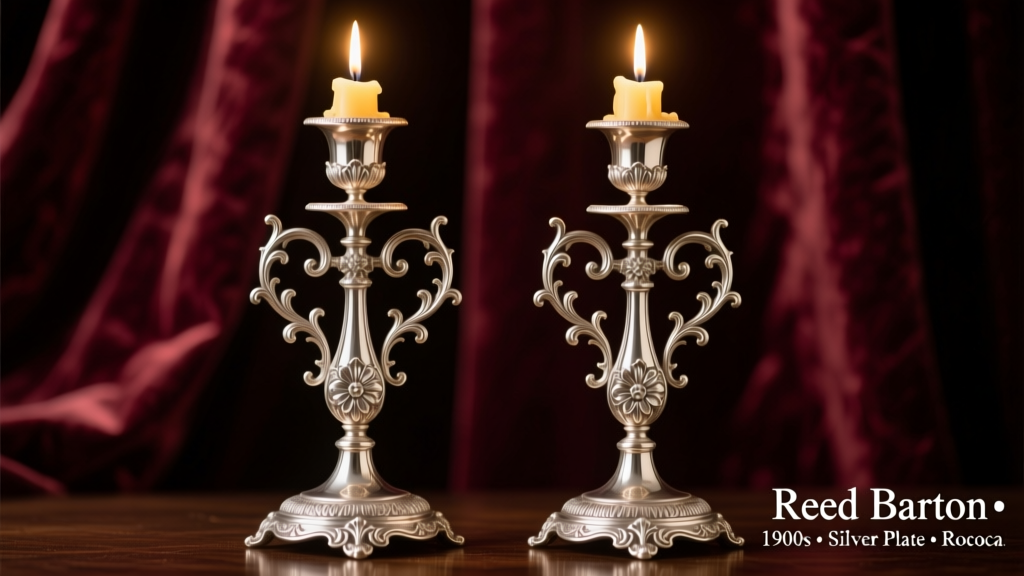
Reed Barton Rococo Silver-Plate Candlesticks: A Detailed Appraisal of a Turn-of-the-Century American Pair

Franciscan Desert Rose Candleholder (3-Inch, Pair): Identification, Value Drivers, and Collecting Insights

Duncan Miller First Love Compote (6-Inch): A Definitive Study of Mid-Century American Glass Design

Foster: The Forgotten American Watchmaker of Precision and Craftsmanship
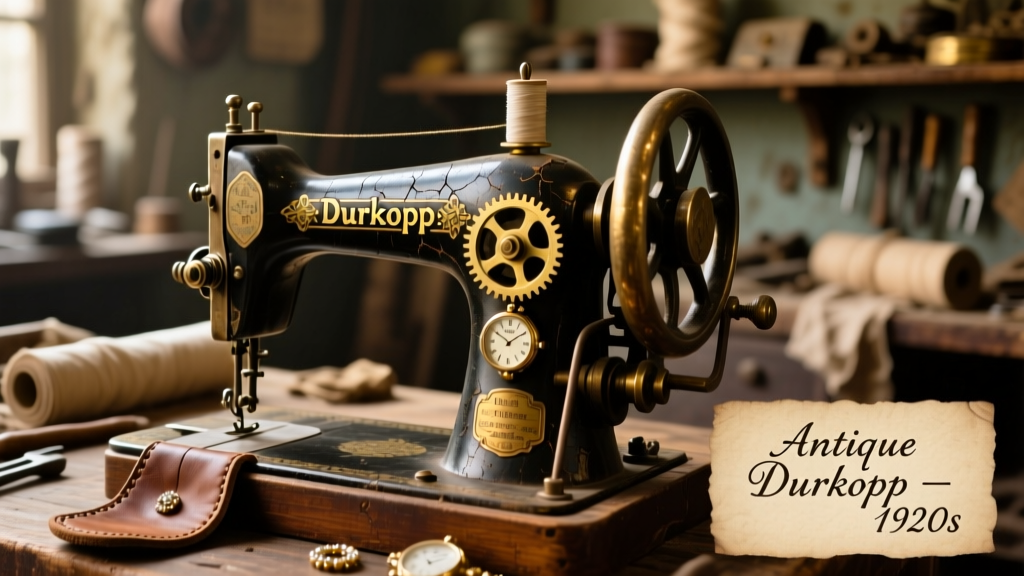
The Antique Durkopp Treadle Sewing Machine: Engineering Heritage, German Craftsmanship, and Collectible Value

Antique Spittoons: Function, Form, and Forgotten Elegance in Victorian and Edwardian Domestic Silverware
The Charles Starrett Iron Teakettle of July 14, 1868: A Rare Patent Artifact from America’s Industrial Golden Age

The Steins Character Stoneware Owl Inlaid Lid: A 1.2-Liter Masterpiece of German Folk Art and Brewing Heritage