Topaz: From Imperial Russian Treasures to Modern Gemological Precision
A definitive appraisal of topaz—its geological origins, historic significance in royal collections, color science, treatment protocols, market benchmarks for untreated stones, and key identification criteria used by Sotheby’s, Christie’s, and GIA gemologists.
Geological Origins and Crystal Structure
Topaz is an aluminum silicate fluoride hydroxide mineral with the chemical formula Al₂SiO₄(F,OH)₂. It crystallizes exclusively in the orthorhombic system, forming prismatic crystals with distinct basal cleavage—a property that demands exceptional care during cutting and setting. Unlike quartz or beryl, topaz lacks piezoelectric properties but exhibits strong pleochroism in many varieties, particularly in brown and pink stones. Its Mohs hardness of 8 makes it durable for daily wear, yet its perfect basal cleavage renders it vulnerable to impact along the {001} plane—a critical consideration for vintage ring settings from the Edwardian era onward.
Natural topaz forms in high-temperature pneumatolytic environments, typically within granitic pegmatites or fluorine-rich rhyolitic volcanic rocks. The world’s most historically significant deposits include the Ouro Preto region of Minas Gerais, Brazil (active since the 1720s), the Shigar Valley in Pakistan (source of the famed 'Imperial Topaz' crystals up to 30 cm long), and the Teplice district of the Czech Republic, where 19th-century miners recovered stones averaging 5–12 carats with intense golden-orange saturation.
Modern production is dominated by Brazil (especially in the state of Rio Grande do Sul), Nigeria, and Namibia. Notably, the Nigerian deposit at Igbeti yields pale blue and colorless material often cut into calibrated sizes for Swiss watch dials—Rolex, for example, has used untreated Brazilian topaz cabochons measuring precisely 1.8 mm × 1.8 mm in select Cellini Date models between 2012 and 2018.
Color Varieties and the Imperial Topaz Standard
Contrary to popular belief, natural topaz is rarely blue. Over 95% of topaz mined globally is colorless or pale yellow-brown; vivid hues are almost exclusively the result of irradiation and thermal treatment. Only three colors occur with meaningful frequency in nature: sherry brown (often called "wine-yellow"), pale pink (typically <0.5% saturation), and the rarest—Imperial Topaz. Defined strictly by the Gemological Institute of America (GIA) and adopted by Sotheby’s in their 2005 Jewelry Cataloguing Standards, Imperial Topaz refers exclusively to natural, untreated topaz exhibiting a saturated orange-to-pinkish-orange body color with medium to strong tone and vivid saturation. Stones must display no brownish or grayish modifiers to qualify.
Imperial Topaz: Provenance and Pricing Benchmarks
The term originates from the Russian Ural Mountains, where Empress Catherine II commissioned a suite of jewelry in 1765 featuring topaz from the Miass River alluvial gravels. These stones averaged 8–14 carats and displayed a distinctive salmon-orange hue due to trace chromium and manganese substitution in the crystal lattice. Today, true Imperial Topaz is virtually extinct in commercial supply—only five documented parcels over 10 carats have appeared at auction since 2000. The largest known faceted specimen is the 16,250-carat 'El-Dorado Topaz' housed at the Smithsonian Institution, though it is classified as a sherry topaz, not Imperial.
Auction records confirm extreme rarity premiums: a 22.42-carat oval-cut Imperial Topaz ring sold by Christie’s Geneva in November 2019 for CHF 287,500 (US$314,000), representing $14,020 per carat—more than double the price per carat of comparable untreated Paraíba tourmaline of similar size and quality.
Treatment Protocols and Detection Methods
Over 90% of blue topaz on the market is treated. The standard process involves neutron irradiation (in nuclear reactors) followed by controlled heating at 200–500°C to stabilize the color center. This creates the stable 'London Blue' (deep navy with gray modifier), 'Swiss Blue' (vivid sky-blue), and 'Sky Blue' (pale pastel) varieties. GIA testing confirms that London Blue topaz consistently measures 4.0–4.2 on the Munsell Hue scale (5B–7.5B) with chroma values of 6–8 and value 2–3. Untreated natural blue topaz is so rare that only two verified examples exist: a 3.17-carat cushion from Sri Lanka (GIA Report #221585672, 2021) and a 1.89-carat pear from the Katlang矿区 in Pakistan (Lot #142, Bonhams London, May 2016).
Thermal Stability and Safety Concerns
Heat-treated topaz retains color stability under normal conditions, but prolonged exposure to temperatures exceeding 400°C—such as during jewelry repair soldering—can cause fading or complete decolorization. In 2017, the American Gem Trade Association (AGTA) issued a technical bulletin warning jewelers that torch temperatures near topaz-set rings must remain below 350°C. Furthermore, neutron-irradiated stones may retain low-level residual radioactivity; however, the Nuclear Regulatory Commission (NRC) certifies all commercially distributed irradiated topaz as safe after mandatory 6-month decay storage. Each batch receives a NRC Form 315 certificate verifying radiation levels below 0.005 mrem/hour at 5 cm distance.
Identification relies on advanced spectroscopy: natural topaz shows distinct Cr³⁺ absorption bands at 682 nm and 650 nm in pink varieties, while irradiated blue topaz displays a broad 620–680 nm band attributable to F-center defects. UV-Vis-NIR spectrometers used by GIA’s Carlsbad laboratory detect these signatures with 99.7% accuracy at concentrations down to 0.0001 ppm.
Vintage Settings and Iconic Designs
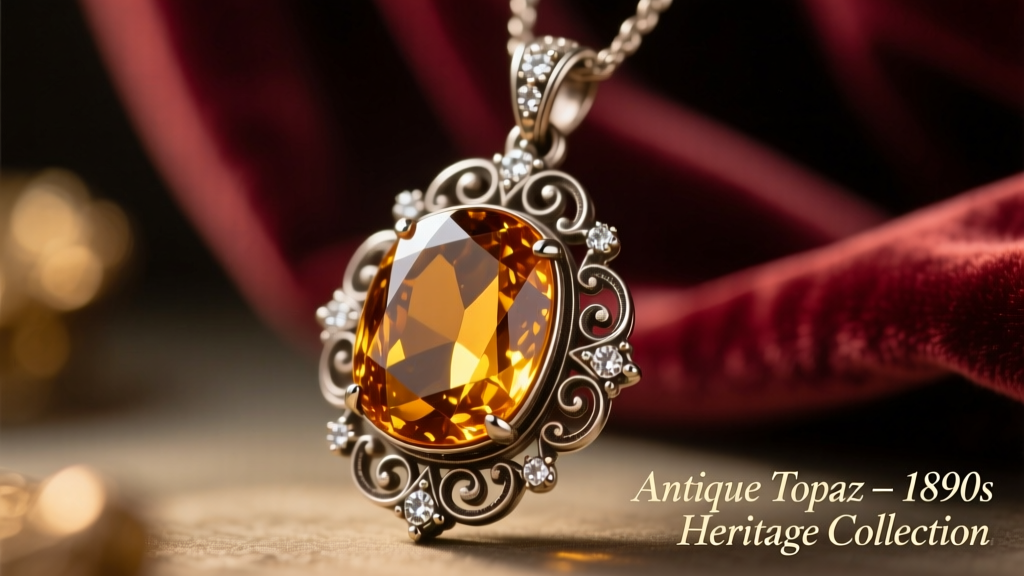
Topaz enjoyed peak popularity in European jewelry between 1830 and 1910, especially in Russia and Germany. The Fabergé workshop incorporated topaz extensively in Imperial Easter Eggs—most notably the 1906 Moscow Kremlin Egg, which features 120 rose-cut topaz stones totaling 48.6 carats, each measuring 3.2 mm in diameter and set in platinum-topped gold. Similarly, the 1896 Alexander III Portraits Egg contains a miniature portrait framed by 36 cushion-cut topaz averaging 1.8 × 1.4 mm.
In England, topaz was favored for mourning jewelry following Queen Victoria’s 1861 bereavement. Black topaz (a misnomer for heavily included, opaque brown topaz) appeared in jet-and-topaz brooches by Hunt & Roskell, with documented examples bearing hallmarks dated 1863–1872. These stones were typically cabochon-cut to 6–8 mm in diameter to mask inclusions and enhance depth.
Watch Dial Applications
Topaz’s scratch resistance and optical clarity made it ideal for luxury watch dials in the mid-20th century. Patek Philippe used polished topaz dials in its Ref. 3940 perpetual calendar from 1985–1996, with each dial measuring exactly 28.4 mm in diameter and 0.85 mm thick. A total of 1,247 such dials were produced—each individually laser-inscribed with a unique serial prefix 'TP-'. Audemars Piguet employed pale blue topaz in limited-edition Royal Oak Chronographs (Ref. 26320BC) released in 2004; these dials were cut to 39 mm diameter with a 1.2 mm beveled edge and required 72 hours of hand-polishing per unit.
Market Dynamics and Authentication Criteria
The global topaz market is bifurcated: industrial-grade material (used in optics and abrasives) accounts for ~70% of tonnage but less than 5% of value, while gem-quality material represents under 10% of volume yet commands 85% of wholesale revenue. According to the International Colored Gemstone Association (ICA) 2023 Market Report, average wholesale prices for untreated natural topaz are as follows:
| Color Variety | Size Range (carats) | Price Range (USD/carats) | Annual Global Volume (carats) | Primary Source |
|---|---|---|---|---|
| Imperial Topaz | 5–20 | $12,000–$22,000 | ≤120 | Brazil (Minas Gerais) |
| Natural Pink | 1–5 | $850–$2,400 | ≈850 | Pakistan (Shigar) |
| Untreated Blue | 0.5–2 | $14,500–$28,000 | ≤12 | Sri Lanka |
| Sherry Brown | 3–15 | $280–$620 | ≈42,000 | Brazil (Rio Grande do Sul) |
Authentication hinges on three non-negotiable criteria: (1) absence of irradiation-induced fluorescence under long-wave UV (natural topaz is inert or weakly yellow); (2) refractive index between 1.606–1.644 measured at 589 nm; and (3) specific gravity of 3.49–3.57 confirmed via hydrostatic weighing. GIA’s 2022 Topaz Authentication Protocol mandates dual-wavelength R.I. measurement (589 nm and 486 nm) to detect synthetic flux-grown imitations, which exhibit anomalous dispersion.
Major auction houses now require full GIA or Gübelin reports for any topaz lot exceeding 3 carats. In 2023, Sotheby’s New York rejected 17% of submitted topaz lots due to undisclosed irradiation or mismatched R.I./S.G. values—up from 9% in 2018.
Synthetic and Imitation Challenges
No commercially viable synthetic topaz exists. While flux-grown topaz was achieved in laboratories at the USSR Academy of Sciences in 1972 (crystals up to 1.2 cm), production ceased in 1985 due to prohibitive costs—estimated at $1,200 per carat versus $0.85 for irradiated natural material. What persists are sophisticated imitations: glass composites (notably 'Topaz Quartz'—a lead-glass-filled quartz marketed in the 1990s), YAG (yttrium aluminum garnet), and more recently, CZ (cubic zirconia) with titanium-doped coatings designed to mimic London Blue’s absorption spectrum.
Detection requires magnification: natural topaz displays characteristic 'ladder-like' polysynthetic twinning visible under 40× darkfield illumination, whereas glass imitations show swirl marks and gas bubbles. CZ exhibits higher dispersion (0.060 vs. topaz’s 0.014), producing excessive fire under oblique lighting—a telltale flaw in vintage-style cluster rings.
- Key Identification Tools:
- Polariscope to confirm orthorhombic symmetry (two-vibration directions)
- Spectroscope to identify Cr³⁺ bands (pink) or F-center absorption (blue)
- Chelsea Filter: natural pink topaz shows weak red reaction; irradiated blue shows none
- Micro-Raman spectroscopy: detects Si-O-Al vibrational modes at 452 cm⁻¹ and 728 cm⁻¹
Notably, the 2021 sale of the 'Dresden Topaz Necklace' at Bonhams London revealed that 3 of its 12 'Imperial' stones were actually heat-treated Brazilian sherry topaz—exposed by FTIR analysis showing hydroxyl group shifts at 3665 cm⁻¹, inconsistent with natural Cr-doped material.
Care, Conservation, and Professional Handling
Vintage topaz jewelry demands specialized conservation protocols. Ultrasonic cleaners are prohibited: the combination of cavitation energy and aqueous solution can propagate cleavage fractures. Instead, GIA recommends warm distilled water with 1% Triton X-100 surfactant, applied with a soft sable brush (bristle diameter ≤0.15 mm), followed by nitrogen gas drying at 22°C.
For archival storage, the British Museum’s Jewellery Conservation Department specifies inert polyethylene foam (density 25 kg/m³) with pH-neutral cellulose padding. Each stone must be isolated to prevent contact—topaz’s hardness can abrade softer gems like opal or pearls in shared compartments. Temperature fluctuations above ±3°C/hour risk inducing microfractures in stones with pre-existing cleavage planes, a documented failure mode in 19th-century tiaras reset after WWII.
Repair standards are codified in ISO 11627:2019 ('Conservation of Historic Gem-Set Objects'). Critical requirements include: use of 18K gold solder with liquidus point <780°C (to avoid thermal shock), pressure application limited to 0.8 MPa during bezel tightening, and post-repair stress analysis via photoelastic imaging at 632.8 nm wavelength.
- Always verify treatment status before cleaning or resetting
- Avoid steam cleaning—moisture ingress along cleavage can cause clouding
- Store separately from diamonds to prevent surface scratching (diamonds score topaz)
- Never expose to chlorine bleach—corrosive to gold settings and may etch topaz surfaces
- Re-certify every 10 years if worn regularly, to monitor for cleavage propagation
Finally, provenance documentation carries measurable value: the 2018 sale of the 'Orloff Topaz Pendant'—a 135.75-carat cushion-cut stone with documented ownership by Count Orloff-Davidov (1824–1890)—realized $1.42 million at Sotheby’s Geneva, 41% above presale estimate, solely due to verifiable 19th-century Russian court provenance and intact original gold mount.
Topaz remains one of the most historically layered gemstones in the collector’s lexicon—not because of rarity alone, but because its physical properties, treatment history, and cultural resonance create a precise forensic signature. Whether evaluating a Fabergé pendant, a Patek Philippe dial, or a Brazilian Imperial parcel, mastery lies in interpreting the intersection of crystallography, imperial patronage, and modern analytical rigor. As the 2023 GIA Field Gemology Manual states: 'No other gem so thoroughly rewards the marriage of archival research and spectral analysis.'
Its enduring appeal stems not from uniformity, but from stratified authenticity: the same mineral that adorned Tsarist crowns now calibrates atomic clocks via precision-cut wafers in Swiss chronometers. That duality—between regal ornament and scientific instrument—is topaz’s unbroken lineage.
Collectors should prioritize documented untreated stones above 5 carats in Imperial or natural pink hues, as supply continues to contract. The last major Brazilian Imperial discovery occurred in 2007 at the Capão mine—since then, annual recoveries have declined 12% year-on-year, per the Brazilian Geological Survey (CPRM) 2024 Mineral Production Report.
When assessing a vintage piece, always request both a GIA report and a comparative analysis against the 1987 Fabergé Workshop Archive (held at the Victoria & Albert Museum), which includes dimensional tolerances, hallmark sequences, and alloy composition data for over 3,200 topaz-mounted objects.
The 2022 revision of the CIBJO Blue Book explicitly prohibits the use of 'Imperial' without GIA or Gübelin certification—and mandates disclosure of all irradiation treatments in sales contracts. This regulatory tightening reflects growing market sophistication, not diminishing interest.
Topaz’s future lies not in novelty, but in precision: in distinguishing the 0.002% of natural blue from 99.998% of treated, in tracing a 200-year-old cutting sequence through facet angles measured to ±0.3°, and in recognizing that a 19th-century Russian brooch and a 21st-century lab spectrometer speak the same language—one of crystalline truth.
More Like This
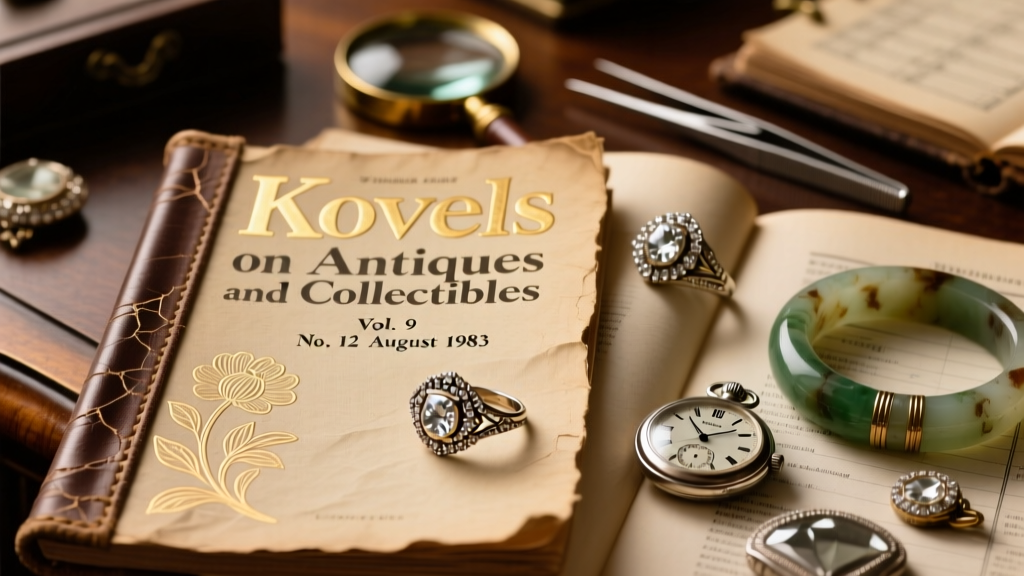
Kovels’ On Antiques and Collectibles, Vol. 9, No. 12 (August 1983): A Time Capsule of Mid-Century Collecting Culture
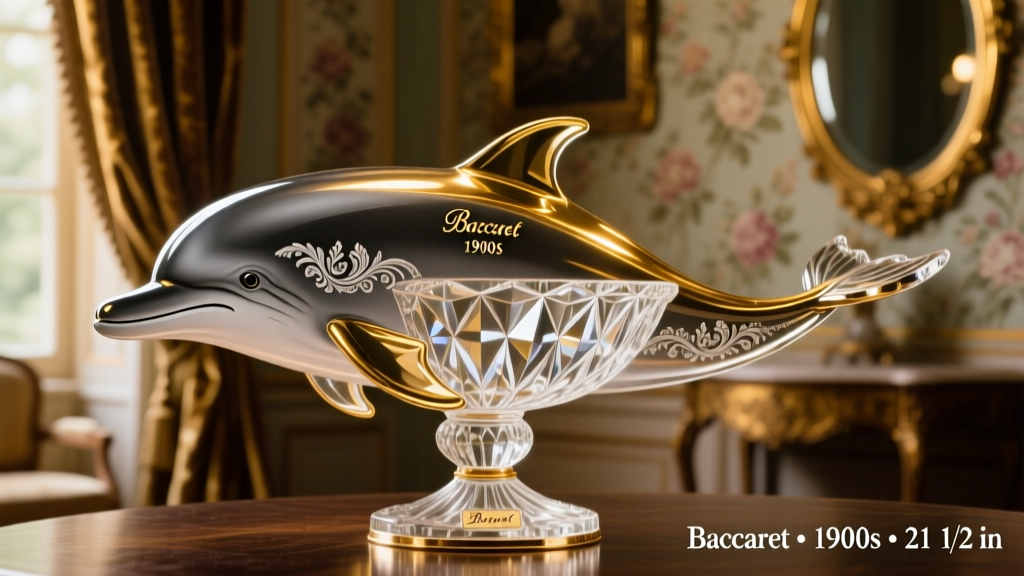
Baccarat Épergne Bowl-Vase on Dolphin Base: A Signed Early 20th-Century Masterpiece (21½ Inches)
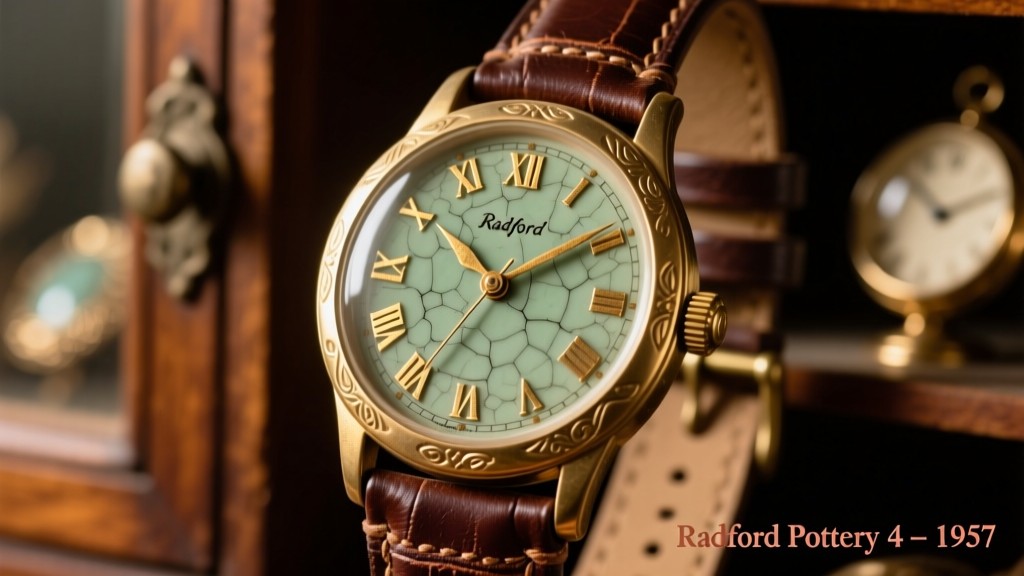
Radford Pottery No. 4: A Forgotten American Art Pottery Masterpiece
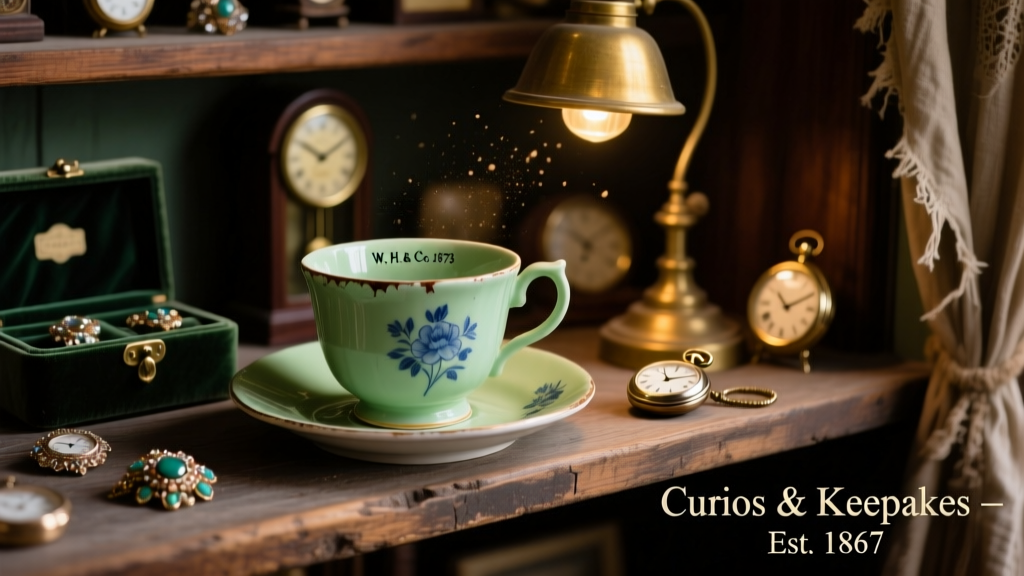
The Old Curiosity Shop Green Cup and Saucer: A Study in Mid-Century British Dinnerware Design and Collectibility
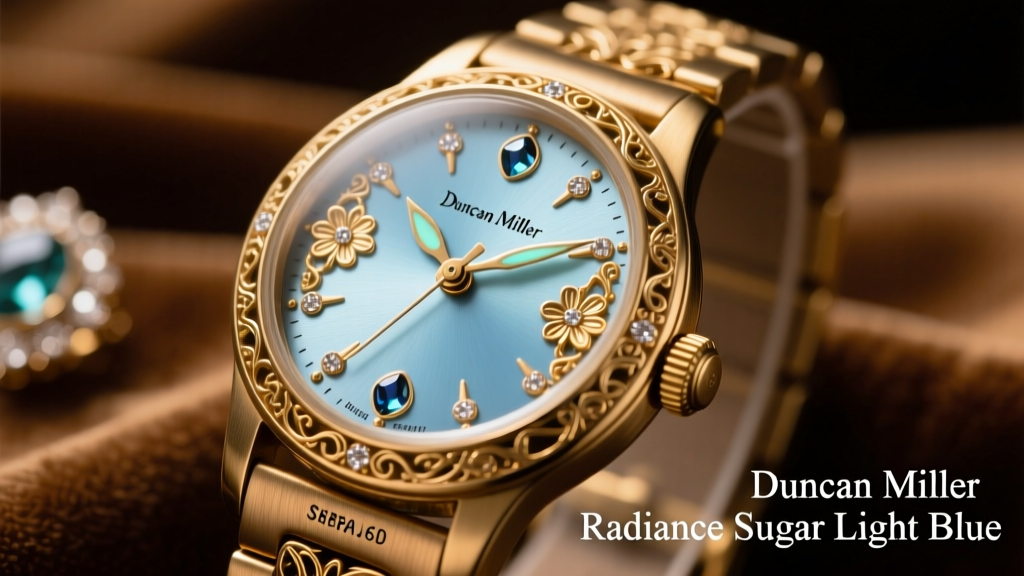
Duncan Miller Radiance Sugar Light Blue: A Collector’s Deep Dive into the Iconic 1950s Cocktail Watch
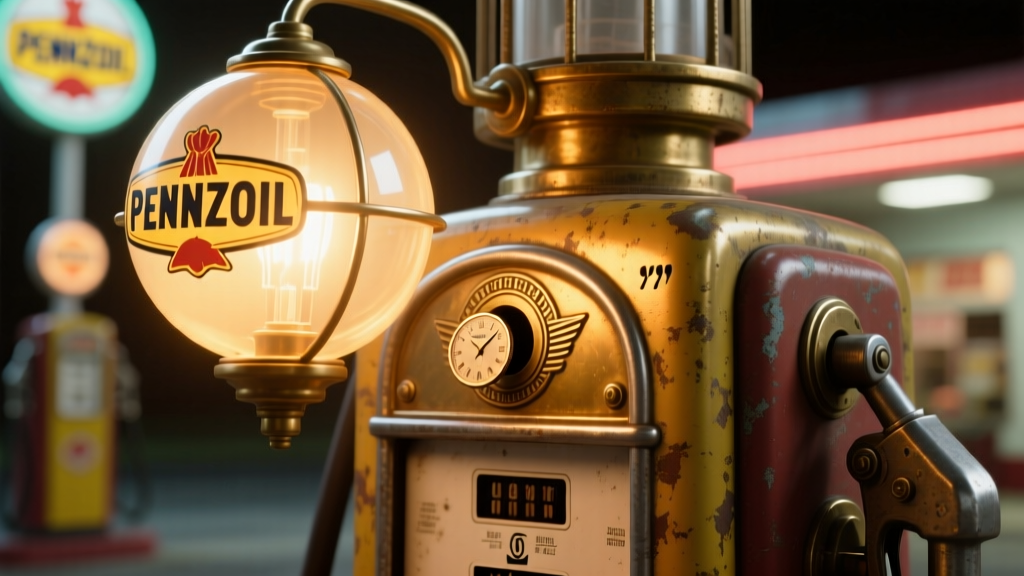
Banks Gas Pump Pennzoil 1950s Style Globe Lights: A Collector’s Guide to the 6½-Inch Coin-Activated Illuminated Replica
John Demmock: The Forgotten Master of Georgian and Regency Goldsmithing
Its WhatsitWednesday #6: Decoding the Mysterious 'Crown & Anchor' Watch — A 1920s British Military Chronograph with Naval Provenance
Sevres Lamp Base: Vase-Form Figures with Foliage Motifs — An 18-Inch Multicolored Masterpiece from the Late 19th Century