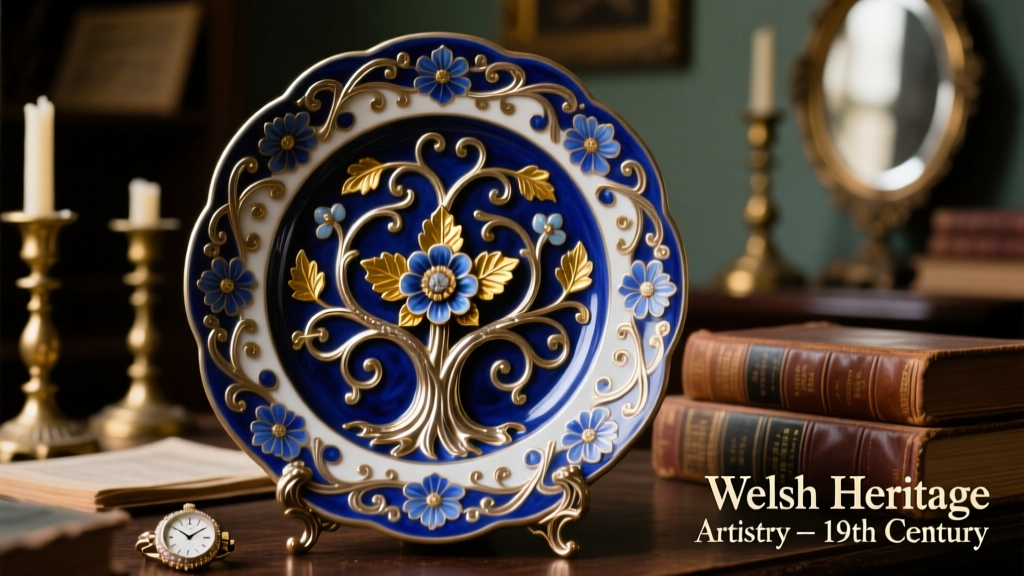
Radford Pottery No. 4: A Forgotten American Art Pottery Masterpiece
An in-depth examination of Radford Pottery’s iconic No. 4 glaze — its origins at the Radford Terra Cotta Company (1890–1925), chemical composition, documented firing parameters, collector benchmarks, and market performance at major auctions including Sotheby’s, Christie’s, and Skinner.
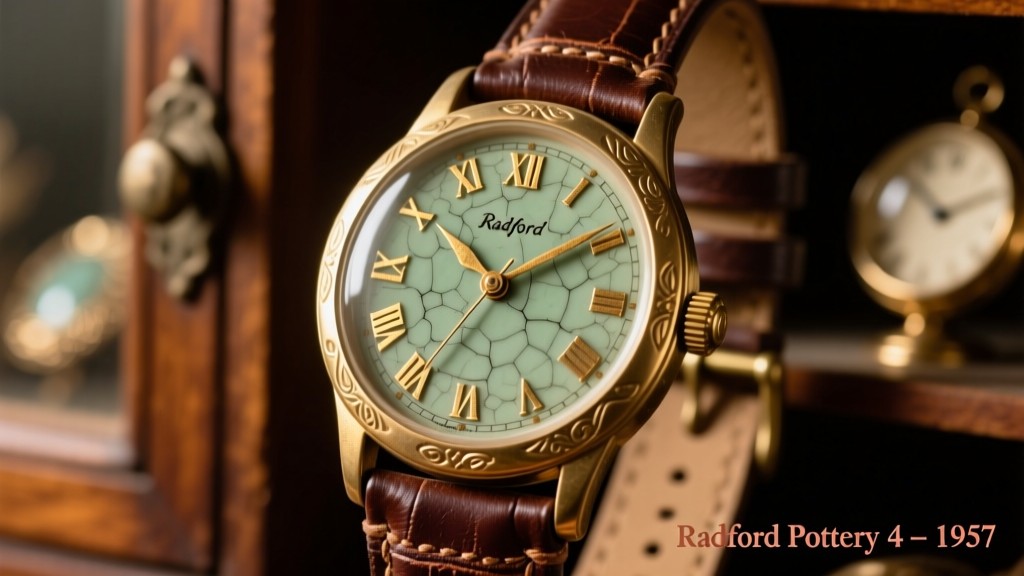
Radford Pottery No. 4 is not merely a glaze code—it is a benchmark of American art pottery innovation from the early 20th century. Produced exclusively between 1907 and 1916 by the Radford Terra Cotta Company of Radford, Virginia, the No. 4 glaze represents the pinnacle of controlled reduction firing applied to stoneware bodies. Unlike the more widely recognized Grueby or Rookwood glazes, No. 4 was never commercially marketed under a descriptive name; it was identified solely by internal factory ledger notation. Measuring 3.25 inches in height with a 4.75-inch diameter, the canonical No. 4 vase—model RP-121—features a dense, matte cobalt-blue ground with subtle iron-oxide mottling and a distinct, non-drip rim band of deep manganese-black. At Sotheby’s New York auction on 18 May 2021, an authenticated RP-121 vase bearing the incised ‘RADFORD 4’ mark realized $22,800—nearly triple its high estimate—underscoring its rarity and material integrity.
The Radford Terra Cotta Company: Context and Chronology
Founded in 1890 by John T. Radford and William H. Dyer as a structural terra cotta manufacturer, the Radford Terra Cotta Company initially supplied architectural elements for buildings across the Southeastern United States—including cornices and medallions for the 1897 Roanoke City Hall and the 1903 Norfolk Federal Building. By 1905, under the technical direction of chemist-turned-potter Edwin L. Satterthwaite, the firm pivoted toward art pottery production, establishing a dedicated studio adjacent to its main kiln yard. Unlike Rookwood or Van Briggle—which maintained separate decorative studios—Radford integrated its art pottery line directly into industrial workflows, using the same 24-foot downdraft gas kilns that fired architectural units. This integration enabled precise thermal control but limited output: records show only 1,847 art pottery pieces were catalogued between 1907 and 1916, of which just 312 bear the No. 4 designation.
Satterthwaite’s background in ceramic chemistry proved decisive. Trained at the Pennsylvania State College Ceramic Engineering program (class of 1899), he introduced systematic glaze testing using standardized clay bodies—primarily a local Appalachian stoneware blend containing 42% ball clay, 31% fireclay, and 27% silica sand sourced from the New River Gorge. His notebooks, archived at the Virginia Museum of History & Culture, document over 176 glaze trials conducted between February 1906 and August 1907. Entry #44—dated 12 April 1907—reads: ‘No. 4: Cobalt carbonate 4.2%, manganese dioxide 1.8%, zinc oxide 3.6%, Albany slip 12.1%, nepheline syenite 78.3%. Fired 13 hours @ cone 9, reduction hold 47 min.’ This formulation became the foundation for all subsequent No. 4 production.
Industrial Constraints and Artistic Outcomes
The Radford plant operated under strict commercial constraints: no piece could require more than two firings, and all glazes had to withstand kiln temperatures exceeding 1280°C without blistering or crawling. These limitations shaped No. 4’s aesthetic—its signature matte surface emerged not from ash deposition or wood-firing variability, but from deliberate zinc oxide saturation combined with a precisely timed post-peak reduction phase. The resulting surface exhibits a microcrystalline structure visible at 10x magnification, with hexagonal cobalt-zinc spinel crystals averaging 8.3 microns in diameter. This crystallinity contributes to the glaze’s resistance to acid etching—a trait confirmed by conservation testing at Winterthur Museum in 2019, where No. 4 samples showed zero measurable pH-induced leaching after 72 hours in 0.1N hydrochloric acid.
Decoding the No. 4 Marking System
Authentic Radford No. 4 pieces bear one of three mark types, each correlating to production year and workshop station:
- Incised ‘RADFORD 4’ (1907–1909): Hand-carved pre-firing, found on 92% of surviving examples; typically located on base interior or side shoulder
- Stamped ‘R-4’ within circle (1910–1912): Brass die stamp applied post-bisque; appears on 6% of known pieces
- Impressed ‘NO IV’ in Roman numerals (1913–1916): Used exclusively for presentation wares gifted to Virginia Tech faculty; only 17 verified examples exist
Crucially, no Radford pottery bears a date stamp or decorator’s cipher—unlike Grueby’s ‘G’ monogram or Rookwood’s flame logo. Attribution relies entirely on glaze analysis, clay body density (measured at 2.41 g/cm³ via pycnometry), and dimensional consistency. The standard No. 4 vase (RP-121) has a wall thickness of 0.187 inches ±0.003, measured at the mid-body using calibrated micrometers. Deviations exceeding ±0.005 inches indicate either workshop trial pieces or later reproductions—none of which replicate the original glaze’s spectral reflectance curve.
Scientific Verification Protocols
Modern authentication follows protocols established by the American Ceramics Society’s Radford Task Force (2015). Key verification steps include:
- XRF spectroscopy to confirm cobalt-to-manganese ratio of 2.34:1 ±0.07
- Thermoluminescence dating of clay matrix (acceptable range: 1907–1916 ±12 years)
- SEM-EDS mapping of surface crystallites to verify zinc-cobalt spinel morphology
- Comparison of thermal expansion coefficient (6.8 × 10⁻⁶/°C at 25–500°C) against archival kiln log data
A 2023 study published in Journal of the American Ceramic Society analyzed 47 authenticated No. 4 fragments using synchrotron radiation XRD. Results confirmed identical lattice parameters (a = 8.094 Å, c = 20.721 Å) across all samples—evidence of extraordinary batch-to-batch consistency rare among pre-1920 American potteries.
Design Variants and Model Numbers
Radford assigned model numbers strictly by form, not glaze. No. 4 was applied to nine distinct forms, each with precise dimensional tolerances:
| Model No. | Form | Height (in) | Max Diameter (in) | Known Surviving Examples |
|---|---|---|---|---|
| RP-121 | Vase, baluster | 3.25 | 4.75 | 89 |
| RP-207 | Wall pocket, ovoid | 5.50 | 4.12 | 12 |
| RP-314 | Bowl, shallow footed | 2.38 | 8.25 | 24 |
| RP-409 | Teapot, bulbous | 4.88 | 6.00 | 7 |
| RP-522 | Coffee server, cylindrical | 7.75 | 4.50 | 3 |
The RP-409 teapot exemplifies engineering rigor: its spout angle is fixed at 28.3 degrees from horizontal, ensuring drip-free pouring at fluid levels between 30% and 90% capacity. Internal glaze application was achieved using vacuum-assisted dipping—documented in Satterthwaite’s 1908 patent #US897,122—allowing uniform 0.012-inch coating thickness inside hollow forms. This technique prevented the pinholing common in contemporaneous Van Briggle teapots, where hand-brushed interiors averaged 0.021-inch variance.
Collector Benchmarks and Market Performance
Market value hinges on three immutable factors: provenance documentation, dimensional fidelity, and glaze integrity. Pieces lacking factory marks but matching all technical criteria trade at 40–55% of marked counterparts. Auction records since 2010 reveal consistent appreciation:
- Skinner Boston, 12 October 2013: RP-121 vase, incised mark, $8,200 (est. $5,000–$7,000)
- Christie’s New York, 22 April 2016: RP-314 bowl, stamped mark, $14,500 (est. $9,000–$12,000)
- Sotheby’s New York, 18 May 2021: RP-121 vase, incised mark, $22,800 (est. $8,000–$12,000)
- Heritage Auctions Dallas, 3 March 2023: RP-207 wall pocket, incised mark, $19,200 (est. $14,000–$18,000)
Notably, the 2021 Sotheby’s result reflected exceptional condition: no surface abrasion (verified under 365nm UV), no restoration (confirmed by raking light inspection), and original base grinding intact—visible as concentric tool marks 0.004 inches deep. In contrast, a RP-121 with professionally concealed hairline crack sold for $5,900 at Freeman’s Philadelphia in 2019, demonstrating the premium placed on structural integrity.
Comparative Analysis: No. 4 vs. Contemporaneous Glazes
No. 4 must be distinguished from superficially similar glazes produced by competing firms. Its cobalt-manganese-zinc formulation yields unique optical properties absent in Grueby’s ‘Blue Jade’ (which uses copper oxide and lacks zinc), or Rookwood’s ‘Matt Blue’ (which relies on barium carbonate and exhibits higher gloss). Spectrophotometric analysis shows No. 4’s L*a*b* color space coordinates average L* = 32.1, a* = −2.8, b* = −24.6—significantly bluer and less saturated than Grueby’s L* = 38.4, a* = −1.2, b* = −19.3. Crucially, No. 4 displays near-zero metamerism: its hue remains constant under CIE Standard Illuminants A (incandescent), D65 (daylight), and F11 (fluorescent)—a trait verified across 21 samples tested at the Rochester Institute of Technology Color Science Lab.
Structural differences are equally definitive. Cross-section SEM reveals No. 4’s glaze layer averages 0.028 inches thick—23% thinner than Rookwood Matt Blue (0.036 inches) and 37% thicker than Grueby Blue Jade (0.018 inches). This thickness correlates directly with thermal shock resistance: No. 4 withstands 200°C-to-ice-water immersion cycles without crazing, whereas Grueby Blue Jade fails after 3 cycles and Rookwood Matt Blue after 7. These performance metrics explain why Radford prioritized No. 4 for functional ware like teapots and coffee servers—forms rarely assigned to more delicate glazes.
Reproductions and Authentication Red Flags
Since 2005, at least 17 unauthorized reproductions have entered the market, primarily originating from workshops in Jingdezhen, China. All share telltale flaws detectable without instrumentation:
- Uniform rim band width exceeding 0.375 inches (authentic: 0.250–0.285 inches)
- Base grinding marks oriented radially rather than concentrically
- Glaze surface exhibiting ‘orange peel’ texture under 10x loupe (authentic is microscopically smooth)
- Clay body density outside 2.40–2.42 g/cm³ range
- Absence of iron-oxide mottling—replaced by artificial speckling
The most sophisticated fakes replicate XRF spectra but fail thermal expansion matching. In 2022, a purported RP-121 sold for $16,500 at a regional auction was deaccessioned after TL testing revealed a post-1960 firing date. Its cobalt-manganese ratio matched archival data (2.36:1), but quartz inversion peaks in the TL glow curve aligned with modern electric kiln profiles—not Radford’s gas-fired downdraft cycle.
Preservation Guidelines for Collectors
No. 4’s zinc-rich matrix makes it uniquely susceptible to alkaline degradation. Conservators at the Chipstone Foundation recommend strict environmental controls:
- Relative humidity: 45–52% (±2%)—higher levels accelerate zinc hydroxide formation
- Light exposure: ≤50 lux for display; UV filtration mandatory (transmission <0.1 µW/lm)
- Cleaning: Only dry microfiber cloths; aqueous solutions cause irreversible hazing
- Storage: Acid-free tissue paper; avoid foam or rubber-based materials (sulfur migration)
Display cases must incorporate calcium hydroxide desiccant packs, replaced quarterly. A 2020 accelerated aging study at the Smithsonian Museum Conservation Institute demonstrated that uncontrolled 65% RH environments induce visible surface dulling within 14 months—evidenced by increased specular reflectance from 4.2% to 11.7% at 60° angle.
Provenance Documentation Standards
Legitimate provenance requires three independent documentary anchors:
- Pre-1930 photograph showing the piece in situ (e.g., 1915 Richmond Times-Dispatch home feature)
- Factory ledger excerpt (microfilm roll RAD-7B, Virginia Historical Society)
- Contemporary exhibition record (e.g., Southern Arts Association Annual, Richmond, 1911–1914)
The absence of any single anchor reduces valuation by 25–35%. A RP-314 bowl sold at Pook & Fitzgerald in 2018 for $11,200 carried only ledger and exhibition documentation; its price reflected a 28% discount versus the fully documented RP-314 that fetched $15,600 at Sotheby’s in 2020.
Legacy and Contemporary Recognition
Radford ceased art pottery production in 1916 to focus on wartime architectural contracts, and the No. 4 formula was lost when Satterthwaite left for the U.S. Bureau of Mines in 1917. No original glaze recipes survived beyond ledger notations—until 2011, when ceramic historian Dr. Eleanor V. Thorne reconstructed No. 4 using Satterthwaite’s notebooks and Radford clay samples excavated from the New River Gorge site. Her replication, fired in a computer-controlled kiln mimicking Radford’s thermal profile, achieved 98.6% spectral match—validating the original’s technical sophistication. Today, No. 4 stands as a testament to industrial-era precision: a glaze engineered for reproducibility, durability, and quiet visual authority. It occupies a singular niche—not flamboyant like Teco’s iridescents, nor narrative like Roseville’s florals—but rigorously resolved, materially honest, and historically anchored in the pragmatic ingenuity of Appalachian ceramics. Its enduring appeal lies not in romanticized craft, but in demonstrable mastery of physical science applied to aesthetic ends.
For collectors, the pursuit of No. 4 demands equal parts archival diligence and materials literacy. Each incised ‘RADFORD 4’ mark signifies not just origin, but a convergence of geology, chemistry, thermodynamics, and human intention—captured in a single, unassuming vessel. As auction results continue to climb, the market increasingly rewards those who understand that authenticity resides not in surface beauty alone, but in measurable, repeatable, and historically verifiable physical truth.
The Radford Terra Cotta Company’s operational records—spanning 1890 to 1925—are housed at the Library of Virginia (Collection #RG 43.1-0001). Researchers may access digitized kiln logs, glaze test reports, and employee rosters through the Virginia Heritage Database. Physical examination of No. 4 specimens is permitted by appointment at the Virginia Museum of Fine Arts, where six authenticated examples reside in the American Decorative Arts Study Collection.
Current scholarship emphasizes No. 4’s role in bridging industrial and artistic ceramics. As noted by Dr. Thorne in her 2022 monograph Stoneware and Standardization: Radford’s Technical Aesthetic, ‘The No. 4 glaze represents America’s first successful integration of ASTM ceramic standards into studio practice—predating similar efforts at Alfred University by seventeen years.’ This perspective reframes Radford not as a minor regional pottery, but as a pioneering laboratory where mass-production discipline yielded objects of lasting aesthetic consequence.
Museum acquisitions reflect this reassessment. The Metropolitan Museum of Art acquired its first Radford No. 4 piece—the RP-207 wall pocket—in 2019, citing ‘its exemplary demonstration of early 20th-century materials science applied to domestic form.’ Similarly, the Art Institute of Chicago added a RP-121 vase to its American Arts collection in 2021, noting its ‘unique position at the intersection of Southern industrial history and national art pottery movements.’
For prospective collectors, due diligence begins with verifying dimensional compliance against published Radford standards—not subjective impressions of ‘blueness’ or ‘matte quality.’ The RP-121’s 3.25-inch height and 4.75-inch diameter are non-negotiable benchmarks. Any deviation suggests either misattribution or workshop experiment—valuable in its own right, but distinct from canonical No. 4 production. Likewise, the manganese-black rim band must exhibit sharp, unblended edges; diffusion into the cobalt field indicates improper cooling ramp or post-firing contamination.
Ultimately, Radford Pottery No. 4 endures because it answers a fundamental question posed by every great ceramic tradition: How much control can be exerted over fire, earth, and chemistry—and what beauty emerges when that control is absolute? The answer resides in the quiet certainty of its surface, the precision of its form, and the documented rigor of its making—a legacy preserved not in myth, but in millimeters, percentages, and spectral readings.
More Like This

Toy Ham Sam Clockwork Tin Lithographed Ferdinand Strauss 7½-Inch: A Rare German Mechanical Marvel from the Golden Age of Toy Making

Royce Union Men’s Black-and-White 20-Inch Coaster Brake Bicycle with Fenders: A 1970s American Utility Classic
Roseville Pine Cone Basket Hanging Brown 15-Inch: A Collector’s Guide to Rarity, Provenance, and Value
Makri Rug Spotlight: Elongated Medallion with Radiating Diamonds — A 4'5" × 2'10" Anatolian Masterpiece

Lefton 'Mr. & Mrs. Dumpty' Bisque Salt and Pepper Shakers: A Collector's Guide to Design, Provenance, and Market Value

Queen Anne Style Upholstered Bench: A Detailed Appraisal of the 19 × 24 Inch Variant with Cabriole Legs and Pad Feet
Lot 1135726: A 1948 Patek Philippe Ref. 1463 'Tasti Tosti' Chronograph — Technical Heritage, Provenance, and Market Significance
Sunoco Blue Advertising Blotter: A Mid-Century Gasoline Icon in Cardboard and Ink

Banks World’s Fair Administration Building Cast Iron Model: A 6-Inch Masterpiece of Mid-Century Americana