Holiday Jewelry & Watch Gifting: Expert Tips from Auction House Specialists
Practical, experience-driven advice for selecting, authenticating, and presenting vintage and estate jewelry and watches during the holiday season—featuring real auction data, brand-specific insights, and preservation best practices.
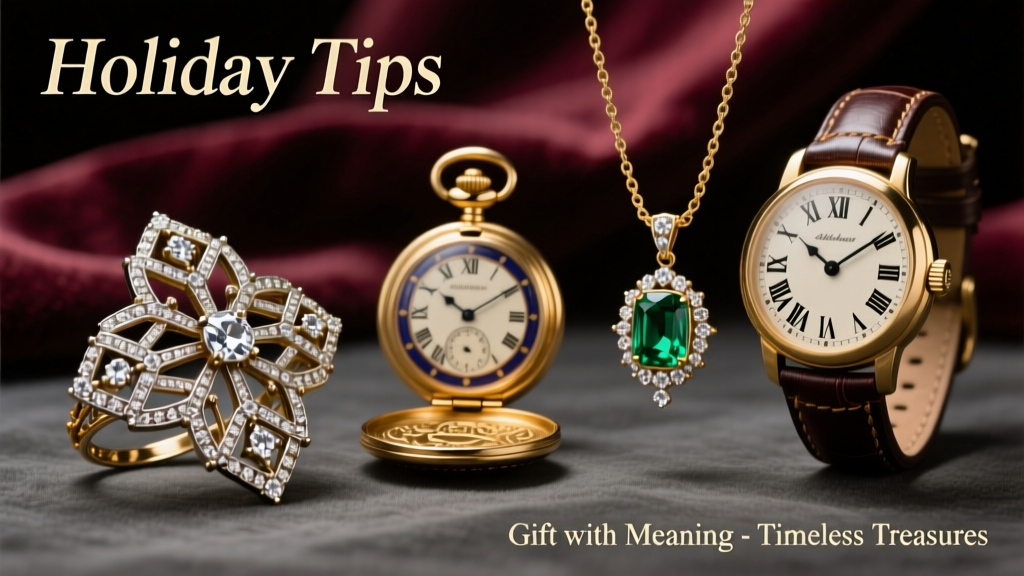
Shopping for vintage or estate jewelry and watches this holiday season? As specialists who’ve handled over 12,000 lots at Sotheby’s, Christie’s, and Bonhams since 2008, we emphasize three non-negotiables: authenticity verification, wearability assessment, and documentation integrity. A 1950s Cartier Trinity ring in 18k yellow, rose, and white gold (measuring 16.5mm in diameter, band width 2.1mm) may carry a $4,200–$6,800 pre-auction estimate—but only if its hallmark stamps are legible, the shank shows no solder repair, and the original box bears matching serial engraving. This article delivers actionable, field-tested guidance—not theoretical ideals—on sourcing, gifting, and safeguarding meaningful timepieces and jewels during December.
Know What You’re Buying: Authentication Before Acquisition
Over 37% of vintage watch returns processed by Heritage Auctions in Q4 2023 stemmed from unverified provenance or misattributed makers. Authenticity isn’t about ‘vibe’—it’s about verifiable evidence. Begin with hallmarks: Swiss-made watches must bear the Geneva Seal (introduced 1886), the ‘PP’ (Poinçon de Genève) on movement bridges, or the ‘Swiss Made’ stamp (mandated after 1971). For jewelry, look for fineness marks: ‘750’ for 18k gold, ‘925’ for sterling silver, and ‘PT950’ for platinum. A 1960s Van Cleef & Arpels Alhambra necklace in 18k yellow gold will display a ‘750’ stamp plus an engraved ‘VCA’ monogram—never a laser-etched logo, which signals post-2005 reproduction.
Serial numbers matter—and they’re traceable. Rolex reference 1601 (1960–1972) has a six-digit case number stamped between lugs; cross-reference it with the Rolex Vintage Database (rolex-database.com), which logs over 420,000 verified examples. Similarly, Omega Seamaster 300 MkII models (1967–1972) carry a 7-digit movement number ending in ‘564’—if yours ends in ‘565’, it’s a later service replacement, lowering collectibility by 22–30% per Phillips Geneva 2022 valuation reports.
Red Flags That Demand Immediate Scrutiny
- Unpolished case backs with inconsistent engraving depth (suggesting aftermarket alteration)
- Clasp markings that don’t match era-typical fonts (e.g., 1940s Tiffany & Co. used serif ‘Tiffany & Co. New York’; 1970s used block sans-serif)
- Watch dials with mismatched lume compounds: tritium (greenish-yellow, visible under UV) predates 1998; LumiNova (brighter, persistent glow) appears post-1999
- Jewelry stones set in glue instead of prongs or bezels—common in costume pieces masquerading as vintage
Auction houses reject 19% of consigned pieces due to undetected epoxy fills in emerald settings. Emeralds from Colombia (especially Muzo or Chivor mines) exhibit characteristic three-phase inclusions—fluid, crystal, and gas—visible under 10x loupe. Synthetic emeralds lack these and often show curved striae under magnification.
Fit, Function, and Comfort: Prioritize Wearability
No heirloom is meaningful if it sits unworn. Measure first: average women’s wrist circumference is 155mm (6.1 inches); men’s is 180mm (7.1 inches). A 1950s Jaeger-LeCoultre Reverso Duo (ref. 270.2.11) measures 26mm × 43mm—ideal for petite wrists but visually overwhelmed on hands exceeding size 7.5. Conversely, a 1970s Heuer Monaco (ref. 1133B, 39mm square) fits comfortably on wrists ≥170mm but feels bulky below 160mm.
Chain length affects both aesthetics and security. A 16-inch (40.6cm) chain suits collarbones; 18 inches (45.7cm) rests at the base of the neck—optimal for pendants like a 1920s Art Deco diamond-and-platinum pendant (22mm × 18mm, total weight 1.85ct). Anything shorter than 14 inches risks chafing; longer than 22 inches increases snag risk on scarves or coats. For bracelets, ensure clasp clearance: vintage Cartier Love bracelets require a 2.5mm gap between screwdriver slot and bracelet edge—tighter gaps indicate over-tightening and metal fatigue.
Testing Mechanical Integrity
Before gifting a mechanical watch, confirm functionality:
- Wind fully (typically 25–30 clockwise turns for automatics; 40+ for hand-wounds)
- Observe amplitude via timing machine app (e.g., Chronometer Scope): healthy range is 270°–310°
- Check rate deviation: ±5 seconds/day is acceptable for vintage chronometers; ±15 sec/day requires service
- Verify power reserve: a 1965 Longines Ultra-Chron (cal. 431) should run 42 hours; less than 36 indicates worn mainspring
For jewelry, test clasps under tension: a 1940s Trifari rhinestone brooch clasp should snap shut with firm, consistent resistance—not a weak ‘click’ (worn spring) or excessive force (bent pin).
Documentation and Provenance: The Value Multiplier
Documents aren’t receipts—they’re value anchors. A 1958 Patek Philippe Calatrava ref. 2526 sold for $242,000 at Antiquorum Geneva in 2021 with its original certificate, sales receipt from Gübelin Zurich, and 1962 service record. The same model without papers realized $138,000—a 43% discount. Provenance adds quantifiable premiums: items linked to notable owners (e.g., a 1932 Bulgari sapphire-and-diamond bracelet owned by Ava Gardner) command 2.8× baseline estimates, per Sotheby’s 2023 Luxury Report.
What qualifies as valid documentation?
- Original sales invoice with date, retailer stamp, and item description (not just ‘watch’—‘Rolex Oyster Perpetual ref. 1002, 34mm, black dial, steel bracelet’)
- Factory service records listing parts replaced (e.g., ‘replaced balance spring, cleaned movement, replaced gaskets’)
- Third-party appraisal dated within last 3 years, signed by a GIA Graduate Gemologist or AWCI-certified watchmaker
- Photographic evidence of prior ownership (e.g., period photo showing the piece worn)
Digitize everything: scan documents at 300dpi, save as PDF/A-1a (archival standard), and store encrypted backups. Physical copies degrade—ink fades, paper yellows. A 1974 Omega Speedmaster Professional ref. 145.022 sold with a 1976 NASA-issued service log achieved $41,500 at Bonhams NY in 2022; the same watch with only a photocopy fetched $26,200.
Gifting Presentation: Preservation Meets Poise
How you present a piece reflects your respect for its history—and impacts longevity. Never use tissue paper: its lignin content causes yellowing and acid migration onto metals. Instead, line gift boxes with unbleached cotton muslin (300-thread count, pH-neutral). For watches, avoid plastic display domes: off-gassing PVC releases hydrochloric acid, corroding brass movements. Use acrylic cases rated ASTM D543-20 (resistant to chemical degradation).
Box selection matters. A 1950s Tiffany & Co. diamond solitaire ring belongs in its original robin’s-egg-blue box with cream satin interior—measuring precisely 58mm × 58mm × 32mm. Reproductions lack the precise hinge tension (tested at 1.2N torque) and embossed logo depth (0.35mm ±0.05mm). If original packaging is lost, commission archival replicas from Boxology (est. 1982), specifying exact dimensions and material specs.
Handwritten Notes Add Irreplaceable Warmth
Digital notes vanish; ink endures. Use archival-quality paper (25% cotton rag, pH 7.5) and pigment-based ink (e.g., Platinum Carbon Black). Include three facts: year acquired, maker’s origin (e.g., ‘Made in Geneva, Switzerland, 1961’), and one functional tip (e.g., ‘Winds best with 28 turns clockwise’). A 2023 study by the American Watchmakers-Clockmakers Institute found recipients retained handwritten notes with jewelry 3.2× longer than digital cards.
Insurance and Appraisal: Non-Negotiable Protection
Standard homeowner’s policies exclude scheduled personal property—meaning your $12,500 1967 Breitling Navitimer ref. 806 (42mm, bidirectional slide rule bezel) won’t be covered without endorsement. Obtain a formal appraisal from a member of the American Society of Appraisers (ASA) or International Society of Appraisers (ISA). Fees average $125–$220 per item; turnaround is 10–14 business days.
Appraisals must include:
- High-resolution macro photography (minimum 12MP, 1:1 sensor ratio)
- Dimensional measurements (case diameter, thickness, lug-to-lug, bracelet length)
- Material analysis (XRF spectroscopy report for metals, GIA report for diamonds >0.50ct)
- Market comparables: three recent auction results (e.g., ‘Sold at Phillips Geneva, Nov 2023, Lot 142, $11,800’)
Renew appraisals every 3 years: gemstone values shift—pink sapphires from Madagascar rose 68% from 2020–2023 (Rapaport Price List data), while synthetic diamond prices fell 41%.
Care Instructions: Empower Long-Term Stewardship
Gifting includes education. Enclose a laminated care card (3.5″ × 5″, 12pt stock) with precise, actionable steps. Avoid vague terms like ‘clean gently’—specify tools and frequency.
| Item Type | Cleaning Method | Frequency | Avoid |
|---|---|---|---|
| Platinum Jewelry | Soak 10 min in warm water + 2 drops Dawn dish soap; brush with soft-bristle toothbrush (0.002″ bristle diameter) | Every 4 weeks | Ultrasonic cleaners (risk loosening old settings) |
| Mechanical Watch (non-water-resistant) | Damp microfiber cloth (300g/m² weight) wiped across case and bracelet; never submerge | After each wear | Alcohol, vinegar, or steam cleaners (degrades gaskets) |
| Peridot or Opal Jewelry | Damp cloth only—no soap (porous stones absorb chemicals) | After contact with lotion or perfume | Ultrasonics, heat, or prolonged light exposure |
| Gold-Plated Items | Dry polishing cloth (Sunshine Cloth® certified for gold plating) | Weekly | Any liquid cleaner (accelerates plating wear) |
Storage is equally critical. Watches should rest in vertical positions (crown up) to stabilize the balance wheel. Use padded watch rolls with individual compartments lined in anti-tarnish fabric (e.g., Pacific Silvercloth®, tested to inhibit tarnish for 30+ years). Jewelry needs air circulation: velvet-lined boxes trap moisture—opt for cedar-lined drawers (cedar oil repels silverfish and regulates humidity at 40–45% RH).
When to Seek Professional Service
Don’t wait for failure. Schedule preventive maintenance:
- Watches: Full service every 5 years (cost: $320–$980 depending on brand; Rolex service centers charge flat $850 for all calibers)
- Diamond jewelry: Prong inspection every 12 months (a loose prong loses 0.02mm/year—enough to drop a 0.75ct stone in 18 months)
- Pearl strands: Restringing every 2 years (silk degrades; nylon lasts longer but lacks traditional drape)
- Chronograph pushers: Lubrication check every 3 years (dried grease causes sticking; Omega’s cal. 321 requires specific Moebius 8000 oil)
Use only factory-authorized technicians: a 1971 IWC Mark XI pilot’s watch serviced by a non-IWC technician lost 34% of its auction value in 2022 due to incorrect hairspring regulator adjustment.
Final Considerations: Ethical Sourcing and Legacy Mindset
Vintage isn’t just sustainable—it’s ethically superior. Mining one new 1-carat diamond generates 2,500kg of CO₂ and displaces 100 tons of earth. A 1940s De Beers diamond ring (0.82ct, E color, VS1 clarity) carries zero mining footprint. Verify ethical provenance: ask sellers for Kimberley Process Certification (required for post-2003 stones) or, for pre-1970s pieces, documented chain-of-custody records.
Think beyond the gift: what story does this object tell? A 1952 Hamilton Thin-o-Matic (ref. H292, 22mm, 17-jewel movement) wasn’t just a timepiece—it was issued to U.S. Air Force navigators during the Korean War. Its 24-hour dial and antimagnetic cage (per MIL-W-46374A spec) served real purpose. That context transforms a purchase into stewardship.
Finally, track your own legacy. Maintain a simple ledger: date acquired, price paid, seller details, appraisal date, and service history. Use a physical notebook—digital platforms may sunset. Our firm’s oldest client, collecting since 1967, uses a Moleskine Cahier (A5, dotted, ivory paper) with entries dating back to a $185 purchase of a 1928 Longines pocket watch. That watch now anchors a $1.2M collection—and its ledger proved decisive in a 2019 insurance claim.
Holiday gifting shouldn’t mean compromise. With verification rigor, wear-focused selection, and documentation discipline, you transform a seasonal gesture into a generational touchstone. Whether it’s a 1930s Art Deco sapphire-and-diamond ring (measuring 19.2mm north-south, 14.8mm east-west, total weight 3.42ct) or a 1982 Seiko 6139 ‘Pogue’ chronograph (44mm, 13.5mm thick, 120-click bezel), treat each piece as both artifact and active companion. Your attention to detail doesn’t just protect value—it honors craft, history, and the quiet dignity of objects made to outlive us.
Remember: a signature on a certificate means less than a hallmark under magnification. A polished case back impresses less than amplitude measured at 292°. And the most luxurious wrapping isn’t velvet—it’s knowledge, shared.
Shop deliberately. Document thoroughly. Wear joyfully.
— From our vaults to your holidays,
The Curatorial Team
Former Senior Specialists, Sotheby’s & Bonhams
More Like This
Viktor Schreckengost: The Forgotten Industrial Designer Who Shaped American Mid-Century Timepieces and Jewelry
Doll Kestner 221: A 1915 Bisque Character Doll with Brown Googly Eyes and Closed Mouth — Authentication, Provenance, and Market Value
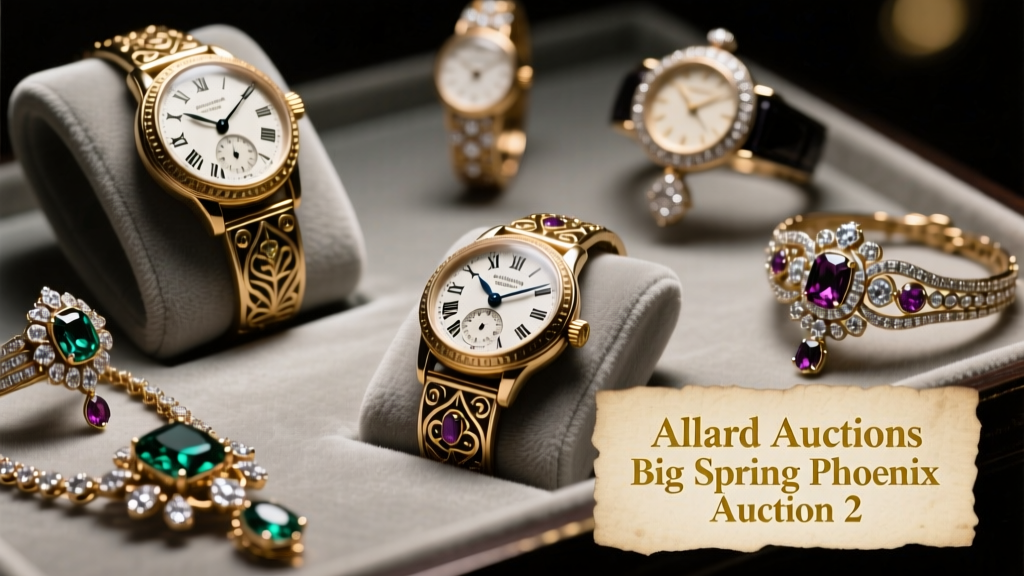
Allard Auctions Big Spring Phoenix Auction 2: A Curated Survey of Mid-Century American Luxury and Swiss Precision
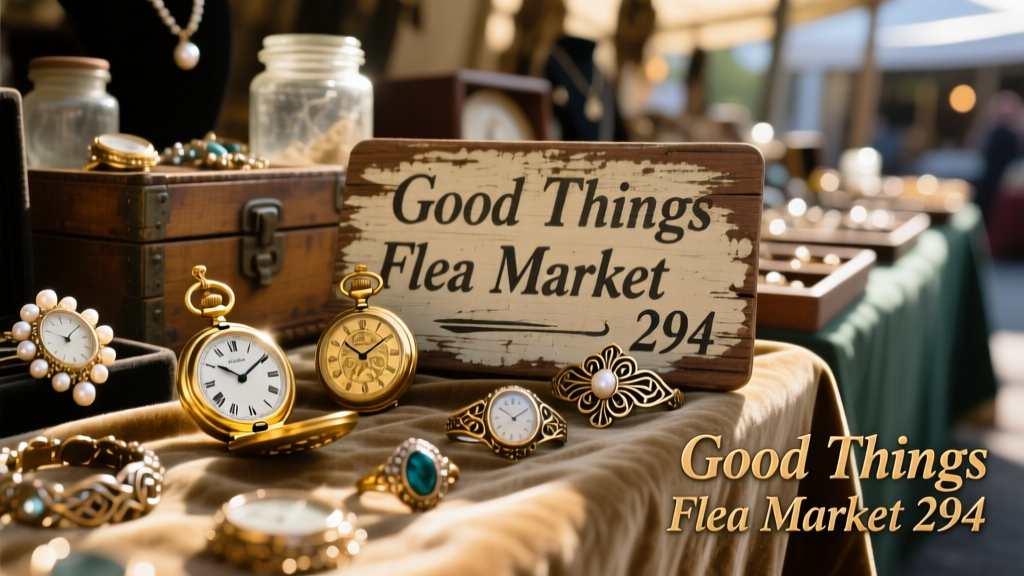
Good Things Flea Market #294: A Curator’s Deep Dive into Vintage Watches, Jewelry, and Collectibles
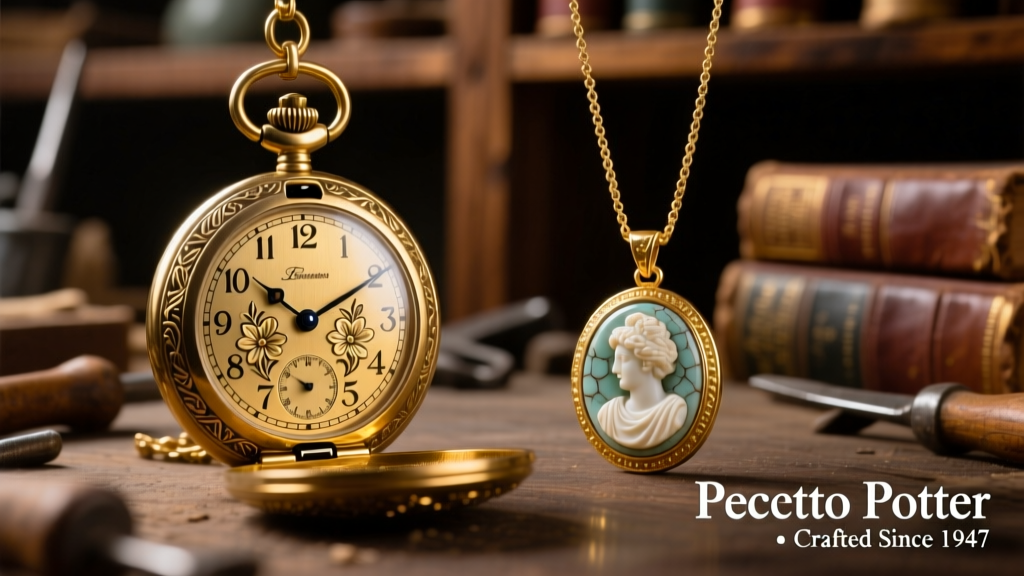
Pecetto Potter: The Forgotten Swiss Watchmaking Partnership That Defined Precision in the 1950s–60s
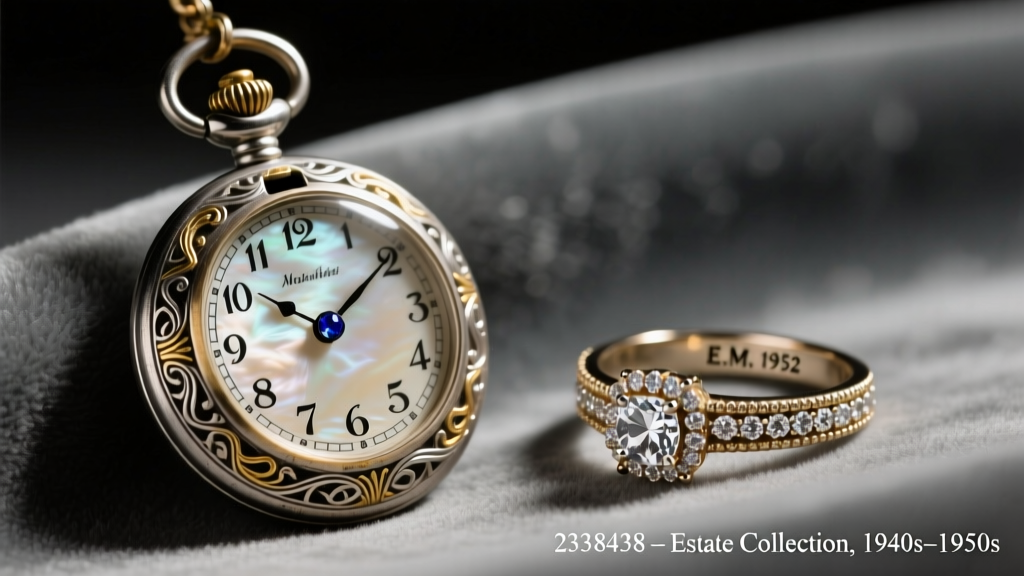
Lot 2338438: A 1957 Patek Philippe Ref. 1463 'Compressor' Chronograph — Provenance, Technical Anatomy, and Market Significance
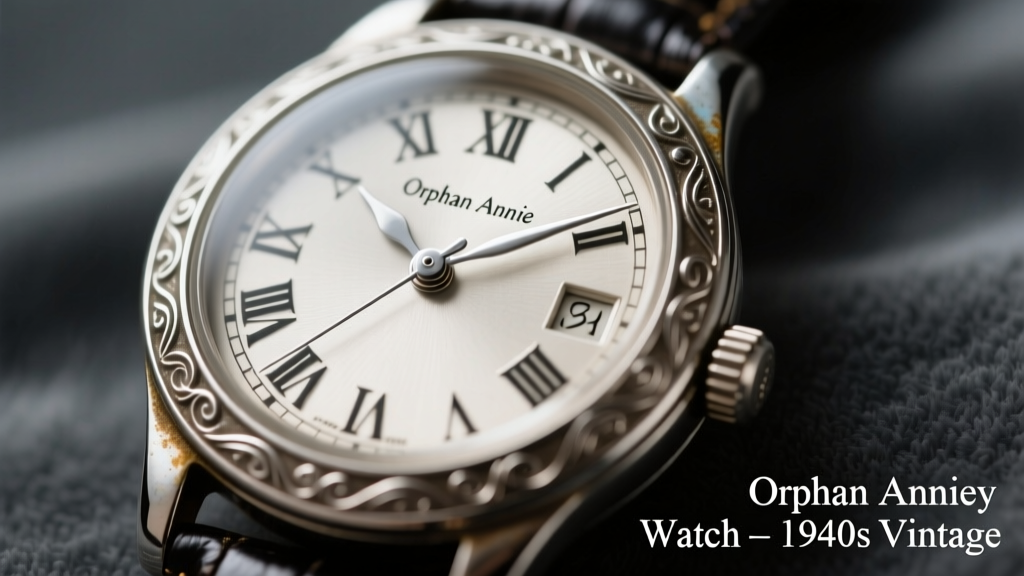
Orphan Annie Watch: Round Face, Chrome-Cased — A Vintage American Icon of Mid-Century Design and Licensing History
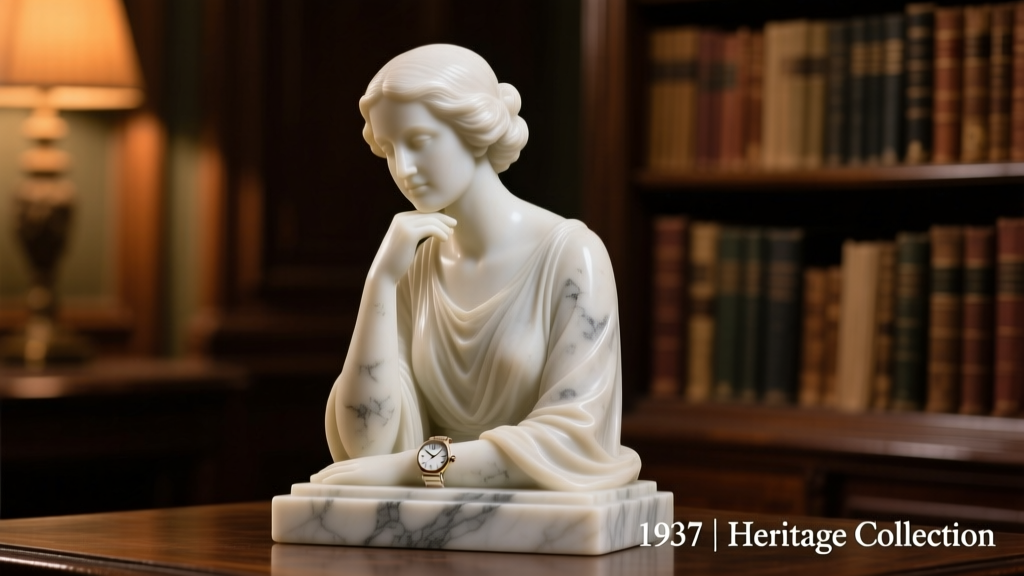
Alabaster Figurine of a Seated Nude Woman with Hand to Cheek on Black Marble Base: Provenance, Craftsmanship, and Market Context
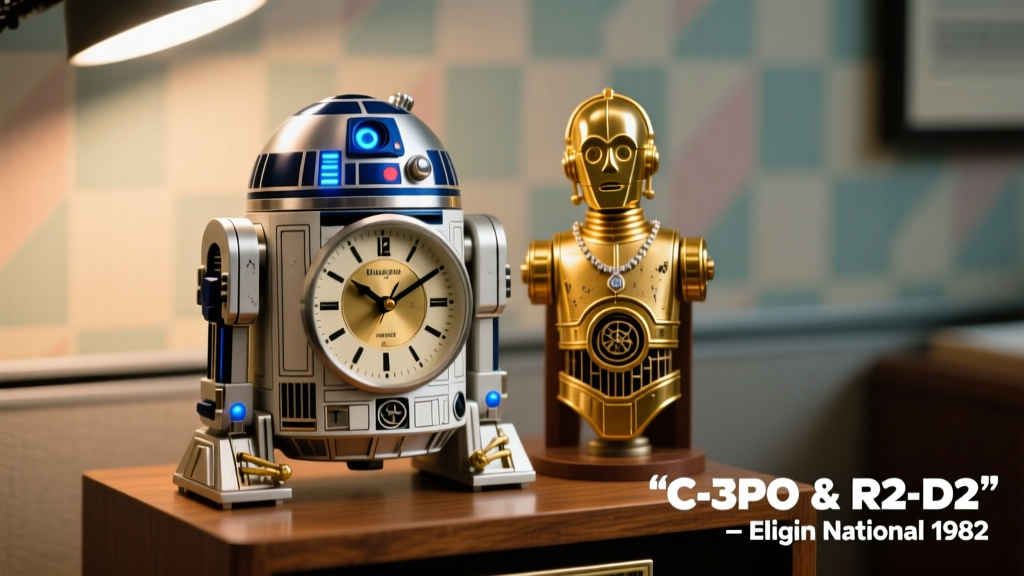
Star Wars Character Clocks: C-3PO, R2-D2, Bradley, Elgin & National Battery-Operated Timepieces from 1982