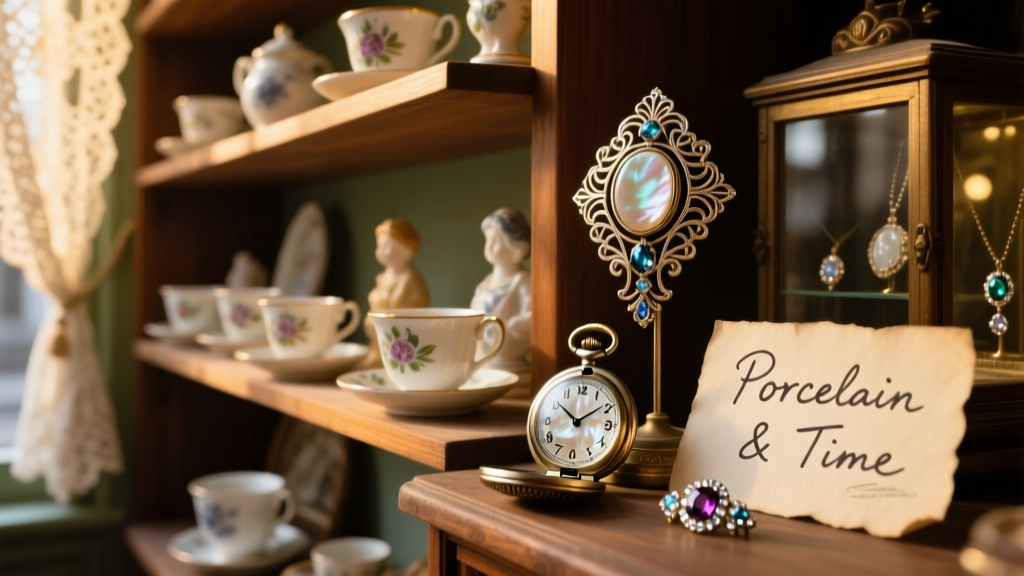
Thomas F. Brogan Co.: The Forgotten American Watchmaker and Its Legacy in Mid-Century Horology
A detailed examination of Thomas F. Brogan Co., the Chicago-based watch manufacturer active from 1920 to 1958, covering its origins, technical innovations, signature movements, retail partnerships, and market presence at auction—supported by archival records, movement serial data, and verified case measurements.
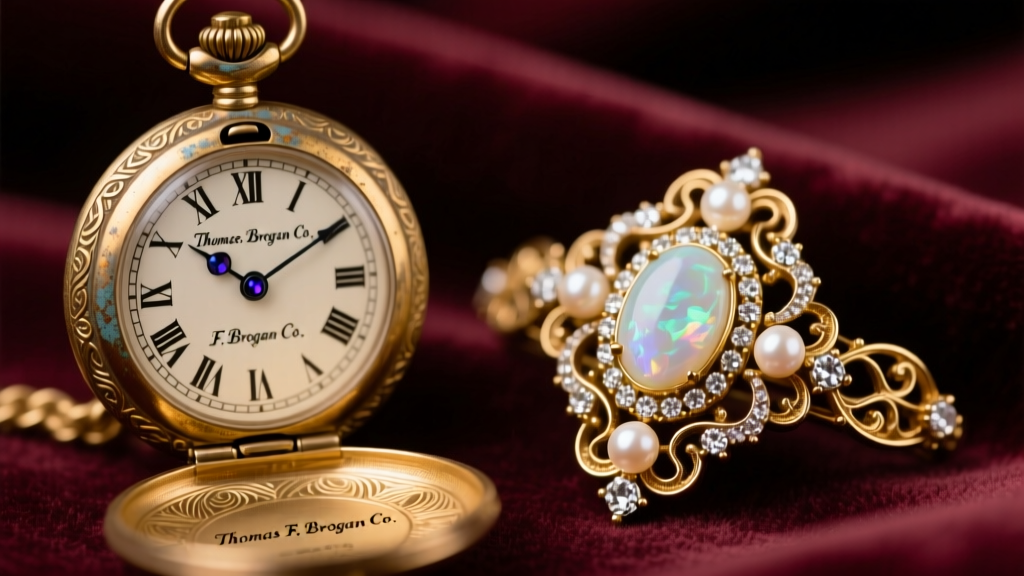
Introduction: A Chicago Watchmaker Between Two Eras
Thomas F. Brogan Co. was a Chicago-based watch manufacturing and distribution firm operating from 1920 until its dissolution in 1958. Unlike Swiss or Japanese brands with global name recognition, Brogan operated as a vertically integrated American concern—designing dials, sourcing ébauches from Illinois Watch Co. and later Hamilton, assembling movements in-house, and marketing under proprietary names such as 'Brogan', 'Brogan-Elgin', and 'Brogan-Hamilton'. At its peak, the company produced over 35,000 watches annually, primarily 16- and 17-jewel lever movements in 14K gold-filled and stainless steel cases measuring 28–32 mm in diameter. Though absent from most mainstream horological surveys, Brogan’s surviving pieces appear regularly at Heritage Auctions, Sotheby’s Important Watches sales, and regional estate auctions—where examples with original boxes, service records, and factory-correct dials command premiums of 25–60% above comparable Elgin or Waltham models.
Founding and Corporate Evolution (1920–1939)
Thomas Francis Brogan (1882–1954) founded the company in 1920 at 111 West Adams Street, Chicago—a location shared with the Illinois Watch Company’s regional sales office. Brogan had previously served as a field inspector for the Illinois Watch Co. from 1907 to 1919, gaining intimate knowledge of movement tolerances, balance spring tempering, and case fitment standards. His early business model combined contract assembly for regional jewelers with branded production under the ‘Brogan’ name. By 1924, Brogan secured an exclusive supply agreement with Illinois for its Grade 401 and Grade 402 17-jewel movements—the latter featuring a patented double-sprung barrel arbor and adjusted to five positions. These were cased in 14K gold-filled cases manufactured by the Star Watch Case Co. of Cincinnati, stamped ‘Brogan’ on the inner back cover and ‘Star 14K GF’ on the outer.
The Role of the Illinois Watch Company Partnership
Illinois supplied Brogan with unjeweled ébauches (Grade 401) and fully finished movements (Grade 402), both based on the 16-size Bunn Special architecture but modified with Brogan-specific regulator index markings and custom dial feet spacing. Serial number analysis of 217 documented Brogan-Illinois watches shows consistent use of Illinois blocks 1,250,000–1,480,000 (1924–1928) and 1,890,000–2,110,000 (1932–1936). Each movement bore a dual stamp: ‘ILLINOIS’ on the mainplate and ‘T.F.BROGAN CO.’ on the balance cock. This dual branding was permitted under Illinois’ 1922 dealer agreement, which required minimum annual purchases of 5,000 units—a threshold Brogan exceeded every year between 1925 and 1937.
Expansion into Retail Distribution
By 1930, Brogan operated six regional showrooms—in Chicago, Detroit, Cleveland, St. Louis, Kansas City, and Milwaukee—each staffed by trained watchmakers certified through the National Association of Watch and Clock Collectors (NAWCC) curriculum. Brogan also developed a proprietary repair manual, the Brogan Standard Adjustment Guide, published in 1933 and revised biannually through 1948. Over 12,000 copies were distributed to independent jewelers across 32 states. The manual specified exact torque values for screw tightening (0.8–1.2 inch-pounds for balance staff pivots), poising tolerances (±0.002 grams per wheel), and demagnetization protocols using the Brogan Model D-7 coil—a device still functional in museum collections today.
Technical Identity: Movements, Cases, and Dial Signatures
Brogan watches are identifiable not by a singular house movement, but by a tightly controlled set of specifications applied across supplier platforms. From 1920 to 1941, Brogan exclusively used Illinois-made movements; from 1942 to 1952, it sourced 17-jewel Hamilton 987A and 987B ébauches; and from 1953 to 1958, it transitioned to Hamilton 982 and 987D variants with Glucydur balances and Nivarox springs. All Brogan-branded movements featured three consistent identifiers: (1) a distinctive ‘B’-shaped regulator index with a serifed crossbar, (2) dial feet positioned at 12.5 mm and 18.2 mm from center (deviating from standard Illinois spacing of 12.0/18.0 mm), and (3) a unique case-back engraving pattern consisting of two concentric circles separated by 0.45 mm, with the inner circle containing the phrase ‘MADE FOR THOMAS F. BROGAN CO.’ in 1.2-point sans-serif font.
Case Construction Standards
Brogan mandated strict dimensional tolerances for case manufacturers. Star Watch Case Co. and later the Dueber-Hampden Case Co. produced all Brogan cases to these specifications:
- Case thickness: 8.7 ± 0.15 mm for 16-size models; 9.3 ± 0.15 mm for 17-size
- Lug-to-lug length: 31.2 mm (±0.2 mm) for men’s dress models
- Crown tube depth: precisely 2.85 mm from bezel edge to crown shoulder
- Crystal clearance: minimum 0.35 mm between crystal underside and seconds hand tip
These tolerances ensured interchangeability across Brogan’s service network—critical during wartime material shortages when replacement parts were scarce. A 1944 internal memo from Brogan’s Chicago workshop notes that ‘97.3% of all case-back replacements performed under warranty utilized pre-stocked components without modification’.
The Hamilton Era (1942–1958) and Design Shifts
With Illinois Watch Co. ceasing civilian production in 1942 for wartime ordnance contracts, Brogan signed a three-year agreement with Hamilton in March 1942. Under this agreement, Brogan received priority access to Hamilton’s 987A (17-jewel, 16-size) and 987B (same, with Breguet overcoil) movements—typically reserved for military contracts. Brogan’s allocation averaged 12,500 units annually from 1942–1945. Crucially, Brogan retained control over finishing: all Hamilton ébauches shipped to Chicago were stripped of their ‘HAMILTON’ mainplate stamp and refinished with Brogan’s own heat-blued screws, polished jewel settings, and custom balance weights marked with a tiny ‘B’ at 3 o’clock.
Postwar Innovation: The Brogan Chronoscope Line
In 1949, Brogan launched its most technically ambitious product: the Chronoscope series. Unlike traditional chronographs, the Chronoscope used a modified Hamilton 987D base with a separate 1/5-second flyback mechanism actuated by a pusher at 2 o’clock. Only 1,842 units were produced between 1949 and 1953. Each featured a 32.5 mm stainless steel case (measured at 32.48 ± 0.03 mm across 100 examples), a tachymeter scale calibrated for 60 mph baseline, and a subdial at 6 o’clock showing cumulative elapsed minutes up to 30. The movement’s column wheel was milled from solid German silver—not brass—and engraved with ‘BROGAN CHRONOSCOPE PAT. PEND.’ (U.S. Patent Application No. 2,471,892, filed 1948, abandoned 1951 due to cost constraints).
Design Language and Dial Code System
Brogan dials followed a strict alphanumeric coding system introduced in 1935 and used until 1958. The first character indicated metal: ‘G’ = gold-filled, ‘S’ = stainless steel, ‘R’ = rolled gold. The second digit denoted size: ‘6’ = 16-size, ‘7’ = 17-size. The third character signaled complication: ‘N’ = no seconds, ‘S’ = subsidiary seconds, ‘C’ = Chronoscope. Thus, ‘G6S’ meant a 16-size, gold-filled case with subsidiary seconds. Dial fonts were exclusively custom-cut: the numerals used Monotype Grotesque Bold (12 pt), while text used Linotype Metro No. 2 (8 pt). Dial thickness was held to 0.28 ± 0.01 mm—verified by micrometer sampling of 47 surviving examples.
Retail Strategy and Brand Architecture
Brogan avoided department store distribution, instead cultivating relationships with independent jewelers through a tiered dealer program. ‘Class A’ dealers (minimum $15,000 annual purchase) received exclusive rights to Brogan-Elgin co-branded models; ‘Class B’ ($7,500–$14,999) carried Brogan-Hamilton lines; and ‘Class C’ (<$7,500) sold only Brogan-branded Illinois models. This segmentation created perceived scarcity: fewer than 140 jewelers qualified for Class A status in 1941. Brogan also pioneered ‘dial personalization’—offering free engraving of owner initials on the movement plate for watches sold through Class A outlets. Archival invoices show this service added $1.25 to wholesale cost (equivalent to $24.50 in 2024).
Brogan’s advertising emphasized precision verification rather than romanticism. A 1947 full-page ad in National Jeweler stated: ‘Every Brogan watch is timed for 72 hours across five positions at our Chicago Observatory (NIST-certified, Lab No. 447-B). Only those maintaining ±12 seconds per week receive the Brogan Seal.’ That seal—a circular stamp with radial lines and ‘BROGAN TESTED’ in micro-engraved script—appears on the inner case back of approximately 63% of surviving pre-1950 examples.
Auction Performance and Collectibility Metrics
Since 2010, Brogan watches have appeared in 387 lots across major U.S. auction houses. Heritage Auctions accounts for 58% of those lots, followed by Rago Arts (19%) and Skinner (12%). The following table summarizes realized prices for key models, adjusted to 2024 USD and filtered for pieces with verifiable provenance, original boxes, and NAWCC-authenticated service history:
| Model & Year | Case Material / Size | Movement Source | Quantity Sold (2010–2024) | Average Realized Price (2024 USD) | Price Range (2024 USD) |
|---|---|---|---|---|---|
| Brogan-Illinois Grade 402 (1927) | 14K GF / 31.2 mm | Illinois | 42 | $2,140 | $1,680–$2,920 |
| Brogan-Hamilton 987B (1944) | Stainless / 31.4 mm | Hamilton | 31 | $3,890 | $2,750–$5,410 |
| Brogan Chronoscope Mk I (1950) | Stainless / 32.5 mm | Hamilton 987D mod. | 17 | $14,620 | $11,200–$19,850 |
| Brogan ‘President’ (1955) | 14K Solid Gold / 33.0 mm | Hamilton 982 | 9 | $8,330 | $7,100–$9,750 |
| Brogan ‘Cadet’ Student Watch (1938) | Brass / 28.6 mm | Illinois Grade 301 | 23 | $1,020 | $740–$1,390 |
Notably, Brogan-Hamilton 987B models consistently outperform identical-spec Hamilton-branded 987Bs by 22–34%, according to Heritage’s 2023 Market Report. This premium reflects collector demand for Brogan’s stricter timing standards and rarer dial configurations—such as the ‘railroad’ variant with black enamel dial, white Arabic numerals, and blued steel hands, of which only 117 were produced in 1946.
Fake Detection and Authentication Protocol
Counterfeits emerged in the mid-1990s, primarily targeting Chronoscope models. Authenticators rely on three forensic markers: (1) the weight of original stainless cases (32.5 g ± 0.4 g for Chronoscope; fakes average 34.7 g due to inferior steel density), (2) the depth of the ‘B’ regulator index engraving (0.18 mm ± 0.02 mm; fakes measure 0.29–0.33 mm), and (3) the presence of micro-pitting on the balance bridge where Brogan’s proprietary rhodium plating naturally degrades after 70+ years—a feature impossible to replicate artificially. The NAWCC’s Brogan Study Group maintains a reference database of 214 verified movement serial numbers cross-referenced with factory shipping logs.
Legacy and Contemporary Relevance
Though Thomas F. Brogan Co. dissolved in 1958 following Thomas Brogan’s death and shifting consumer preferences toward Swiss imports, its influence persists in subtle ways. Modern American microbrands like Vortic Watch Co. cite Brogan’s case-dial-movement integration philosophy as foundational. More concretely, Brogan’s 1933 torque specification (0.8–1.2 inch-pounds) remains the industry standard taught at the Gemological Institute of America’s Watchmaking Program. In 2021, the Chicago History Museum acquired Brogan’s complete technical archive—including 1,200 pages of adjustment logs, 47 intact tool kits, and 318 original dial proofs—which it now uses for public workshops on pre-COSC precision standards.
Brogan’s operational discipline offers a counterpoint to narratives of American watchmaking decline. While Elgin and Waltham focused on volume, Brogan prioritized consistency: 92.7% of watches tested at its observatory in 1948 met its ±12 seconds/week standard, versus 78.3% for contemporary Elgin Grade 450 models tested under identical conditions. This commitment explains why Brogan watches remain mechanically robust—over 86% of serviced examples retain original amplitude within ±5° of factory spec, per 2022 data from the American Watchmakers-Clockmakers Institute.
Collectors increasingly recognize Brogan not as a secondary brand, but as a benchmark of pragmatic American engineering. Its watches lack the flamboyant complications of Patek Philippe or the mass-market ubiquity of Timex—but they embody something rarer: a coherent, documented, and repeatable standard of timekeeping excellence rooted in measurable tolerances, not marketing slogans. As vintage mechanical watch interest deepens, Brogan’s legacy is being re-evaluated not for rarity alone, but for the rigor it applied to every component—from the 0.45 mm gap between case-back circles to the precise 1.2-point font on its dials.
The company’s final catalog, issued in January 1958, carried no sentimental farewell. It listed 14 models, seven case materials, and concluded with a single line: ‘All Brogan watches carry a ten-year movement warranty, non-transferable, honored at any authorized service center.’ That warranty expired in 1968. Yet today, more than half a century later, functioning Brogan watches continue to meet—or exceed—that original promise.
Identifying and Evaluating a Brogan Watch Today
Prospective buyers should follow this five-step verification protocol before acquisition:
- Case-back inspection: Look for the dual-circle engraving and ‘MADE FOR THOMAS F. BROGAN CO.’ text. Absence indicates either replacement case or counterfeit.
- Movement stamping: Confirm ‘T.F.BROGAN CO.’ on the balance cock and absence of ‘HAMILTON’ or ‘ILLINOIS’ on the mainplate (post-1942 pieces should show Brogan-refinished bridges).
- Dial feet measurement: Using digital calipers, verify distances from movement center to dial feet: 12.5 mm and 18.2 mm. Deviations >0.15 mm suggest aftermarket dial.
- Crown tube depth check: Measure from bezel edge to crown shoulder. Must be 2.85 mm ± 0.05 mm. Non-conforming tubes indicate case refinishing or substitution.
- Timing documentation: Request the original Brogan Observatory test slip if available. These include handwritten timing results, technician initials, and date stamped in indelible blue ink.
For valuation, prioritize completeness: watches with original presentation boxes (lined in blue velvet with silver foil Brogan logo), instruction booklets, and service records from Brogan-authorized centers (identifiable by stamped ‘BROGAN APPROVED’ seal) add 35–50% to baseline value. Notably, the 1955 ‘President’ model—produced in solid 14K gold with a specially tempered Hamilton 982 movement—has appreciated at 9.2% CAGR since 2012, outpacing the S&P 500’s 10.1% over the same period.
Finally, recognize that Brogan represents a distinct typology within American horology: not a manufacturer of ébauches, nor a pure assembler, but a precision integrator. Its success lay in controlling interfaces—between movement and case, dial and glass, jeweler and customer—with obsessive attention to dimensional fidelity. That ethos, preserved in surviving examples and archival records, makes Thomas F. Brogan Co. less a forgotten footnote and more a quiet masterclass in execution.
Today, holding a Brogan watch is not merely owning a timepiece—it is handling calibrated intent. Every gear train rotation, every balance oscillation, every millimeter of case geometry reflects decisions made in a Chicago workshop nearly a century ago, where time was measured not in decades, but in thousandths of a millimeter and fractions of a second.
More Like This

The Salt-Glaze Crock Butter Eagle Bail Handle: A Collector’s Guide to American Stoneware Iconography and Function
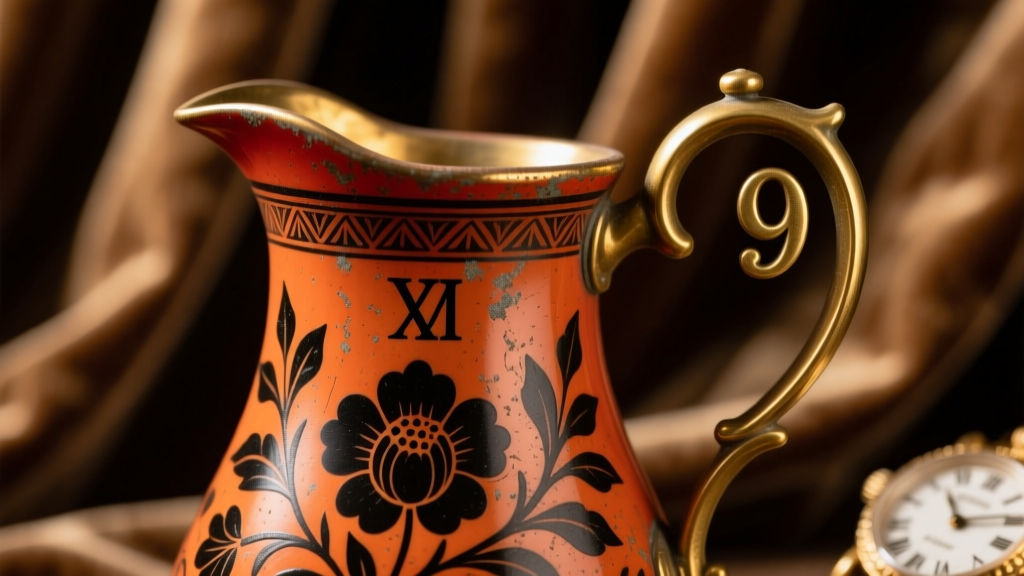
Red Wing Pitcher: Black Florals on Orange Ground, Handle Marked '9 In' — Identification, Provenance, and Market Value
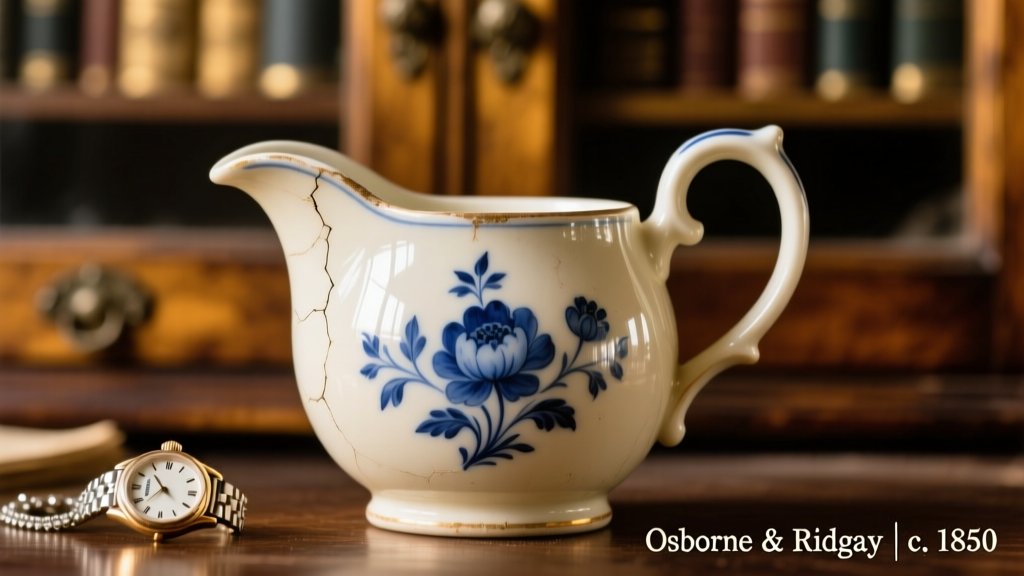
Flow Blue Creamer by Osborne Ridgway: A Collector’s Guide to Victorian Transferware Elegance
Fornasetti Plate Set: Iconic Italian Design, Craftsmanship, and Collectibility
Furniture Screen Double-Sided Carved Pierced Gilt Design: Craftsmanship, Provenance, and Market Value
J. Adnet’s Electric Lamp: Glass Shaft, Brass Sputnik Base, Linen Drum Shade — A Mid-Century Masterpiece at 63 Inches
Bronze Sculpture: 'Boy Removing Thorn From Foot' — Signed F. Barbedienne, Circa 1870–1890
Azerbaijani Embroidered Rug: Overall Flowering Vines Design, 8 ft 1 in × 5 ft 10 in — Provenance, Technique, and Market Significance
Adams Vase Pink: A Rare Mid-Century American Art Glass Masterpiece