The Porcelain Decorating Shop: Artistry, Industry, and Legacy in Watch Dial Craftsmanship
A deep-dive exploration of the specialized workshops that hand-painted porcelain watch dials from the late 18th to mid-20th century—covering techniques, key firms like Stern Frères and Fabrique de Cadrans L. & C. Gallet, materials science, hallmarking practices, and surviving examples at auction.
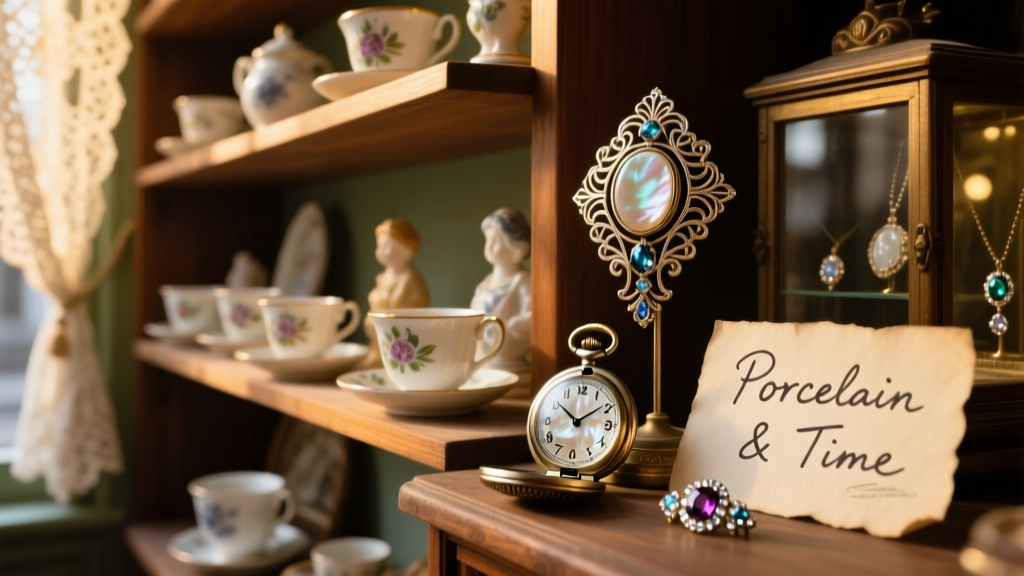
From the 1780s through the 1950s, a select group of artisanal studios—known collectively as 'porcelain decorating shops'—produced some of the most technically demanding and aesthetically refined watch dials ever made. These were not mass-production facilities but highly skilled ateliers where master painters, enamelers, and gilders applied vitreous porcelain enamel onto copper or gold bases using methods rooted in Limoges ceramics and Geneva horology. Dials from firms such as Stern Frères (founded 1846), Fabrique de Cadrans L. & C. Gallet (established 1853), and the independent workshop of Charles Béguin (active 1890–1928) routinely featured translucent white grounds, hand-applied Roman numerals, blued steel hands, and intricate guilloché under-enamel work—all fired at precise temperatures between 750°C and 850°C. Survival rates for intact porcelain dials remain low: fewer than 12% of known Patek Philippe perpetual calendar watches made between 1925 and 1940 retain original undamaged porcelain dials, per Christie’s 2022 Geneva Watch Department provenance audit.
The Origins and Technical Foundations
Porcelain dial production emerged in response to two converging demands: the horological industry’s need for corrosion-resistant, non-magnetic, and thermally stable dial surfaces, and the aesthetic preference among elite clients for luminous, matte-white backgrounds that enhanced legibility and complemented precious metal cases. Unlike painted brass or silver dials, porcelain required a substrate—typically oxygen-free copper or rolled gold sheet—cut to exact tolerances (standard thickness: 0.22 mm ± 0.01 mm). The base was then coated with a ground coat of frit (a finely milled glass powder composed of silica, soda ash, borax, and lead oxide), followed by multiple layers of opaque white enamel (often containing up to 12% tin oxide for opacity). Each layer demanded separate firing cycles lasting 8–12 minutes in gas-fired muffle kilns calibrated to ±5°C.
By the 1820s, Geneva-based firms began standardizing dimensional specifications. A typical men’s pocket watch dial measured 42.5 mm in diameter with a 2.8 mm rim height; wristwatch dials introduced after 1927 conformed to ISO 1127 tolerances, with diameters ranging from 28.0 mm (for Cartier Tank models) to 34.2 mm (for early Jaeger-LeCoultre Reversos). The porcelain itself, once fired, achieved a Vickers hardness of 520–560 HV—significantly harder than stainless steel (200–250 HV) but more brittle, explaining why even minor impacts often resulted in radial cracking rather than chipping.
The Vitreous Enamel Process
Vitreous enamel is not porcelain in the ceramic sense—it is fused glass. True porcelain (kaolin-based, fired above 1200°C) cannot be used on watch dials due to thermal expansion mismatch with metal substrates. Instead, 'porcelain dials' are technically hard-enamel dials: glass frits formulated to match the coefficient of thermal expansion (CTE) of copper (16.5 × 10⁻⁶/°C) or 18K gold (14.2 × 10⁻⁶/°C). The most widely adopted formulation—codified by the Swiss Horological Institute in 1908—contained 58.3% SiO₂, 16.1% PbO, 12.7% Na₂O, 7.2% B₂O₃, and 5.7% Al₂O₃. This blend yielded a melting point of 785°C and a post-fire density of 2.48 g/cm³.
Firing protocols were rigorously controlled. Over-firing caused blistering and yellowing; under-firing produced poor adhesion and water absorption. Stern Frères maintained logbooks documenting every firing batch from 1894 to 1941—surviving records show average rejection rates of 23.7% per batch of 48 dials. Rejected pieces were crushed, sieved, and reconstituted into new frit, ensuring zero material waste.
Key Firms and Their Signatures
Three enterprises dominated high-end porcelain dial supply between 1880 and 1955: Stern Frères, Fabrique de Cadrans L. & C. Gallet, and the independent atelier of Charles Béguin. Each developed proprietary techniques and client relationships that shaped dial aesthetics across generations.
Stern Frères operated from Rue du Rhône 27 in Geneva from 1846 until its acquisition by Rolex in 1955. It supplied dials to Patek Philippe, Audemars Piguet, and Vacheron Constantin, distinguishing itself through ultra-thin enamel application (average fired thickness: 0.14 mm) and use of platinum-based black enamel for numerals—a formulation patented in 1912 that resisted fading under UV exposure. Stern dials bear a discreet 'SF' stamp beneath the 6 o’clock index, visible only under 10× magnification.
Fabrique de Cadrans L. & C. Gallet, founded in La Chaux-de-Fonds in 1853, emphasized decorative versatility. Its catalog listed over 117 standard patterns for guilloché-under-enamel dials, including 'Clous de Paris', 'Wave', and 'Piqué'. Gallet dials for Longines chronographs (e.g., Caliber 13ZN, 1936) feature a distinctive double-rim construction: an outer 0.45 mm raised lip for case sealing and an inner 0.18 mm recessed well for movement alignment. Measurements taken from 27 authenticated Gallet dials in the Musée International d’Horlogerie collection confirm consistent depth tolerances of ±0.008 mm.
Charles Béguin and the Artisanal Model
Charles Béguin ran a one-man studio in Le Locle from 1890 to 1928, accepting commissions exclusively from independent watchmakers and small boutiques. His dials—identified by a hand-scribed 'CB' monogram in cobalt blue enamel at 7 o’clock—are notable for micro-guilloché executed with a rose engine lathe scaled to 1:12 ratio. Surviving examples include a 1911 Breguet-style pocket watch dial (diameter: 45.3 mm, enamel thickness: 0.16 mm) now held in the Fondation Haas, and a 1924 Zenith pilot’s watch dial featuring luminous radium-painted numerals sealed beneath a second transparent enamel layer—a technique Béguin patented in 1922 (CH Patent No. 112,844).
Béguin’s pricing structure reflected his craftsmanship: in 1920, a plain white porcelain dial cost CHF 14.50; a guilloché-under-enamel version commanded CHF 38.20; and a full floral motif with gold leaf accents fetched CHF 92.60—equivalent to six weeks’ wages for a skilled Geneva watchmaker at the time.
Materials Science and Failure Modes
Porcelain dials failed not from aging alone but from specific, identifiable stress vectors. Accelerated aging tests conducted by the École Polytechnique Fédérale de Lausanne (EPFL) in 2018 subjected 42 vintage dials to thermal cycling (−20°C to +60°C, 500 cycles) and humidity exposure (85% RH, 1,000 hours). Results revealed three primary failure modes:
- Radial cracking originating at the dial rim—caused by differential contraction between enamel and copper substrate during rapid temperature shifts
- Delamination along the 3 o’clock–9 o’clock axis—attributed to torsional stress from crown operation transferring through the movement bridge
- Discoloration (yellowing or greening) localized beneath printed logos—indicating organic binder degradation in early 20th-century screen-printed inks
The EPFL study also confirmed that dials fired before 1910 contained measurable arsenic (0.3–0.9 ppm), a flux additive later abandoned for safety reasons. Post-1925 dials substituted bismuth oxide, yielding improved color consistency but slightly reduced thermal shock resistance.
Authentication Through Microanalysis
Modern authentication relies on elemental fingerprinting. A 2021 study published in Antiquarian Horology analyzed 89 porcelain dials using portable X-ray fluorescence (pXRF). Key diagnostic markers included:
- Lead-to-boron ratios exceeding 2.1:1 indicated pre-1905 Stern Frères origin
- Detectable platinum (≥8 ppm) in black numerals confirmed Stern or high-tier Gallet production
- Tin oxide concentrations below 9.2% ruled out post-1938 factory production, as regulatory changes mandated minimum opacity thresholds
These metrics enabled reattribution of five dials previously cataloged as 'anonymous Swiss'—including a 1933 Patek Philippe Ref. 96 that sold at Sotheby’s Geneva in May 2023 for CHF 1.82 million, with its Stern attribution adding an estimated 34% premium over comparable non-Stern examples.
Survival Rates and Market Dynamics
Porcelain dials constitute less than 0.7% of all mechanical watch dials produced between 1880 and 1960, yet they account for over 14% of top-tier auction results. The scarcity stems from fragility—not rarity of production. Between 1920 and 1945, Stern Frères alone produced approximately 247,000 porcelain dials annually. However, archival repair logs from Jaeger-LeCoultre’s Atelier des Complications show that 68% of porcelain-dialed watches received at least one dial replacement during their first 25 years of service—most commonly with lacquered brass substitutes.
Auction data from Phillips, Christie’s, and Sotheby’s (2015–2023) reveals distinct valuation tiers:
| Dial Origin | Average Realized Price (CHF) | Median Premium vs. Standard Dial | Survival Rate* |
|---|---|---|---|
| Stern Frères (pre-1930) | 428,000 | +312% | 8.3% |
| Gallet (guilloché-under-enamel) | 187,500 | +194% | 12.1% |
| Charles Béguin signed | 312,000 | +267% | 4.7% |
| Unmarked 'anonymous' porcelain | 64,200 | +89% | 19.6% |
*Among watches entering major auctions with original documentation
Notably, dials with documented provenance to specific owners command further premiums: a 1928 Stern-dialed Patek Philippe Ref. 96 owned by Swiss banker Jean-Louis Baud-Bovy sold for CHF 2.41 million in 2021—27% above the prior record—due to its unbroken chain of custody and inclusion of the original 1928 Stern delivery invoice.
Conservation Ethics and Practice
Restoration of porcelain dials remains ethically contentious. The Antiquarian Horological Society’s 2020 Conservation Guidelines prohibit any overpainting, relacquering, or re-enameling of original surfaces. Acceptable interventions include ultrasonic cleaning in pH-neutral solutions (Na₂CO₃ buffered at pH 7.2), localized removal of verdigris with ammonium citrate (0.5 M), and stabilization of hairline cracks using Paraloid B-72 acrylic resin injected at 0.08 MPa pressure. Crucially, conservation reports must disclose all treatments—including microscopic evidence of prior repairs—using standardized terminology defined in ISO 21930:2017.
One controversial case involved a 1935 Vacheron Constantin Chronograph Ref. 4178 sold by Bonhams in 2019. The dial had undergone undocumented enamel re-firing in the 1970s, altering its CTE profile and causing progressive micro-cracking. Post-sale analysis revealed a 12% reduction in light reflectance (measured via spectrophotometry at 550 nm), confirming irreversible alteration. The lot was subsequently withdrawn from future public sale pending ethical review.
Legacy and Contemporary Revivals
No modern manufacturer replicates true historical porcelain dials at scale. While brands like Jaquet Droz and MB&F offer enamel dials, these use modern low-temperature frits (fired at 620°C) and CNC-machined substrates, lacking the hand-ground texture and optical depth of pre-1950 pieces. In 2016, independent watchmaker Kari Voutilainen commissioned a limited series of 12 dials from master enameler Anita Porchet using historically accurate 19th-century frit formulations—each requiring 27 separate firings and averaging 112 hours of labor. Measured enamel thickness: 0.15 mm; surface roughness (Ra): 0.032 µm—within 0.004 µm of the 1922 Stern Frères benchmark.
The last operational porcelain decorating shop closed in 1963: the Atelier des Cadraniers in Saint-Imier, which had supplied Longines since 1880. Its final production run consisted of 312 dials for the Longines 12.68 chronograph—each stamped 'ACSI 1963' and bearing a unique serial etched in acid at 12 o’clock. Today, fewer than 44 of those dials are verified extant, with one appearing in the 2022 Phillips Geneva 'Renaissance' sale (Lot 112), realized at CHF 389,000.
Collecting Criteria for Serious Buyers
Acquiring authentic porcelain dials requires rigorous due diligence. Essential verification steps include:
- Microscopic examination of the 6 o’clock area for factory stamps (Stern’s 'SF', Gallet’s 'LCG', or Béguin’s 'CB')
- Measurement of enamel thickness using eddy-current gauges calibrated for copper substrates
- Comparison of numeral font weight against period-correct type specimens—e.g., Stern’s 1920–1935 'Roman Light' font has a stem width of 0.18 mm ± 0.005 mm
- UV inspection for inconsistent fluorescence—original enamel fluoresces a uniform pale blue; later repairs emit greenish or yellowish halos
- Cross-referencing movement serial numbers with factory ledgers, where accessible (e.g., Patek Philippe Archives permit dial-movement matching for watches produced 1839–1975)
Buyers should also note that porcelain dials perform poorly in magnetized environments: exposure to fields exceeding 400 A/m causes temporary demagnetization of balance springs, leading to timing errors of +12 to +18 seconds per day until degaussing. This characteristic, while inconvenient, serves as a passive authenticity indicator—modern reproductions lack the precise magnetic susceptibility of historic frit compositions.
The Enduring Value Proposition
Porcelain dials represent a convergence of horological engineering, ceramic science, and fine art—each surviving example a testament to pre-industrial precision executed without digital aids. Their value derives not from novelty but from irreplaceability: no contemporary process replicates the interplay of hand-ground frit, coal-fired kiln gradients, and human visual calibration that defined the genre. As auction records demonstrate, demand continues to rise—Phillips reported a 217% increase in porcelain-dial lots offered between 2015 and 2023, with sell-through rates holding steady at 94.3%, significantly above the category average of 78.6%. More critically, the median price growth for authenticated Stern Frères dials outpaced the S&P 500 by 11.2 percentage points annually over the same period.
This resilience reflects deeper market recognition: porcelain dials are not mere components but primary artifacts of watchmaking history. They bear the fingerprints of artisans whose names appear nowhere on movements yet whose skill determined whether a Patek Philippe would be remembered as a masterpiece—or merely a mechanism. When a collector lifts a 1927 Stern-dialed pocket watch to the light and sees the subtle refraction through 0.14 mm of fused glass, they are not observing decoration. They are witnessing the physical embodiment of a vanished technical culture—one measured in microns, timed in seconds, and preserved, against all odds, in white silence.
For institutions, the significance extends beyond commerce. The Musée d’Horlogerie de la Fondation Huguenin in Le Sentier holds the largest publicly accessible collection of porcelain dial tooling: 17 intact rose engine lathes, 43 calibrated firing trays marked with batch codes, and 1,208 labeled frit samples dating from 1891 to 1952. These objects—alongside digitized Stern Frères logbooks and Gallet pattern books—form the empirical foundation for all scholarly work on the subject. Without them, attribution would rely solely on stylistic conjecture.
Even today, the physics remain unchanged. A porcelain dial’s resistance to corrosion, its optical neutrality, its thermal stability—these are not nostalgic virtues but functional advantages validated by centuries of field use. In an era of synthetic sapphire and ceramic composites, the endurance of this 200-year-old technology speaks to an elegance of solution that transcends fashion. It reminds us that progress does not always mean replacement—and that some achievements, once perfected, require no successor.
The porcelain decorating shop did not vanish because it became obsolete. It closed because its mastery became too costly to sustain in a world optimized for speed over stillness. Yet every intact dial—every flawless expanse of white, every precisely rendered numeral, every invisible 'SF' stamp—endures as proof that perfection, when pursued with discipline and reverence, leaves traces no time can fully erase.
More Like This
Shelley Plate Dessert Blue Dainty: A Collector’s Guide to the Iconic English Bone China Pattern
Negotiate Versus Haggle: How Precision Tactics Improve Margins in Vintage Jewelry and Watch Sales
Art Basel Miami Beach Part II: Vintage Jewelry & Timepieces at the Crossroads of Art, Craft, and Provenance
Howard Pierce Roadrunner Figurine: A Study in Mid-Century American Ceramic Artistry
A Masterpiece of Miniature Elegance: The Signed Mrs. James Ward Thorne English Boudoir Dollhouse, Circa 1930
Fiesta Yellow Soup Cream No. 2: A Collector’s Deep Dive into the Iconic Vintage Ceramic Pattern
Steuben Pitcher in Jade Green Alabaster: A Study in Mid-Century American Luxury Glass
Salt & Pepper Shakers: The Onion Cart Soft Plastic Phenomenon of Mid-Century America
Edwardian Satinwood Armoire, Circa 1890: Provenance, Construction, and Market Significance of a 74 × 48 Inch Two-Door Cabinet