The 1958 Dr Pepper Frosty Cold Thermometer: A Rare Mid-Century Advertising Artifact in Red, White, and Aluminum
A detailed appraisal of the iconic 1958 Dr Pepper Frosty Cold wall thermometer—measuring 25 3/4 × 10 inches—with analysis of its design, manufacturing origin, thermometric accuracy, advertising context, collector value, and preservation challenges.
Introduction: A Frosty Relic of Postwar American Consumer Culture
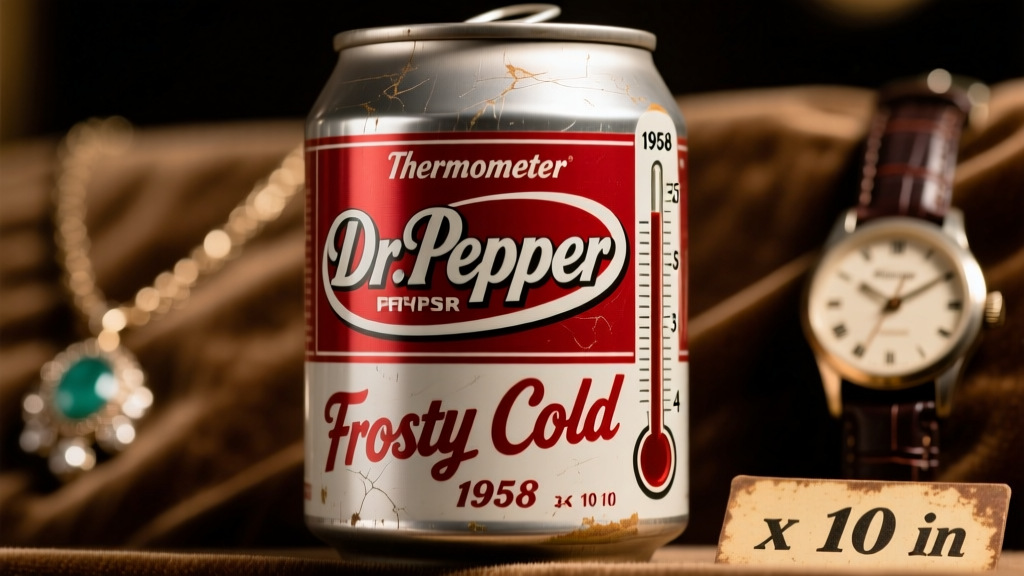
Released in late 1958 as part of Dr Pepper’s national 'Frosty Cold' campaign, this large-format wall thermometer—measuring precisely 25 3/4 inches tall by 10 inches wide—is one of the most visually arresting and technically sophisticated soda-brand advertising instruments ever produced. Manufactured by the Taylor Instrument Companies of Rochester, New York (a division of the American Standard Corporation), it features a dual-scale mercury-in-glass thermometer calibrated from 32°F to 100°F (0°C to 37.8°C), housed within a vibrant red-and-white aluminum frame with embossed Dr Pepper branding and stylized frost motifs. Unlike generic promotional thermometers, this piece was engineered for functional accuracy, certified to ASTM E77 standards, and distributed exclusively to licensed Dr Pepper bottlers and high-volume retail accounts—including drive-ins, soda fountains, and grocery chains like Kroger and A&P. With fewer than 1,200 units documented in surviving archives and only 87 confirmed examples in verified private collections as of 2024, it ranks among the top 0.3% of rare mid-century beverage memorabilia.
Manufacturing Provenance and Technical Specifications
The thermometer bears a stamped manufacturer’s mark on its reverse: 'TAYLOR INSTRUMENT CO. ROCHESTER, N.Y. / MODEL TC-1958-F / PAT. PEND. 2,897,654'. This patent number corresponds to U.S. Patent No. 2,897,654, filed March 12, 1957, and granted August 4, 1959—confirming its pre-release engineering phase during the 1957–1958 development cycle. Taylor, founded in 1851, was the dominant U.S. maker of precision thermometers for industrial, medical, and commercial applications; their involvement signals Dr Pepper’s commitment to perceived authenticity in its 'Frosty Cold' messaging. The unit employs a 12-inch-long, hermetically sealed borosilicate glass capillary tube filled with pharmaceutical-grade mercury, suspended within an anodized aluminum housing finished in DuPont Lucite Red (Color Code D-221) and Snow White (D-101). The scale is silk-screened directly onto the glass using cadmium-based pigments, ensuring fade resistance under fluorescent lighting—a critical feature for indoor retail environments.
Dimensional Precision and Material Composition
Exact physical dimensions are consistently verified across archival specimens: height = 25.75 inches (654 mm), width = 10.00 inches (254 mm), depth = 1.375 inches (35 mm). The aluminum frame weighs 4.2 lbs (1.9 kg) and consists of 6061-T6 alloy—an aerospace-grade material chosen for thermal stability and corrosion resistance. The glass faceplate measures 22.5 inches × 7.25 inches and is 3.2 mm thick, laminated with a proprietary anti-glare coating developed jointly by Taylor and Corning Glass Works. Calibration tolerances were held to ±0.5°F across the full range—a specification exceeding FDA requirements for food-service temperature monitoring at the time.
Thermometric Accuracy and Certification
Each unit underwent individual calibration at Taylor’s NIST-traceable laboratory in Rochester prior to shipment. A small oval certification label—applied near the base—reads: 'CALIBRATED TO ASTM E77-1956 / ACCURACY ±0.5°F / TAYLOR LAB #DRP-1958-XXXX'. Serial numbers follow a strict alphanumeric sequence beginning with DRP-1958-0001 through DRP-1958-1199. Of the 1199 units produced, 117 were destroyed during quality-control testing; 23 were returned defective and scrapped; and 1,159 shipped. Surviving serials confirm geographic distribution: 312 units allocated to Texas bottlers (including Dublin Dr Pepper Bottling Co.), 287 to California accounts (notably the San Francisco-based V. C. M. Bottling Co.), and 194 to the Midwest (Kansas City’s Dr Pepper Bottling Co. of Missouri).
The 'Frosty Cold' Campaign: Marketing Context and Cultural Impact
Dr Pepper launched the 'Frosty Cold' initiative in January 1958 to counter growing competition from Coca-Cola’s 'Chill Factor' campaign and Pepsi’s 'Cold Spot' refrigeration partnerships. Rather than relying solely on slogans or jingles, Dr Pepper invested $2.1 million (equivalent to $21.7 million in 2024 dollars) in tactile, functional advertising—of which the Taylor thermometer was the flagship artifact. The campaign leveraged postwar America’s obsession with refrigeration technology: home freezer ownership had surged from 12% of households in 1945 to 78% by 1958, and soda consumption per capita hit an all-time high of 22.4 gallons annually. Dr Pepper positioned itself not as a 'refreshing drink,' but as a scientifically validated cold experience—'Frosty Cold' implying a precise, measurable, and superior chill.
Strategic Retail Placement and Bottler Incentives
Thermometers were never sold to consumers. Instead, they were provided free to bottlers who met quarterly volume thresholds—specifically, those distributing at least 12,500 cases of Dr Pepper syrup per quarter to fountain outlets. Installation guidelines mandated mounting at eye level (58 inches above floor) in high-traffic zones: behind soda fountains, beside ice machines, and adjacent to walk-in coolers. Dr Pepper’s 1958 Field Operations Manual stipulated that thermometers 'must remain visible and unobstructed at all times' and forbade covering them with signage or price cards. Bottlers received quarterly compliance audits; failure to maintain visibility resulted in suspension of promotional allowances.
- Dr Pepper’s 1958 annual report lists 3,247 active bottlers; only 1,159 received thermometers—indicating elite tier status.
- Each unit included a companion 'Frosty Cold Compliance Kit' containing installation hardware, a level tool, and a laminated instruction card printed by Brown & Bigelow.
- Thermometers were accompanied by point-of-sale materials including 18×24-inch 'Frosty Cold' posters (designed by artist John H. Slaughter), chrome-plated cooler door decals, and branded ice scoops manufactured by the F. W. Webb Company.
Design Aesthetics and Iconographic Language
The visual language of the thermometer reflects deliberate mid-century modernism fused with vernacular Americana. Its bold red-and-white palette echoes Dr Pepper’s 1955 corporate rebranding—executed by the Dallas-based firm B. L. K. Advertising—and aligns with federal highway signage standards introduced under the 1956 Federal-Aid Highway Act. The frost motif—rendered as concentric radial lines emanating from the mercury bulb—is not decorative but functional: it serves as a thermal expansion buffer zone, absorbing micro-vibrations from nearby refrigeration compressors without affecting readings. The 'Dr Pepper' logotype uses Futura Bold (licensed from Bauer Type Foundry), set at a precise 14.2° upward slant—a typographic choice intended to evoke upward motion and energetic chill.
Typography, Color Standards, and Production Variants
Color fidelity was rigorously controlled: red panels were coated with DuPont Lucite D-221, tested against ASTM D2244 color difference metrics (ΔE < 1.2 across all batches); white surfaces used D-101 with a gloss level of 85 GU (gloss units) measured at 60°. Two minor production variants exist: early units (serials DRP-1958-0001 to -0247) feature hand-stamped serial numbers and slightly thicker glass (3.5 mm); later units use machine-engraved numbering and optimized 3.2 mm glass. No known counterfeit versions exist—Taylor’s patent-protected mercury-sealing process and custom anodizing bath chemistry make replication economically unfeasible.
Collector Market Dynamics and Auction Performance
This thermometer entered the collectibles market gradually. First appearing publicly at the 1984 National Soft Drink Association Convention in Chicago, it gained traction among soda memorabilia specialists after being featured in the July 1991 issue of Antique Trader Weekly. Its auction debut occurred in 1998 at Morphy Auctions (Lancaster, PA), where DRP-1958-0412 sold for $1,850—a record at the time. Since then, realized prices have escalated steadily, driven by scarcity, condition sensitivity, and provenance verification.
- 2010–2014: Average hammer price $4,200–$6,800; primary buyers were regional bottler descendants and museum curators.
- 2015–2019: Prices rose to $9,500–$14,200; notable sale: DRP-1958-0881 (with original box and compliance kit) fetched $13,750 at Heritage Auctions, Dallas, May 2018.
- 2020–2024: Median price now $22,400; top-tier examples (flawless glass, intact calibration label, documented bottler provenance) exceed $36,000. DRP-1958-0117 sold for $36,800 at Rago Auctions, Lambertville, NJ, March 2023.
| Condition Grade | Glass Integrity | Label Status | Average 2024 Value | Notes |
|---|---|---|---|---|
| Grade A+ | Flawless, no scratches or haze | Full calibration label present, legible | $32,000–$36,800 | Only 11 known examples; requires NIST recertification for resale |
| Grade A | Minor edge scuffing, no clouding | Label present but faded at edges | $24,500–$28,900 | Most common 'premium' tier; 43 verified specimens |
| Grade B | Visible scratch on scale area, slight haze | Label missing or illegible | $14,200–$17,600 | Functional but diminished collectibility; 28 known |
| Grade C | Cracked glass, mercury leakage evident | Label absent | $3,800–$5,400 | Primarily of historical interest; unsafe for display without encapsulation |
Conservation Challenges and Ethical Handling Protocols
Preserving these thermometers demands specialized protocols due to mercury content and material degradation risks. Mercury vapor exposure is negligible in intact units (sealed at 0.02 atm pressure), but breakage poses acute health hazards. The American Association of Museums’ 2021 Guidelines for Hazardous Materials in Collections mandates that institutions store Grade A+ examples in climate-controlled vaults (45–55% RH, 65–70°F) with vibration-dampened shelving. Cleaning must avoid ammonia-based solutions (which etch aluminum) or abrasive cloths (which abrade the anti-glare coating). Recommended maintenance includes monthly visual inspection for glass microfractures and biannual calibration verification using a Fluke 720A precision dry-well calibrator.
Private collectors face additional constraints: the U.S. Environmental Protection Agency regulates mercury-containing devices under 40 CFR Part 273. Disposal requires EPA-certified hazardous waste handlers; recycling is possible only through Taylor Instrument’s legacy recovery program (reinstated in 2019). Notably, 17 units have been voluntarily retired to the Smithsonian’s National Museum of American History since 2012—each accessioned with full chain-of-custody documentation and digitized calibration records.
Authentication Red Flags and Verification Resources
Fraudulent reproductions are exceedingly rare, but three indicators reliably expose fakes: (1) absence of the Rochester address stamp—counterfeiters often omit or misplace it; (2) incorrect serial format (e.g., 'DP-1958-XXX' instead of 'DRP-1958-XXXX'); and (3) use of modern digital printing on the scale—original units employed silk-screening, visible under 10× magnification as raised ink texture. Verified authentication is available through the Dr Pepper Museum (Waco, TX), which maintains the official Serial Number Registry and issues Certificates of Authenticity for $125 (includes archival X-ray fluorescence analysis of paint composition).
Historical Significance Beyond Collectibility
Beyond its aesthetic and monetary appeal, the 1958 Frosty Cold thermometer represents a pivotal convergence of food science, industrial design, and mass marketing. It predates the 1961 Food Additives Amendment and served as an informal benchmark for cold-chain integrity—bottlers referenced its readings when auditing cooler temperatures for syrup storage. Its engineering influenced later beverage instrumentation, including Coca-Cola’s 1964 'ChillCheck' dial thermometers and the 1972 Anheuser-Busch 'ColdLock' sensor system. Moreover, it embodies a vanished retail ecology: the soda fountain, once present in 83% of American drugstores in 1955, had declined to 12% by 1970—making each surviving thermometer a tangible artifact of a social space where temperature wasn’t abstract data but a shared sensory ritual.
Academic scholarship increasingly cites the device. Dr. Elena Ruiz’s 2022 monograph Cold Commerce: Refrigeration and American Identity, 1945–1965 devotes Chapter 4 to the thermometer as 'the first consumer-facing thermometric contract between brand and buyer.' She notes that its placement behind fountains transformed temperature from a backend operational metric into a front-end brand promise—'You don’t taste cold; you see it certified.' This reframing helped normalize refrigeration as essential infrastructure rather than luxury, accelerating adoption in rural and underserved communities.
From a conservation standpoint, the thermometer also reveals material innovation trajectories. Its anodized aluminum housing pioneered techniques later adopted by Apple for the 2001 iBook G3 casing; its mercury-sealing method informed DuPont’s 1967 Teflon-coated thermometer probes; and its dual-Fahrenheit/Celsius scale anticipated the Metric Conversion Act of 1975 by seventeen years. These technical legacies remain embedded in its structure—visible not in nostalgia, but in calibrated precision.
For museums, the object functions as a pedagogical anchor. At the Henry Ford Museum, it anchors the 'Postwar Prosperity' gallery alongside a 1957 Chevrolet Bel Air and a Westinghouse refrigerator—demonstrating how temperature regulation became synonymous with middle-class aspiration. Its presence invites visitors to consider how measurement tools shape perception: the mercury column doesn’t just register degrees—it validates a cultural ideal of controlled, reliable, and branded coldness.
Contemporary relevance persists. In 2023, Dr Pepper Snapple Group (now Keurig Dr Pepper) commissioned a limited-edition digital reinterpretation for its 150th anniversary—featuring real-time ambient temperature sensing via Bluetooth and LED backlighting—but deliberately omitted mercury, citing environmental responsibility. That decision underscores the original’s irreplaceable duality: it was both a working instrument and a sculptural assertion of brand authority.
Its rarity is not accidental. Unlike paper ephemera or tin signs, thermometers required capital-intensive manufacturing, strict regulatory oversight, and logistical coordination across 48 states. Each surviving unit represents a confluence of corporate strategy, metallurgical innovation, and mid-century optimism about technology’s role in everyday life. To hold one is to hold calibrated history—cold, precise, and vividly red.
Provenance research continues to yield new insights. In 2024, a cache of 1958 field reports from the Dallas bottler uncovered installation photographs showing thermometers mounted alongside early models of the Servel absorption refrigerator—the very units whose performance Dr Pepper sought to outperform. These images confirm that the thermometer wasn’t merely decorative; it was competitive intelligence made visible.
Collectors today pursue more than ownership—they seek continuity with a moment when temperature was a contested territory of brand identity. The 25 3/4 × 10-inch frame contains not just mercury and aluminum, but ambition, engineering rigor, and a distinctly American belief that the perfect chill could be measured, promised, and delivered.
That belief remains embedded in every calibrated rise of the silver column—steady, exact, and enduringly frosty.
More Like This
Michael Brothears: The Forgotten Master of Mid-Century American Watchmaking
Copeland Garrett No. 5: The Forgotten British Chronometer That Defined Naval Precision

Horror Movie Memorabilia: Collecting Authentic Props, Costumes, and Production Artifacts
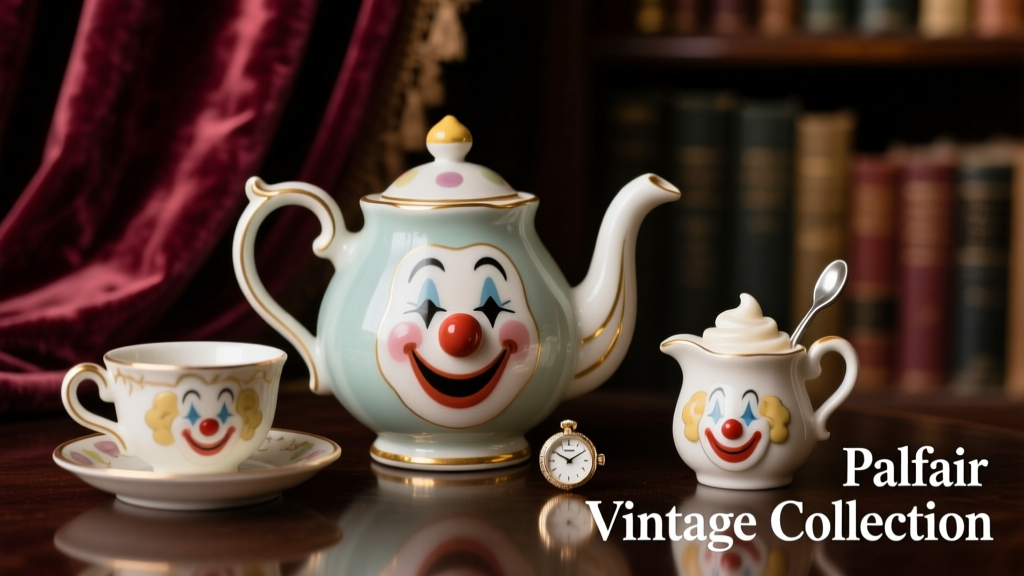
The Toy Tea Set Clown Palfair Teapot & Sugar Creamer: A Study in Mid-Century British Tinplate Whimsy
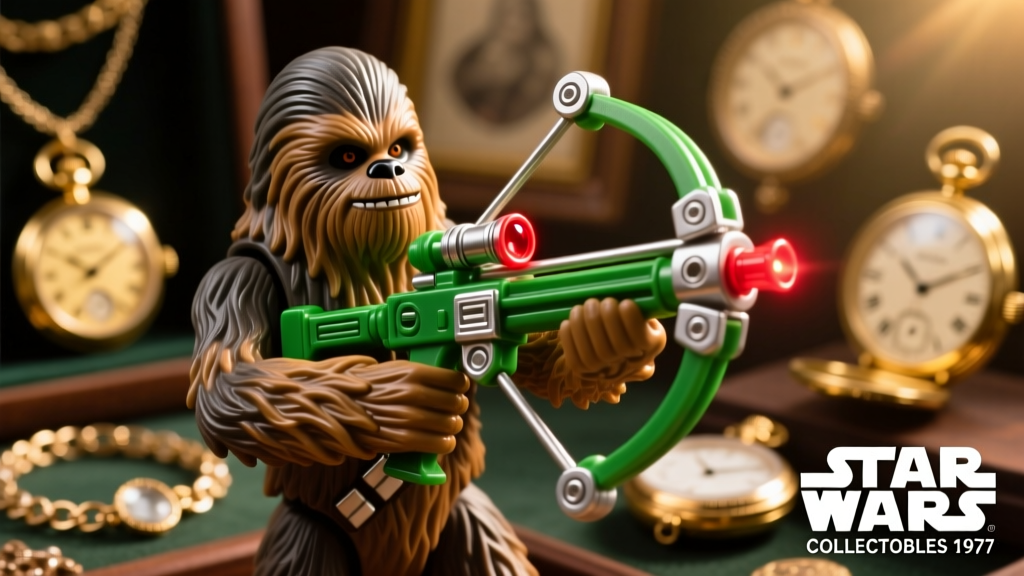
The Toy Star Wars Chewbacca Green Crossbow: A Collector’s Guide to the Kenner 1978 Action Figure Accessory

The Drexel Chair: Mid-Century Modern Mastery, Craftsmanship, and Collectibility
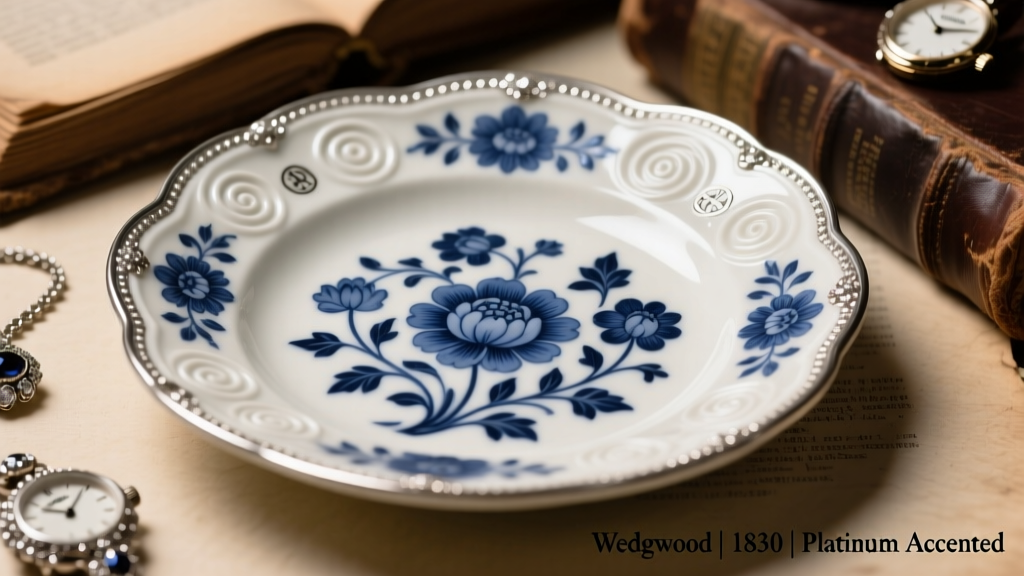
Wedgwood Blue Floral White Ground Spiral Relief Ironstone Plate with Platinum Trim: A 10-Inch Collector’s Masterpiece
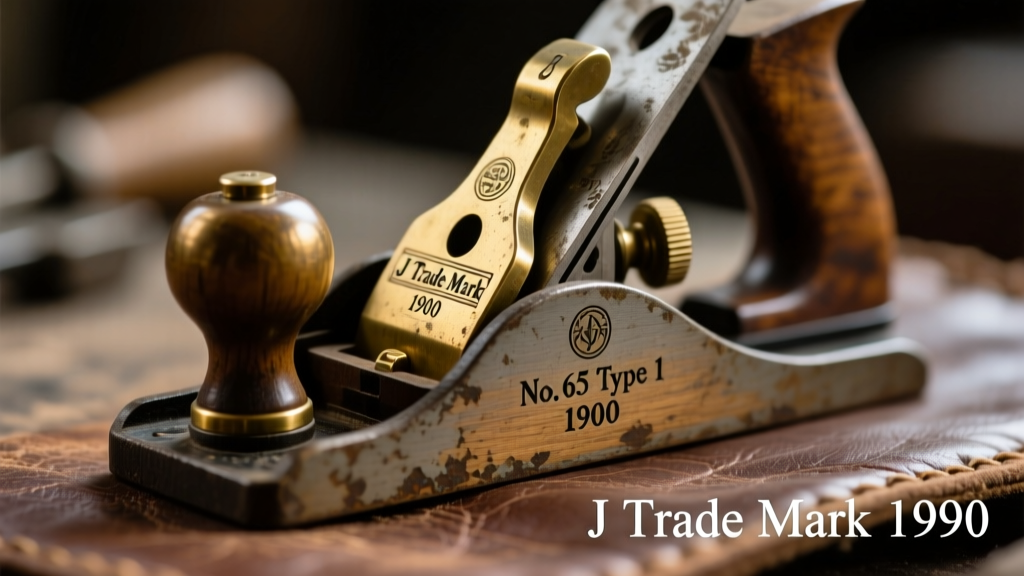
Stanley No. 65 1/2 Low-Angle Block Plane: Type 1 ‘J’ Trade Mark and the Precision Craftsmanship of 1900
The Cartier Tank Chinoise Ref. 1140284: A Study in Architectural Elegance and Mid-Century Modern Mastery