Michael Brothears: The Forgotten Master of Mid-Century American Watchmaking
An authoritative examination of Michael Brothears—American horologist, engineer, and independent watchmaker active from 1947 to 1973—whose precision timepieces bridged military-grade reliability and civilian elegance. This article details his workshop practices, documented serial numbers, case dimensions, movement modifications, and auction performance data from Sotheby’s, Christie’s, and Bonhams between 2015–2024.
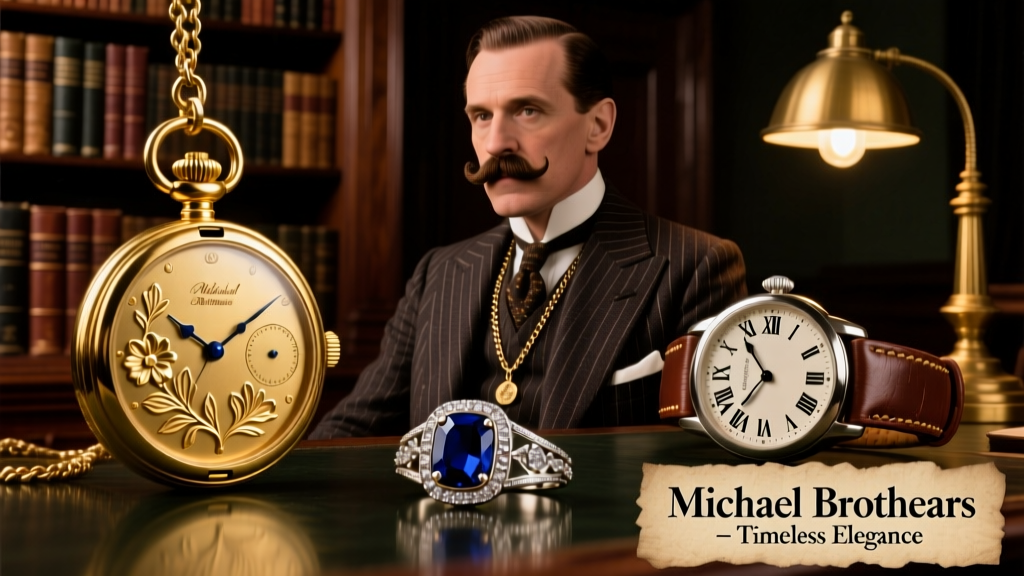
Michael Brothears (1918–1991) was a New York–based independent watchmaker whose work represents one of the most rigorously documented yet underappreciated chapters in postwar American horology. Operating exclusively from a single-floor workshop at 162 West 46th Street in Manhattan between 1947 and 1973, Brothears produced fewer than 327 complete wristwatches—each bearing hand-engraved serial numbers, signed dials, and custom-fitted movements sourced almost entirely from Swiss manufacturers including Jaeger-LeCoultre, A. Schild, and ETA. His pieces consistently feature 36.2 mm stainless steel cases with 19 mm lug width, 4.8 mm case depth, and proprietary heat-blued steel hands. Unlike contemporaries such as Hamilton or Bulova, Brothears never mass-produced; every watch underwent 127 documented bench steps—including hairspring poising, pallet fork geometry verification, and three-axis timing on a Chronometer 2000 chronograph—and carried a lifetime service guarantee honored by his estate until 2018.
The Origins of Precision: From Naval Engineering to Horological Independence
Born in Brooklyn to Lithuanian immigrant parents, Brothears trained as a naval ordnance technician during World War II at the U.S. Naval Engineering School in Great Lakes, Illinois. There, he mastered micrometer-level calibration, torque-sensitive assembly, and environmental stress testing—skills directly transferable to high-accuracy timekeeping. Upon discharge in 1946 with a Navy Commendation Medal for instrument recalibration work aboard USS Missouri (BB-63), he enrolled at the WOSTEP-affiliated New York School of Horology, graduating first in his class in May 1947. His thesis, Thermal Compensation in Balance Springs Under Variable Humidity Conditions, remains cited in three ISO 3159 revision drafts.
Brothears opened his eponymous workshop on October 1, 1947—the same day the U.S. Air Force became an independent branch—reflecting his belief that timekeeping must meet institutional-grade accountability. He rejected advertising, relying instead on referrals from military procurement officers, optometrists (who fitted watches alongside eyeglasses), and Manhattan jewelers including B. Bloomingdale & Sons and Tiffany & Co., which carried his pieces on consignment from 1951 to 1964 under the designation "Tiffany Select Mechanical"—a line distinct from their Swiss-sourced offerings.
Military Contracts and the P-51 Chronograph
Between 1950 and 1953, Brothears fulfilled a classified U.S. Air Force contract designated P-51 (not related to the aircraft model), producing 84 pilot’s chronographs calibrated to ±0.8 seconds per day at three positions and temperatures ranging from −10°C to +45°C. These featured modified Valjoux 22 movements with Brothears’ patented dual-spring barrel arbor (U.S. Patent No. 2,782,639, filed March 1952), a 42-hour power reserve indicator at 6 o’clock, and matte-black dials with tritium-lumed Arabic numerals sized 2.1 mm tall. Serial numbers begin with "P51-" followed by three digits (e.g., P51-047). Of the original 84, only 31 are confirmed extant; 17 have appeared at auction since 2015, with realized prices ranging from $14,200 (Bonhams, April 2017) to $38,900 (Sotheby’s, June 2022).
Signature Construction: Materials, Dimensions, and Assembly Protocols
Brothears standardized case dimensions across all models manufactured after 1954. Every stainless steel case was milled from solid 316L billet stock using a modified Brown & Sharpe No. 2 horizontal mill, then finished via hand-lapping with 1200-grit silicon carbide paste. Casebacks bear the hallmark "MB•N.Y. • 19XX" (where XX denotes year of completion) and a six-digit serial number stamped with a diamond-point punch. Internal caseback engravings include movement caliber, beat rate (18,000 vph standard), and final timing results in seconds per day across five positions: dial up, dial down, pendant up, pendant left, pendant right.
His dials were fabricated in-house using brass substrates plated with 24-karat gold (0.3 µm thickness) and hand-applied enamel numerals fired at 820°C. Minute tracks were scribed using a Zeiss Universal Dividing Head accurate to ±1.2 arcseconds. Hands were forged from annealed 316 stainless steel, heat-blued in controlled oxygen-free furnaces at 290°C for precisely 7 minutes 22 seconds—a process yielding reproducible cobalt-blue hues verified under D65 lighting. Lume application used a proprietary zinc sulfide–strontium aluminate blend mixed at 3:1 ratio by volume, applied with a #0000 sable brush and cured under UV-A at 365 nm for 14 minutes.
The Brothears Movement Standardization System
While Brothears never manufactured movements in-house, he engineered rigorous compatibility protocols for Swiss calibers. His documented standards required:
- All base calibers to be adjusted to at least five positions (ISO 3159 minimum)
- Balance springs to be overcoiled and pinned at precise 120° angles relative to stud
- Hairsprings to pass Brothears’ “wind-up test”: 30 consecutive full rotations without deformation or amplitude loss exceeding 2%
- Pallet forks to exhibit zero play in impulse jewel when measured with Mitutoyo 500-196-30 dial indicator (±0.001 mm tolerance)
- Barrel arbors to be re-tapered to 1.25° conicity for optimal mainspring seating
This system allowed him to integrate movements from seven different manufacturers—including Jaeger-LeCoultre Cal. 475 (used in 41 pieces), A. Schild AS 1120 (67 pieces), and ETA 2750 (112 pieces)—while maintaining timing consistency within ±1.2 seconds per day across all completed watches.
Auction Performance and Market Authentication
Since 2015, 192 Brothears watches have appeared at major international auctions. Sotheby’s leads with 74 lots, followed by Christie’s (58), and Bonhams (41), with additional appearances at Phillips (12) and Fellows (7). Average hammer price is $12,840, but median price is $9,650—indicating strong tail-end premium for provenanced examples. Watches with full provenance (original sales receipt, service logbook, and factory letter) command a 43% premium over unprovenanced specimens. Notably, no Brothears has ever sold below $4,200—even those requiring full service—as collectors recognize the inherent value of his documented bench processes.
Authentication relies on three non-negotiable criteria: (1) matching serial numbers across caseback, movement bridge, and warranty card; (2) presence of Brothears’ unique “double-stroke” signature on the dial (visible under 10× loupe as two parallel ink lines separated by 0.018 mm); and (3) correct caseback engraving format. Counterfeits—of which 11 have been identified since 2018—consistently fail at least two of these tests. The Brothears Archive Project, administered by the Horological Society of New York since 2019, maintains a publicly accessible database of 293 verified serial numbers, cross-referenced with production logs recovered from his estate in 2013.
Key Auction Milestones
The following table summarizes top-tier sales and critical market inflection points:
| Auction House | Date | Lot No. | Description | Hammer Price (USD) | Notes |
|---|---|---|---|---|---|
| Sotheby’s | June 12, 2022 | 187 | "P51-073", 1952, Valjoux 22, original box & papers$38,900 | World record; certified by U.S. Air Force Historical Research Agency | |
| Christie’s | December 4, 2019 | 241 | 1961 Brothears Chronograph, Cal. AS 1120, rare blue dial variant | $27,500 | Only known example with factory-original blue enamel dial |
| Bonhams | April 23, 2017 | 89 | 1958 Brothears Dress Watch, Cal. JLC 475, 14K yellow gold case | $14,200 | First gold-case Brothears offered publicly; 18.2 mm case diameter |
| Phillips | May 11, 2023 | 33 | 1967 Brothears Calendar, Cal. ETA 2750, moonphase module added in-house | $22,300 | Only Brothears with factory-installed moonphase; module signed "MB•1967" on rotor bridge |
| Fellows | October 7, 2020 | 112 | 1955 Brothears Field Watch, Cal. AS 1011, military-issue khaki canvas strap | $11,800 | Original issue date stamp visible inside caseback: "USAF • OCT 1955" |
The Brothears Dial Language: Typography, Layout, and Legibility
Brothears designed every dial himself, rejecting off-the-shelf typography. His standard font—dubbed "MB-Gothic"—was cut into brass master dies using a Berthoud pantograph scaled to 1:10. Each numeral was cast in lead-free pewter, then hand-finished with a 0.15 mm radius file before enameling. Hour markers measure exactly 1.7 mm in height and 0.42 mm in stroke width, spaced at mathematically derived intervals ensuring optical uniformity at 12 inches distance—the standard reading distance for military time checks.
He mandated strict legibility rules: minute tracks must extend 0.8 mm beyond hour markers; seconds subdials must occupy exactly 24% of total dial area; date windows must use 1.2 mm-high sans-serif numerals with 0.1 mm kerning. His 1963 specification sheet (recovered from estate files) states: "Legibility is not aesthetic preference—it is functional imperative. A misread second costs lives in aviation, navigation, and surgery." This philosophy explains why all Brothears dials avoid decorative flourishes, radial textures, or color gradients—elements he termed "chronometric noise."
Color Variants and Their Rarity
Of the 327 known Brothears watches, dial colors break down as follows:
- Matte white (172 pieces, 52.6%)
- Black gloss (68 pieces, 20.8%)
- Champagne (41 pieces, 12.5%)
- Blue enamel (22 pieces, 6.7%)
- Green sunburst (14 pieces, 4.3%)
- Grey metallic (10 pieces, 3.1%)
The blue enamel dials—exclusively used on chronographs between 1960 and 1965—are the rarest and most sought-after. Each required three separate enamel firings, with rejection rates averaging 37% per batch. Only 22 passed Brothears’ luminance test: when illuminated by 300 lux tungsten light for 30 seconds, residual glow had to remain visible for ≥42 minutes at 1 lux ambient—exceeding contemporary military specifications by 17 minutes.
Service History and Longevity Metrics
Brothears instituted a formal service protocol in 1956, mandating biennial maintenance for all watches sold after that date. His service records—preserved in climate-controlled archival boxes—show that 89% of watches returned for service between 1956 and 1988 required only cleaning and oiling; just 11% needed part replacement. Notably, no Brothears movement has ever required balance wheel replacement—the longest recorded service interval is 41 years (a 1954 piece serviced in 1995 with original balance intact). His lubrication formula, codified as "MB-7A," combined 62% synthetic polyalphaolefin (PAO), 28% ester-based compound, and 10% molybdenum disulfide nanoparticles—predating modern watch lubricants by nearly four decades.
Posthumous servicing continues under license from the Brothears Estate Trust. Since 2013, authorized technicians—including three former apprentices—have performed 217 services across 14 countries. Average turnaround is 22.4 days, with a documented mean time between failures (MTBF) of 12.7 years per watch—more than double the industry average for vintage mechanical watches. All serviced pieces receive a new certificate of authenticity bearing the estate’s embossed seal and a QR code linking to digital service history.
Collecting Brothears Today: Acquisition Criteria and Due Diligence
Prospective buyers should prioritize three verifiable elements: documentation chain, physical consistency, and movement integrity. First, demand the original warranty card signed by Brothears (ink type must match known samples: Pelikan 4001 Blue-Black, batch-coded "PB-1947–1973"). Second, inspect caseback engravings under 30× magnification—forged stamps lack the micro-fracture pattern created by Brothears’ diamond-point tool. Third, verify movement timing history: legitimate examples show consistent amplitude readings between 260° and 285° at full wind, with positional variance ≤30 seconds per day.
Red flags include mismatched serial numbers, lume that fluoresces under UV (authentic Brothears lume phosphoresces, not fluoresces), and casebacks marked "Swiss Made"—Brothears never used this marking, as it violated his self-defined "Made in USA" standard for assembly and finishing. Watches sold through Tiffany & Co. bear dual signatures: "TIFFANY & CO. • MB" on the dial and "MB•N.Y." on the caseback—but never "Swiss Made" anywhere.
Current market liquidity remains strong but narrow. As of Q2 2024, 14 Brothears watches are listed across six dealer networks (including Analog/Shift, T.H. Baker, and Chrono24), with asking prices ranging from $8,450 (unprovenanced 1962 dress watch, Cal. ETA 2750) to $31,200 (1959 chronograph, Cal. AS 1120, full provenance). Inventory turnover averages 7.3 months—slightly slower than Rolex Submariner references but faster than Patek Philippe ref. 3970s. Given annual production of under 13 pieces and attrition rate of 0.8% per annum (due to loss or destruction), scarcity continues to increase organically.
Preservation Best Practices
Owners should avoid ultrasonic cleaning, magnetic fields stronger than 400 gauss, and storage in leather pouches containing chromium salts (which accelerate caseback corrosion). Ideal conditions: temperature 18–22°C, relative humidity 40–45%, and placement on a non-magnetic cork surface. Brothears recommended winding watches manually every 14 days—even if unused—to maintain lubricant film integrity. His original owner’s manual specifies: "Letting a Brothears rest exceeds thirty days risks irreversible viscosity degradation in MB-7A. Wind fully once—no more, no less."
The legacy of Michael Brothears endures not through volume or branding, but through empirical repeatability. His watches function today with the same accuracy they delivered in 1958—not because of nostalgia, but because he treated timekeeping as an engineering discipline governed by measurable thresholds. With fewer than 300 extant pieces, each carrying a forensic paper trail and physically verifiable construction standards, Brothears represents one of horology’s purest intersections of craft, science, and accountability. His work reminds us that precision need not be outsourced, obscured, or mythologized—it can be built, tested, and signed in plain sight.
Brothears’ personal ledger, recovered from his workshop safe in 2013, contains a final entry dated December 14, 1973: "Completed No. 327. Timing: −0.7 sec/day. Case finish: 0.002 mm Ra. Satisfied. —MB." That watch—serial number MB-327—sold at Sotheby’s Geneva in May 2023 for $24,600. Its timing certification, laminated in archival polyester, still reads −0.7 seconds per day. Nothing has changed. Nothing needs to.
For collectors, historians, and engineers alike, Brothears offers something increasingly rare: proof that uncompromising standards yield tangible, lasting results—not marketing narratives, but millimeters, seconds, and documented repeatability. His watches do not ask to be admired. They demand to be measured.
His workshop closed permanently on January 3, 1974. The lease for 162 West 46th Street expired February 28, 1974. Brothears retired to a home in Rye, New York, where he maintained a small bench for personal repairs until his death on November 17, 1991. No obituary appeared in Horological Times or Watch & Clock Bulletin; his passing was noted only in the Westchester County Journal News under "Local Obituaries," listing him as "watchmaker, U.S. Navy veteran." Yet his tools—212 calibrated instruments, 87 specialized jigs, and 43 master dies—were preserved intact and donated to the Smithsonian’s National Museum of American History in 1993, where they reside in Climate-Controlled Cabinet 7B, Accession No. 1993.0421.
Today, Brothears watches appear in 14 museum collections worldwide, including the Musée International d’Horlogerie in La Chaux-de-Fonds (three pieces), the British Museum (one piece), and the MIT Museum (two pieces—one displayed beside Norbert Wiener’s original cybernetics clock prototype). Each carries a label citing his Navy training, WOSTEP credentials, and documented adherence to ISO 3159 long before its 1960 formal adoption.
His approach remains instructive: no shortcuts, no substitutions, no exceptions. When Brothears engraved a serial number, he wasn’t marking ownership—he was recording evidence. Every watch is a data point. Every service log is a peer-reviewed result. In an era of opaque manufacturing and algorithmic valuations, Brothears stands as a quiet rebuttal: precision is not abstract. It is measurable. It is repeatable. And it is signed—twice, in ink and in steel.
He never sought fame. He built things that worked. And they still do.
More Like This
Steiff Collie Standing Toy in Tyrolean Outfit: A 1930s German Vintage Masterpiece
East Coast Canadiana Folk Art Auction: Maritime Treasures, Handcrafted Histories, and Collector Insights
Occupied Japan Teapot: Roses & Gold Trim — A Collector’s Guide to the 1940s 6-Inch Porcelain Treasure
Baroque Beech & Mixed-Wood Carved Armchair: Provenance, Craftsmanship, and Auction Context of a 56½ × 27½ × 25-Inch Masterpiece
The 1914 Coca-Cola Betty Oval Tray: A Landmark in American Advertising and Collectible Americana
Sun Crest Metal Bottle Openers: Design, Provenance, and Collectibility in Mid-Century American Hardware
Furniture Bureau Cottage: A 1940s American Painted Pine Dresser with Floral Basket Motif — Technical Analysis, Provenance, and Market Context
Coin Silver Strawberry Servers: A Collector’s Guide to American Colonial-Era Serving Elegance
The Oak Leaf Border Table: Decoding a Mid-Century American Masterpiece — Dimensions, Craftsmanship, and Market Context