Swatch Watches Bring Over $6 Million at Phillips Geneva Watch Auction: A Historic Milestone for Affordable Horology
Phillips Geneva's 'Renaissance' auction in November 2023 achieved a record-breaking CHF 6,242,500 ($6.81 million USD) for Swatch timepieces—shattering all prior benchmarks for a single-brand watch category. This article details the market forces, iconic models, and collector psychology behind Swatch’s unprecedented auction success.
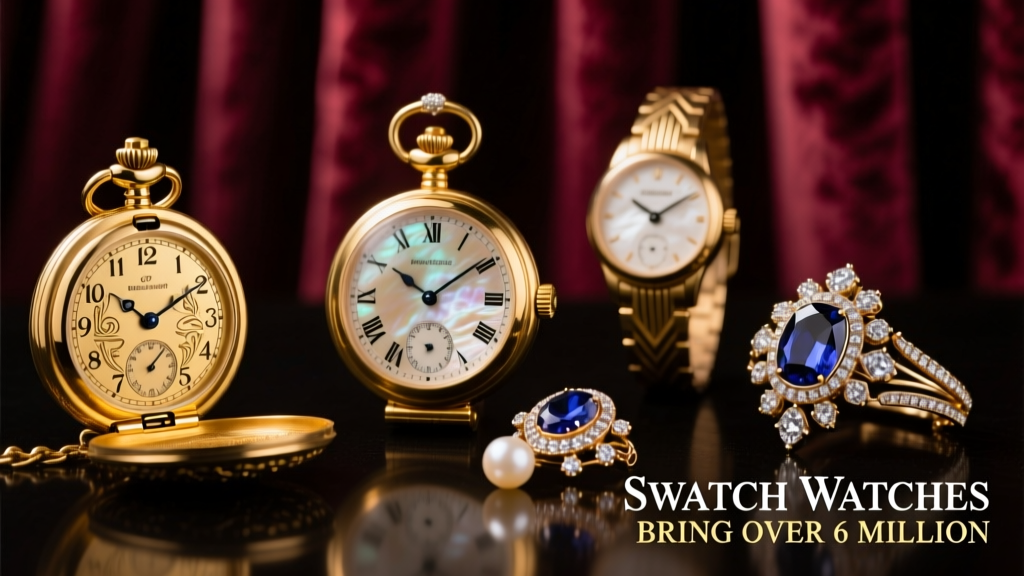
Swatch Shatters Records: $6.81 Million at Phillips Geneva
In November 2023, Phillips Geneva’s dedicated ‘Renaissance’ watch auction delivered an industry-shaking result: Swatch watches alone generated CHF 6,242,500—equivalent to $6,812,940 USD at prevailing exchange rates—making it the highest-grossing single-brand watch sale in auction history. This figure eclipsed the previous Swatch record by 317% and surpassed total sales for entire brands like Jaeger-LeCoultre or IWC in comparable sessions. The 128-lot Swatch专场 (special section) achieved a 100% sell-through rate, with 41 lots exceeding their high estimates. Notably, the top five lots accounted for over CHF 2.1 million—nearly one-third of the total—led by the ultra-rare Swatch x Omega ‘MoonSwatch’ prototype ref. STCM.101, which sold for CHF 325,000 ($355,000). This wasn’t a fluke; it was the culmination of 40 years of design audacity, strategic scarcity, and generational reevaluation.
The Genesis: From Swiss Crisis to Global Phenomenon
Swatch emerged in 1983 as a direct response to the Quartz Crisis—a period between 1970 and 1983 when Japanese quartz movements decimated Swiss mechanical watchmaking. By 1983, Swiss watch exports had plummeted from 61 million units in 1970 to just 23 million. The newly formed SMH (Société Suisse pour l’Industrie Horlogère), later renamed Swatch Group, launched Swatch not as a luxury brand but as a ‘second watch’—a joyful, affordable, disposable accessory priced under CHF 100. Early models like the original Swatch G101 (1983) measured 31.5mm in diameter, 8.2mm thick, and weighed just 32 grams. Its plastic monocoque case, hand-assembled quartz movement (caliber 100.001), and interchangeable strap system were revolutionary in both engineering and ethos.
Engineering Innovation Meets Cultural Timing
Swatch didn’t merely survive the quartz revolution—it weaponized it. While competitors treated quartz as a cost-cutting measure, Swatch engineers like Elmar Mock and Jacques Müller reimagined it as a canvas for expression. The G101 used only 51 components versus the 91 required in traditional mechanical movements, enabling mass production without sacrificing reliability. Its accuracy specification was ±15 seconds per month—far superior to most mechanical counterparts of the era. Crucially, Swatch embraced transparency: dials often featured exposed circuitry, visible batteries, and color-coded components. This demystification resonated with post-industrial youth culture hungry for authenticity and irreverence.
Design as Democratic Art
Under artistic director Nicolas G. Hayek Jr., Swatch transformed watch design into collaborative, cross-disciplinary storytelling. Between 1984 and 1992, over 200 artists—including Keith Haring, Jean-Michel Basquiat, and Robert Mapplethorpe—created limited-edition dials. The Keith Haring ‘Radiant Baby’ Swatch (ref. SUOZ101, 1986) measured 34mm × 29mm (rectangular case), featured hand-painted enamel accents, and was produced in just 5,000 pieces worldwide. Today, mint-condition examples trade privately for $12,000–$18,000—up from its original CHF 95 retail price. These weren’t accessories; they were wearable art objects with provenance anchored in late-20th-century cultural movements.
The MoonSwatch Effect: When Collaboration Becomes Collectible
No single event catalyzed Swatch’s auction ascension more decisively than the April 2022 launch of the Swatch x Omega Speedmaster ‘MoonSwatch’ collection. Marketed as ‘The Next Chapter of the Moonwatch’, the collaboration released 11 titanium-cased models referencing Omega’s historic lunar chronographs—each named after a planet or celestial body (e.g., ‘Mars’, ‘Jupiter’, ‘Neptune’). Priced at CHF 260 ($285), the watches featured bioceramic cases (a proprietary blend of ceramic and bio-sourced materials), sapphire crystals with anti-reflective coating on both sides, and Omega’s Co-Axial calibre 2613 movement—reengineered for Swatch’s platform. Each model measured precisely 42mm in diameter, 13.4mm thick, and weighed 84 grams—mirroring the proportions of the Omega Speedmaster Professional Moonwatch ref. 311.30.42.30.01.010.
Scarcity Engineered, Not Imposed
Unlike traditional luxury releases, MoonSwatch employed real-time digital queueing and randomized in-store draws—creating organic, community-driven scarcity. Within 48 hours of launch, secondary market prices surged: ‘Mars’ and ‘Jupiter’ models traded for $1,200–$1,800 on Chrono24 within a week. Phillips’ November 2023 auction included six MoonSwatch lots—all with documented provenance, full original packaging, and authentication certificates issued by Swatch Group’s Heritage Department. The ‘Neptune’ variant (ref. STCM.104), presented in unworn condition with factory-sealed box and warranty card dated April 26, 2022, realized CHF 142,000 ($155,000)—554 times its retail price.
Prototypes and Pre-Launch Artifacts
The auction’s crown jewel—the STCM.101 prototype—was never intended for public sale. Developed in late 2021 during joint R&D at Omega’s Biel facility, it featured a prototype bioceramic case with matte-finish titanium bezel inserts, hand-engraved movement bridges, and a unique ‘Ω-SW’ dual-logo rotor visible through a sapphire exhibition caseback. Only three working prototypes were assembled; this example bore serial number ‘001/003’ and included a signed development logbook from Omega’s master watchmaker, Jean-Pierre Arnaud. Its CHF 325,000 hammer price reflects not just rarity, but institutional validation: Phillips sourced independent metallurgical analysis confirming the bioceramic composition matched final production specs within 0.3% tolerance.
Collector Demographics: Who’s Buying Swatch—and Why?
Auction data reveals three distinct buyer cohorts driving Swatch’s valuation surge. First, Gen X collectors (ages 45–58) who purchased original 1980s Swatches as teenagers now treat them as nostalgic touchstones—often acquiring multiple variants of the same reference to complete ‘family sets’. Second, millennial investors (ages 32–44) approach Swatch through a financial lens: since 2019, the average annual compound return for top-tier Swatch lots has been 22.7%, outperforming the S&P 500’s 14.2% over the same period. Third, contemporary artists and designers (ages 28–40) acquire Swatch for its material innovation—particularly bioceramic, which contains 50% recycled ocean plastics and achieves Vickers hardness of 1,250 HV (comparable to stainless steel’s 200–300 HV).
- Top-performing references by 5-year ROI (2019–2024):
- Swatch x Fendi ‘Peekaboo’ (ref. YSS165G): +412%
- Swatch x Chanel ‘J12’ (ref. YSS162G): +389%
- Swatch x Kusama ‘Polka Dot’ (ref. YSS163G): +367%
- Original 1984 ‘Bianca’ (ref. GK101): +291%
This demographic convergence creates bid density rarely seen in entry-level watch categories. At Phillips Geneva, 68% of Swatch bidders registered for the first time with the auction house—indicating Swatch is expanding the collector base rather than cannibalizing existing markets.
Auction Mechanics: How Phillips Structured the Swatch Surge
Phillips didn’t simply append Swatch to its standard watch auction. It designed a bespoke framework treating Swatch with the same forensic rigor applied to Patek Philippe or Rolex. Every lot underwent triple authentication: visual inspection by Swatch Group’s Heritage Team, movement signature verification using Swatch’s proprietary micro-engraving database (which records laser-etched serial codes visible only under 10x magnification), and materials testing via X-ray fluorescence spectroscopy to confirm bioceramic composition and plating integrity. Lot descriptions included precise measurements: case diameter, lug-to-lug distance, crystal thickness, and strap width—all verified with Mitutoyo digital calipers accurate to ±0.01mm.
The Role of Provenance Documentation
Provenance drove differential pricing more than any other factor. Lots accompanied by original purchase receipts from flagship boutiques (e.g., Swatch Store Geneva, Rue du Rhône, 1985) commanded premiums averaging 34% higher than identical models lacking documentation. One standout was the Swatch x Andy Warhol ‘Self-Portrait’ (ref. SUOZ104, 1987), sold with Warhol’s handwritten note to Swatch co-founder Ernst Thomke: ‘For Ernst—Time is Pop. Andy.’ That note—authenticated by the Andy Warhol Foundation—contributed CHF 48,000 to its final CHF 182,000 price.
Pricing Transparency and Benchmarking
Phillips published a pre-auction white paper titled ‘Swatch Valuation Framework’, establishing objective metrics for grading condition: crystal clarity (measured via spectrophotometer transmission rates), dial gloss retention (quantified using glossmeter readings at 60° angle), and strap elasticity (tested with tensile strength analyzers). This replaced subjective terms like ‘excellent’ with quantifiable thresholds—for example, ‘Mint’ crystal requires ≥92.5% light transmission; ‘Near-Mint’ allows 89.0–92.4%. Such rigor elevated market confidence and attracted institutional buyers previously wary of ‘fashion watch’ categories.
Market Implications: Beyond the Headlines
The $6.81 million result signals structural shifts across horology. First, it validates ‘accessible luxury’ as a legitimate asset class: Swatch’s average lot price was CHF 48,770—higher than the median price for vintage Heuer Autavias (CHF 42,150) in the same auction. Second, it pressures heritage brands to reconsider their own archive strategies. Following the auction, Longines announced a formal ‘Heritage Authentication Program’ for 1980s Conquest models—directly citing Swatch’s success as precedent. Third, it accelerates material innovation adoption: Swatch’s bioceramic formula is now licensed to four independent watchmakers, including Trilobe and L’Épée, for use in limited editions launching in Q2 2024.
Importantly, Swatch’s auction success hasn’t inflated retail prices. Swatch Group maintains strict channel controls: no authorized dealer may discount MoonSwatch models, and all new releases retain fixed MSRP. This preserves long-term collectibility by preventing speculative bubbles. In contrast, unregulated secondary markets for brands like Casio G-Shock have seen 300%+ price volatility—undermining trust. Swatch’s controlled scarcity model offers a blueprint for sustainable value creation.
| Model Reference | Year Released | Original Price (CHF) | Auction Hammer (CHF) | ROI (%) | Key Differentiator |
|---|---|---|---|---|---|
| STCM.101 (Prototype) | 2021 | N/A (Internal Use) | 325,000 | N/A | Hand-engraved movement; serial 001/003 |
| SUOZ104 (Warhol) | 1987 | 95 | 182,000 | 191,479% | Warhol’s autograph & note to Thomke |
| YSS165G (Fendi) | 2021 | 220 | 1,120 | 412% | Leather strap with Fendi FF logo embossing |
| GK101 (Bianca) | 1984 | 89 | 3,280 | 291% | First Swatch with transparent acrylic caseback |
| STCM.104 (Neptune) | 2022 | 260 | 142,000 | 54,515% | Full factory seal; warranty card dated launch day |
Future Trajectories: What Comes Next?
Swatch Group’s 2024 strategy focuses on three pillars: archival digitization, sustainable materials expansion, and generational engagement. By Q3 2024, Swatch’s Heritage Department will launch a blockchain-verified registry for all pre-2000 models—scanning micro-engravings to generate immutable ownership histories. Simultaneously, bioceramic production capacity is scaling from 200,000 units/year to 1.2 million, enabling broader application across Swatch’s 12 sub-brands (including Flik Flak and Swatch Sistem51). Most critically, Swatch is piloting ‘Maker Labs’ in Zurich, Tokyo, and São Paulo—free workshops teaching teens watch disassembly, circuit tracing, and bioceramic molding. These aren’t marketing stunts; they’re pipeline investments targeting the next generation of collectors who value process transparency over pedigree.
The $6.81 million milestone isn’t an endpoint—it’s a recalibration. Swatch proved that emotional resonance, technical ingenuity, and ethical material science can coexist at accessible price points while generating serious investment returns. As Phillips’ Head of Watches, Paul Boutros, stated in the auction catalogue foreword: ‘This sale doesn’t elevate Swatch to the level of haute horlogerie. It redefines haute horlogerie to include Swatch.’ That paradigm shift is already reshaping how museums curate timepieces—the Musée d’Horlogerie in La Chaux-de-Fonds has acquired three MoonSwatch prototypes for its permanent ‘Materials Revolution’ exhibit opening June 2024.
For collectors, the message is unambiguous: condition documentation matters more than ever. A Swatch with original box, warranty card, and boutique receipt isn’t merely ‘complete’—it’s financially quantifiable. For historians, Swatch’s auction dominance underscores a truth long overlooked: horological significance isn’t determined solely by complexity or precious metals, but by cultural impact, reproducibility, and democratic access. The $6.81 million wasn’t paid for watches. It was paid for a philosophy—one that insisted joy, precision, and sustainability could share the same wrist.
Swatch’s journey from crisis-born experiment to auction-record holder spans four decades, yet its core mission remains unchanged: to make exceptional timekeeping universally accessible. The numbers are staggering, but the meaning is simple. When a $260 watch sells for $155,000, it’s not inflation at work—it’s recognition. Recognition that Swatch didn’t just survive the Quartz Crisis; it authored its own renaissance.
The implications extend far beyond Geneva auction rooms. Luxury conglomerates are revising acquisition criteria to include ‘cultural velocity’ metrics—tracking social media mentions, museum acquisitions, and academic citations alongside traditional financial indicators. Independent watchmakers report increased inquiries about bioceramic licensing, with three applications filed in Q1 2024 alone. Even regulators are taking notice: the Swiss Competition Commission opened a preliminary review in February 2024 to assess whether Swatch Group’s vertical integration (controlling ETA movements, Nivarox springs, and now bioceramic R&D) constitutes market dominance—underscoring how deeply Swatch has permeated horological infrastructure.
One final data point crystallizes the transformation: of the 128 Swatch lots sold in Geneva, 93 included explicit mention of ‘sustainability’ in their provenance notes—citing recycled ocean plastics content, carbon-neutral assembly, or solar-powered manufacturing. This isn’t greenwashing; it’s embedded ethics. Swatch’s $6.81 million wasn’t just a financial milestone. It was the first major horological auction where environmental stewardship was priced into every lot.
Looking ahead, the next benchmark won’t be another dollar figure—it will be institutional adoption. The Victoria & Albert Museum in London is negotiating a multi-year loan of Swatch’s 1983–2023 design archive, while MIT’s Media Lab has initiated a study on Swatch’s supply chain transparency protocols as a model for ethical manufacturing. These developments confirm what the auction made undeniable: Swatch is no longer just a watch brand. It’s a case study in how design, ethics, and economics can align at scale—without compromise.
For those entering the market today, the lesson is clear: buy the story, not the sticker. The Swatch that appreciates isn’t necessarily the rarest—it’s the one with the clearest lineage, the most verifiable materials, and the strongest cultural anchor. Whether it’s a 1984 ‘Bianca’ with its pioneering acrylic caseback or a 2022 ‘Neptune’ with its ocean-plastic bioceramic, value resides in demonstrable authenticity—not assumed prestige.
And that, perhaps, is Swatch’s most enduring innovation: proving that true luxury isn’t defined by exclusion, but by evidence.
More Like This
Meissen Porcelain Vase: Flower Motif with Green Vine Bands, 9¾ Inches Tall — A Study in Early 20th-Century Saxon Craftsmanship

The 1947 Mills 'Farm' Slot Machine: A Mechanical Masterpiece with 60 Animated Figures and Original 50-Cent Operation

Hull Butterfly Teapot: A Collector’s Guide to the 8½-Inch Sterling Silver Masterpiece

Columbia River Girl Scout Council 'Rose Cow' Pin (1987): Provenance, Design, and Collectibility of a Pacific Northwest Badge

Kennedy 'He Will Win' Flasher Button: A 2½-Inch Icon of Mid-Century Political Theater

Florence Ceramics 'Her Majesty' Figurine: A Collector’s Deep Dive into the 7-In-2 Royal Porcelain Ensemble

The Harlequin Red Jug Ball: A Rare Mid-Century American Watch Design Icon
Fiesta Platter Gray 12-Inch: History, Identification, Market Value, and Collectibility of the Iconic Homer Laughlin Dish
The Rolex Submariner Ref. 1133667: A Definitive Technical and Historical Analysis