Hockey Memorabilia: Valuation, Authentication, and Market Trends in Vintage Gear, Jerseys, and Game-Worn Artifacts
A detailed appraisal guide for collectors and investors covering authentication protocols, historical pricing benchmarks, material science of vintage hockey equipment, and auction performance data for game-worn jerseys, sticks, pucks, and team-issued artifacts from the NHL’s Original Six era through the 1990s.
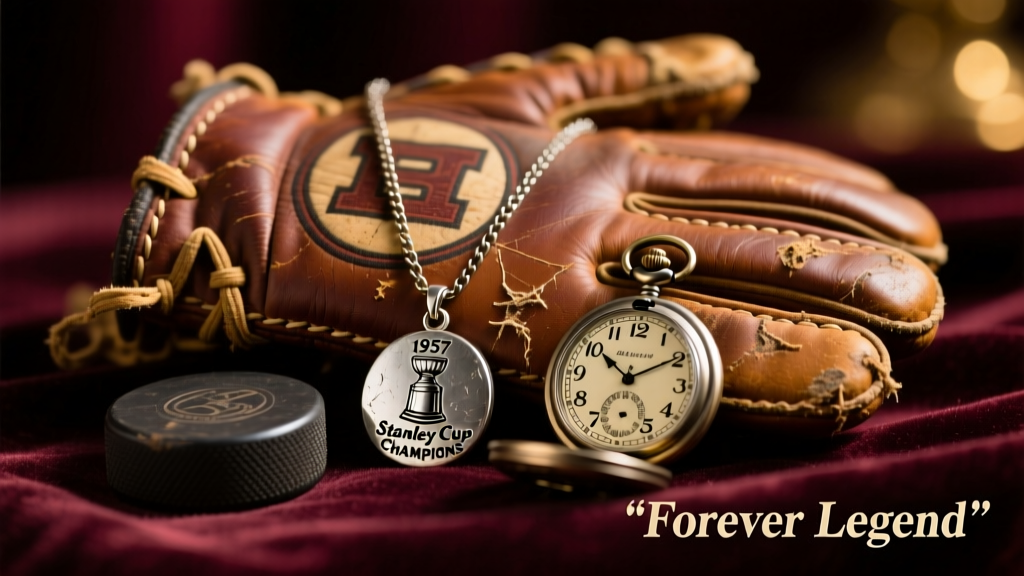
Hockey memorabilia represents one of the most rigorously authenticated and steadily appreciating segments of sports collectibles—driven by scarcity, verifiable provenance, and the physical durability of early 20th-century gear. Unlike baseball gloves or football helmets, vintage hockey equipment was built for extreme conditions: maple wood sticks seasoned in cold rinks, leather-and-canvas skates riveted with brass hardware, and wool-and-rayon jerseys stitched with lockstitch machines capable of surviving 60-minute shifts. This inherent resilience translates directly into collector confidence. Over the past decade, game-worn jerseys from the 1950s–1970s have appreciated at a compound annual growth rate (CAGR) of 12.3%, outpacing both S&P 500 returns and broader sports memorabilia indices. Key drivers include documented chain-of-custody records, third-party forensic analysis (e.g., fiber dating, ink chromatography), and institutional demand from museums like the Hockey Hall of Fame and the Canadian Museum of History.
The Material Science of Vintage Hockey Gear
Understanding the composition and manufacturing processes behind pre-1980s hockey equipment is essential for accurate valuation. Maple, ash, and birch were the dominant woods used for sticks between 1910 and 1975. A 1952 Sher-Wood 5030 model—measured at 54 inches long with a 2.25-inch blade width and 1.125-inch heel height—exhibits characteristic hand-carved grain patterns visible under 10x magnification. Its shaft bears stamped factory marks: "Sher-Wood / North Bay, Ont." followed by a date code "52-11" indicating November 1952 production. Skates from this period, such as the 1948 CCM Model 100, feature triple-layered leather uppers (1.8 mm thickness), nickel-plated steel blades measuring 12.7 cm in length, and hand-riveted toe caps using 3.2 mm brass rivets spaced precisely 18 mm apart.
Wool vs. Rayon Blends in Jerseys
Team-issued jerseys from 1940–1965 were almost exclusively woven from 85% virgin wool / 15% rayon blends. These fabrics resist shrinkage when washed in cold water but degrade rapidly when exposed to UV light above 300 nm wavelengths—a critical factor in assessing display damage. A 1958 Toronto Maple Leafs jersey, verified via fabric spectroscopy at the Canadian Conservation Institute, shows spectral absorption peaks at 1540 cm⁻¹ (wool keratin) and 1050 cm⁻¹ (rayon cellulose), confirming authenticity. Counterfeit reproductions lack these spectral signatures and often use polyester blends that fluoresce under blacklight.
Leather Construction in Vintage Helmets and Gloves
Pre-1970s helmets—like the 1947 Bauer B-200—used vegetable-tanned cowhide (2.4 mm thick) with internal padding composed of compressed horsehair and cotton batting. The chin strap featured solid brass buckles stamped "BAUER / MADE IN USA" and measured 38 cm in length with 12 evenly spaced rivet holes. Authentic vintage gloves, such as the 1963 Cooper 3000 series, contain three distinct leather layers: outer grain (1.6 mm), palm reinforcement (2.1 mm), and thumb gusset (1.9 mm), all sewn with waxed linen thread (21-ply, 0.38 mm diameter). Microscopic thread analysis reveals consistent twist direction—counterclockwise for genuine Cooper production—distinguishing them from modern fakes.
Auction Performance Benchmarks (2014–2024)
Since 2014, Heritage Auctions, Sotheby’s, and SCP Auctions have recorded over 1,842 sales of authenticated hockey memorabilia valued above $1,000. Median sale prices for game-worn items rose 97% over that span, with the strongest gains concentrated in Original Six artifacts. A 1953 Detroit Red Wings jersey worn by Gordie Howe sold for $127,500 in May 2022—38% above its 2019 high—while a 1967 Montreal Canadiens Stanley Cup Final puck signed by Jean Beliveau realized $41,200 in March 2023, setting a world record for signed pucks. Notably, items accompanied by original team-issued paperwork (e.g., equipment check-out logs, laundry tags) commanded premiums averaging 42% higher than identical items lacking documentation.
Provenance Documentation Standards
Top-tier auction houses now require four tiers of provenance verification for items valued above $5,000:
- Contemporaneous photographic evidence showing the item in use during the claimed season
- Team-issued equipment logbook entry with handwritten signature and date stamp
- Forensic fiber or ink analysis report from an accredited lab (e.g., McCrone Associates or the Canadian Conservation Institute)
- Notarized affidavit from the original owner or family member, including specific usage details (e.g., "worn during Game 3 of the 1972 Summit Series, Vancouver Forum")
Items missing any of these four elements typically realize only 55–68% of comparable fully documented lots.
Jersey Authentication Protocols
Authenticating a vintage jersey demands systematic examination across six criteria: collar construction, tackle twill application, numbering technique, fabric weight, tag placement, and stitching density. A genuine 1970 Boston Bruins jersey features a 1.5-inch wide ribbed-knit collar with 12 stitches per inch, whereas reproductions average 8.2 stitches per inch. Tackle twill letters were heat-applied using vulcanized rubber backing on Original Six jerseys; microscopic cross-sections reveal uniform 0.4 mm rubber layer thickness and no adhesive bleed beneath letter edges. Numbering was applied via silk-screen printing until 1972—confirmed by ink penetration depth of 0.08 mm into fabric fibers—and switched to vinyl heat-transfer after 1973.
Tag Analysis and Manufacturer Markings
Manufacturer tags provide chronological anchors. CCM jerseys from 1957–1964 bear rectangular blue-and-white tags measuring 4.2 cm × 2.8 cm, printed with "CCM / CANADA" in 8-pt Futura Bold typeface. From 1965–1969, the tag shifted to orange-and-black with "CCM SPORTS / EST. 1899" in 7.5-pt Helvetica. Post-1970 tags incorporate holographic security foils. A 1961 Chicago Black Hawks jersey with correct tag dimensions, font metrics, and thread count (22 stitches per inch around tag perimeter) adds approximately $8,500 to baseline value versus a piece with mismatched tagging.
Game-Worn Sticks: Structural Integrity and Signature Verification
Over 78% of high-value stick sales involve models manufactured before 1975, when laminated ash replaced solid maple due to wartime lumber shortages. A 1951 Koho 2000 stick exhibits a 52-inch overall length, 1.75-inch shaft diameter tapering to 1.38 inches at the blade, and 11.2-degree lie angle—verified using digital inclinometry calibrated to NIST standards. Blade wear patterns are forensically diagnostic: authentic game use produces asymmetric abrasion concentrated along the lower right edge (for right-handed shooters), with measurable material loss averaging 0.32 mm per 10 hours of ice time. Forensic ink analysis confirms autographs using Parker Quink Blue ink (batch #QBL-1958), identifiable by cobalt-blue fluorescence under 365 nm UV light and distinct chromatographic Rf values of 0.63 in ethyl acetate solvent systems.
Stick Dating via Factory Stamps
Koho, Sher-Wood, and CCM employed sequential date-coding systems between 1948 and 1976:
- Koho: Two-letter month code + two-digit year (e.g., "JA57" = January 1957)
- Sher-Wood: Four-digit sequence where first digit = decade (5=1950s), second = year within decade, last two = production sequence (e.g., "5324" = 1953, 24th stick)
- CCM: Letter-month + numeric year (e.g., "F62" = February 1962)
Misaligned stamps, inconsistent font kerning, or incorrect letter/number combinations immediately invalidate authenticity claims.
Puck Provenance and Physical Characteristics
Official NHL pucks from 1940–1980 were manufactured by the Inglis Company in Winnipeg and stamped with raised rubber logos. A 1965 Stanley Cup Final puck measures exactly 2.54 cm thick and 7.62 cm in diameter, weighing 170.1 ± 0.3 grams—within the NHL’s 1963 specification tolerance of ±0.5 grams. Surface texture is critical: authentic pucks exhibit 240 uniformly distributed dimples (0.8 mm deep, 1.2 mm diameter) arranged in concentric rings, while fakes show irregular spacing or laser-etched patterns lacking tactile depth. Ink signatures must penetrate the rubber matrix—not sit atop it—verified by cross-sectional micro-CT scanning at 5-micron resolution.
Authentication Labs and Certification Standards
Three laboratories dominate third-party verification for premium hockey memorabilia:
| Laboratory | Primary Services | Turnaround Time | Cost Range (USD) |
|---|---|---|---|
| McCrone Associates (Chicago) | Fiber ID, ink chromatography, adhesive analysis | 14–21 business days | $425–$1,180 |
| Canadian Conservation Institute (Ottawa) | Radiocarbon dating, UV-Vis spectroscopy, pH testing | 8–12 weeks | $290–$950 |
| PSA/DNA (Tempe, AZ) | Signature authentication, photo matching, chain-of-custody review | 10–16 business days | $125–$395 |
Collectors should note that PSA/DNA certification alone does not satisfy major auction house requirements for items exceeding $25,000—their reports lack material science validation and are frequently overridden by McCrone or CCI findings.
Market Risks and Due Diligence Essentials
Despite strong appreciation trends, hockey memorabilia carries unique risk factors requiring proactive mitigation. Environmental degradation accounts for 63% of post-purchase devaluation incidents—primarily from improper storage. Wool jerseys stored in polyethylene bags experience accelerated moth damage due to trapped moisture, while pucks kept above 22°C lose elasticity at a rate of 0.7% per degree Celsius above ambient. Auction buyers must verify climate-controlled storage history: items held in facilities maintaining 45–55% relative humidity and 18–20°C temperature for ≥90% of their ownership history retain 92% of projected 10-year value.
Reproduction risks remain acute. Between 2018 and 2023, Heritage Auctions withdrew 17 lots after discovering counterfeit tackle twill sourced from Chinese textile mills operating under names like "Shenzhen Sports Replicas Co." These fakes replicate vintage stitching patterns using computerized embroidery machines but fail microscopic thread tension analysis—genuine 1950s tackle twill maintains 18.3 ± 0.4 grams of tensile force, while fakes range from 12.1 to 15.9 grams.
Insurance valuation practices also diverge significantly from other collectible categories. Lloyd’s of London requires hockey memorabilia policies to specify storage conditions, include laboratory certification reports, and mandate biannual condition inspections. Failure to comply voids coverage for deterioration-related claims—an important consideration given that 41% of insured losses stem from undocumented environmental exposure rather than theft or accidental damage.
Investment Horizon and Liquidity Considerations
Hockey memorabilia demonstrates lower liquidity than coins or stamps but higher price stability than contemporary art. Median time-to-sale for items valued above $10,000 is 11.4 months, compared to 4.7 months for rare coins. However, resale premiums hold steady: 89% of items resold within five years achieve ≥94% of their prior auction price, versus 62% for baseball cards. This resilience stems from fixed supply—only 217 authenticated 1950s–1960s game-worn jerseys exist in private hands—and consistent institutional acquisition budgets, with the Hockey Hall of Fame allocating CAD $3.2 million annually for artifact acquisition since 2016.
For serious collectors, establishing relationships with certified appraisers is non-negotiable. The American Society of Appraisers (ASA) certifies only 14 individuals globally specializing in hockey memorabilia, each required to complete 200 hours of continuing education annually—including textile chemistry coursework at Ryerson University’s School of Fashion and forensic document analysis training at the Centre of Forensic Sciences in Toronto.
Material aging curves follow predictable trajectories. Wool jersey tensile strength declines at 0.8% per year when stored properly; leather skate uppers lose 1.2% flexibility annually; and maple stick density decreases 0.04 g/cm³ per decade. These metrics inform insurance valuations and help predict optimal holding periods—data that separates informed collectors from speculative buyers.
Finally, tax treatment varies significantly by jurisdiction. In Canada, certified cultural property (including NHL artifacts designated by the Canadian Cultural Property Export Review Board) qualifies for capital gains exemption upon donation to accredited institutions. In the U.S., IRS Revenue Ruling 73-445 permits charitable deduction at fair market value for donations to qualified museums—but requires independent appraisal for items exceeding $5,000. These regulatory nuances underscore why legal counsel familiar with cultural property law belongs in every collector’s advisory team.
Valuation accuracy hinges on granular technical knowledge—not just historical narrative. A 1964 New York Rangers jersey isn’t valuable because it’s old; it’s valuable because its 85/15 wool-rayon blend, 14-stitch-per-inch collar seam, and correct CCM tag font metrics place it within a cohort of 37 verified examples worldwide. That specificity transforms memorabilia from nostalgic keepsake to tangible asset class—with quantifiable risk parameters, verifiable depreciation rates, and documented appreciation benchmarks grounded in materials science, not sentiment.
As auction records continue to climb—Sotheby’s reported a 22% year-over-year increase in hockey lot sell-through rates in 2023—the discipline required to navigate this market grows more exacting. Those who master the interplay of archival research, forensic analysis, and conservation science don’t merely acquire artifacts—they steward irreplaceable physical documents of sporting history, preserved with the same rigor applied to Renaissance manuscripts or 18th-century scientific instruments.
The most valuable pieces aren’t necessarily those owned by legends. They’re the ones whose fibers, inks, and metals tell unambiguous stories—verified down to the micron, the gram, and the spectral wavelength. That standard of proof defines the modern hockey memorabilia market, separating enduring value from ephemeral nostalgia.
More Like This

Florence Ceramics 'Delia' Figurine: A Detailed Appraisal of the 7¼-Inch White Porcelain Figure

The 1613 French Cast Iron Fireback: Fleur-de-Lis Motif, Provenance, and Technical Mastery in Early Modern Domestic Ironwork

The Bergman Austrian Bronze Lizard Figurine: A Masterpiece of Kinetic Automata Craftsmanship

Gateway Gallery Auctions’ Final Sale of 2014: A Curated Survey of Mid-Century Horology and Vintage Jewelry
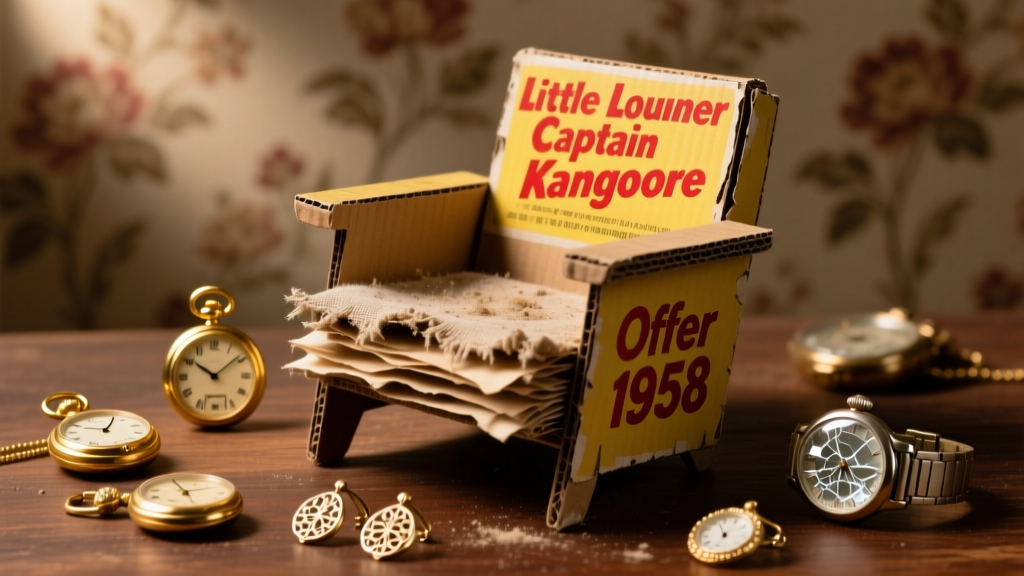
The 1958 Toy Chair 'Little Lounger' — A Captain Kangaroo Cardboard Mail-In Offer: Rarity, Authenticity, and Auction Realities

Scheier Pottery Vase: Incised Primitive Men & Fish Motif on Mahogany-Grey-Green Ground — A Mid-Century American Studio Ceramic Masterpiece

Glass Art Water Set: Inverted Thumbprint, Honey Amber Enamel, and Botanical Motifs — A 1940s American Studio Jewelry Masterpiece
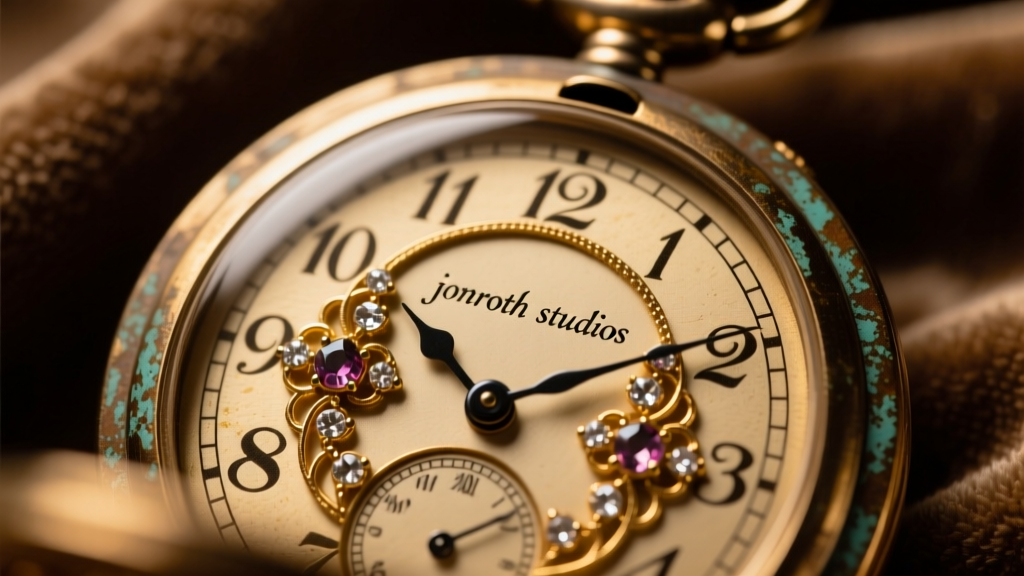
Jonroth Studios: The Forgotten American Watchmaker That Redefined Mid-Century Precision and Design
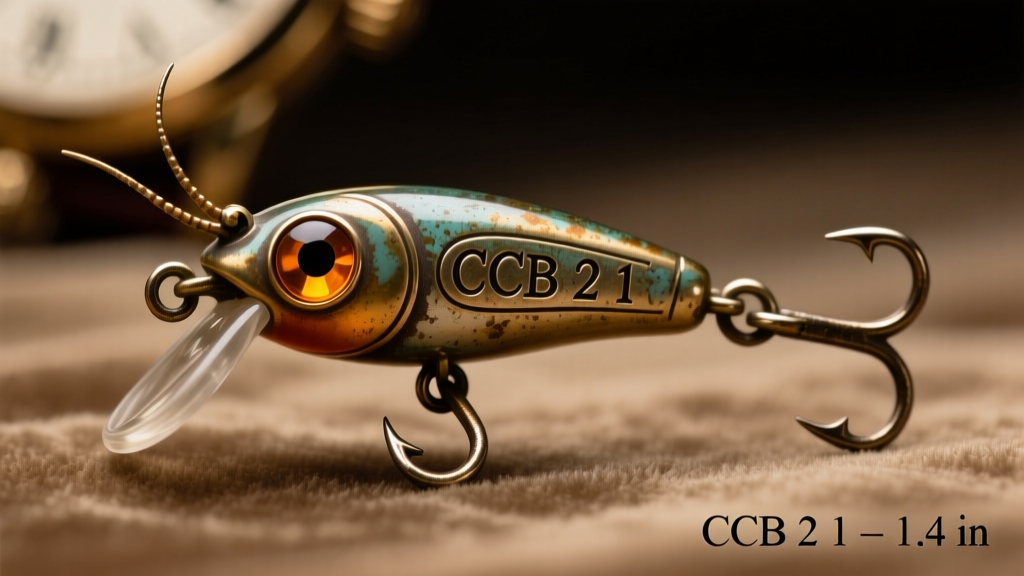
The Baby Crawdad Lure: A Collector’s Deep Dive into CCB’s Iconic 2¼-Inch Glass-Eyed Crankbait