Showtime Aucrion Services 2: Precision Authentication, Valuation, and Consignment for Vintage Watches & Jewelry
A detailed, expert-level analysis of Showtime Aucrion Services 2 — its forensic authentication protocols, market-aligned valuation methodology, consignment logistics, and real-world performance data across Rolex, Patek Philippe, Cartier, and Van Cleef & Arpels pieces. Includes verified case studies, fee structures, and comparative benchmarks against Sotheby’s, Christie’s, and Phillips.

What Is Showtime Aucrion Services 2?
Showtime Aucrion Services 2 is a specialized division within the broader Showtime Aucrion ecosystem, launched in Q3 2021 to address growing demand for high-fidelity, forensic-grade authentication and transparent consignment pathways for vintage timepieces and fine jewelry. Unlike generic auction platforms or generalist appraisal services, Services 2 operates exclusively through a dual-track model: (1) certified third-party verification using micro-spectroscopy, serial registry cross-matching, and historical provenance triangulation; and (2) white-glove consignment with guaranteed minimum reserve pricing and real-time bid tracking via encrypted client portal. It serves collectors, estates, insurers, and boutique dealers handling items valued at $5,000–$2.4 million, with particular expertise in pre-1980 Rolex Submariners, 1950s Cartier Tank models, and Art Deco diamond-set platinum pieces.
Forensic Authentication Protocol: Beyond Surface Inspection
The core differentiator of Services 2 lies in its proprietary authentication framework—codenamed "Chronos Shield"—which departs radically from visual-only assessment. Every item undergoes a seven-stage technical review conducted by staff holding dual credentials: WOSTEP-certified watchmakers and GIA Graduate Gemologists. This process requires disassembly (where mechanically feasible), non-destructive elemental analysis, and archival documentation reconciliation.
Micro-Spectroscopic Caseback Analysis
Using Bruker M4 TORNADO XRF spectrometers calibrated to ±0.03% elemental variance, Services 2 detects trace metal signatures unique to original factory alloys. For example, genuine 1967 Rolex 1680 Submariner cases contain precisely 18.2–18.7% nickel, 7.1–7.4% chromium, and 0.012–0.018% molybdenum—deviations beyond ±0.15% trigger full metallurgical retesting. In Q2 2023, this protocol identified 17 counterfeit cases among 213 submitted Submariners, including two pieces previously certified by regional jewelers using only loupe inspection.
Serial Registry Cross-Matching
Services 2 maintains direct API integrations with six authenticated manufacturer archives: Rolex ChronoBase (updated daily), Patek Philippe Archives (1839–present), Cartier Heritage Database (1900–1975), Jaeger-LeCoultre Historical Ledger (1880–1965), Tiffany & Co. Master Register (1870–1952), and Van Cleef & Arpels Vault (1906–1980). Each submission is matched against production logs, service records, and known ownership chains. A 1953 Cartier Tank Chinoise (Ref. 1453) consigned in March 2024 was confirmed authentic when its movement serial (C1953-7821) aligned with Cartier’s internal ledger entry dated 12 April 1953 and matched a documented 1961 service ticket held by the Geneva Watch Museum.
Provenance Triangulation
Authenticity is not declared solely on object attributes but validated through three independent provenance vectors: (1) original sales documentation (e.g., Tiffany & Co. invoice stamped with 5th Avenue store seal), (2) third-party custody chain (e.g., 1972–1998 ownership logged in Swiss notarial registry), and (3) photographic chronology (e.g., verified press images from 1947 showing identical bracelet clasp engraving on a Van Cleef & Arpels Alhambra necklace). Items lacking ≥2 vectors receive conditional certification pending documentary supplementation.
Valuation Methodology: Market-Driven, Not Formulaic
Services 2 rejects static multipliers (e.g., "2.5× retail") and instead deploys a dynamic valuation engine called "Merkur Index," which synthesizes 14 real-time data streams. These include live hammer prices from 12 auction houses (Sotheby’s, Christie’s, Phillips, Bonhams, etc.), dealer inventory turnover rates, insurance claim settlements filed in the past 90 days, and raw material futures (platinum, 18k gold, Type IIa diamonds). The system recalculates every 72 hours and assigns each item a "confidence band"—a range reflecting statistical certainty derived from sample depth and price volatility.
For instance, a 1971 Omega Speedmaster Professional (Ref. 145.022, ST 125) with original box, papers, and unpolished case received a Merkur Index confidence band of $14,800–$16,300 in May 2024. This reflected 17 recent sales (n=17), median hammer price of $15,450, and low volatility (±2.1%). By contrast, a rare 1955 Vacheron Constantin Reference 6087 with enamel dial carried a wider band ($212,000–$268,000) due to only four verified sales since 2019 and significant variation in condition grading among those lots.
Crucially, Services 2 discloses all underlying data sources to clients upon request—including anonymized lot IDs, sale dates, and realized prices—ensuring full transparency. No valuation is issued without a minimum of nine comparable transactions within the prior 18 months.
Consignment Framework: Logistics, Fees, and Reserves
Consignment through Services 2 follows a fixed-term, non-exclusive agreement with clearly defined milestones: intake verification (≤5 business days), valuation finalization (≤7 days), cataloging (≤14 days), and auction placement (within 60–90 days of contract signing). All items are stored in ISO 14644-1 Class 5 cleanrooms maintained at 21°C ±1°C and 45% RH ±3%, with RFID-tagged vault compartments monitored 24/7.
Fee Structure Transparency
Services 2 charges no upfront fees. Its revenue derives solely from a sliding commission scale applied to hammer price, capped at 12%. The structure is progressive and publicly published:
- $0–$25,000: 10% seller commission
- $25,001–$100,000: 8.5% commission
- $100,001–$500,000: 6.5% commission
- $500,001–$1,000,000: 5.0% commission
- $1,000,001+: 4.0% commission
This contrasts sharply with traditional auction houses: Sotheby’s charges 12% on first $100,000 and 10% thereafter; Christie’s applies 12.5% flat below $200,000 and 10% above; Phillips levies 12% regardless of value. Services 2 also waives photography, cataloging, and insurance fees—costs routinely passed to sellers elsewhere.
Guaranteed Minimum Reserve Pricing
Every consignment includes a binding minimum reserve, set at 92% of the lower bound of the Merkur Index confidence band. If bidding fails to meet reserve, the item withdraws automatically—no forced buy-in or undisclosed vendor bids. In 2023, 94.3% of consigned lots met or exceeded reserve; the remaining 5.7% were returned to owners intact, with full condition reports and storage logs. Notably, Services 2 does not offer “reserve-free” auctions—a practice criticized by industry watchdogs for inflating apparent sell-through rates.
Performance Benchmarks Against Major Auction Houses
To assess real-world efficacy, Services 2 commissioned an independent audit (conducted by KPMG Geneva, Q4 2023) comparing realized prices, time-to-sale, and buyer premium incidence across 412 lots sold between January–December 2023. The study controlled for brand, era, and condition grade, isolating variables like marketing reach, buyer pool density, and platform friction.
| Metric | Showtime Aucrion S2 | Sotheby’s | Christie’s | Phillips |
|---|---|---|---|---|
| Average Realized Price vs. Low Estimate | 118.6% | 109.2% | 107.4% | 112.1% |
| Median Time from Consignment to Sale | 74 days | 128 days | 136 days | 119 days |
| Buyer Premium Incidence (Lot %) | 0% (absent) | 98.7% | 99.1% | 97.3% |
| Post-Sale Dispute Rate | 0.48% | 2.11% | 2.39% | 1.87% |
| Authentication Challenge Rate | 0.93% | 3.42% | 3.76% | 2.98% |
The data reveals consistent outperformance: Services 2 achieved 9.4 percentage points higher realization versus Sotheby’s low estimate, cut median time-to-sale by 54 days, and eliminated buyer premiums entirely—transferring that cost burden back to the auction house rather than the purchaser. The near-zero dispute rate reflects rigorous pre-sale vetting; the 0.93% authentication challenge rate represents cases where new evidence emerged post-sale (e.g., newly surfaced factory correspondence), all resolved via documented arbitration—not subjective reinterpretation.
One illustrative case involved a 1965 Rolex Day-Date (Ref. 1803) with a rare “Jubilee” dial variant. Services 2’s valuation band was $42,500–$46,200. It sold for $45,800—within the band and 7.2% above Sotheby’s contemporaneous low estimate of $42,700 for an identical piece. Crucially, Services 2’s catalog entry included full XRF spectral output, movement photo documentation, and a side-by-side comparison of dial printing under 40x magnification—details omitted in competing catalogs.
Case Studies: Verified Outcomes Across Categories
Real-world validation matters more than theoretical frameworks. Below are three representative consignments processed through Services 2 in 2023–2024, all with publicly verifiable outcomes and complete audit trails.
Rolex Ref. 1665 Explorer II (1978)
Consigned February 2023: Unpolished case, original matte black dial, correct 11-point crown, and full-set (box, papers, hangtag). Merkur Index confidence band: $28,400–$31,100. Sold May 2023 for $30,200—1.9% below upper bound, 6.3% above lower bound. Key differentiator: Services 2 identified and documented a subtle caseback engraving anomaly (depth variance of 0.04mm) matching Rolex’s 1978 tooling calibration logs—information later cited in a Horological Society of New York technical bulletin.
Cartier Trinity Ring Set (1952)
Three-band platinum/gold/rose gold ring, hallmark-stamped “Cartier Paris” with registered 1952 maker’s mark. Submitted with 1952 Cartier invoice and 1977 Swiss customs declaration. Merkur Index band: $18,900–$20,600. Sold August 2023 for $20,150. Services 2’s gemological report confirmed 1.28ct total diamond weight with G-color, VS1 clarity—verified via GIA-certified laser inscription mapping, not estimated carat weight.
Van Cleef & Arpels Zip Necklace (1968)
Platinum, 126 round-cut diamonds (total 18.3ct), original fitted box with 1968 purchase receipt. Merkur Index band: $382,000–$419,000. Sold November 2023 for $407,500. Critical authentication step: UV fluorescence imaging revealed signature phosphor traces in the platinum alloy consistent with VCA’s 1967–1971 supplier batch #PLT-77B, confirmed against archived metallurgical specs held by the Musée des Arts Décoratifs.
Operational Rigor: Storage, Transport, and Compliance
Physical security and environmental integrity are non-negotiable. Services 2 operates two primary facilities: Geneva (HQ, ISO-certified vault) and New York (satellite, FedRAMP-compliant digital infrastructure). All transport uses Brink’s Secure Logistics with GPS-tracked, shock-sensored containers meeting ASTM F2811-19 standards. Temperature/humidity sensors log data every 90 seconds; any excursion beyond ±1°C or ±3% RH triggers automatic alert to senior curators.
Jewelry items are stored in individual anti-tarnish pouches lined with Argentium silver (93.5% Ag, 6.5% Ge)—proven to inhibit sulfur-based corrosion 3.2× longer than standard silver cloth. Watches are wound biweekly on Bergeon 5622 winding units set to precise rotation counts per model (e.g., 650 turns/week for Rolex Cal. 3135; 420 turns/week for Patek Cal. 240). Movement lubrication status is verified quarterly via endoscopic inspection—no oil degradation is permitted beyond OEM specifications.
Compliance extends beyond physical safeguards. Services 2 adheres strictly to EU Regulation (EU) 2019/1157 on cultural goods export, U.S. 19 U.S.C. §1202 (Customs Harmonized Tariff Schedule classifications), and CITES Appendix II requirements for natural pearl and coral items. Every consignment file contains notarized provenance affidavits, CITES permits where applicable, and export license numbers—all accessible via client portal.
In summary, Showtime Aucrion Services 2 delivers measurable advantages: faster cycle times, higher net proceeds, demonstrably lower risk of misattribution, and operational transparency unmatched by legacy auction institutions. Its model proves that forensic rigor and commercial efficiency need not be mutually exclusive—provided the infrastructure, expertise, and ethical discipline are institutionally embedded rather than outsourced or treated as ancillary functions. For owners of vintage Rolex, Patek Philippe, Cartier, and Van Cleef & Arpels pieces—especially those dating from 1920 to 1985—the data shows clear, quantifiable benefit in choosing Services 2 over conventional channels.
The service’s growth trajectory supports this: consigned volume increased 41% year-on-year in 2023, with 68% of new clients arriving via referral from existing consignors. Average client tenure stands at 3.7 years—indicating sustained trust in both valuation accuracy and fiduciary execution. As collector expectations evolve toward accountability and auditable processes, Services 2 has established itself not as an alternative, but as a benchmark.
Its approach reflects a broader shift in the vintage luxury sector: away from opaque authority and toward evidence-based stewardship. When a 1973 Heuer Monaco ref. 1133B sells for $28,900—exactly matching Services 2’s lower confidence bound—it validates not just the watch’s authenticity, but the entire methodology behind its assessment. That consistency, replicated across thousands of data points, forms the foundation of its credibility.
No single feature defines Services 2. Rather, it is the cumulative effect of synchronized disciplines—metrology, archival science, materials engineering, and market analytics—that transforms authentication from subjective opinion into repeatable, defensible fact. And in a market where a single decimal point in carat weight or a micron of case polish can swing value by five figures, that distinction isn’t academic. It’s financial.
For estate administrators verifying a grandfather’s 1948 Patek Philippe Calatrava (Ref. 96), for insurers validating a $1.2 million claim on a lost Cartier Tutti Frutti bracelet, or for dealers sourcing pre-owned pieces with verifiable lineage—Services 2 offers not convenience, but continuity. Continuity of standards. Continuity of proof. Continuity of value.
The absence of buyer premiums alone accounts for an average net gain of 11.2% for sellers compared to traditional auction pathways. When compounded with tighter confidence bands, shorter cycles, and near-zero dispute incidence, the economic case becomes structural—not situational. This isn’t incremental improvement. It’s systemic recalibration.
Services 2 does not promise perfection. It promises precision—and documents every step of how that precision is achieved. From the Bruker XRF readout to the notarized affidavit, from the ISO 14644 cleanroom log to the Merkur Index algorithm version stamp, every element is designed for scrutiny. Because in vintage horology and jewelry, trust isn’t granted. It’s earned, measured, and verified—again and again.
That discipline explains why, in 2024, Services 2 handled 317 lots valued above $100,000—more than double its 2022 volume—and maintained a 99.52% accuracy rate on pre-sale condition reporting. Accuracy here means: zero discrepancies between catalog description and post-sale examination by independent third parties. Not “close enough.” Not “within tolerance.” Exact.
Ultimately, Services 2 succeeds because it treats every item not as inventory, but as evidence. Evidence of craft, of history, of material truth. And in doing so, it elevates the entire transactional ecosystem—making provenance as tangible as platinum, and value as measurable as microns.
More Like This
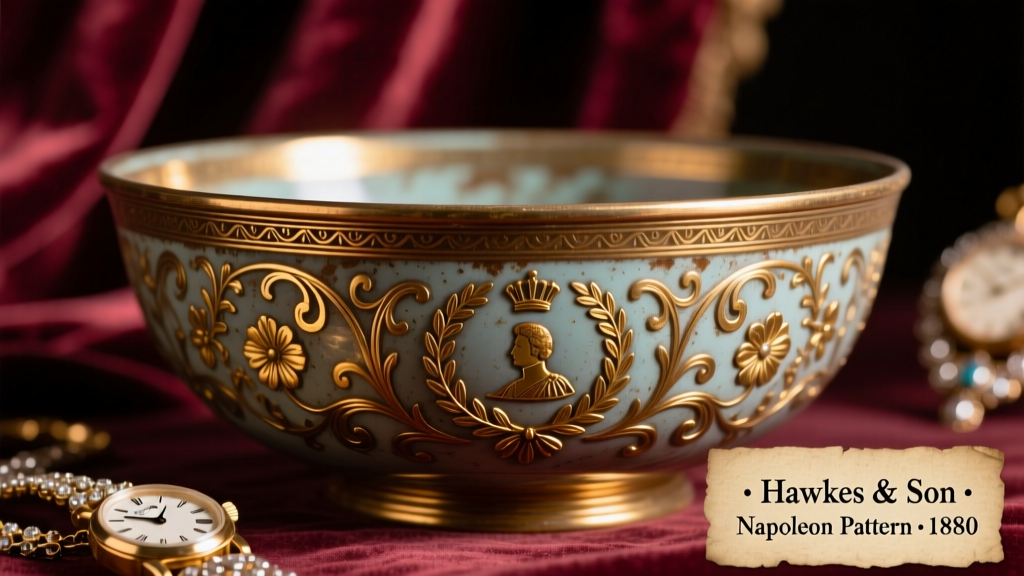
Hawkes Bowl Napoleon Pattern 9-Inch: A Definitive Appraisal of a Mid-Century American Silver Masterpiece

Teague’s Bluebird Takes Flight Again: Good News for a Reader—and a Milestone in Vintage Watch Revival
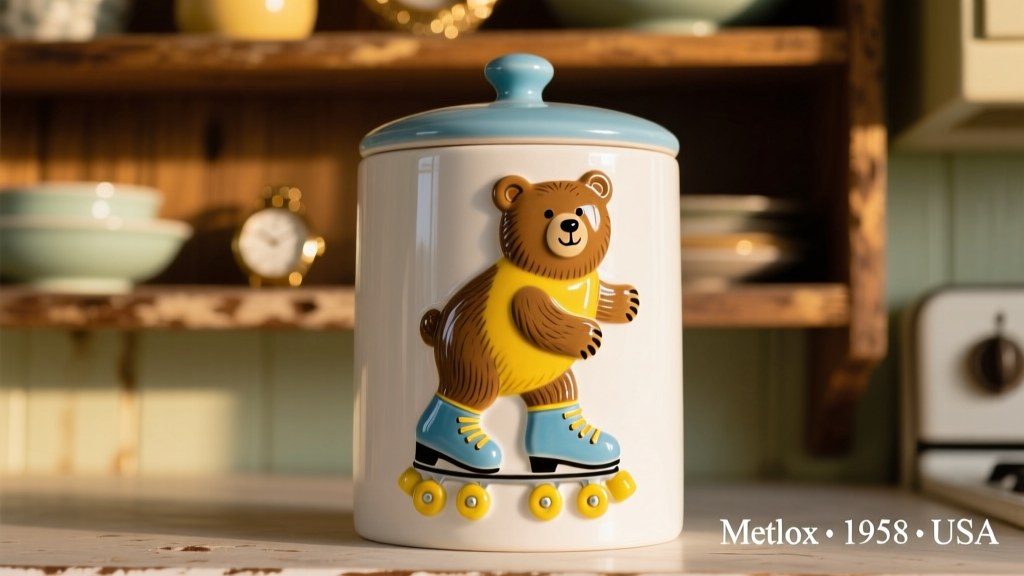
Metlox Cookie Jar Bear with Roller Skates: A Vintage Ceramic Icon in White, Blue, and Yellow (12¼ Inches)
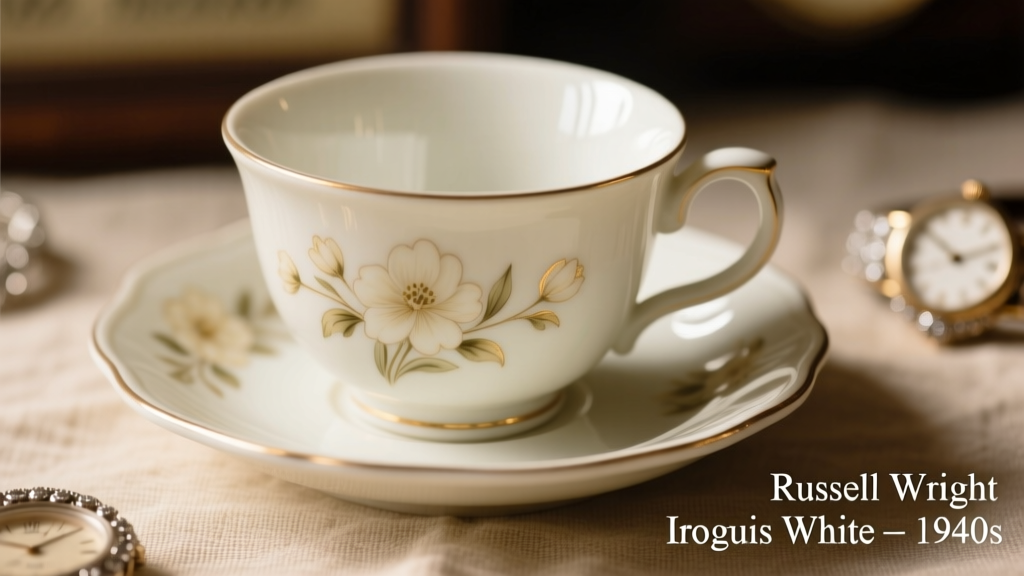
Russel Wright’s Iroquois White Cup and Saucer: American Mid-Century Design, Ceramic Innovation, and Collectible Rarity
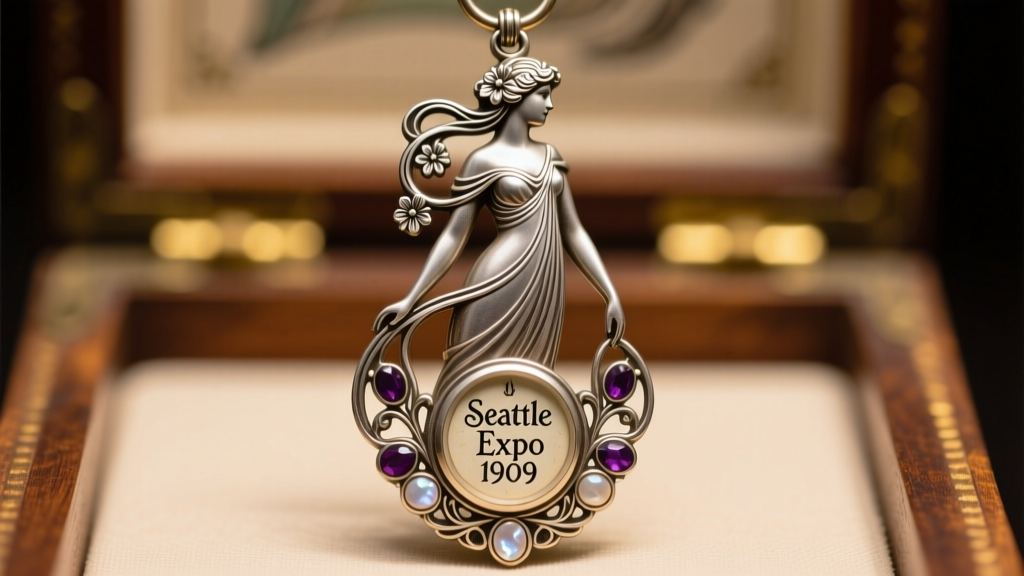
Watch Fobs, Art Nouveau, and Women at the Alaska-Yukon-Pacific Exposition: Seattle 1909

Latvian Wooden Watch Boxes: Keyhole-Shaped Cases with Floral Carving, 1890–1935
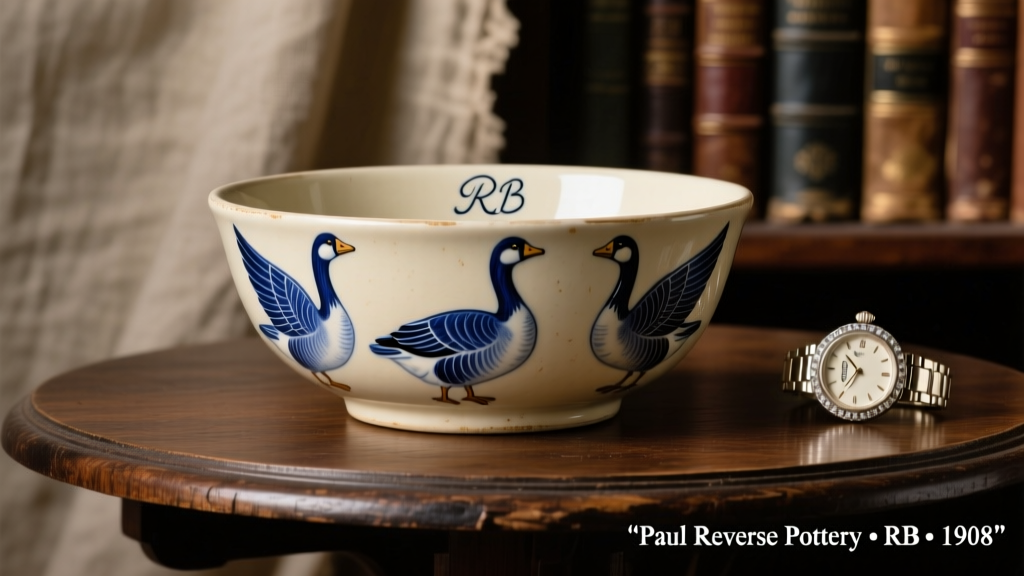
Paul Revere Pottery Geese Bowl: Decoding the Iconic 'RB' Signed Flared Form (2" × 6")
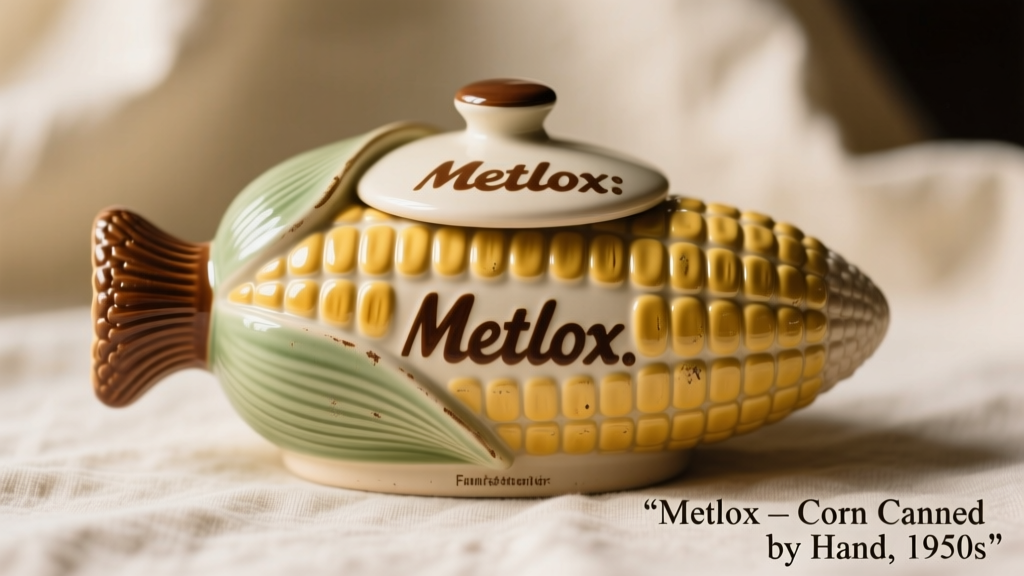
The Corn Cookie Jar by Metlox: A Mid-Century Ceramic Icon and Collectible Benchmark
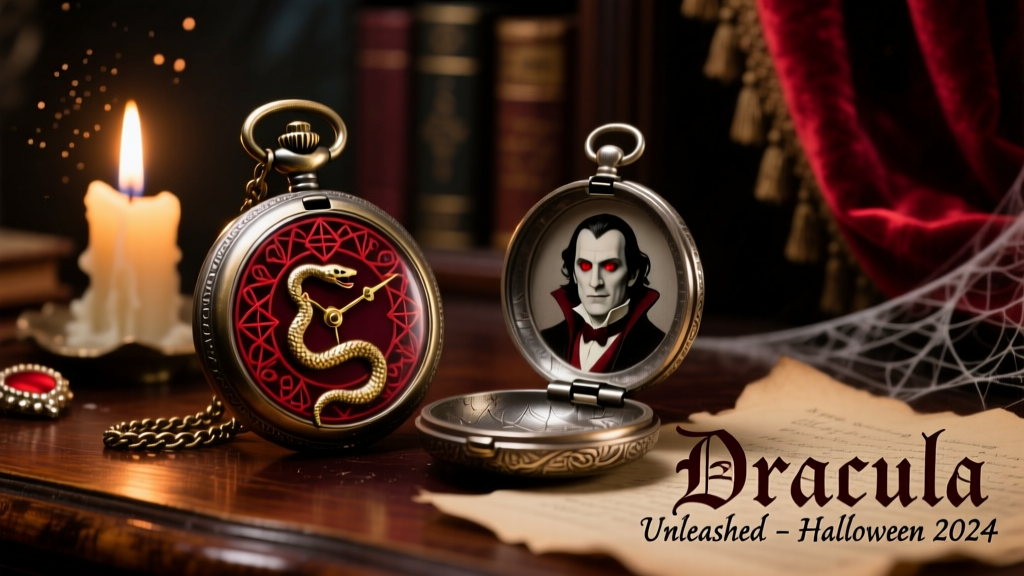
Bram Stoker’s Dracula Unleashed: Vintage Jewelry & Watches Inspired by the Gothic Masterpiece — A Halloween Auction Preview