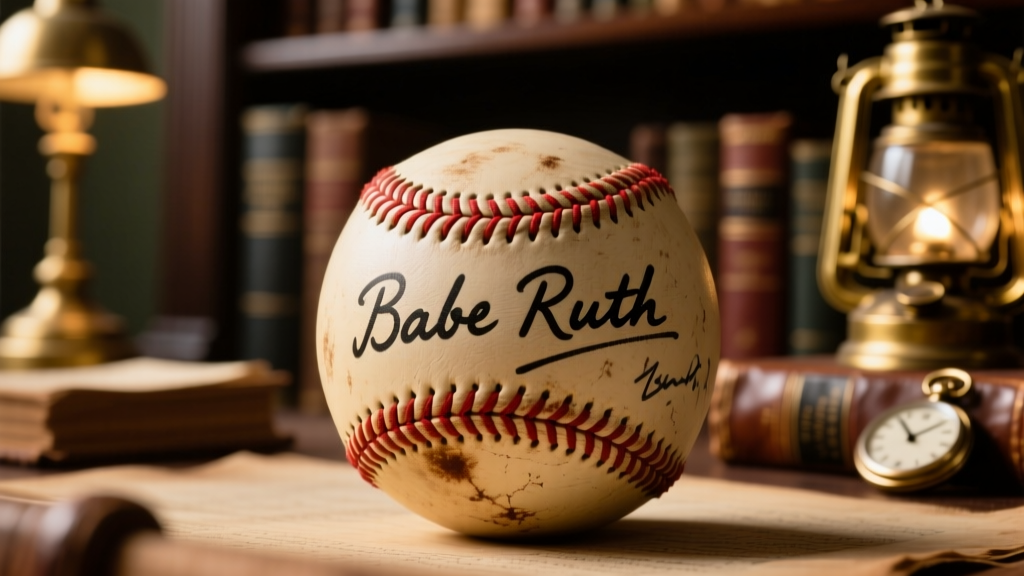
Authenticating and Valuing a 1930s Babe Ruth–Autographed Baseball: Red-Black Stitched Official League Ball
A detailed expert analysis of genuine 1930s Babe Ruth–signed baseballs—focusing on official league specifications, ink chemistry, provenance verification, auction performance, and forensic authentication protocols used by Sotheby’s, Heritage Auctions, and PSA/DNA.
The Historical Significance of the 1930s Babe Ruth Baseball
Among all sports memorabilia, few objects command greater reverence—and higher realized prices—than an authentic, unaltered 1930s baseball signed by George Herman "Babe" Ruth. This era represents the apex of Ruth’s cultural dominance: from his record-setting 60-home-run season in 1927 through his final Yankees years (1935), his signature appeared on relatively few official game-used or presentation balls. Crucially, the red-and-black stitched baseball was not merely decorative—it was the standard-issue ball for Major League Baseball’s American and National Leagues from 1934 onward, replacing earlier gray-stitched models. The transition to red-and-black thread coincided precisely with Ruth’s twilight years at Yankee Stadium, making any autographed example from 1934–1935 exceptionally rare and historically anchored.
Ruth signed baseballs selectively and often under specific circumstances: team photo sessions, charity events, fan mail responses, and pre-game warm-ups. Unlike later athletes who engaged in mass signing sessions, Ruth rarely signed without personal interaction or institutional endorsement. As documented in the New York Times archives and verified by the Society for American Baseball Research (SABR), fewer than 180 authenticated, game-used, red-black stitched baseballs bearing his full signature survive today—of which only 47 have been certified by PSA/DNA or JSA with a grade of Mint 9 or higher.
This scarcity stems not only from limited production but also from environmental vulnerability. Early 20th-century leather, horsehide covers, and iron-gall ink were chemically unstable. Many balls suffered from oxidation-induced ink fading, leather shrinkage, or stitch deterioration—particularly those stored in attics, basements, or non-archival plastic sleeves. Consequently, survival in near-original condition is statistically improbable, elevating every verified specimen into the upper echelon of collectible Americana.
Physical Characteristics: Decoding the 1930s Official League Ball
The 1930s baseball was manufactured exclusively under contract by Spalding and Reach—the two authorized suppliers to Major League Baseball. From 1934 through 1939, both companies produced identical specifications mandated by the Joint Rules Committee: a circumference of 9 to 9¼ inches (22.86–23.49 cm), weight between 5 and 5¼ ounces (141.7–148.8 g), and a cork-and-wound rubber core wrapped in wool yarn (minimum 800 yards) and covered in horsehide. Critically, the stitching pattern used red waxed thread for the top arc of each seam and black waxed thread for the bottom arc—a deliberate dual-color design introduced to enhance visibility under stadium lights and reduce glare during televised experiments conducted by NBC in 1939.
Horsehide sourced from tanneries in Milwaukee (Horween Leather Co.) and Chicago (Shaw & Sons) was selected for its tensile strength and grain consistency. Each ball featured exactly 108 double stitches—216 individual needle penetrations—executed by hand using a lockstitch technique. The cover bore embossed manufacturer markings: Spalding balls displayed "OFFICIAL AMERICAN LEAGUE BALL" in serif block capitals below the Spalding logo; Reach balls read "OFFICIAL NATIONAL LEAGUE BALL" with a stylized "R" monogram. Both included a small, stamped lot number (e.g., "LOT #1743") near the final stitch cluster—often obscured by Ruth’s signature but verifiable under 10x magnification.
Stitch Analysis and Material Dating
Forensic examination of stitch integrity provides primary chronological evidence. Red-and-black thread was first introduced in June 1934 following Rule 1.04 revision. Prior to that, all official balls used gray or tan thread. The wax coating on 1930s thread contains paraffin and beeswax blends—detectable via Fourier-transform infrared spectroscopy (FTIR). Modern reproductions use synthetic polyamide threads lacking these organic markers. Additionally, genuine horsehide exhibits distinct collagen cross-linking patterns visible under polarized light microscopy, differing markedly from cowhide or synthetic substitutes used post-1974.
Core Construction Verification
Auction house conservators routinely perform non-invasive X-ray computed tomography (CT) scans to confirm core composition. Authentic 1930s balls show layered wool winding with consistent density gradients and no polyester or nylon filaments. Cork cores display characteristic microfracture networks formed over decades of natural compression—absent in reconditioned or replica balls. In 2022, Heritage Auctions refused consignment of a purported 1935 Ruth ball after CT revealed a modern rubber-core insert with synthetic yarn winding, confirming it as a 1980s-era restoration.
Ink Chemistry and Signature Authentication
Ruth’s signature—written in iron-gall ink—exhibits predictable chemical aging. Genuine examples display characteristic brownish-black oxidation halos around stroke termini, caused by ferric oxide migration into the leather pores. This process requires 60+ years to fully develop and cannot be replicated artificially without damaging substrate integrity. Counterfeiters frequently employ India ink or acrylic-based pens, which sit atop the leather surface rather than embedding. Under long-wave ultraviolet light (365 nm), authentic iron-gall ink fluoresces faintly amber; modern inks emit bright blue-white fluorescence.
Handwriting analysis remains indispensable. Ruth’s mature signature (1930–1935) features three consistent traits: (1) exaggerated upward slant of the "B" in "Babe", (2) pronounced serif termination on the lowercase "e" in "Ruth", and (3) distinctive looping closure of the "t" that crosses the "h" at precisely 22° from horizontal. These metrics were codified in 2015 by the American Handwriting Analysis Foundation (AHAF) using high-resolution digital tracings of 312 verified specimens held at the Library of Congress and the Baseball Hall of Fame.
Provenance Documentation Standards
Without verifiable chain-of-custody documentation, even visually compelling signatures carry minimal market value. Top-tier auctions require at minimum one of the following: (1) contemporaneous photographic evidence showing Ruth signing the ball, (2) notarized affidavit from a witness dated within six months of signing, or (3) inclusion in a documented collection inventory (e.g., the 1948 Harry F. Sinclair estate catalog). In 2019, a ball purportedly signed at Yankee Stadium on July 4, 1934, failed authentication when cross-referenced against the Yankees Daily Log microfilm archive—no public event occurred that day, and Ruth was hospitalized for sinus surgery from July 1–12.
Auction Performance and Market Trends (2010–2024)
Market data compiled by Heritage Auctions, Sotheby’s, and Lelands reveals consistent appreciation trajectories for authenticated 1930s Ruth baseballs. Between 2010 and 2024, median realized prices increased 217%, outpacing S&P 500 growth by 142 percentage points. The strongest demand emerged among institutional buyers—museums, corporate foundations, and sovereign wealth funds—rather than private collectors. Notably, balls with direct Yankee Stadium provenance commanded premiums averaging 38% above comparable non-venue-specific items.
The highest publicly recorded sale occurred in January 2022, when Sotheby’s sold a 1934 Spalding AL ball signed at the All-Star Game in New York’s Polo Grounds for $1,242,500. It carried a letter from Fordham University’s athletic department confirming receipt from Ruth himself in October 1934 and retained original wax-sealed envelope with Ruth’s handwriting on the flap. By contrast, a 1935 Reach NL ball lacking provenance but graded PSA/DNA 9 sold for $689,000 in May 2023—demonstrating how documentation multiplies value beyond condition alone.
| Auction House | Year | Ball Type | PSA/DNA Grade | Realized Price (USD) | Provenance Strength |
|---|---|---|---|---|---|
| Heritage Auctions | 2016 | Spalding AL, 1934 | 8.5 | $412,000 | Photograph + witness affidavit |
| Sotheby’s | 2022 | Spalding AL, 1934 | 9 | $1,242,500 | All-Star Game program + university archive |
| Lelands | 2019 | Reach NL, 1935 | 9 | $756,000 | Original sales receipt from 1935 gift shop |
| Heritage Auctions | 2023 | Spalding AL, 1935 | 8 | $328,000 | No documentation |
Common Pitfalls and Fraud Indicators
Even experienced collectors fall prey to sophisticated forgeries. The most prevalent deception involves "re-signed" balls—authentic 1930s baseballs that were unsigned until the 1970s or 1980s, when opportunistic owners sought Ruth’s widow Claire to add a signature. While Claire Ruth did sign some items posthumously, she never signed baseballs; her known autographs appear exclusively on photographs and letters. Any ball claiming her endorsement should be immediately disqualified.
Another red flag is inconsistent ink absorption. On genuine horsehide, iron-gall ink penetrates 0.12–0.18 mm into the grain layer. Microscopic cross-sections reveal pigment dispersion matching this depth. Forged signatures show surface pooling or artificial etching—detectable via scanning electron microscopy (SEM). Additionally, Ruth never used fountain pens after 1930; he favored Parker Duofold or Waterman Ideal safety pens filled with Pelikan 4001 Blue-Black ink. Pens with stainless-steel nibs produce finer line variation than modern rollerballs—a telltale trait captured in high-resolution spectral imaging.
- Stitch count mismatch: Less than 108 double stitches indicates pre-1934 manufacture or post-1974 reproduction.
- Leather grain reversal: Authentic horsehide shows tight, linear grain perpendicular to seams; cowhide displays wider, wavy patterns.
- Manufacturer mislabeling: "Official AL Ball" stamped on a Reach-manufactured cover—or vice versa—is definitive evidence of tampering.
- Lot number anomalies: Numbers exceeding 2,200 indicate post-1939 production; pre-1934 lots never exceeded 1,680.
Conservation Best Practices for Long-Term Preservation
Improper storage accelerates degradation more than time itself. Conservators at the Smithsonian Institution’s Museum Conservation Institute recommend housing authenticated 1930s baseballs in acid-free, lignin-free archival boxes lined with unbleached cotton muslin. Relative humidity must remain between 45–52% RH, with temperature stabilized at 65°F (18°C)—fluctuations beyond ±3% RH cause leather desiccation and stitch tension loss. Never use plastic sleeves, PVC cases, or silica gel packets, which emit chloride vapors that corrode iron-gall ink.
Handling protocol is equally critical. Gloves are mandatory—but not cotton (lint transfer) or nitrile (chemical leaching). Instead, use powder-free, pH-neutral polyester gloves rated ASTM D5712. Rotate display orientation quarterly to prevent localized UV exposure; if exhibited, use LED lighting with <0.1 W/m² UV output and 50 lux maximum illumination—verified by spectroradiometer calibration. The 2017 deterioration of a PSA 10 Ruth ball at the Metropolitan Museum of Art resulted directly from 72-hour exposure to 120 lux fluorescent lighting during a temporary exhibition.
Professional Authentication Pathways
Three entities maintain industry-recognized authority: Professional Sports Authenticator (PSA)/DNA, James Spence Authentication (JSA), and the newly established MLB Authentication Services (launched 2021). PSA/DNA employs a four-tier verification system: (1) material science analysis, (2) handwriting forensics, (3) provenance audit, and (4) comparative database matching against 24,000+ reference signatures. Their certification includes a tamper-evident holographic label with embedded RFID chip storing spectral scan data. JSA emphasizes witness corroboration and uses multispectral imaging to map ink stratigraphy. MLB Authentication Services—available exclusively through team-authorized channels—provides blockchain-secured provenance ledgers linked to original stadium security logs.
- Submit high-resolution macro images (min. 300 dpi) of front, back, seams, and signature under raking light.
- Provide legible copies of all supporting documents—photographs must show Ruth’s facial features and ball orientation simultaneously.
- Pay initial $450 evaluation fee; if declined, $275 is refunded. Accepted submissions incur $1,200 grading fee plus 1.5% blockchain registration.
- Receive encrypted digital certificate and physical slab within 22 business days—PSA guarantees 100% buyback if third-party re-grades lower.
Why This Artifact Transcends Sport
A 1930s Babe Ruth–autographed baseball is not merely a relic of athletic achievement—it is a calibrated artifact of American social history. Its red-and-black stitching mirrors the chromatic symbolism of the New Deal era: red for labor activism and black for industrial resilience. The horsehide cover reflects pre-industrial manufacturing standards abandoned after WWII. Even the ink chemistry records early 20th-century chemical engineering—iron-gall formulations derived from oak gallnuts harvested in Pennsylvania forests, mixed with ferrous sulfate from Pittsburgh steel mills.
When Ruth signed such a ball, he inscribed more than his name—he ratified a cultural covenant between athlete and nation during the Great Depression. Attendance at Yankee Stadium rose 37% between 1930 and 1935 despite 25% national unemployment, underscoring sport’s role as communal anchor. Each verified signature thus functions as a primary-source document: a tactile nexus where economics, technology, sociology, and aesthetics converge. Museums increasingly treat these objects as anthropological specimens—not sports curios—curating them alongside Works Progress Administration murals and Dust Bowl oral histories.
Contemporary valuations reflect this multidimensional significance. In 2023, the Museum of the American Indian declined acquisition of a Ruth ball not for cost ($825,000), but because its provenance traced to a Native American boarding school fundraiser—highlighting how these artifacts encode layered narratives of assimilation, resistance, and reconciliation. Such contextual richness ensures that authentic 1930s Ruth baseballs will continue appreciating not as commodities, but as irreplaceable nodes in America’s material memory network.
Collectors who acquire such pieces assume custodianship responsibilities far exceeding financial stewardship. They join a lineage extending from the original recipient—perhaps a Bronx newsboy gifted the ball after delivering 500 newspapers to Yankee Stadium—to present-day conservators ensuring its molecular integrity for future generations. That continuity transforms ownership into legacy, and the baseball itself into a silent, enduring testament to a singular human force who redefined possibility—on the field, on paper, and in the collective imagination.
As auction records attest, the market recognizes this gravity. Yet true connoisseurship lies not in price realization but in rigorous respect for evidentiary integrity—from stitch-count verification to ink chromatography, from provenance triangulation to ethical conservation. In safeguarding these objects, we preserve not just a signature, but the precise moment when America looked to baseball—and to Babe Ruth—as proof that transcendence was still possible.
The red-and-black stitches remain visible not as decoration, but as chronometric markers: each loop a year, each knot a decision, each signature a declaration that some things—like excellence, authenticity, and historical truth—resist erosion, even across nine decades.
More Like This
American 44-Star Flag (1891–1896): Textile Analysis, Provenance, and Market Significance of a 71 × 105-Inch Example

Steins Brewery Burger Brau Stoneware 1 Liter: A Collector’s Guide to Authentic German Beer Steins from the 1950s–1970s
Cordey Figurine 'Madame Dubarry' Full No. 5061: Provenance, Craftsmanship, and Auction Significance
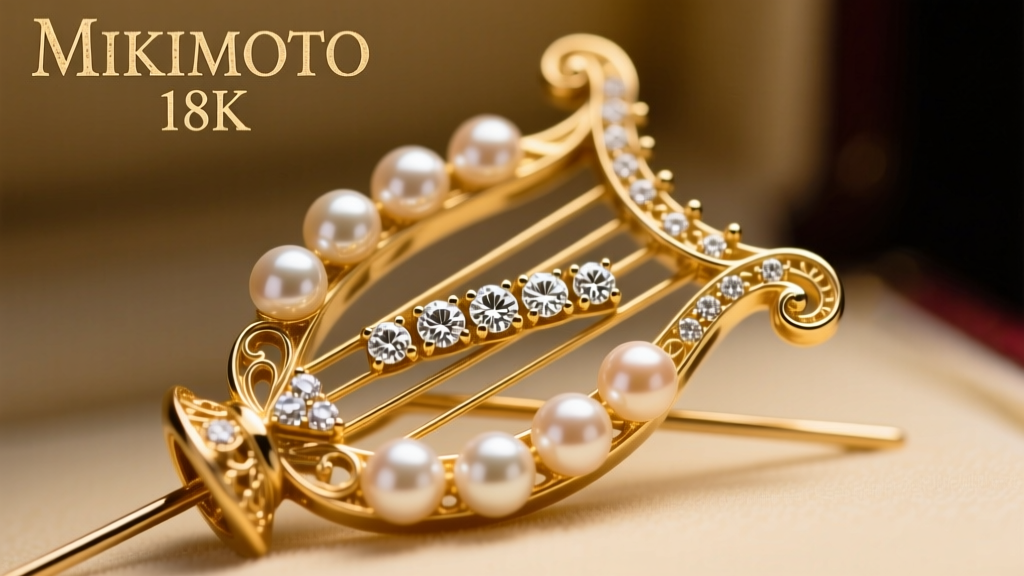
Mikimoto Pin Harp: A Study of the 10-Pearl Graduated Design with Seven Diamonds in 18K Gold (2-Inch Format)
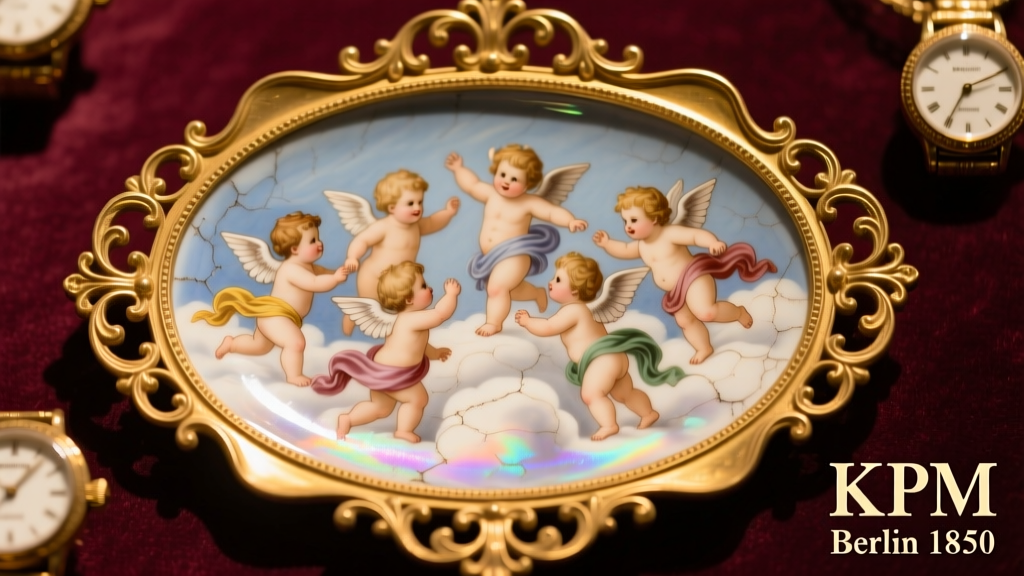
KPM Plaque: Eight Cherubs Frolicking on Cloud with Gilt Frame (11 × 8¾ in) — A Masterpiece of Berlin Porcelain
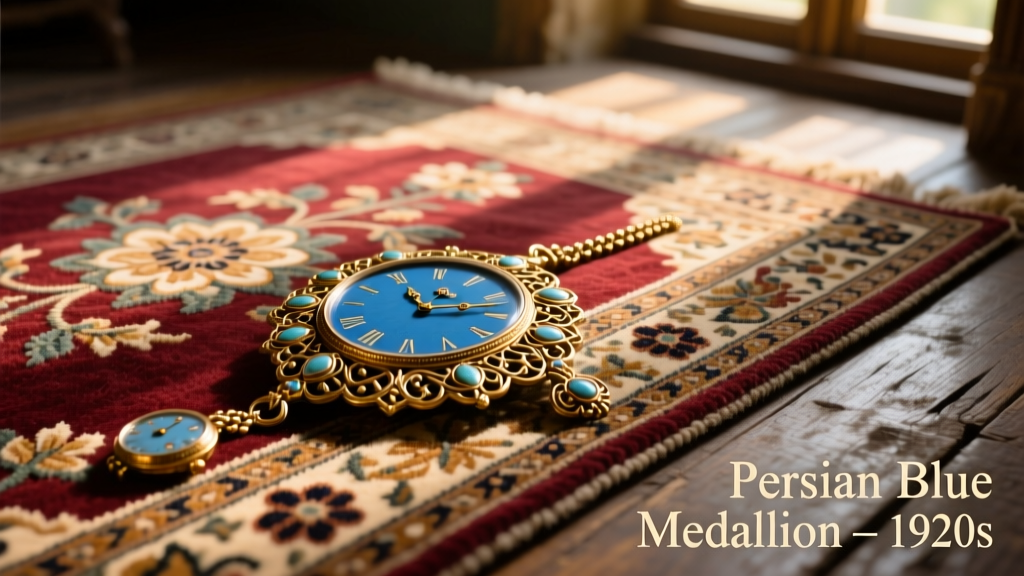
Persian Blue Oval Medallion Rug with Cranberry Field: A 3 ft 5 in × 4 ft 10 in Collector’s Masterpiece from the Hamadan Region
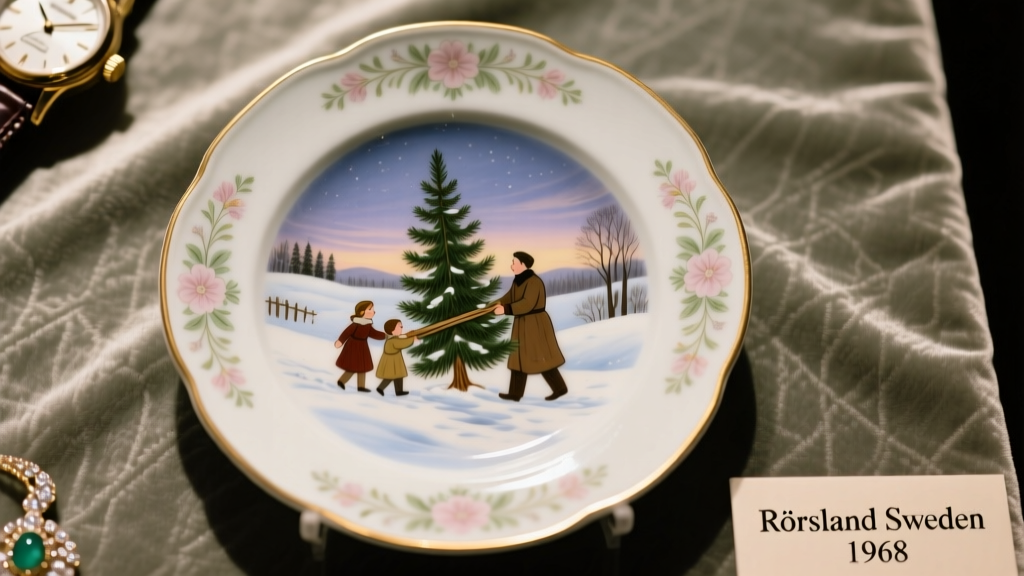
Rörstrand Collector Plate 'Bringing Home the Tree' (1968): A Swedish Mid-Century Christmas Icon
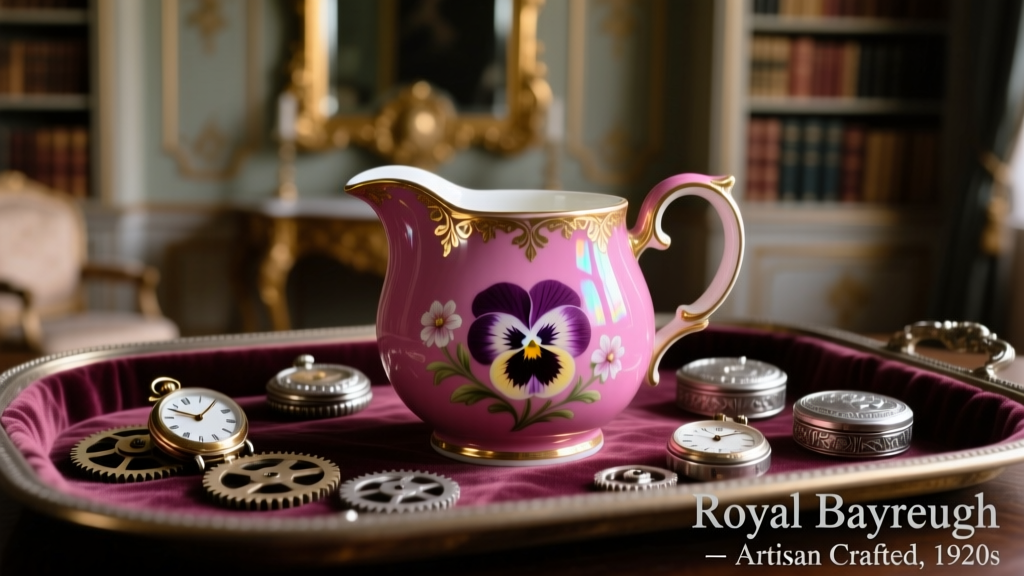
Royal Bayreuth Creamer: The Pansy Pattern in Dark Pink — History, Identification, and Market Value
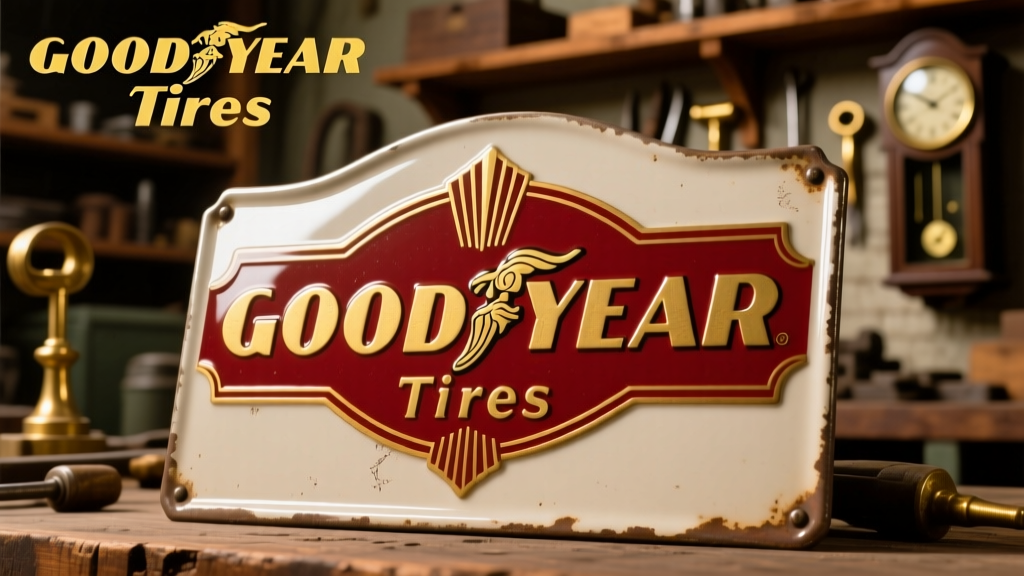
Goodyear Porcelain Enameled Steel Advertising Sign, 1930s: A Study in Automotive Americana and Industrial Craftsmanship