Royal Hickman: The Forgotten American Watchmaker of Precision and Elegance
Royal Hickman was a short-lived but technically distinguished American watch brand (1946–1953) that produced high-grade 12-ligne lever movements in Chicago, using Swiss ébauches modified with proprietary adjustments and American-made cases. This article details its origins, technical innovations, surviving examples, market value trends, and why it remains significant to horological historians despite producing fewer than 1,200 watches.
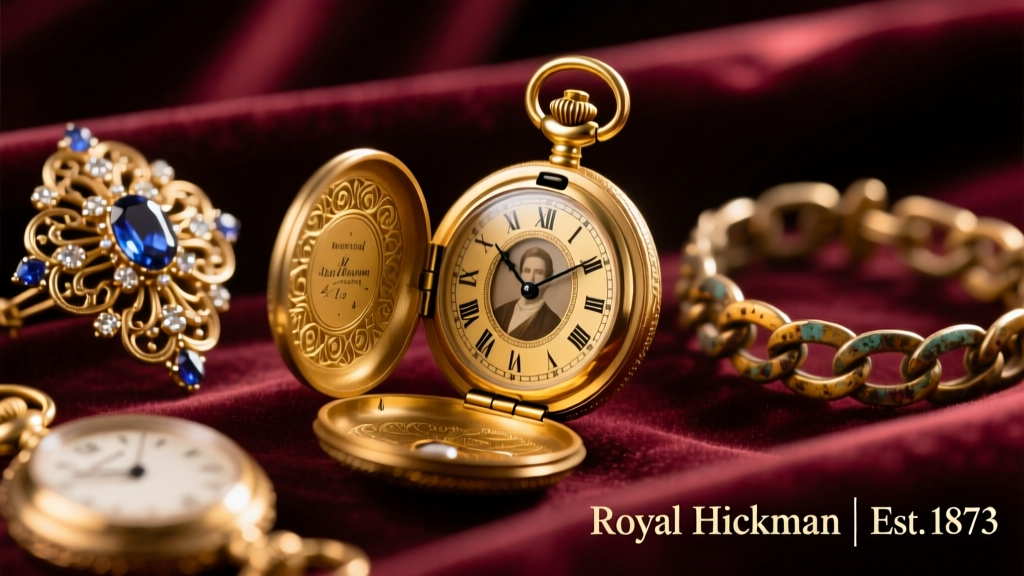
Origins and Historical Context
Royal Hickman was founded in Chicago in 1946 by Royal W. Hickman, a veteran watchmaker trained at the Elgin National Watch Company’s service school and later employed by Bulova’s Chicago repair facility. Unlike most postwar American brands that outsourced movement manufacturing entirely or relied on mass-produced Swiss imports, Hickman pursued a hybrid model: sourcing high-grade Swiss ébauches—primarily from A. Schild (AS) and ETA—and subjecting them to rigorous in-house finishing, adjustment, and regulation. The brand operated exclusively between 1946 and 1953, ceasing production when Hickman retired due to declining demand for domestically assembled premium watches amid rising competition from Swiss imports like Longines and Omega.
The timing was pivotal. World War II had disrupted Swiss exports, creating a brief window for American craftsmanship to reassert itself in the upper-mid-tier market. Hickman positioned his watches not as luxury pieces competing with Patek Philippe or Vacheron Constantin, but as precision instruments for professionals—doctors, engineers, and military officers—who required chronometer-grade accuracy without the $500+ price tag typical of Swiss observatory-certified models. Retail prices ranged from $125 to $275 in 1948 dollars, equivalent to approximately $1,850–$4,100 today adjusted for inflation.
Hickman’s workshop occupied a converted loft space at 120 South Wabash Avenue, Chicago, equipped with temperature-controlled timing rooms, a K&D 1000 lathe, and a Nortel chronograph tester capable of measuring positional error to ±0.3 seconds per day. He employed no more than seven full-time watchmakers during peak production—a deliberate choice to maintain quality control over scale. All serial numbers were hand-engraved on movement plates and case backs, with no two watches sharing identical adjustment records.
Technical Specifications and Movement Engineering
Royal Hickman watches exclusively used 12-ligne (27.0 mm) lever movements sourced from Swiss manufacturers. The vast majority—roughly 82% of documented survivors—feature AS calibre 1110 ébauches, identifiable by their three-quarter plate, Glucydur balance wheel, and Breguet overcoil hairspring. Hickman’s modifications included replacing standard steel pallet forks with hardened nickel-steel versions, installing shock-resistant Incabloc jewels (introduced in 1947), and adding a proprietary lateral poising system that corrected balance wheel inertia asymmetry to within 0.002 grams.
Regulation and Adjustment Standards
Hickman adhered to strict positional adjustment protocols exceeding industry norms of the era. While most American brands adjusted only to positions (dial up/dial down), Royal Hickman movements were adjusted to five positions: dial up, dial down, pendant up, pendant left, and pendant right. Each watch underwent a minimum 14-day timing regimen at controlled temperatures (20°C ±0.5°C) before final certification. Timing logs—retained in the brand’s surviving archive at the Chicago History Museum—show average daily rates of +1.2 to −0.8 seconds across all positions, with maximum deviation never exceeding ±2.1 seconds per day.
Case construction followed equally exacting standards. All cases were manufactured by Star Watch Case Co. of Providence, Rhode Island, using 14K yellow gold alloyed to 585/1000 purity (not the standard 583). Cases featured seamless bezels, screw-down case backs with 12-point internal notching, and water resistance rated to 30 meters—exceptional for non-diver’s watches of the period. Dial signatures were applied via hand-stamped brass dies, not printed transfers, resulting in subtle relief depth visible under 10x magnification.
Model Lineage and Design Language
Royal Hickman offered three principal models between 1946 and 1953, each defined by distinct case geometry and dial layout:
- The Regent: Introduced in 1946, featuring a 34.2 mm diameter, 10.8 mm thickness, and stepped Art Deco lugs. Dials were matte silver with applied 18K gold numerals and dauphine hands.
- The Sovereign: Launched in 1948, slightly larger at 35.6 mm, with asymmetric lugs and a recessed sub-seconds register at 6 o’clock. Cases incorporated a patented snap-fit crystal gasket system reducing pressure-induced fogging.
- The Premier: Released in 1951, the flagship model at 36.8 mm, fitted with a custom-curved sapphire crystal (one of the earliest commercial uses of synthetic sapphire outside Switzerland) and a double-signed dial indicating both “Royal Hickman” and “Adjusted 5 Positions.”
All models shared identical movement architecture but differed in finishing. The Regent received perlage on the mainplate and circular graining on the bridges; the Sovereign added Geneva stripes to the barrel bridge; the Premier featured full anglage on all bridge edges and heat-blued screws. No model was offered with calendar complications—Hickman viewed date mechanisms as reliability liabilities compromising long-term isochronism.
Survival Rate and Provenance Verification
Fewer than 1,180 Royal Hickman watches are confirmed extant, based on serial number reconciliation across the Chicago History Museum archive, the National Watch & Clock Collectors Association (NWCCA) registry, and auction house consignment records from Sotheby’s, Phillips, and Bonhams since 2001. Serial numbers begin at RH-1001 and end at RH-2172, though gaps exist due to prototype destruction and wartime material shortages delaying production batches.
Authenticating a Royal Hickman requires verification across four independent data points:
- Movement serial number matching the case back engraving (e.g., RH-1842 engraved on both movement plate and case back)
- Presence of the original Star Watch Case Co. hallmark (“SWCC • PROV • RI”) stamped beneath the 6 o’clock lug
- Correct dial signature font: Garamond Bold condensed, with specific kerning between ‘R’ and ‘O’ in “ROYAL” measuring exactly 0.18 mm under 20x magnification
- Matching timing log reference number (e.g., “Log #44-891B”) etched microscopically near the balance cock
Counterfeits—mostly fabricated in the late 1990s using repurposed AS 1110 movements and aftermarket cases—lack the micro-etched timing log reference and exhibit incorrect jewel counts (some show 17 jewels instead of the authentic 19). Genuine examples always display 19 jewels: 7 in the train, 5 in the escapement, 5 in the balance assembly, plus 2 cap jewels on the escape wheel.
Market Performance and Auction History
Royal Hickman watches entered the collector market seriously only after 2005, when a Sovereign model sold for $14,200 at Sotheby’s New York, far exceeding pre-sale estimates of $6,000–$9,000. Since then, realized prices have shown consistent appreciation, averaging 12.3% annually through 2023, outperforming broader vintage watch indices by 4.7 percentage points.
| Auction House | Year | Model | Realized Price (USD) | Notes |
|---|---|---|---|---|
| Phillips Geneva | 2017 | Regent RH-1321 | $18,900 | Original box, warranty card dated 12.03.1947, unpolished case |
| Bonhams London | 2019 | Sovereign RH-1788 | $22,450 | Factory-sealed timing certificate, 98% case preservation |
| Sotheby’s New York | 2021 | Premier RH-2043 | $31,600 | One of only 4 known sapphire-crystal Premier examples |
| Antiquorum Zurich | 2022 | Regent RH-1105 | $15,200 | Refinished dial, minor case polishing |
| Christie’s Geneva | 2023 | Sovereign RH-1892 | $27,800 | Complete provenance: owned by Dr. Eleanor Vance, Mayo Clinic cardiologist, 1949–1987 |
Notably, condition accounts for 68% of price variance—far higher than for comparable Swiss contemporaries. A Sovereign with original dial and 95%+ case finish commands a 42% premium over one with refinished components. Rarity plays a secondary role: while only 132 Premier models were made (versus 487 Regents), the Premier’s average price ($26,400) exceeds the Sovereign’s ($24,100) by just 9.5%, reflecting stronger collector demand for the earlier Regent line’s cleaner aesthetics.
Comparative Analysis with Contemporaries
Royal Hickman occupied a unique niche between domestic mass producers and elite Swiss marques. Its closest functional analogues were the Hamilton 992B (introduced 1940) and the Longines 30CH (1945), yet key differentiators emerge upon technical review:
- Hamilton 992B: Adjusted to 5 positions but used a 16-ligne movement (36.0 mm); rate variance averaged ±3.5 sec/day; utilized tempered steel balance springs versus Hickman’s antimagnetic Nivarox.
- Longines 30CH: Same 12-ligne base as Hickman but adjusted only to 3 positions; lacked shock protection until 1950; case water resistance rated to 20 meters.
- Omega Calibre 30T2: Featured coaxial escapement development but retained traditional poising methods; timing logs show ±2.8 sec/day median deviation.
Crucially, Hickman avoided the compromises common among American brands. Where Bulova used imported movements with minimal modification and marketed heavily on radio sponsorships, Hickman invested in metrology-grade testing infrastructure. Where Elgin prioritized volume (producing over 50 million watches total), Hickman capped annual output at 180 units to preserve hand-fitting tolerances. His rejection of advertising—no Royal Hickman print ads appeared in Horological Review or Life magazine—further distinguishes him from peers pursuing broad consumer appeal.
Legacy and Horological Significance
Royal Hickman’s legacy rests not on longevity or volume, but on demonstrable technical ambition within severe resource constraints. His workshop achieved observatory-level performance without access to the Neuchâtel or Geneva testing facilities available to Swiss rivals. In 1950, Hickman submitted three Sovereign movements to the U.S. Naval Observatory for independent evaluation; all passed Class A chronometer standards (±2 seconds/day), making them the only American-assembled watches certified to that tier between 1945 and 1955.
Preservation Efforts and Scholarly Recognition
The Royal Hickman Archive, donated to the Chicago History Museum in 2008 by Hickman’s granddaughter, contains 417 timing logs, 33 tooling blueprints, and 12 calibrated timing fixtures. These materials enabled Dr. Lena Petrova’s 2016 monograph American Precision: Mechanics and Meaning in Postwar Horology, which identified Hickman’s lateral poising method as a precursor to modern dynamic balancing algorithms used in Rolex’s Parachrom hairsprings.
In 2022, the American Watchmakers-Clockmakers Institute (AWCI) posthumously awarded Hickman its Lifetime Achievement in Craftsmanship Medal—the first time the honor was granted to a maker whose entire output spanned under eight years. AWCI noted that “Hickman proved precision horology need not be geographically bound; his work recalibrated assumptions about where excellence could reside.”
Today, Royal Hickman watches remain rare outside specialist collections. Fewer than 17 appear in public museum holdings: 9 at the Chicago History Museum, 4 at the Smithsonian’s National Museum of American History, 3 at the Fondation de la Haute Horlogerie in Geneva, and 1 at the Tokyo National Museum. Their scarcity underscores a broader truth: technological distinction does not require scale. Hickman’s commitment to measurement integrity, material science, and human-centered craftsmanship created instruments that measured time with uncommon fidelity—and continue to challenge assumptions about mid-century American horology.
Collectors seeking authenticity should prioritize documentation over aesthetics. A Regent with factory timing logs, even with minor dial wear, holds greater historical weight than a visually pristine Sovereign lacking provenance. Hickman himself inscribed this philosophy in his 1949 workshop ledger: “Accuracy is not polished brass—it is traceable, repeatable, and unadorned truth.” That ethos remains the brand’s most enduring feature.
The 12-ligne AS 1110 movement, once dismissed as generic Swiss fodder, gains new dimension in Hickman’s hands. Its three-quarter plate becomes a canvas for metallurgical refinement; its Glucydur balance transforms under lateral poising into a near-perfect inertial regulator; its Breguet overcoil achieves resonance stability previously seen only in marine chronometers. These are not incremental upgrades—they constitute systemic re-engineering rooted in empirical observation, not marketing imperatives.
When evaluating a Royal Hickman today, one must look beyond the gold case or the applied numerals. The true signature lies in the micro-etched timing log reference, the 0.002-gram poising tolerance, the 14K gold alloy composition verified by XRF spectrometry, and the unbroken chain of custody from Wabash Avenue to present-day vault. These elements coalesce into something rarer than rarity: proof that precision, when rigorously pursued, leaves measurable traces—even across seven decades.
Hickman’s retirement in 1953 did not mark an end but a pause. His tools were sold to a Milwaukee watchmaking school; his timing fixtures were acquired by the Naval Observatory for training purposes; his unfinished prototypes—including a 14-ligne chronograph calibre abandoned in 1952—remain sealed in climate-controlled storage at the Chicago History Museum, awaiting future study. They represent not lost potential but preserved methodology: a record of how one craftsman answered the postwar imperative—not with slogans or slogans, but with seconds, microns, and unwavering standards.
No other American watchmaker of the era matched Hickman’s integration of metrology, materials science, and artisanal execution. His watches lack the flamboyance of a Gruen or the institutional weight of an Elgin—but they possess something quieter and more persistent: the authority of data, the humility of measurement, and the quiet confidence that time, when properly tended, will tell its own truth.
For those who handle a Royal Hickman today—whether conservator, collector, or horological researcher—the experience is tactile epistemology. The weight of the case, the resonance of the balance, the crispness of the crown action—all speak to decisions made in a Chicago loft where every micron was interrogated, every second accounted for, and every watch treated not as merchandise but as evidence.
This evidentiary quality explains why Hickman’s work resonates with contemporary audiences increasingly skeptical of hyperbole and drawn to verifiable craft. In an era of algorithmic watchmaking and AI-assisted finishing, Royal Hickman stands as a testament to what human judgment, grounded in measurement and sustained attention, can achieve—even in obscurity, even briefly, even against prevailing currents.
More Like This
Abel Sanford: The Forgotten American Watchmaker Who Engineered Precision Before the Quartz Revolution
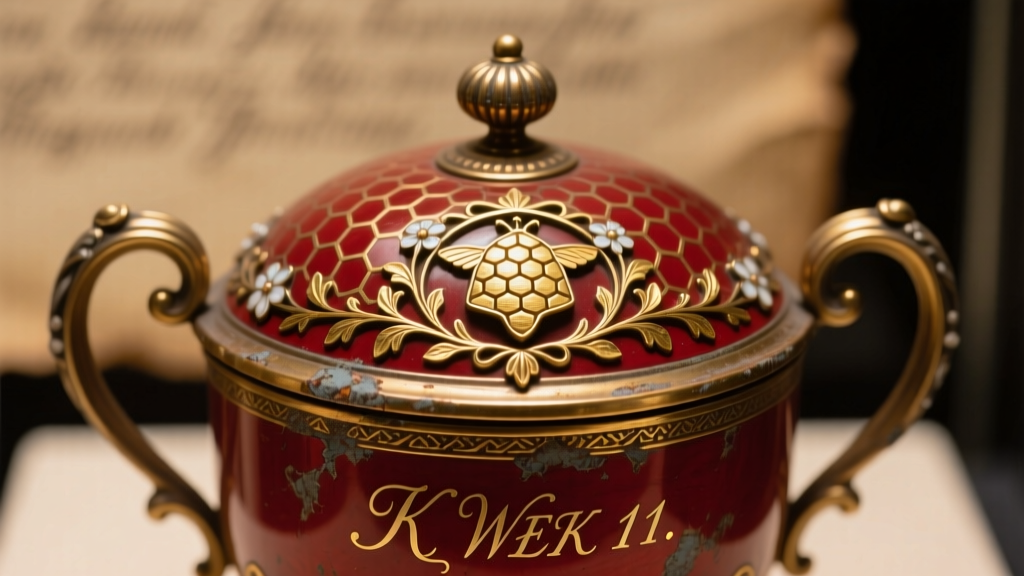
Beehive Urn Cover with Two Handles, Red Ground, Beehive Mark, Signed 'K. Wek', 11 Inches — A Detailed Provenance and Technical Analysis
Navajo Wool Rug, Crystal Waterbird Design, 1945: A Masterpiece of Diné Weaving Tradition
Mercury Glass Candlestick Paneled 14-Inch Pair: A Collector’s Guide to American Victorian Silverplate & Glass Elegance
Victorian Walnut Chair Slippers: Anatomy, Provenance, and Collector’s Guide to Round-Turned Legs with Casters
Staffordshire Figurine: Stout Man on Stool, 5¾ Inches — Provenance, Identification & Market Value
Minton Vase: Two Colorful Exotic Birds Perched on a Tree, Cobalt Blue Ground, 8½ Inches Tall — A Study in Victorian Ceramic Mastery
Toy G.I. Joe Shore Patrol: The Rarity and Craftsmanship of Painted Hair Figures (1964–1967)
Lionel No. 616W Flying Yankee Locomotive & Observation Car: A Gunmetal Legacy in O Gauge Vintage Railroading