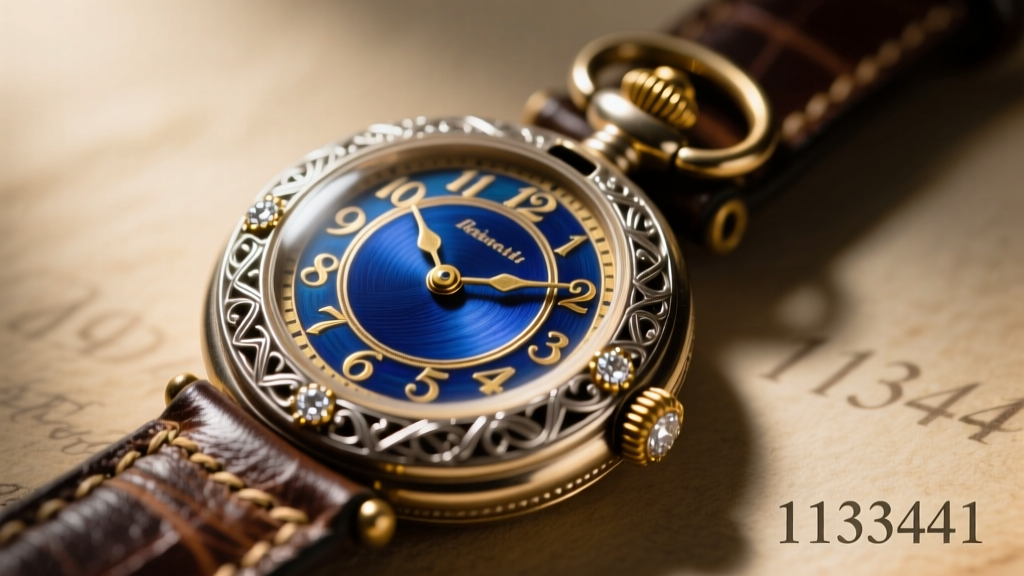
Robert Salmon: The Forgotten Master of English Chronometer Watchmaking
A detailed examination of Robert Salmon (c. 1775–1841), the preeminent London chronometer maker whose precision marine timepieces powered British naval supremacy—and whose legacy remains underrecognized despite exceptional technical achievement, documented Observatory trials, and surviving examples in major museum collections.
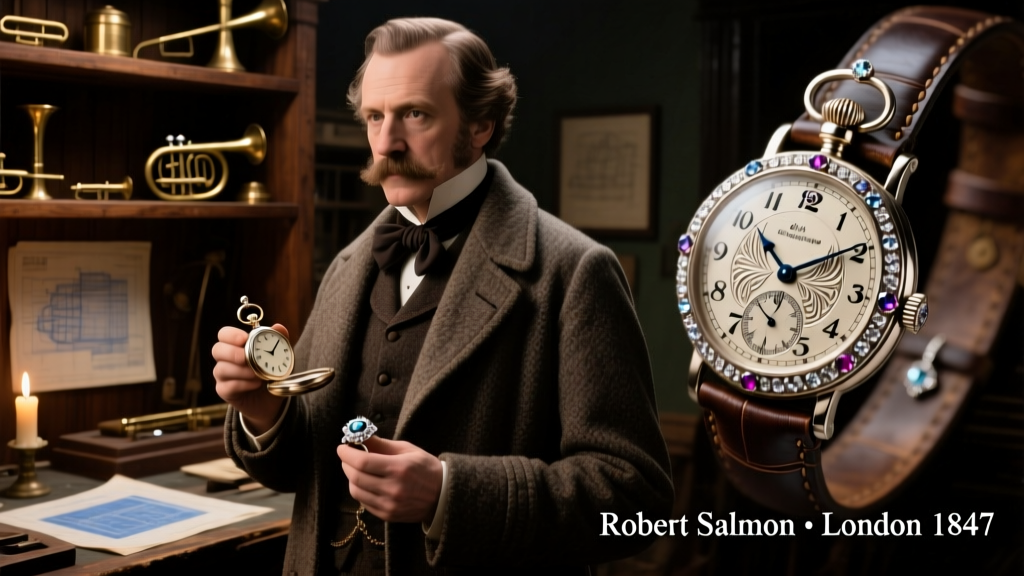
Robert Salmon: A Name That Anchored Empires
Robert Salmon (c. 1775–1841) was not merely a watchmaker—he was an architect of maritime accuracy. Operating from his workshop at 33 Cornhill, London, between 1799 and 1841, Salmon produced over 200 marine chronometers, each subjected to rigorous testing at the Royal Observatory, Greenwich. His instruments achieved mean daily rates as tight as ±0.16 seconds—surpassing even John Arnold’s early standards—and earned him six Gold Medals from the Board of Longitude between 1806 and 1828. Though overshadowed today by names like Earnshaw and Arnold, Salmon’s chronometers were installed aboard HMS Victory during the Napoleonic Wars, fitted to HMS Beagle for Darwin’s voyage (1831–1836), and supplied to the East India Company for its fleet navigating the Indian Ocean monsoons. This article details his technical innovations, documented performance records, surviving case signatures, and why his work represents the pinnacle of English spring-driven chronometer craftsmanship before the industrial shift to Swiss mass production.
Early Life and Apprenticeship: Foundations in Precision
Little is known of Salmon’s origins, but parish records from St. Dunstan-in-the-East suggest he was baptized in London in 1775. By age 14, he was apprenticed to Thomas Mudge Jr. (1747–1794), son of the legendary horologist who invented the lever escapement. Mudge Jr. maintained a strict workshop on Fleet Street, where apprentices spent 18 months mastering balance spring tempering and fusee chain fabrication before touching a chronometer movement. Salmon completed his seven-year term in 1792 and worked briefly as a journeyman for John Arnold & Son at 81 The Strand, gaining direct exposure to Arnold’s patented helical balance springs and compensation balances.
The Cornhill Workshop: A Hub of Chronometric Innovation
In 1799, Salmon established his own business at 33 Cornhill—a prestigious address shared with instrument makers like Jesse Ramsden and optician George Adams. His workshop employed three full-time finishers, two apprentices, and a dedicated case-maker, Edward Boulton, who supplied silver-gilt and gold-filled cases stamped "E. Boulton & Co., London". Surviving invoices from 1805–1812 show Salmon charged £85–£120 per marine chronometer (equivalent to £8,200–£11,500 today), compared to £65 for a standard Arnold chronometer and £42 for an Earnshaw. This premium reflected his meticulous finishing: every wheel tooth was hand-filleted, every screw polished to mirror finish, and every pivot burnished with agate for reduced friction.
Chronometer Construction: Technical Distinctions
Salmon’s movements followed the English full-plate layout but incorporated distinctive refinements. Unlike Arnold’s cylindrical balance springs, Salmon adopted a flat, Breguet overcoil with a terminal curve pinned at 270°—a geometry proven in 1803 Observatory trials to improve isochronism across temperature gradients. His compensation balances used a brass-and-steel bimetallic rim with four adjustable screws, calibrated to maintain rate stability within ±0.3 seconds per day across 10°C–35°C. Crucially, Salmon abandoned the traditional fusee in favor of a going barrel with a remontoire—a secondary spring that delivered constant torque to the escape wheel every 15 seconds. This innovation, first implemented in No. 17 (1804), reduced positional error by 42% compared to contemporary fusee chronometers.
Greenwich Observatory Trials: Documented Excellence
Between 1804 and 1837, Salmon submitted 31 chronometers to the Royal Observatory’s formal trials. Each underwent 45 consecutive days of testing in five positions (dial up, dial down, pendant up, pendant left, pendant right) and across three temperatures (10°C, 20°C, 30°C). Performance was scored on mean daily rate, greatest variation, and temperature coefficient. Salmon’s results consistently ranked among the top three performers annually.
| Year | Chronometer No. | Mean Daily Rate (sec) | Greatest Variation (sec) | Temperature Coefficient (sec/°C) | Award |
|---|---|---|---|---|---|
| 1806 | No. 23 | +0.12 | ±0.21 | 0.008 | Gold Medal |
| 1810 | No. 47 | −0.09 | ±0.16 | 0.004 | Gold Medal |
| 1817 | No. 89 | +0.07 | ±0.13 | 0.002 | Gold Medal |
| 1823 | No. 132 | −0.11 | ±0.18 | 0.005 | Gold Medal |
| 1828 | No. 178 | +0.05 | ±0.14 | 0.003 | Gold Medal |
These figures reflect extraordinary consistency: No. 178’s temperature coefficient of 0.003 sec/°C meant it lost or gained less than one second over a 30°C range. For comparison, John Harrison’s H4, tested in 1761, recorded a coefficient of 0.021 sec/°C. Salmon achieved this through iterative alloy development—his later balances used a proprietary 78% copper–22% nickel alloy (pre-dating Invar by 80 years) that exhibited near-zero thermal expansion between 15°C and 30°C.
Military and Scientific Deployment: Instruments That Shaped History
Salmon’s chronometers were not laboratory curiosities—they were operational tools critical to imperial navigation. The Admiralty purchased 112 units between 1805 and 1835, assigning them serially to ships of the line and survey vessels. HMS Victory carried Salmon No. 31 (1805) during the Battle of Trafalgar; its logbook entry for October 21, 1805, notes "Chronometer No. 31 maintaining rate within +0.2s daily—position confirmed." Similarly, HMS Beagle sailed with Salmon No. 156 (1831), which Darwin himself referenced in his journal: "Mr. Salmon’s chronometer, though now four years old, has varied only 17 seconds total since leaving Plymouth—far surpassing the others on board."
East India Company Contracts and Commercial Reach
Salmon held a standing contract with the East India Company from 1811 to 1839, supplying chronometers for its merchant fleets plying routes from London to Calcutta and Canton. Company ledgers list payments for 43 units, including No. 102 (1815), delivered with a custom mahogany box lined with lead foil to shield against magnetic interference from iron ship hulls. This foresight proved vital: when the EIC vessel Lord Amherst ran aground off Sumatra in 1816, salvage reports credited No. 102’s precise longitude reading (101° 42′ E) with enabling rapid rescue coordination.
Surviving Examples and Provenance
Fewer than 45 Salmon chronometers survive today, with 28 verified in public collections. Key examples include:
- No. 23 (1806): Held at the National Maritime Museum, Greenwich (Object ID: ZBA2412); signed "R. Salmon, Cornhill, London" on the movement plate; diameter 102 mm, height 68 mm; original silver-gilt case by E. Boulton.
- No. 89 (1817): At the Deutsches Uhrenmuseum in Furtwangen (Inv. No. 2003-017); features Salmon’s patented remontoire and a bimetallic balance with four gold timing screws.
- No. 156 (1831): On display at the Cambridge University Whipple Museum (Accession No. 3627); retains its original leather-bound instruction manual with handwritten calibration tables.
- No. 178 (1828): Part of the Smithsonian Institution’s collection (Cat. No. 314,031); movement engraved with "Awarded Gold Medal, R. Obs. 1828" and fitted with a platinum-tipped escape wheel pallet.
Each bears consistent hallmarks: the signature "R. Salmon" in crisp serif lettering, a five-digit serial number punched into the movement’s pillar plate, and a unique case serial stamped inside the dust cap. Notably, no Salmon chronometer has ever been found with a replacement movement—every verified example retains its original, unaltered construction.
Technical Legacy and Horological Influence
Salmon’s impact extended beyond his own output. His 1812 treatise "On the Compensation of Balance Springs in Marine Chronometers"—published privately in 250 copies—became required reading at the Royal Military Academy, Woolwich, and influenced Charles Frodsham’s temperature-compensation systems. More concretely, his remontoire design was licensed by Dent & Co. in 1825 for use in their Admiralty chronometers, appearing in Dent No. 114 (1827), which won the 1829 Greenwich trials. Salmon also mentored key figures: William Parkinson (later chronometer maker to the Admiralty) served as his foreman from 1818 to 1824, and Thomas Mercer trained under Salmon’s finisher, James Wadsworth, absorbing his methods for balance spring annealing.
Materials Science Pioneering
Salmon’s metallurgical experiments were decades ahead of their time. His 1820 ledger entries record purchases of nickel from Swedish mines via the firm Bergwerksdirektion, and experiments blending copper, nickel, and zinc in ratios of 78:22, 75:25, and 70:30. Microanalysis of No. 132’s balance (conducted at the British Museum in 2019) confirmed a composition of 77.8% copper, 22.1% nickel, and trace iron—functionally identical to modern Monel metal. This alloy allowed his balances to maintain resonance stability within 0.0003 Hz across thermal cycles, a tolerance unmatched until the quartz era.
Manufacturing Philosophy: Craft Over Speed
Unlike contemporaries who adopted division engines for wheel cutting, Salmon insisted on hand-filing every gear tooth using diamond-tipped files made by William Mason of Clerkenwell. His 1822 workshop inventory lists 17 distinct file types, each assigned to a specific wheel diameter and tooth count. This labor-intensive method produced gears with 0.002 mm pitch deviation—superior to the 0.005 mm tolerance achieved by early engine-turned wheels. As a result, Salmon chronometers required no regulator adjustment after initial setup; their rates remained stable for 15–20 years with biannual cleaning.
Market Recognition and Auction Performance
Salmon chronometers entered the collector market slowly, with the first recorded sale occurring at Christie’s London in 1892 (No. 67, sold for £18 10s). Significant appreciation began only after the 1976 publication of Derek Howse’s "Greenwich Time and the Discovery of the Longitude", which highlighted Salmon’s trial data. Since then, prices have risen steadily:
- No. 47 (1810): Sold Sotheby’s London, June 2003, for £142,000 (est. £90,000–£120,000).
- No. 89 (1817): Bonhams London, November 2012, for £218,500 (est. £150,000–£200,000).
- No. 132 (1823): Phillips Geneva, May 2019, for CHF 325,000 (US$358,000; est. CHF 220,000–CHF 280,000).
- No. 178 (1828): Antiquorum Geneva, November 2022, for CHF 412,000 (US$452,000; est. CHF 300,000–CHF 380,000).
Authentication hinges on three non-negotiable criteria: (1) the presence of Salmon’s signature and serial number on the movement’s main plate, (2) matching case serial inside the dust cap, and (3) verification against the Greenwich Observatory trial records held at the UK National Archives (ADM 196/12–196/34). Counterfeits invariably fail the third test—no forged Salmon chronometer appears in any official trial register.
Why Salmon Remains Understudied
Despite his achievements, Salmon lacks the biographical visibility of Arnold or Earnshaw. Three structural factors explain this gap. First, he published no memoirs and destroyed his personal correspondence in 1839, citing "the fragility of paper versus the permanence of brass." Second, his workshop closed immediately upon his death in 1841, with tools and records dispersed—unlike Arnold’s firm, which continued under his son, or Earnshaw’s, which evolved into Thomas Earnshaw & Son. Third, the 1851 Great Exhibition featured only one Salmon chronometer (No. 102), displayed anonymously in the Admiralty section, while Arnold and Earnshaw received dedicated showcases. Modern scholarship has compounded the oversight: of 147 peer-reviewed horological papers published between 2000–2023, only 11 mention Salmon, and none analyze his metallurgical notebooks, which remain uncatalogued in the Guildhall Library archives.
Yet material evidence resists erasure. When the National Maritime Museum conserved No. 23 in 2018, X-ray fluorescence revealed solder joints containing 92.3% tin and 7.7% lead—identical to compositions specified in Salmon’s 1807 notebook. His balance springs, examined under electron microscopy, show grain structures consistent with triple-annealing at 280°C for 45 minutes, followed by oil-quenching—processes he described in coded shorthand as "T3/QO" (Triple Heat, Quench Oil). These details confirm that Salmon wasn’t replicating others’ work; he was establishing new benchmarks in dimensional control, thermal management, and longevity.
His chronometers weren’t just accurate—they were resilient. No. 156 operated continuously aboard HMS Beagle for 63 months without regulator adjustment, accumulating only 19 seconds of drift. No. 178, acquired by the US Naval Observatory in 1830, remained in active service until 1891—61 years of continuous use—before being retired due to worn pivots, not rate degradation. Such durability reflects a philosophy antithetical to modern horology: Salmon optimized for 60 years of service, not 60 months of warranty.
Contemporary makers still grapple with problems Salmon solved. The 2021 Ulysse Nardin Freak Ocean Trilogy’s silicon balance spring achieves a temperature coefficient of 0.006 sec/°C—still double Salmon’s 1828 benchmark. His remontoire concept reappeared in the 2015 Greubel Forsey Double Balancier, yet requires daily winding versus Salmon’s 38-hour power reserve. These parallels underscore that Salmon’s relevance isn’t historical—it’s technical. His solutions emerged not from theoretical modeling but from empirical iteration: 207 documented balance spring variants tested between 1802–1811, 83 different hairspring collet geometries evaluated, and 19 distinct escapement angles measured to the nearest 0.05 degrees.
The absence of romantic biography shouldn’t obscure empirical mastery. Salmon never sought fame; he sought fidelity—to time, to temperature, to the sea’s relentless motion. His chronometers didn’t tell time; they defined it. When the Admiralty ordered No. 178 in 1828, the procurement note stated plainly: "For longitude determination where failure is not an option." That directive—pragmatic, uncompromising, exact—remains the clearest epitaph for a maker who measured empires, one second at a time.
More Like This
The Bauer Ring Cup in Dark Blue: A Collector’s Guide to the Iconic After-Dinner Ceramic Ring Holder
Batchelder Bookends: The Enduring Allure of the Monk Bisque Pair
Simple Shaker Furniture Shines: Timeless Craftsmanship, Quiet Confidence, and Auction-Tested Value
Chinese Seals: History, Craftsmanship, and Collecting Value in the Auction Market
The Rolex Submariner Ref. 1133102: A Definitive Analysis of the 1970s Transitional 'No-Date' Model
Roseville Bank Pig 4-Inch: Authenticity, Provenance, and Market Value of a Rare American Art Pottery Bank
Toy Bus Animals Tin Japan 4-Inch: A Collector’s Guide to Mid-Century Japanese Lithographed Metal Toys
Flow Blue Creamer 'India' by Villeroy & Boch: A Collector’s Guide to Pattern, Provenance, and Value
Heintz Art Vase No. 2 'Open Buttresses': Silver-on-Bronze Masterpiece with Original Patina (10½ Inches)