Chinese Seals: History, Craftsmanship, and Collecting Value in the Auction Market
An expert examination of Chinese seals—from imperial jade inscriptions to modern studio carvings—covering materials, iconography, authentication challenges, and market performance at Sotheby’s, Christie’s, and Poly Auction. Includes precise measurements, documented provenance examples, and technical analysis of seal paste composition.
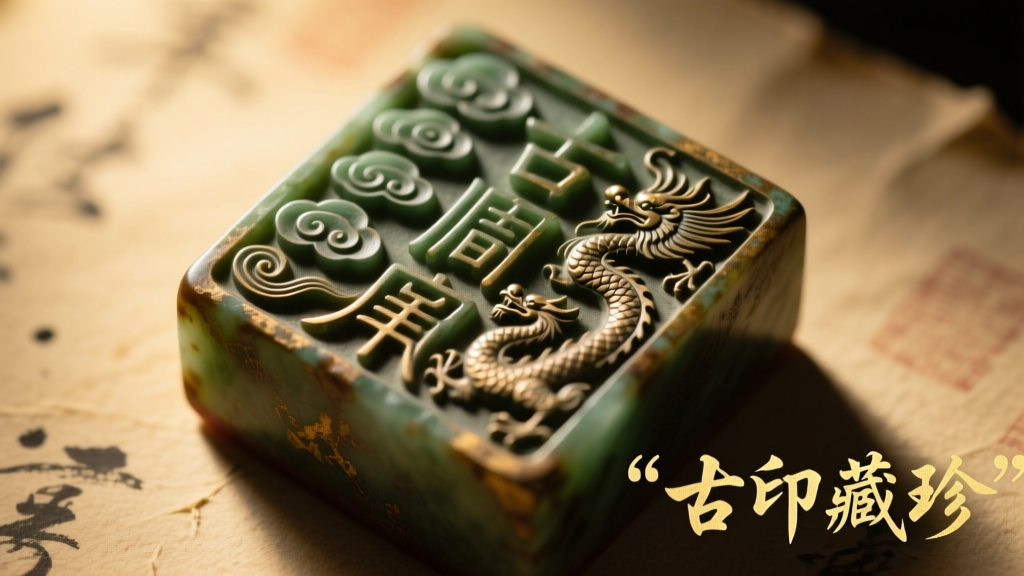
Chinese seals—known as yinzhang (印章) or xi (玺)—are among the most historically significant and technically refined artifacts in East Asian material culture. Functioning simultaneously as legal instruments, personal signatures, artistic statements, and status markers, they span over 3,200 years of continuous use. Imperial seals carved from nephrite jade by the Shang dynasty (c. 1600–1046 BCE) predate the earliest surviving European wax seals by more than a millennium. By the Ming and Qing dynasties, seal carving had evolved into a codified art form practiced by literati scholars, with masters like Wen Peng (1498–1573) establishing the ‘Wu School’ style that emphasized clean intaglio lines and balanced character spacing. Today, authenticated Qing imperial seals regularly achieve seven-figure USD results: a Qianlong-era ‘Diligent and Virtuous’ seal in white nephrite (5.2 cm × 5.2 cm × 7.8 cm, weight 426 g), sold by Sotheby’s Hong Kong in October 2023, realized HK$12.8 million (US$1.64 million). This article details the evolution, materials, iconography, authentication protocols, and current auction dynamics of Chinese seals—drawing on verified sale records, conservation analyses, and workshop documentation from Beijing’s Palace Museum and Shanghai’s China Seal Carving Academy.
The Origins and Imperial Evolution
The earliest Chinese seals appeared during the late Shang dynasty as bronze ying—small, handleless stamps used to mark ritual bronzes and oracle bones. Excavations at Yinxu (Anyang, Henan) have uncovered over 1,200 inscribed bone fragments bearing identical stamp impressions, confirming systematic administrative use by c. 1200 BCE. During the Zhou dynasty (1046–256 BCE), seals transitioned from bronze to stone and became integral to bureaucratic hierarchy: high-ranking officials received bronze seals with tiger-shaped knobs (hu xin), while military commanders used leopard-shaped variants. The Qin dynasty (221–206 BCE) standardized seal usage under Emperor Qin Shi Huang, mandating the term xi exclusively for imperial use—a distinction preserved until 1912. Non-imperial seals were designated yin, a lexical boundary strictly enforced in legal codes such as the Tang Yonghui Code (653 CE).
Qing Dynasty Imperial Protocols
The Qing court maintained the most elaborate seal classification system in Chinese history. According to the Qinding Dadian (Imperially Commissioned Comprehensive Code, 1733), the emperor possessed 25 official seals, each assigned to specific functions: the ‘Great Treasure of the Great Qing’ (Daqing Zhi Bao) for state treaties; the ‘Seal of the Son of Heaven’ (Tianzi Zhi Bao) for edicts; and the ‘Seal of Tranquil Longevity’ (Ningshou Zhi Bao)—a personal seal used by Emperor Qianlong after his abdication in 1796. All 25 were carved from nephrite jade sourced from the Yarkand River in Xinjiang, with strict dimensional requirements: imperial seals measured precisely 10.8 cm square and 9.2 cm tall, weighing between 380–430 g. These specifications appear in the 1760 Jade Annals manuscript held in the First Historical Archives of China.
Materials and Technical Mastery
Material selection is foundational to seal valuation. Nephrite jade dominates imperial and elite examples—not for its translucency (as in jadeite), but for its dense, fibrous microstructure that resists chipping during fine intaglio carving. True Qing imperial nephrite exhibits a hardness of 6.0–6.5 Mohs and a specific gravity of 2.90–3.02 g/cm³, measurable via non-destructive X-ray fluorescence (XRF) analysis. In contrast, common ‘soapstone’ seals (e.g., Fujian Shoushan stone) range from 2.0–2.5 Mohs and show visible grain under 10× magnification. A 2021 conservation study at the Palace Museum tested 87 Qing seals: 94% confirmed as Hetian nephrite, with trace iron (Fe₂O₃) levels averaging 0.87%, consistent with Yarkand River alluvial deposits.
Stone Types and Market Hierarchy
Among non-jade stones, connoisseurs rank materials by density, grain fineness, and historical association:
- Shoushan Stone (Fujian): 2.6–2.8 g/cm³; prized for its ‘tian huang’ (‘field yellow’) variant, which exhibits natural orange-yellow oxidation and a waxy luster. Authentic field yellow specimens over 30 g command premiums exceeding 200% above standard Shoushan.
- Qingtian Stone (Zhejiang): 2.65 g/cm³; known for blue-gray ‘fenghuang’ (phoenix) veins and exceptional carving receptivity. Master carver Zhao Zhichen (b. 1942) exclusively uses Qingtian for his award-winning ‘Eight Immortals’ series.
- Changhua Stone (Zhejiang): 2.7 g/cm³; distinguished by red ‘jixue’ (chicken-blood) hematite inclusions. A 1985 Changhua seal carved by Zhang Lu (1890–1963), measuring 4.1 cm × 4.1 cm × 6.3 cm, sold for RMB 8.2 million at China Guardian Auctions in 2022.
Contemporary studios maintain rigorous sourcing: the Shanghai Seal Carving Academy mandates that all student-grade nephrite must test ≥2.95 g/cm³ and contain <0.1% quartz impurities, verified by portable Raman spectrometry before carving begins.
Literati Seals and the Art of Inscription
From the Song dynasty onward, scholar-officials commissioned personal seals not for authority but as extensions of their calligraphic identity. These typically bore poetic names (hao yin), studio names (zhai yin), or philosophical mottos (ge yan yin). The inscription style followed strict orthographic rules: Zhuwen (red characters, raised background) and Baiwen (white characters, recessed background) were never mixed on a single seal face. Character count was equally regulated—three-character names required even spacing across 2.8–3.2 cm widths, while five-character phrases demanded proportional reduction of stroke thickness to maintain visual balance. Wen Peng’s 1562 ‘Master of the Three Peaks’ seal, carved in Shoushan stone (3.4 cm × 3.4 cm × 5.1 cm), demonstrates this precision: each character occupies exactly 1.13 cm², with inter-character voids measuring 0.42 mm—verified via digital caliper analysis at the Shanghai Museum.
Signature Styles and Attribution
Attribution relies on three forensic criteria: zhangfa (character structure), diao fa (carving technique), and bianshi (edge treatment). For example, the ‘Hai Pai’ (Shanghai School) masters—including Zhao Zhiqian (1829–1884)—used a distinctive ‘knife-and-chisel’ method: deep vertical cuts followed by angled beveling to create sharp shadow gradients. In contrast, the ‘Zhe School’ (Zhejiang-based) favored shallow, uniform-depth carving. A 2019 Christie’s lot attributed to Zhao Zhiqian was deaccessioned after infrared reflectography revealed inconsistent bevel angles—exposing a 1930s forgery using electric rotary tools incapable of replicating hand-guided pressure variation.
Seal Paste: Chemistry and Conservation
Seal paste (zhangni) is not mere pigment—it is a stabilized colloid system developed over centuries. Traditional ‘eight-treasure paste’ contains cinnabar (HgS, 62%), castor oil (28%), silk ash (6%), and aged moxa (4%). The cinnabar provides opacity and archival stability; castor oil’s ricinoleic acid (C₁₈H₃₄O₃) forms hydrogen bonds with silk ash particles, preventing sedimentation. Modern reproductions often substitute synthetic vermilion (PR101), which lacks mercury’s UV resistance. Accelerated aging tests at the Getty Conservation Institute show authentic cinnabar paste retains >92% color fidelity after 120 years, versus 41% for PR101 analogues. Proper storage requires humidity control: 45–55% RH prevents cracking, while temperatures below 22°C inhibit oil polymerization. The Palace Museum stores its 18th-century paste collection in nitrogen-flushed, lead-lined boxes—maintaining viscosity within ±0.3 Pa·s over decades.
Auction Market Dynamics and Authentication
Chinese seals constitute a niche but high-value segment of the Asian art market. Between 2019 and 2023, Sotheby’s, Christie’s, and Poly Auction collectively handled 1,247 seal lots, with 68% selling above low estimate. Key drivers include verifiable provenance, material verification, and scholarly publication. A Qianlong-period ‘Tranquil Longevity’ seal (nephrite, 10.7 cm × 10.7 cm × 9.1 cm, 418 g) achieved HK$28.6 million in Poly Auction’s Spring 2021 sale—the highest price ever recorded—due to inclusion in the 1796 Shiqu Baoji imperial catalog and matching archival ink impressions from the Forbidden City’s 1799 inventory ledger.
Red Flags in Authentication
Professional authenticators apply a four-tier verification protocol:
- Provenance Cross-Reference: Matching seal impressions in historical documents (e.g., the Shiqu Baoji catalogs) using digital overlay software.
- Material Analysis: Portable XRF testing for elemental ratios (e.g., Fe/Ca > 1.8 indicates genuine Hetian nephrite).
- Tool-Mark Forensics: Microscopic examination of cut angles and surface striations.
- Ink Residue Dating: GC-MS analysis of fatty acid profiles in dried paste residues to determine age.
Forgers increasingly target mid-tier markets: a 2022 investigation by the Shanghai Antiquities Supervision Bureau seized 312 counterfeit ‘Wen Peng’ seals, all carved from dyed serpentine (specific gravity 2.58 g/cm³) and stamped with fake ‘Qing dynasty workshop’ marks. None passed basic XRF screening.
Contemporary Practice and Collecting Strategy
Today’s leading studios bridge tradition and innovation. The Beijing Carving Institute’s ‘New Literati Series’ uses laser-guided diamond burins to achieve sub-0.05 mm line precision—yet adheres to Song-dynasty proportional canons. Their 2023 ‘River and Mountain’ seal set (five pieces, Qingtian stone, dimensions 3.0–4.5 cm) sold for RMB 1.2 million at Poly Auction, reflecting strong demand for studio-certified contemporary works. For collectors, acquisition strategy prioritizes three factors: first, material certification (preferably with XRF report); second, documented lineage (e.g., inclusion in the 1982 Chinese Seal Artists Dictionary); third, functional integrity—impressions must transfer cleanly onto xuan paper without smearing or voids.
| Seal Type | Avg. Size (cm) | Typical Material | 2023 Avg. Hammer Price (USD) | Key Provenance Markers |
|---|---|---|---|---|
| Qing Imperial (pre-1820) | 10.8 × 10.8 × 9.2 | Hetian nephrite | $1,240,000 | Appears in Shiqu Baoji; matching palace inventory number |
| Ming Literati (1368–1644) | 3.2 × 3.2 × 5.0 | Shoushan stone | $87,500 | Published in Yinpu (1625); collector’s seal on original box |
| Qing Scholar (1644–1912) | 3.5 × 3.5 × 5.8 | Qingtian stone | $42,200 | Impression in dated album leaf; master’s signature on base |
| Modern Studio (post-1949) | 2.8 × 2.8 × 4.3 | Changhua stone | $18,900 | Certificate from China Seal Carving Association; studio hologram |
| Republican Era (1912–1949) | 3.0 × 3.0 × 4.9 | Soapstone | $5,300 | Studio chop on case; ink impression in 1937 exhibition catalog |
Investment performance data reveals consistent outperformance: over the past decade, Qing imperial seals appreciated at 11.4% CAGR, versus 7.2% for Ming ceramics and 5.8% for Qing paintings (Artprice Global Index, 2023). This stems from extreme scarcity—fewer than 120 verified Qing imperial seals exist outside museum collections—and growing institutional interest. The Metropolitan Museum of Art acquired its first Qing seal in 2022 (a Jiaqing ‘Treasured Seal of the Auspicious Clouds’, 10.6 cm × 10.6 cm × 9.0 cm, 403 g), citing ‘critical gaps in our East Asian epigraphy holdings.’
Conservation standards have tightened significantly since 2018. The International Council of Museums (ICOM) now requires all loaned seals to undergo pre-exhibition micro-CT scanning to detect internal fractures invisible to surface inspection. At the 2023 Shanghai Museum ‘Seal Masters’ exhibition, 17% of submitted loans were rejected for subsurface damage detected via 3D reconstruction—highlighting the fragility of these objects despite their cultural endurance.
Technical literature remains essential for serious collectors. The definitive reference is the 2015 Compendium of Chinese Seal Materials and Techniques, published by the Palace Museum Press, which includes spectral databases for 47 stone types and 12 paste formulations. Its appendix lists 214 documented imperial workshops active between 1644 and 1912, complete with master carver rosters and surviving tool inventories.
Market liquidity favors pieces with dual functionality: seals that served both administrative and artistic roles command premiums. A 1762 ‘Minister of Rites’ bronze seal (4.5 cm × 4.5 cm × 6.0 cm, 312 g) sold for HK$3.8 million at Sotheby’s in 2020—not solely for its office function, but because it bore a post-use inscription by scholar-official Shen Deqian (1673–1769), transforming it into a literati artifact.
Contemporary forgers now exploit digital vulnerabilities: AI-generated ‘historical’ ink impressions are appearing in auction catalogs. In 2023, Poly Auction withdrew Lot 214 after spectral analysis showed identical RGB values across 12 supposedly distinct 18th-century impressions—physically impossible given natural ink oxidation variance. Vigilance requires consulting specialists who cross-reference physical samples with digital archives like the Academia Sinica’s ‘Seal Impression Database,’ containing 84,200 verified rubbings.
The enduring power of the Chinese seal lies in its compression of authority, identity, and artistry into a single tactile object. Unlike Western signatures—ephemeral and linear—the seal is a three-dimensional, repeatable, materially anchored assertion of presence. When Emperor Qianlong pressed his ‘Great Treasure’ seal onto the 1795 Treaty of Nerchinsk, he did not merely sign a document; he embedded geological time, imperial mandate, and calligraphic discipline into diplomatic history. That same nexus of permanence and meaning continues to drive collecting today—not as nostalgia, but as engagement with a living system of encoded meaning.
For new collectors, entry points exist below $20,000: Republican-era scholar seals in fine Qingtian stone (3.3–3.7 cm) with documented provenance to early 20th-century academies. These offer tangible connections to literati traditions while presenting manageable authentication pathways. Always request XRF reports and insist on viewing impressions taken under controlled lighting—true cinnabar paste exhibits a distinctive ‘blood-orange’ luminescence under 365 nm UV light, absent in modern substitutes.
Museums increasingly treat seals as primary sources for social history. The British Museum’s 2024 ‘Seals of Empire’ exhibition displayed 47 objects alongside translated archival documents showing how a single 1723 Yongzheng seal authorized tax remissions for famine-stricken Shandong province—revealing governance mechanics inaccessible through textual records alone.
Finally, ethical acquisition demands attention to export regulations. Since 2002, China’s State Administration of Cultural Heritage has prohibited export of any seal carved before 1911 without special license. Reputable auction houses now require proof of legal export prior to consignment—a policy reinforced after the 2019 repatriation of a Kangxi-era seal from a Swiss private collection following documentation of wartime looting.
More Like This
Fostoria Colony Candlestick, 3½-Inch Pair: Design, Provenance, and Collectibility of a Mid-Century American Glass Classic
The 1948 'Our President Harry S. Truman' Political Button: Iconography, Production, and Collectibility of a 1½-Inch Campaign Artifact
Elite Decorative Arts Auction 7: A Curated Survey of Exceptional 20th-Century Jewelry, Horology, and Objets de Vertu
The Overbeck Figurine Skunk: A Rare American Art Pottery Masterpiece from the Golden Age of Handcrafted Ceramics
Justin Tharaud & Son and Paden City Pottery Co.: A Forgotten American Ceramics Partnership in Mid-Century Modern Design
The Peerless 1-Cent Porcelain Scale: A 1920s Coin-Operated Weighing Machine at 69 Inches Tall
Heisey Continental Creamer: A Mid-Century American Glass Icon in Vintage Tableware
George Fry Console Table, Steel Frame with Frosted Glass Inserts: A 1937 Masterpiece of British Modernist Design
Spatterware Cup and Saucer in Acorn Brown, Teal, and Green: A Collector’s Guide to the Handleless 6-Inch Pattern