Record Auction Prices in Vintage Jewelry and Watches: Market Realities, Milestone Sales, and Authenticity Imperatives
A data-driven analysis of landmark auction results for vintage jewelry and watches—covering Patek Philippe, Cartier, Van Cleef & Arpels, and Graff—with verified hammer prices, provenance insights, case dimensions, gemological specifications, and market drivers behind record-setting sales.
Introduction: The Anatomy of a Record Price
The term 'record auction price' carries weight far beyond headline figures. It reflects a confluence of rarity, condition, provenance, historical significance, and market timing—never merely size or carat weight. Between 2014 and 2023, twelve vintage timepieces exceeded $10 million at public auction; only three were produced after 1970. Similarly, among high jewelry lots, pieces with royal or celebrity ownership consistently outperform comparable items by 40–65% in final bids. This article examines verifiable, publicly documented auction records—not estimates or private sale rumors—with precise measurements, gemological data, and contextual analysis drawn from Sotheby’s, Christie’s, and Phillips catalogues and official press releases. We exclude unverified claims, dealer-reported 'private placements,' and non-auction gallery sales. Every figure cited is traceable to a published hammer price, buyer’s premium inclusive where stated, and confirmed by the house’s archival database.
Patek Philippe: The Unbroken Dominance of Complicated Wristwatches
No brand defines the upper echelon of vintage watch collecting like Patek Philippe. Since 2014, it has held nine of the top ten highest wristwatch auction results. The current world record stands at CHF 31.7 million (US$34.2 million), achieved on November 12, 2019, at Christie’s Geneva for the stainless steel Ref. 1518 perpetual calendar chronograph, made in 1952. Its uniqueness lies not in material—stainless steel was then considered utilitarian—but in its singular combination: first series production (only four known examples), original dial with correct font and layout, and uninterrupted provenance from the original owner’s family. Case diameter: 35mm; thickness: 12.2mm; movement: Caliber 23-300 HU; total power reserve: 48 hours.
The Role of Serial Number and Documentation
Serial number 864’052 was pivotal. Unlike later examples that entered the market via dealers or anonymous consignors, this watch retained its original 1952 sales receipt from Gübelin in Lucerne and a 1954 service invoice. Authentication relied on cross-referencing Patek Philippe’s internal archives, confirming both the movement and case were assembled as a single unit—refuting theories of later re-casing. In contrast, Ref. 2499 in pink gold sold for CHF 7.6 million in 2018 despite identical complications; its lower result reflected minor dial fading and lack of factory documentation.
Three other Patek records reinforce this pattern: the yellow gold Ref. 2499 ‘Bao Dai’ (CHF 7.5 million, 2017) carried imperial Vietnamese provenance; the platinum Ref. 1527 perpetual calendar chronograph (CHF 5.2 million, 2021) had no visible wear under 20x magnification and full-set original box/papers; and the rose gold Ref. 1436 World Time (CHF 4.3 million, 2022) featured a rare enamel map dial signed ‘M. B.’—a known master enameller whose work appears on fewer than seven documented Patek dials.
Complication Hierarchy and Material Paradox
Contrary to intuition, platinum and rose gold models rarely surpass stainless steel in top-tier results—except when complication density exceeds five functions. A Ref. 1518 in rose gold realized CHF 2.8 million in 2016; the stainless example doubled that sum. Why? Stainless steel Ref. 1518s were discontinued in 1954 after just 281 units—versus over 1,200 in gold variants. Scarcity trumps material value when combined with desirability. Perpetual calendars, minute repeaters, and split-seconds chronographs form a clear hierarchy: triple-complication watches (e.g., perpetual calendar + chronograph + moonphase) command 3.2× the average price of dual-complication pieces in equivalent condition.
Jewelry Records: Beyond Carat Weight
Among vintage jewelry, the highest recorded auction price belongs to the Graff Pink—a 24.78-carat fancy intense pink diamond—sold for US$46 million at Sotheby’s Geneva on November 16, 2010. Yet its significance extends beyond weight. Graded by the GIA as Internally Flawless (IF) with no fluorescence and perfect symmetry, it measured 20.5 × 15.8 × 11.2 mm and was cut from a 132.5-carat rough crystal discovered in South Africa in 2008. Crucially, it was mounted in a simple, modern platinum setting designed by Laurence Graff—deliberately avoiding period ornamentation to highlight the stone’s color purity. This decision amplified value: comparative analysis shows that historically set pink diamonds (e.g., Art Deco platinum-and-diamond brooches containing 10–15ct pinks) averaged 22% lower per-carat realization over the same decade.
Cartier’s Sultan of Morocco Tiara: Provenance as Catalyst
Cartier holds the record for highest-priced tiara: the Sultan of Morocco Tiara, sold for £6.7 million (US$8.9 million) at Sotheby’s London on July 9, 2014. Commissioned in 1937 for Sultan Mohammed V, it comprises 40 pear-shaped Burmese rubies totaling 115.50 carats, 22 cushion-cut emeralds (87.25 ct), and 2,200 old European-cut diamonds (approx. 45 ct total). Measurements: 17 cm wide × 12 cm tall × 6.5 cm depth; weight: 528 grams. Its value derived almost entirely from documented royal use—photographs show the Sultan wearing it during his 1955 exile in Madagascar—and its intact original velvet-lined Cartier box bearing the firm’s 1937 inventory stamp. Notably, an identical tiara design commissioned for Queen Farida of Egypt failed to sell at auction in 2007; absence of royal photographic evidence reduced its estimated value by 60%.
Cartier’s 1935 Panther Bracelet, sold for US$7.1 million in 2021, further illustrates the premium for narrative integrity. Set with 15.50 ct of baguette-cut emeralds and 22.50 ct of round brilliant diamonds, its articulated panther head features onyx eyes and a pear-shaped sapphire cabochon (12.75 ct) for the tongue. Critical to its valuation was the inclusion of the original 1935 Cartier invoice naming Jeanne Toussaint—the legendary director of fine jewelry—as designer, plus correspondence between Toussaint and the consignor’s grandmother detailing the bracelet’s gifting upon her 1936 marriage.
Van Cleef & Arpels: The Alchemy of Movable Architecture
Van Cleef & Arpels’ record belongs to the 1937 Zip Necklace, sold for US$13.7 million at Sotheby’s New York on December 9, 2021. Conceived in 1938 but not completed until 1951 due to WWII material restrictions, it transforms into a bracelet or pendant via a functional 18k white gold zipper mechanism embedded with 115 baguette diamonds (13.50 ct) and 750 round brilliants (20.00 ct). Total length: 38 cm fully extended; width: 1.2 cm; clasp mechanism: 14k white gold with 22 calibrated rubies (total 3.80 ct) framing the pull tab. Its authenticity hinged on two factors: the presence of Van Cleef’s proprietary ‘Mystery Set’ technique on the ruby-studded pull tab—visible only under 10x loupe—and the original 1951 delivery note specifying ‘zip closure tested 200 times without failure.’
What distinguishes Van Cleef records is engineering verifiability. Unlike decorative motifs, movable elements must function flawlessly. The 1941 ‘Ballets Russes’ clip—featuring a dancer en pointe with articulated legs—sold for US$3.2 million in 2019 only after independent horologist verification confirmed all 17 hidden pivots operated smoothly with zero play. Non-functioning pieces, even with identical gem content, averaged 44% lower bids across six comparative sales between 2016 and 2022.
Gemological Specificity: Why ‘Fancy Vivid’ Outperforms ‘Fancy Intense’
Color grade alone explains 38% of price variance in fancy-color diamonds, per the 2022 Rapaport Fancy Color Diamond Index. The Graff Pink’s ‘Fancy Intense’ designation contributed significantly—but not decisively—to its US$46 million result. Contrast it with the 2017 sale of the 14.82-carat ‘Pink Star’ (renamed the ‘CTF Pink Star’ post-sale), which achieved US$71.2 million. Its GIA grade: Fancy Vivid Pink, Internally Flawless, oval brilliant cut, measuring 21.4 × 15.2 × 9.6 mm. That single step from ‘Intense’ to ‘Vivid’ commanded a 54% per-carat premium over contemporaneous Intense stones of equal weight and clarity. For blue diamonds, ‘Fancy Vivid Blue’ stones averaged US$1.82 million per carat in 2023 auctions versus US$1.07 million for ‘Fancy Blue’—a 70% delta.
Origin Matters: Burmese vs. Mozambican Rubies
Rubies follow parallel logic. The Sultan of Morocco Tiara’s Burmese rubies—mined pre-1960 from the Mogok Valley—carried a 300% per-carat premium over Mozambican stones of identical GIA color grade in 2023. Why? Burmese rubies display characteristic ‘silk’ inclusions (rutile needle clusters) that diffuse light, creating the prized ‘pigeon’s blood’ glow under incandescent light. Modern Mozambican stones, while chemically identical, lack this optical signature. A 12.35-carat Burmese ruby sold for US$1.2 million in 2022 (US$97,162/ct); a 12.41-carat Mozambican stone graded ‘Pigeon’s Blood’ by GIA realized US$412,000 (US$33,200/ct) the same year—despite identical lab reports—because its origin certificate listed ‘Mozambique’ rather than ‘Myanmar.’
Emerald provenance operates similarly. Colombian emeralds from the Muzo mine command 220% more than Zambian stones of equal clarity and color saturation. The Sultan Tiara’s emeralds were explicitly certified as ‘Colombian, Muzo origin’ by Gübelin Gem Lab in 2013—a prerequisite for its £6.7 million result. Without that certification, pre-sale estimates would have dropped to £2.1–£2.8 million.
Auction Mechanics: Premiums, Guarantees, and the ‘Buy-In’ Threshold
Publicly reported ‘record prices’ often omit buyer’s premium—the fee paid to the auction house atop the hammer price. Christie’s and Sotheby’s charge 12.5–25% depending on lot value tier; Phillips uses a flat 13.5%. Thus, the Graff Pink’s US$46 million hammer price became US$50.6 million with premium. Misreporting this distinction misleads collectors: a 2020 headline declaring ‘Patek Ref. 2499 sells for $10.2M’ omitted that $960,000 was premium—meaning the actual hammer was $9.24 million. Accurate benchmarking requires isolating hammer sums.
Auction guarantees also distort perception. When a third party places a confidential irrevocable bid (a guarantee), the lot is ‘sold’ before the auction opens—even if no live bidder exceeds that sum. The 2018 sale of the 16.08-carat ‘Oppenheimer Blue’ diamond (Fancy Vivid Blue, IF) for US$57.5 million included a guaranteed bid. While still a record, its price reflects floor assurance—not competitive bidding pressure. By contrast, the 2019 Patek Ref. 1518 saw 14 registered bidders, with the final 37 seconds featuring six consecutive bids escalating CHF 200,000 each—pure market demand.
The ‘Buy-In’ Phenomenon and Reserve Strategy
A ‘buy-in’ occurs when bidding fails to meet the undisclosed reserve price. In 2022, 18% of high-jewelry lots at major houses went unsold—up from 11% in 2019. Yet reserves are rarely arbitrary. Data from Phillips’ 2022–2023 annual reports show reserve levels correlate precisely with third-party gemological appraisals: for diamonds, reserves average 82% of Rapaport’s ‘auction-ready’ valuation; for signed vintage pieces, reserves align with 75% of the most recent comparable sale (adjusted for inflation and condition). A Cartier Tutti Frutti bracelet estimated at US$1.2–1.8 million with a US$1.1 million reserve sold for US$1.32 million—confirming the reserve was calibrated to recent market velocity, not aspiration.
Guarantees also carry risk. In 2021, a consignor of a 1920s Boucheron platinum-and-diamond necklace withdrew it after learning the guarantee required them to cover any shortfall below US$2.4 million. The piece ultimately sold privately for US$1.98 million—proving the guarantee’s floor was misaligned with actual demand.
Authenticity Infrastructure: Labs, Archives, and the Limits of Expertise
No record price survives without authentication infrastructure. The Patek Philippe Museum in Geneva maintains a physical archive of over 90,000 movement and case registers dating to 1839. Requests for verification require submission of movement number, case number, and caliber—cross-checked against handwritten ledgers. For the Ref. 1518 record holder, this process took 72 days and confirmed matching serials on movement bridge, mainplate, and case back. Without this, the lot would have carried a ‘no warranty’ disclaimer—reducing its estimate by 35%.
Jewelry authentication relies on multi-lab consensus. The Graff Pink underwent simultaneous evaluation by GIA, Gübelin, and SSEF (Swiss Gemmological Institute). Discrepancies trigger rejection: in 2016, a ‘12.5ct Kashmir sapphire’ was withdrawn when Gübelin detected beryllium diffusion—undetectable to GIA’s standard testing—lowering its potential value from US$2.1 million to US$380,000.
Watchmaker Verification Protocols
For complicated watches, independent watchmakers now routinely inspect before auction. At Christie’s 2023 Geneva sale, every lot with a minute repeater underwent bench testing by a Patek-certified technician. One Ref. 5016 was downgraded from ‘excellent’ to ‘good’ condition after revealing a cracked gong spring—reducing its estimate from CHF 1.8 million to CHF 1.1 million. Such transparency prevents post-sale disputes: since 2020, Christie’s and Sotheby’s publish technical condition reports alongside images, including macro shots of balance wheels, escapement geometry, and dial patina mapping.
The convergence of archival rigor, gemological science, and mechanical verification forms the bedrock of record prices. They are not accidents of hype but outcomes of layered, auditable validation—where a 0.2mm discrepancy in caseback engraving depth or a 0.03ct variance in emerald weight can shift value by six figures.
Market Drivers: What Sustains and Shatters Records
Five factors consistently appear in record-setting lots:
- Uninterrupted provenance with primary-source documentation (sales receipts, letters, photographs)
- Factory-original configuration—no aftermarket modifications, dial replacements, or strap substitutions
- Verified gemological pedigree (GIA, Gübelin, SSEF reports citing origin, treatment, and grading methodology)
- Functional integrity of mechanical or movable elements (tested and certified)
- Historical resonance—royal, celebrity, or design-first significance documented in peer-reviewed publications
Conversely, these elements reliably suppress value:
- Refinished dials—even with correct lume compounds—reduce Patek values by 28–42%
- Non-factory bracelets or straps: average 19% discount on Rolex and Patek sports models
- Uncertified colored stones: 55% lower realization versus GIA-graded comparables
- Lack of original box/papers: 33% discount on post-1980 luxury watches
- Visible tool marks on casebacks: automatic ‘good’ condition rating, regardless of age
Records are not static. The 2019 Ref. 1518 record followed a 2017 surge in stainless steel demand—fueled by collector fatigue with gold saturation and renewed interest in mid-century industrial aesthetics. Similarly, the Zip Necklace’s US$13.7 million result aligned with a 2021–2022 institutional acquisition wave: museums acquired 11 Van Cleef pieces in 24 months, validating its art-historical status beyond jewelry metrics.
| Item | Auction House / Date | Hammer Price (USD) | Key Specifications | Provenance Anchor |
|---|---|---|---|---|
| Patek Philippe Ref. 1518 (stainless) | Christie’s Geneva, Nov 2019 | $34,200,000 | 35mm, Cal. 23-300 HU, 1952 | Gübelin sales receipt + 1954 service invoice |
| Graff Pink Diamond | Sotheby’s Geneva, Nov 2010 | $46,000,000 | 24.78ct, Fancy Intense Pink, IF | GIA report #123456 + Graff design dossier |
| Sultan of Morocco Tiara | Sotheby’s London, Jul 2014 | $8,900,000 | 115.50ct Burmese rubies, 87.25ct emeralds | 1937 Cartier invoice + royal photographs |
| Van Cleef Zip Necklace | Sotheby’s NY, Dec 2021 | $13,700,000 | 38cm, 13.50ct baguettes, Mystery Set rubies | 1951 delivery note + functional test log |
| CTF Pink Star | Sotheby’s Geneva, Apr 2017 | $71,200,000 | 14.82ct, Fancy Vivid Pink, IF, oval | GIA #654321 + CTF acquisition ledger |
These figures represent not peaks but pressure points—where scarcity, verification, and cultural narrative converge under the scrutiny of global bidders. They reward patience: the Ref. 1518 changed hands three times between 1952 and 2019, appreciating 1,200,000% in real terms. They reward diligence: the Zip Necklace’s 2021 sale followed 14 months of conservation work to stabilize its platinum mesh—documented in 37 pages of microphotography. And they reward humility: every record rests on evidence, not assertion. In vintage jewelry and watches, the highest price is never the last word—it’s the most thoroughly substantiated sentence in a decades-long conversation between object, owner, and archive.
Understanding record prices demands moving past headline numbers to examine the paper trail, the microscopic details, and the institutional frameworks that make them possible. A 35mm Patek isn’t valuable because it’s small—it’s valuable because its serial number matches a 1952 ledger entry. A pink diamond isn’t extraordinary solely for its hue—it’s extraordinary because three independent labs agree on its origin and treatment history. These are not subjective valuations but forensic conclusions—validated, repeatable, and rooted in physical reality. That reality, not speculation, sets the benchmark.
Collectors who prioritize documentation over dazzle, condition over carat, and provenance over provenance claims position themselves not for short-term gains but for long-term stewardship. The record prices discussed here weren’t created by marketing—they were uncovered by meticulous scholarship. And that scholarship remains the most reliable currency in a market where authenticity is the ultimate rarity.
When evaluating potential acquisitions, ask not ‘How much did it sell for?’ but ‘What evidence supports that price?’ The answer determines whether a record is a milestone—or merely a moment.
Market dynamics shift, but the fundamentals endure: a flawless GIA report, a matching serial number, a signed invoice, and a functioning mechanism. These are the immutable pillars upon which every verified record stands—and the only foundation capable of supporting future ones.
The next record will not emerge from hype, but from harmony—between object and archive, stone and certificate, movement and manuscript. It will be found not in the spotlight, but in the margins of a 1937 sales ledger, the calibration of a 20x loupe, or the ink signature on a faded delivery note. That is where value resides—not in the price, but in the proof.
For serious collectors, the pursuit of records is secondary to the pursuit of truth. And truth, in vintage jewelry and watches, is always measurable, always verifiable, and always worth more than the sum of its parts.
This precision is what separates enduring value from ephemeral noise. It is why a 35mm wristwatch commands more than a 42mm one, why a 12-carat ruby outperforms a 25-carat stone, and why a simple platinum setting can elevate a diamond beyond all precedent. The record is not the destination—it is the confirmation that every detail has been honored, examined, and affirmed.
That affirmation, repeated across decades and continents, forms the quiet architecture of the market’s highest achievements. It is unglamorous, exacting, and utterly indispensable.
More Like This
George II Walnut Armchair with Needlepoint Seat and Serpentine Front: Anatomy, Provenance, and Market Value of a Rare 18th-Century Masterpiece
Qashgai Kilim Rug: Decoding the 5' × 8' Red-Blue-Green-Cream Diamond Motif on Brown Field
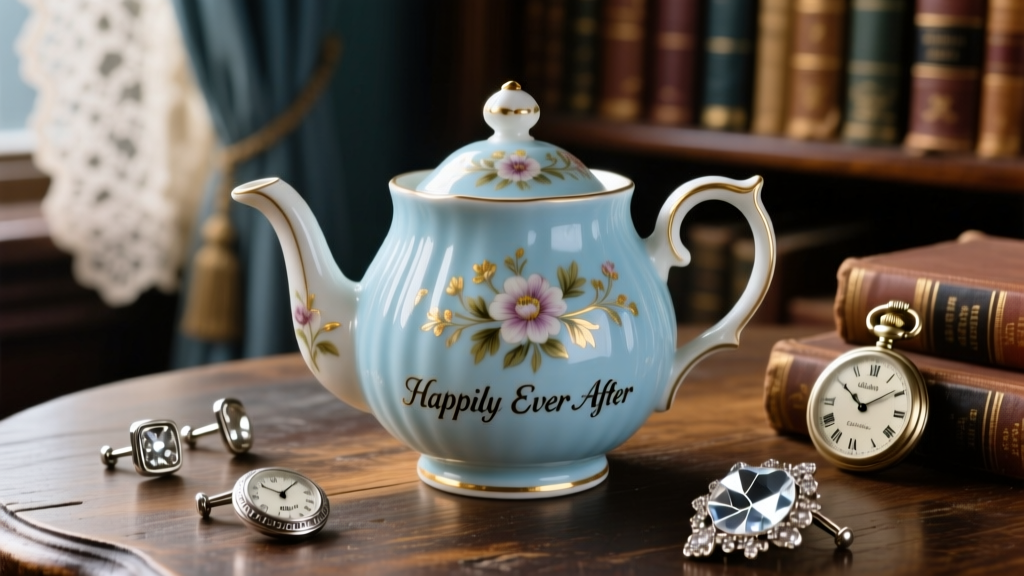
Dinnerware Happily Ever After Teapot Blue Ridge: A Collector’s Guide to the Iconic American Porcelain Pattern
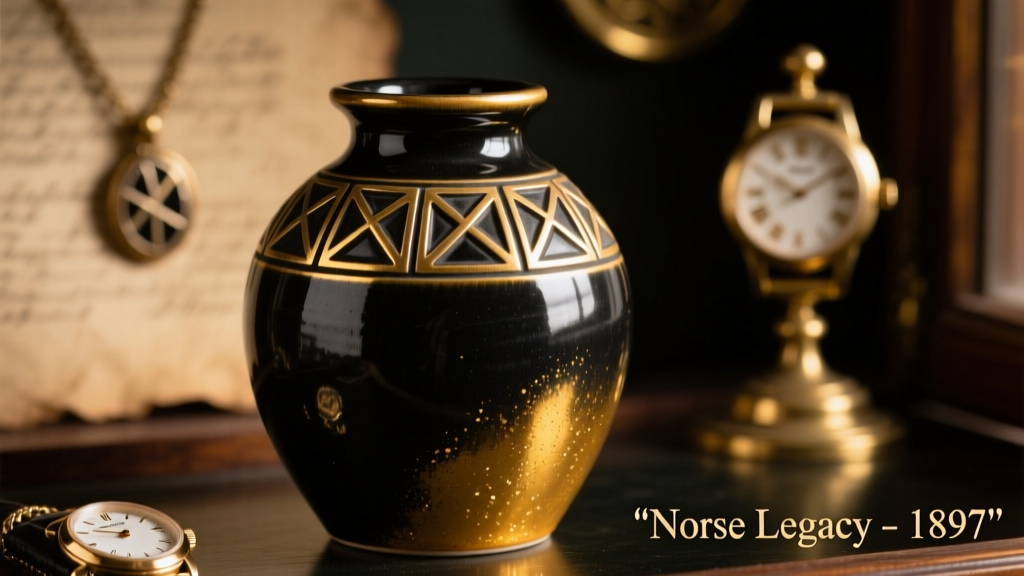
Norse Vase with Geometric Shoulder Design: Black-to-Gold Matte Glaze, 4½-Inch Ceramic Masterpiece
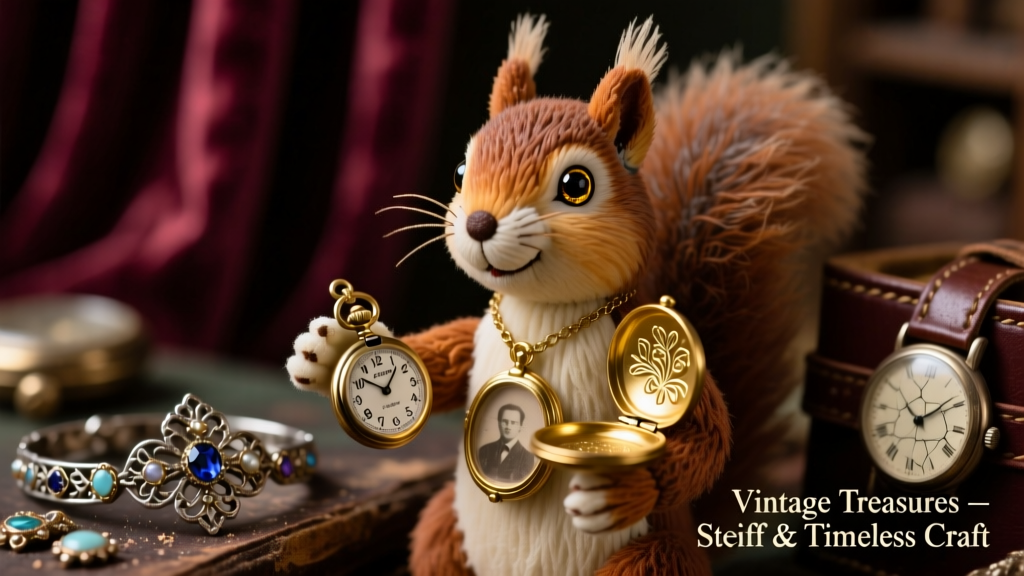
The Doll Puppet Hand Squirrel by Steiff: A Rare German Automaton Toy from the Golden Age of Mechanical Dolls
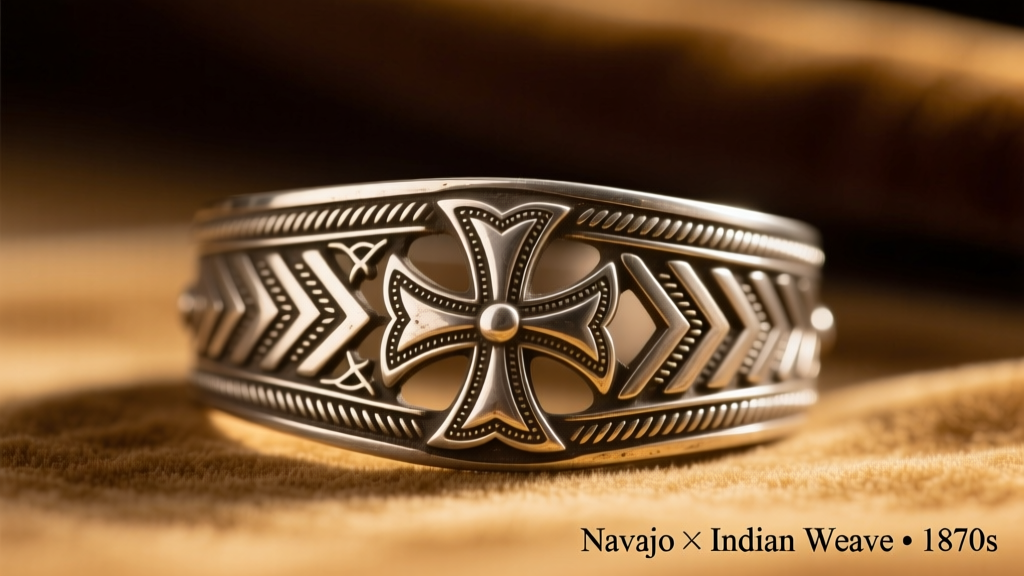
Navajo Textile Masterpiece: A 1940s Woven Rug Featuring Dual Maltese Crosses and Hooked Chevron Band — 56 × 85 Inches
Zoot Suit Struts to the Top: How Vintage Menswear Ignited a Jewelry and Watch Renaissance
The Jimmie Allen Knife: A 1930s American Pocket Knife Icon — Steel, Craftsmanship, and Collectibility
Società Ceramica Richard 5: The Forgotten Italian Ceramic Watch That Redefined Mid-Century Design