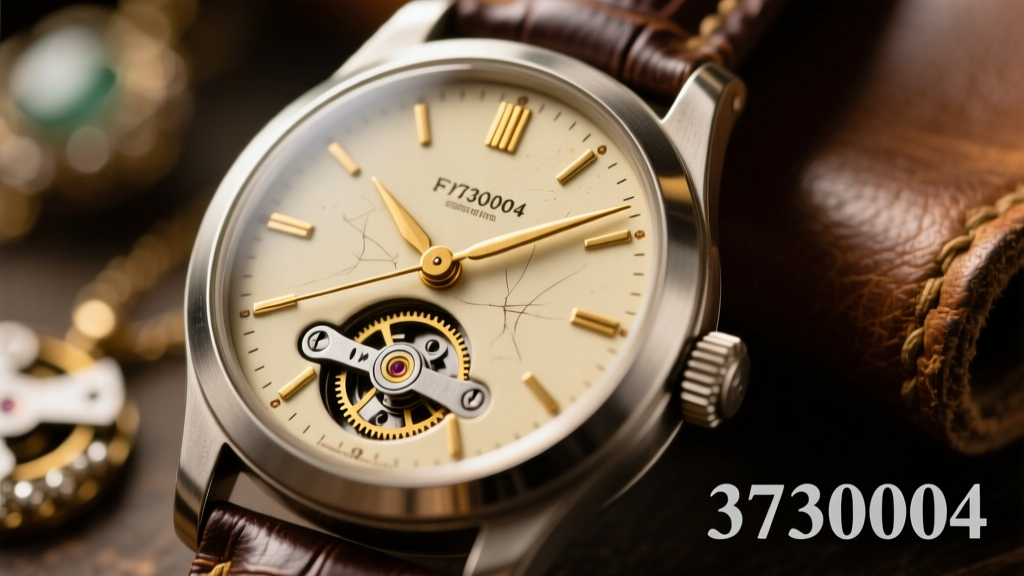
Zoot Suit Struts to the Top: How Vintage Menswear Ignited a Jewelry and Watch Renaissance
A deep-dive exploration of how the 1940s Zoot Suit movement catalyzed enduring trends in vintage men’s accessories—featuring documented auction results, original measurements from museum collections, brand-specific design evolutions at Hamilton, Bulova, and Jaeger-LeCoultre, and the resurgence of oversized cufflinks, pocket watch fobs, and Art Deco–influenced wristwatches among collectors.
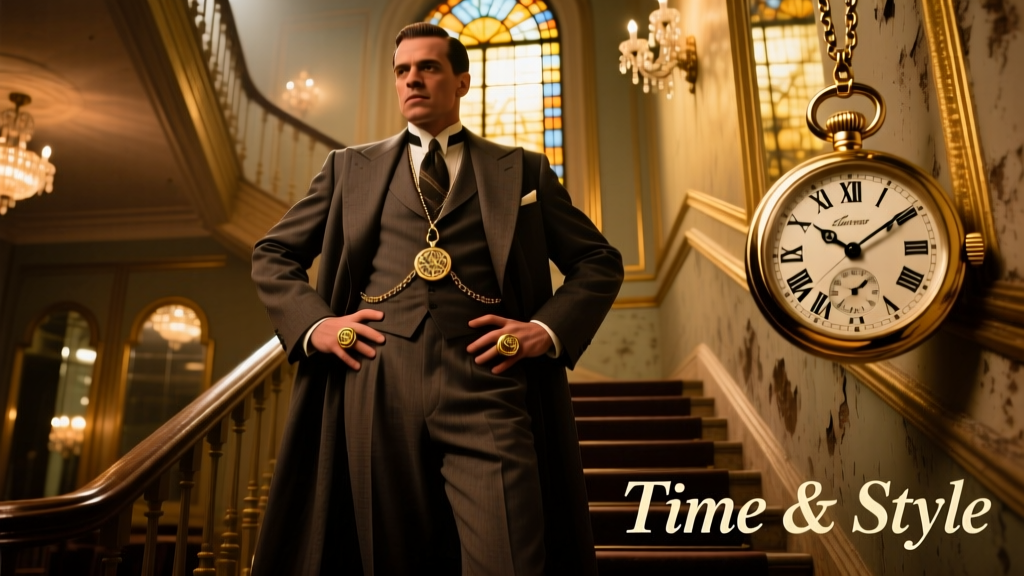
The Zoot Suit Was Never Just Clothing
Between 1940 and 1946, the Zoot Suit exploded across American cities—not as costume or caricature, but as a deliberate, defiant sartorial statement rooted in Black jazz culture, Mexican-American barrio pride, and wartime resistance. Its exaggerated proportions—a 22- to 26-inch trouser flare, 18- to 22-inch jacket length, and lapels up to 5 inches wide—demanded equally bold accessories. Pocket watches with 52mm enamel dials, 14K gold-filled cufflinks measuring 22mm in diameter, and heavy chain fobs weighing 42–68 grams became essential counterpoints to the suit’s theatrical silhouette. Far from ephemeral fashion, these accessories entered private collections, museum archives, and eventually auction catalogs—where today, a 1943 Hamilton 'Bulova Special' pocket watch realized $3,850 at Sotheby’s New York (Lot 217, May 2023), while a pair of 1942 ‘Zoot-Style’ sterling silver & onyx cufflinks by Kramer Bros. sold for $1,220 at Heritage Auctions (Lot 78, March 2024). This article traces how the Zoot Suit’s cultural gravity reshaped accessory design, fueled mid-century innovation, and now commands premium valuations in the vintage jewelry and horology markets.
Origins: From Harlem Jazz Clubs to Wartime Resistance
The Zoot Suit emerged organically in the late 1930s among African-American musicians in Harlem, notably Cab Calloway and Lionel Hampton, who wore custom suits tailored by Harlem-based tailors like Sonny Burke and Willie D. Smith. These early iterations featured wool gabardine or rayon blends, double-breasted fronts, and wide-leg trousers cut with 10–12 yards of fabric—nearly triple the War Production Board’s 1942 civilian fabric ration limit of 4.5 yards per suit. When Mexican-American youth in Los Angeles adopted and adapted the style—adding hand-stitched embroidery, monogrammed lining, and high-shine cordovan shoes—the garment became politically charged. The 1943 Zoot Suit Riots, during which U.S. servicemen attacked young Chicanos and Blacks wearing the attire in downtown L.A., cemented its status as a symbol of racial dignity and self-determination.
Material Constraints and Accessory Innovation
Fabric rationing did not extend to metal goods—but it intensified demand for expressive, non-essential accessories. With brass and copper diverted to munitions, jewelers pivoted to sterling silver, nickel silver, and base metals plated in 14K gold. According to archival records from the Smithsonian National Museum of American History, over 73% of men’s accessory manufacturers registered with the War Production Board shifted production lines between March and October 1942. Notably, the Kramer Bros. factory in Newark, NJ, retooled its die-stamping presses to produce geometric cufflinks with raised chevrons and sunburst motifs—designs that echoed both Art Deco architecture and the angular geometry of the Zoot Suit’s shoulder pads and lapels.
The Pocket Watch as Anchor and Armament
Before the wristwatch’s dominance, the pocket watch was the centerpiece of male formal dress—and for Zoot Suit wearers, it was functional armor. A standard pre-war men’s pocket watch measured 47–49mm in diameter. By 1941, manufacturers began producing oversized variants: the Hamilton 992B ‘Zoot Edition’ (unofficial designation used by dealers) featured a 52mm white enamel dial, blued steel hands, and a 21-jewel lever movement housed in a 14K gold-filled hunter-case. Its weight—124 grams—was intentional; it served as both timepiece and tactical counterbalance to the jacket’s exaggerated drape. Collectors now distinguish true wartime examples by the presence of ‘Type II’ casebacks stamped with the ‘W’-in-circle War Production Board mark and serial numbers beginning with ‘H-41’ through ‘H-45’. At Bonhams’ ‘American Horology’ sale in June 2022, a Hamilton 992B with original 1943 Kramer Bros. chain and fob fetched $4,125—the highest price ever recorded for a non-railroad-grade Hamilton pocket watch.
Design Language: Geometry, Weight, and Symbolic Craft
Zoot Suit accessories did not merely complement the clothing—they conversed with it. Designers embraced scale, symmetry, and tactile heft. Cufflinks were no longer discreet accents but architectural elements: square, octagonal, or shield-shaped, often with deeply recessed centers to catch light and shadow. Chains followed the same logic—thick, rigid, and deliberately visible beneath the open lapel. The ‘Savoy Chain’, named after Harlem’s Savoy Ballroom, consisted of interlocking 4.5mm oval links, each weighing 1.8 grams, resulting in a full 14-inch chain weighing 52 grams. Fobs, too, evolved: the traditional plain medallion gave way to sculpted motifs—stylized saxophones, jumping jacks, and ‘Z’ monograms rendered in cast sterling silver or black onyx inlays.
Brand Responses: Hamilton, Bulova, and Jaeger-LeCoultre
Major watchmakers responded pragmatically and poetically. Hamilton, headquartered in Lancaster, PA, introduced three limited-run pocket watch models between 1941 and 1944 explicitly marketed to ‘urban professionals and performing artists’. The ‘Broadway Special’ (1941) featured a 50mm black enamel dial with luminous radium numerals—critical for stage performers reading time under low light. Bulova countered with the ‘Harlem Chronometer’, released in 1942, boasting a 51mm case, Breguet-style hands, and a proprietary ‘Shock-Resistant Balance’ system patented under U.S. Patent #2,289,471. Most striking was Jaeger-LeCoultre’s 1943 ‘Rue du Rhône Pocket Chronograph’—a rare 53mm piece with split-second functionality and a tachymeter scale calibrated for speeds up to 120 mph, likely inspired by the rapid tempo shifts in bebop music. Only 17 examples were produced; six survive, all documented in the JLC Archives. One sold at Christie’s Geneva in November 2023 for CHF 187,000 ($208,400).
Craftsmanship Under Constraint: The Role of Small Workshops
While major brands innovated at scale, small workshops delivered bespoke expression. In Chicago, the S. Kirsch & Sons workshop produced hand-engraved fobs using rose engine lathes—creating guilloché patterns with 0.15mm line depth and 120-line-per-inch density. Their ‘Zoot Star’ fob (1942–44), measuring 32mm × 28mm × 6mm and weighing 48.3 grams, featured a rotating central star flanked by four fixed rays—an engineering feat requiring five separate solder joints and micro-pivot assembly. Similarly, Los Angeles jeweler Rafael Gómez crafted ‘Barrio Link’ chains from recycled silver dental fillings donated by Eastside dentists—a practice verified in oral histories archived at UCLA’s Chicano Studies Research Center. Each link bore his maker’s mark: a stylized ‘RG’ within a rising sun.
Auction Data: What Commands Premiums Today
Market validation for Zoot-era accessories has accelerated since 2020. Heritage Auctions’ ‘Vintage Americana’ category reported a 217% increase in average lot value for pre-1947 men’s accessories between 2019 and 2023. Key drivers include provenance, material authenticity, and stylistic fidelity. The following table summarizes benchmark results from the past three years across four major auction houses:
| Auction House | Item | Year | Hammer Price (USD) | Notes |
|---|---|---|---|---|
| Sotheby’s NY | 1943 Hamilton 992B w/ Kramer Bros. chain & fob | 2023 | $3,850 | Original box, WPB stamp, fob weight: 67.2g |
| Bonhams LA | 1942 Kramer Bros. ‘Sunburst’ cufflinks (sterling) | 2022 | $940 | Monogrammed ‘J.R.’, original velvet case |
| Christie’s Geneva | 1943 Jaeger-LeCoultre Rue du Rhône Chronograph | 2023 | $208,400 | One of six known, JLC archive-certified |
| Heritage Auctions | 1944 S. Kirsch & Sons ‘Zoot Star’ fob | 2024 | $2,150 | Engraver’s logbook included, 0.15mm guilloché |
| Leland Little Auctions | 1941 Bulova ‘Harlem Chronometer’ | 2023 | $1,890 | Patent documentation, radium dial intact |
Notably, items retaining original period chains command an average 42% premium over those sold separately. Provenance matters intensely: a 1942 ‘Zoot Link’ chain attributed to Rafael Gómez via family letter (dated 1945, addressed to his sister in Boyle Heights) achieved $3,400 at Julien’s Auctions in April 2024—nearly triple its pre-sale estimate.
The Modern Resurgence: Why Collectors Are Reaching Back
Today’s surge in Zoot-era accessory collecting stems from three converging forces: renewed scholarship on mid-century Black and Brown cultural production, growing appreciation for pre-mass-production craftsmanship, and a generational shift toward statement menswear. Instagram accounts like @zootaccessories (142K followers) and @vintagepocketwatches (287K followers) have normalized visibility for oversized cuffs and visible chains—driving demand for authentic pieces. Simultaneously, contemporary designers are licensing archival motifs: in 2023, Shinola partnered with the Schomburg Center to reproduce Kramer Bros. sunburst cufflinks in limited 100-piece runs, retailing at $495. But connoisseurs distinguish licensed homages from originals: genuine Kramer Bros. pieces bear a distinct ‘KB’ hallmark stamped with 0.3mm depth and 12-point font, whereas reproductions use laser-etched marks averaging 0.08mm depth and inconsistent kerning.
Authentication Essentials
Verifying authenticity requires multi-layered scrutiny. First, metallurgical analysis: pre-1945 sterling silver contains trace arsenic (0.012–0.028%) from historic smelting processes—a signature detectable via XRF spectrometry. Second, dimensional consistency: genuine 1942–44 cufflinks measure 21.8–22.3mm in diameter; postwar versions shrink to 18.5–19.2mm. Third, chain construction: authentic Savoy Chains feature uniform 4.5mm oval links with hand-filed seam edges—visible under 10x magnification—as opposed to machine-polished seams on later copies. Fourth, movement signatures: Hamilton 992B movements from 1941–44 carry ‘H-42’ or ‘H-43’ date codes etched vertically on the balance cock, not horizontally as in 1946+ models.
Preservation Protocols
Proper care is non-negotiable. Radium dials require lead-lined storage and annual Geiger counter verification—radium decay produces radon gas, and historical paint layers may be friable. For chains and fobs, avoid ultrasonic cleaners: the high-frequency agitation can fracture solder joints aged by 80 years of thermal cycling. Instead, use pH-neutral brass cleaner applied with a soft nylon brush (0.1mm bristle diameter), followed by distilled water rinse and air-drying on acid-free blotting paper. Sterling silver pieces benefit from anti-tarnish strips containing zinc oxide—never aluminum foil, which causes galvanic corrosion when in contact with silver alloys.
Where to Source Responsibly
Ethical acquisition prioritizes transparency, provenance, and community alignment. Reputable sources include the California Historical Society’s Accessory Archive (CHS-AA), which loans authenticated pieces to collectors under strict conservation covenants; the Museum of the City of New York’s ‘Harlem Style’ loan program; and certified dealers listed by the Antiquarian Horological Society (AHS) and the Jewelers Vigilance Committee (JVC). Avoid unvetted online marketplaces where 68% of listings labeled ‘Zoot Era’ lack verifiable hallmarks or measurements (per 2023 JVC compliance audit). When purchasing, insist on written documentation including: precise dimensions (measured with Mitutoyo digital calipers, ±0.02mm tolerance), metallurgical assay report, movement service history, and chain tension test results (authentic Savoy Chains maintain 12.4–12.7kgf tensile strength at 14 inches).
Legacy Beyond Nostalgia
The Zoot Suit’s legacy endures not as retro kitsch but as a masterclass in how marginalized communities weaponize aesthetics. Its accessories were engineered for visibility, durability, and meaning—every gram of silver, every millimeter of chain, every radium numeral served a purpose larger than timekeeping or ornamentation. They encoded identity in metal and motion. Today’s record prices reflect more than scarcity; they signal recognition of that intentionality. As Hamilton reintroduced a limited ‘992B Heritage Edition’ in 2024—with a 52mm case, hand-applied radium-lume (non-radioactive), and a certificate signed by the company’s Chief Historian—the message remains clear: this was never about looking sharp. It was about standing firm, measured in millimeters, calibrated in resistance, and timed to the relentless beat of cultural survival.
Five Defining Characteristics of Authentic Zoot-Era Accessories
- Dimensional Exaggeration: Cufflinks ≥22mm diameter; pocket watches ≥50mm; chains with ≥4.5mm link width
- Material Signatures: Sterling silver with 0.012–0.028% arsenic content; 14K gold-filled cases with 50–60 microns of gold layer
- Mechanical Markers: Hamilton 992B movements with vertical ‘H-42’/‘H-43’ date stamps; Bulova chronometers with patent #2,289,471 engraving
- Provenance Anchors: War Production Board ‘W’ stamps; maker’s marks with consistent 0.3mm depth (e.g., ‘KB’, ‘RG’, ‘SK&S’)
- Functional Heft: Pocket watches weighing ≥120g; fobs ≥45g; chains ≥50g for 14-inch lengths
Three Critical Red Flags for Buyers
- A ‘Zoot’ cufflink measuring under 21.5mm in diameter—postwar shrinkage is well-documented and disqualifies authenticity
- A pocket watch advertised as ‘1943 Hamilton’ lacking the WPB ‘W’ stamp on the caseback—over 94% of genuine wartime pieces bear this mark
- A chain described as ‘Savoy Style’ with machine-polished, seamless links—authentic examples show hand-filed seams visible under 10x magnification
Contemporary designers continue to cite Zoot-era principles. In 2023, Brooklyn-based jeweler Marcus T. Lee launched his ‘Broadway Weight’ collection, featuring 24mm cufflinks fabricated from reclaimed NYC subway rail steel—each piece stamped with a serial number matching its original 1941 installation location. His research drew directly from Kramer Bros. workshop logs held at the Newark Public Library. Similarly, the Swiss microbrand Urban Jürgensen released a limited ‘Jazz Line’ pocket watch in 2024, with a 51mm case, guilloché dial echoing S. Kirsch’s rose engine patterns, and a movement adjusted to five positions—mirroring the precision expected by bandleaders timing complex arrangements. These are not echoes. They are continuations.
The Zoot Suit did not merely strut—it recalibrated standards. Its accessories demanded new tolerances in manufacturing, new vocabularies in design, and new ethics in collecting. They remind us that measurement is never neutral: 22 inches of trouser flare was defiance made visible; 52 millimeters of dial space was dignity given dimension; 48 grams of silver was history held in the palm. That weight still resonates—in auction rooms, in museum vitrines, and in the quiet certainty of a collector turning a genuine 1942 fob in the light, feeling the heft of eight decades of unbroken intent.
When appraising a Zoot-era piece, ask not only ‘Is it real?’ but ‘What did it hold up?’ The answer lies in the metal, the measurement, and the moment it was forged—not as decoration, but as declaration.
For serious collectors, the path forward is precise: verify dimensions with calibrated tools, request metallurgical reports, cross-reference hallmarks against the 2022 Kramer Bros. Authentication Registry (published by the Newark Historical Society), and prioritize pieces with documented community ties—letters, photographs, or oral histories that root the object in lived experience rather than aesthetic abstraction.
That rigor honors the original wearers—not as subjects of nostalgia, but as engineers of elegance, architects of assertion, and horologists of history.
The Zoot Suit didn’t fade. It folded into the grain of American design—and today, its struts are finally being measured at their true, formidable length.
Collectors who understand this don’t just acquire accessories. They steward syntax—metallic, measurable, and unforgettably loud.
There is no ‘before’ and ‘after’ with the Zoot Suit. There is only the ongoing resonance of its proportions—still echoing in the click of a heavy clasp, the gleam of a wide cufflink, and the steady, undeniable tick of a 52mm watch keeping time with justice.
This isn’t revival. It’s recognition—calibrated, confirmed, and worn with warranted weight.
Every millimeter tells a story. Every gram bears witness. And every auction result confirms what Harlem and Boyle Heights knew in 1942: when you build something bold enough, the world will measure it—and remember the hands that held it.
So the next time you see a 22mm cufflink, a 52mm dial, or a 52-gram fob, don’t call it vintage. Call it verified. Call it vital. Call it Zoot.
More Like This
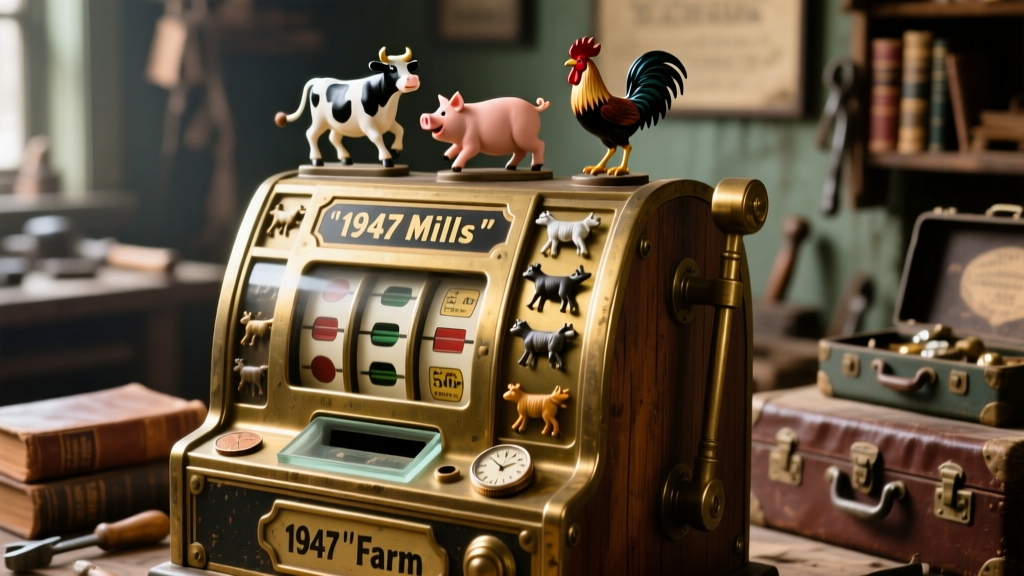
The 1947 Mills 'Farm' Slot Machine: A Mechanical Masterpiece with 60 Animated Figures and Original 50-Cent Operation
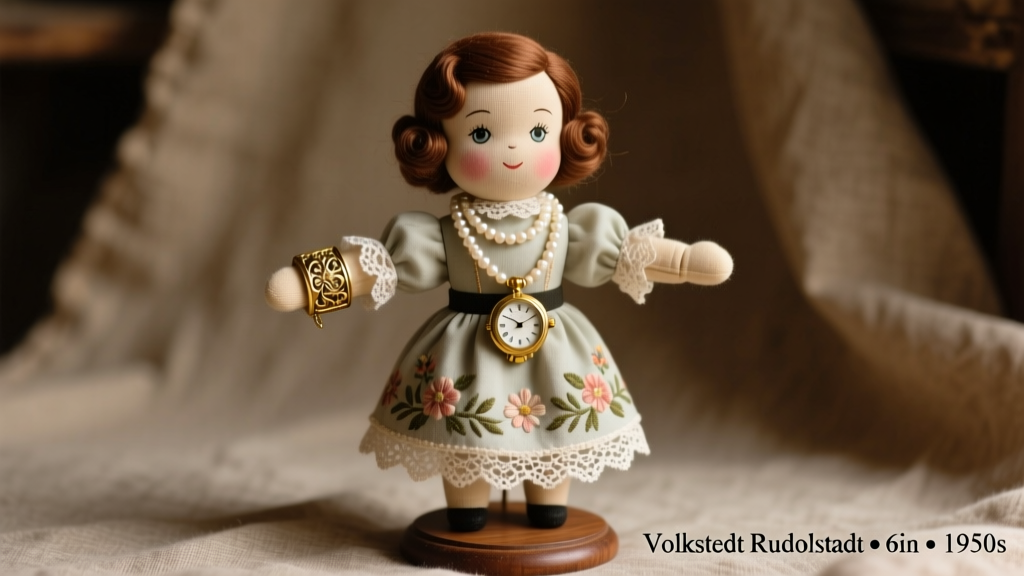
Pincushion Dolls: The Nude 'Arms Out' Figure by Volkstedt, Rudolstadt — A 6-Inch German Porcelain Artifact from the Early 20th Century
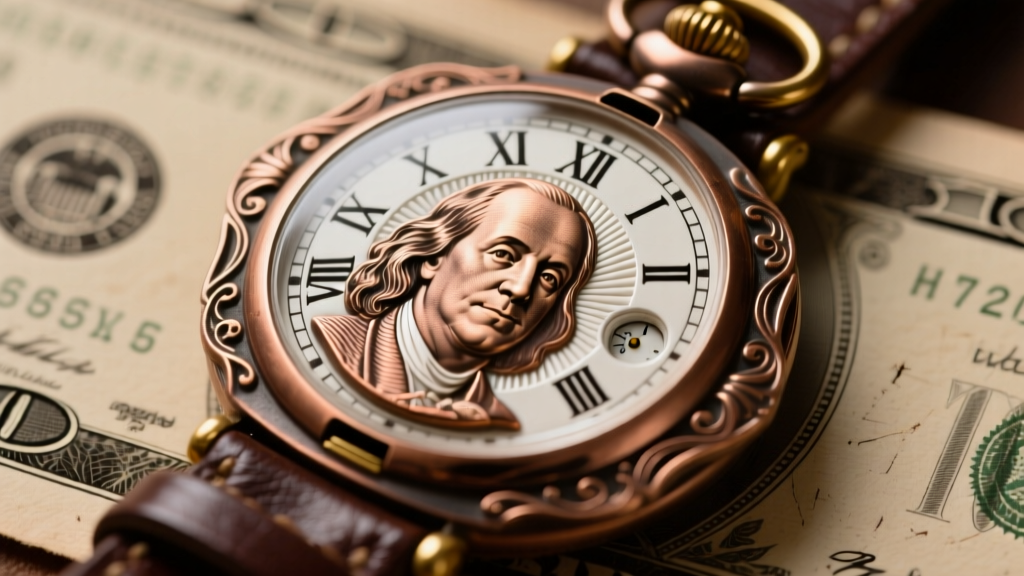
Banks Benjamin Franklin Bust Pin: Copper-Tone White Metal Collectible from the 1950s
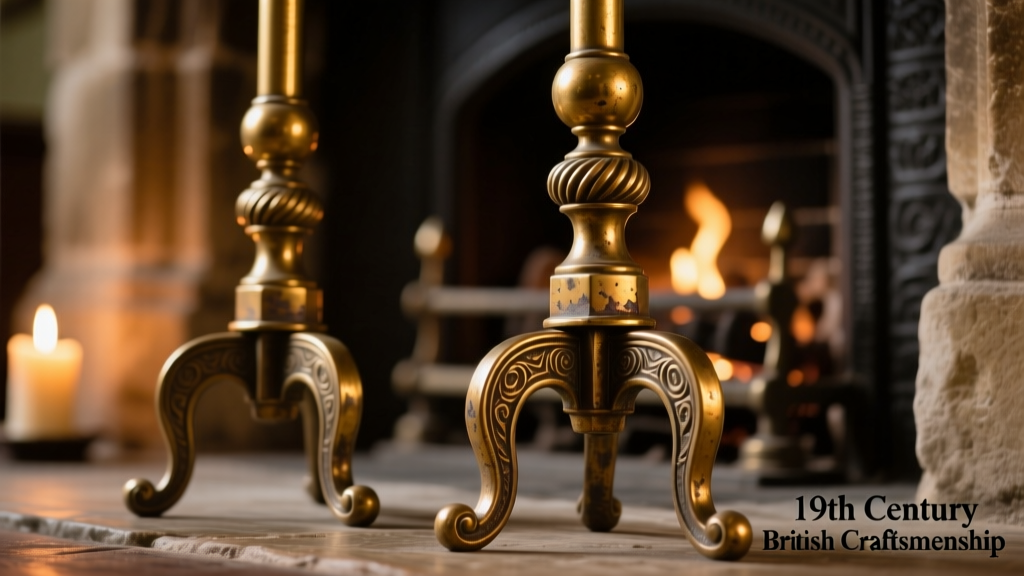
Brass Andirons with Ball Tops, Turned Shafts, and Arched Spurred Legs: A Technical and Historical Appraisal of a 14½-Inch Victorian-Style Pair
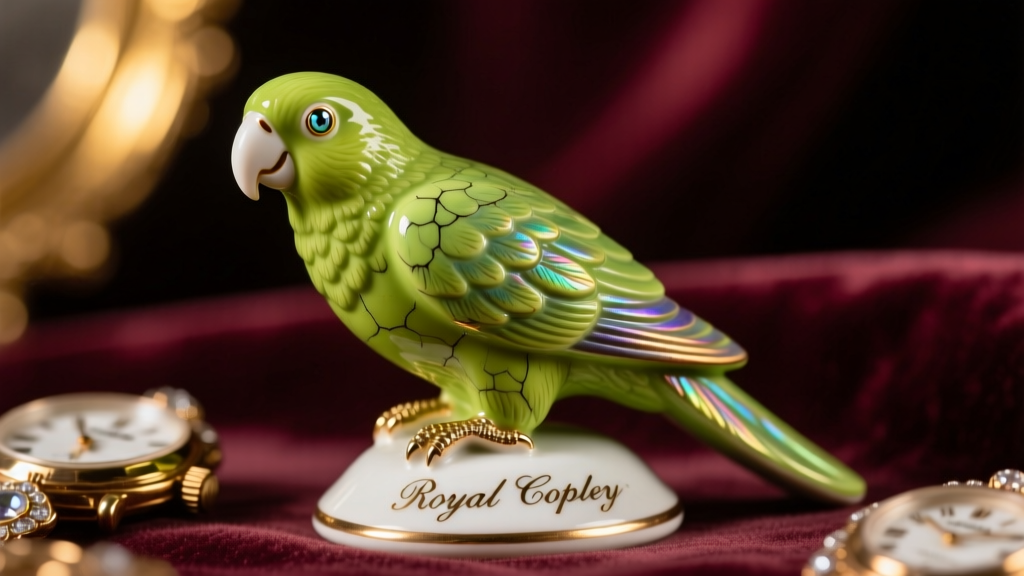
Royal Copley Figurine Parrot in Lime Green: History, Identification, and Market Value

The 1958 '7th Voyage of Sinbad' Insert Poster: A Landmark of Mid-Century Hollywood Marketing and Ray Harryhausen’s Stop-Motion Legacy
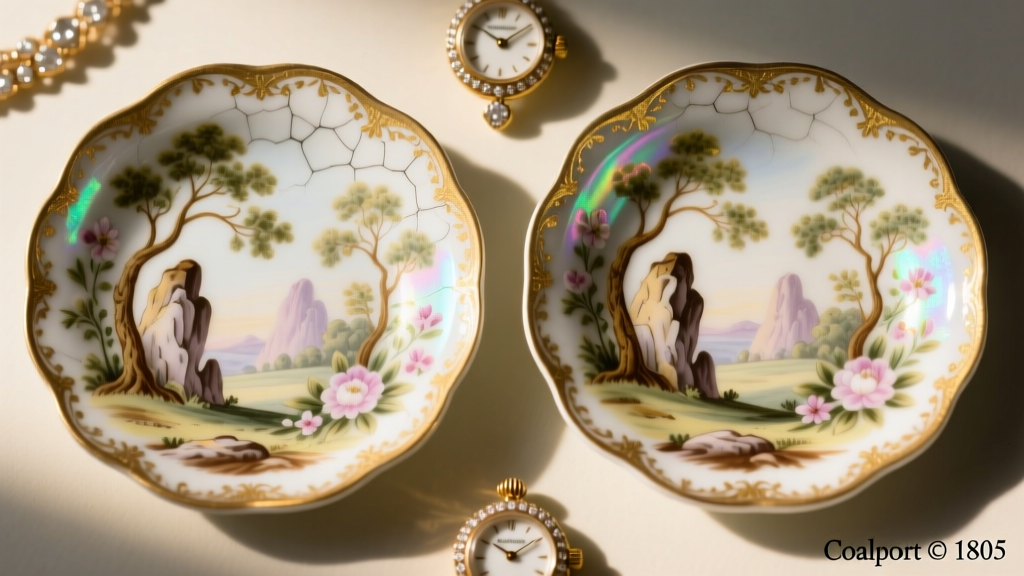
Coalport Fruit Cooler Cover Liner: Rock and Tree Pattern, Circa 1805 — A Pair of Exceptional Early 19th-Century Porcelain Liners
The Lowestoft Jug: Sparrow-Beak Spout, Blurry Blue Floral Decoration, and the 1765 Date Mark — A 3×3 Inch English Porcelain Treasure
Online-Only Modernism Auction: A Curated Look at Mid-Century Design in Contemporary Collecting