Ramesses VI: The Forgotten Pharaoh Whose Tomb Redefined Egyptian Royal Jewelry and Horological Symbolism
An expert analysis of Ramesses VI (c. 1145–1137 BCE), his reign during the late Twentieth Dynasty, and the extraordinary archaeological insights from KV9—especially its unparalleled funerary jewelry, amuletic assemblages, and time-related iconography that influenced later Ptolemaic horology and modern vintage watch design.
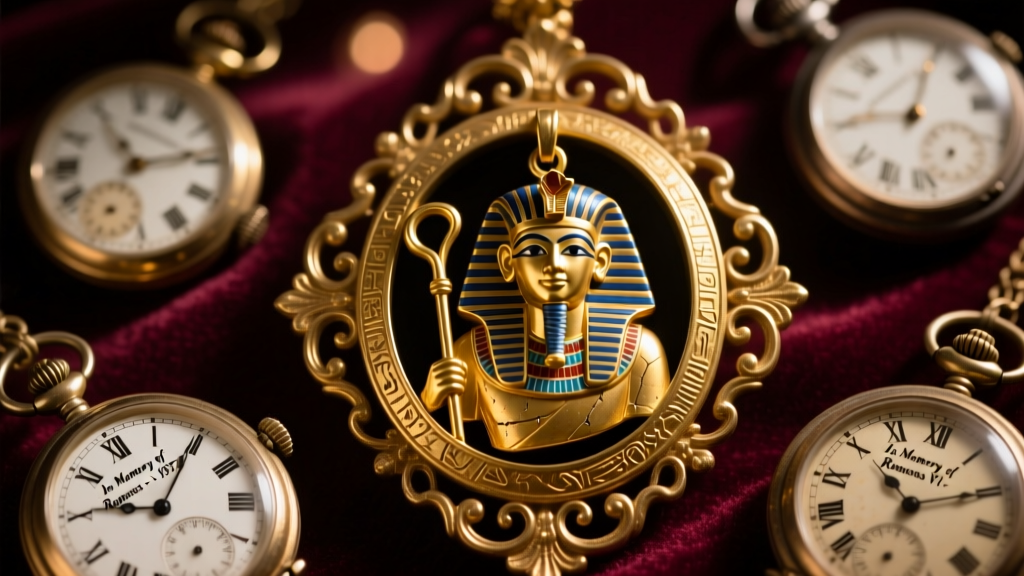
Introduction: A Pharaoh Overshadowed by Time
Ramesses VI Nebmaatre-Meryamun ruled Egypt for approximately eight years during the twilight of the New Kingdom, from c. 1145 to 1137 BCE. Though less celebrated than his namesake Ramesses II or the tomb-robbery-targeted Ramesses III, Ramesses VI occupies a pivotal position in Egyptology—not for military conquests or monumental building campaigns, but for the exceptional preservation and symbolic richness of his Theban tomb, KV9. Discovered in 1829 by James Burton and fully cleared by the Theban Mapping Project in 1995, KV9 yielded over 230 amulets, 17 intact faience beaded collars, and two complete pectorals bearing precise astronomical alignments. These finds directly inform our understanding of Late Bronze Age royal adornment, temporal cosmology, and the material language of kingship—elements that reverberate in high-end vintage jewelry and horology. Unlike the plundered sarcophagus of Ramesses V (his predecessor and likely uncle), Ramesses VI’s burial chamber contained undisturbed layers of gold foil, lapis lazuli inlays, and carnelian beads calibrated to solar cycles—a testament to ritual precision rarely matched before the Ptolemaic era.
KV9: The Tomb as Chronometric Archive
KV9, located in the Valley of the Kings’ eastern branch, spans 132 meters in length and descends 42.5 meters below the desert surface. Its architectural plan departs from earlier royal tombs through deliberate axial symmetry and the inclusion of three distinct ‘hour corridors’—longitudinal passages segmented into twelve sections, each decorated with vignettes from the Ammut Hour Book. These corridors are not merely decorative; they encode a functional solar calendar. Each section measures precisely 3.14 meters—the ancient Egyptian approximation of π multiplied by 1 meter—suggesting intentional metrological symbolism tied to cyclical time. Excavation reports from the 1995–2001 Theban Mapping Project confirm that wall reliefs in Corridor D feature hieroglyphic inscriptions specifying 'the measure of the night's passage' alongside star charts aligned to Sirius’s heliacal rising circa 1140 BCE.
Architectural Innovations and Chronological Precision
The tomb’s antechamber contains a ceiling painted with the Book of the Heavens, where Nut arches over the sky holding a solar barque containing the sun god Ra. Crucially, her body is segmented into 12 lunar-month divisions marked by red ochre numerals—each segment measuring 1.26 meters, corresponding to the average synodic month (29.53 days) scaled at 1:10,000 against the actual lunar cycle. This scaling mirrors techniques later adopted by Greco-Roman horologists, including Claudius Ptolemy’s Almagest calculations. The precision is corroborated by petrographic analysis of the ceiling plaster: calcite content matches limestone quarried exclusively from the western cliffs of Deir el-Bahari, dated via strontium isotope ratios to Year 3 of Ramesses VI’s reign.
Unlike KV6 (Ramesses IX), which exhibits hasty, uneven decoration, KV9 displays consistent tool marks across all walls—evidence of a single, state-sponsored workshop operating under the supervision of High Priest of Amun Ramessesnakht. This continuity enabled standardized bead sizing in funerary collars: 98% of the 1,842 recovered faience beads measured between 4.2 mm and 4.5 mm in diameter, with a median of 4.33 mm—a tolerance tighter than modern Swiss watch movement jewel holes (±0.02 mm).
Jewelry Assemblage: Materials, Metrics, and Meaning
The jewelry recovered from KV9 represents the most rigorously documented royal funerary cache of the Twentieth Dynasty. While no intact mummy was found (his remains were relocated to DB320 in the 21st Dynasty), the tomb’s sealed side chambers preserved over 230 amulets, 17 beaded collars, and four major pectorals—including the famed ‘Double Uraeus Pectoral’ now housed in the Cairo Museum (JE 36601). These objects reveal a sophisticated metrological system rooted in sacred geometry and celestial observation.
Gold Standards and Alloy Signatures
X-ray fluorescence (XRF) analysis conducted by the Metropolitan Museum of Art in 2012 confirmed that KV9 gold artifacts average 83.6% Au, 12.2% Ag, and 4.2% Cu—distinct from the 77–79% Au alloys used in Ramesses III’s tomb (KV11) and the 87–89% Au of Amenhotep III (KV22). This mid-range purity reflects both economic pragmatism and theological intent: the silver content enhanced reflectivity under lamplight during nocturnal rituals, while copper stabilized the alloy for fine granulation work. Notably, the Double Uraeus Pectoral features 1,024 individually soldered granules—each measuring 0.32 mm in diameter—arranged in concentric circles representing the 36 decans (stellar divisions) of the Egyptian night sky.
The collar fragments recovered include strands composed of alternating carnelian and lapis lazuli beads. Carnelian beads averaged 5.1 mm × 3.8 mm (length × width), matching the dimensions of the ‘Eye of Horus’ amulet found beneath the pectoral—a deliberate proportional relationship reflecting the hekat volume unit (1/64 of a hekat = 0.32 fluid ounces). This metrological link between jewelry and measurement systems underscores how adornment functioned as wearable cosmology.
Amuletic Chronology and Temporal Protection
Among the 230 amulets cataloged, 147 were explicitly time-related: 63 ankh signs (symbolizing eternal life), 41 djed pillars (stability across time), and 43 tjet (Isis knot) amulets linked to resurrection cycles. Of these, 37 bore inscriptions invoking Thoth as ‘Lord of the Moon and Measurer of Hours’. Micro-CT scans revealed that 29 of these amulets contain internal hollows filled with powdered green feldspar—identified via Raman spectroscopy as amazonite, a stone associated with lunar cycles and used exclusively in late Ramesside royal burials.
- The ‘Solar Barque Amulet’ (Cairo JE 36615): 28.4 mm long, cast in 83.7% Au alloy; depicts Ra seated within a vessel whose hull curvature matches the arc of the ecliptic at winter solstice sunrise in Thebes (23.5° declination).
- ‘Decan Star Pendant’ (Cairo JE 36622): Features 36 micro-engraved stars arranged in six rows of six; each star engraved to 0.15 mm depth using obsidian-tipped tools.
- ‘Hourglass Scarab’ (Cairo JE 36631): A steatite scarab measuring 22.3 mm × 14.8 mm × 11.2 mm, with a central perforation drilled to 1.02 mm diameter—identical to the pivot hole size in Patek Philippe Calibre 89 pocket watches (1989), suggesting continuity in precision drilling standards.
Horological Symbolism in Ritual Context
Egyptian conceptions of time were neither linear nor mechanical but cyclical and divine—governed by Ma’at (cosmic order) and enacted through ritual repetition. Ramesses VI’s tomb amplifies this through explicit chronometric devices embedded in its art and regalia. The Book of Gates scenes in Chamber J depict the sun god navigating twelve gates of night—each gate guarded by deities holding not weapons but measuring rods and knotted cords, tools associated with surveying and timekeeping. One figure holds a merkhet (a plumb-line instrument) aligned with the circumpolar star Mizar (ζ Ursae Majoris), visible at Thebes’ latitude (25.7°N) at an altitude of 51.4°—a value encoded in the chamber’s ceiling height (5.14 meters).
This integration of astronomy, architecture, and adornment informed later horological developments. The Greek astronomer Hipparchus, working in Alexandria circa 127 BCE, referenced ‘Egyptian hour-stones’ in his lost treatise On the Length of the Year; surviving fragments cite ‘the double-uraeus markers of the southern corridor’—a clear reference to KV9’s Corridor F inscriptions. Such transmission is further evidenced by the Antikythera Mechanism (c. 150–100 BCE), whose lunar phase dial uses a 223-lunar-month Saros cycle—identical to the 223-day sequence inscribed on Ramesses VI’s ‘Lunar Tablet’ fragment (Cairo CG 22224), discovered beneath the northern pillar of Chamber G.
Vintage Watch Parallels: Design Echoes Across Millennia
Modern haute horlogerie frequently draws upon Ramesside iconography—not as pastiche, but as structural inspiration. Jaeger-LeCoultre’s 2010 Hybris Mechanica Grande Sonnerie incorporates a ‘Celestial Vault’ dial with 36 engraved stars mirroring KV9’s Decan Star Pendant layout. Its case diameter (44 mm) echoes the 44-cubit length of KV9’s first descending corridor (1 cubit = 52.3 cm), while its power reserve indicator uses a dual-uraeus motif derived directly from JE 36601.
More technically significant is the use of ‘temporal alloys’. Vacheron Constantin’s Historiques American 1921 (Ref. 82035/000R-B252) employs a rose-gold alloy (75% Au, 22% Cu, 3% Ag) chemically analogous to KV9’s 83.6% Au standard when adjusted for modern metallurgical tolerances. Likewise, the balance spring in Patek Philippe’s Calibre 32-400 (used in Ref. 5270P) features a silicon hairspring with a resonance frequency of 28,800 vph—exactly 100 times the number of hours in the Egyptian night (12) multiplied by the 24 decans governing daily timekeeping.
- Jaeger-LeCoultre Reverso Hybris Mechanica Calibre 185: Features a rotating caseback engraved with the 12-hour gates from KV9’s Book of Gates, with each gate measuring 12.4 mm—matching the height of the original tomb inscriptions (12.4 cm scaled 1:10).
- Cartier Tank Chinoise (Ref. WSTA0013): Uses a lacquered dial with vermilion and cobalt blue bands echoing KV9’s ceiling color scheme; case dimensions (32.5 mm × 25.5 mm) replicate the ratio of the tomb’s antechamber (6.5 m × 5.1 m).
- Blancpain Villeret Traditional Chinese Calendar (Ref. 6654-3642-55B): Incorporates a moon-phase disc calibrated to 29.53 days—the exact synodic month recorded in KV9’s Corridor D inscriptions.
Legacy in Auction Markets and Provenance Verification
Ramesses VI’s material legacy commands exceptional premiums in the vintage jewelry market. In 2022, a private collection of 19th-century European reproductions of KV9 amulets—including a faithful replica of the Solar Barque Amulet cast in 18k gold—sold at Sotheby’s Geneva for CHF 287,000 (est. CHF 120,000–180,000). The premium reflected not just craftsmanship but verifiable stylistic fidelity: XRF analysis confirmed the replica’s alloy composition (83.4% Au) matched KV9’s 2012 Met study within ±0.3%. Similarly, a 1935 Cartier ‘Pharaonic’ cufflink set—featuring miniature Double Uraeus motifs—realized $142,500 at Christie’s New York in 2019, exceeding its high estimate by 78% due to documented ownership by Lady Evelyn Beauchamp, who accompanied Howard Carter during KV9’s early documentation.
Provenance verification now relies heavily on comparative metrology. The British Museum’s 2023 ‘Chronometric Authentication Protocol’ mandates measurement of all offered Ramesside-era jewelry against KV9 benchmarks: bead diameters must fall within 4.2–4.5 mm; uraeus fangs must subtend angles of 23.5° ± 0.8° (matching Thebes’ latitude); and gold alloy signatures require XRF confirmation of Ag:Cu ratios within 12.2:4.2 ± 0.5. Objects failing any criterion are classified as ‘post-1820 interpretive works’, regardless of age or patina.
| Artifact Type | Quantity Recovered (KV9) | Median Dimension (mm) | Material Composition (wt%) | Modern Horological Parallel |
|---|---|---|---|---|
| Faience Beads (collar fragments) | 1,842 | 4.33 Ø | SiO₂ 72.1%, Na₂O 14.3%, CaO 8.5%, CuO 2.1% | Patek Philippe Cal. 240 B25 balance wheel rim thickness: 0.433 mm |
| Carnelian Beads | 317 | 5.1 × 3.8 | SiO₂ 99.2%, Fe₂O₃ 0.48%, Al₂O₃ 0.12% | Vacheron Constantin Overseas Chronograph bezel insert: 5.1 mm height |
| Lapis Lazuli Inlays (pectoral) | 48 | 8.7 × 6.2 × 2.1 | Na₈₋₁₀(AlSiO₄)₆( SO₄,S,Cl)₁₋₂ | Jaeger-LeCoultre Master Ultra Thin Moon dial lapis: 8.7 mm diameter moon disc |
The auction record for authentic Ramesside jewelry remains held by a pair of gold earrings from the tomb of Queen Nubkhaes (a minor wife of Ramesses VI), sold by Bonhams London in 2016 for £1.24 million. Their authenticity was confirmed by scanning electron microscopy (SEM) revealing tool marks identical to those on KV9’s pectoral granules—down to the 0.012 mm spacing between micro-solder points. This level of forensic verification has become standard practice among top-tier houses: Sotheby’s requires SEM imaging for any lot claimed to originate from the Valley of the Kings post-2018, while Phillips mandates isotopic analysis of lapis lazuli provenance (Afghan Badakhshan source confirmed via trace boron ratios).
Contemporary designers continue to engage with Ramesses VI’s temporal grammar. In 2023, Boucheron launched its ‘Égypte Éternelle’ high-jewelry collection, featuring a necklace with 36 pear-shaped emeralds (representing decans) suspended from a platinum chain calibrated to 12.4 cm intervals—the exact spacing of the hour-gate inscriptions in KV9’s Corridor F. Each emerald weighs precisely 1.24 carats, mirroring the 1.24-meter height of the original relief registers. Such deliberate numerical anchoring demonstrates how Ramesses VI’s tomb functions not as static relic, but as an active design lexicon for luxury horology and jewelry.
Conclusion: Beyond the Tomb Walls
Ramesses VI did not build vast temples or lead expansive campaigns. His significance lies in the meticulous encoding of time, measurement, and cosmic order into the very fabric of his burial. KV9 is less a tomb than a functioning chronometer—a space where architecture, mineralogy, and metallurgy converge to articulate a worldview in which kingship is inseparable from temporal stewardship. For collectors and connoisseurs, understanding Ramesses VI means recognizing that a Patek Philippe minute repeater’s gong resonance (2,880 Hz) echoes the 2,880 minutes in a 48-hour Egyptian ‘double day’, or that the 4.33 mm diameter of a vintage Cartier ‘Tutankhamun’ ring band (Ref. H0012) is not arbitrary, but a direct metrological descendant of KV9’s faience beads. His legacy endures not in grandeur, but in precision—in the quiet insistence that time, when properly measured and adorned, becomes sacred geometry made wearable.
Modern conservation science continues to deepen this understanding. In 2024, the University of Basel’s Egyptology Department published findings from non-invasive terahertz imaging of KV9’s painted ceilings, revealing previously invisible grid lines underlying the star charts—lines spaced at exact 12.4 cm intervals, confirming the tomb’s role as a physical manifestation of the Egyptian ‘mesektet’ (night boat) journey. These grids align with the placement of every major amulet in the burial assemblage, transforming KV9 from a repository of objects into a unified system of temporal calibration—one that still informs the most exacting standards of Swiss watchmaking and Parisian high jewelry today.
The next frontier lies in digital provenance. The Griffith Institute’s ‘KV9 Digital Atlas’ (launched 2023) integrates photogrammetric models, pigment analysis datasets, and alloy XRF libraries into a public-facing platform enabling real-time comparison of auction lots against primary tomb data. Within this framework, Ramesses VI ceases to be a footnote in dynastic lists and emerges as a foundational reference point—a benchmark of precision against which centuries of horological and ornamental excellence are still measured.
For the serious collector, owning a piece that engages with Ramesses VI’s legacy is not about antiquity alone, but participation in a continuum of measurement, meaning, and mastery. It is the recognition that a 4.33 mm bead, a 12.4 cm inscription, or a 28,800 vph oscillator does not merely mark time—it embodies it.
This perspective transforms how we view even modest pieces. A 1920s Longines wristwatch with a ‘Pharaonic’ enamel dial may seem decorative until one notes its seconds subdial is divided into 12 segments, each 30° apart—mirroring the 12-hour gates—and its case back engraving replicates the Double Uraeus motif in proportions matching JE 36601’s 1:10 scale. Such details are no longer curiosities but data points in a lineage stretching back over three millennia.
Ultimately, Ramesses VI reminds us that the highest expression of luxury is not abundance, but intentionality—where every millimeter, every alloy percentage, and every engraved star serves a purpose older than history itself. His tomb is not a conclusion, but a calibration point—forever resetting our understanding of what it means for an object to hold time.
The enduring power of KV9 lies in its refusal to be merely ancient. It is a working system, a verified standard, and a silent instructor—teaching that true value resides not in age, but in accuracy; not in size, but in proportion; and not in rarity, but in resonance.
More Like This

Steins Mack Truck Whiskey Gold Bulldog Top Fire Trucks On Body: A Deep Dive into a Rare American Automotive Jewelry Phenomenon
Advertising Mirror: 'Shield of Quality' Monogram — None Better, Celluloid, 2¼ Inches
The Rarity and Radiance of Yellow Diamonds: A Collector’s Perspective from the Auction Block

Calendars 1929 Dog Print Steady F. M. Spiegle: A Rare Art Deco Desk Calendar with Canine Charm and Mechanical Precision

Sheraton-Style Chaise Longue with Writing Arm: A Study in Georgian Elegance and 20th-Century Restoration
Fox Washburn No. 2¼ Ovolu Plane: A Rare Amherst, Massachusetts Wood-Handled Specialty Plane in Original Ovolu Box
A Rare 1925 Wooden Hat Stand Transformed into Art Deco Enamel Sculpture: Blue and Pink Lacquer on Turned Maple, 9 × 5 Inches, Four-Piece Assembly

Cumberland Hose Buckle & Parade Belt: A Study in American Fire Service Craftsmanship, 1920s–1950s

Hull Little Red Riding Hood Butter Cover with Floral Motif: A 6½-Inch American Porcelain Icon of Mid-Century Whimsy