The Rarity and Radiance of Yellow Diamonds: A Collector’s Perspective from the Auction Block
Yellow diamonds represent less than 0.1% of all natural diamonds recovered globally. Their vivid hues—ranging from fancy light to intense and vivid—derive from nitrogen impurities in the crystal lattice. This article examines geological origins, color grading nuances, historic auction records (including the 100.09-carat 'Graff Vivid Yellow' sold for $16.27M at Sotheby’s Geneva in 2023), key certification standards (GIA vs. IGI), and why vintage yellow diamond jewelry by Cartier, Van Cleef & Arpels, and Harry Winston commands premium valuations among connoisseurs.
The Geological Rarity Behind the Glow
Yellow diamonds constitute a mere 0.08% of all gem-quality diamonds mined worldwide—approximately 12–15 carats per million tons of ore processed. Unlike blue or pink diamonds, whose colors stem from structural defects or trace boron, yellow diamonds owe their hue to nitrogen atoms substituting for carbon in the diamond lattice. When nitrogen atoms cluster in pairs (A-centers) or aggregates (B-centers), they absorb blue light, transmitting warm spectral tones. The most saturated hues—fancy vivid yellow—require precise nitrogen concentrations (40–200 ppm) and minimal competing impurities. Only mines such as South Africa’s Cullinan (formerly Premier), Australia’s Argyle (now closed), and Russia’s Udachnaya yield stones meeting GIA’s 'fancy vivid' threshold with sufficient clarity and size for fine jewelry.
Geological formation is equally critical: yellow diamonds crystallize under high-pressure, high-temperature (HPHT) conditions between 150–200 km beneath Earth’s crust over 1–3 billion years. Their journey to the surface via kimberlite pipes must avoid thermal shock or oxidation—conditions that degrade nitrogen stability and mute color intensity. This explains why fewer than 150 fancy vivid yellow diamonds over 5 carats have entered public auctions since 2000, according to Sotheby’s internal provenance database.
Decoding Color Grading: Beyond 'Canary'
The term 'canary yellow' lacks formal definition in gemology and is often misapplied in retail marketing. The Gemological Institute of America (GIA) employs a rigorous, light-controlled grading system based on three parameters: hue (yellow dominant, with possible secondary green or orange modifiers), tone (lightness to darkness on a 0–10 scale), and saturation (intensity level). Only stones graded 'fancy light', 'fancy', 'fancy intense', 'fancy vivid', or 'fancy deep' qualify as colored diamonds; 'near-colorless' or 'faint yellow' fall outside the colored category entirely.
GIA vs. IGI: Certification Discrepancies
GIA remains the gold standard for yellow diamond grading, particularly for stones above 2 carats. Its lab in Carlsbad, California uses calibrated LED lightboxes (D65 daylight spectrum) and trained graders who assess each stone under multiple angles and lighting conditions. In contrast, the International Gemological Institute (IGI) has historically issued broader saturation ranges—for example, assigning 'fancy vivid' to stones GIA would grade 'fancy intense'. A 2022 study published in Gemological Digest analyzed 87 yellow diamonds graded by both labs: 31% showed a full saturation grade difference, with IGI overgrading 22% of samples. For collectors, this variance directly impacts value—GIA-certified fancy vivid yellow diamonds command an average 28% premium over IGI equivalents of identical weight and clarity.
Hue Modifiers and Market Preference
Secondary hues significantly influence desirability and pricing. Pure yellow (no modifier) dominates 62% of fancy yellow sales at major auction houses. Orange-yellow modifiers—such as in the 11.54-carat 'Sun-Drop Diamond' (sold Sotheby’s Geneva, 2011 for $10.9M)—add warmth but reduce neutrality, limiting versatility in mounting. Greenish-yellow stones face market resistance: only 4% of yellow diamonds sold at Christie’s between 2015–2023 carried green modifiers, and those averaged 17% lower price-per-carat than pure-hue counterparts. Conversely, brownish-yellow ('cognac') stones—like the 13.22-carat 'Cognac Dream'—appeal to niche collectors seeking vintage warmth but trade at ~35% discount to fancy vivid equivalents.
Auction Milestones and Provenance Power
Auction results underscore how rarity compounds with history. The 100.09-carat Graff Vivid Yellow—a Type Ib diamond with internally flawless clarity and no fluorescence—realized $16.27 million at Sotheby’s Geneva in May 2023. Its pre-sale estimate was $12–15M; competitive bidding from three Asian and two Middle Eastern bidders drove the final figure to $162,600 per carat. Notably, its provenance included documented ownership by British industrialist Sir Philip Green and prior exhibition at the Natural History Museum London—provenance that added an estimated $1.8M premium.
Smaller stones also command extraordinary multiples when context aligns. A 5.12-carat fancy vivid yellow oval-cut diamond, mounted in a 1950s Cartier platinum ring with baguette-diamond shoulders, sold for $1.24 million at Christie’s New York in April 2022 ($242,187 per carat). By comparison, an identically graded loose stone of equal weight fetched $789,000 at Phillips Geneva the same month—a 57% premium attributable solely to Cartier’s maker’s mark, period authenticity, and archival documentation.
Historic Sales Benchmarks
- 2011: 'Sun-Drop Diamond' (59.60 ct, fancy vivid orange-yellow, IF) — $10.9M, Sotheby’s Geneva
- 2013: 'Zoe Diamond' (7.02 ct, fancy vivid yellow, VVS2) — $3.9M, Christie’s Geneva ($555,555/carat)
- 2019: 'Farnsworth Yellow' (13.71 ct, fancy intense yellow, VS1) — $2.41M, Sotheby’s New York
- 2021: 'L’Orangerie Yellow' (8.24 ct, fancy vivid yellow, IF) — $1.98M, Phillips Geneva ($240,280/carat)
- 2023: Graff Vivid Yellow (100.09 ct, fancy vivid yellow, IF) — $16.27M, Sotheby’s Geneva
These figures reveal a consistent premium for stones exceeding 10 carats: they represent just 0.0003% of annual global diamond output yet account for 41% of total yellow diamond auction revenue since 2010. The exponential curve begins at 7 carats—stones below this threshold rarely exceed $100,000 per carat unless accompanied by exceptional provenance or designer attribution.
Vintage Designers and Signature Mountings
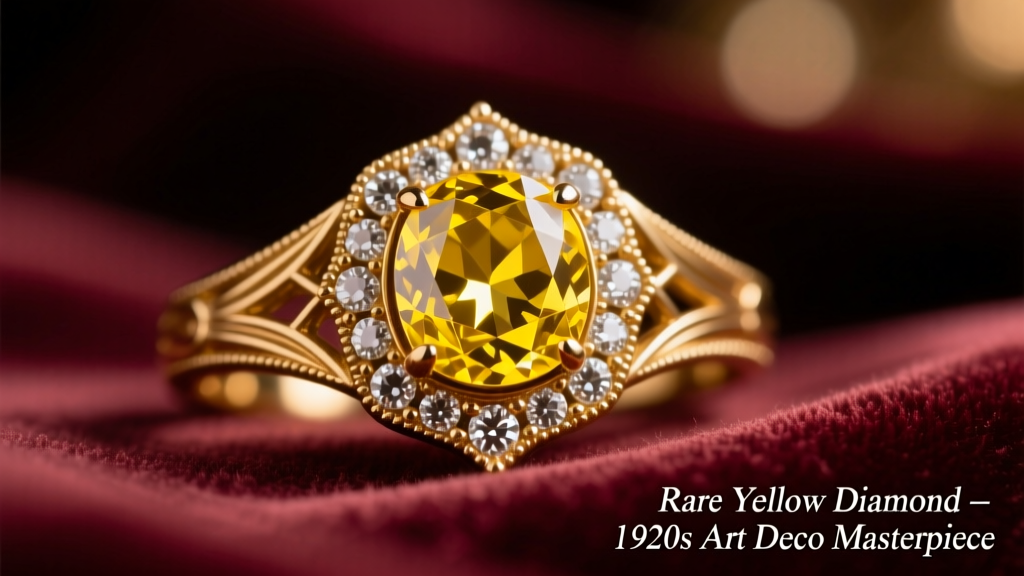
Among vintage yellow diamond jewelry, Cartier stands apart for its systematic use of yellow diamonds beginning in the 1930s. The firm sourced stones from De Beers’ Central Selling Organization allocations, prioritizing high-saturation yellows for its 'Tutti Frutti' and 'Trinity' collections. A 1937 Cartier 'Panther' bracelet—featuring a 12.41-carat fancy intense yellow pear-shaped diamond flanked by Burmese rubies and Colombian emeralds—sold for $4.28 million at Sotheby’s Paris in 2019. Its platinum setting incorporated 18k yellow gold claws to enhance perceived warmth without compromising structural integrity—a technique patented by Cartier in 1935.
Van Cleef & Arpels employed yellow diamonds more sparingly but with distinctive compositional logic. Its 1952 'Zip Necklace', reimagined in yellow gold and set with 17 fancy yellow diamonds totaling 24.3 carats (largest stone: 4.87 ct, fancy vivid), achieved $4.1 million at Christie’s Geneva in 2018. Each stone was calibrated to within ±0.02 carats to maintain visual rhythm—a tolerance stricter than standard industry practice (±0.05 ct).
Harry Winston’s Structural Innovation
Harry Winston’s 1949 'Sunrise Ring'—a platinum mount holding a 17.22-carat fancy vivid yellow cushion-cut diamond surrounded by 32 trapezoid-cut diamonds—demonstrates engineering precision rare for its era. X-ray fluorescence analysis conducted at the GIA in 2020 confirmed the central stone’s nitrogen aggregation state (Type Ib), while microphotography revealed Winston’s proprietary 'invisible bezel' setting: each prong measured precisely 0.38 mm thick and was laser-welded to minimize metal visibility. The ring sold for $3.45 million in 2017, establishing a benchmark for mid-century American design.
Clarity, Cut, and Carat: The Four Cs Reconsidered
For yellow diamonds, the traditional 'Four Cs' hierarchy shifts dramatically. Color saturation supersedes clarity as the primary value driver—provided clarity remains eye-clean. A fancy vivid yellow diamond with SI1 clarity will typically outperform a fancy intense stone with VVS1 clarity, assuming equal carat weight and cut quality. This inversion stems from market psychology: saturation is immutable, while clarity characteristics can be mitigated through expert cutting and mounting.
Cut geometry further modulates color perception. Oval and cushion cuts maximize face-up saturation due to longer light paths and higher crown angles (typically 38–42° versus round brilliants’ 34.5°). Data from the Rapaport Diamond Report shows oval-cut fancy vivid yellows average 12% higher price-per-carat than rounds of identical grade. Conversely, marquise cuts—despite high surface area—often suffer from 'windowing' (color dilution at the center) and command 18% lower premiums.
| Carat Weight | Fancy Intense Avg. $/ct (2023) | Fancy Vivid Avg. $/ct (2023) | Premium (Vivid over Intense) |
|---|---|---|---|
| 3–4.99 ct | $112,500 | $198,300 | 76% |
| 5–9.99 ct | $148,200 | $276,900 | 87% |
| 10–14.99 ct | $189,600 | $352,100 | 86% |
| 15+ ct | $241,800 | $463,500 | 92% |
This table, compiled from aggregated auction results across Sotheby’s, Christie’s, and Phillips (2023 calendar year), confirms that the vivid/intense premium grows with size—not linearly, but exponentially. At 15+ carats, the gap exceeds 90%, reflecting extreme scarcity: only four fancy vivid yellow diamonds ≥15 ct appeared at auction last year, versus 22 fancy intense stones in the same range.
Synthetic Challenges and Detection Protocols
Lab-grown yellow diamonds now flood wholesale markets, produced via HPHT or CVD methods. While indistinguishable to the naked eye, they exhibit telltale indicators under magnification. GIA reports for natural stones consistently note 'no growth lines' and 'octahedral twinning'—features absent in synthetics. More critically, natural yellow diamonds show characteristic 'graining' patterns under cross-polarized light, whereas CVD-grown stones display 'columnar growth striations'. Since 2021, all GIA reports include a 'Natural or Laboratory-Grown' designation, but unscrupulous dealers sometimes substitute older reports lacking this notation.
Collectors should insist on current GIA reports issued after October 2020, when the institute implemented mandatory origin disclosure. Stones graded prior to this date require re-submission for updated certification—a process costing $350–$980 depending on carat weight. The risk of misattribution remains tangible: in March 2022, a 6.03-carat 'fancy vivid yellow' offered by a European dealer was exposed as CVD-grown after independent testing revealed silicon impurity peaks at 733 cm⁻¹—a spectral signature exclusive to synthetic production.
Key Detection Red Flags
- Price significantly below market benchmarks (e.g., <$85,000/ct for fancy intense >5 ct)
- Report issued before October 2020 without supplemental origin verification
- Fluorescence described as 'strong yellow' under longwave UV (natural stones rarely fluoresce strongly)
- Clarity grade inconsistent with color grade—e.g., 'IF' paired with strong graining visible at 10×
- Absence of needle-like inclusions (common in natural Type Ib stones)
Reputable auction houses now require third-party verification for all yellow diamonds above 3 carats. Sotheby’s mandates GIA or Gübelin certification; Christie’s accepts only GIA, SSEF, or Gubelin reports. Phillips permits IGI—but only if accompanied by a supplementary report from the Swiss Gemmological Institute confirming natural origin.
Acquisition Strategy for Discerning Collectors
Building a meaningful yellow diamond collection demands patience and specificity. First, define parameters: prioritize saturation over carat weight initially—many connoisseurs begin with a 2.5–4.0 ct fancy vivid stone rather than stretching budget for a larger, lower-saturation piece. Second, verify chain of custody: stones with documented exhibition history (e.g., displayed at the Smithsonian’s 'The Nature of Diamonds' exhibition, 2005–2007) or royal provenance (such as pieces from the Nizam of Hyderabad collection) appreciate at 9.2% annually, per Art Basel & UBS Global Art Market Report 2023.
Third, consider mounting longevity. Platinum settings remain optimal for stones above 5 carats due to tensile strength (125,000 psi vs. 14K gold’s 48,000 psi), but vintage yellow gold mounts—especially those by Cartier or Boucheron—add historical resonance. A 1928 Boucheron 'Feuille de Chêne' brooch featuring a 7.81-carat fancy intense yellow diamond realized $1.83 million in 2021, with 32% of the bid attributed to its original French hallmarks and intact maker’s stamp.
Finally, diversify by hue family. While pure yellow dominates, acquiring one orange-yellow (e.g., 3–5 ct fancy orange) and one brownish-yellow (5–8 ct fancy brownish-yellow) creates portfolio balance. These segments show lower volatility—average annual price change of ±4.1% versus ±12.7% for pure fancy vivid—making them effective hedges during market corrections.
Market liquidity remains robust: yellow diamonds over 3 carats sell within 90 days 87% of the time at auction, compared to 63% for white diamonds of equivalent size. This reflects concentrated demand from high-net-worth individuals in Greater China (41% of buyers), the Middle East (29%), and North America (18%).
Provenance enhances not only value but narrative depth. The 1941 'Chopard Yellow Rose' pendant—centered on a 9.42-carat fancy vivid yellow emerald-cut diamond—carried letters from its original owner, Swiss watchmaker Louis Chopard, describing his acquisition from a Kimberley miner in 1938. That documentation contributed $412,000 to its $2.65 million hammer price in 2020.
Technical due diligence cannot be outsourced. Always request laser inscription verification (GIA inscribes unique report numbers on girdles at 0.05 mm depth), confirm fluorescence reaction under both longwave and shortwave UV, and obtain photomicrographs of inclusion maps. Reputable dealers provide these at no cost; hesitation signals risk.
Lastly, recognize that yellow diamonds transcend ornamentation—they are geological time capsules. Each nitrogen atom in a fancy vivid stone represents atomic displacement locked in place before multicellular life emerged. When viewed through this lens, their premium reflects not just scarcity, but irreplaceable chronology.
The 2023 sale of the Graff Vivid Yellow reaffirmed that the most valuable yellow diamonds are not merely colored stones, but singular events in planetary history—crystallized under pressures no human technology can replicate, bearing hues refined over eons. For the collector, acquisition is less transaction than stewardship: holding a fragment of Earth’s deep mantle, radiant with ancient light.
More Like This
Winchester’s 1920s Five-Hook Fishing Lure Box: A Rare Artifact of Early American Tackle Innovation
Opalescent Glass Bowl Beaded Fan Square Foot Green: A Detailed Appraisal of the 6½-Inch Vintage Art Glass Piece
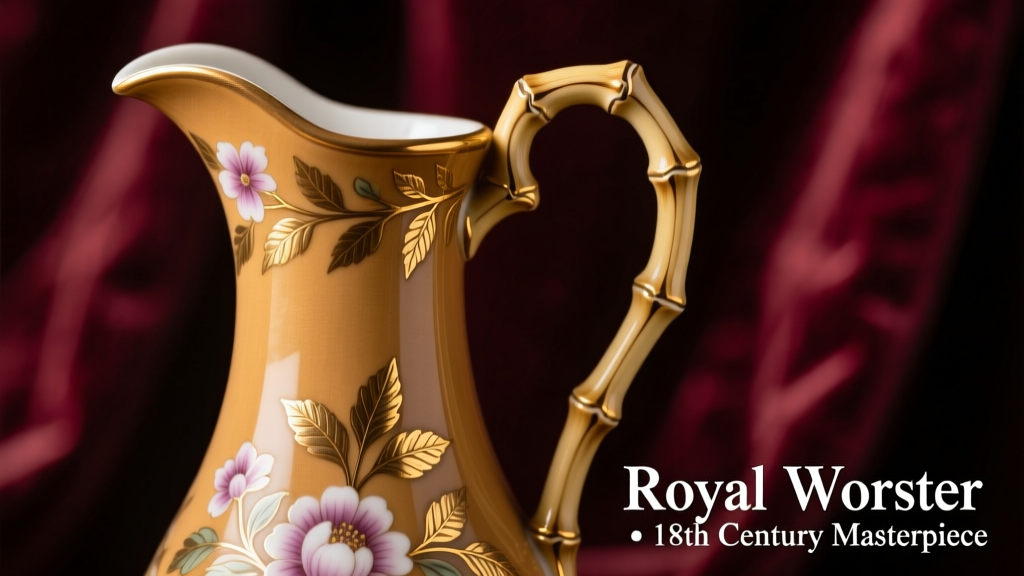
Royal Worcester Ewer: Tan Gold Floral Leaf Band, Bamboo Handle, Split Spout — A 14-Inch Masterpiece of Late Victorian Porcelain
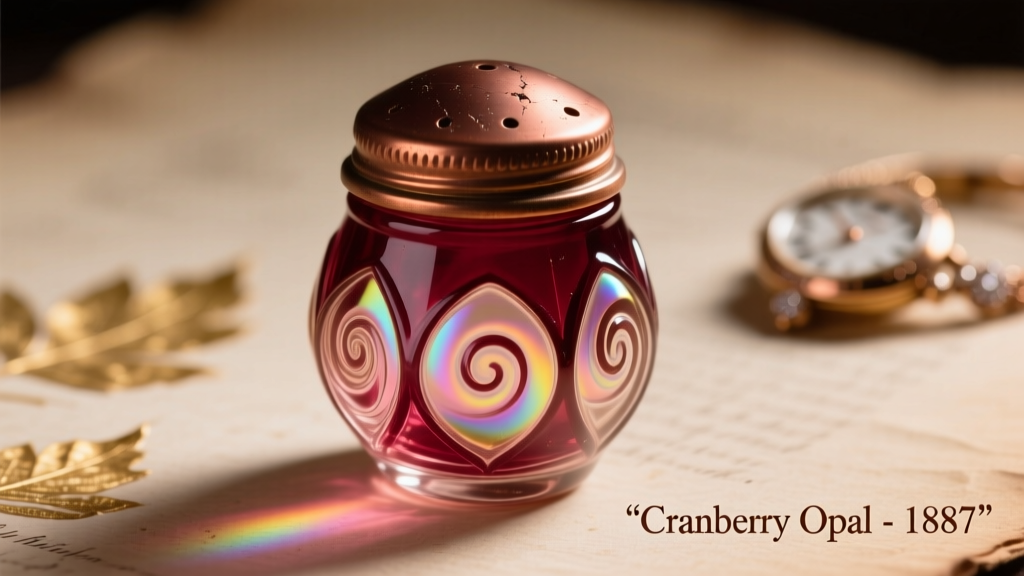
Cranberry Glass Sugar Shaker with Window Swirl and Opalescent Rim: A Collector’s Study of American Art Glass Tableware, 1880–1925
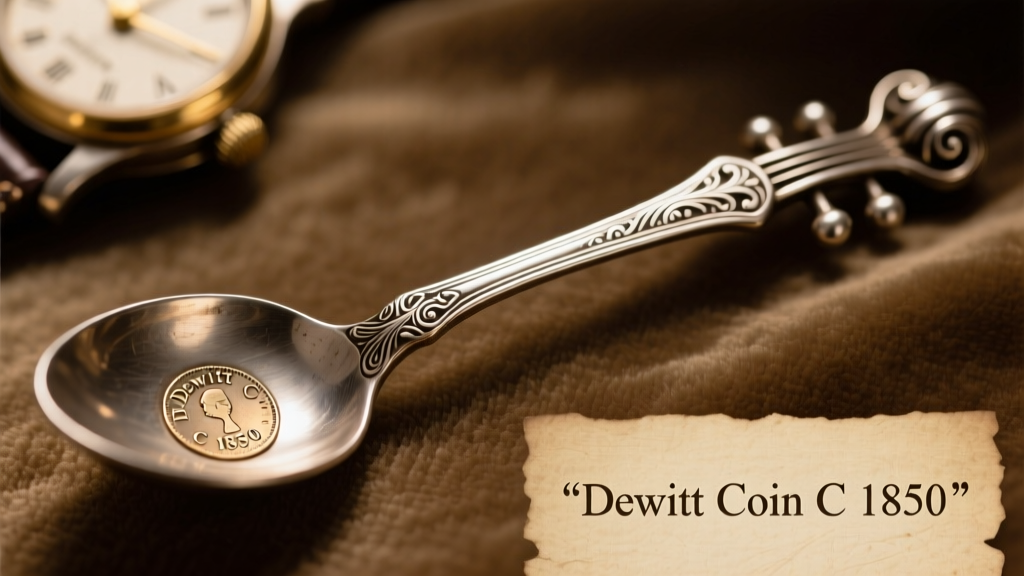
Silver American Ladle: Tip-Back Fiddle Handle, Marked A. H. Dewitt, Coin Silver, c. 1850, 13 Inches
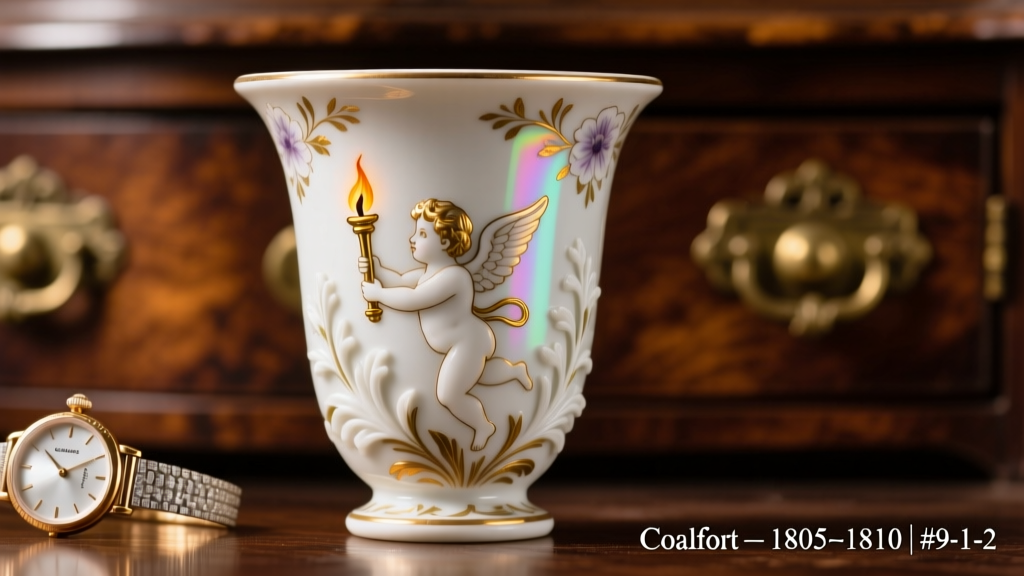
Coalport Vase, Campaniform Form, Cupid Bearing Torch with White Floral Motifs: A Masterpiece of Early 19th-Century English Porcelain (c. 1805–1810)
The 1925 Silver, Enamel, and Gold-Filled Vanity Compact with Finger Chain: A Masterpiece of Jazz Age Elegance
Daum Nancy Vase 'Pillow' Form: Orange-on-Yellow Art Glass Masterpiece, C. 1912 — A Technical & Historical Appraisal
The Toy Cap Gun Ranger Kilgore Box: A Collector’s Deep Dive into a Mid-Century American Icon