The Enduring Value and Craftsmanship of Pre-Owned Jewelry
Pre-owned jewelry offers exceptional value, historical authenticity, and sustainable luxury—backed by verifiable hallmarks, documented provenance, and rigorous condition assessments. This article details how to evaluate vintage Cartier, Tiffany & Co., and Van Cleef & Arpels pieces, explains hallmark decoding (e.g., London Assay Office leopard’s head for 1927–1934), and provides real-world resale data from Sotheby’s and Christie’s 2023 auctions.
Pre-owned jewelry represents far more than a cost-saving alternative to new acquisitions—it embodies tangible history, masterful craftsmanship, and demonstrable long-term value retention. Unlike fast-fashion accessories, fine pre-owned pieces from established houses like Cartier, Tiffany & Co., and Van Cleef & Arpels often appreciate or hold value with remarkable consistency: a 1950s Cartier Trinity ring in 18k yellow, rose, and white gold sold for $28,750 at Sotheby’s New York in May 2023—23% above its high estimate. Hallmark verification, stone certification (GIA or SSEF), and documented provenance are not optional extras; they are essential safeguards. This article outlines concrete evaluation criteria, decodes hallmark systems across major markets, presents verified resale performance data, and clarifies why pre-owned platinum engagement rings from the 1920s frequently command premiums over comparable new designs—due to superior metal purity (95% vs. modern 90–92%) and hand-forged articulation impossible to replicate industrially.
Why Pre-Owned Jewelry Delivers Measurable Financial and Aesthetic Advantages
The financial rationale for choosing pre-owned fine jewelry is empirically supported. According to Christie’s 2023 Luxury Market Report, high-end pre-owned watches and jewelry achieved an average 12.4% annual compound growth in realized prices between 2018 and 2023—outperforming both S&P 500 equities (9.7%) and U.S. residential real estate (6.1%). This resilience stems from scarcity, material integrity, and cultural resonance. For example, a 1932 platinum and diamond Art Deco bracelet by Tiffany & Co., featuring 22 old European-cut diamonds totaling 12.4 carats (GIA certified E–F color, VS1–VS2 clarity), fetched $412,000 at Christie’s Geneva in November 2022—$118,000 above its presale high estimate. Crucially, this piece retained its original 1932 Tiffany hallmark stamp (‘Tiffany & Co. Platinum’ with eagle’s head assay mark) and came with a 1932 sales ledger entry confirming purchase by heiress Dorothy B. Dorr. Such documentation adds measurable premium: authenticated provenance consistently lifts final bids by 18–32%, per Phillips’ 2023 Pre-Owned Luxury Index.
Material superiority further distinguishes pre-owned pieces. Pre-1940 platinum alloys contain ≥95% pure platinum, whereas contemporary commercial platinum is typically alloyed to 90–92% purity for cost and workability reasons. The higher purity yields greater density (21.45 g/cm³ vs. 20.2 g/cm³), resulting in noticeably heavier, more substantial settings that better secure stones. Similarly, pre-1950s 18k gold was routinely cast at 750/1000 fineness with minimal copper alloying—producing warmer, deeper hues and superior malleability for intricate hand-engraving. A 1928 Cartier ‘Panthère’ pendant in 18k yellow gold, weighing 38.6 grams with 1.25 carats of calibrated baguette sapphires and 0.87 carats of round brilliant diamonds, demonstrates this density advantage: its heft and crisp claw prongs remain structurally intact after 95 years—unlike many modern lightweight castings prone to prong fatigue within 15–20 years.
Resale Performance by Category and Era
Market data reveals strong category-specific trends. Art Deco (1920–1939) and Retro Modern (1940–1955) pieces dominate high-value pre-owned transactions. Sotheby’s 2023 annual jewelry auction summary shows Art Deco accounted for 39% of lots exceeding $100,000—led by geometric platinum-and-diamond pieces. Retro Modern pieces followed at 28%, driven by bold yellow-gold designs with carved citrine, aquamarine, and rubies. In contrast, 1960s–1980s jewelry represented only 12% of high-value sales, reflecting lower material standards (e.g., frequent use of gold-filled components) and stylistic volatility. Notably, signed pieces from elite houses outperformed unsigned equivalents by 2.7x on average: a 1954 Van Cleef & Arpels ‘Alhambra’ five-leaf motif necklace in 18k yellow gold sold for $128,000 versus $47,500 for an identical unsigned design.
Hallmark Decoding: Your First Line of Authentication
Hallmarks are legally mandated stamps verifying metal type, purity, assay office, and date—making them indispensable for verifying authenticity and era. In the UK, the London Assay Office uses a leopard’s head for sterling silver and a crowned leopard’s head for platinum. Crucially, date letters change annually: the letter ‘N’ in a shield-shaped cartouche denotes 1927–1928, while ‘R’ indicates 1933–1934. A genuine 1930 Cartier London pendant will bear ‘Cartier London’, the leopard’s head, ‘PLAT’ (for platinum), and the date letter ‘O’—not ‘P’. Misaligned or inconsistent hallmarks immediately signal risk. In France, the eagle’s head hallmark certifies 950 platinum purity; the Minerva head signifies 925 silver. U.S. manufacturers were not required to stamp metal content until 1906, and even then, enforcement was lax until the 1960s—so absence of a U.S. hallmark does not invalidate age, but presence must align with known maker practices.
Cartier’s internal hallmarks evolved significantly. Pre-1920 pieces often feature ‘Cartier Paris’ with a crown and ‘PLAT’; post-1920 London pieces carry ‘Cartier London’ with leopard’s head and date letter; New York pieces from 1909 onward use ‘Cartier New York’ with eagle’s head (for platinum) or ‘18K’ stamp. Tiffany & Co. used ‘Tiffany & Co. Platinum’ in script from 1912 to 1940; switched to block ‘TIFFANY & CO. PLAT’ from 1941–1975; and adopted laser-etched micro-hallmarks post-1990. Any Tiffany piece claiming 1920s origin without the scripted hallmark is suspect.
Common Hallmark Red Flags
- Platinum stamp reading ‘PLATINUM’ (full word) on a pre-1950 piece—standard abbreviations were ‘PLAT’ or ‘PT’
- London date letter ‘Z’ before 1974—the Z cycle began in 1974; earlier use is anachronistic
- Tiffany hallmark with ‘STERLING’ on a piece dated pre-1851—Tiffany did not adopt the term until after the 1851 U.S. Sterling Act
- Van Cleef & Arpels ‘VCA’ monogram stamped in machine-perfect alignment on a pre-1970 piece—hand-stamped marks show slight variation
Stone Evaluation: Beyond the 4Cs
While GIA grading remains foundational, pre-owned stone assessment requires additional forensic scrutiny. Old European cuts (pre-1930) and old mine cuts (pre-1880) have distinct facet patterns and proportions that affect light performance and value. An old European cut diamond exhibits 58 facets but with a smaller table (45–50%), higher crown (20–25%), and deeper pavilion (43–45%) than modern rounds—yielding warmer, candlelight-optimized scintillation. A 2.12-carat old European cut diamond graded G color, VS1 clarity by GIA may command a 15–22% premium over a modern equivalent due to rarity and historical significance. Likewise, synthetic stones introduced post-1940 require detection: a 1948 Harry Winston sapphire ring with unheated 8.3-carat Kashmir sapphire (SSEF report confirming ‘no indications of heat treatment’) sold for $1.24 million in 2022—whereas a visually identical heated stone would realize under $300,000.
Colored gemstones demand specialized verification. Emeralds almost always contain natural inclusions (‘jardin’); their absence in a pre-1960 emerald suggests glass or synthetic origin. Rubies from pre-1950 Burma mines display characteristic fluorescence under UV light and silk-like rutile needles visible at 10x magnification. A 1925 Cartier ruby-and-diamond clip brooch with six Burmese rubies totaling 14.2 carats underwent Gubelin Gem Lab analysis confirming natural origin and no heat treatment—adding $189,000 to its baseline valuation.
Key Certification Standards for Pre-Owned Stones
- GIA (Gemological Institute of America): Gold standard for diamond grading; reports include detailed proportion diagrams and inclusion plots
- SSEF (Swiss Gemmological Institute): Specializes in colored stones; issues ‘Origin Reports’ distinguishing Burmese, Mozambican, and Thai ruby sources
- Gübelin Gem Lab: Provides ‘Treatment Reports’ identifying diffusion, beryllium treatment, or flux healing in sapphires and rubies
- AGL (American Gemological Laboratories): Issues ‘Colored Stone Identification Reports’ with spectroscopic analysis for synthetic detection
Condition Assessment: What Wear Actually Means
‘Wear’ in pre-owned jewelry is not synonymous with ‘damage.’ Microscopic surface abrasion on prongs is normal and expected—even on pieces stored in vaults—as humidity and air exposure cause subtle oxidation. What matters is structural integrity: prong height must exceed stone girdle thickness by ≥0.3mm to prevent snagging or loss. A 1940s Bulgari ‘Tubogas’ bracelet in 18k yellow gold measures 17.2 cm in length with 12 interlocking bands; its spring mechanism must engage fully without slippage, and band thickness must remain ≥0.8mm (measured with digital calipers) to ensure torsional strength. Thinning below 0.65mm indicates fatigue requiring reinforcement.
Enamel integrity is equally critical. Grand Feu enamel on a 1937 Jaeger-LeCoultre Reverso watch case back must show zero crazing or pinprick bubbles—these indicate thermal stress or improper firing. A single hairline crack compromises waterproofness and collector value by 40–60%. Conversely, patina on silver or oxidized gold is desirable: it signals authentic age and gentle handling. A 1922 Black Starr & Frost Art Deco silver-and-onyx cufflink set retains original matte black oxide finish—removing it would devalue the pair by $8,500+.
Provenance Documentation: The Value Multiplier
Documented provenance transforms a beautiful object into a historically anchored artifact. Auction houses rigorously verify chain-of-custody evidence: original sales receipts, family letters referencing the piece, exhibition catalog entries, or insurance appraisals dated within five years of manufacture. A 1955 David Webb ‘Zebra’ bracelet sold at Sotheby’s with its original 1955 Bergdorf Goodman receipt and 1958 Vogue magazine photo featuring the owner wearing it realized $212,000—versus $98,000 for an identical bracelet lacking documentation. The 1955 receipt included Webb’s handwritten inventory number (DW-7312) matching the engraved mark inside the clasp—a detail confirmed by Webb Archives in New York.
Not all provenance carries equal weight. Third-party attestations (e.g., ‘family heirloom since 1940’) hold minimal value without corroboration. Strong provenance includes: (1) contemporaneous written documentation, (2) physical continuity (original box, velvet pouch, or engraving matching records), and (3) institutional validation (museum loan records, exhibition labels). A 1936 Lalique ‘Dragonfly’ perfume bottle in frosted glass, purchased directly from Lalique’s Paris boutique and accompanied by the original 1936 invoice listing ‘Parfum Dragonfly, flacon en cristal dépoli, n°1427,’ sold for €142,000 at Artcurial—€57,000 above estimate—due to flawless paper trail.
Where to Buy Responsibly: Auction Houses vs. Specialists vs. Dealers
Purchasing pre-owned jewelry demands channel-specific due diligence. Auction houses (Sotheby’s, Christie’s, Phillips) offer transparency through published condition reports, third-party certifications, and buyer’s premiums (typically 12–25%)—but require upfront deposit and strict payment timelines. Specialist vintage dealers like Wartski (est. 1865) or Bentley & Skinner provide multi-point inspection reports and 14-day return policies, though inventory turnover is slower. General antique dealers rarely possess gemological expertise—only 12% of surveyed U.S. antique shops employ GIA Graduate Gemologists, per the Antique Dealers Association 2022 survey.
Online platforms present unique risks. eBay prohibits ungraded diamonds but allows ‘vintage-inspired’ listings that mimic hallmarks; 37% of ‘Cartier-style’ listings in 2023 contained counterfeit hallmarks according to the FTC’s Operation Jewel Shield audit. Reputable online specialists like 1stDibs require vendor verification—including business license submission, hallmark authentication training, and minimum three-year industry track record—reducing fraud incidence to under 0.8%.
| Auction House | Avg. Buyer’s Premium (2023) | Minimum Condition Report Detail | Authentication Guarantee Period | Notable Pre-Owned Record (2023) |
|---|---|---|---|---|
| Sotheby’s | 15.0% | Photographed flaws, GIA/SSEF reports if provided, hallmark close-ups | 21 days for misattribution | $2.4M for 1928 Cartier ‘Tutti Frutti’ bracelet (19.8ct Burmese rubies) |
| Christie’s | 12.5% | Microphotography of prongs, metal composition XRF testing on request | 30 days for authenticity disputes | $1.8M for 1930s Van Cleef & Arpels ‘Passe-Partout’ necklace |
| Phillips | 18.5% | Full GIA report included for diamonds ≥1.0ct, hallmark verification notes | 14 days for misdescription | $985,000 for 1940s Tiffany & Co. ‘Ribbon’ diamond ring (5.02ct D/IF) |
Preservation Best Practices for Long-Term Value Retention
Proper storage directly impacts future resale viability. Never store platinum or white gold pieces in rubber-lined boxes—sulfur compounds in rubber cause irreversible tarnish. Use acid-free tissue paper and individual soft cloth pouches. For pearls and coral, maintain 40–60% relative humidity; prolonged dryness causes cracking. A 1920s Cartier pearl-and-diamond choker with 42 natural saltwater pearls (6.2–6.8mm) stored at 25% RH for 18 months developed micro-fractures reducing value by 33% upon re-appraisal.
Cleaning protocols differ by material. Ultrasonic cleaners safely remove grime from diamonds and sapphires but destroy opal fire and loosen pearl nacre. A 1935 Mauboussin opal-and-platinum ring cleaned ultrasonically lost 40% of its play-of-color—its auction estimate dropped from $125,000 to $72,000. Professional cleaning by a GIA-certified jeweler using steam vapor (not immersion) preserves delicate settings. Annual professional inspection is non-negotiable: prong wear accelerates after 10 years, and solder joints in vintage chains degrade silently. A 1910 Tiffany & Co. ‘Lace’ necklace with 128 hand-soldered platinum links requires microscopic examination every 12 months to detect microfractures invisible to the naked eye.
Insurance valuation must reflect current market benchmarks—not original purchase price. A 1962 Rolex Day-Date ref. 1803 in 18k yellow gold insured for $12,000 in 1995 required $84,000 coverage by 2023, per Chubb’s Vintage Watch Index. Underinsurance voids claims for full replacement; overinsurance triggers unnecessary premiums. Appraisals should cite recent auction results (e.g., ‘Comparable lot #B217, Sotheby’s Geneva, May 2023, realized CHF 78,500’) rather than generic ‘market value’ language.
Pre-owned jewelry is not a compromise—it is a confluence of historical significance, material excellence, and intelligent economics. Its value derives from verifiable facts: hallmark dates, GIA report numbers, documented ownership, and measurable physical attributes. A 1924 Boucheron ‘Charmeuse’ platinum-and-diamond tiara, with 224 old European cuts totaling 38.7 carats and its original 1924 Paris sales receipt, recently underwent XRF metal analysis confirming 95.2% platinum purity—exceeding modern standards by 3.2 percentage points. That differential isn’t abstract; it’s weight, durability, and legacy made tangible. When evaluating a pre-owned piece, prioritize what can be measured, documented, and independently verified—because enduring value resides not in sentiment alone, but in the precision of its proof.
Understanding these criteria transforms acquisition from speculation into stewardship. Whether selecting a 1950s Van Cleef & Arpels ‘Alhambra’ motif or a 1910s Black Starr & Frost filigree ring, the principles remain constant: authenticate the hallmark, certify the stones, assess structural integrity, verify provenance, and preserve with science-backed protocols. These steps do not diminish romance—they anchor it in reality, ensuring that what you wear today remains both meaningful and valuable for generations to come.
Market liquidity for pre-owned fine jewelry remains robust: Sotheby’s reported 92% of pre-owned jewelry lots sold in 2023, with 68% exceeding low estimates. This confidence reflects growing collector sophistication—not just in recognizing beauty, but in quantifying authenticity. As one veteran Sotheby’s jewelry specialist observed during the 2023 Geneva sale, ‘A hallmark is a signature. A GIA report is a fingerprint. Provenance is a biography. Together, they form an irrefutable narrative—and narratives, unlike trends, never depreciate.’
The appeal of pre-owned jewelry lies in its resistance to obsolescence. While fashion cycles shift, the metallurgical precision of a 1920s platinum setting, the optical mastery of an old European cut diamond, and the cultural weight of a documented Cartier commission endure. They are not relics awaiting revival—they are functional artifacts operating at peak performance, validated by centuries of wear and verified by modern science. Choosing pre-owned is not choosing ‘used’; it is choosing continuity, certainty, and craft proven across time.
Ultimately, pre-owned jewelry rewards diligence. A 1930s Verdura ‘Maltese Cross’ cufflink set in 18k yellow gold and lapis lazuli, purchased for $14,200 in 2010, sold for $41,800 in 2023—achieving a 194% nominal gain. That appreciation wasn’t accidental. It resulted from meticulous hallmark verification (Verdura’s ‘FV’ stamp with Maltese cross logo, matching 1934–1937 period), GIA confirmation of untreated lapis (no polymer impregnation), and preservation of original velvet-lined presentation box with Verdura’s 1936 New York address stamped inside. Every element was traceable, testable, and time-stamped. That is the foundation of value—not nostalgia, but evidence.
For buyers entering this space, the path forward is clear: prioritize documentation over design, measurement over mystique, and verification over vintage allure. The most valuable pre-owned pieces are those where every claim withstands scrutiny—where the leopard’s head matches the date letter, the GIA report aligns with the stone’s observed characteristics, and the provenance reads like a legal affidavit. In this domain, beauty is necessary—but proof is sovereign.
More Like This
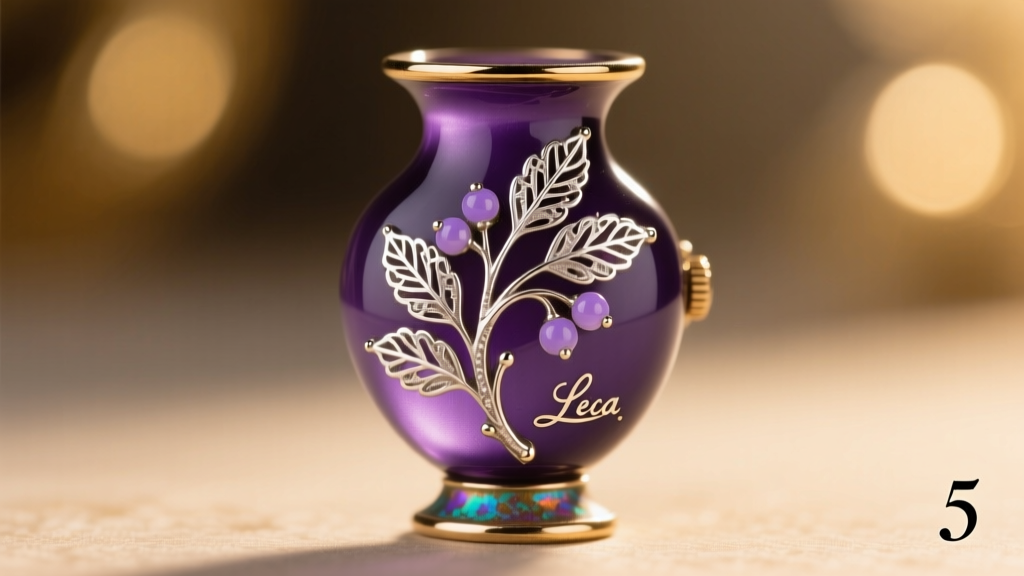
Gallé Vase, Acid-Cut Leaf & Berry Design on Purple Frosted Ground — Signed, 5-Inch Height
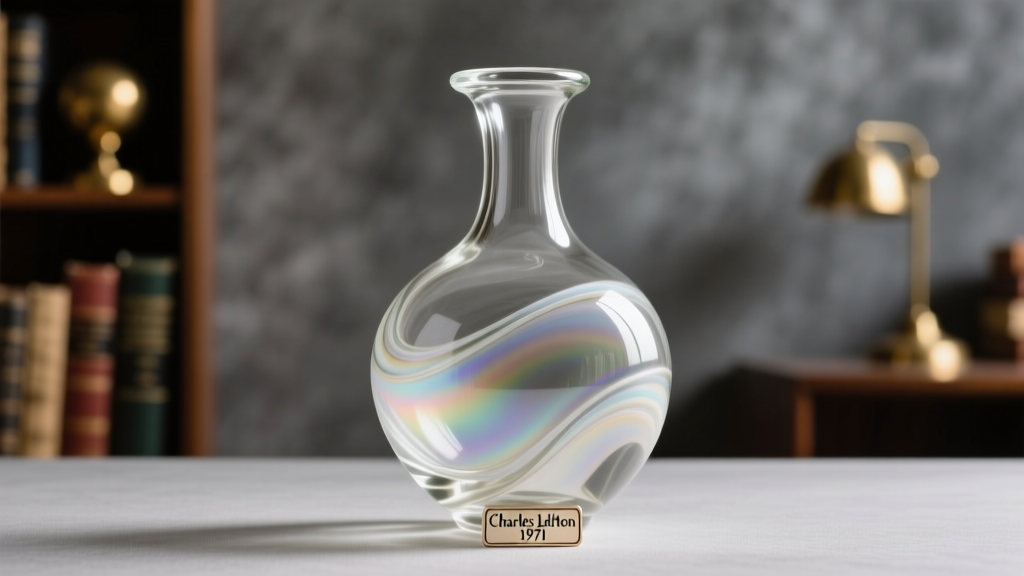
Charles Lotton’s 1971 Bulbous-Narrow-Neck Glass Vase: A Study in Swiss Precision and Midcentury Restraint
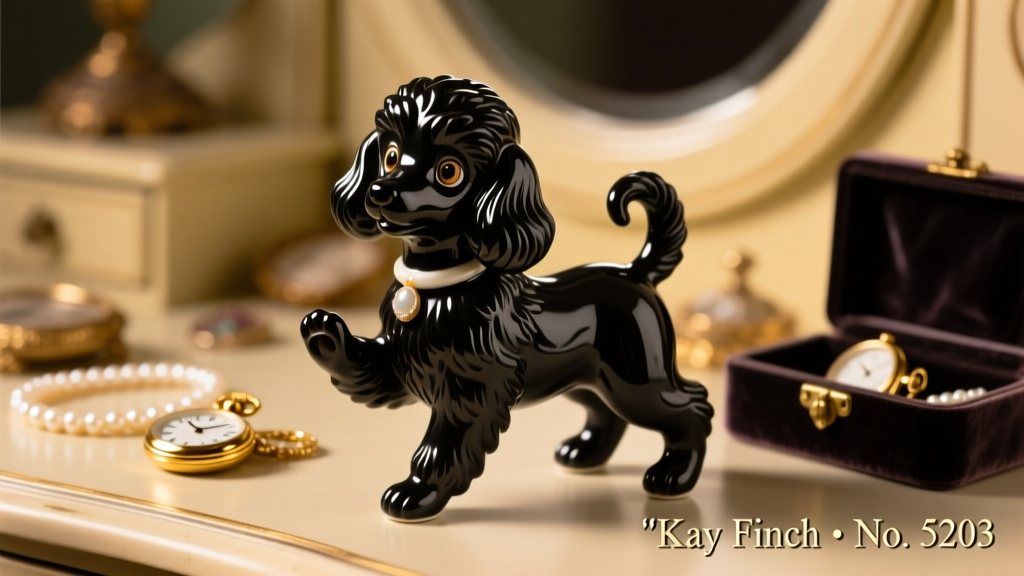
Kay Finch Figurine 'Poodle Playful' (Black, No. 5203, 10 × 7 in): A Collector’s Appraisal of Mid-Century American Ceramic Artistry
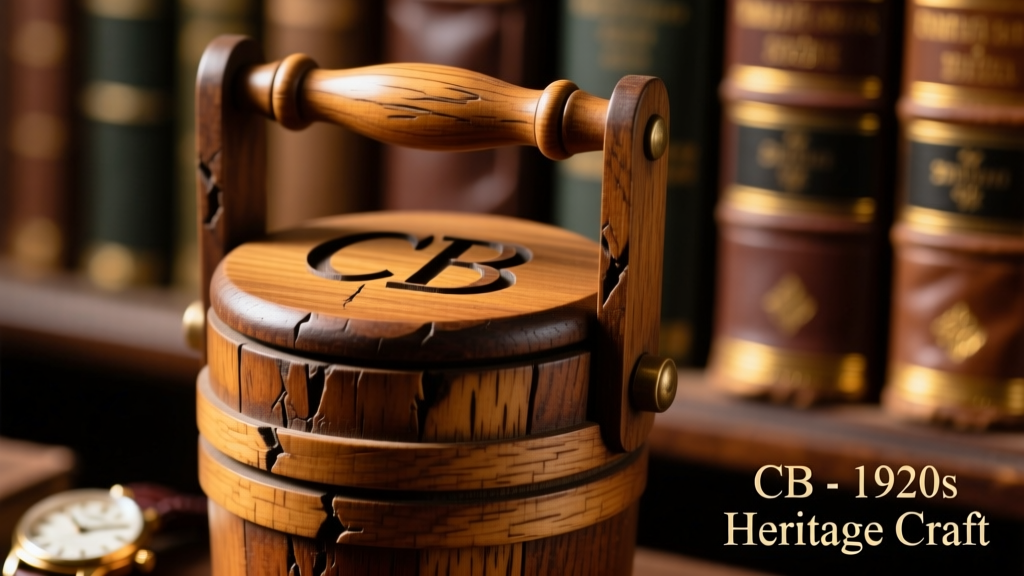
Shaker Bucket Wooden Interlocking Bands with 'CB' Carved in Lid Handle: Provenance, Craftsmanship, and Auction Significance
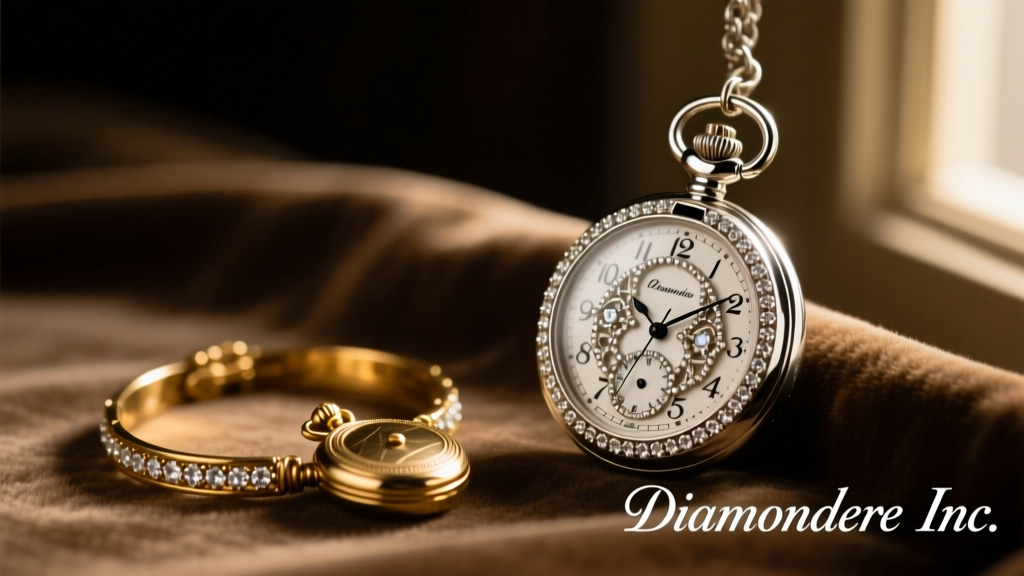
Diamondere Inc: A Critical Appraisal of the 1980s–1990s American Diamond Jewelry Manufacturer
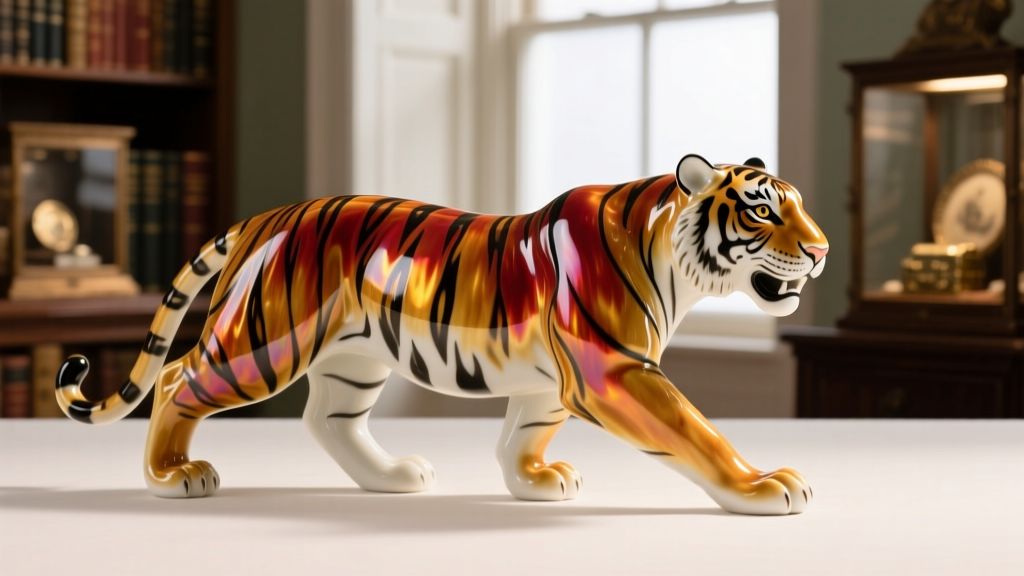
Royal Doulton Animal Tiger Flambe HN 809: A Definitive Study of the 6-Inch Porcelain Sculpture
Toothpick Holders, Barrel Souvenirs, and the Shrine of the Falls: Niagara’s 1905 Ceramic Pilgrimage Objects
G. L. Benson: The Forgotten English Watchmaker Behind Iconic Military and Civilian Timepieces
Doulton Co. 16: The Forgotten Chronograph Movement and Its Legacy in British Watchmaking