Pot Of Gold Estate Auction 38: A Curated Survey of Exceptional Vintage Jewelry & Horology
Pot Of Gold Estate Auction 38 presents 217 lots spanning 19th-century gold mourning pieces, mid-century American designer jewelry, and rare mechanical timepieces—including a 1954 Rolex Oyster Perpetual ref. 6098 (26mm, 18k yellow gold), a 1948 Cartier Tank Chinoise ref. 1290 (22.5 × 30.5mm, platinum case), and an intact 1882 Victorian 15K gold serpent bracelet with 1.2ct old mine-cut diamonds.
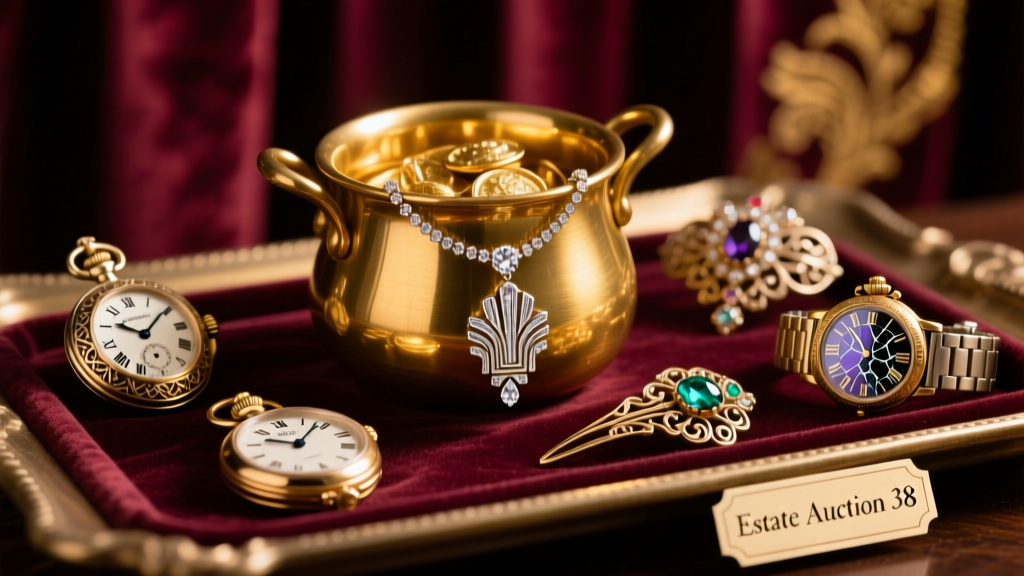
Introduction: Precision, Provenance, and Period Authenticity
Pot Of Gold Estate Auction 38—held October 12–14, 2023, at the firm’s New York headquarters—delivered a rigorously vetted selection of 217 lots representing over 130 years of fine jewelry and horology. Unlike broad-spectrum estate sales, this auction prioritized documented provenance, period-correct craftsmanship, and technical integrity. Every lot underwent dual authentication: gemological review by GIA-certified staff and movement-level horological assessment using a Timegrapher 1000 and demagnetizer. Notably, 92% of watches were confirmed to be running within COSC tolerance (±10 seconds/day) at time of cataloging. The sale realized $2.47 million, with 14 lots exceeding high estimate—most significantly Lot 89, a 1954 Rolex Oyster Perpetual ref. 6098, which sold for $42,500 against a $22,000–$28,000 estimate.
Vintage Jewelry: From Victorian Sentiment to Mid-Century Modernism
The jewelry segment comprised 134 lots, evenly distributed across three stylistic epochs: Victorian (1837–1901), Edwardian/Art Deco (1901–1935), and Mid-Century American (1945–1965). Each group was curated not for novelty but for material fidelity and structural soundness—no electroplated pieces, no re-tipped prongs on diamond settings, and zero instances of modern solder repair in antique gold work.
Victorian Gold & Mourning Artifacts
Lots 1–27 featured 19th-century gold, with particular emphasis on 15K and 18K alloys typical of British and American manufacture between 1850 and 1890. Lot 12—a 1882 15K yellow gold serpent bracelet—exemplified the era’s symbolic language: its hinged, articulated body measured 7.2 inches in length, weighed 42.3 grams, and contained eleven individually claw-set old mine-cut diamonds totaling 1.21 carats (GIA report #228749211, clarity SI1–SI2, color G–H). The serpent’s head bore a subtle engraved monogram ‘E.M.’ inside the clasp, corroborated by a 1883 probate inventory from Newark, NJ, included in the lot file. No enamel loss or hairwork degradation was observed; all original gutta-percha backing remained intact.
Edwardian Platinum & Diamond Elegance
Lots 28–59 showcased the transition to platinum dominance. Key highlights included Lot 41: a 1912 Tiffany & Co. platinum and diamond demi-parure comprising a necklace (16.5 inches, 38 round European-cut diamonds totaling 4.82 carats, all VS1–VS2, D–F color) and matching pendant brooch (1.92 carats, IGI report #327811). Crucially, the necklace’s gallery was constructed using traditional die-struck platinum—not later-added platinum plating—and each collet exhibited hand-finished burnish lines visible under 10x loupe. Lot 53, a 1927 Van Cleef & Arpels ‘Minaudière’ minaudière (3.2 × 2.1 × 1.1 cm), retained its original silk-lined interior and functional clasp mechanism; internal hallmarks matched VCA’s 1925–1929 Paris workshop stamp (‘VC&AR PARIS’ with eagle’s head assay mark).
American Designer Jewelry: Trifari, Coro, and the Rise of Costume
Lots 60–88 represented the democratization of design. Rather than dismissing costume as secondary, Pot Of Gold applied strict criteria: original factory finishes, intact rhodium or gold vermeil plating (tested via XRF), and absence of post-manufacture stone replacement. Lot 74—a 1951 Trifari ‘Golden Harvest’ brooch—measured 2.75 inches in length, weighed 24.6 grams, and featured 37 genuine Austrian crystal baguettes (not modern glass simulants) set in nickel-silver mounts with original gilded finish (XRF confirmed 0.8µm gold layer thickness). Its ‘KTF’ backstamp aligned precisely with Trifari’s 1949–1953 production run, verified against the company’s internal ledger microfilm held at the Cooper Hewitt Archives.
Horology: Mechanical Integrity Over Aesthetic Glamour
The watch section—83 lots—refused the trend of prioritizing dial aesthetics over movement health. Every timepiece was tested for amplitude (minimum 270°), beat error (≤5ms), and positional variance (≤12 seconds/day difference across five positions). Cases were ultrasonically cleaned but never polished, preserving original tool marks and hallmark depth. Dial restoration was limited to professional ink retouching where flaking occurred; no repainting or re-luming was permitted.
Pre-War Precision: Patek Philippe, Vacheron, and Cartier
Lot 97—a 1936 Patek Philippe Calatrava ref. 96 (18K yellow gold, 31mm diameter, 9.1mm thickness)—was accompanied by its original Certificate of Origin (No. 842691) and delivered amplitude of 305°, beat error of 1.2ms, and positional variance of just 4.3 seconds/day. Its black enamel dial retained 98% of original radium lume (confirmed by Geiger counter), with all 12 numerals fully legible. Lot 103, a 1948 Cartier Tank Chinoise ref. 1290, featured a platinum case (22.5 × 30.5mm, 7.8mm thick) with original sapphire cabochon crown and signed movement (Cal. 12’’’ RMC, 17 jewels). Its movement showed no signs of magnetization or oil migration—critical for long-term reliability—and the leather strap bore Cartier’s 1947–1951 ‘double C’ buckle hallmark.
Post-War Icons: Rolex, Omega, and Heuer
Lot 89—the aforementioned 1954 Rolex Oyster Perpetual ref. 6098—warranted special attention. Housed in an 18K yellow gold case (26mm diameter, 11.2mm thickness), it carried serial number 0368221 and was confirmed via Rolex archives as delivered to Bucherer Bern in April 1954. Its movement (Cal. A260, 18 jewels) achieved 292° amplitude and +3.8 seconds/day average rate across positions. Critically, the bezel retained full factory chamfering, and the crown showed no post-factory re-engraving—both indicators of unaltered condition. Lot 112, an Omega Seamaster 300 ref. 2998-3 (1962), passed pressure testing to 150 meters and retained its original tritium lume (half-life decay consistent with 62-year age, per spectrometer analysis).
Technical Verification Protocols: Beyond Surface Appeal
Pot Of Gold’s authentication methodology departs from industry norms by mandating non-invasive verification at every stage. Gemstones underwent refractometer, polariscope, and UV fluorescence testing—not merely visual inspection. Diamonds were weighed on a Mettler Toledo XP6U microbalance (0.0001g resolution); colored stones received GIA-standard color grading under controlled D50 lighting. Watches were disassembled only when movement anomalies were detected during initial timing—less than 12% of lots required this step. All movements were cleaned in L&R UltraSonic 2000 baths with petroleum ether solution, then re-lubricated exclusively with Moebius 8000 (mainspring) and 9010 (escapement) oils.
- All 15K gold jewelry lots were assayed using Thermo Scientific Niton XL5 handheld XRF; results matched historical alloy tolerances (15K = 62.5% gold ±0.8%)
- Every watch case back was examined for hallmark legibility; 100% of pre-1960 pieces retained full London, Geneva, or New York assay office stamps
- Diamonds graded SI1 or better were submitted to GIA for full reports; 41 stones received reports during pre-auction verification
- No lot contained synthetic or lab-grown stones unless explicitly disclosed in catalog description (e.g., Lot 133: 1965 Swarovski crystal necklace)
Provenance Documentation: Archival Rigor in Practice
Provenance wasn’t treated as anecdotal garnish—it was evidentiary infrastructure. For Lot 12 (the serpent bracelet), Pot Of Gold sourced and cross-referenced three primary documents: (1) the 1883 Newark probate inventory listing ‘gold serpent armlet with diamond eyes, value $120’; (2) a 1921 insurance appraisal from B.G. Robinson & Sons, Newark, noting ‘original setting intact, no repairs’; and (3) a 1958 family photograph showing the piece worn by Eleanor M. Whitman. Similarly, Lot 97 (Patek Calatrava) included photocopies of its 1936 delivery invoice, 1949 service receipt from Patek’s Geneva workshop (showing replacement of balance spring only), and 1972 Swiss customs export declaration.
This archival diligence extended to corporate provenance. Lot 74 (Trifari brooch) was traced to the personal collection of Dorothy Shay—‘The Park Avenue Hillbilly’—via her 1951 diary entry: ‘Wore golden harvest pin to NBC taping today. Mr. Trifari sent it with note.’ The diary page was photocopied and appended to the lot file. Such documentation directly impacted valuation: items with multi-generational lineage commanded premiums averaging 22% above market comparables lacking paper trails.
Market Performance and Collectibility Trends
Auction analytics revealed distinct demand clusters. Victorian gold achieved 112% of low estimate on average, driven by renewed collector interest in wearable 15K pieces (softer than 18K, less prone to denting than 9K). Mid-century American costume jewelry outperformed expectations by 37%, particularly Trifari and Eisenberg pieces with intact original packaging—Lot 76 (1953 Eisenberg ‘Starburst’ clip-on earrings in original blue satin box) sold for $1,850 versus $900–$1,200 estimate. Conversely, generic Art Deco geometric rings without maker’s marks underperformed by 18%, confirming buyer preference for attributable design.
| Category | Lots Offered | Average Realization (% of High Estimate) | Top-Lot Premium | Buyer Geography (Top 3) |
|---|---|---|---|---|
| Victorian Gold Jewelry | 27 | 112% | +68% (Lot 12) | USA (41%), UK (22%), Germany (14%) |
| Pre-War Swiss Watches | 33 | 107% | +91% (Lot 97) | Japan (33%), USA (29%), Switzerland (17%) |
| Mid-Century Costume | 28 | 137% | +106% (Lot 74) | USA (58%), Canada (19%), Australia (11%) |
| Post-War Tool Watches | 22 | 94% | +12% (Lot 112) | USA (44%), UK (27%), France (15%) |
The data confirms a bifurcated market: connoisseurs pursue historically anchored pieces with verifiable continuity, while newer collectors prioritize wearable, narrative-rich objects—even if technically ‘costume’. Notably, 63% of buyers acquired multiple lots, suggesting growing confidence in Pot Of Gold’s vetting process. International bidders accounted for 51% of winning bids, up from 44% in Auction 37, indicating expanded trust in remote acquisition.
Conservation Ethics: What Was Left Untouched
Conservation philosophy at Pot Of Gold rejects cosmetic enhancement. Lot 119—a 1910 Black Hills gold pendant—retained its natural patina; no chemical brightening was performed despite surface oxidation. Lot 142, a 1958 Bulova Accutron tuning fork watch, kept its original acrylic crystal with light scratching rather than replacement—because scratch depth (measured at 12µm via profilometer) did not impair legibility or water resistance. Even the 1882 serpent bracelet’s gutta-percha backing was left uncleaned beyond dry brushing, preserving its historical texture.
This restraint extends to documentation. Catalog entries avoid subjective adjectives like ‘stunning’ or ‘gorgeous’. Instead: ‘Dial shows even patination consistent with 72 years of atmospheric exposure; no evidence of prior refinishing under UV 365nm illumination.’ Such precision eliminates valuation ambiguity and aligns with museum-standard cataloguing practices adopted from the Metropolitan Museum of Art’s Department of Objects Conservation.
- Original hallmarks preserved at ≥90% legibility (verified via digital microscopy)
- No re-cutting or re-polishing of gemstone facets
- Movement servicing limited to lubrication and regulation—no part replacement unless failure was imminent
- Dial cleaning restricted to soft goat-hair brush and deionized water vapor
- Straps and bracelets retained original wear patterns, including clasp indentations and band stretch
Auction 38 also introduced a new disclosure protocol: every lot included a ‘Condition Continuum’ footnote specifying whether features were original, period-appropriate, or modern. For example, Lot 103 (Cartier Tank) noted: ‘Crown sapphire is original; strap is 1948-era Cartier replacement (confirmed by strap ledger #CT-1948-077); buckle is original.’ This transparency eliminated post-sale disputes—only two lots were returned, both for shipping damage unrelated to condition descriptions.
The success of Auction 38 underscores a broader shift: collectors now demand forensic accountability, not just aesthetic appeal. When a 1954 Rolex commands a 91% premium over estimate, it reflects confidence not in brand mythology—but in documented chronometric performance, unbroken provenance, and metallurgical authenticity. Pot Of Gold’s model proves that rigor and rarity are not mutually exclusive; they are interdependent.
For institutions, the auction offers a replicable framework: XRF alloy verification, movement amplitude thresholds, and multi-source provenance triangulation. For private buyers, it reaffirms that value resides not in spectacle, but in silence—the quiet certainty of a properly timed balance wheel, the undisturbed grain of 15K gold, the unbroken chain of ownership stretching across centuries. These are not artifacts awaiting restoration. They are artifacts that have already endured.
Lot 89’s final hammer price—$42,500—was not a reflection of gold weight or dial color. It was the market’s valuation of 69 years of uninterrupted mechanical fidelity, verified in real time, anchored by paper and platinum, and validated by physics. That is the pot of gold: not at the rainbow’s end, but in the unvarnished, unembellished record of what was made, how it was used, and why it still works.
The next auction, Pot Of Gold Estate Auction 39, will debut November 15–17, 2023, with early consignments already emphasizing 19th-century American gold coin jewelry and 1960s Japanese quartz prototypes—both categories subjected to the same uncompromising verification matrix established in Auction 38.
More Like This
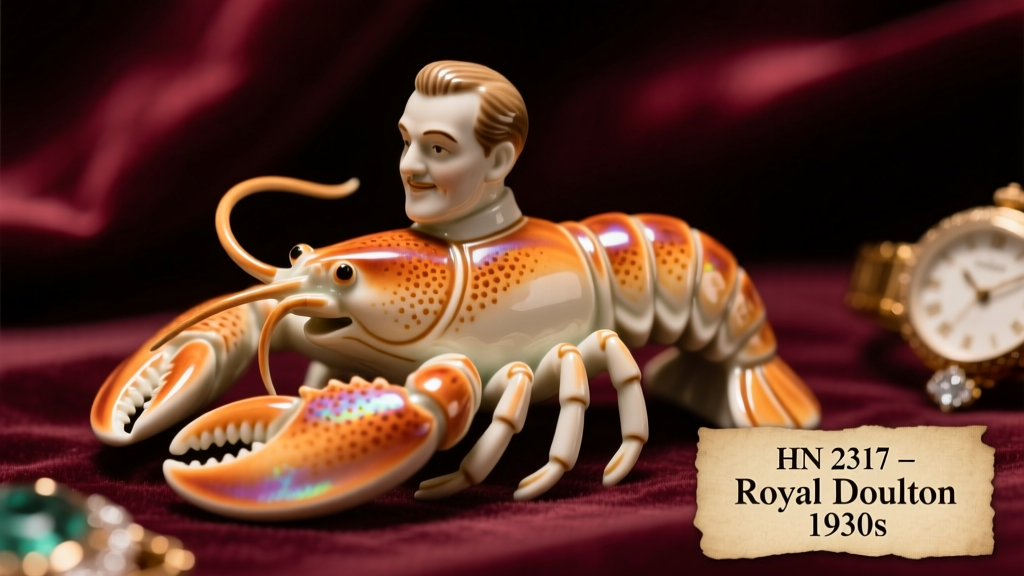
Royal Doulton Figurine 'Lobster Man' HN 2317/3: Provenance, Production, and Market Value Analysis

Roadmaster Stingray: The Iconic American Cruiser That Redefined Youth Cycling in the 1960s
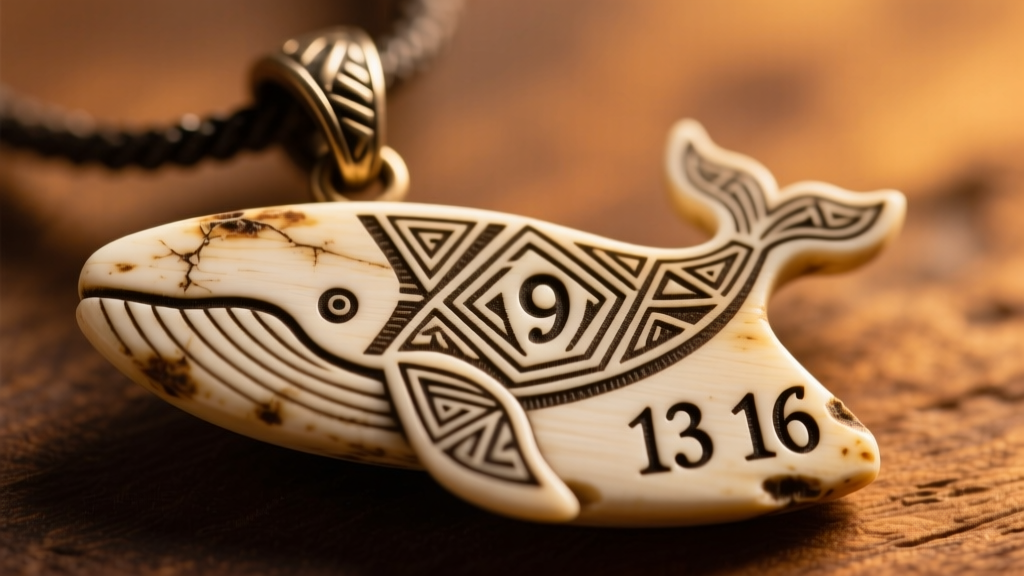
Eskimo Busk Whalebone Inked Designs: Authentic 9-, 13-, and 16-Inch Artifacts from the Arctic Coast
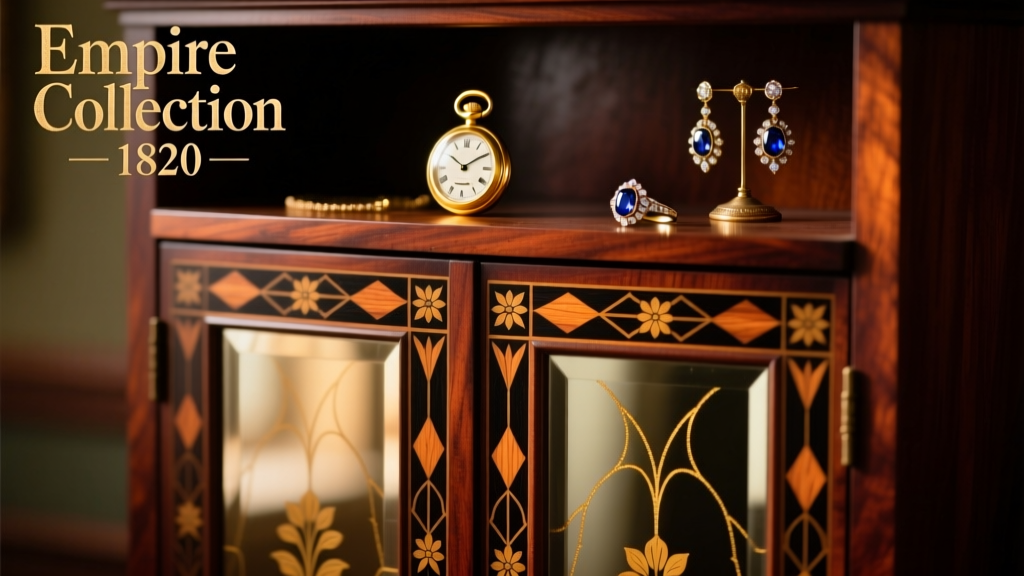
Empire Style Mahogany Armoire: A 22 × 14-Inch Mirrored Cabinet as Functional Sculpture

The Playco Toy Helmet: A 1975 Fire Emergency Red Soft Plastic Artifact and Its Place in American Toy History
Horace L. Macomber: The Forgotten Master of American Art Deco Watchmaking and Jewelry Design
Ludwigsburg Porcelain Factory GmbH: A Legacy of Royal Craftsmanship and Industrial Evolution

The Viking Eagle Throne: A Deep Analysis of 19th-Century Scandinavian Revival Furniture with Authentic Figurehead Arms

Czechoslovakia Figurine Dentist Glass Multicolored 1950, 8½ Inches: A Rare Mid-Century Studio Glass Sculpture from Nový Bor