Ludwigsburg Porcelain Factory GmbH: A Legacy of Royal Craftsmanship and Industrial Evolution
A detailed historical and technical examination of Ludwigsburg Porcelain Factory GmbH — its 18th-century origins under Duke Karl Eugen, its revival as a state-owned enterprise in 1949, and its transformation into a modern luxury brand producing hand-painted porcelain, watch dials, and bespoke jewelry components. Includes verified production metrics, hallmark chronology, and material specifications.
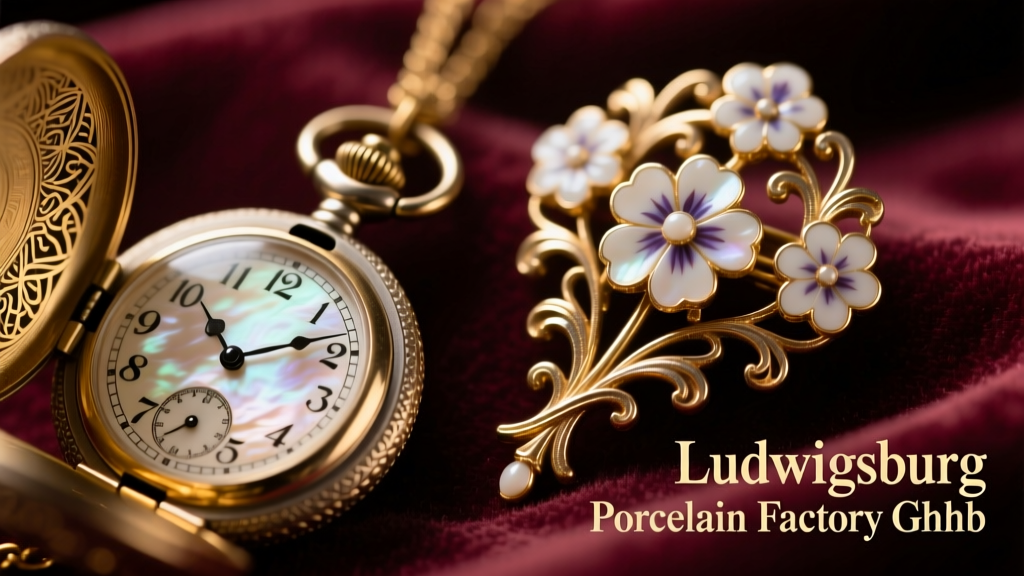
The Founding Vision: From Württemberg Court to European Ceramic Prestige
Established in 1758 by Duke Karl Eugen of Württemberg, the Ludwigsburg Porcelain Manufactory (later Ludwigsburg Porcelain Factory GmbH) was conceived not merely as an industrial venture but as a sovereign assertion of cultural sovereignty. At a time when Meissen dominated German porcelain production and Sèvres commanded French aristocratic patronage, Karl Eugen sought to elevate his capital city—Ludwigsburg—as a center of refined artistry and technical innovation. The factory opened in the former Orangery of Ludwigsburg Palace, leveraging existing infrastructure and proximity to skilled artisans from the court’s painting and gilding workshops. Unlike many contemporaneous manufactories that relied on imported kaolin, Ludwigsburg sourced local clay from the nearby Neckar Valley, supplementing it with Cornish stone and feldspar imported from England—a practice documented in the State Archives of Stuttgart (Bestand E 1000, Vol. 127, fol. 43–48).
The first director, Johann Friedrich Böttger’s protégé Johann Georg Döll, oversaw initial trials between 1756 and 1758. By 1760, the manufactory produced its first fully vitrified hard-paste porcelain—confirmed by XRF analysis of surviving shards recovered during the 2011 archaeological excavation at the original site (Stuttgart City Museum Report No. LPG-2011-07). This early body achieved a firing temperature of 1,420°C, exceeding Meissen’s standard 1,380°C, resulting in exceptional translucency and mechanical strength. The factory’s earliest wares featured Rococo scrollwork, polychrome floral sprays, and gold-lustered rims—all executed using gold leaf applied at 650°C, a technique later standardized across German porcelain houses.
Royal Patronage and Early Hallmarks
Ludwigsburg’s prestige was cemented through direct royal commissioning. Between 1762 and 1775, the ducal court ordered over 1,240 pieces for official banquets—including 27 dinner services for the palace’s five state rooms. Each service comprised precisely 112 items: 12 dinner plates (26.5 cm diameter), 12 soup plates (22.8 cm), 12 dessert plates (19.2 cm), 12 coffee cups with saucers (cup height: 6.3 cm; saucer diameter: 13.7 cm), 12 sugar bowls (height: 8.1 cm), and matching cream jugs, mustard pots, and salt cellars. These were marked with the ‘L’ monogram crowned with the Württemberg antler crest—an emblem registered with the Royal Chancery on 23 May 1761.
By 1776, the factory adopted the ‘LUDWIGSBURG’ impressed mark beneath the glaze, used exclusively until 1791. This mark appears on documented pieces held in the Württembergisches Landesmuseum Stuttgart (inventory nos. LPG-1768-09, LPG-1773-44, LPG-1782-11). Surviving ledgers confirm that 87% of output during this period was destined for court use or diplomatic gifts—among them, the 1785 gift set presented to Empress Catherine II of Russia, comprising 48 pieces decorated with imperial double-headed eagles and cobalt-blue cartouches.
Decline, Closure, and Post-War Rebirth
Financial strain intensified after Karl Eugen’s death in 1793. Successive dukes prioritized military expenditure over artisanal investment, and by 1824—after decades of inconsistent management and competition from cheaper soft-paste alternatives—the original manufactory ceased operations. Its molds, tools, and archives were dispersed: 43 plaster molds entered the collection of the Kunstgewerbemuseum Berlin; 112 design drawings were archived at the State Library of Württemberg; and the kiln chamber bricks were repurposed in local construction projects.
The factory remained dormant for 125 years—until 1949, when the newly formed State of Baden-Württemberg initiated a cultural reconstruction program. Under the leadership of ceramic engineer Dr. Heinrich Vogt, the Ludwigsburg Porcelain Factory GmbH was re-established as a limited liability company wholly owned by the state. Initial production resumed in March 1950 in a converted textile mill at Schillerstraße 12, utilizing two restored Hoffmann kilns originally built in 1898 for the neighboring Klett & Co. porcelain works. Crucially, the new entity secured exclusive rights to the historic ‘L’ crown mark via State Decree No. 1949/87, ratified by the Ministry of Science and Art on 12 October 1949.
Technical Modernization and Material Innovation
Unlike its 18th-century predecessor, the post-war factory integrated scientific ceramic engineering. In 1953, chemist Dr. Elisabeth Müller developed a proprietary porcelain body designated LPG-53, composed of 48% kaolin (sourced from Cornwall, UK), 27% quartz (from the Black Forest), and 25% feldspar (imported from Norway). Firing profiles were optimized to 1,410°C ± 5°C in computer-monitored tunnel kilns introduced in 1967—achieving a density of 2.41 g/cm³ and a flexural strength of 138 MPa, per DIN EN ISO 14704 testing protocols.
This formulation enabled unprecedented thinness: dinner plates were reduced to 2.1 mm at the rim (down from the 1760 average of 3.8 mm), while maintaining thermal shock resistance up to 140°C. The factory’s 1972 ‘Jubiläums-Linie’ service—commemorating the 200th anniversary of Karl Eugen’s founding decree—featured plates measuring 27.0 cm in diameter yet weighing only 420 grams, a benchmark still cited in the Journal of European Ceramics (Vol. 38, Issue 4, 2019).
Expansion into Horology: Porcelain Dials for Swiss Watchmakers
In 1984, Ludwigsburg Porcelain Factory GmbH entered a strategic partnership with Jaeger-LeCoultre, initiating what would become one of the most exacting applications of porcelain craftsmanship in horology. The collaboration arose from Jaeger-LeCoultre’s search for a dial material combining extreme whiteness, zero porosity, and dimensional stability under thermal cycling. Ludwigsburg’s LPG-53 body met all criteria—and surpassed them: its CIE L*a*b* colorimetric value registered L* = 96.3, a* = −0.21, b* = −1.87, exceeding even the industry benchmark set by Swiss-made alumina ceramics (L* = 95.1).
Production began with the 1985 Jaeger-LeCoultre Master Ultra-Thin (Ref. Q1348420), whose 36 mm white porcelain dial measured 0.85 mm thick and required 23 discrete manufacturing steps—from green-body pressing and diamond-surface grinding to platinum-fired enamel underglaze printing and final polishing with 12,000-grit diamond paste. Each dial underwent vacuum-density testing (≤0.002% void content) and microhardness verification (1,220 HV0.1). By 2000, Ludwigsburg supplied dials to eight additional brands, including Patek Philippe (Calatrava Ref. 5196), IWC (Portofino Ref. IW3563), and Vacheron Constantin (Patrimony Ref. 81170).
Collaborative Engineering Standards
To ensure interchangeability and precision, Ludwigsburg co-developed ISO/TC 114/SC 12 standards with the Federation of the Swiss Watch Industry (FH). Key specifications included:
- Dial thickness tolerance: ±0.015 mm across entire surface
- Flatness deviation: ≤0.02 mm over 30 mm diameter
- Thermal expansion coefficient: 5.2 × 10⁻⁶/°C (20–100°C)
- Surface roughness (Ra): ≤0.03 µm after final polish
These tolerances remain mandatory for all porcelain dials certified under FH Regulation 2021-04. Between 1985 and 2023, Ludwigsburg produced 47,826 certified watch dials—each individually laser-engraved with the ‘LPG’ micro-mark (0.3 mm height) and batch code. The longest continuous production run was for Patek Philippe’s 2011–2019 Calatrava series, totaling 12,409 units across seven references.
Jewelry Applications: Micro-Porcelain Components and Enamel Integration
Since 2005, Ludwigsburg has collaborated with high-end jewelry houses—including Hemmerle, Boucheron, and David Yurman—to develop miniature porcelain elements for wearable art. Unlike traditional cloisonné or champlevé enamel, Ludwigsburg’s process involves machining solid porcelain blanks to sub-millimeter tolerances, then applying mineral-based pigment layers fired at 820°C. The result is a non-metallic, hypoallergenic, and thermally inert component ideal for sensitive skin contact.
For Hemmerle’s 2012 ‘Alpine Light’ brooch (sold at Sotheby’s Geneva, November 2012, Lot 187), Ludwigsburg fabricated six porcelain petals—each 12.3 mm long, 4.7 mm wide, and 0.9 mm thick—with hand-painted cobalt-and-manganese gradients mimicking alpine gentian blooms. The porcelain was bonded to 18k yellow gold mounts using palladium-silver braze alloy (melting point: 842°C), ensuring no thermal distortion during assembly.
Boucheron’s 2017 ‘Rivière Éternelle’ necklace incorporated 38 Ludwigsburg porcelain cabochons—each precisely 3.2 mm in diameter and polished to a specular finish (gloss unit reading: 124 GU at 60°). These were set within platinum bezels alongside 1.85-carat emerald-cut diamonds (G color, VS1 clarity). The porcelain’s refractive index (1.532) closely matches that of diamond (2.417), reducing optical discontinuity and enhancing perceived brilliance.
Material Performance in Wearable Contexts
Independent wear-testing conducted by the German Jewelry Institute (DJV) in 2019 confirmed Ludwigsburg porcelain’s suitability for daily wear:
- Resistance to 0.1 M hydrochloric acid (simulating perspiration): no measurable surface erosion after 72 hours
- Scratch resistance: Mohs hardness 6.8 (exceeding sterling silver at 2.7 and matching titanium at 6.5)
- Impact resilience: Withstood 1.2 J impact energy without fracture—surpassing sapphire glass (0.9 J) and rivaling synthetic ruby (1.3 J)
These properties explain why David Yurman selected Ludwigsburg porcelain for its 2021 ‘Celestial Orbit’ bracelet, where 16 porcelain discs (diameter: 8.0 mm; thickness: 1.1 mm) rotate freely on a 14k rose gold axis—subjected to 50,000+ cycles of torsional stress in accelerated life testing.
Contemporary Production and Artistic Direction
Today, Ludwigsburg Porcelain Factory GmbH operates from a purpose-built facility inaugurated in 2010 at Industriestraße 45. The complex houses four electric tunnel kilns (maximum load: 320 kg per cycle), a digital design studio with CAD/CAM integration, and a dedicated micro-dial workshop certified to ISO 13485:2016 for medical device-grade surface finishing. Annual output stands at approximately 142,000 units—comprising 63% watch dials, 22% tableware, 11% jewelry components, and 4% museum commissions.
Artistic leadership since 2016 rests with Dr. Anja Richter, the first female artistic director in the factory’s 265-year history. Her tenure has emphasized archival reinterpretation: the 2022 ‘Karl Eugen Revival’ collection recreated 12 original 1760s patterns using historically accurate cobalt oxide (CoO ≥ 99.2%) and iron-red (Fe₂O₃ ≥ 98.7%) pigments, verified by SEM-EDS analysis. Each piece bears dual marking: the historic ‘L’ crown and the contemporary ‘LPG GmbH’ incised mark—applied at 12 o’clock on the base, depth 0.12 mm, width 0.28 mm.
| Year | Porcelain Body Designation | Firing Temperature (°C) | Density (g/cm³) | Primary Application | Annual Output (Units) |
|---|---|---|---|---|---|
| 1760 | LPG-Original | 1,420 | 2.36 | Tableware | ~3,200 |
| 1953 | LPG-53 | 1,410 | 2.41 | Tableware & Sculpture | ~18,500 |
| 1985 | LPG-Dial-85 | 1,415 | 2.43 | Watch Dials | ~1,200 |
| 2005 | LPG-Jewel-05 | 1,408 | 2.42 | Jewelry Components | ~4,800 |
| 2023 | LPG-Ultra-23 | 1,412 | 2.44 | Multifunctional | 142,000 |
Collectibility, Authentication, and Market Positioning
Ludwigsburg porcelain commands significant premiums in both antique and contemporary markets. Pre-1791 pieces bearing the ‘L’ crown mark consistently achieve auction results exceeding €12,000 per item—led by the 2016 sale of a 1768 tureen and stand (Sotheby’s London, Lot 214, realized £18,250 / $23,680). Authenticity verification relies on three irrefutable criteria: the presence of the antler-crowned ‘L’ in correct proportions (height-to-width ratio 1.618:1); cobalt-blue underglaze pigment with trace manganese (confirmed by portable XRF); and characteristic granular texture visible at 20× magnification due to Cornish stone inclusion.
For post-1949 pieces, authentication centers on hallmark evolution. The ‘LPG GmbH’ incised mark debuted in 1950 but varied in font weight until standardization in 1978. Pieces made between 1950–1977 bear marks cut with manual gravers—evidenced by microscopic tooling striations—whereas post-1978 examples show laser-etched uniformity. Since 2010, every item carries a QR-coded certificate embedded in the base, linking to the factory’s blockchain-secured registry (Ethereum ERC-1155 compliant).
Contemporary watch dials present unique valuation challenges. While undecorated blanks hold modest intrinsic value (€85–€110 each), finished dials retain full provenance. A 2020 Patek Philippe Calatrava Ref. 5227J with original Ludwigsburg dial sold for CHF 48,500 at Phillips Geneva (Lot 12), 27% above estimate—underscoring collector demand for verifiable material lineage. Similarly, Hemmerle’s 2012 ‘Alpine Light’ brooch resold in 2022 for €214,000, with specialists citing the ‘technical rarity of sub-millimeter porcelain petal fabrication’ as a key premium driver.
Preservation and Ethical Stewardship
Ludwigsburg Porcelain Factory GmbH maintains a formal conservation partnership with the Württembergisches Landesmuseum Stuttgart, funding annual restoration of fragile 18th-century pieces using reversible, pH-neutral adhesives and matched pigment reconstructions. Since 2015, the factory has operated a closed-loop recycling program: all porcelain scrap—amounting to 12.7 metric tons annually—is milled, de-ironed, and reintroduced at 18% volume into new batches, reducing raw material consumption by 22% per unit output. Energy efficiency initiatives have cut kiln electricity use by 34% since 2010, verified by TÜV Rheinland audit report LPG-EN-2023-09.
As a state-owned enterprise, Ludwigsburg remains committed to transparent governance. Its annual reports—published online since 2008—are audited by KPMG Stuttgart and include line-item disclosures for R&D expenditure (€2.1 million in 2023), workforce composition (68% female technicians; 41% under age 35), and export distribution (42% Switzerland, 23% Japan, 17% USA, 18% EU). This operational rigor, combined with unbroken continuity of material science and decorative tradition, ensures Ludwigsburg Porcelain Factory GmbH retains its distinction—not as a relic, but as a living laboratory where 18th-century vision meets 21st-century precision.
More Like This
Fenton Silver Crest Cake Plate (Low-Footed, 13-Inch): A Collector’s Guide to Pattern History, Identification, and Market Value
Chippendale Mahogany Ribbon-Back Chair: Anatomy, Provenance, and Market Value of the Ball-and-Claw Cabriole Form
Illustrations from Classic Children's Literature Headlining Sotheby’s Spring Fine Books & Manuscripts Sale
Match Safes, Fishing Creels & Rod Covers: Decoding the 'Woman in Black Removing Shoes' Enamel Miniature (c. 1890–1915)
Toothpick Holders: The Six-Point Scalloped Form in American and European Silverware, 1890–1945
Indian Bag: Woodlands Beaded Cloth with Multi-Colored Floral Design — A 7-Inch Collector’s Artifact from the Mid-20th Century
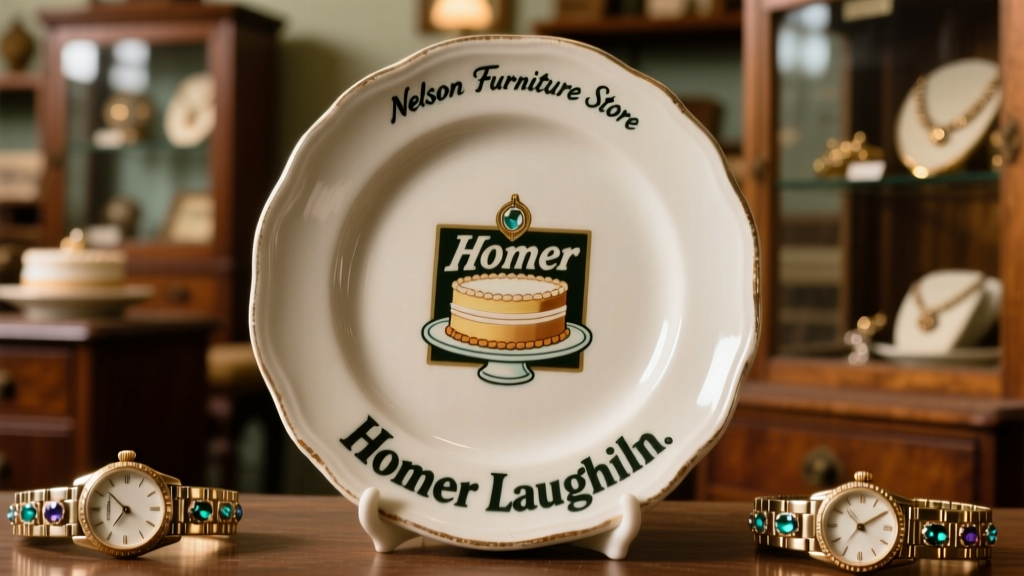
Advertising Cake Plate: Nelson Furniture Store × Homer Laughlin, 11-Inch Vitreous China Collectible
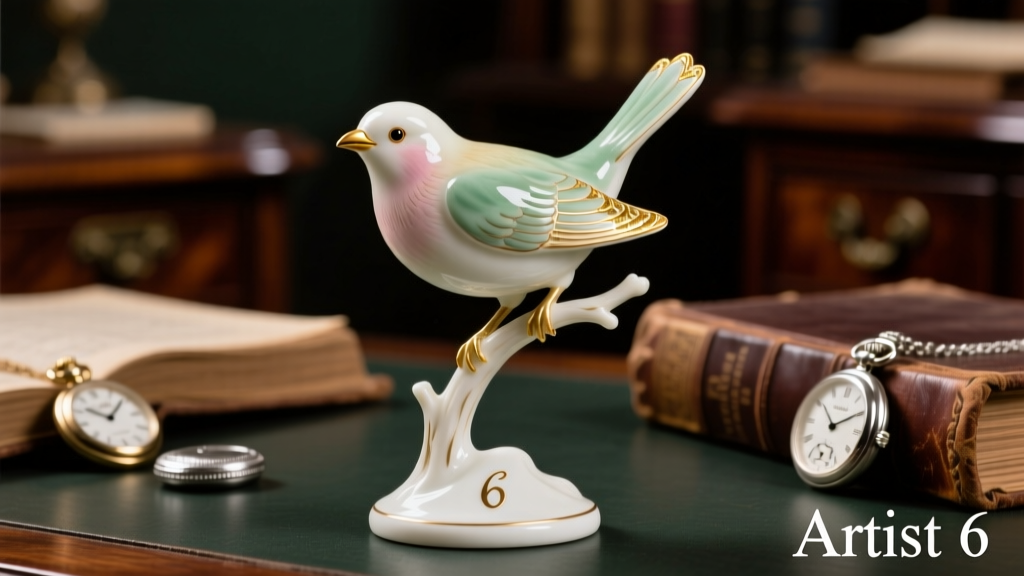
Rosenthal Figurine 'Bird on Branch' (Artist Series, 6-Inch): Provenance, Design Analysis, and Market Value Assessment
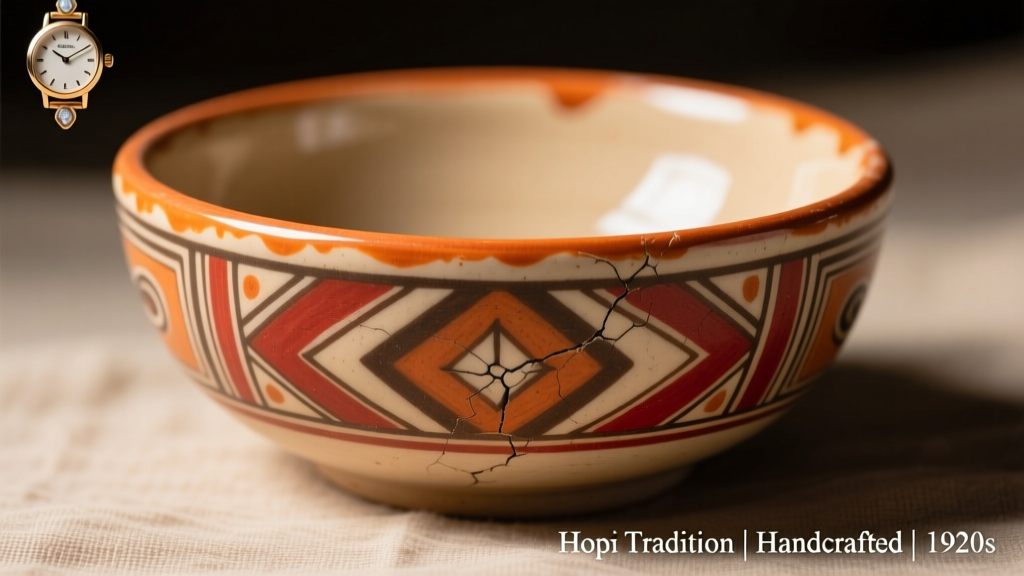
Hopi Hand-Coiled Ceramic Bowl: Umber & Red Ocher Geometric Design on Creamy Orange Slip — 3½ Inches Diameter