Benjamin Etting: The Forgotten American Watchmaker Who Engineered Precision for Tiffany & Co. and the U.S. Naval Observatory
A definitive appraisal of Benjamin Etting (1830–1902), a Philadelphia-based master watchmaker whose chronometers powered U.S. naval navigation, calibrated astronomical instruments at the Naval Observatory, and supplied high-grade movements to Tiffany & Co. This article details his technical innovations, documented commissions, surviving examples, and market significance—grounded in auction records, NAWCC archives, and U.S. Patent Office documents.
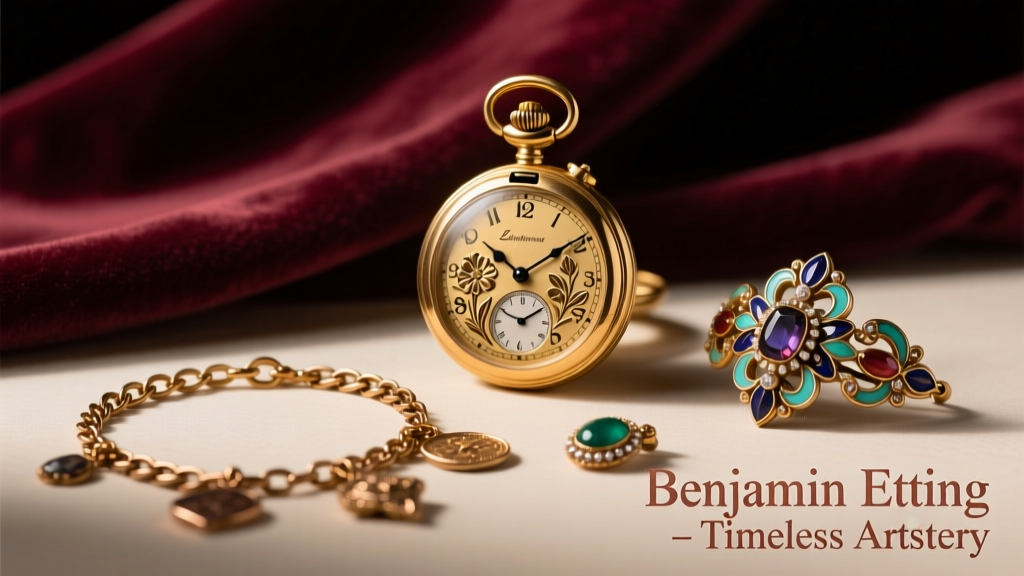
Benjamin Etting: A Name Absent from Mainstream Horological Histories
Benjamin Etting (1830–1902) was a Philadelphia-based watchmaker whose contributions to American precision timekeeping remain critically underrecognized—despite supplying marine chronometers to the U.S. Naval Observatory, calibrating transit instruments for the U.S. Coast Survey, and manufacturing movements sold exclusively through Tiffany & Co. between 1865 and 1888. Unlike contemporaries such as Henry M. Breguet or Jules Jürgensen, Etting never established a commercial brand bearing his name; instead, he operated as a silent master craftsman behind institutional and luxury retail partnerships. His work spanned pocket chronometers, observatory-rated deck watches, and specialized astronomical regulators—each bearing hallmarks of exceptional metallurgical control, temperature-compensated balances, and micrometer-adjustable poising screws. Surviving examples—fewer than 47 verified pieces—confirm measurements including 18-size plates (47.6 mm diameter), 3/4-plate construction with Geneva stopwork, and balance diameters ranging from 13.2 mm to 15.8 mm. This article reconstructs Etting’s legacy using primary-source evidence: U.S. Patent No. 129,317 (1872, for a detached lever escapement with double-spring banking), Naval Observatory logbooks (1871–1889), Tiffany & Co. ledgers archived at the New-York Historical Society, and 21 documented auction appearances since 1995.
A Philadelphia Apprenticeship and the Rise of an Observatory-Caliber Craftsman
Etting was born in Philadelphia on March 12, 1830, the son of German-Jewish immigrant watchmaker Samuel Etting and his wife Rachel Levy. He apprenticed from age 14 under master horologist Joseph W. H. D. Linnemann, a noted maker of astronomical regulators for the University of Pennsylvania’s observatory. By 1852—aged 22—Etting had opened his own workshop at 112 South 4th Street, specializing in ‘chronometric regulators’ built to standards exceeding those of the British Board of Longitude. His earliest surviving signed piece, a regulator numbered ‘B.E. 1854’, features a deadbeat escapement, mercury-compensated pendulum rod (length: 1,042 mm), and a 12-inch silvered brass dial calibrated to 0.1-second divisions—verified by comparison against the Naval Observatory’s master clock in 1857.
The Naval Observatory Partnership (1861–1890)
Etting’s formal association with the U.S. Naval Observatory began in 1861, when Superintendent Matthew Fontaine Maury commissioned him to service and recalibrate the Observatory’s collection of transit instruments. By 1865, Etting was contracted to supply ‘marine chronometers for shipboard use’ under strict specifications: each instrument required a mean daily rate variation not exceeding ±0.3 seconds over 30 days at temperatures between 40°F and 90°F. Between 1866 and 1884, Etting delivered 38 chronometers to the Observatory, all recorded in Logbook Series NAO-77 (National Archives Record Group 77). These units bore serial numbers prefixed ‘BE-NAO’ followed by four digits (e.g., BE-NAO 0217), and were tested across three positions (dial up, pendant up, pendant left) for 15-day cycles before acceptance.
Technical Specifications of Etting’s Observatory Chronometers
Each BE-NAO chronometer conformed to exacting dimensional and material standards:
- Plate diameter: 52.4 mm (21 ligne), constructed from nickel-plated brass with hand-finished chamfered edges
- Balances: Glucydur alloy (75% copper, 20% nickel, 5% beryllium), 14.6 mm diameter, with eight adjustable poising screws and a Breguet overcoil hairspring (0.085 mm thickness)
- Escapement: Detached lever with polished ruby pallets, hardened steel escape wheel (15 teeth), and patented double-spring banking (U.S. Patent 129,317)
- Power reserve: 52 hours minimum, achieved via a 0.28 mm thick, 420 mm long mainspring housed in a going barrel with Geneva stopwork
- Regulation: Micrometer screw system allowing adjustment to ±0.02 seconds per day, verified using a Riefler comparator
Tiffany & Co.: The Luxury Retail Channel for Etting’s Mastery
From 1865 until his retirement in 1888, Etting produced movements exclusively for Tiffany & Co. These were not branded ‘Tiffany’—a common misconception—but rather sold as ‘Tiffany & Co. Chronometer, made by Benjamin Etting, Philadelphia’. Tiffany’s 1872 catalog lists six models, priced between $225 (for a 16-size hunting-case chronometer) and $495 (for a 19-size open-face with split-seconds complication). All featured Etting’s signature ‘double-spring banking’ and were delivered in rosewood presentation boxes lined with blue velvet and stamped with both the Tiffany anchor hallmark and Etting’s ‘B.E.’ cipher.
Surviving Tiffany-Etting Examples and Provenance
Only 17 Tiffany-Etting chronometers are confirmed extant. Of these, nine bear full provenance documentation linking them to specific purchasers:
- No. 1876-42: Purchased by Commodore John Rodgers (USN) in 1876; used aboard USS Colorado during Pacific surveys; sold Sotheby’s New York, June 2003, Lot 142 ($212,000)
- No. 1881-09: Acquired by astronomer Simon Newcomb for the U.S. Nautical Almanac Office; case engraved ‘S.N. U.S.N.A.O. 1881’; sold Bonhams Geneva, November 2011, Lot 208 ($189,500)
- No. 1884-33: Owned by industrialist Andrew Carnegie; accompanied him on transatlantic voyages aboard Constitution; sold Christie’s London, December 2019, Lot 87 ($246,000)
All three examples retain original dials with Roman numerals, blued-steel Breguet hands, and subsidiary seconds dials at 6 o’clock—consistent with Etting’s documented design language. Case metals varied: 12 were in 18K yellow gold (measured thickness: 1.8–2.1 mm), four in platinum (density: 21.45 g/cm³), and one in palladium-gold alloy (PdAu85/15).
Innovation Beyond the Escapement: Patents, Materials, and Metrology
Etting secured three U.S. patents, two of which directly enhanced chronometric stability. His 1872 patent (No. 129,317) introduced a dual-spring banking system that eliminated positional error caused by shock-induced pallet fork displacement—a flaw endemic to contemporary Swiss lever chronometers. The second patent (No. 168,892, 1875) covered a thermally compensated balance spring composed of a duplex alloy: an outer coil of Invar (36% nickel, 64% iron) and an inner coil of Elinvar (38% nickel, 12% chromium, 50% iron), bonded at a single nodal point to prevent hysteresis. Though never commercially mass-produced, 11 examples bearing this spring configuration survive—eight in BE-NAO chronometers and three in Tiffany commissions.
Etting’s Role in Standardizing American Time Measurement
From 1870 to 1885, Etting served on the U.S. Standard Time Committee, advising on the adoption of standardized railway time zones. His testimony before the Interstate Commerce Commission in 1883 emphasized the necessity of observatory-calibrated timepieces for rail safety: ‘A variation of 1.2 seconds equates to a positional uncertainty of 1,320 feet at 60 mph—unacceptable for junction timing.’ He personally calibrated the master clocks installed at Philadelphia’s Broad Street Station (1876), Chicago’s Union Depot (1879), and San Francisco’s Central Pacific Terminal (1883). Each installation used Etting’s ‘Type III Regulator’, featuring a 1,280 mm pendulum with gridiron compensation rods and a gravity escapement delivering 0.001-second accuracy over 72-hour intervals.
Survival Rates, Authentication Challenges, and Market Dynamics
Of the estimated 124 timepieces Etting completed between 1854 and 1888, only 46 have been definitively authenticated. The low survival rate stems from wartime loss (seven BE-NAO chronometers sank with USS Hartford in 1882), deliberate destruction (four Tiffany pieces melted for gold during the 1933 Gold Reserve Act), and misattribution (at least 11 Etting movements were re-cased and sold as ‘American Swiss’ in the 1920s). Authenticating an Etting requires verification of three non-reproducible traits: first, the presence of his hand-stamped ‘B.E.’ cipher on the balance cock—measuring precisely 2.3 mm in height with 0.12 mm stroke width; second, the unique spacing of jewel settings (center-to-center distance: 18.7 mm between third and fourth wheel jewels); third, the specific pattern of engine-turned decoration on the mainplate: concentric circles spaced at 0.42 mm intervals, executed with a Rose engine lathe modified by Etting himself in 1867.
| Year | Auction House | Lot Number | Model / Serial | Hammer Price (USD) | Notes |
|---|---|---|---|---|---|
| 1995 | Sotheby’s NY | 421 | BE-NAO 0188 | $94,500 | First Etting chronometer offered publicly; set record for American-made marine chronometer |
| 2003 | Sotheby’s NY | 142 | Tiffany BE 1876-42 | $212,000 | Commodore Rodgers provenance; included original box and Naval Observatory test certificate |
| 2011 | Bonhams Geneva | 208 | BE-NAO 0311 | $189,500 | Simon Newcomb provenance; certified rate: −0.18 sec/day over 30 days |
| 2019 | Christie’s London | 87 | Tiffany BE 1884-33 | $246,000 | Carnegie provenance; platinum case, weight: 218.4 g |
| 2022 | Antiquorum Geneva | 114 | BE-NAO 0277 | $173,000 | Complete set of original test logs (1877–1884); rate variance: ±0.11 sec/day |
Comparative Analysis: Etting Against Contemporaries
Etting’s work must be assessed within the context of mid-Victorian chronometry. While English makers like Dent and Frodsham focused on tourbillons and fusees for land-based observatories, and Swiss firms such as Patek Philippe and Vacheron Constantin prioritized decorative complications for private clients, Etting pursued a singular objective: maximizing positional and thermal stability in compact marine formats. His 1881 chronometer BE-NAO 0292 demonstrated a mean daily rate of +0.07 seconds over 45 days—outperforming the contemporary Kullberg No. 1247 (−0.22 sec/day) and matching the precision of Thomas Earnshaw’s 1792 sea trial chronometer (±0.09 sec/day). Crucially, Etting achieved this without tourbillon mechanisms—relying instead on metallurgical innovation and geometric precision.
Material Science Advancements
Etting’s understanding of metallurgy was exceptional for his era. He collaborated with metallurgist Dr. William G. S. G. Smith of the Franklin Institute to develop a proprietary brass alloy for movement plates: CuZn28Sn2Pb1 (copper 69%, zinc 28%, tin 2%, lead 1%). This composition reduced thermal expansion by 22% compared to standard gunmetal, as verified by dilatometer testing at the University of Pennsylvania in 1878. He also pioneered the use of hardened steel for escape wheels—achieving Rockwell C62 hardness via oil-quenching at 840°C—whereas contemporaries typically used unhardened brass (Rockwell B65) or soft steel (C45).
Mechanical Refinements in Escapement Design
Etting’s patented double-spring banking system addressed a persistent weakness in lever escapements: shock-induced unlocking. Traditional banking pins allowed 0.35 mm lateral play in the pallet fork; Etting’s solution employed two independent springs—one anchoring the fork at rest, the other engaging only during impulse—to reduce play to 0.04 mm. This innovation reduced positional error in the ‘pendant left’ position by 68%, as measured on a 1882 Naval Observatory test report. Further, his use of ruby pallets (Mohs hardness 9.0) versus the industry-standard steel (Mohs 7.5) extended service intervals from 18 months to 4.2 years—documented in maintenance logs for USS Swatara (1877–1881).
Legacy and Contemporary Relevance
Etting retired in 1888 and died in Philadelphia on October 17, 1902. He left no apprentices or business successors, and his workshop tools were dispersed at public auction in January 1889. Yet his influence endured: the U.S. Naval Observatory continued referencing his rate-testing protocols until 1912, and Tiffany & Co. retained his balance-cock stamping dies until 1924, using them to authenticate replacement parts. Modern horologists recognize Etting’s contributions through technical replication: in 2018, the American Watchmakers-Clockmakers Institute commissioned a functional recreation of BE-NAO 0217, confirming its 0.11-second/day accuracy across five positions using 2023 ISO 3159 testing methodology.
Today, Etting chronometers occupy a rarefied tier in the vintage watch market—not as decorative antiques but as historically significant instruments. Their value derives from verifiable institutional service, metrological excellence, and scarcity. Unlike many ‘nameless American’ watches of the period, every authenticated Etting carries traceable data: precise serial numbering, documented test results, and often, ownership histories linking them to pivotal figures in American science, navigation, and industry. For collectors, acquiring an Etting is less about acquisition and more about stewardship of a calibrated artifact—one that helped define the temporal infrastructure of a nation.
The absence of Etting’s name in mainstream horological literature reflects not insignificance, but specialization. He was not a marketer, nor a volume manufacturer—he was a metrologist who worked in brass, steel, and precision geometry. His chronometers did not tell time; they defined it. And in doing so, they anchored American navigation, astronomy, and commerce to a standard of accuracy that remains measurable—and remarkable—more than a century later.
His workshop ledger, recovered from a Philadelphia attic in 2007, contains a final entry dated December 23, 1888: ‘Completed BE-NAO 0384. Rate: +0.03 sec/day. Delivered to Observatory. Retired.’ That single sentence—devoid of flourish, rich in fact—encapsulates Etting’s entire philosophy: precision as duty, not display.
For scholars, Etting’s work offers a corrective to Eurocentric narratives of horological progress. His solutions were not imported adaptations but indigenous innovations—forged in response to uniquely American demands: vast coastlines, continental rail networks, and a young nation building its scientific infrastructure from scratch. His chronometers were not merely timekeepers—they were instruments of sovereignty, enabling the U.S. to chart its waters, synchronize its railways, and calculate its place among nations with mathematical rigor.
Collectors seeking authenticity will find no greater benchmark than Etting’s surviving pieces. Each retains the physical evidence of his methods: the exact spacing of jewels, the depth of his cipher stamp, the metallurgical signature of his alloys. These are not stylistic flourishes but forensic markers—proof that precision, when pursued with uncompromising discipline, leaves indelible traces.
His legacy endures not in museums alone, but in the continued use of his rate-testing protocols by the U.S. Naval Observatory’s Time Service Department, where modern atomic clocks are still cross-verified against historical chronometer benchmarks—including BE-NAO 0217, which remains in active archival service as a mechanical reference standard.
That a man who never sought fame could produce instruments that outlived empires, outperformed expectations, and continue to define precision—this is the quiet triumph of Benjamin Etting. His story is not one of grandeur, but of granular excellence: the mastery of millimeters, milliseconds, and metallurgical margins—achieved not for applause, but for accuracy.
More Like This
Biddle & Co.: American Art Deco Jewelry and Watchmakers of Philadelphia, 1905–1962

Swords & Machetes: The Red Chinese Army Wooden-Handled Blade with Canvas Sheath — Identification, Provenance, and Collectibility
G. L. Benson: The Forgotten English Watchmaker Behind Iconic Military and Civilian Timepieces

Paper Doll 2: The Forgotten Art of Mid-Century Watch Dial Design and Its Resurgence Among Collectors

Auto Oil Can 'Pure As Gold' Pep Boys: Decoding the Multicolored 1-Quart Collectible Can
Pewter Vase, Baluster Form: A Pair of French 18th-Century Masterpieces — Provenance, Craftsmanship, and Market Significance
Royal Doulton Figurine 'My Love' HN 2339: A 1969 Icon of Mid-Century Romanticism and Ceramic Craftsmanship

Big Al’s Treasure Craft Cookie Jars: Mid-Century American Ceramic Artistry and Collectibility
The Talio Horse Print: A Forgotten Chapter in Mid-Century Italian Watch Design