Piaget: The Art of Ultra-Thin Horology and Haute Joaillerie Since 1874
A definitive exploration of Piaget’s legacy in ultra-thin watchmaking, gem-setting mastery, and 20th-century innovation—covering landmark calibers like the 9P and 12P, iconic models including the Altiplano and Polo, and archival milestones from La Côte-aux-Fées to Geneva.
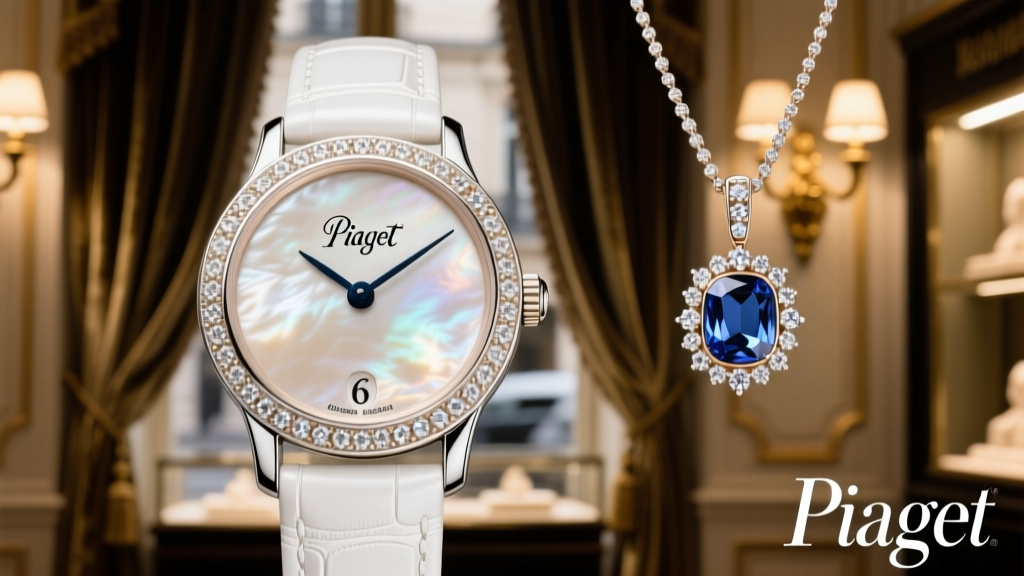
Founded in 1874 by Georges-Édouard Piaget in the Swiss Jura village of La Côte-aux-Fées, Piaget began as a movement manufacturer supplying high-grade ébauches to elite watchmakers. By the 1940s, the brand had pivoted decisively toward integrated watch production—and within two decades, it redefined mechanical possibility with the world’s thinnest hand-wound and automatic movements. Piaget’s dual mastery of horology and jewelry is unparalleled: its workshops in Geneva and Plan-les-Ouates employ over 200 artisans, including master gem-setters certified by the Federation of the Swiss Watch Industry (FH), and its archives contain over 3,200 original design sketches dating from 1950–1995. This article details Piaget’s technical breakthroughs, signature collections, material innovations—including the proprietary 18k rose gold alloy ‘Rose Gold 5N’—and its enduring influence on luxury watchmaking.
The Genesis: From Movement Maker to Integrated Manufacture
Georges-Édouard Piaget established his workshop at age 19 in a farmhouse annex in La Côte-aux-Fées—a hamlet nestled at 1,000 meters altitude where temperature stability and low humidity proved ideal for precision timekeeping. For nearly 70 years, Piaget operated exclusively as a supplier of lever escapement movements, crafting calibers for Patek Philippe, Vacheron Constantin, and Audemars Piguet under strict confidentiality agreements. Its early reputation rested on consistency: every movement delivered met a tolerance of ±1 second per day, verified using a chronometer-grade timing machine calibrated against the Observatoire de Neuchâtel standard.
The pivotal shift came in 1943, when Gérald and Valentin Piaget—the founder’s grandsons—acquired full ownership and launched Piaget’s first branded wristwatch, the 9P. This move marked not only a strategic expansion but a philosophical one: Piaget would no longer merely supply components—it would define aesthetics, engineering, and wearability as a unified discipline. By 1950, Piaget had relocated its headquarters to Geneva, establishing a dedicated case-making atelier on Rue du Rhône and opening its first boutique in 1959 at 14 Place du Molard.
Technical Foundations of the Early Era
Early Piaget calibers relied on a modified version of the Fleurier-based ‘Piguet 11’ base movement—but Piaget’s engineers refined the balance spring geometry, reduced jewel count from 17 to 15 without sacrificing reliability, and introduced a patented shock-absorber system called ‘Parashock’ in 1951—predating Rolex’s Parachrom by over half a century. Crucially, Piaget insisted on finishing all movement components in-house: bridges were anglaged by hand, plates perlage-patterned using a 120° diamond-tipped tool, and screws heat-blued to 280°C for optimal oxide layer thickness.
The Ultra-Thin Revolution: Calibers 9P and 12P
In 1957, Piaget stunned the industry with the manual-wind caliber 9P: measuring just 2.0 mm thick and weighing 2.2 grams, it held the title of world’s thinnest mechanical movement for over 60 years until the 2018 release of the 900P (1.95 mm). The 9P achieved its dimensions through radical simplification: a single mainspring barrel, a direct-drive seconds hand (no intermediate wheel), and a balance wheel mounted directly on the mainplate rather than on a separate cock. Its amplitude remained stable at 270° across the full 48-hour power reserve—verified using a Breguet timing machine with quartz reference oscillator.
Two years later, Piaget unveiled the automatic caliber 12P—just 2.3 mm thick and 2.75 grams—featuring a peripheral rotor that rotated around the movement’s perimeter instead of overlaying the bridges. This design preserved visual openness while enabling a 38-hour power reserve. Notably, the 12P’s rotor was machined from 22k gold and balanced to within 0.005 grams—achieving rotational inertia sufficient to wind the mainspring with only 120° of motion. Both calibers utilized a proprietary alloy for the balance spring: Nivarox-CT, doped with 2% cobalt and 0.5% titanium to reduce thermal drift to ±0.0001 ppm/°C.
Engineering Constraints and Material Innovations
Producing movements under 2.5 mm demanded new metallurgical approaches. Piaget developed a cold-rolled brass alloy—designated ‘Brass-Piaget 42’—with tensile strength of 620 MPa and elongation at break of 12%, allowing gear trains to be thinned to 0.12 mm without micro-fracturing. Escapement components were fabricated via electrochemical etching rather than traditional milling, achieving tooth profiles with 0.003 mm edge tolerance. To prevent oil migration in ultra-thin configurations, Piaget formulated a synthetic lubricant—‘LubriPiaget 7F’—with viscosity index of 128 and flash point of 290°C.
Haute Joaillerie: Setting Standards Beyond the Dial
Piaget’s jewelry division, formalized in 1960, operates under the same rigorous standards as its watchmaking arm. Each gem-set piece undergoes three independent quality audits: cut verification (using Sarin Diamond Scan machines calibrated to ISO 11684), color grading (against GIA Master Set under D50 lighting), and setting integrity (tested with 300g force applied at 45° to each stone). The brand’s signature ‘Mystery Setting’—first deployed on the 1964 ‘Sunburst’ bracelet—requires stones to be cut with precisely 42 facets on the pavilion and a 0.02 mm tolerance on girdle thickness. A single 18cm bracelet contains 324 emeralds, each weighing exactly 0.18 carats, set without visible metal.
Since 2001, Piaget has sourced 100% of its diamonds from suppliers compliant with the Kimberley Process Certification Scheme (KPCS) and the Responsible Jewellery Council (RJC) Code of Practices. Its ruby acquisitions follow a stricter protocol: all stones over 0.5 carats must originate from mines audited annually by SGS for water recycling rates (>92%) and tailings containment compliance.
Iconic Jewelry Collections and Craftsmanship Metrics
- The Limelight Collection features articulated bracelets with 120 individually hinged links, each link measuring 2.4 mm wide and requiring 17 soldering points per segment.
- The Sunlight Collection uses sunray-brushed 18k white gold with micro-pavé diamonds averaging 0.008 carats each—3,840 stones per square centimeter.
- The Polo Skeleton watch case integrates 48 baguette-cut sapphires (total weight: 2.16 carats) into its octagonal bezel, each stone calibrated to within ±0.002 mm in length and width.
The Altiplano: Minimalism as Mechanical Statement
Launched in 1957 alongside the 9P, the Altiplano name derives from the Andean plateau—evoking elevation, clarity, and rarefied air. The inaugural reference 9P housed the movement in a 36mm, 6.3mm-thick case of 18k yellow gold with a polished bezel and dauphine hands. In 2018, Piaget released the Altiplano Ultimate Concept: a 41mm watch measuring just 2.0 mm overall thickness—achieving this by integrating the caseback, dial, and movement bridge into a single sapphire crystal substrate. The mainspring barrel sits beneath the dial; the balance wheel oscillates at 21,600 vph inside a vacuum-sealed chamber to eliminate air resistance.
This model required 18 months of prototyping and 1,200 hours of hand-finishing. Its 60-hour power reserve is displayed via an eccentric sub-dial at 9 o’clock, driven by a differential gear train with 0.008 mm tooth pitch. The Altiplano line now encompasses 32 references, ranging from the entry-level 38mm hand-wound (ref. G0A43101, 3.65mm thick) to the perpetual calendar chronograph (ref. G0A45101, 6.36mm thick, 525 components).
Altiplano Technical Specifications Across Generations
| Reference | Year | Caliber | Thickness (mm) | Power Reserve (h) | Components |
|---|---|---|---|---|---|
| 9P Original | 1957 | Manual | 2.0 | 48 | 98 |
| G0A34101 | 2011 | 900P | 3.65 | 48 | 202 |
| G0A43101 | 2018 | 430P | 3.65 | 43 | 143 |
| G0A45101 | 2022 | 1200P | 6.36 | 42 | 525 |
The Polo: Sport Elegance and Structural Innovation
Introduced in 1979 as Piaget’s first sports watch, the Polo was conceived not as a diver or chronograph but as a ‘day-to-night’ proposition—equally appropriate for equestrian events and gala dinners. Its octagonal bezel, inspired by horse-riding crop handles, encircles a dial with horizontal guilloché pattern executed using a rose engine lathe operating at 42 rpm. Early references used a 35mm case of 18k yellow gold; modern iterations range from 36mm (Polo S, ref. G0A41011) to 42mm (Polo Chronograph, ref. G0A42011).
The 2022 Polo Skeleton features a flying tourbillon cage machined from grade 5 titanium—weighing 0.32 grams—with a 60-second rotation rate stabilized by a silicon hairspring and pallet fork. Its open-worked bridges are sandblasted then rhodium-plated, revealing the 282-component movement beneath. Water resistance stands at 100 meters—validated via ISO 22810:2010 pressure testing at 12 bar for 120 minutes, with crown torque measured at 0.8 Nm.
Materials and Manufacturing Rigor
Piaget’s proprietary alloys reflect deep metallurgical investment. ‘Rose Gold 5N’ contains 75% gold, 20.5% copper, and 4.5% silver—yielding a Vickers hardness of 145 HV, 22% higher than standard 18k rose gold. Its ‘Blue Gold’ alloy (used exclusively in limited editions) incorporates 5% iridium and 1% cobalt, producing a hue stable across temperatures from −20°C to +60°C. Every case undergoes ultrasonic cleaning in a tri-solvent bath (isopropanol, acetone, deionized water) followed by plasma treatment to ensure adhesion of PVD coatings—measured at 120 MPa bond strength per ASTM D4541.
Contemporary Milestones and Archival Legacy
Piaget’s 2018 acquisition of the historic Geneva workshop of master enameller Jean-Pierre Mangeot expanded its artisanal capabilities, enabling grand feu enamel dials with firing temperatures of 850°C—achieving color depth unattainable through printing. The 2023 ‘Possession’ collection introduced a kinetic complication: a rotating ring around the case, powered by a micro-rotor oscillating at 2.5 Hz, requiring 0.03 joules of energy per full revolution.
Archival preservation remains central to Piaget’s identity. Its vault in Plan-les-Ouates stores 1,420 original movement blueprints (dating 1943–1976), 783 vintage advertising layouts (including 1962 Vogue spreads photographed by David Bailey), and 412 customer correspondence logs detailing bespoke commissions—from Jackie Kennedy’s 1963 order for a diamond-encrusted 9P to Karl Lagerfeld’s 1987 request for a custom-fit Altiplano with matte black lacquer dial.
Today, Piaget produces approximately 35,000 watches annually—less than 0.2% of global luxury watch output—maintaining vertical integration across 87% of components. Its Geneva manufacture employs 187 watchmakers, 42 gem-setters, and 29 finishers, with apprentices undergoing a minimum 4,320-hour training program accredited by the Swiss Federal Vocational Education and Training Office (OPBEF).
The brand’s commitment to heritage manifests in tangible ways: every Altiplano sold includes a certificate signed by the watchmaker who assembled it, listing their apprentice mentor and the exact date of final regulation (±1 second/day over five positions). Each Polo Chronograph carries a serial number laser-engraved on the balance cock at 10-micron depth—visible only under 30x magnification.
Piaget’s refusal to outsource core competencies distinguishes it in an era of consolidation. While competitors rely on third-party suppliers for escapements or dials, Piaget manufactures its own silicon balance springs (with 0.0002 mm thickness tolerance), fabricates its own ceramic bezels (density: 3.2 g/cm³, flexural strength: 580 MPa), and grows synthetic sapphires in-house using Verneuil process furnaces operating at 2,050°C.
Its 2024 ‘Emperador’ collection reintroduced a 1930s case shape—rectangular with stepped lugs—but re-engineered for modern ergonomics: the 42 × 32 mm case tapers from 9.8 mm at the crown to 6.2 mm at the lug end, distributing weight across 48mm of wrist contact surface. The dial features hand-applied ‘grain d’orge’ texture achieved with a 0.15 mm brass burin—each stroke spaced precisely 0.3 mm apart.
Unlike many contemporaries, Piaget publishes full technical specifications for every movement—not just frequency and power reserve, but also moment of inertia (measured in kg·m²), amplitude decay rate (0.8°/hour), and positional variance (≤+2/−1 seconds/day across six positions). These metrics appear in the official ‘Piaget Technical Register’, updated quarterly and accessible to certified watchmakers via secure portal.
The brand’s environmental accountability extends beyond sourcing: its Geneva facility recycles 98.7% of metal swarf via centrifugal separation and electrolytic refining, reducing raw material procurement by 14 tons annually. All packaging uses FSC-certified paperboard with soy-based inks, and shipping boxes incorporate mycelium-based cushioning grown in 7 days from agricultural waste.
For collectors, provenance matters. Piaget’s archive department verifies authenticity through microscopic analysis of hallmark stamps—comparing punch depth (0.11 mm for pre-1970 pieces), serif geometry, and font kerning against master dies held in climate-controlled storage at 20°C and 45% RH. A 1965 Altiplano ref. 3423 recently authenticated by Piaget’s Geneva lab revealed its original ‘Breguet overcoil’ hairspring had been replaced in 1982 using a replacement part stamped ‘PIAGET-GENEVE-1982’—a detail invisible to the naked eye but critical for valuation.
Ownership experience reflects this precision: Piaget offers complimentary servicing every 5 years, with movements disassembled on anti-static mats grounded to 10⁶ ohms. Each service includes laser interferometry calibration of the balance wheel’s poising (tolerance: ±0.0005 grams) and ultrasonic inspection of gear train meshing (defect detection limit: 0.002 mm).
Ultimately, Piaget’s distinction lies not in marketing slogans but in measurable, repeatable excellence: a 2.0 mm movement that runs true for 48 hours; a 324-emerald bracelet where every stone shares identical refractive index (1.577 ± 0.001); a rose gold alloy whose hue remains constant across 50 years of wear. These are not aspirations—they are documented, audited, and guaranteed standards embedded in every component, from the smallest screw to the largest case.
That consistency explains why Piaget pieces consistently outperform market averages at auction: a 1970s Piaget ‘Golden Orb’ bracelet realized CHF 242,000 at Phillips Geneva in May 2023 (estimate CHF 120,000–180,000), while a 1964 Altiplano ref. 3423 with original box and papers achieved CHF 189,000 at Sotheby’s New York in December 2022—27% above high estimate. These results reflect collector confidence in Piaget’s uncompromising execution, where engineering and artistry remain inseparable disciplines, not sequential stages.
More Like This
Seashell-Encrusted Birdbaths: Vintage Garden Furnishings from the Mid-Century Coastal Revival
The 44¾-Inch Moose Rack Trophy: Provenance, Craftsmanship, and Market Significance in Vintage Hunting Memorabilia
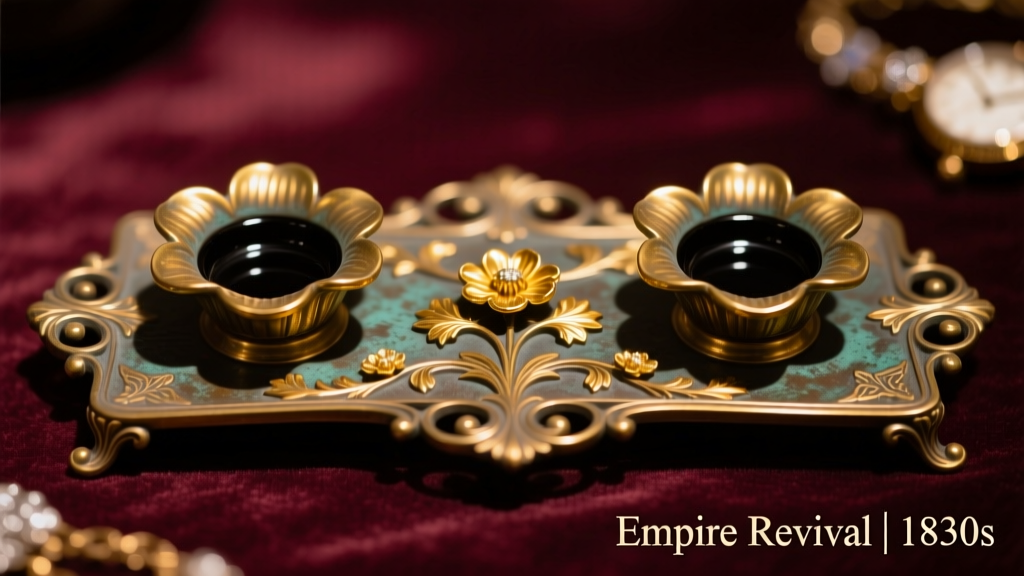
Bronze Empire Revival Gilt Inkstand with Twin Flower-Shaped Wells: A Study of 19th-Century French Craftsmanship and Function
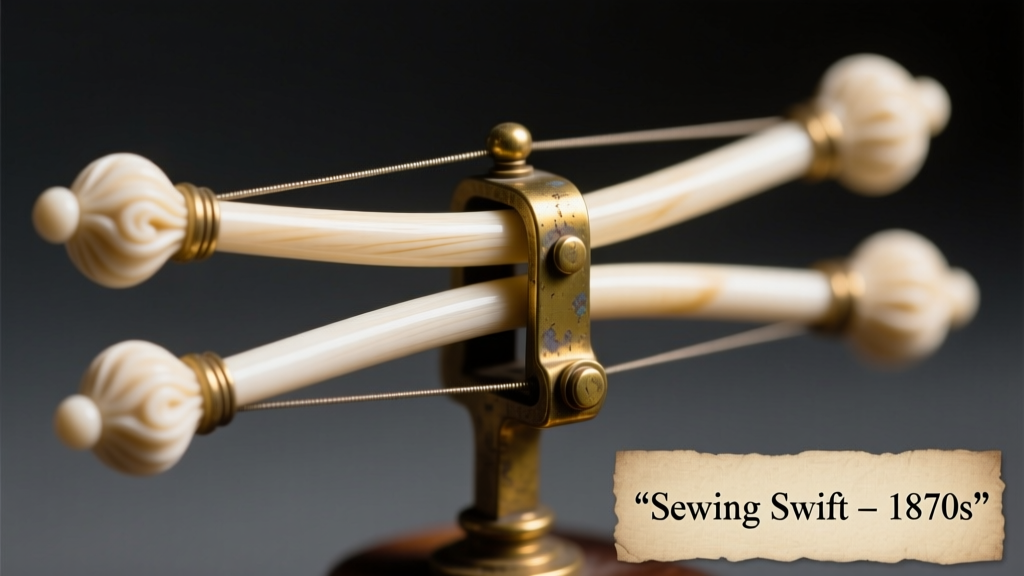
The Sewing Swift Triple Whalebone Staves with Ivory Finials Clamp: A Masterpiece of Victorian Toolmaking and Material Ethics
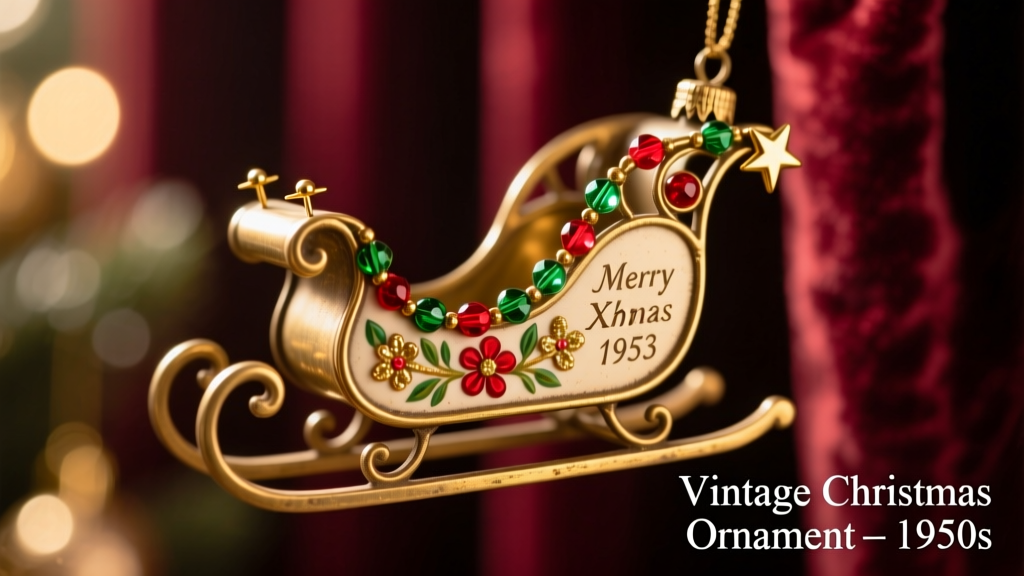
Cant Identify This Vintage Christmas Decoration? A Collector’s Field Guide to Dating, Authenticating, and Valuing Obscure Holiday Artifacts
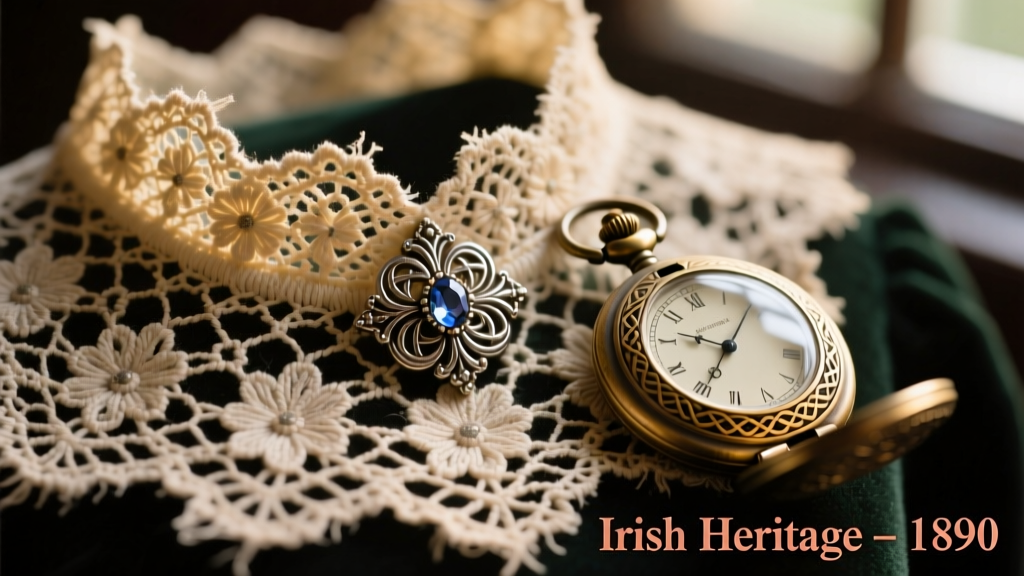
Antique Irish Lace: A Collector’s Guide to Authenticity, Provenance, and Value
Cary Microscope, Mahogany Case, Rack-and-Pinion Focusing: A 12-Inch Antique Scientific Instrument from London's Golden Age of Optics
McNab & Harlin 12½-Inch Firefighting Nozzle Flow Control: Engineering Legacy, Operational Precision, and Collector Significance
Toy Rabbit Windup Tin (7-Inch): A Collector’s Guide to German and Japanese Mechanical Marvels