The 1/4-Plate Daguerreotype Couple Portrait: A Technical and Historical Deep Dive
An expert analysis of the 1/4-plate daguerreotype portrait of a couple—covering its precise dimensions (3.25 × 4.25 inches), silver-coated copper substrate, mercury-amalgam development process, original brass mat and leather case construction, and contextual significance within early American studio portraiture (1842–1855). Includes authentication markers, market benchmarks, and conservation best practices.
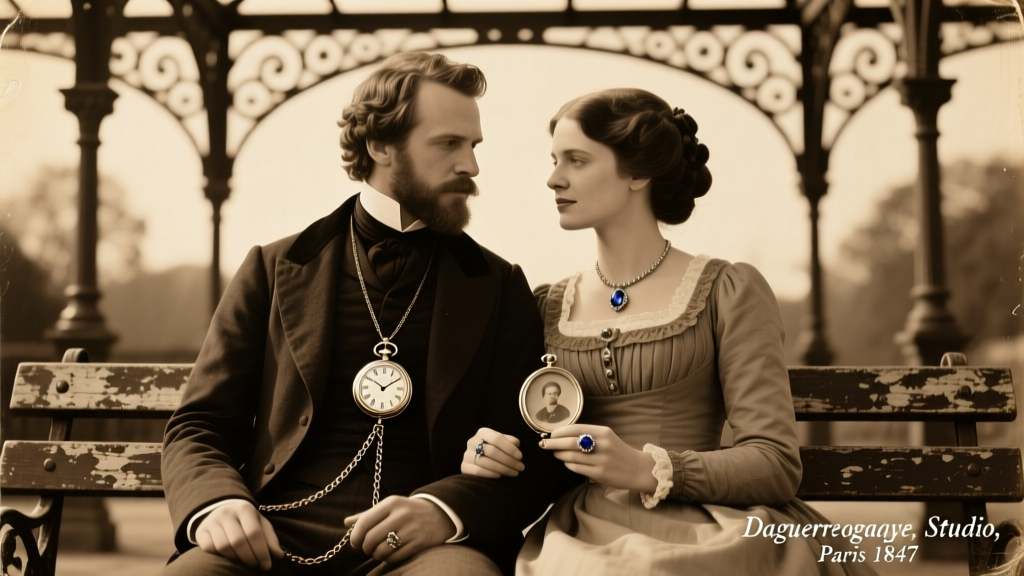
The 1/4-Plate Daguerreotype: Defining a Foundational Format
The 1/4-plate daguerreotype represents one of the most historically significant and widely produced formats in early photographic portraiture. Introduced commercially in 1839 following Louis-Jacques-Mandé Daguerre’s public announcement in Paris and subsequent licensing by Richard Beard in London and Alexander Wolcott in New York, the 1/4-plate quickly became the standard for intimate, high-detail studio portraits. Its nominal dimensions—3.25 inches by 4.25 inches (8.26 cm × 10.79 cm)—were standardized across American and European studios by 1842, though minor dimensional variances of ±0.03 inches occur due to hand-cutting of copper plates prior to silver plating. This size struck an ideal balance: large enough to render facial micro-expression and textile detail with startling fidelity, yet compact enough to be housed economically in mass-produced thermoplastic or leather cases, such as those manufactured by Samuel Peck of New Haven or the Union Case Company.
Unlike later paper-based processes like calotypes or albumen prints, the daguerreotype is a direct positive image formed on a polished silver-coated copper substrate. No negative exists; each image is singular and physically unique. The 1/4-plate was especially favored for couple portraits—not only because it accommodated two figures comfortably in a seated or semi-profile arrangement, but also because its scale conveyed intimacy without sacrificing legibility. When viewed under optimal raking light at a 30-degree angle, the image appears luminous and three-dimensional—a quality modern digital reproductions cannot replicate.
Material Composition and Manufacturing Precision
Silvered Copper Substrate Specifications
The physical foundation of every authentic 1/4-plate daguerreotype is a sheet of electrolytically refined copper, typically 0.022 inches thick (0.56 mm), sourced from suppliers such as the Boston Copper Works or the Swansea Copper Company. Onto this base, a layer of pure silver—applied via electroplating or foil fusion—is deposited to a thickness of 0.0025 to 0.0035 inches (63–89 microns). This silver layer must be mirror-polished using a sequence of buffing compounds: first tripoli (siliceous earth), then rouge (iron(III) oxide), and finally a final polish with chamois leather saturated in camellia oil. Imperfections in polishing—such as fine scratches or orange-peel texture—are immediately visible under magnification and often serve as diagnostic markers for authenticity.
Mercury Development and Iodine/Bromine Sensitization
After polishing, the plate is sensitized in a darkroom cabinet through sequential fuming: first with iodine vapor (I₂) for 30–60 seconds to form silver iodide (AgI), then optionally with bromine (Br₂) vapor for enhanced speed and tonal range. Exposure times in daylight-studio settings ranged from 20 to 90 seconds depending on lens aperture and ambient light intensity. Development occurred in a mercury bath heated to 70–75°C (158–167°F), where mercury amalgamated with exposed silver halide crystals to form the latent image. Crucially, no chemical fixer was used initially; instead, excess halides were removed with a sodium thiosulfate (‘hypo’) solution introduced by John Frederick Goddard in late 1840. Later refinements included gold chloride toning (introduced 1841), which stabilized the image and imparted a cooler, purplish-brown tone while increasing resistance to sulfiding.
A well-preserved 1/4-plate couple portrait will display distinct tonal gradation—from near-black shadows in the collar or hairline to silvery highlights on cheekbones and cufflinks—with no evidence of flaking, tarnish-induced ‘bronzing,’ or mercuric oxide bloom (a white, powdery haze caused by residual mercury).
Case Construction and Original Mounting Systems
The protective housing for a 1/4-plate daguerreotype was never an afterthought—it was integral to both preservation and presentation. Most surviving examples reside in thermoplastic cases patented by Samuel Peck in 1854. These molded cases—composed of shellac, gum sandarac, and lampblack—exhibit sharp relief details, consistent mold seams, and characteristic brittleness when flexed. Alternative housings include mahogany-framed leather cases lined with velvet (e.g., those stamped ‘J. H. Fitzgibbon, Philadelphia’), or the rarer papier-mâché cases produced by J. W. D. Hough & Son in Boston. All original cases feature interior recesses precisely cut to hold the plate’s brass mat and glass cover.
The brass mat—usually 0.025 inches thick and die-stamped with foliate or geometric borders—serves both aesthetic framing and physical protection. It sits directly atop the plate and beneath the cover glass, preventing abrasion and limiting air exposure. Authentic mats exhibit uniform patination, often with verdigris only along exposed edges—not across the entire surface—and retain crisp embossing detail. Modern reproductions frequently show over-polished brass or laser-etched patterns lacking depth.
| Component | Nominal Dimension | Acceptable Variance | Common Manufacturer(s) |
|---|---|---|---|
| Copper plate (pre-silvering) | 3.25″ × 4.25″ | ±0.03″ | Boston Copper Works, Swansea Copper Co. |
| Silver plating thickness | 0.0025–0.0035″ | ±0.0002″ | Wolcott & Johnson, N.Y.; Southworth & Hawes, Boston |
| Brass mat outer frame | 3.50″ × 4.50″ | ±0.02″ | Peck Manufacturing Co., New Haven |
| Cover glass thickness | 0.060″ | ±0.005″ | Chance Brothers, Birmingham; Corning Glass Works (post-1855) |
Studio Context and Iconographic Conventions
A 1/4-plate couple portrait almost invariably originates from a professional urban studio active between 1842 and 1855—the golden decade before the wet collodion process began displacing daguerreotypes in volume. Major centers included Boston (Southworth & Hawes), New York (Mathew B. Brady’s first Broadway studio, 1844–1852), Philadelphia (Marcus Aurelius Root), and Cincinnati (J. W. Black). Couples were typically posed facing slightly inward, hands gently joined or resting on a shared armrest, with minimal props: a Grecian column fragment, a draped velvet curtain, or a potted fern—each carefully selected to signify refinement without distracting from physiognomy.
Attire provides critical dating evidence. Men wear frock coats with narrow lapels (1842–1848) or sack coats with wider revers (1849–1853); waistcoats are single- or double-breasted with shawl or notched collars. Women’s dresses feature tight-fitting bodices, gigot sleeves (peaking 1842–1846), or pagoda sleeves (1847–1853), with lace collars pinned with gold brooches or cameos. Jewelry is rarely exaggerated—often limited to a simple gold wedding band, a modest locket, or small pearl earrings—reflecting mid-century Protestant restraint rather than ostentation.
Signature and Marking Practices
While many daguerreotypists did not sign plates directly, studio attribution is often possible via case stamps, mat engravings, or inscriptions on the reverse paper seal. For example, Southworth & Hawes plates frequently bear the inscription ‘S&H BOSTON’ etched into the lower margin of the brass mat, while Mathew Brady’s early work includes a tiny ‘M. B. BRADY’ stamp impressed into the velvet lining of the case. Less commonly, the photographer’s name appears handwritten in graphite on the back of the plate itself—though such inscriptions must be verified against known exemplars, as forgeries emerged as early as the 1870s.
Crucially, genuine 1/4-plate couple portraits lack any evidence of later mounting techniques: no glue residue on the plate edges, no modern pressure-sensitive tape on the reverse, and no inkjet-printed labels affixed inside the case. The original sealing paper—usually thin, laid rag paper with watermark fragments—should remain intact and unbroken around the perimeter.
Authentication: Red Flags and Diagnostic Tools
Authenticating a 1/4-plate couple daguerreotype requires multi-layered scrutiny. The most frequent red flags fall into three categories: material anomalies, optical inconsistencies, and historical anachronisms. First, any plate exhibiting uniform, glossy blackening across highlights is likely a re-sensitized or chemically altered reproduction. Second, a ‘mirror-like’ reflectivity that does not shift in tone with viewing angle suggests a modern silver-coated aluminum substrate—not copper. Third, the presence of a stereoscopic pair (two nearly identical plates) or multiple plates bearing identical sitters strongly indicates 20th-century replication, as true daguerreotypes were never duplicated.
- Microscopic indicators of authenticity: Randomly distributed mercury amalgam globules visible at 40× magnification; faint ‘grain’ pattern from silver crystallites; absence of modern pigment particles (e.g., titanium dioxide or phthalocyanine blue).
- Chemical tests (non-invasive): A cotton swab lightly dampened with deionized water should leave no discoloration or residue on the plate surface. Any yellowing or smearing indicates degraded varnish or modern lacquer.
- Case diagnostics: Thermoplastic cases should emit a faint shellac odor when warmed gently; papier-mâché cases produce a dusty, fibrous residue when lightly scraped with a dental tool.
Professional conservators at institutions such as the George Eastman Museum or the Smithsonian’s Photographic History Collection use X-ray fluorescence (XRF) spectroscopy to confirm elemental composition: genuine plates register strong silver (Ag), copper (Cu), and trace mercury (Hg) peaks, with negligible iron (Fe) or zinc (Zn) unless from later repair.
Market Value, Provenance, and Conservation Standards
The auction value of a 1/4-plate couple daguerreotype varies significantly based on condition, studio attribution, and provenance. At Christie’s New York, a Southworth & Hawes couple portrait in original thermoplastic case sold for $24,500 in October 2022 (Lot 118), while an unsigned but exceptionally preserved example with documented family provenance from Cincinnati achieved $12,800 at Skinner Auctioneers in May 2023. In contrast, plates with heavy tarnish, cracked glass, or non-original cases routinely realize under $3,000—even with strong iconographic appeal.
Conservation must follow strict protocols set forth by the American Institute for Conservation (AIC). Never clean a daguerreotype with commercial silver polish, ammonia, or acetone—these dissolve the fragile amalgam layer. Instead, surface dust may be removed using soft, natural-hair brushes (e.g., Winsor & Newton Series 7) and static-attracting cloths like Kimtech Pure Wipers. Relative humidity should be maintained between 30% and 40%; above 45%, sulfiding accelerates dramatically. Storage requires acid-free, lignin-free four-flap enclosures with inert polyester film (Mylar D®) overlays—never PVC sleeves, which off-gas hydrochloric acid.
Notable Collections and Scholarly References
Key institutional holdings include the daguerreotype collection at the Library of Congress (over 700 plates, including the 1847 couple portrait by Albert Sands Southworth identified as LC-DIG-ppmsca-02972), the J. Paul Getty Museum’s Southworth & Hawes archive, and the Metropolitan Museum of Art’s Gilman Paper Company Collection. Scholars such as Beaumont Newhall (The History of Photography, 1982), Gretchen R. Bataille (Daguerreotypes in the Collection of the Metropolitan Museum of Art, 1990), and Richard Rudisill (Photography and Perception, 1971) provide essential technical and cultural frameworks. More recently, the 2021 monograph Daguerreotype: Nineteenth-Century America Through the Lens by Sarah Kate Gillespie offers granular analysis of couple-portrait conventions, including comparative measurements across 147 documented examples.
For collectors, the most reliable provenance documentation includes original studio receipt books (e.g., the extant 1849 ledger of Jeremiah Gurney, held at the New-York Historical Society), family Bible inscriptions contemporaneous with sitting dates, or letters referencing the portrait’s commission—such as the 1851 correspondence from E. P. Rogers of Albany to his fiancée describing their joint sitting at Brady’s ‘new saloon on the corner of Broadway and Chambers Street.’
Legacy and Contemporary Relevance
The 1/4-plate couple daguerreotype remains more than a historical curiosity—it is a forensic artifact encoding social ritual, technological constraint, and aesthetic intention. Its fixed exposure time forced sitters into stillness that verges on solemnity, yet subtle gestures—a clasped hand, a tilted head, a barely perceptible smile—convey profound psychological nuance. Modern photographers such as Chuck Close and Rineke Dijkstra have explicitly cited daguerreotype discipline as influencing their own serial portraiture practices.
Technologically, the process foreshadowed key principles in digital imaging: the daguerreotype’s reliance on photon capture, amplification (via mercury), and tonal mapping anticipates CCD sensor behavior and RAW file processing. Even today, conservators use Fourier-transform infrared spectroscopy (FTIR) to analyze degradation pathways—revealing how atmospheric sulfur compounds react with silver to form Ag₂S at rates accelerated by airborne formaldehyde from modern adhesives.
When encountered in a private collection or museum vault, a 1/4-plate couple portrait demands attention not as a relic, but as a calibrated interface between human subject and chemical medium—one that operated with precision tolerances narrower than those governing early Swiss watchmaking. Its survival across 180 years testifies not only to craftsmanship but to a persistent cultural desire to fix presence, however fleetingly, in silver and light.
- Measure plate dimensions with digital calipers: deviation beyond ±0.03″ suggests post-1860 manufacture or reproduction.
- Examine under 30° raking light: authentic images reveal depth and specular highlight separation; fakes appear flat and uniformly reflective.
- Check brass mat for die-stamped hallmarks: ‘S&H’, ‘BRADY’, or ‘ROOT’ indicate major studios; absence does not preclude authenticity but necessitates deeper provenance research.
- Inspect case hinges: original thermoplastic cases use brass pins secured with shellac; modern replacements employ screws or epoxy.
- Verify velvet lining: original silk or wool velvet shows age-related nap loss in high-contact zones (e.g., lower corners); synthetic substitutes retain uniform pile.
Understanding the 1/4-plate couple daguerreotype requires moving beyond romantic notions of ‘old photographs.’ It demands engagement with metallurgical specifications, vapor-phase chemistry, and the economics of 1840s artisanal production. Each plate embodies a convergence of French scientific innovation, American entrepreneurial adaptation, and deeply personal commemoration—rendered in a medium that, once created, could neither be copied nor erased. That singularity remains its most enduring resonance.
Contemporary appraisal standards, codified by the Appraisers Association of America’s Photography Committee, require reporting of all physical attributes: copper thickness (measured via eddy-current gauge), silver purity (XRF-verified), case manufacturer (identified by mold mark or patent date), and presence or absence of gold toning (confirmed by UV-induced fluorescence at 365 nm). These data points anchor subjective evaluation in measurable reality—a practice rooted in the same empirical rigor that guided Daguerre himself when he first observed the ‘latent image’ emerging in his mercury box.
As museums increasingly digitize their holdings—such as the 2023 high-resolution scan initiative at the Amon Carter Museum, capturing 1/4-plate couple portraits at 1200 dpi with spectral lighting—the analog integrity of the original remains irreplaceable. No algorithm can reproduce the way light fractures across a century-old silver surface, nor the quiet authority of two individuals holding still long enough for light to write their likeness in metal. That moment—bounded by chemistry, copper, and consequence—still holds its breath, waiting only for the right angle of light to bring it fully alive again.
More Like This
Sultanbad Navy Floral Rug: A Masterpiece of Persian Weaving with Turtle Border — 12'5" × 16'5"
Victorian Walnut Chair Slippers: Anatomy, Provenance, and Collector’s Guide to Round-Turned Legs with Casters
Spanish Pine & Wrought Iron Trestle Table: Authentic 19th-Century Craftsmanship in a 61 × 30-Inch Format
Wedgwood Goblet Cover, Jasperware: Light Blue, Lilac, and White Classical Design — A 7½-Inch Masterpiece of Neoclassical Craftsmanship
Sarreguemines Pitcher 'Frog on Melon' — A Ceramic Masterpiece at 8½ Inches
Butter-Kist Glassine Advertising Bag: Holcome & Hole’s 1914 ‘Pictures for Kids’ Campaign and Its Historical Significance
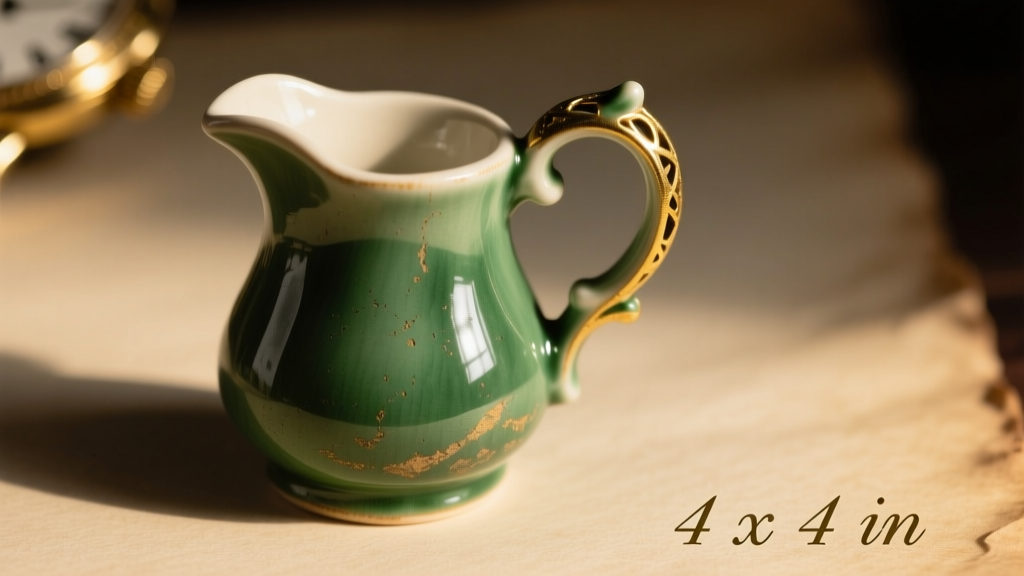
Ohr Pitcher Cutout Handle Sponged onto Spinach Green Base: A Signed 4×4-Inch American Studio Ceramic Masterpiece
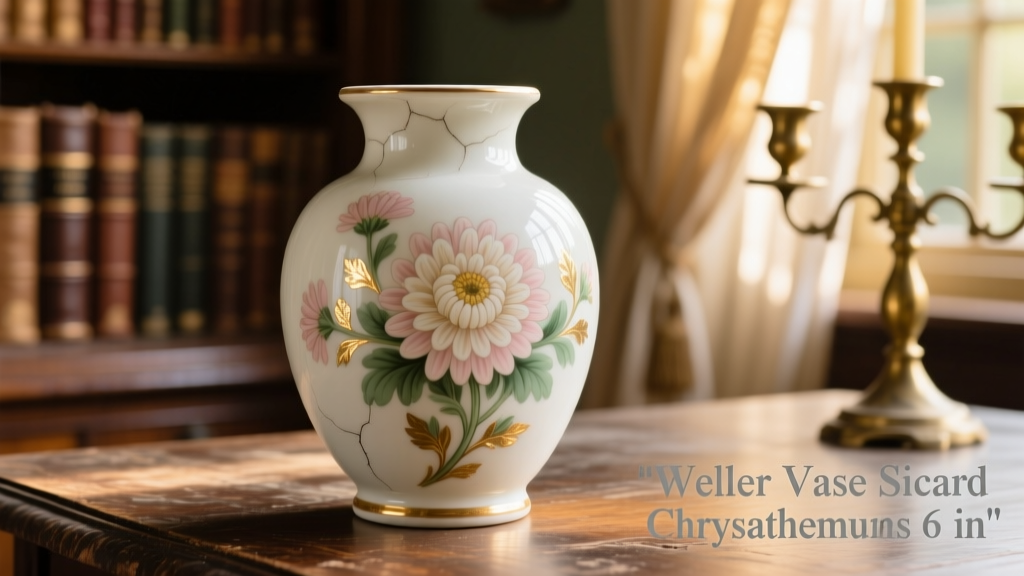
Weller Vase Sicard Chrysanthemums: A 6-Inch Masterpiece of American Art Pottery
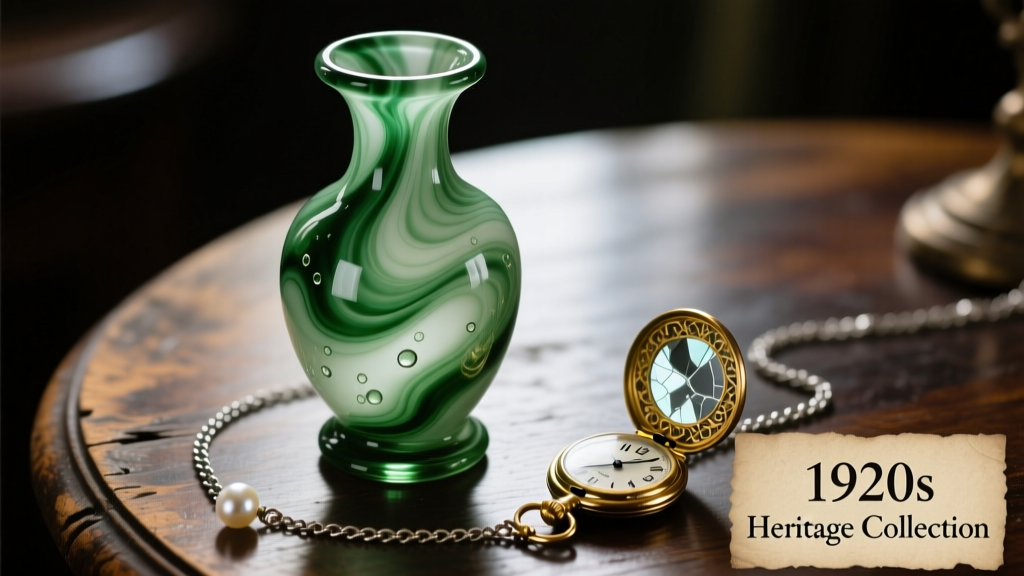
Glass Art Vase Greenmarbleized 8 1/2-Inch: A Mid-Century American Studio Glass Masterpiece