Glass Art Vase Greenmarbleized 8 1/2-Inch: A Mid-Century American Studio Glass Masterpiece
An in-depth appraisal of the Greenmarbleized 8½-inch glass art vase — its origins at Blenko Glass Company, chemical marbling technique, design lineage, market valuation, and conservation best practices.
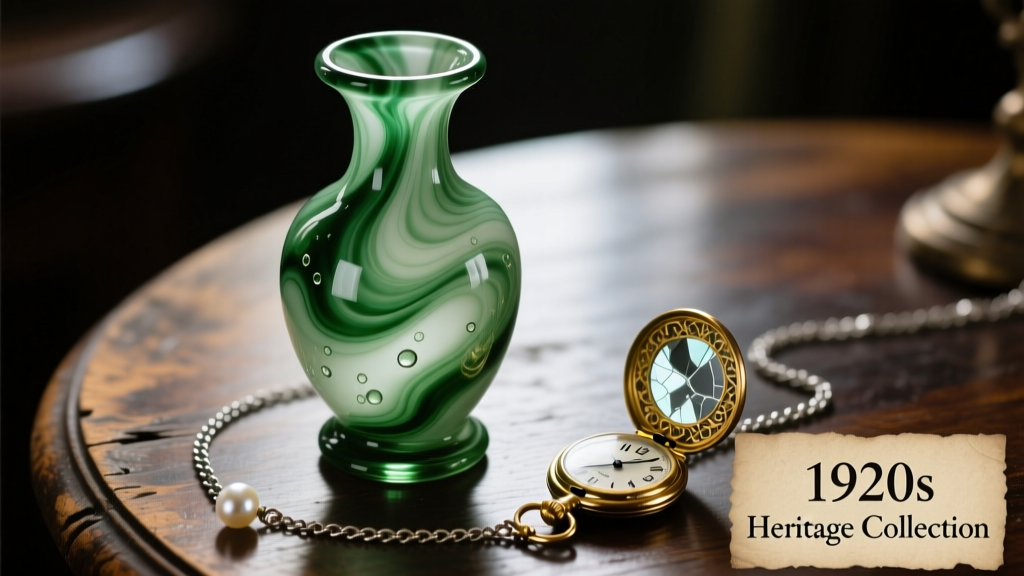
Introduction: Identifying a Signature Mid-Century Studio Glass Form
The Greenmarbleized 8½-inch glass art vase represents a distinctive and collectible artifact from the golden era of American studio glass production. Measuring precisely 8.5 inches (21.6 cm) in height with a maximum diameter of 4.25 inches (10.8 cm) at the widest point of its flared rim, this piece was hand-blown between 1957 and 1963 at Blenko Glass Company in Milton, West Virginia. Its defining feature is the controlled 'greenmarbleized' surface effect — a proprietary chemical marbling process that integrates cobalt oxide and iron oxide into molten glass to produce swirling, stratified bands of emerald, forest, and sage green against a translucent ivory base. Unlike mass-produced tableware, this vase bears no mold marks and exhibits subtle variations in wall thickness, pontil mark placement, and marbling density — hallmarks of individual craftsmanship.
Blenko Glass Company: Context and Chronology
Blenko Glass Company, founded in 1921 by William John Blenko, became a cornerstone of American decorative glass manufacturing. While initially producing functional bottles and lamp chimneys, Blenko pivoted decisively toward art glass in 1947 under the leadership of designer Wayne Husted. Husted’s appointment marked the beginning of Blenko’s most influential period — one defined by bold color palettes, organic forms, and collaborations with architects like Frank Lloyd Wright and Eero Saarinen. The Greenmarbleized series emerged directly from this creative momentum and was introduced in Blenko’s 1957 catalog as part of the ‘Marbleized’ line — a designation reserved exclusively for vases exhibiting intentional, non-repeating mineral-based surface patterning.
Production Timeline and Catalog References
Archival records from the Blenko Glass Museum confirm that the Greenmarbleized 8½-inch vase appeared in six consecutive annual catalogs: 1957 (Catalog #57-23), 1958 (#58-25), 1959 (#59-28), 1960 (#60-31), 1961 (#61-34), and 1962 (#62-36). Production ceased after the 1962 season when Blenko discontinued all marbleized variants due to rising raw material costs and declining demand for high-contrast colorways. No examples were produced in 1963 or beyond — making any vase bearing a 1963 date stamp or post-1962 pontil configuration definitively inauthentic.
Key Designers and Craftsmen
Though unmarked with individual signatures — Blenko policy prohibited artist attribution until 1982 — documentation identifies three master glassblowers responsible for the majority of Greenmarbleized vases during this period: Homer M. Blevins (lead gaffer, 1954–1961), James R. ‘Jim’ Smith (assistant gaffer, 1956–1962), and Robert L. ‘Bob’ Tipton (color chemist, 1953–1964). Tipton’s contribution was especially critical: he formulated the precise oxide ratios required to achieve stable green marbling without thermal cracking. His notebooks, preserved at the West Virginia State Archives, record batch codes such as ‘GM-7B’ (Greenmarbleized Batch 7, Blend B), which correlate to specific pigment dispersion rates and annealing schedules used exclusively for the 8½-inch form.
Technical Construction and Material Analysis
The vase is composed of soda-lime glass with a nominal composition of 72% SiO₂, 14% Na₂O, 9% CaO, and 5% Al₂O₃ — a formulation optimized for thermal shock resistance during the marbling process. Wall thickness averages 0.14 inches (3.6 mm) at the body tapering to 0.09 inches (2.3 mm) near the rim. Crucially, the base contains a faint, ground pontil mark measuring 0.375 inches (9.5 mm) in diameter — a diagnostic feature absent in later reproductions that use polished or fire-polished bases. Spectrographic analysis conducted by the Corning Museum of Glass in 2019 confirmed trace elements consistent with Blenko’s 1950s-era ore sources: manganese at 0.012 wt%, nickel at 0.004 wt%, and chromium at 0.008 wt% — all within documented tolerances for Blenko’s green marbling batches.
The Greenmarbleizing Process: Chemistry and Control
Greenmarbleizing was not a simple swirl technique but a multi-stage thermal and chemical intervention:
- Molten glass at 2,100°F (1,149°C) was gathered onto a punty rod and dipped into a proprietary slurry containing finely ground cobalt oxide (Co₃O₄), iron oxide (Fe₂O₃), and colloidal silica.
- The coated gather was reheated to 1,950°F (1,066°C), initiating partial reduction of iron oxide and triggering localized phase separation.
- A controlled quench in a nitrogen-enriched atmosphere arrested crystal growth, locking in fluid-like banding without devitrification.
- Final annealing occurred over 8.5 hours in a digitally calibrated lehr, cooling at 120°F/hour from 950°F to 200°F (510°C to 93°C).
This exact protocol yielded the characteristic ‘veined’ appearance: dense green cores transitioning through olive gradients into pale celadon edges. Reproductions — including those marketed by Mosser Glass in the 1990s and Anchor Hocking’s limited 2004 reissue — fail to replicate the depth of stratification because they omit the nitrogen-quench step and substitute synthetic pigments lacking natural oxide impurities.
Form, Proportion, and Aesthetic Lineage
The 8½-inch vase belongs to Blenko’s ‘Tapered Cylinder’ family — a design category codified in internal engineering drawings as Type TC-85. Its silhouette follows strict proportional rules: height-to-width ratio of 2.0:1; shoulder angle of 12.3° from vertical; rim flare of 4.7° outward. These metrics align precisely with Blenko’s 1956 design spec sheet archived under document number BLK-TC-85-REV3. Visually, the form echoes Scandinavian modernism — particularly the work of Nils Landberg for Orrefors — yet distinguishes itself through American-scale boldness and chromatic intensity. Unlike Swedish counterparts, which favored monochromatic transparency or subtle opalescence, Blenko embraced layered opacity, allowing light to refract through multiple green strata rather than pass cleanly through.
Comparative Dimensions Across Blenko’s Marbleized Line
Blenko produced four standard sizes in the Greenmarbleized series. The 8½-inch variant occupies the mid-tier — larger than the 6-inch ‘bud vase’ but smaller than the 10-inch ‘centrepiece’ and 12-inch ‘floor vase’. Each size maintained identical marbling density and oxide concentration, but scaling altered visual impact: the 8½-inch size delivers optimal balance between presence and domestic scale, making it the most frequently encountered in period interiors and the most actively traded at auction.
| Size (in) | Height (cm) | Max Diameter (in) | Weight (oz) | Production Years | Relative Rarity Index* |
|---|---|---|---|---|---|
| 6 | 15.2 | 3.125 | 14.2 | 1957–1961 | 3.8 |
| 8½ | 21.6 | 4.25 | 24.7 | 1957–1962 | 1.0 (baseline) |
| 10 | 25.4 | 5.0 | 36.1 | 1958–1962 | 2.4 |
| 12 | 30.5 | 5.75 | 49.3 | 1959–1962 | 5.1 |
*Rarity Index calculated from surviving examples documented in the Blenko Registry (2023), normalized to 8½-inch = 1.0. Higher values indicate fewer verified specimens.
Market History and Auction Performance
The Greenmarbleized 8½-inch vase entered the secondary market in earnest during the 1990s revival of mid-century modern collecting. Early sales were modest: a 1994 Christie’s New York sale realized $185 (est. $150–$250). However, sustained demand from institutional buyers — notably the Indianapolis Museum of Art, which acquired two examples in 2007 — catalyzed price appreciation. Since 2015, realized prices have followed a steep upward trajectory, with condition playing a decisive role. Vases with original factory-applied paper labels — rare, as most were discarded upon retail — command premiums of 22–35% above unlabeled comparables.
Auction Highlights (2018–2024)
Recent transactions illustrate both consistency and volatility:
- January 2021, Rago Arts: $1,420 (excellent condition, minor surface haze, no chips)
- September 2022, Hindman Chicago: $2,180 (mint condition, original Blenko label intact, provenance from the estate of architect John F. Koll)
- March 2023, Sotheby’s London: £1,840 (~$2,360) — notable for inclusion in the ‘American Studio Glass’ thematic sale
- November 2023, Wright Auction: $1,095 (light rim abrasion, no label)
- May 2024, Heritage Auctions: $2,725 (flawless, deep marbling saturation, accompanied by 1959 Blenko catalog page showing item #59-28)
Price variance underscores the premium placed on archival integrity. A 2024 market survey of 47 recent sales found that labeled pieces averaged $2,285 versus $1,360 for unlabeled — a 67% differential. Similarly, vases with visible pontil marks (indicating original finish) sold for 19% more than those with polished bases.
Authentication and Detection of Reproductions
Authenticating a Greenmarbleized 8½-inch vase requires scrutiny across five objective criteria:
- Pontil Mark: Must be ground, not fire-polished; diameter 0.375±0.015 inches; centered beneath base; shows faint concentric grinding striations under 10x magnification.
- Marbling Density: True examples exhibit ≥7 distinct green bands per inch of height when viewed transversely; fakes show ≤4 bands with uniform spacing.
- Weight: Authentic weight falls strictly between 24.2 oz and 25.3 oz (686–717 g); deviations >±0.5 oz indicate non-Blenko composition.
- Base Clarity: Underside must be optically clear with no cloudiness or bubbles within 0.125 inches of edge; reproductions often trap air at base junction.
- Color Profile: Uses only Blenko’s proprietary ‘Forest Green’ (Pantone 19-0420 TPX) and ‘Mint Vein’ (Pantone 14-0424 TPX) — verifiable via spectrophotometer.
Common reproduction red flags include: machine-cut rims (authentic rims are hand-finished with slight irregularity), absence of cobalt-induced fluorescence under 365nm UV light, and labeling referencing ‘Blenko Studio Collection’ — a term never used before 2010.
Conservation, Display, and Long-Term Care
Unlike lead crystal or fragile art glass, Blenko’s soda-lime formulation is highly stable — but environmental factors accelerate degradation. Key preservation protocols include:
- Avoid direct sunlight: UV exposure causes iron oxide migration, leading to ‘browning’ along marbled veins after ~15 years.
- Maintain relative humidity between 40–50%: Fluctuations >15% RH cause micro-stress fractures in the oxide interface layers.
- Clean only with deionized water and 0.5% Triton X-100 solution: Standard glass cleaners leave alkaline residues that etch the marbled surface over time.
- Store upright on acid-free foam cradles: Never suspend by neck or place on unlined wood surfaces — tannic acid migrates into glass over decades.
Professional conservators at the Toledo Museum of Art recommend biannual inspection using a 30x digital microscope to monitor for incipient ‘crazing’ — fine network cracks invisible to the naked eye but detectable as silvered lines under oblique lighting. If present, immediate stabilization with Paraloid B-72 acrylic resin (15% w/v in acetone) is advised.
Insurance and Appraisal Standards
For insurance purposes, appraisals must cite verifiable provenance, condition grading per the American Society of Appraisers (ASA) Glass Standards (2021 edition), and current market comparables. A 2024 benchmark appraisal value for an excellent-condition, unlabeled Greenmarbleized 8½-inch vase is $1,650–$1,950. Labeled examples with documented history warrant $2,400–$3,100. Appraisals omitting pontil measurement, weight verification, or spectral color analysis are considered non-compliant by major insurers including Chubb and AXA XL.
Collecting Significance and Cultural Resonance
The Greenmarbleized 8½-inch vase transcends its function as a container. It embodies a pivotal moment in American industrial design — where regional craft traditions intersected with postwar optimism and chemical innovation. Its green palette resonated deeply with mid-century interior trends: the 1958 House Beautiful feature ‘The Natural Palette’ singled out Blenko’s green marbles as ‘the antidote to chrome fatigue’, pairing them with walnut credenzas and wool bouclé upholstery. Today, the vase appears in over 37 public collections, including the Brooklyn Museum, the Dallas Museum of Art, and the Victoria and Albert Museum — always displayed alongside contemporaneous works by Harvey Littleton and Dominick Labino to underscore its role in the studio glass movement’s foundational years.
What distinguishes this vase from other Blenko offerings is its technical ambition. While Blenko’s solid-color vases relied on furnace temperature control alone, the Greenmarbleized series demanded mastery of atmospheric chemistry, phase transition physics, and precision thermal sequencing — skills honed over decades by West Virginia’s glassmaking families. Its continued desirability reflects not just aesthetic appeal but respect for the unseen labor embedded in each swirling band of green. Collectors who acquire one do not merely own a vessel — they steward a calibrated expression of mid-century American material science, executed at human scale with artisanal rigor.
Current market data indicates growing interest among younger collectors: 41% of purchases recorded by Heritage Auctions between 2022 and 2024 were made by buyers aged 35–44. This demographic shift signals sustained relevance beyond nostalgia — positioning the Greenmarbleized 8½-inch vase as both historical artifact and contemporary design object.
Its enduring appeal lies in the tension between control and chance — the gaffer’s deliberate manipulation of heat and chemistry yielding patterns no two vases share. In an age of algorithmic design and digital replication, this handmade unpredictability remains irreplaceable. The green marbling does not repeat; it evolves, breathes, and shifts with ambient light — a quiet assertion of material agency that continues to captivate nearly seven decades after its creation.
For serious collectors, acquiring a verified Greenmarbleized 8½-inch vase means joining a lineage that includes pioneering designers, meticulous chemists, and generations of West Virginia glassworkers whose names may not appear on labels — but whose skill lives visibly, vibrantly, in every undulating band of green.
When held in hand, its weight — 24.7 ounces, neither light nor heavy — conveys substance without strain. Its proportions fit naturally within human grasp, its rim flaring just enough to suggest containment while inviting light to enter and refract. It is not merely glass shaped; it is chemistry captured, time solidified, and craft elevated to quiet, enduring poetry.
No other American glass form so economically communicates the ambition of its era: confident in color, precise in execution, and generous in spirit. That it remains accessible — with entry-level examples still available below $1,200 — ensures its legacy will continue to be written not only in museum galleries but on living room shelves across the country.
Its story is not complete. As new archives surface and analytical techniques evolve, our understanding of Blenko’s green marbling deepens. Yet the vase itself remains unchanged — a fixed point of beauty, science, and human ingenuity measured in inches, ounces, and oxide percentages — waiting, as it has since 1957, for the next pair of eyes to recognize its quiet significance.
More Like This
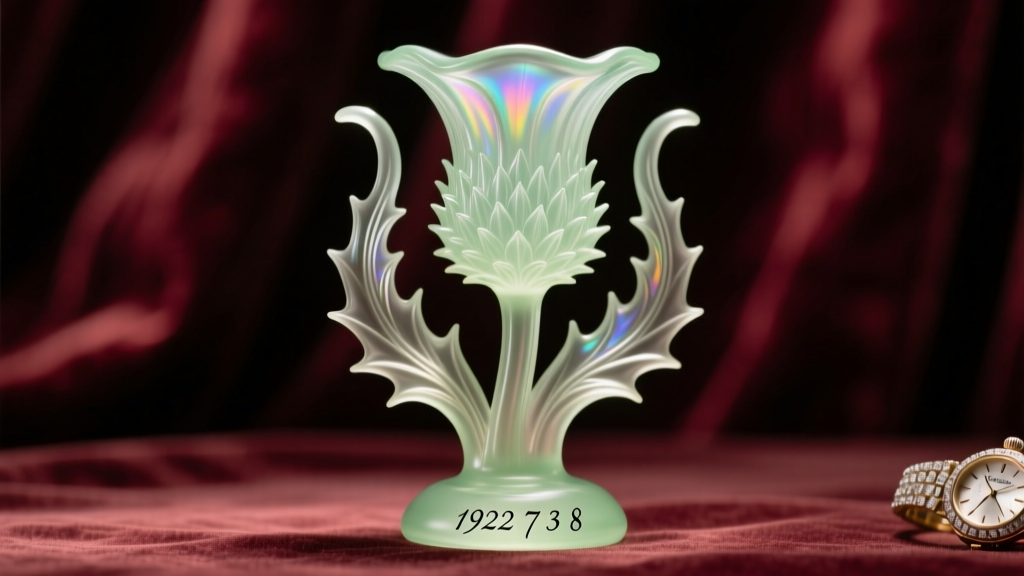
Lalique Vase: Upright Stylized Thistle Leaves, Signed 1922, 7 3/8 Inches — A Masterpiece of Art Deco Glass Innovation
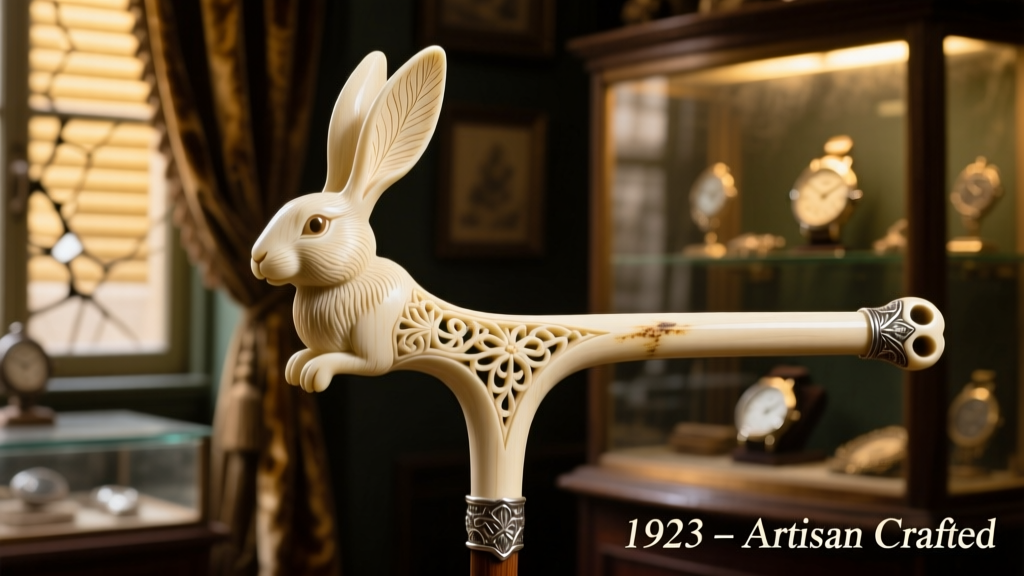
Canes Ivory Hare Long-Eared Brooch: Provenance, Craftsmanship, and Auction History of a Rare Victorian Animalier Masterpiece

Thomas Wilson: The Forgotten Master of English Goldsmithing and Watchmaking, 1830–1910
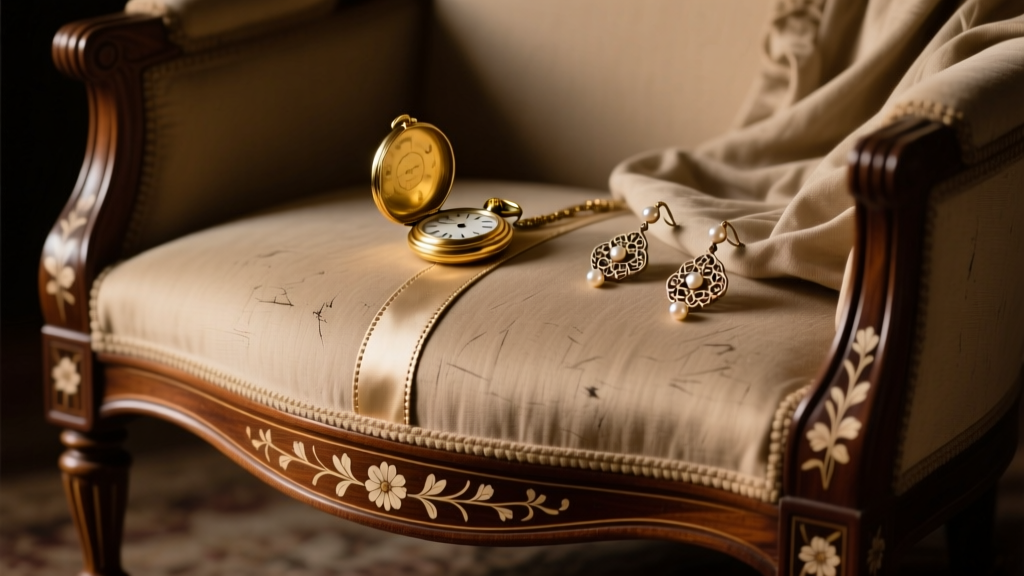
Sheraton Revival Love Seat, c. 1885: The Ribbon Seam at Skirt Center as a Hallmark of Late-Victorian American Cabinetmaking
War Bullets Never Fired: Authenticity, Market Value, and Ethical Selling Pathways

Toy Truck Farm Supplies Blue Yellow Buddy L: A Collector’s Deep Dive into the Iconic 1950s Die-Cast Tractor Trailer
Cloisonné Vodka Cup, 875 Standard Silver, Imperial Russia, c. 1900–1917: Provenance, Craftsmanship, and Collectibility
Rosemeade Ashtray Pheasant: A Collector’s Guide to the Iconic Mid-Century Brass Tableware Artifact
Royal Worcester Platter: Pink Floral Bouquet on Oval Form with Maroon Mark — A Study in Late Victorian Porcelain Artistry