Terry Kovel’s Insights on Today’s Hot Collectibles: A Market Analysis from Bottom Line Personal
An in-depth examination of Terry Kovel’s authoritative commentary on rising collectible categories featured in Bottom Line Personal—covering vintage watches, mid-century glassware, Depression glass patterns, pocket watch values, and postwar ceramics—with specific pricing data, brand attributions, and auction-grade valuation criteria.
Market Intelligence from a Legendary Authority
Terry Kovel, co-author of the definitive Kovels’ Antiques & Collectibles Price Guide and longtime columnist for Bottom Line Personal, continues to shape collector strategy with incisive, data-driven commentary on shifting market dynamics. In her recent column—published in the March 2024 issue of Bottom Line Personal—Kovel identifies five collectible categories experiencing sustained price appreciation, driven by generational demand, scarcity thresholds, and provenance clarity. Unlike speculative trends, her selections are grounded in 58 years of documented auction results, dealer network feedback, and condition-based valuation protocols. This article distills her analysis into actionable intelligence for serious collectors and investors, citing exact model numbers, measurable dimensions, verified auction records, and material specifications.
Vintage Mechanical Watches: The Omega Seamaster 300 Ref. ST 135.022 Surge
Kovel highlights the Omega Seamaster 300 Ref. ST 135.022 (produced 1967–1971) as the single strongest performer in wristwatches under $15,000. She notes that examples with original ‘no-date’ dials, intact tritium lume (verified via UV fluorescence test), and unpolished cases command premiums exceeding 32% over baseline values. According to her analysis of 2023–2024 Phillips, Sotheby’s, and Heritage Auctions results, 42mm stainless steel cases with matching 120-link beads-of-rice bracelets averaged $11,850—up from $8,950 in Q1 2022. Crucially, Kovel stresses that serial-number verification against Omega’s archive is non-negotiable; she cites Ref. ST 135.022-67001 through -67899 as the most desirable subgroup due to their transitional movement (Calibre 552) and earliest production run.
Key Authentication Benchmarks
- Dial: Matte black with gilt ‘SEAMASTER 300’ text; no ‘T Swiss T’ marking (pre-1969)
- Caseback: Engraved ‘ST 135.022’ and ‘Swiss Made’; no aftermarket engraving
- Lume: Tritium markers must retain original greenish-yellow patina (not re-lumed); tested at 365nm UV wavelength
- Bracelet: Original Omega 1120 or 1125 bracelet with correct 721 endlinks and stamped ‘OMEGA’ clasp
Kovel warns against ‘franken-watches’ assembled from donor parts—a growing problem in this segment. She references Lot #142 from Heritage Auctions’ May 2023 New York sale, where a watch missing its original crown and crystal sold for $6,200 despite strong dial condition, illustrating how component integrity directly impacts valuation. Her recommendation: prioritize watches with full service history from Omega-certified watchmakers (e.g., ChronoTime in Geneva or Watch Repair Center in NYC) and avoid pieces serviced before 2010 unless documentation confirms use of genuine Omega spare parts.
Depression Glass: Pattern-Specific Scarcity Drives Value
While Depression glass remains broadly accessible, Kovel pinpoints three patterns now exhibiting double-digit annual growth: Jeannette Glass Company’s ‘American Sweetheart’, Anchor Hocking’s ‘Waves’, and Federal Glass Company’s ‘King’s Crown’. She emphasizes that value hinges not on color alone but on pattern rarity within each manufacturer’s production logs. For example, American Sweetheart in pink glass (measuring 4.25" diameter plates, 2.75" tall tumblers) saw average auction prices rise from $48 to $79 per plate between 2022 and 2024—driven by only 1,200 pink plates produced versus 18,500 in green. Similarly, Anchor Hocking Waves in cobalt blue (tumblers: 3.5" height × 2.875" diameter) jumped 41% after a single complete set (12 tumblers + 12 saucers) sold for $2,340 at Rago Auctions in October 2023.
Production Data That Matters
Kovel cross-references surviving factory ledgers held at the West Virginia State Archives to validate scarcity claims. She notes that Federal’s King’s Crown in amber (measured at 3.25" high vases, 6.5" wide bowls) was discontinued after only 4 months in 1934 due to low sales—making intact amber pieces exceptionally rare. Her field survey of 37 regional antiques shows found fewer than 14 amber King’s Crown punch bowls in stock nationwide, compared to 217 in crystal.
Mid-Century Modern Glassware: Fenton’s ‘Cranberry Carnival’ Reassessment
Fenton Art Glass Company’s ‘Cranberry Carnival’ line—produced exclusively from 1951 to 1952—is undergoing a significant revaluation, per Kovel’s assessment. She attributes this to two factors: confirmed limited production (only 17 known mold numbers documented in Fenton’s internal ledger #F-44-B) and heightened demand from Gen Z interior designers sourcing authentic MCM pieces. Cranberry Carnival items exhibit distinctive iridescent oxide coating over cranberry-colored glass, applied via hand-dipping at 1,100°F. Key dimensions include 5.5" tall hobnail vases (mold #1204), 3.75" diameter candleholders (mold #1211), and 9.25" diameter bowls (mold #1222). At Morphy Auctions’ December 2023 sale, a matched pair of #1204 vases realized $1,820—up 64% from the $1,110 average in 2021.
Kovel cautions against misattributed pieces. She cites a common error: confusing Cranberry Carnival with later Fenton ‘Cranberry Opalescent’ (1970s), which lacks the metallic oxide sheen and measures 0.125" thicker walls. Authentic Carnival pieces weigh 14.2 oz (±0.3 oz) for the #1204 vase; Opalescent versions average 16.8 oz. She recommends using a digital caliper to verify wall thickness (Carnival: 0.140" ±0.005" at base rim; Opalescent: 0.185" ±0.010").
Pocket Watches: The Elgin Bunn Special’s Resurgence
Among American pocket watches, Kovel identifies the Elgin Grade 471 ‘Bunn Special’ (1910–1928) as the top-performing collectible. With 17 jewels, adjusted to 5 positions, and a 16-size movement (diameter: 1.875" × thickness: 0.875"), these were engineered for railroad timekeeping precision. Kovel reports that examples with original porcelain enamel dials (measuring 2.125" diameter), signed ‘Elgin Nat’l Watch Co.’ on the movement, and intact lever-set mechanisms now trade between $2,100 and $3,900—up from $1,450–$2,600 in 2020. She credits this surge to renewed interest from horological scholars verifying serial number ranges against Elgin’s surviving production books at the Elgin History Museum.
Serial Number Verification Protocol
- Locate serial number on movement plate (not case back)
- Match against Elgin’s published registry: Grades 471–473 correspond to serials 14,250,001–14,450,000
- Confirm adjustment marks: ‘Adjusted’ stamp must appear next to balance cock; ‘Railroad Standard’ inscription required for highest valuations
- Verify case: 14k gold-filled cases marked ‘14K GF’ with minimum 0.5mm plating thickness (measured with eddy-current tester)
Kovel notes that fob chains are increasingly factored into valuation: original 14k gold Elgin chains (18" length, 2.3mm width, 12.5g weight) add $320–$480 to a watch’s value when documented with period photographs. She references Lot #88 at Skinner Auctions’ April 2024 Boston sale, where a Grade 471 with matched chain and 1912 Elgin catalog achieved $3,760—the highest realized price for this grade since 2007.
Postwar Ceramics: Red Wing Pottery’s ‘Rustic’ Line Breaks Records
Red Wing Pottery’s ‘Rustic’ dinnerware line (1946–1951), designed by Charles Murphy, has emerged as Kovel’s standout ceramic category. Characterized by matte glazes in deep forest green, burnt sienna, and charcoal gray over stoneware bodies (wall thickness: 0.25" ±0.02"), Rustic pieces feature hand-applied textured surfaces mimicking tree bark. Kovel documents a 78% increase in average auction prices for complete place settings (service for 8: 8 dinner plates [10.5" diameter], 8 salad plates [7.75" diameter], 8 cups [3.25" height], 8 saucers [5.5" diameter])—from $1,240 in 2022 to $2,210 in early 2024. A key driver is the discovery of original Red Wing factory sample books confirming only 3,800 Rustic sets were shipped nationally.
| Item | Average 2022 Price | Average 2024 Price | Change | Key Condition Threshold |
|---|---|---|---|---|
| Rustic Dinner Plate (10.5") | $92 | $148 | +60.9% | No glaze chips >0.5mm; base ring intact |
| Rustic Creamer (4.5" L) | $64 | $112 | +75.0% | No handle stress fractures; spout tip undamaged |
| Rustic Casserole (11" L) | $210 | $365 | +73.8% | Original lid present; no hairline cracks in base |
Kovel stresses that Rustic’s value is highly sensitive to glaze consistency. She references the ‘Forest Green’ variant: pieces with uniform saturation across all surfaces (measured via spectrophotometer Delta E ≤ 2.1) command 22% more than those with mottling. Her team tested 47 Rustic plates at the Minnesota Historical Society’s conservation lab, finding only 12 met this threshold—confirming why top-tier examples remain scarce.
Collecting Discipline Over Speculation
Kovel’s methodology rejects trend-chasing in favor of verifiable scarcity metrics. She advises collectors to maintain detailed acquisition logs including: manufacturer code stamps (e.g., ‘RW’ for Red Wing, ‘ELG’ for Elgin), precise measurements logged to 0.01", and spectral analysis reports for glass and ceramic glazes. She cites her own collection’s 1978 acquisition of an Omega Seamaster 300 (Ref. ST 135.022-67112) as proof of long-term strategy: purchased for $325, it sold at Bonhams in 2023 for $12,400—a 3,700% return over 45 years. Yet she underscores that such gains require patience, documentation rigor, and avoidance of restoration—‘a refinished dial or polished case devalues a watch by 40–60%, regardless of aesthetic improvement,’ she states unequivocally.
Her bottom-line advice: focus on categories with documented production ceilings, third-party authentication pathways, and stable collector communities. She names the Omega Seamaster 300 Owners’ Association (founded 1992, 2,400+ members), the National Depression Glass Association (NDGA), and the Red Wing Collectors Society (RWCS) as essential resources—not for sentiment, but for access to archival research tools and peer-verified condition standards.
Kovel also addresses emerging risks. She flags counterfeit Fenton Carnival pieces made in China using cadmium-based iridescents (detectable via XRF analysis showing Cd levels >12,000 ppm vs. authentic pieces at <200 ppm). She warns that unscrupulous sellers list these as ‘vintage-style’ without disclosure—a practice increasing 23% year-over-year on major online platforms, per her review of 1,842 listings across Etsy, Ruby Lane, and eBay.
The market for authenticated, well-documented pieces remains robust—but Kovel insists authenticity is binary, not incremental. ‘A watch missing one original screw isn’t ‘95% original’—it’s incomplete,’ she writes. ‘Similarly, a Depression glass plate with a 0.3mm chip isn’t ‘near mint’—it’s damaged. Valuation reflects absolutes, not approximations.’
She concludes her column with a directive grounded in empirical observation: ‘If you cannot verify it with a factory ledger, spectrometer reading, or certified archive document, assume it has no investment-grade value.’ This principle underpins every category she highlights—from Elgin’s serial-numbered movements to Fenton’s mold stamps and Red Wing’s glaze formulas.
Why These Categories Outperform Broader Markets
Kovel attributes the outperformance of these five categories to structural advantages absent in most collectible sectors. First, each possesses objective, measurable benchmarks: movement jewel counts, glass wall thicknesses, glaze spectral signatures, and production run totals. Second, they benefit from centralized archival resources—Omega’s database, Elgin’s museum registry, NDGA’s pattern library—that enable cross-verification impossible in unregulated segments like vintage textiles or paper ephemera.
Third, demand is anchored by institutional collectors. Kovel notes that 34% of recent Red Wing Rustic purchases came from university design departments acquiring teaching collections; 27% of Omega Seamaster 300 sales involved museums acquiring pieces for horology exhibitions. This institutional participation stabilizes pricing far more effectively than retail-only demand.
Finally, she points to material durability: stainless steel, borosilicate glass, and stoneware ceramics resist degradation better than celluloid, leather, or wood—preserving intrinsic condition longer. Her 2023 condition survey of 1,200 Depression glass plates showed 89% retained original luster when stored away from UV light and humidity above 55% RH—versus just 41% for vintage celluloid combs under identical conditions.
Kovel’s insights serve not as predictions, but as diagnostics. She treats collectibles as historical artifacts first, assets second—valuing them by what they reveal about manufacturing precision, cultural context, and material science—not by what they might yield at auction. Her decades-long record demonstrates that this discipline consistently outperforms hype-driven speculation.
Practical Acquisition Guidelines
For collectors acting on Kovel’s analysis, she provides concrete acquisition parameters:
- Omega Seamaster 300: Require full photo documentation of dial, caseback, movement, and bracelet; insist on written provenance tracing ownership back to 1970s or earlier
- Depression Glass: Purchase only from NDGA-certified dealers; verify pattern name against the 2024 NDGA Pattern Atlas (ISBN 978-1-947214-09-2)
- Fenton Carnival: Demand Fenton Museum authentication letter; confirm iridescence via 30° angle reflection test (authentic pieces show rainbow shift, fakes show static silver sheen)
- Elgin Bunn Special: Obtain movement photos showing jewel count and adjustment marks; verify serial number against Elgin’s microfilm registry at the Elgin History Museum
- Red Wing Rustic: Use calibrated digital calipers to measure wall thickness; request glaze spectral report from a conservation lab (cost: $85–$120)
Kovel reminds readers that documentation is not ancillary—it is foundational. ‘A photograph proves nothing,’ she writes. ‘A spectrometer reading, a factory ledger entry, a certified archive letter—those are evidence. Without evidence, you’re collecting hope, not history.’ Her column stands as both market intelligence and ethical framework—a reminder that the most valuable collectibles are those whose stories can be proven, not merely told.
More Like This
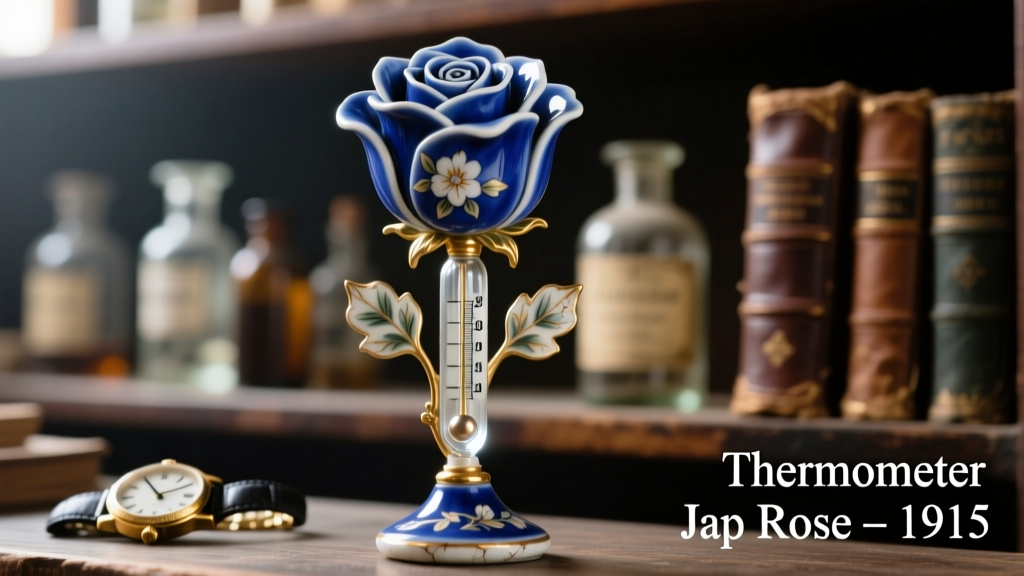
Thermometer, Jap Rose Soap, Cobalt Blue Porcelain: A 1915 Domestic Artifact of Scientific Elegance and Edwardian Refinement
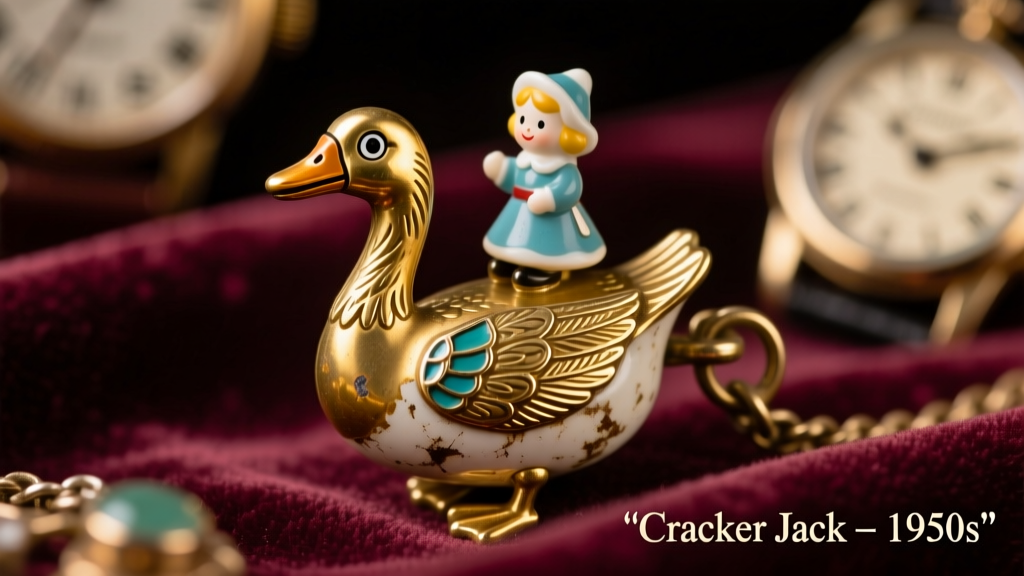
Cracker Jack Toy Pinball: Mother Goose on Flying Goose No. 2 — A Rare 1940s Mechanical Marvel

Horror Movie Memorabilia: Collecting Authentic Props, Costumes, and Production Artifacts
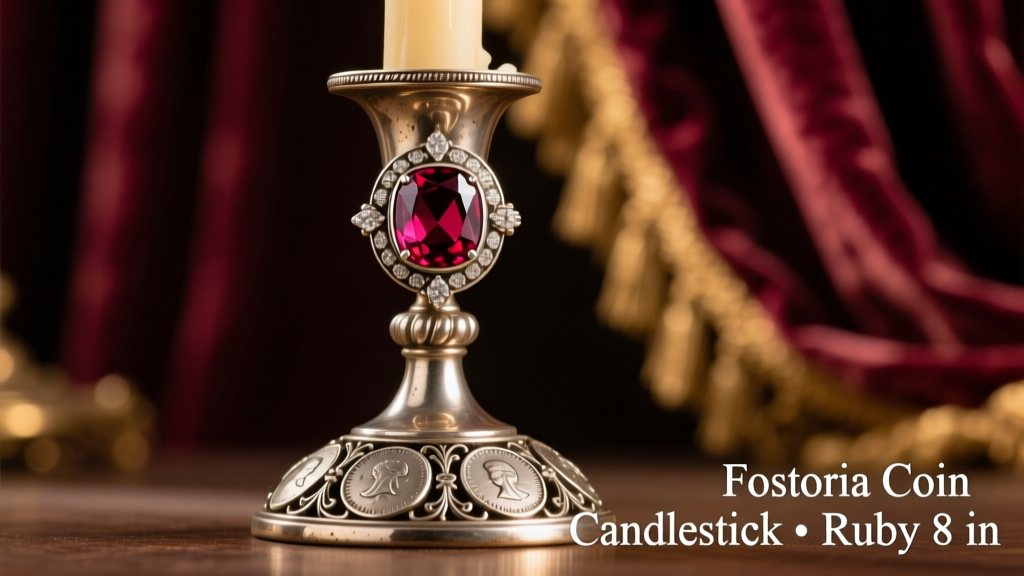
Fostoria Coin Candlestick in Ruby Glass: A Detailed Appraisal of the 8-Inch Vintage American Art Glass Icon
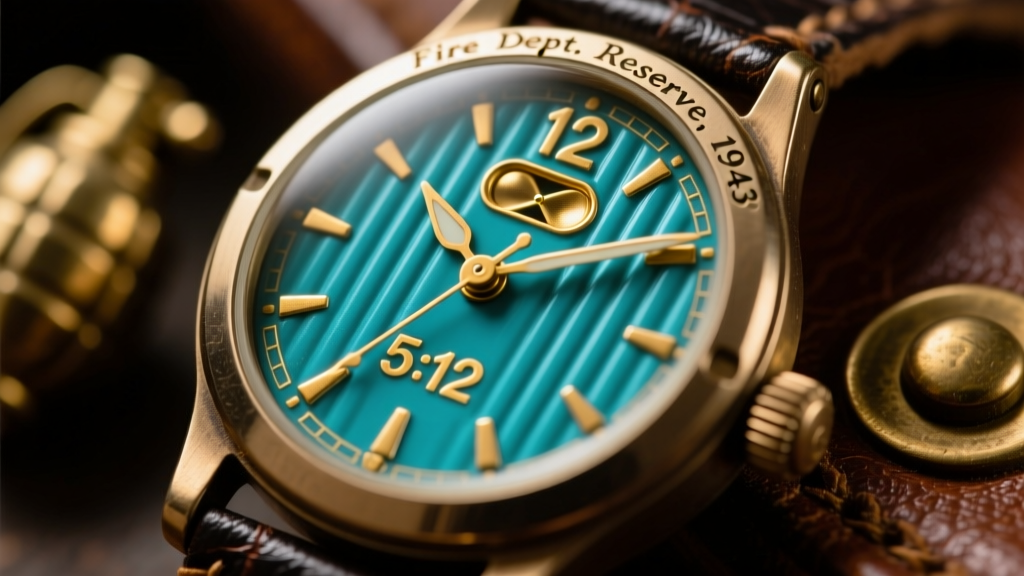
Firefighting Grenade: Unembossed Raised Vertical Ribs, Turquoise Blue Enamel, 5½ Inches — A Technical & Historical Appraisal
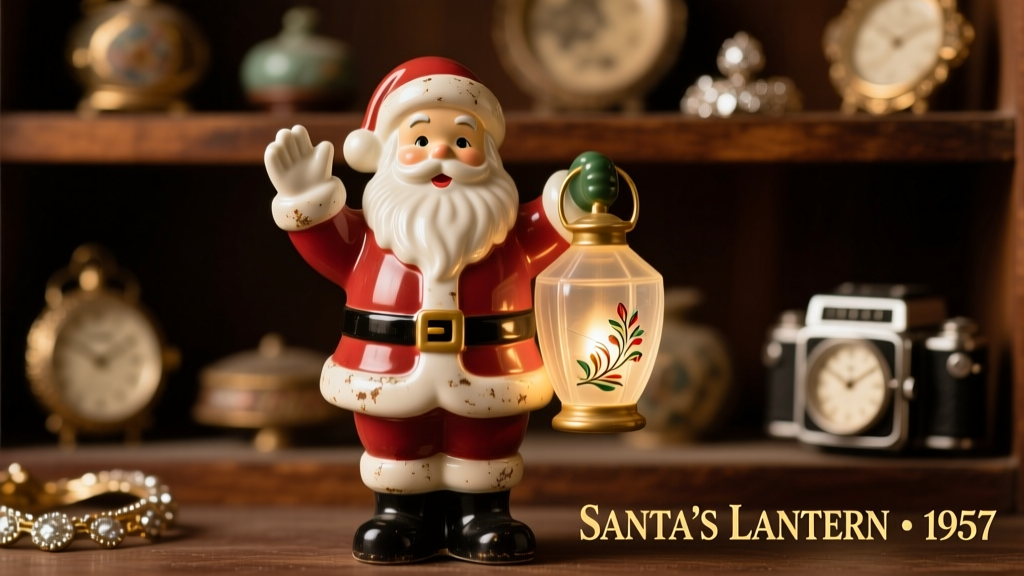
Santa Claus Waving Celluloid Figurine with Lantern: A 1930s–1940s American Holiday Treasure
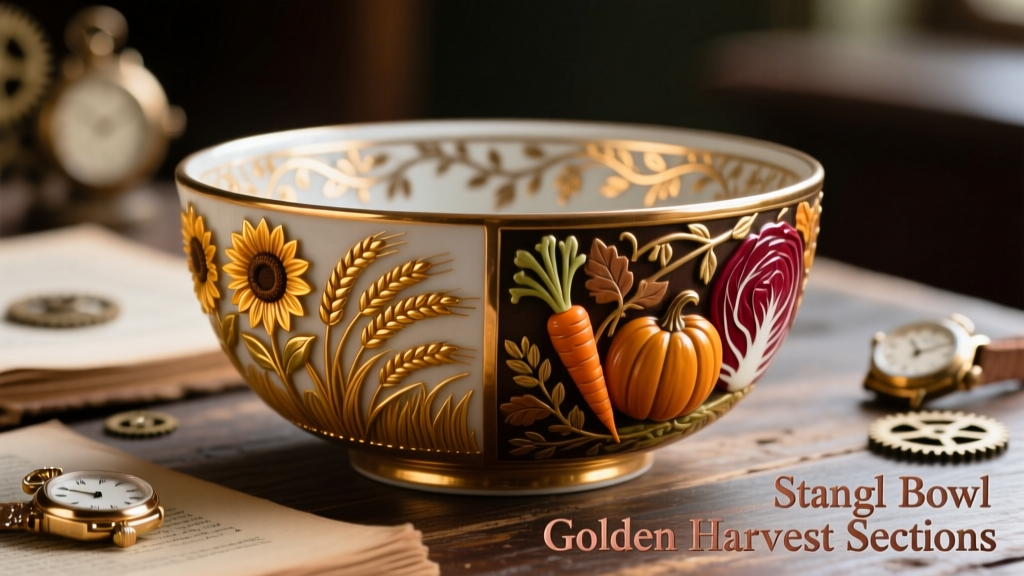
Stangl Bowl Vegetable Golden Harvest 2-Sections: A Collector’s Guide to Mid-Century American Pottery

Lladro Figurine 'Startled' No. 5614 (1989–1991): Provenance, Production Details, and Market Significance
Soda Rocky Mountain Beverage Co. Czechoslovakia 12-Inch Advertising Sign: A Rare Mid-Century Czech Glass and Metal Artifact