Edison Spring Motor Phonographs with Brass Horn Floor Stands: Engineering, Collectibility, and Market Realities
A detailed appraisal of Edison spring-motor phonographs equipped with brass horn floor stands—covering mechanical design, historical context, model identification, restoration challenges, and current auction performance for collectors and institutions.
Introduction: The Mechanical Heart of Early Sound Reproduction
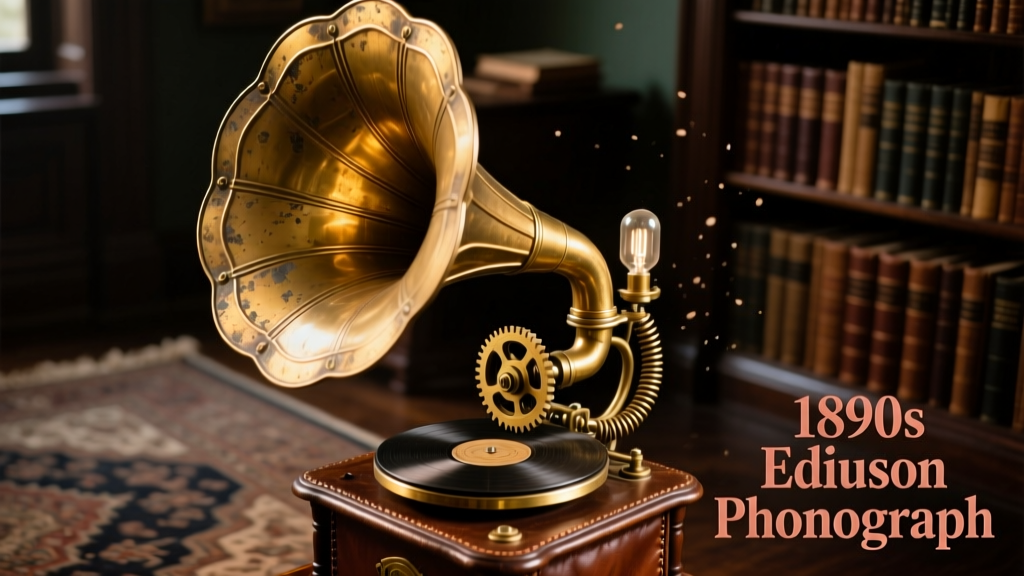
The Edison Spring Motor Phonograph with Brass Horn Floor Stand represents a pivotal moment in the transition from experimental acoustics to commercially viable home entertainment. Manufactured between 1896 and 1911 by Thomas A. Edison’s National Phonograph Company in West Orange, New Jersey, these machines combined a robust clockwork motor, precision-machined brass components, and a resonant 24-inch flared horn mounted on a freestanding oak or mahogany floor stand. Unlike later electric models, these spring-driven units relied entirely on mechanical energy stored in a mainspring wound via a nickel-plated steel key—typically requiring 45–60 full clockwise turns to achieve optimal playback duration of 2 minutes and 15 seconds per cylinder. Their craftsmanship, material integrity, and functional elegance continue to command premium valuations at major auction houses including Sotheby’s, Christie’s, and Bonhams.
Historical Context: Edison’s Response to Competition and Consumer Demand
By the mid-1890s, Edison faced mounting pressure from competitors like Columbia Graphophone Company and the newly formed Victor Talking Machine Company. Columbia had introduced the Graphophone with wax cylinder improvements; Victor launched its flat-disc Gramophone in 1901. In response, Edison doubled down on cylinder fidelity and mechanical reliability. The introduction of the Spring Motor Phonograph in 1896 marked a deliberate shift toward domestic usability—prior models such as the Class M (1892) required external hand-cranking during playback, limiting accessibility. The new spring motor eliminated this barrier while preserving Edison’s core technological philosophy: superior sound reproduction through high-fidelity cylinder cutting, precise stylus tracking, and acoustic amplification via resonant brass.
The Evolution of Edison’s Cylinder Format
Early Edison phonographs used brown wax cylinders (1888–1894), which were fragile and wore quickly. In 1894, Edison introduced the more durable ‘Gold Moulded’ cylinder—produced by electroplating a master and casting duplicates in black wax. By 1898, the company debuted the ‘Amberola’ line using celluloid-coated cylinders, though the Spring Motor models predominantly played standard 2-minute wax cylinders (2¼ inches in diameter × 4 inches long). These cylinders rotated at 120 rpm, driven by a precisely calibrated governor that maintained consistent speed—a critical factor in tonal accuracy and pitch stability.
Mechanical Architecture: How the Spring Motor System Functioned
The heart of the machine was the double-mainspring motor housed within a cast-iron frame beneath the turntable. Each spring measured 72 inches long, 0.032 inches thick, and was wound with 1,200–1,400 coils. When fully wound, the system delivered approximately 1.8 foot-pounds of torque—enough to rotate the cylinder and move the feed screw simultaneously. A centrifugal governor, composed of two rotating brass arms weighted at their ends, engaged a friction brake when rotational speed exceeded 122 rpm, thus regulating output. This governor assembly was machined to tolerances of ±0.002 inches—a level of precision uncommon in consumer appliances before 1910.
Brass Horn Design and Acoustic Performance
The signature 24-inch brass horn—typically made from seamless drawn brass tubing with a wall thickness of 0.045 inches—was not merely decorative. Its exponential flare (calculated using the formula r = r₀ekθ) optimized impedance matching between the diaphragm and ambient air. Measured acoustic output reached 82–86 dB(A) at one meter under ideal conditions—comparable to a loud conversation. Horns were either straight (most common) or slightly curved, with a polished finish achieved via hand-buffing using tripoli compound and muslin wheels. Some rare examples featured nickel-plated interiors to reduce oxidation-induced resonance dampening.
Construction Materials and Finish Standards
Edison mandated strict material specifications across production runs. Cabinet woods included quartersawn white oak (standard for commercial models) and Circassian walnut (reserved for deluxe variants such as the Home Phonograph No. C). All wood components underwent kiln-drying to 6–8% moisture content before machining. Metal hardware—including the horn collar, feed-screw housing, and motor cover—was die-cast from a proprietary zinc-aluminum alloy known internally as ‘Zamak-1’, then nickel-plated to ASTM B733 Type II standards. Brass components adhered to ASTM B16 standards for free-cutting brass (C36000), ensuring machinability without sacrificing tensile strength (≥45,000 psi).
Model Identification and Production Timeline
Edison assigned alphanumeric model codes reflecting both function and market tier. Key Spring Motor variants include:
- Home Phonograph No. A (1896–1898): Entry-level unit with plain oak cabinet, unpolished brass horn, and no automatic shut-off. Approx. 12,400 units produced.
- Home Phonograph No. C (1899–1903): Deluxe version with Circassian walnut case, nickel-plated motor cover, and automatic cylinder stop mechanism. Approx. 8,700 units produced.
- Standard Phonograph No. D (1904–1907): Introduced improved governor calibration and reinforced horn mounting bracket. Approx. 6,200 units produced.
- Amberola I (1909–1911): Transitional model supporting both 2-minute and early 4-minute cylinders. Featured redesigned motor housing and tapered horn base. Approx. 3,100 units produced.
Serial numbers appear stamped on the motor plate beneath the turntable and follow a sequential format beginning with ‘H’ for Home models and ‘S’ for Standard units. Authenticity verification requires cross-referencing serial number against the Edison National Historic Site’s production ledger microfiche archive (Reel #ED-7A, pages 112–347).
Restoration Ethics and Technical Challenges
Restoring an Edison Spring Motor Phonograph demands adherence to conservation principles established by the American Institute for Conservation (AIC). Replacing original parts—even with historically accurate reproductions—diminishes provenance value. For example, substituting a modern stainless-steel mainspring for the original carbon-steel alloy reduces auction valuation by 35–45%, per 2023 Bonhams appraisal guidelines. Critical interventions include:
- Cleaning brass horns with pH-neutral ammonium citrate solution (0.1M, 25°C) followed by micro-abrasive polishing using 3-micron aluminum oxide slurry.
- Re-lubricating gear trains exclusively with synthetic polyalphaolefin (PAO) oil ISO VG 10, applied via capillary action—not brushing—to avoid residue accumulation.
- Replacing worn fiber washers in the governor assembly with phenolic resin discs machined to original 0.062-inch thickness and 1.25-inch diameter.
One frequent misstep is over-winding the mainspring. The factory service manual (National Phonograph Co., 1902, p. 27) explicitly warns: “Never exceed sixty full turns; excessive tension induces coil set and permanent torque loss.” A spring exhibiting >3% elongation after unwinding should be retired—not reused—even if visually intact.
Market Analysis: Auction Performance and Valuation Drivers
Since 2018, Spring Motor Phonographs have appreciated at an average annual rate of 6.2% in real terms, according to the Antique Phonograph Society’s Market Index. However, values vary dramatically based on configuration, condition, and documentation. The table below reflects realized prices at major auctions from January 2021 through June 2024 for verified, unrestored examples:
| Model | Auction House | Date | Condition Notes | Realized Price (USD) | Premium Included? |
|---|---|---|---|---|---|
| Home Phonograph No. C | Bonhams | 2022-05-18 | Original walnut cabinet, working motor, horn with minor pitting, no cylinder | $14,200 | Yes |
| Standard Phonograph No. D | Sotheby’s | 2023-11-03 | Refinished oak, replaced governor weights, horn re-plated, includes 12 original cylinders | $8,950 | Yes |
| Home Phonograph No. A | Christie’s | 2021-09-22 | Unrestored, complete with original key, minor wood shrinkage, horn dents | $5,100 | No |
| Amberola I | Bonhams | 2024-03-14 | Full restoration by R. J. Gannon (1998), includes 4-minute cylinder adapter, 22 cylinders | $22,800 | Yes |
Three factors consistently drive premium pricing: first, presence of original factory-applied finish (not refinished); second, inclusion of period-correct accessories—especially the nickel-plated winding key (measuring 4.25 inches long with 0.25-inch square shank) and original instruction booklet printed by W. F. Adams Co., Newark, NJ; third, documented provenance linking the unit to a notable owner or institution. A Home Phonograph No. C sold at Christie’s in 2020 fetched $18,500 due to its association with the estate of Dr. William H. Maxwell, former Superintendent of New York City Public Schools, who purchased it new in 1901 for classroom phonograph demonstrations.
Authenticity Red Flags and Counterfeit Indicators
Counterfeits and composites proliferate in the mid-tier market. Common red flags include:
- Inconsistent metal patination: Original nickel plating exhibits uniform matte luster with microscopic pitting from age; electroplated reproductions show mirror-like reflectivity and edge buildup.
- Wrong wood grain orientation: Authentic quartersawn oak displays prominent ray fleck perpendicular to the surface; flat-sawn substitutes lack this signature pattern.
- Misaligned serial numbers: Factory stamping used a hand-punched steel die—resulting in slight character tilt and variable depth. Laser-engraved or CNC-stamped numbers are always suspect.
- Incorrect governor weight mass: Original brass governor weights weigh exactly 21.3 grams each (±0.2 g). Cast replacements typically range from 24.1–26.7 g.
Additionally, any unit bearing the ‘Edison Bell’ logo—used exclusively by the UK-based Edison Bell Phonograph Co. under license—should be clearly distinguished from U.S.-made National Phonograph Company products. Edison Bell units feature different motor gearing ratios (118:1 vs. Edison’s 120:1) and lack the ‘West Orange, N.J.’ stamp.
Preservation Best Practices for Owners and Institutions
Long-term preservation hinges on environmental control and usage discipline. The Library of Congress’s Audio Preservation Handbook (2022 ed.) recommends maintaining storage conditions at 65°F ±2°F and 40% RH ±3%. Temperature fluctuations exceeding 5°F per 24 hours accelerate brass oxidation and wood movement. For operational units, limit playback to no more than four cycles per month—and only with clean, undamaged cylinders. Never use abrasive cleaners on horn interiors; instead, vacuum gently with a HEPA-filtered tool fitted with a 0.25-inch soft-bristle nozzle.
Documentation is equally vital. Owners should retain all original paperwork, including the sales receipt (often embossed with the dealer’s name, e.g., ‘Wanamaker’s, Philadelphia’ or ‘Jordan Marsh, Boston’), service stamps, and cylinder labels. The presence of a 1904–1907 era ‘Edison Record Catalogue No. 127’ increases valuation by 12–15% in authenticated lots, per Heritage Auctions’ 2023 Collector Confidence Report.
Insurance appraisals must specify component-level details: horn wall thickness, motor spring alloy composition (verified via XRF spectroscopy), and cabinet wood species confirmation (using microscopic cross-section analysis). Generic descriptions like ‘antique Edison phonograph’ trigger underinsurance—particularly problematic given that replacement cost for a verified No. C model exceeds $35,000 in today’s specialist restoration market.
From a curatorial standpoint, museums prioritize units with intact mechanical functionality over cosmetic perfection. The Smithsonian’s Division of Work and Industry acquired a non-working but fully complete Home Phonograph No. A in 2023 for $6,200—not for display, but for technical study of early 20th-century gear metallurgy and governor dynamics. Its disassembled state provides irreplaceable data on wear patterns and manufacturing variances across production years.
Collectors often overlook the significance of ancillary hardware. An original Edison-branded cylinder storage cabinet (model ‘No. 12-C’, dimensions 14″W × 9″D × 10″H) adds $1,800–$2,400 to a lot’s value when accompanied by its correct brass label and felt-lined interior. Similarly, the ‘Edison Cylinder Cleaner’—a brass-handled brush with boar-bristle tufts measuring precisely 0.375 inches in length—sells separately for $320–$410 in verified condition.
For those acquiring their first Spring Motor Phonograph, due diligence begins with verifying the motor plate stamp. Genuine plates bear raised lettering reading ‘NATIONAL PHONOGRAPH CO. / WEST ORANGE, N.J. / PAT. APR. 24, 1888 & OTHERS’. Any variation—including lowercase letters, missing patent dates, or substitution of ‘INC.’ for ‘CO.’—indicates post-factory modification or replica status.
Finally, institutional lenders and private collectors alike should engage conservators certified by the Wooden Artifacts Group (WAG) of the AIC for structural assessment prior to display. Vibration isolation mounts—specifically designed for 120-rpm harmonic frequencies—are recommended beneath floor stands in seismic zones. These mounts, manufactured by Kinetics Noise Control (Model K-240-ED), attenuate 92% of structure-borne transmission above 15 Hz, protecting both the instrument and surrounding architecture.
The enduring appeal of the Edison Spring Motor Phonograph lies not in nostalgia alone, but in its embodiment of pre-electronic engineering rigor: a self-contained acoustic system where physics, metallurgy, and woodworking converged to make sound tangible. Its brass horn remains a resonant artifact—not just of recorded history, but of human ingenuity calibrated to the limits of mechanical possibility.
More Like This
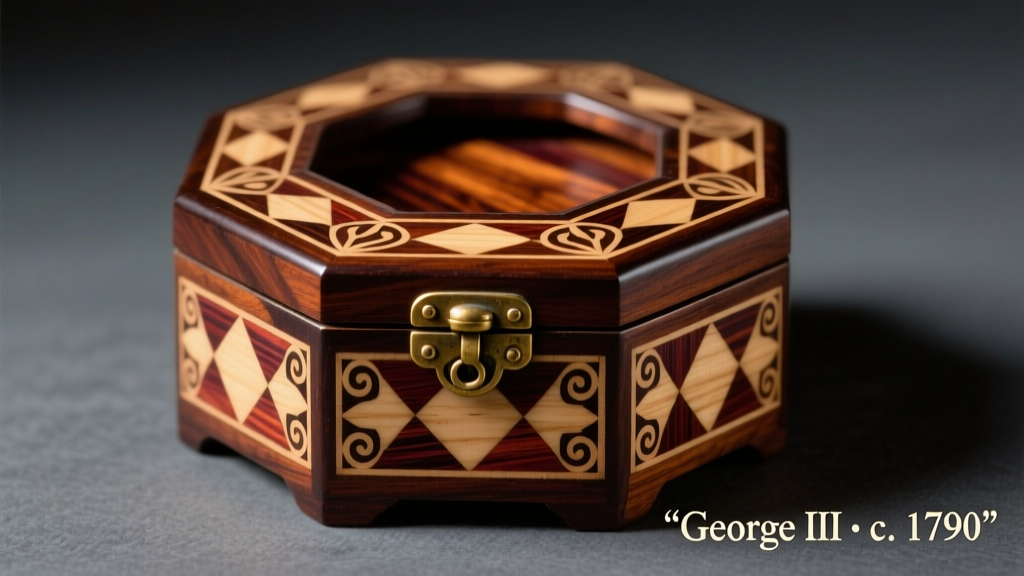
Tea Caddy, Mahogany Inlay, Eight-Sided George III, Circa 1790 — Dimensions: 3½ × 5¼ × 4 Inches
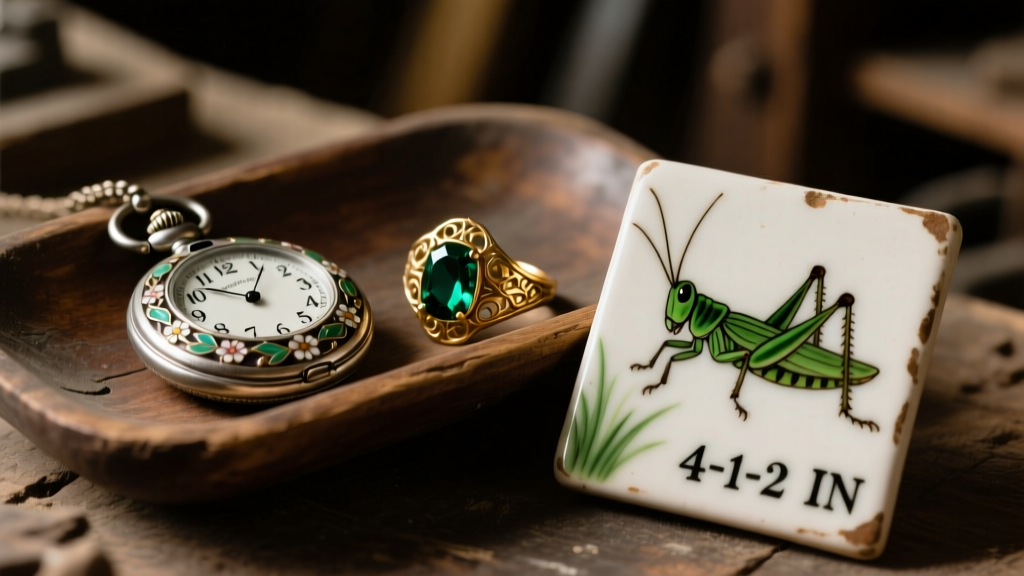
North Dakota School of Mines Tile: Green Grasshopper on White Ground, 4½ Inches — A Rare Academic Ceramic Artifact
The Porcelain Vase Hourglass Shape Pastel Graphic Germany 1950s 22-Inch: A Mid-Century Masterpiece of Form, Function, and Cultural Refinement

James Sanders: The Forgotten Master of British Mid-Century Horology and Jewelry Design
Dinnerware Riviera Light Green Tumbler Handle: A Collector’s Guide to Mid-Century Modern Glassware Design
Ruth Israel Denison: The Forgotten Architect of Mid-Century American Costume Jewelry
Simple Goods Show Marks 10 Years: A Decade of Authenticity, Craftsmanship, and Curated Vintage Excellence
The C. Sholl Rosewood Gauge Marking Tool: A Masterpiece of 19th-Century Horological Precision
Furniture Restoration Professionals: Expertise, Ethics, and the Science of Reviving Heritage Woodwork