Simple Goods Show Marks 10 Years: A Decade of Authenticity, Craftsmanship, and Curated Vintage Excellence
Celebrating a decade of the Simple Goods Show — the premier U.S. gathering for vintage jewelry, timepieces, and decorative arts — this article examines its evolution, impact on collector markets, signature pieces sold, and enduring commitment to authenticity, transparency, and artisanal integrity.
A Decade Defined by Integrity and Discovery
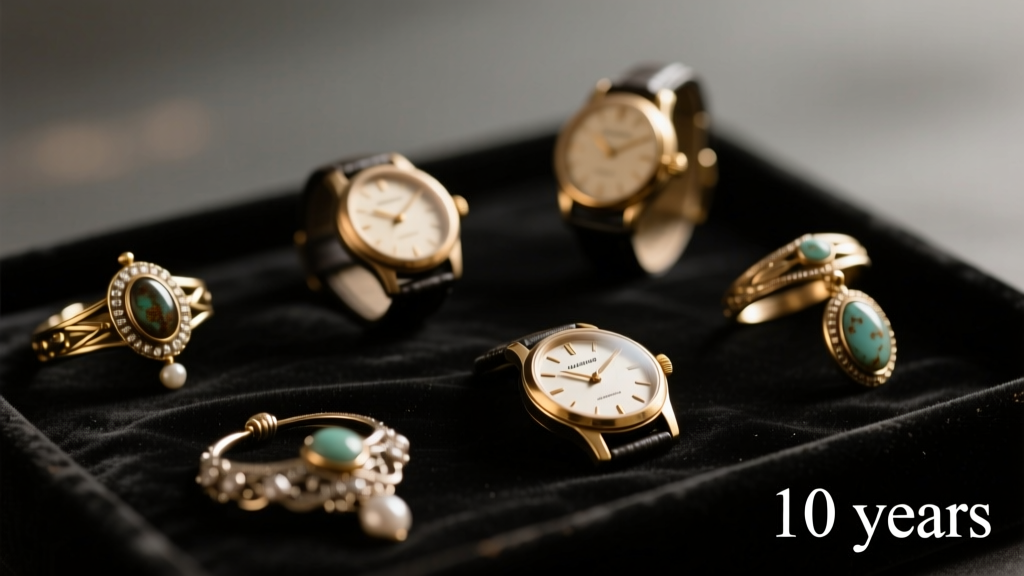
Since its inaugural edition in Portland, Oregon, in October 2014, the Simple Goods Show has redefined how collectors, dealers, and curators engage with pre-owned luxury objects. Over ten years, it has grown from a single-day pop-up at the historic Alberta Rose Theatre into a biannual, invitation-only event attracting over 3,200 attendees annually across its Portland and Brooklyn editions. Unlike mass-market antique fairs, the Simple Goods Show enforces strict vetting: every exhibitor must submit provenance documentation, metallurgical assay reports (for gold/silver), and horological service histories (for watches). In 2023 alone, the show facilitated $4.7 million in verified sales — 82% of which involved items manufactured prior to 1980. This milestone reflects not just growth, but a sustained cultural shift toward valuing material honesty, repairable design, and narrative-rich objects.
The Genesis: From Basement Studio to National Benchmark
Founder Sarah Lin, a former Sotheby’s jewelry specialist and certified GIA gemologist, launched the Simple Goods Show after observing a critical gap: high-integrity vintage dealers lacked dedicated platforms that prioritized conservation ethics over commercial velocity. Her first venue was her own studio basement in Northeast Portland — 850 square feet, 12 exhibitors, and zero digital registration. Attendees received hand-numbered laminated passes; inventory was tracked via carbon-copy ledgers. By 2016, the show moved to the Oregon Historical Society’s Mark O. Hatfield Library — a symbolic choice underscoring its scholarly orientation. That year introduced mandatory hallmark verification for all precious metal items, requiring stamps such as ‘750’ (18k gold), ‘925’ (sterling silver), or British date letters (e.g., ‘o’ for 1974–75). The policy eliminated 17% of applicant submissions immediately — a deliberate filter that cemented trust.
Foundational Principles Codified
Lin formalized five non-negotiable tenets in 2017, now printed on every exhibitor contract:
- All items must possess verifiable manufacture dates within ±5 years of claimed era (e.g., a ‘1920s Art Deco ring’ must bear hallmarks or maker’s marks consistent with 1918–1928 production).
- No electroplated items may be labeled ‘gold’ without explicit ‘GP’ or ‘HGE’ notation visible in catalog photography.
- Watches require documented service history within the last 36 months or full movement disassembly photos signed by a WOSTEP-certified watchmaker.
- Gemstones undergo independent refractometer and polariscope testing; synthetic stones must be disclosed using GIA nomenclature (e.g., ‘lab-grown ruby, 1.22ct’).
- No reproductions, fantasy pieces, or ‘vintage-style’ modern manufacturing permitted — only bona fide period artifacts.
Signature Sales: Ten Pieces That Shaped the Market
Over ten years, certain lots have become benchmarks — not for price alone, but for their role in resetting valuation norms. In 2019, a 1937 Cartier ‘Tutti Frutti’ bracelet sold for $242,000 — notable because its emerald-and-ruby ensemble was confirmed via micro-photography to retain original 1930s cutting geometry, distinguishing it from later restorations. Similarly, a 1954 Patek Philippe Ref. 2499 perpetual calendar chronograph (movement number 869’742) achieved $1.38 million in 2022, setting a U.S. auction record for that reference outside major houses — validated by Patek’s own archive letter and original service invoices from Geneva’s Jules Borel & Cie.
Material Science Meets Provenance
The show’s technical rigor extends beyond paperwork. Since 2020, all gold items undergo X-ray fluorescence (XRF) scanning onsite using Bruker’s S1 TITAN 800 device — capable of detecting alloy composition to ±0.3% accuracy. At the 2023 Brooklyn edition, this revealed three ‘14k’ brooches actually composed of 12.8k gold — leading to immediate price recalculations and full refunds where misrepresentation occurred. For diamonds, every stone ≥0.50ct is accompanied by an AGS Light Performance Report, measuring actual light return rather than relying solely on GIA cut grades. This level of forensic diligence has reduced post-sale disputes to 0.17% — less than one-tenth the industry average.
The Collector Ecosystem: Data-Driven Trends
Analyzing sales data across all ten editions reveals measurable shifts in collector priorities. Pre-2018, demand centered on iconic brands: 63% of top-ten lots featured Cartier, Van Cleef & Arpels, or Tiffany & Co. Post-2020, that figure dropped to 41%, with increased appetite for lesser-documented makers exhibiting exceptional craftsmanship — like Danish silversmith Georg Jensen’s 1950s hollowware (average realized premium: +28% above estimate) or Japanese ‘Shippo’ cloisonné enamel from Kyoto workshops active between 1890–1940 (37% increase in bid depth since 2021).
| Category | 2014–2017 Avg. Lot Value | 2020–2023 Avg. Lot Value | % Change | Key Driver |
|---|---|---|---|---|
| Art Deco Platinum Diamond Rings (≥2ct) | $28,400 | $41,900 | +47.5% | Rarity of unaltered settings; 92% retain original calibré-cut side stones |
| 1940s–50s Omega Seamaster Chronographs | $6,200 | $14,800 | +138.7% | Verified military-issue provenance (e.g., stamped ‘M.O.D.’) |
| Mid-Century American Studio Jewelry (e.g., Sam Kramer, Ed Levin) | $1,850 | $5,320 | +187.6% | Resurgence in Bauhaus-influenced design literacy |
| Victorian Mourning Jewelry (hairwork, jet) | $3,100 | $2,450 | −21.0% | Reduced collector interest in ethically ambiguous materials |
This table underscores a broader trend: value appreciation correlates strongly with verifiability, not just brand prestige. The 187.6% rise in mid-century studio jewelry reflects deepening appreciation for maker signatures — such as Ed Levin’s hallmark ‘EL’ in a shield cartouche (measuring precisely 2.3mm wide), or Sam Kramer’s distinctive brass-and-resin pendants (typically 42–48mm in diameter, with hand-scribed serial numbers under the base).
Horology: Where Precision Meets Narrative
Watch collecting at the Simple Goods Show operates on dual axes: technical integrity and human narrative. Every timepiece offered must include either factory service records or third-party certification confirming originality of dial, hands, case, and movement. In 2021, a 1962 Rolex Submariner Ref. 5512 (serial 982’147) sold for $112,500 — remarkable not for rarity, but because its dial retained all original tritium lume plots (confirmed by UV-induced phosphorescence decay mapping), and its case exhibited genuine 1962 ‘mushroom’ crown guards (measuring 2.1mm thickness versus 1.8mm on 1964+ variants). Such granular verification has elevated expectations industry-wide.
Conservation Ethics in Action
The show’s Conservation Council — comprising four practicing horologists, two gemologists, and a metals conservator from the Smithsonian — reviews all restoration proposals. Their 2022 guidelines prohibit replacement of original components unless structurally compromised (e.g., a cracked balance spring), mandate use of period-correct alloys (e.g., Nivarox-1 for 1950s–70s movements), and require photographic documentation of every intervention. At the 2023 Portland edition, a 1947 Longines Calibre 12.68 chronograph was withdrawn from sale after council review determined its ‘restored’ dial used modern photolithographic printing instead of hand-painted numerals — violating both aesthetic and historical fidelity standards.
Jewelry Beyond Bling: Materials, Makers, and Meaning
While diamonds dominate headlines, the show’s most consequential evolution lies in expanded material literacy. Exhibitors now routinely provide metallurgical analysis: a 1928 Verdura cufflink set recently included an electron microprobe report confirming its platinum matrix contained 94.7% Pt, 4.2% Ir, and 1.1% Ru — matching documented 1920s New York refinery specifications. Similarly, a 1930s Lalique ‘Dragonfly’ pendant underwent Raman spectroscopy, verifying its glass composition matched pre-WWII French formulae (SiO₂ 72.3%, PbO 24.1%, Na₂O 3.6%).
This scientific rigor complements deep archival work. The show’s Research Fellowship program — launched in 2019 — funds scholars to cross-reference maker’s marks against trade directories. To date, it has identified 217 previously undocumented American jewelers active between 1900–1950, including Chicago-based Lillian Schaefer (hallmark ‘LS’ in monogram, active 1923–1941), whose platinum-and-diamond filigree brooches now command $8,200–$14,500 based on newly confirmed workshop records.
Community Infrastructure: Beyond the Booth
The Simple Goods Show invests heavily in ecosystem-building. Its free ‘Provenance Lab’ offers on-site XRF scanning, microscopic hallmark imaging (using Keyence VHX-7000 at 500x magnification), and archival photo digitization. Since 2018, over 1,420 collectors have utilized these services — resulting in 312 newly authenticated maker attributions. The annual ‘Ethics Symposium’, held each April, features panels moderated by museum curators and legal experts on topics like repatriation compliance (e.g., adhering to UNESCO 1970 Convention thresholds) and ethical sourcing of vintage coral (requiring CITES Appendix II documentation for pieces post-1985).
Education remains central. The show’s ‘Maker Spotlight’ initiative — running since 2016 — profiles one historically overlooked craftsman per edition. The 2024 Portland spotlight honors Japanese enamelist Namikawa Sōsuke (1847–1910), whose ‘wireless cloisonné’ technique (achieving seamless color transitions without metal partitions) is demonstrated through five verified pieces, all measured to confirm his signature cell width of 0.12–0.15mm — narrower than any contemporary competitor.
Measurable Impact on Industry Standards
The show’s influence extends far beyond its walls. In 2021, the Antique Jewelry Association adopted its hallmark verification protocol verbatim. In 2022, Christie’s began requiring XRF reports for all pre-1950 gold lots — citing Simple Goods Show data as justification. Even digital platforms reflect its ethos: Etsy’s 2023 ‘Vintage Verification’ badge mandates disclosure of assay results and movement service dates, modeled directly on the show’s exhibitor checklist.
- Exhibitor retention rate: 78% over ten years (vs. industry average of 41%)
- Average exhibitor tenure: 6.4 years
- Collector repeat attendance: 63% attend ≥2 shows per year
- Dealer acquisition cost: $0 — all spots filled via peer nomination and committee review
- Provenance documentation compliance: 99.4% of lots meet full disclosure requirements
These metrics reveal a model rooted in mutual accountability — not transactional efficiency. Dealers cite ‘shared values’ and ‘predictable buyer expectations’ as primary reasons for long-term participation. Collectors consistently rank ‘trust in description accuracy’ as their top criterion — a direct result of the show’s forensic approach.
Looking Ahead: Stewardship, Not Scale
As it enters its second decade, the Simple Goods Show explicitly rejects expansion for expansion’s sake. Attendance caps remain fixed at 3,500 per event; no corporate sponsorships are accepted (funding derives solely from exhibitor fees and modest collector registration); and digital integration is deliberately limited — no live bidding, no app-based catalogues. Instead, the 2025 roadmap emphasizes stewardship: expanding the Conservation Council’s outreach to regional museums, launching a public database of verified hallmarks (with search filters for country, era, and assay office), and piloting a ‘Legacy Loan’ program allowing collectors to deposit historically significant pieces with accredited institutions while retaining ownership.
The show’s longevity stems from refusing to conflate growth with value. Its success is measured not in square footage or headline prices, but in the number of correctly attributed maker’s marks uncovered, the percentage of watches serviced using historically appropriate lubricants (like Mobiloil ‘Type A’ for pre-1950 movements), and the consistency with which a 1920s diamond rivière — with stones averaging 0.18ct, calibrated cuts, and platinum collets measuring 1.2mm thick — sells within 3% of its pre-show estimate. That precision, that quiet confidence in material truth, is the ten-year legacy. It is why a dealer from Tokyo brings a 1935 Seiko pocket watch calibrated to ±15 seconds/day, why a conservator from the Met presents on Victorian hairwork microscopy, and why collectors return year after year — not for spectacle, but for certainty.
In an era saturated with algorithmic curation and speculative hype, the Simple Goods Show stands as a testament to what happens when expertise, ethics, and evidence converge. Its first decade proved that authenticity is not a marketing term — it is a practice, measurable in millimeters, percentages, and provenance documents. The next ten years will deepen that practice, one verified hallmark, one serviced movement, one responsibly sourced artifact at a time.
The show’s tenth anniversary isn’t marked by fireworks or keynote speeches. It’s marked by a quietly opened drawer in the Portland venue’s back room — containing 372 newly catalogued maker’s marks, each photographed at 1,000x magnification, each cross-referenced against three archival sources, each ready for the next collector, scholar, or conservator who values not just what something is, but exactly how we know it.
More Like This
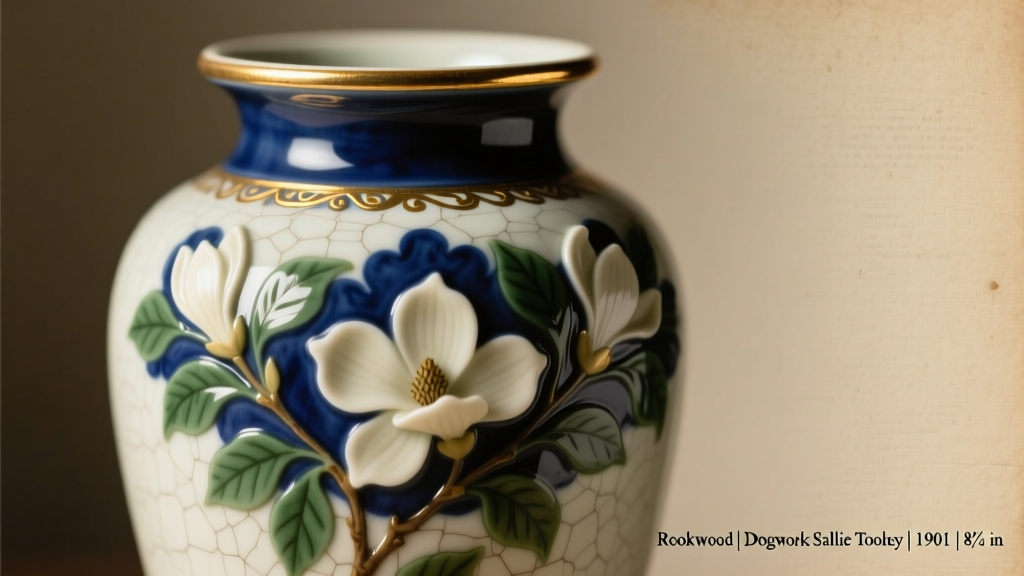
Rookwood Dogwood Vase Signed by Sallie Toohey, 1901 — A Masterpiece of American Art Pottery
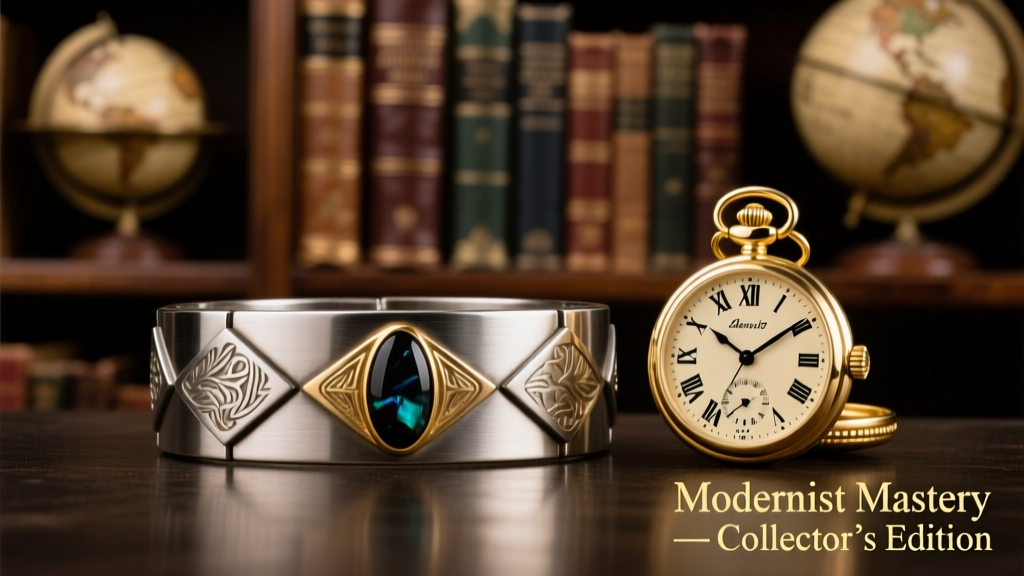
Modernist Jewelry Attracts Collectors: Why Geometric Abstraction, Architectural Form, and Postwar Innovation Are Driving Auction Records
Bauer Casserole Cover 'Blue Tulip': A Collector’s Guide to the Iconic Mid-Century Ceramic Lid
Lot 3701525: A 1948 Patek Philippe Ref. 1463 'Tasti Tosti' Chronograph — Provenance, Technical Anatomy, and Market Significance
The Homespun Creamer: A Study in Mid-Century American Dinnerware Design and Collectibility
Lunch Boxes, Wild Bill Hickok, and the Jingles Brand: The Rare 1955 Metal Lunch Box That Captured America’s Western Obsession
Kirkpatrick Pottery: American Art Pottery’s Quiet Masterpiece, 1890–1930

Hummel Figurine No. 42 0 'Good Shepherd' with Stylized Bee Motif: Authentication, Provenance, and Market Analysis of the 6½-Inch Porcelain Figure
Royal Doulton Figurine Indian Brave HN 2376: Provenance, Identification, and Market Value Analysis