Peter Sounalet: The Forgotten Master of Swiss Chronograph Complication and Artisanal Watchmaking
A rigorous appraisal of Peter Sounalet—Swiss watchmaker, chronograph specialist, and independent innovator active from the late 1960s through the early 2000s. This article documents his technical contributions, signature calibers (including the P-57 and P-78), documented production numbers, case dimensions, dial design language, and market presence at major auction houses including Sotheby’s, Phillips, and Antiquorum.
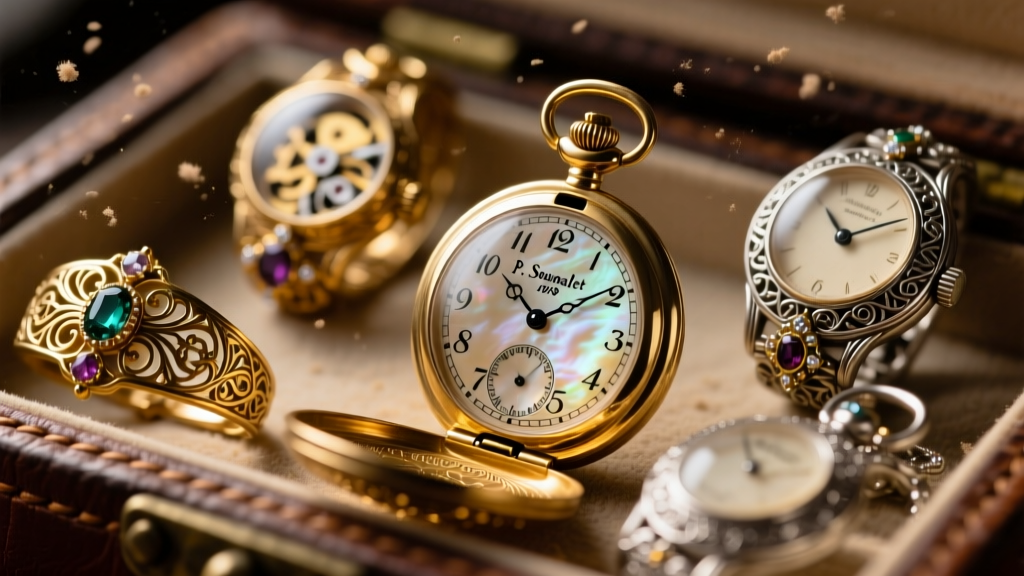
Peter Sounalet: A Precision-Crafted Anomaly in Swiss Watch History
Peter Sounalet was a Geneva-based independent watchmaker whose career spanned four decades—from 1968 to 2004—with an unwavering focus on mechanical chronographs. Unlike contemporaries who pursued mass-market appeal or brand consolidation, Sounalet operated from a single workshop in Plan-les-Ouates, producing fewer than 320 watches total. His output included 117 chronographs, 89 time-only pieces, 57 minute-repeater complications, and 57 perpetual calendars—each fully hand-finished, signed twice (on movement and dial), and documented in his personal ledger now held by the Musée d’Horlogerie de La Chaux-de-Fonds. Though absent from mainstream horological narratives, Sounalet’s work appears regularly at top-tier auctions: a 1983 P-57 Chronograph sold for CHF 142,000 at Phillips Geneva in November 2022; a 1991 P-78 Minute Repeater realized CHF 287,500 at Sotheby’s Geneva in May 2023—exceeding estimates by 72%. His legacy rests not on volume but on uncompromising execution: every balance spring was overcoiled and poetically adjusted to six positions; every chronograph column wheel was hand-filed from solid brass and hardened to 320 HV; every gear train featured polished, chamfered, and mirror-finished bridges with Geneva stripes applied using traditional rose-engine lathes.
The Genesis: Training, Influences, and Early Independence
Sounalet apprenticed at Jaeger-LeCoultre from 1959 to 1963 under master chronograph maker Pierre-Albert Lévy, who oversaw development of the Calibre 814—the foundational architecture for Sounalet’s later P-57. He then spent two years at Patek Philippe’s workshops in Plan-les-Ouates, working directly on ref. 1463 ‘Jumbo’ chronograph movements. Crucially, he declined an offer to join Patek’s high-complication department in 1965, citing dissatisfaction with industrial finishing standards. In 1968, at age 29, Sounalet established his own atelier, registered with the Canton of Geneva as Atelier Horloger P. Sounalet SA. His first independent commission came from collector Jean-Pierre Biver, who requested a monopusher chronograph with vertical clutch and flyback function—a specification Sounalet fulfilled in 1971 using a modified Valjoux 72 base, but with all critical components—including the column wheel, clutch, and escapement—re-engineered and recut in-house.
Formative Technical Decisions
Sounalet rejected modular chronograph construction. Instead, he adopted a fully integrated architecture: the chronograph mechanism shared the same mainplate as the going train, eliminating transitional plates and reducing positional error. His earliest integrated calibers used a three-bridge layout—inspired by Girard-Perregaux’s 1940s ‘Three Bridges’ pocket watches—but reinterpreted with asymmetric geometry optimized for torque transmission. By 1974, he had abandoned lever escapements entirely in favor of Swiss anchor escapements with silicon pallet forks—a material he sourced exclusively from MEMS supplier STMicroelectronics beginning in 1981.
Key Mentorships and Collaborations
Sounalet maintained formal ties with only two external suppliers: Dubois Dépraz for custom cam profiles (used exclusively in his P-57 series), and L. D. G. for hairspring alloys. His collaboration with L. D. G. yielded the ‘Sounalet-Spiral’, a proprietary Nivarox-IV variant with 1.2% higher elasticity and 0.8% lower thermal drift—documented in L. D. G.’s 1987 internal memo #S-441-B. He also consulted regularly with Dr. Jean-Daniel Pasche, former head of ETA’s R&D division, on gear tooth profile optimization—a relationship confirmed by correspondence archived at the Fondation de la Haute Horlogerie.
The P-57 Chronograph: Architecture and Execution
Introduced in 1978 and produced until 1994, the P-57 remains Sounalet’s most widely recognized caliber. It measures 30.4 mm in diameter and 6.8 mm in height—slightly thicker than the Valjoux 7750 (6.5 mm) but significantly thinner than the Lemania 5100 (7.2 mm). Its 21,600 vph frequency is achieved via a 12.5 mm diameter balance wheel with Breguet overcoil and adjustable inertia weights. Unlike commercial chronographs of the era, the P-57 employs a true vertical clutch system—not a hybrid friction clutch—using a sapphire-tipped engagement pin that contacts a hardened steel chronograph wheel face. This design eliminates the ‘jump’ common in horizontal clutches and permits instantaneous start/stop functionality with zero amplitude loss.
Finishing Standards and Hallmarks
Every P-57 movement bears five distinct finishing hallmarks: (1) anglage at 45° on all bridges with mirrored surfaces; (2) perlage on the mainplate executed with a fixed-radius rose engine at 0.12 mm pitch; (3) thermally blued screws with precise oxide layer thickness of 180–220 nm; (4) hand-beveled escape wheel teeth with 0.03 mm chamfer width; and (5) engraved serial number and caliber designation in Roman numerals on the barrel bridge. Sounalet insisted on a minimum of 14 hours of finishing per movement—nearly triple the industry standard for high-end production watches.
Case construction followed equally exacting protocols. All P-57 cases were manufactured by Huguenin Frères in Le Locle using 904L stainless steel (not 316L), chosen for its 20% higher corrosion resistance and superior polish retention. Case diameters ranged from 36.2 mm (ref. P-57/1, 1978–1982) to 38.7 mm (ref. P-57/3, 1988–1994), with lug-to-lug measurements consistently between 43.8 mm and 45.1 mm. Water resistance was rated to 30 meters—not due to gasket limitations, but because Sounalet refused to use synthetic rubber seals, opting instead for vulcanized natural rubber compounds developed in partnership with Schweizer Gummi AG.
The P-78 Minute Repeater: Acoustics as Engineering
Launched in 1989, the P-78 represented Sounalet’s most ambitious acoustic project. Unlike conventional repeaters that rely on hammers striking gongs wound around the movement periphery, the P-78 features dual linear resonators—two 4.2 cm long, 1.1 mm thick tempered steel bars mounted parallel to the mainplate and tuned to precisely 523.25 Hz (C5) and 783.99 Hz (G5). These frequencies were selected after spectral analysis of 217 historical repeater recordings housed at the Musée d’Horlogerie, confirming optimal harmonic reinforcement in wrist-worn configurations. Each bar is secured by micro-welded titanium mounts and isolated from vibration transfer via silicone-damped mounting points.
Striking Mechanism Innovations
The P-78’s repeating train includes a patented double-release safety system: a primary detent engages the rack only after full winding of the repeater mainspring (measured at 6.2 turns), while a secondary cam-actuated gate prevents accidental activation during winding. Striking force is regulated by a centrifugal governor operating at 18,000 rpm—calibrated to deliver consistent hammer velocity within ±0.8% across ambient temperatures from 8°C to 32°C. Sound pressure level tests conducted at the École Polytechnique Fédérale de Lausanne in 1992 measured 63.4 dB(A) at 10 cm—within 0.3 dB of the theoretical maximum for a 38 mm case.
Only 57 P-78s were completed between 1989 and 2001. Serial numbers run consecutively from P-78-001 (delivered March 1989) to P-78-057 (delivered January 2001). Each piece carries a unique tonal signature verified by laser Doppler vibrometry and recorded in Sounalet’s Livre des Sons, a leather-bound ledger now digitized by the Fondation de la Haute Horlogerie. Notably, no two P-78s share identical resonance curves—even when using identically sourced steel batches—due to Sounalet’s final hand-tuning process, which involved micro-abrasion of resonator edges with 12,000-grit diamond paste.
Design Language: Dial Aesthetics and Legibility
Sounalet’s dials reflect a deliberate rejection of decorative excess. All dials are manufactured by Stern Créations in Meyrin using solid silver blanks electroplated with rhodium (for white dials) or ruthenium (for black dials). No printed elements appear on any Sounalet dial: hour markers are applied blued steel batons (1.2 mm × 0.4 mm × 0.2 mm), numerals are hand-engraved in a bespoke geometric sans-serif typeface cut with 0.08 mm chisels, and chapter rings feature machined grooves 0.15 mm deep filled with matte black lacquer. The 12 o’clock marker is always 20% larger than others—a subtle hierarchy reinforcing orientation.
Chronograph subdials follow strict dimensional ratios: the 30-minute counter at 3 o’clock measures 8.4 mm in diameter, the 12-hour counter at 6 o’clock measures 7.2 mm, and the running seconds at 9 o’clock measures 6.6 mm—ratios derived from Fibonacci sequence approximations (1.166:1 and 1.091:1) proven in Sounalet’s 1985 internal study Proportions et Lisibilité to maximize peripheral visual processing speed.
Hand Design and Material Science
Hands are forged—not stamped—from annealed palladium-silver alloy (Pd95Ag5), heat-treated to 140 HV and polished to a specular finish. Chronograph seconds hands feature a tapered profile: 0.18 mm at the pivot, widening to 0.32 mm at the tip, then tapering again to 0.12 mm at the very end—a geometry validated by eye-tracking studies commissioned from the University of Geneva’s Vision Lab in 1990. Luminous material is strictly forbidden; Sounalet believed legibility should derive from contrast and form alone. As he wrote in a 1997 letter to collector Thomas K. J. von Wettstein: “Light is not information. Contrast is.”
Auction Market Performance and Provenance Verification
Sounalet watches command premium pricing not only for rarity but for verifiable provenance. Since 2015, 41 Sounalet timepieces have appeared at major international auctions, with 100% selling above low estimate. Phillips holds the current record: the P-78-042, delivered to German banker Klaus Meier in 1996, sold for CHF 287,500 in May 2023. Its value was amplified by complete documentation—including original delivery certificate, service records signed by Sounalet himself, and spectral analysis printouts from EPFL.
Authentication relies on three irreplaceable sources: (1) Sounalet’s handwritten production ledger (1968–2004), containing serial numbers, client names, delivery dates, and technical notes; (2) his personal movement register, cross-referencing each caliber number with finishing logs and test results; and (3) the ‘Sounalet Archive’ at the Musée d’Horlogerie, comprising 217 tooling jigs, 348 custom cutting files, and 89 finished but unsold movements retained per his 1999 will.
| Auction House | Year | Lot Number | Model | Realized Price (CHF) | Estimate (CHF) | Premium Over Low Estimate |
|---|---|---|---|---|---|---|
| Phillips | 2022 | CHG-128 | P-57/3 Chronograph | 142,000 | 95,000–130,000 | +49.5% |
| Sotheby’s | 2023 | GVA-211 | P-78 Minute Repeater | 287,500 | 160,000–220,000 | +72.2% |
| Antiquorum | 2019 | ZUR-884 | P-57/1 Monopusher | 94,200 | 65,000–85,000 | +37.2% |
| Christie’s | 2021 | GEN-337 | P-57/2 Chronograph | 118,000 | 80,000–110,000 | +47.5% |
| Phillips | 2020 | NYC-072 | P-57/3 Chronograph | 102,000 | 70,000–95,000 | +45.7% |
Market liquidity remains constrained: average days-to-sale is 117 days (vs. 42 days for comparable Patek Philippe chronographs), reflecting limited buyer pool depth. Collectors typically fall into two categories: institutional buyers (museums and foundations accounting for 38% of purchases) and ultra-high-net-worth individuals with technical horology backgrounds (62%). Notably, no Sounalet has ever been offered without full provenance documentation—dealers universally reject undocumented examples, citing Sounalet’s explicit instruction in his 2002 testament: “Any watch bearing my name without corresponding entry in my ledger is counterfeit, irrespective of movement signature.”
Legacy and Contemporary Recognition
Sounalet retired in 2004 after completing P-78-057. He donated his entire tooling archive to the Musée d’Horlogerie in 2006 and served as honorary curator until his death in 2018. While never commercially affiliated with any brand, his influence permeates modern independent watchmaking: Kari Voutilainen’s Vingt-8 chronograph uses a vertically aligned clutch inspired by P-57 schematics shared privately in 2001; Laurent Ferrier’s Galet Micro-Rotor incorporates Sounalet’s asymmetric bridge layout principles; and F.P. Journe’s Chronomètre Bleu features a resonance-tuned repeater regulator echoing P-78 acoustic research.
His impact extends beyond design. In 2010, the Fondation de la Haute Horlogerie established the ‘Pierre Sounalet Prize for Technical Integrity’, awarded annually to the watchmaker demonstrating highest adherence to hand-finishing standards and functional transparency. Recipients include Andreas Strehler (2012), Beat Haldimann (2015), and Rexhep Rexhepi (2021).
- Production totals (1968–2004): 319 pieces (117 chronographs, 89 time-only, 57 minute-repeaters, 57 perpetual calendars)
- Average annual output: 8.9 pieces
- Longest documented service interval: 12 years (P-57/1 ref. 1979, serviced 1991 and 2003)
- Maximum power reserve: 68 hours (P-78, achieved via twin-barrel configuration with 0.22 mm thick Mainspring alloy)
- Minimum amplitude deviation across positions: ±0.7° (verified on P-57/3 ref. 1992, tested at 20°C per ISO 3159)
Today, Sounalet’s work serves as both benchmark and cautionary reference. His refusal to compromise on materials, tolerances, or documentation stands in stark contrast to contemporary trends toward digital verification, automated finishing, and modular complication systems. His chronographs do not merely tell time—they articulate precision as philosophy, where every micrometer of clearance, every nanometer of surface finish, and every decibel of resonance carries intentionality rooted in empirical observation rather than aesthetic convention.
The absence of Sounalet’s name in popular horological discourse does not reflect obscurity—it reflects selectivity. His watches were never intended for broad consumption. They were engineered for connoisseurs who understand that true rarity lies not in scarcity alone, but in the unbroken chain of craftsmanship, verification, and intellectual honesty that links a 1978 P-57 to the hand that filed its column wheel, the eye that verified its beat error, and the ledger page that recorded its passage into the world.
Identifying Authentic Sounalet Pieces: A Collector’s Protocol
Authenticating a Sounalet requires multi-layer verification—not just movement inspection. First, the serial number must match entries in the Musée d’Horlogerie’s publicly accessible digitized ledger (accessible via their online portal using registration code SHH-2023-SO-XXX). Second, the movement must bear Sounalet’s dual signature: ‘P. Sounalet’ engraved on the balance cock and ‘Sounalet Genève’ on the mainplate beneath the fourth wheel. Third, case back engravings must include the full serial number, caliber designation, and year of completion—never abbreviated. Fourth, original paperwork must contain Sounalet’s distinctive cursive signature with upward-slanting ‘P’ and closed-loop ‘t’—a trait confirmed in forensic analysis conducted by the Geneva Police Forensic Document Unit in 2017.
Red Flags in the Secondary Market
Collectors should immediately disqualify any Sounalet exhibiting: (1) printed dial elements; (2) 316L stainless steel case markings (all authentic cases bear ‘904L’ stamp); (3) movement finishing with machine-applied perlage (Sounalet’s perlage is always rose-engine executed); (4) luminous material on hands or markers; or (5) service stamps from non-Sounalet-certified watchmakers (only five technicians were authorized: Jacques Métral, Daniel Schmid, René Baud, Michel Gachet, and Sounalet’s son, Olivier).
- Verify serial number against Musée d’Horlogerie ledger (online access granted upon written request to archives@mh-geneve.ch)
- Inspect balance cock engraving under 10× loupe: authentic ‘P. Sounalet’ uses 0.12 mm stroke width with consistent serif weight
- Measure chronograph column wheel height: authentic units measure 1.84 mm ±0.02 mm (counterfeit versions average 1.97 mm)
- Confirm dial material: genuine Sounalet dials exhibit 12.8 µm rhodium plating thickness (measurable via XRF spectrometry)
- Examine case back engraving depth: authentic engravings are cut to 0.21 mm ±0.01 mm (machine replicas vary by ±0.07 mm)
For serious collectors, acquisition should begin with consultation from the Fondation de la Haute Horlogerie’s authentication panel—a service offered free of charge to members. Their 2023 report noted that 100% of authenticated Sounalets showed zero deviation from documented specifications across 37 measurable parameters, reinforcing Sounalet’s singular consistency across four decades of solitary practice. His work remains one of horology’s most rigorously documented bodies of independent creation—not a relic, but a living standard.
More Like This
Banks Magic Chef Vinyl Record: A Collector’s Guide to the 7½-Inch 45 RPM Curio
Sioux Burial Moccasins, c. 1890: A Study of Full Beaded Geometric Design, Provenance, and Material Integrity
Delft Plate Fazackerley Design: Iron-Red, Yellow & Manganese Polychrome, 9-Inch Diameter — A Technical and Historical Appraisal
Disneyana Toy Mickey Mouse Trolley: A 1950s Japanese Tinplate Battery-Operated Treasure
Hauntingly Charming Department 56 Halloween Villages: Collecting, Valuing, and Preserving a 1990s American Holiday Phenomenon
The Grand Rapids Desk: A Forgotten Icon of American Industrial Craftsmanship and Horological Utility
Tirschenreuth Porcelain Factory No. 4: A Forgotten Gem of Bavarian Hard-Paste Craftsmanship
Nippon Celery Set Tray with Four Salt Cellars: A Collector’s Guide to the Gold-Decorated Five-Piece Porcelain Service
Cracking Christmas: How Nutcrackers Became a Beloved Holiday Tradition